An address for the unknown
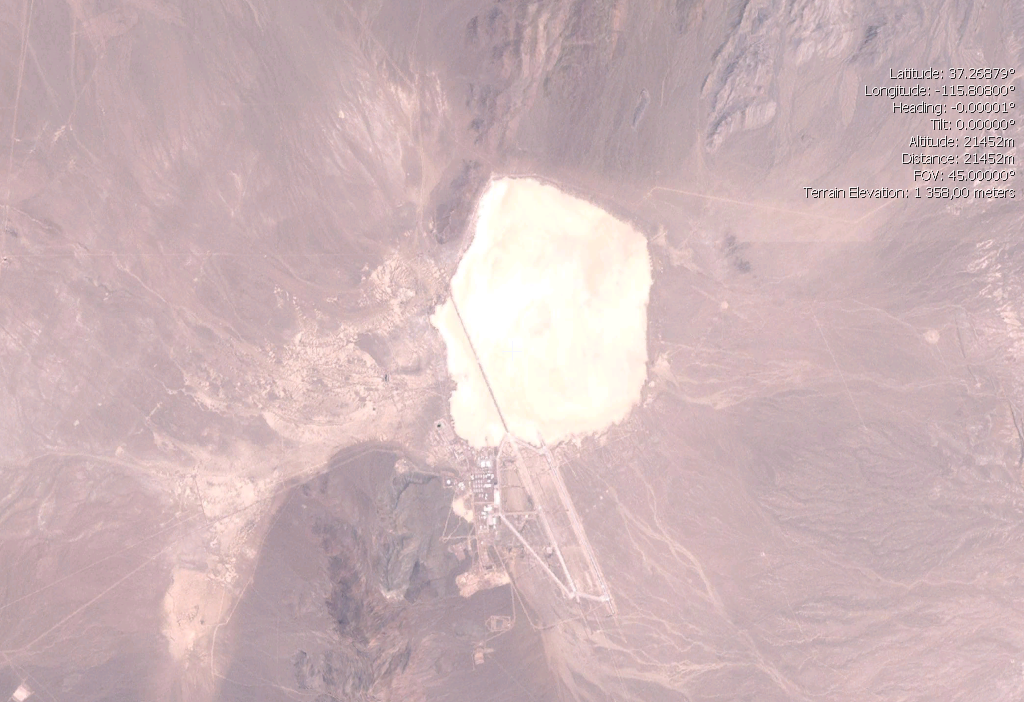
Some places become famous for what people can see. Area 51 became famous for what they cannot. Beside Groom Lake, a dry lakebed in southern Nevada, a classified aircraft-testing site acquired a second identity: the place where the government supposedly keeps its flying saucers. The landscape supplies the setting—desert, mountains, restricted roads, and a runway beyond public reach. The stories supply the occupants: secret pilots, recovered craft, alien bodies, and engineers trying to understand machines built somewhere else. The documented history and the folklore have been growing around each other for decades.
1955: the search for somewhere to disappear
The modern test site began with a very specific problem: where could the CIA and Lockheed fly a new spy plane without attracting attention? On April 12, 1955, CIA official Richard Bissell, Air Force officer Osmund Ritland, Lockheed engineer Kelly Johnson, and test pilot Tony LeVier surveyed Nevada from a small aircraft. Groom Lake offered isolation and a flat expanse suited to flight testing. There was an administrative wrinkle: the chosen land was outside the Atomic Energy Commission’s proving ground. The commission agreed to acquire it, and President Eisenhower approved the arrangement. The U-2 program had found its desert home.
Paradise Ranch, Watertown, Dreamland
Even the names sound like clues. Area 51 was a map designation; Paradise Ranch was Kelly Johnson’s attempt to make a remote assignment sound inviting. Workers shortened it to the Ranch and called themselves ranch hands. Watertown became another official name. Dreamland is the most evocative: the CIA’s account, citing former worker T. D. Barnes, traces it to a radio call sign introduced in the late 1960s for the surrounding special-operations airspace. Its predecessor was Yuletide. A place associated with interstellar visitors had, for a time, answered to a name better suited to a Christmas card.
The spy plane that flew before it was supposed to
The U-2’s first departure from Groom Lake was an accident. The CIA dates it to August 1, 1955: LeVier was conducting a high-speed taxi test when the aircraft lifted off at about 70 knots. The featureless lakebed made his height difficult to judge, and the aircraft bounced before he brought it down. The official test flight followed on August 4. Within months of choosing the site, engineers were flying an aircraft that would carry cameras above 60,000 feet—high enough to challenge ordinary expectations about what could be overhead.
Sources: Area 51 and the Accidental Test FlightCIA’s Role in the Study of UFOs, 1947–90
When a secret airplane becomes a UFO
The U-2 supplied a real mechanism for strange sightings. At its unusual altitude, reflected sunlight could make it appear fiery to observers below, especially around sunrise or sunset. CIA historian Gerald Haines describes Blue Book investigators checking reports against the secret flight program while keeping the actual explanation from the public. His history also records officials’ later estimate that U-2 and OXCART operations accounted for more than half of U.S. UFO reports during the late 1950s and 1960s. That is an attributed historical estimate, not a publicly demonstrated explanation for every case. The more revealing detail is the dilemma itself: investigators could recognize a classified aircraft and still be unable to name it.
OXCART: titanium, heat, and Mach 3
The next great secret was the A-12 OXCART, which began flight testing at Groom Lake in April 1962. Its deliberately unglamorous code name concealed extraordinary engineering. Lockheed’s team had to solve problems involving titanium construction, specialized fuel and lubricants, engines, navigation, and protection for a pilot operating at extreme altitude. The CIA describes sustained performance of Mach 3.2 at 90,000 feet. The A-12 later flew reconnaissance missions over East Asia under the name BLACK SHIELD. It is frequently confused with the SR-71 Blackbird, but the Air Force’s two-seat aircraft was a related successor. Groom Lake’s real inhabitants were already stretching the boundaries of the imaginable.
Sources: OXCART vs Blackbird: Do You Know the Difference?Area 51 and the Accidental Test Flight
The foreign machines behind the fence
There really were unfamiliar aircraft at Area 51 whose workings the United States wanted to understand. In 1968, Project HAVE DOUGHNUT evaluated a Soviet-built MiG-21 borrowed for a brief period. Testers studied its strengths, weaknesses, and performance against American aircraft. MiG-17 evaluations followed under HAVE DRILL and HAVE FERRY in 1969. This was practical intelligence work: learning how an adversary’s equipment behaved and how to fight it. The declassified reports offer a striking parallel to the later saucer stories—foreign machines, restricted access, and engineers probing unfamiliar technology—with a documented terrestrial origin.
Sources: Project HAVE DOUGHNUT: Exploitation of the MiG-21The Area 51 File: Secret Aircraft and Soviet MiGs
Stealth shapes and a flying Whale
On December 1, 1977, Lockheed’s HAVE BLUE demonstrator flew at Groom Lake. It tested the ideas that led to the angular F-117, an aircraft whose shape looked unlike a conventional fighter. Both HAVE BLUE prototypes were lost in accidents; according to the Air Force’s history, both were buried at Groom Lake. Another experimental resident, Northrop’s Tacit Blue, earned the nickname Whale. It tested a different approach: curved surfaces and a small radar signature, combined with battlefield-surveillance sensors. It flew 135 times before its program ended in 1985 and went on public display in 1996. Some of the desert’s strangest machines eventually became museum exhibits.
Sources: December 1st is an historic day for stealth fightersNorthrop Tacit BlueThe Area 51 File: Secret Aircraft and Soviet MiGs
Poker games in the secret desert
Life inside the base had an unexpectedly ordinary side. Aviation historian Peter Merlin’s photograph collection describes early workers sharing trailers and A-12 pilots converting House 6 into a bar with a running poker game. Recreation included a three-hole golf course, a movie theater, and a fishing pond. One photograph shows a U-2 pilot reading science fiction while breathing oxygen before a high-altitude flight. Another records an A-12 radar-test model perched on an inflatable pylon: even the straight seams in the supporting bag produced measurable radar reflections. Secrecy surrounded both the futuristic engineering and the everyday business of passing time far from home.
Sources: Area 51: Origins
The photograph taken from space
In 1974, an accidental photograph became a problem at the highest levels. Skylab astronauts had imaged the installation despite instructions not to photograph it. An April 19 memorandum to CIA director William Colby describes an argument over release: Defense Department organizations wanted the image withheld, while NASA and much of the State Department favored making it available. The memo raised awkward questions about classifying a picture taken from an unclassified spacecraft and whether suppression would merely lead to a leak. It is a small, tangible example of how far the effort to keep the base out of sight could reach.
Sources: Memorandum to the Director of Central Intelligence: SKYLAB imageryThe Area 51 File: Secret Aircraft and Soviet MiGs
Janet: a commute into the classified world
The secret base also has a very visible connection to ordinary life: commuter airplanes. Aircraft observers know the white jets with red stripes and no airline branding as Janet, after their radio call sign. Dreamland Resort’s researchers have documented flights connecting Las Vegas with Groom Lake and the Tonopah Test Range, along with photographs of workers stepping off the aircraft and heading to their cars. The CIA describes an earlier daily shuttle linking the Ranch with Lockheed’s Burbank operation. The appeal is easy to understand: people board a recognizable passenger plane, leave the city, and go to work somewhere most travelers can never visit.
1989: the man who called himself Dennis
A decisive chapter in the alien mythology began on Las Vegas television. On May 15, 1989, KLAS-TV aired an interview with a man presented as Dennis, his identity concealed. He alleged that the military was studying alien technology in the Nevada desert. Later reporting identified him as Bob Lazar. With journalist George Knapp, Lazar described an assignment at S-4, a purported facility south of Groom Lake. The claim moved the mystery from unusual lights outside a military base to an alleged account from inside the workshop. KLAS’s archived reporting remains a primary source for how that story reached the public.
Sources: Bob Lazar describes alien technology housed at secret S-4 base in NevadaOn the Record: George Knapp’s interview with Bob Lazar
Inside the S-4 story: nine saucers
Lazar’s account has a journey built into it: fly into Groom Lake, then ride a bus south to S-4. In a November 1989 radio interview, he said he had seen nine flying saucers. His claimed assignment was to work backward from an existing propulsion system and determine how it operated. In his December television interview, he described a compact reactor, a waveguide, and three gravity amplifiers beneath a disc-shaped craft. For distant travel, he said, the craft tilted onto its side and used the amplifiers to distort space. These are the workings of the craft as Lazar described them; the interviews do not independently establish the facility, the machines, or their performance.
Sources: Bob Lazar on the Billy Goodman HappeningOn the Record: George Knapp’s interview with Bob Lazar
Reticulum-4 and the alleged briefing papers
Lazar also described briefing papers containing alien photographs and apparent autopsy information. He said they placed the beings’ origin at Reticulum-4, associated with Zeta Reticuli, while calling Earth Sol-3. He qualified this part of the story himself: the papers could contain disinformation. That distinction matters to the lore. Even within his own account, reading about an extraterrestrial home world was different from claiming to have handled a machine.
Sources: On the Record: George Knapp’s interview with Bob Lazar
Element 115: a number with an afterlife
Lazar gave the supposed reactor’s fuel a memorable name: element 115. He described a stable substance tied to antimatter production and gravity manipulation. Element 115 does exist in laboratory science and is called moscovium. But matching an atomic number does not match those claimed properties. Berkeley Lab’s account of its FIONA experiment describes making and measuring individual atoms; the moscovium in that experiment had a half-life of roughly 160 milliseconds. That is a very different material from a lasting piece of reactor fuel. The scientific discovery made the old story newly shareable, while leaving its central propulsion claim unverified.
Sources: On the Record: George Knapp’s interview with Bob LazarFIONA measures the mass number of moscovium and nihonium
Roswell and Area 51: two stories joined together
In the broader legend, a crashed saucer needs a destination, and Area 51 supplies the hidden hangar. The chronology is less tidy. The Roswell debris episode occurred in New Mexico in 1947; the Groom Lake U-2 test site was established in Nevada in 1955. They are separate places and separate historical events. A claim that Roswell material was later transported to Area 51 therefore needs its own evidence. The eight-year gap does not prevent someone from proposing a later transfer, but the existence of the base cannot establish that one happened.
Sources: Results of a Search for Records Concerning the 1947 Crash Near Roswell, New MexicoThe Area 51 File: Secret Aircraft and Soviet MiGs
The Black Mailbox: a landmark made by believers
One of the most famous objects in Area 51 lore began as a rancher’s mailbox. Steve Medlin’s roadside mailbox became a meeting point for people watching the sky near Highway 375. According to Travel Nevada, the attention brought mail theft and vandalism, and Medlin eventually moved his working mailbox closer to his ranch. A replacement continued the tradition. Visitors leave notes, trinkets, and other offerings, turning a mundane roadside object into a kind of message center for the unknown. It is an unusually literal example of how the mythology changes the landscape: the landmark survives even after the ordinary purpose that created it has moved away.
Sources: The Black Mailbox
Rachel and the Little A’Le’Inn
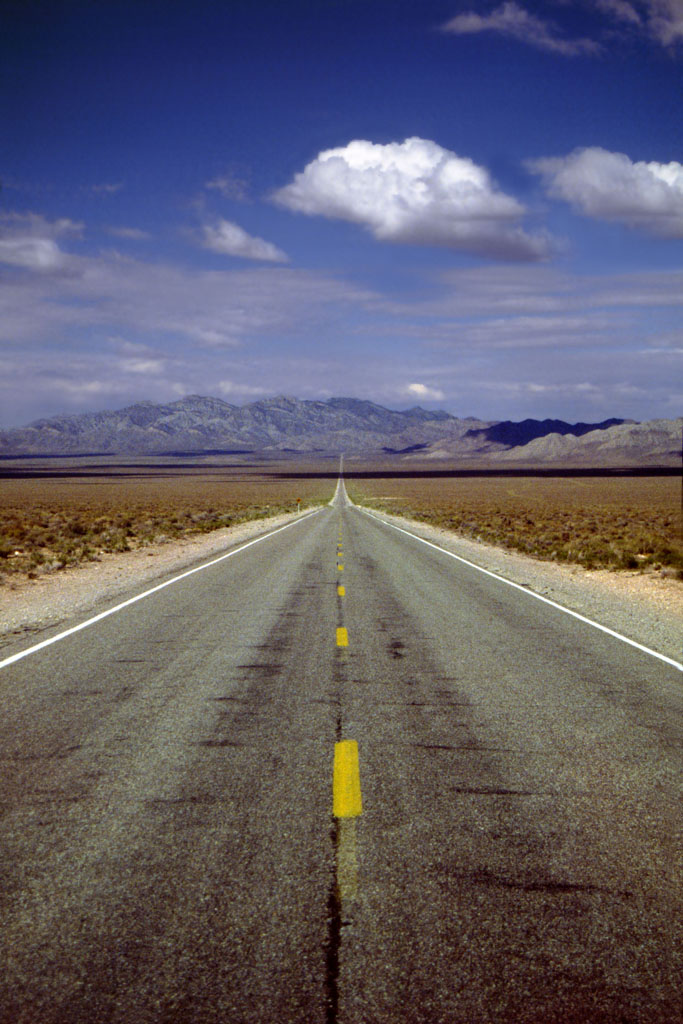
Outside the restricted land, the stories have a gathering place. Pat and Joe Travis bought Rachel’s bar and grill in 1988; it became the Little A’Le’Inn as interest in Lazar’s claims brought visitors from around the world. In a 2000 Smithsonian report, the couple described listening to pilots, curiosity seekers, and people who said they had experienced encounters. They contributed stories of their own, including an alleged narrow beam of light that passed through a steel door and stopped inside the room. That is local testimony, not a measured experiment, but it captures the inn’s role as a place where stories are heard, exchanged, and carried onward. Nevada’s Extraterrestrial Highway links this folklore to an actual road trip.
Sources: Inexplicable MomentsExtraterrestrial Highway road trip
Freedom Ridge and the hunt for Aurora
Not every watcher was looking for aliens. Aircraft enthusiasts built their own culture around glimpses of classified aviation, adopting handles such as PsychoSpy and Agent X. Bill Sweetman’s account describes their former lookout at Freedom Ridge and its loss to a government land withdrawal in 1994. Another enduring mystery was Aurora, a name associated with a rumored high-speed aircraft. Reports of a slender triangle over the North Sea in 1989 and unusual sonic booms over Los Angeles in 1991–92 became part of that discussion. Sweetman treated a connection between them as a question, not an established aircraft identification. Area 51’s mythology includes secret human inventions as well as visitors from elsewhere.
Sources: Searching for Secrets at Area 51
Acknowledged, but still protected
Long before the celebrated 2013 disclosure, a presidential document had publicly referred to the Air Force’s operating location near Groom Lake. In January 1996, President Bill Clinton explained a determination shielding classified information about that location from disclosure through certain hazardous- and solid-waste-law requirements. His letter specified that the exemption was limited to provisions requiring disclosure, rather than a general exemption from environmental obligations. The language is revealing: the government could acknowledge the place while continuing to protect information about what happened there. The distinction between a known location and secret activities is central to the base’s public history.
Sources: Letter to congressional leaders on Presidential Determination 95-45
2013: the map comes out of the file
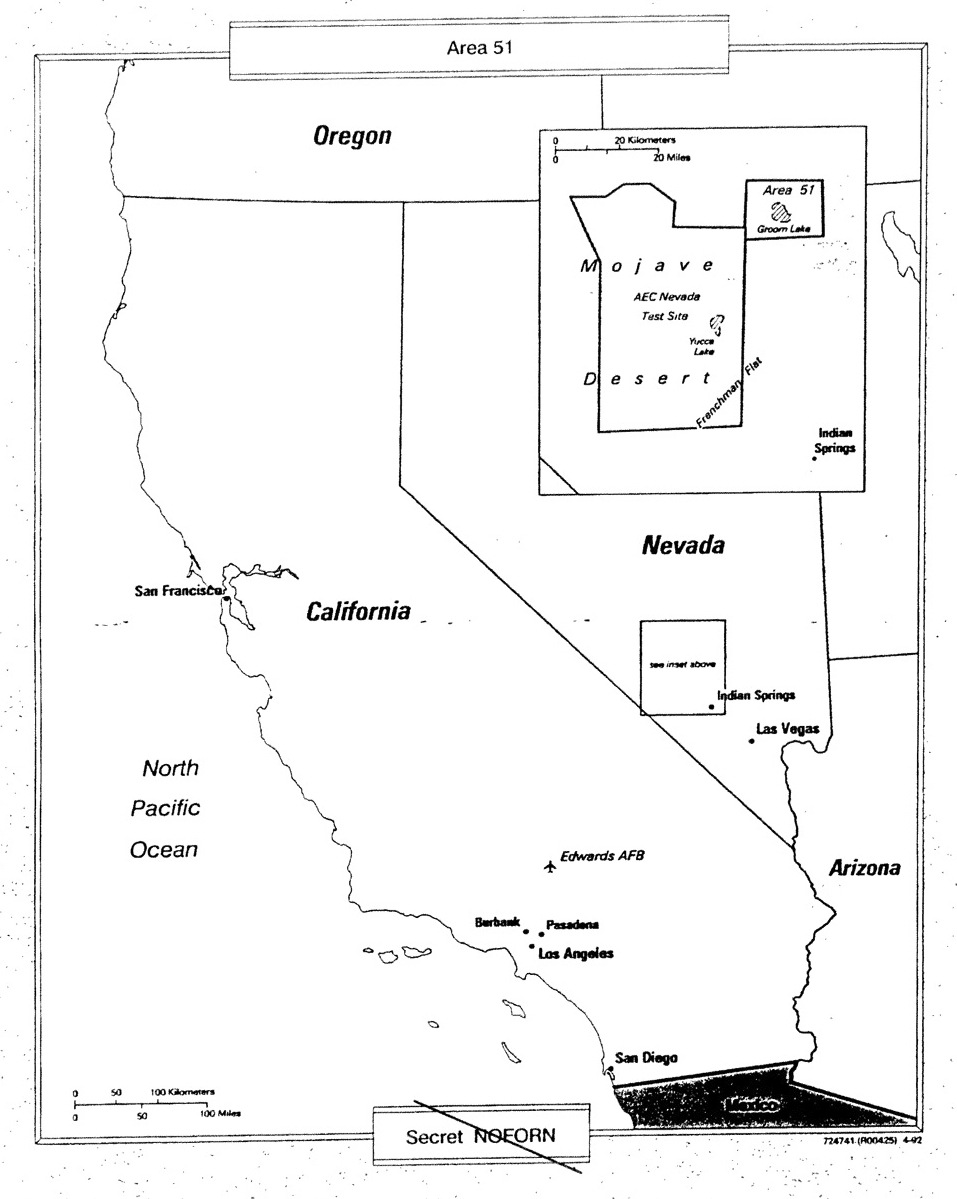
On August 15, 2013, the National Security Archive published a newly declassified version of the CIA’s U-2 and OXCART history. Jeffrey Richelson had requested a review of the redactions in 2005. The release restored numerous references to Groom Lake and Area 51 and included a map, making the site’s place in the reconnaissance program explicit. It also opened details about pilots, funding, overseas operations, and cover arrangements. The event is often compressed into the claim that the government finally admitted Area 51 existed. More precisely, it was a major documentary disclosure about a location already discussed in public records—and the story it documented was secret aviation.
Sources: The Secret History of the U-2 — and Area 51Letter to congressional leaders on Presidential Determination 95-45
2019: the raid that became a desert party
The internet supplied the next chapter with Storm Area 51, a joke invitation to enter the base and find the aliens. On September 20, 2019, the Associated Press reported that roughly 75 to 100 people reached the Rachel-area gate at the appointed 3 a.m. hour, while thousands traveled to surrounding festivities. The scene involved costumes, handmade signs, campers, watchful deputies, and events in Rachel and Hiko. It produced no alien reveal. What emerged was a gathering built around a shared story: some came with questions, others for the joke, the music, or the chance to say they had been there.
Sources: Revelers reach gates of Area 51 then peacefully rejoin party
What remains behind the fence
Area 51’s appeal rests partly on a documented precedent: remarkable aircraft really did operate here before the public learned their names. That gives each new rumor an unusually persuasive setting. The public sources collected here establish the aviation history and the history of the stories; they do not independently verify alien craft at S-4. AARO’s March 2024 historical report stated that it found no empirical evidence of government or private-company reverse engineering of extraterrestrial technology. That is the office’s finding, not a public inventory of every classified hangar. The installation remains closed to visitors. Outside it, the Ranch, Dreamland, the mailbox, and the inn continue to give the unknown an address.
Sources: Report on the Historical Record of U.S. Government Involvement with UAP, Volume IArea 51: location and public access
Sources & media
Report on the Historical Record of U.S. Government Involvement with UAP, Volume IAll-domain Anomaly Resolution Office · Released March 2024 · Official findings, executive summaryJanet AirlineDreamland Resort · Aircraft photographs and observers’ research · Page dated February 16, 2023What really went on at Area 51?Central Intelligence Agency · July 1, 2022 · Aircraft programs and daily transportUnveiling the Mysteries of Area 51National Geographic · July 22, 2021 · Documentary overview of the base and its UFO mythologyBob Lazar describes alien technology housed at secret S-4 base in NevadaKLAS-TV / 8 News Now · Archival reporting republished November 8, 2019 · A source for Lazar’s claimsRevelers reach gates of Area 51 then peacefully rejoin partyAssociated Press, via Voice of America · September 20–21, 2019 · Reporting from the gatheringsFIONA measures the mass number of moscovium and nihoniumLawrence Berkeley National Laboratory · November 28, 2018 · Experimental measurements of element 115Area 51 and the Accidental Test FlightCentral Intelligence Agency · August 6, 2015 · U-2 flights and the base’s namesSearching for Secrets at Area 51Bill Sweetman · Air & Space / Smithsonian · July 2014 · Freedom Ridge and the Aurora mysteryThe Area 51 File: Secret Aircraft and Soviet MiGsNational Security Archive · Jeffrey T. Richelson · October 29, 2013 · Declassified document collectionThe Secret History of the U-2 — and Area 51National Security Archive · Jeffrey T. Richelson · August 15, 2013 · FOIA release and CIA history chaptersArea 51: OriginsPeter Merlin · Air & Space / Smithsonian · March 25, 2013 · Historical photographs and base lifeDecember 1st is an historic day for stealth fighters49th Wing Public Affairs · December 1, 2011 · HAVE BLUE’s first flight at Groom LakeArea 51: Uncensored History of America’s Top Secret Military BaseTalks at Google · Annie Jacobsen · August 30, 2011 · Author talk and historical interpretationInexplicable MomentsDonovan Webster · Smithsonian · January 2000 · Reporting and local stories from the Little A’Le’InnCIA’s Role in the Study of UFOs, 1947–90Gerald K. Haines · Studies in Intelligence · 1997 · Reconnaissance flights and UFO reportingLetter to congressional leaders on Presidential Determination 95-45President Bill Clinton · January 30, 1996 · Archived White House release, January 31Results of a Search for Records Concerning the 1947 Crash Near Roswell, New MexicoU.S. General Accounting Office · July 28, 1995 · Includes contemporary 1947 recordsOn the Record: George Knapp’s interview with Bob LazarKLAS-TV · December 9, 1989 · Interview transcript reproduced by Disclosdex; unverified claimsBob Lazar on the Billy Goodman HappeningNovember 21, 1989 · Interview transcript reproduced by Papoose Lake; unverified claimsMemorandum to the Director of Central Intelligence: SKYLAB imageryApril 19, 1974 · Declassified CIA memorandum, via National Security ArchiveAngels in Paradise: The Development of the U-2 at Area 51Central Intelligence Agency · circa 1960 archival film · U-2 development and life at Groom LakeArea 51: location and public accessTravel Nevada · The restricted installation and surrounding visitor attractionsExtraterrestrial Highway road tripTravel Nevada · State tourism guide to Route 375, Rachel, and the Little A’Le’InnNorthrop Tacit BlueNational Museum of the U.S. Air Force · Aircraft history and specificationsOXCART vs Blackbird: Do You Know the Difference?Central Intelligence Agency · A-12 engineering, operations, and its relationship to the SR-71Project HAVE DOUGHNUT: Exploitation of the MiG-21Rob Young · National Air and Space Intelligence Center · Unclassified briefing, via National Security ArchiveThe Black MailboxTravel Nevada · A ranch mailbox becomes a UFO-watching landmarkSpotted an error, or know a better source? Write to hello@uap.fun.
Discuss this entry
Compare notes with other readers: witness details, sources, and the parts that still do not add up.
Open the discussion