A mystery you could put in a scanner
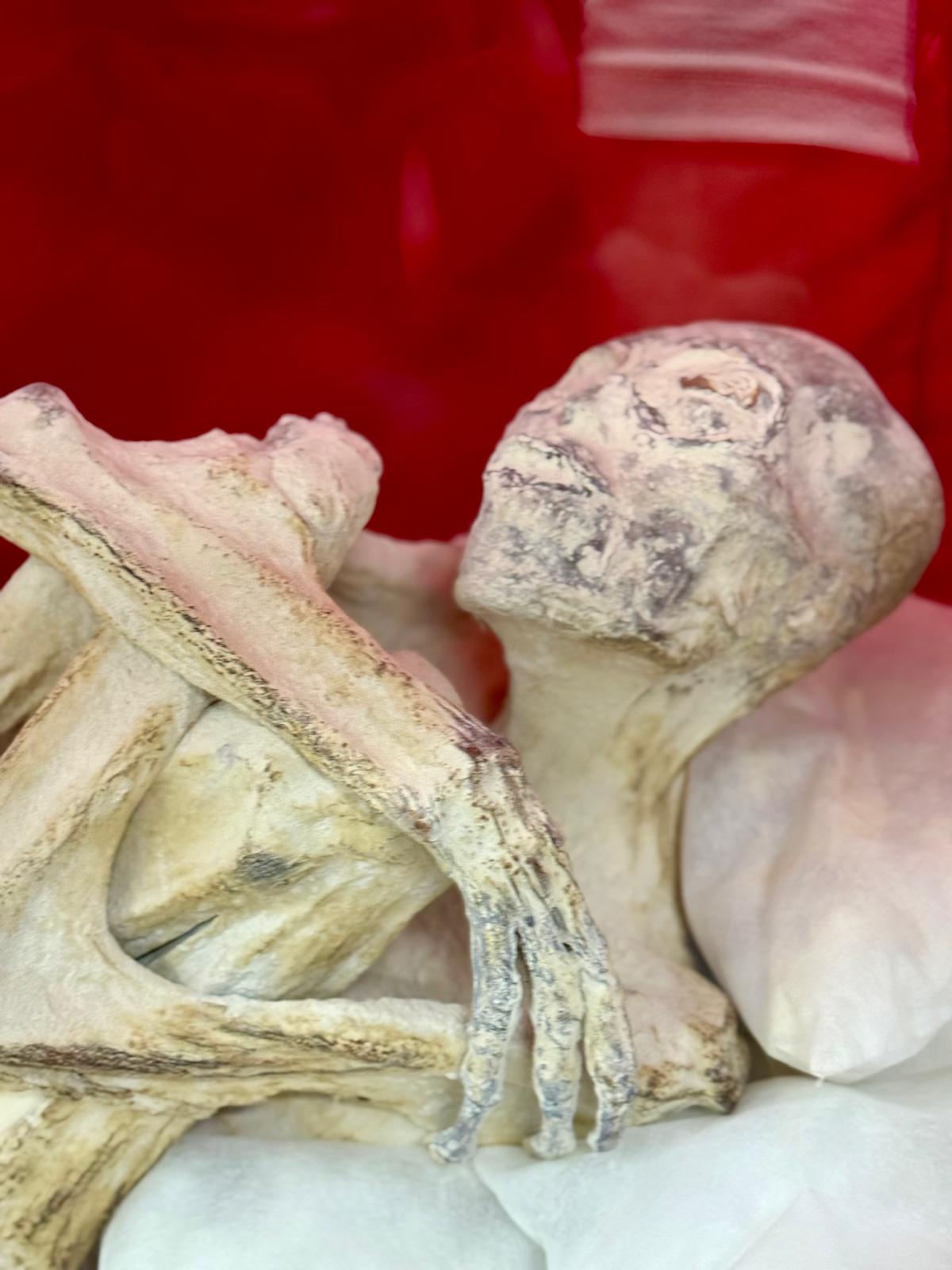
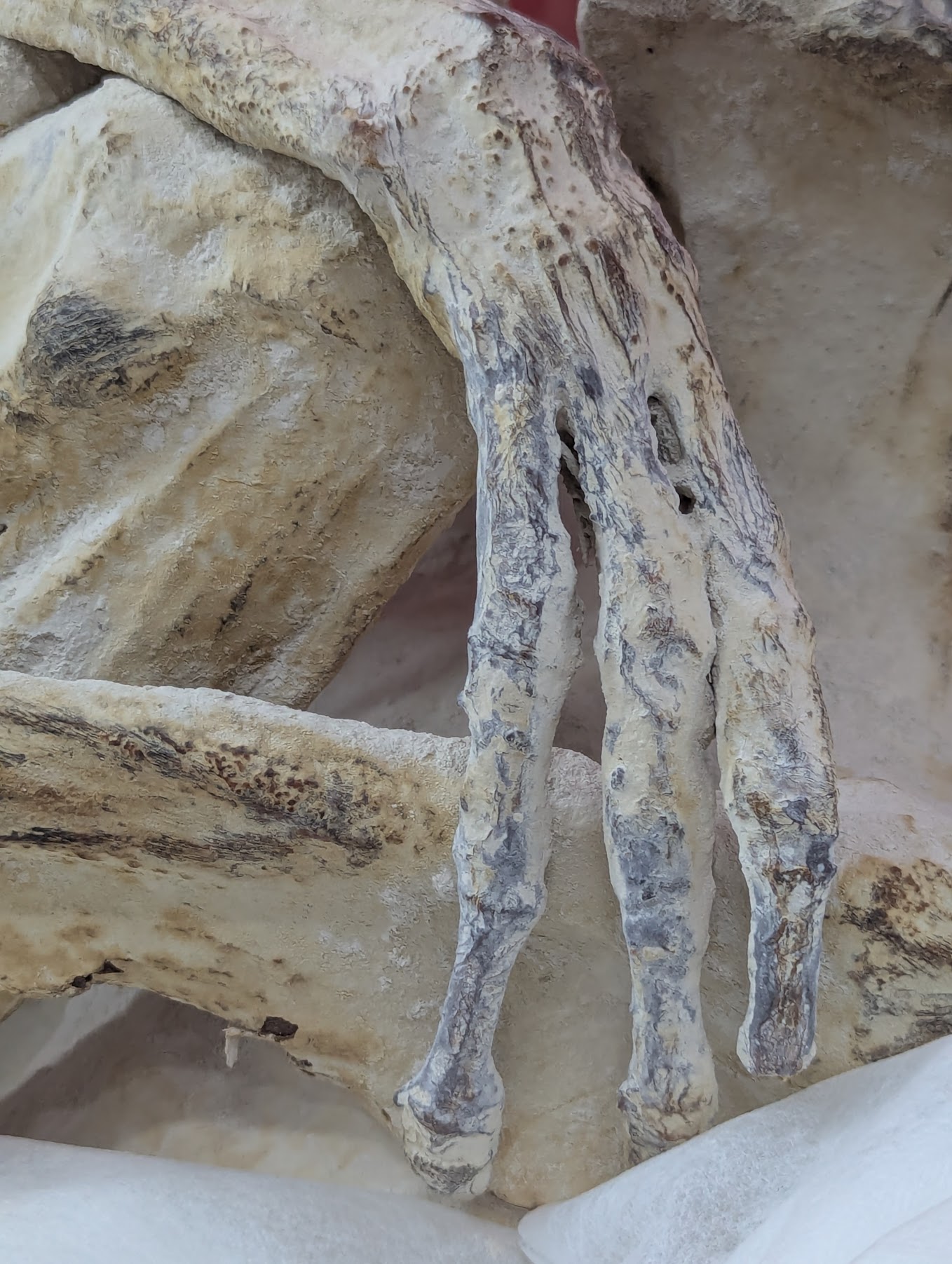
A light can vanish. A witness can die. A body, in principle, stays available for another question. That is the peculiar promise of the Peruvian mummy story: perhaps the most consequential evidence in UFO history is already here, folded into a fetal posture, with three long fingers resting against its legs. The promise becomes stranger as the specimens acquire names. Maria is the large, uncannily human-looking one. Josefina is small, with objects inside her abdomen interpreted as eggs. Montserrat is said to carry a fetus. Together they raise an extraordinary possibility: could something unfamiliar have lived alongside us, leaving its remains in the desert? The bodies offer a way to investigate that possibility, but the evidence is tangled in missing excavation records, conflicting anatomical readings, and objects known to have been altered. The question is not exhausted by asking whether there is real bone inside. We need to know whose bone it is, whether the body grew in this arrangement, and how it reached the examination table.
Sources: Tridactyls: specimen catalog, chronology, and research linksJosefina: the small specimen with alleged eggsMontserrat: the reported pregnant specimen
The desert supplies a mythology
Nazca is an almost unfairly evocative setting for such a discovery. Across the desert lie immense animals, lines, and geometric figures that become legible from above. Set against these immense designs, a body with an elongated head and three fingers seems to promise an answer to an older mystery: who was the intended audience for the desert’s pictures? The association is powerful, but the landscape has its own archaeological history. UNESCO describes figures made by removing surface stones to expose lighter ground, within a ceremonial landscape. Their scale does not require enormous excavation works or an airborne designer. The more interesting question is whether any particular body can be securely connected to a particular burial and culture. A mummy without a recorded excavation borrows Nazca’s atmosphere much more easily than it acquires Nazca’s provenance.
Mario, Maussan, and the missing first chapter
The chronology maintained by tridactyls.org begins in 2015 with Leandro Benedicto Rivera Sarmiento, known in the story as Mario, and a claimed discovery near Nazca. The Inkarri investigators entered the account in 2016; the material reached a wider public in 2017. By the Mexican congressional presentations of 2023, Jaime Maussan had helped turn small desiccated bodies into an international spectacle. The sequence of publicity is easier to follow than the sequence of recovery. The recovery accounts describe a cave, a much larger cache, clandestine removals, and locations that are difficult to establish. That missing first chapter matters. An excavated burial can preserve relationships between a body, its wrapping, associated objects, and sediment. A body delivered through intermediaries arrives with those relationships replaced by someone’s account. The cave may be real; the story attached to it still needs an independently documented site.
Sources: Tridactyls: specimen catalog, chronology, and research linksPeru’s Three Fingered ‘Aliens’ (WTF Are These?!)
There is no single Nazca mummy
The bodies fall into several claimed anatomical groups, including the small J-types and the larger M-types. These are informal groupings, not accepted biological taxa. Josefina, one of the small specimens, is described by her advocates as roughly sixty centimeters tall, with three digits, an unusual chest structure, and apparent eggs. Maria and Montserrat look much closer to human mummies, although their hands, feet, and heads are presented as anatomically exceptional. A conclusion about one group cannot automatically settle the other. Even within a group, an isolated head, a detached hand, and a substantially complete body are different evidentiary objects. The name attached to each scan and sample matters more than the umbrella phrase “alien mummies.”
Sources: Josefina: the small specimen with alleged eggsTridactyls: specimen catalog, chronology, and research linksPeruvian Nazca tridactyls: comparative anatomy between M-type and J-type specimens
Montserrat and the child called Rafael
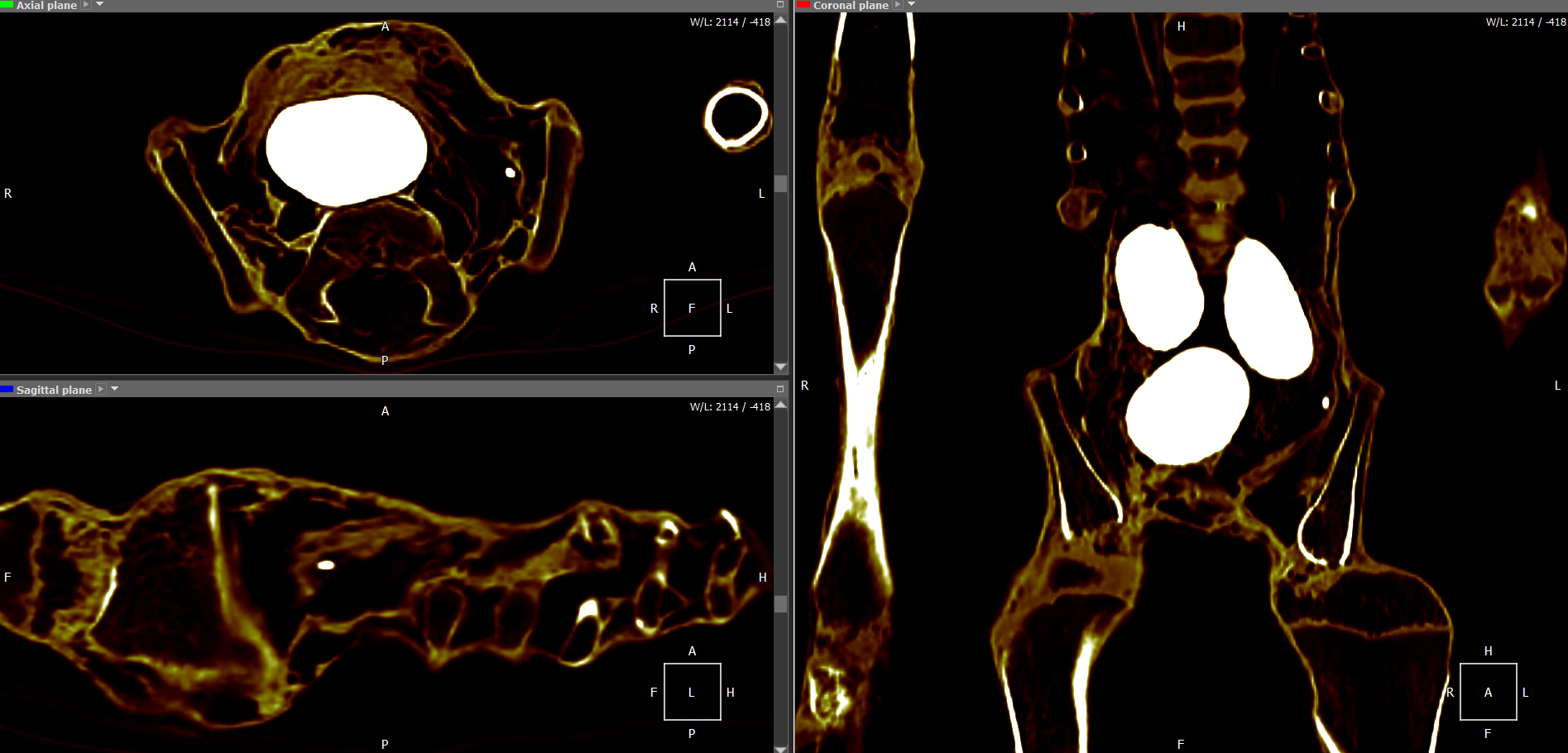
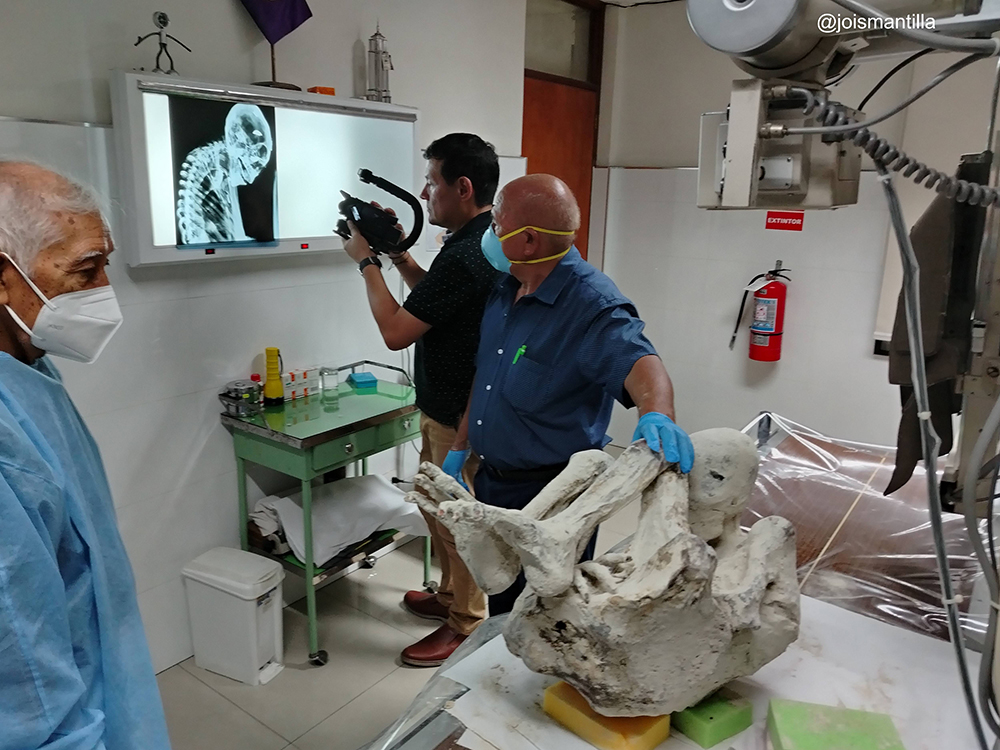
The strangest claim concerns a body about 1.47 meters tall, with its hands positioned over its abdomen. The Montserrat profile credits journalist Jois Mantilla with suspecting pregnancy from that posture, followed by a scan interpreted by David Ruiz Vela and colleagues as showing a fetus. The fetus was named Rafael; advocates describe it as about nineteen centimeters long and itself tridactyl. If independently established, a fetus with matching developmental anatomy would be a much stronger observation than an unusual adult hand. But pregnancy alone would establish neither alien ancestry nor natural tridactyly. The decisive work would identify the fetal digits across the original scan slices, distinguish them from overlapping structures, and test the genetic relationship between the two sets of remains. The extraordinary part of this claim is also the part that makes it testable.
The strongest case for a body that grew this way
José de Jesús Zalce Benítez’s May 2025 opinion on Maria argues that the structures are anatomically continuous: joints articulate, soft tissues follow the bones, and the scans do not show the cuts or assembly he would expect from a fabricated specimen. His argument is more specific than an expression of astonishment. Removing digits from a human hand, he argues, should leave anatomical evidence at the remaining wrist and hand structures. The 2024 morphoanatomical paper by Hernández-Huaripaucar and colleagues likewise presents Maria as a coherent specimen, describing unusual vertebral anatomy and a cranial-volume estimate roughly thirty percent above its human comparison. These are substantive claims to put before other anatomists. Their publication does not by itself establish a new species, but neither should they be reduced to a photograph of a funny-looking doll. Their strength depends on whether independent examiners reproduce the measurements and exclude modification.
Sources: Forensic opinion on MariaBiometric morphoanatomical characterization and dating of a tridactyl humanoid specimen
The hospital report tells a different story
One of the most revealing documents is hosted by the advocates themselves. The translated EsSalud package contains Maria’s September 2024 hospital CT examination and a November report. Its conclusion describes a human specimen with little soft tissue and partial absence of phalanges. It records missing bones, spinal lesions, sacralization of the fifth lumbar vertebra, and other findings without identifying an unknown species. This is not a complete reconstruction of how the hands acquired their present appearance; the report’s human classification also deserves scrutiny. It nevertheless prevents us from treating a hospital scan as a hospital endorsement of alien anatomy. The institution supplied imaging and a radiological interpretation. The more extraordinary interpretation belongs to other readers of the material. Readers can compare both because tridactyls.org has made the disagreement unusually accessible.
Sources: EsSalud correspondence and CT reports for Maria and WawitoForensic opinion on Maria
A later report complicates the enlarged-brain claim
K. H. Fung’s December 30, 2025 virtual autopsy supports natural tridactyly while disagreeing with parts of the earlier anatomical picture. Yet its details complicate the simplest authenticity narrative. Fung interprets parts of the extremities as amputated and discusses possible regrowth, while maintaining that the original anatomy was tridactyl. That is his proposed distinction between injury and manufacture, not a concession that the entire body is assembled. His figure 36 gives cranial volumes of approximately 1,195 cubic centimeters for Maria, 1,193 for Montserrat, and 1,449 for a human comparator. In that comparison, the two specimens are about seventeen percent smaller, not thirty percent larger. One comparator cannot establish a population average, and these are cranial-space measurements rather than a preserved brain’s functional capacity. The disagreement between supportive reports is itself an excellent reason to commission standardized, blinded measurements. The larger-brain claim should not be repeated as a settled feature.
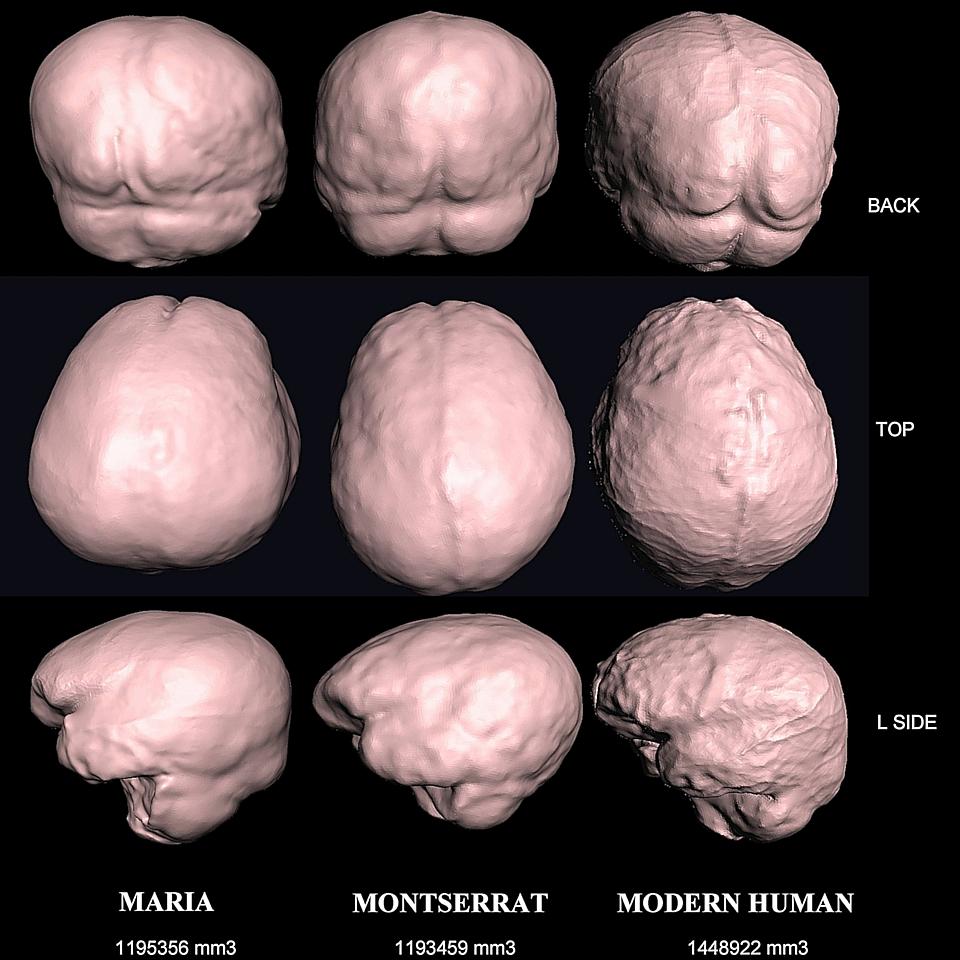
Sources: Final update: virtual autopsy of MariaBiometric morphoanatomical characterization and dating of a tridactyl humanoid specimen
Wawita breaks the real-or-fake shortcut
The catalog’s Wawita entry acknowledges artificial modification of the fingers and toes. That small admission has large consequences. A specimen can contain authentic ancient human remains and still have been altered to look tridactyl. It need not be sculpted from scratch. Organs, aged skin, and biological tissue elsewhere in the body would survive that distinction. Wawita does not prove that Maria or Montserrat was modified. It demonstrates why the investigation needs more than a choice between an intact unknown organism and a wholly manufactured prop. There is a third possibility: an old body given a new identity through changes to selected parts. For each specimen, the examination has to locate the evidence that separates those possibilities.
Sources: Wawita: acknowledged modification of fingers and toes
The airport dolls were a different exhibit
Two small figures seized at Lima’s airport in October 2023 became another public face of the mystery. Peru’s Ministry of Culture announced in January 2024 that these objects contained animal bones and synthetic adhesives. A separately received three-fingered hand contained human bones, cotton, and glue. These were physical constructions involving biological material, not merely sculptures that happened to resemble mummies. They were also different objects from Maria and Montserrat. That distinction is essential: the airport findings cannot establish how either larger body acquired its anatomy. What they do establish is that assembled humanoid objects were circulating in the same wider controversy. A photograph without a specimen name can make a finding about one set of remains look like a verdict on all of them.
Sources: Ministry of Culture reports that seized humanoid dolls were assembled from animal bones
The earlier objects in the forensic laboratory
Flavio Estrada and colleagues published a detailed examination in Arqueológicas in 2023, reporting work that began in 2017. Their set consisted of five objects: two small bodies, a head, an arm, and a hand. They described manipulated human and animal bones, artificial coverings, and adhesives. The specimens had come through an intermediary, not from a controlled excavation, and they were not Maria or Montserrat. This is a bounded finding with real consequences. Fabricated humanoid relics were present in the broader story before the airport seizure, and critics had more than an inconvenient photograph to discuss. Conversely, a collection containing fabricated pieces could conceivably also contain something biologically unusual. The proper response is a specimen register that follows every object into every report, so that neither authenticity nor fraud spreads by association.
Sources: Analysis of alleged extraterrestrial biological material from Nasca
Josefina and the llama inside the argument
The llama-skull explanation has become a dismissive one-liner, but the 2021 CT paper behind it is more interesting. Ríos López, Florides, and Christodoulides compared Josefina’s head with a llama’s braincase and concluded that the object was consistent with a deteriorated llama braincase combined with other, unidentified material. They also discussed features their reconstruction did not fully explain, including the apparent mouth plates, and the absence of visible glue or seams at the available scan resolution. The authors called for better imaging. That combination deserves to survive retelling: a concrete anatomical alternative, accompanied by limitations. An unresolved detail does not overturn the comparison; a plausible comparison does not permit us to replace an examination of every small specimen with the word “llama.”
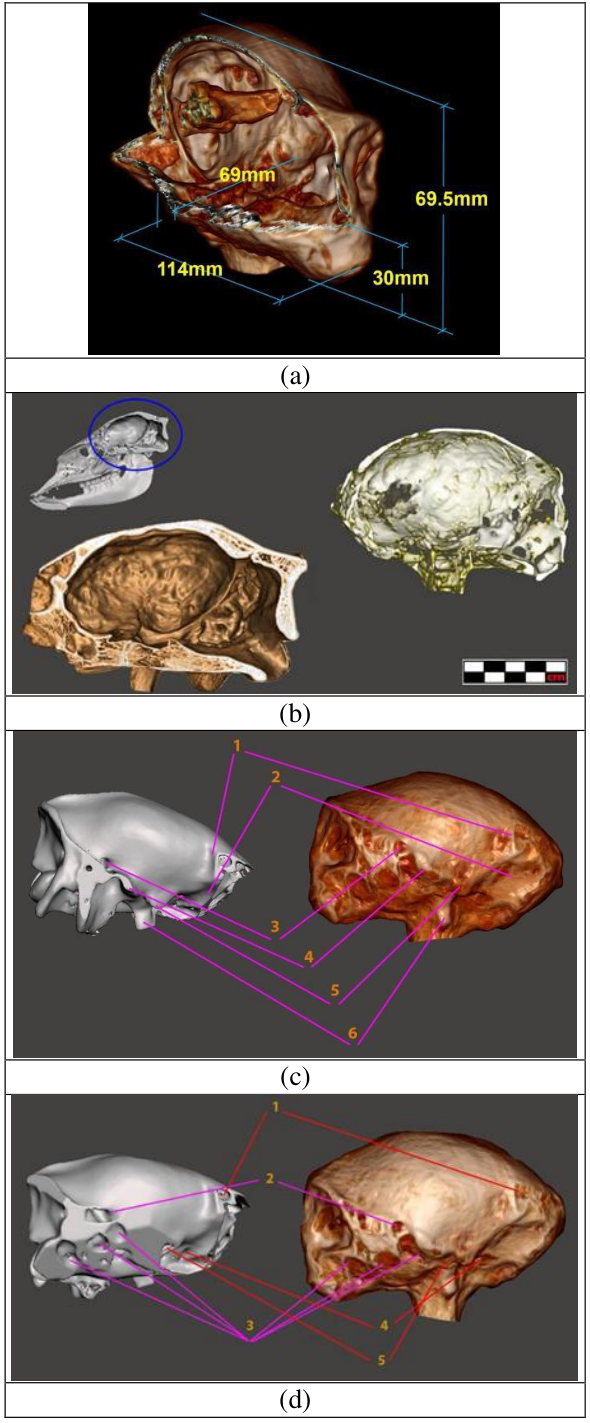
Sources: Applying CT-scanning for the identification of a skull of an unknown archaeological find in Peru
2026: a more elaborate defense of the small bodies
Fung’s June 2026 comparative report pushes back against the idea that the J-types can be dismissed as assemblies. It describes single forearm and lower-leg bones, plate-like wrist and ankle structures, alleged healing around injuries and implants, and markedly unusual spinal anatomy. In one particularly strange interpretation, variations in the neck could reflect extension through vascular pressure. Fung concludes that both groups were living organisms, and interprets differences among the small bodies as biological variation. These interpretations would require a radically unfamiliar body plan. They remain readings of CT structures rather than an independently replicated demonstration of their biological function. A structure identified as a vessel, spinal cord, or healing interface needs confirmation beyond its suggestive appearance in a reconstruction. The new report gives comparative anatomists more specific claims to test. It does not make the earlier llama comparison or the functional objections vanish.
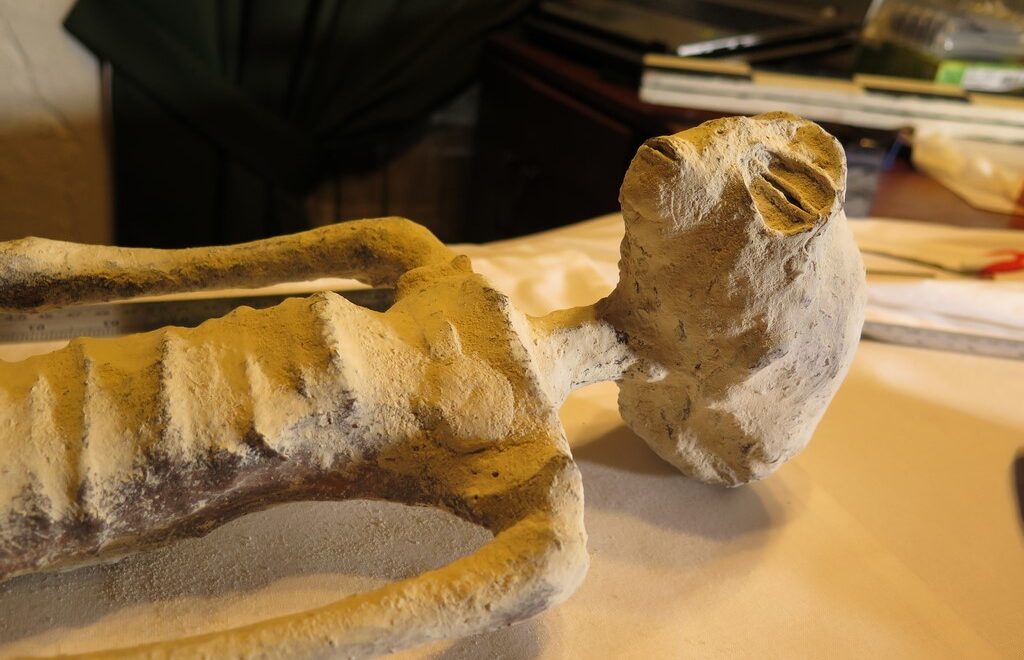
Sources: Peruvian Nazca tridactyls: comparative anatomy between M-type and J-type specimensApplying CT-scanning for the identification of a skull of an unknown archaeological find in Peru
Carbon dates the material, not the story
An ancient date feels decisive because it seems to take a modern hoax off the table. It does not necessarily do so. UNAM clarified that its laboratory had dated a small sample supplied by a client in 2017, without collecting it at the original site or authenticating the alleged organism. The result concerned the material’s age. The 2024 Maria paper reports a radiocarbon age of 1,771 ± 30 years and a calibrated interval of AD 240–383 for the submitted sample. Those dates matter, provided the sample attribution is sound. They still cannot tell us when a body was altered, when a metal object was inserted, or whether old bones were rearranged recently. The useful next comparison would date separately documented tissues and associated materials from the same specimen. Agreement would strengthen its history; disagreement could reveal how that history was assembled.
Sources: UNAM clarifies the scope of its carbon-14 analysisBiometric morphoanatomical characterization and dating of a tridactyl humanoid specimen
The percentage that became an alien genome
Few claims travel faster than the suggestion that a substantial fraction of the DNA is unknown. Unknown to a classification pipeline is not equivalent to nonhuman, and nonhuman is not equivalent to extraterrestrial. The tridactyls.org DNA page itself shows why headline percentages are dangerous. One Maria analysis is summarized as 97.38 percent identified and 2.62 percent unidentified; that first number is not a percentage of human ancestry. Elsewhere the page reports an analysis mapping 95.07 percent of Maria reads to the human reference. Different pipelines and denominators are being discussed. There is a genuine public sequencing deposit to examine: NCBI’s Ancient0003 project, associated with Maria, was submitted in 2022 and carries Homo sapiens in its organism metadata. Neither the deposit nor its label authenticates the mummy. They provide a starting point for reproducible analysis, which is much more useful than treating a database’s unmatched reads as a missing extraterrestrial reference genome.
Sources: DNA data, classification results, and competing interpretationsAncient0003: public sequencing project PRJNA865375
Ancient DNA comes with other lives attached
A credible sequence analysis must distinguish the individual’s DNA from microbes, handling contamination, and analytical error, then establish that the attributed sequences have characteristics consistent with ancient material. Methods such as AuthentiCT exist precisely because ancient and modern human DNA can be mixed in the same sample. One accessible Genetech preliminary report, dated October 16, 2017, illustrates how limited a result can be: Maria’s foot sample yielded only five of fifteen attempted STR markers, reported as consistent with a female primate, while other submitted material was degraded or unsuitable. The report did not exclude contamination from earlier handlers. Partial results can justify further work; they cannot carry the weight of a complete biological identity.
Sources: AuthentiCT: a model of ancient DNA damage to estimate the proportion of present-day DNA contaminationGenetech preliminary DNA report
A gene is a lead, not a creature
Alaina Hardie has proposed a GLI3 variant as a possible clue to the unusual digits. This is a better kind of lead than an unexplained percentage because it makes a biological proposal that others can investigate. GLI3 participates in embryonic patterning, including development of the limbs; variants are associated with conditions involving extra or fused digits. That does not establish that the particular reported variant produces Maria’s anatomy. To make the connection, researchers would need the exact variant, reliable coverage, evidence against contamination, and a defensible relationship between genotype and the observed bones. A real developmental explanation could be fascinating even if it placed the individual squarely within humanity. The test should be allowed to arrive at that answer.
Sources: Peru’s Three Fingered ‘Aliens’ (WTF Are These?!)GLI3 gene: function and associated conditions
Metal in the body, technology in the imagination
The objects described as implants open another door into the lore. Fung’s later Montserrat essay catalogs ten metal-like structures and interprets some adjacent tissue as possible evidence of integration. Those are CT observations. They are not, on their own, an elemental analysis or proof that an object was inserted during life. Claims involving osmium and cadmium have encouraged speculation about sophisticated technology. Identifying an element, however, would still leave the object’s purpose to be established. Osmium is a known terrestrial platinum-group metal, not a rare-earth element. The Alien Project’s own results collection reports different compositions for different objects, including a predominantly copper sample associated with Josefina. There is no reason to collapse every bright structure on every scan into one exotic alloy. The compelling question is more concrete: what is this particular object made of, how was it worked, and what happened at its boundary with the surrounding tissue?
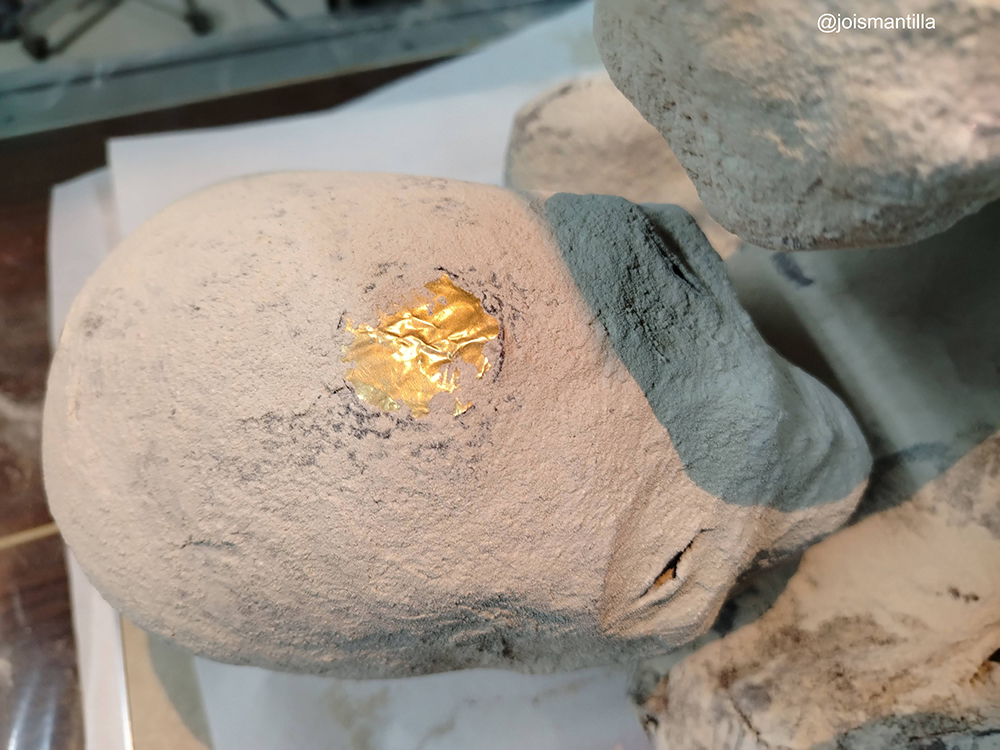
Sources: Pictorial essay: metallic implants of MontserratThe Alien Project: published test resultsOsmium: element 76Peru’s Three Fingered ‘Aliens’ (WTF Are These?!)
When the cave becomes a civilization
The cave accounts connect the alleged discovery to a much older imaginative geography: tunnels, hidden chambers, the Tayos caves, subterranean peoples, and the possibility that intelligence has been beside or beneath us rather than arriving from another star. This is where the mummy story becomes especially fertile UFO lore. An elongated head supplies an image; a sealed chamber supplies a lost world; three fingers supply a recurring signature. Each additional resemblance makes the larger narrative feel more coherent. But coherence is an invitation to investigate, not a chain of custody. An underground-species hypothesis would need evidence of a population and its environment. Even one securely excavated burial, documented from the first exposed bone, could do more for that hypothesis than a dozen borrowed tunnel legends.
Sources: Peru’s Three Fingered ‘Aliens’ (WTF Are These?!)Related lore: alien species and the bodies we expect to find
The bodies in the retrieval stories
The Peruvian remains invite comparison with the bodies reported in UFO retrieval stories. Varginha’s alleged creatures and military recovery offer one such parallel: witnesses describe something unfamiliar, and the possibility of a hidden body gives the account a physical center. A mummy available for examination seems to promise the access those retrieval stories so often lack. But resemblance has not established a common origin. No shared tissue, DNA, or documented custody trail in the reviewed material connects a Peruvian specimen with an alleged recovered UAP occupant. A body could be biologically unusual without having traveled in a craft; an ancient human could acquire an alien identity through the way its remains are presented. The connection belongs to the history of these stories until physical evidence makes it something more.
Sources: Related encounter: Varginha, 1996Related lore: alien species and the bodies we expect to find
Before Nazca, there was Ata
The Atacama skeleton is a useful predecessor precisely because its strangeness survived its identification. The tiny Chilean specimen called Ata had an elongated skull and a skeletal appearance that encouraged speculation about an alien origin. A 2018 whole-genome study found a human female with Chilean ancestry and proposed genetic explanations for unusual skeletal features. Halcrow and colleagues challenged the developmental interpretation, arguing that a preterm human fetus could account for the anatomy without the proposed collection of disorders; they also criticized the treatment of the remains. The disagreement concerned human development and research practice, not a demonstrated alien genome. Ata shows both what sequencing can clarify and how an ambitious explanation can outrun the evidence even after the extraterrestrial question has been answered. A human identification can begin a more precise investigation rather than make the specimen scientifically uninteresting.
Sources: Whole-genome sequencing of Atacama skeleton shows novel mutations linked with dysplasiaOn engagement with anthropology: a critical evaluation of the Atacama study
The museum label that ended a Roswell revelation
Another cautionary artifact is the pair of slides promoted in 2015 as photographs of an alien body associated with Roswell. The body was real enough to photograph. The fatal detail was the small museum placard beside it. Once the lettering became readable, the supposed visitor could be connected to an account of a mummified child. Promoter Anthony Bragalia published an apology retracting his alien identification. This episode illustrates a different failure from a fabricated skeleton: an existing body can become alien through the loss of its caption. The lesson for Peru is not that every disturbing mummy is already explained. It is that provenance can answer a question that visual resemblance keeps making mysterious. Before asking what civilization a body represents, recover as much as possible of the human story that brought it into view.
Sources: The Roswell Alien Slides: My Apology
How would these bodies have moved?
A body plan has to work as a body. John McDowell has questioned whether some of the small specimens could have walked, an objection that shifts attention from their striking faces to their joints and proportions. The challenge is substantial: an unfamiliar arrangement must account for weight-bearing, movement, and the relationship between the limbs and torso. Desiccation and injury can distort a once-functional organism, while an assembly can imitate its outline. A useful anatomical comparison therefore needs to distinguish damage after death from structures that could never have articulated in the proposed way. The larger and smaller specimens may require different explanations. Three fingers alone do not establish that they were relatives, much less members of a single population.
Sources: Peru’s Three Fingered ‘Aliens’ (WTF Are These?!)Applying CT-scanning for the identification of a skull of an unknown archaeological find in Peru
How to use tridactyls.org without inheriting its verdict
The site is valuable because it puts names, scans, reports, and competing strands of analysis within reach. Its value increases when a reader follows a claim into the underlying document. The catalog acknowledges modification in Wawita, hosts a hospital interpretation classifying Maria as human, and links supportive reports whose measurements do not always agree. Some imaging is publicly available; other DICOM access involves a researcher request. A catalog page, a clinician’s opinion, a radiocarbon result, and an uploaded sequencing library answer different questions. Read at that level, the site becomes a dossier rather than a verdict. Its strongest service to the subject may be that a curious reader can discover disagreements that a promotional summary smooths away.
Sources: Tridactyls: specimen catalog, chronology, and research linksWawita: acknowledged modification of fingers and toesEsSalud correspondence and CT reports for Maria and WawitoDNA data, classification results, and competing interpretations
The experiment worth wanting
My preferred next chapter is a specimen-by-specimen investigation with results that could embarrass either camp. Give each body a stable identifier and publish its known custody history. Have independent anatomists read the original full-resolution scans, blinded to the desired conclusion, and mark the exact structures they consider normal, altered, or unexplained. Sample several documented locations under controlled conditions, with contamination controls, independent laboratories, raw reads, and reproducible analysis. Test whether the tissues belong to one individual and, where pregnancy is claimed, whether the two individuals have the expected genetic relationship. Compare dates across tissues and associated materials. For metal objects, publish the elemental assays and examine the tissue interface. Secure excavation context for any newly recovered specimen. This is an editorial proposal, not work already performed for this article. The central question is whether the separate pieces of evidence actually belong to the same biological history.
Sources: Peru’s Three Fingered ‘Aliens’ (WTF Are These?!)AuthentiCT: a model of ancient DNA damage to estimate the proportion of present-day DNA contaminationUNAM clarifies the scope of its carbon-14 analysis
My take: keep the door open, make the test sharper
The reviewed evidence does not establish an extraterrestrial species, an unknown terrestrial lineage, or a naturally tridactyl population. The published fabrication findings, acknowledged modification of Wawita, and human interpretation in Maria’s hospital report give ordinary explanations substantial weight. Even so, the larger specimens deserve a clear, reproducible account of their anatomy and treatment history. Dismissing every document because the publicity is theatrical would leave that work unfinished. A subject should not become unexaminable because the wrong people find it exciting. But an intriguing scan and a new branch of life are separated by several unresolved questions about anatomy, ancestry, and provenance. The extraordinary possibility remains a reason to perform the tests carefully, not a conclusion to protect from their results. Somewhere beneath the names, percentages, and congressional displays are actual remains with an actual history. Recovering that history would be a discovery worth having.
Sources: EsSalud correspondence and CT reports for Maria and WawitoAnalysis of alleged extraterrestrial biological material from NascaWawita: acknowledged modification of fingers and toesForensic opinion on Maria
Sources & media
Tridactyls: specimen catalog, chronology, and research linkstridactyls.org · Proponent-maintained archive · Useful access to underlying documents; its editorial conclusions are advocacyMontserrat: the reported pregnant specimentridactyls.org · Specimen profile and proponents’ account of the fetus called RafaelJosefina: the small specimen with alleged eggstridactyls.org · Specimen profile; interpretations remain disputedWawita: acknowledged modification of fingers and toestridactyls.org · The catalog itself distinguishes artificial tridactyly in this specimenLines and Geoglyphs of Nasca and PalpaUNESCO World Heritage Centre · Archaeological landscape and construction techniqueForensic opinion on MariaJosé de Jesús Zalce Benítez · May 2025 · Specialist’s argument for anatomical integrity; hosted by tridactyls.orgBiometric morphoanatomical characterization and dating of a tridactyl humanoid specimenHernández-Huaripaucar et al. · RGSA, 2024 · DOI 10.24857/rgsa.v18n5-137 · English PDF mirrorEsSalud correspondence and CT reports for Maria and WawitoHospital Augusto Hernández Mendoza, Ica · September 2024 scans; November 2024 reports and correspondence · English translation hosted by tridactyls.org; Maria on PDF pages 7–8Final update: virtual autopsy of MariaK. H. Fung · December 30, 2025 · Proponent’s detailed CT interpretation, including figure 36 cranial-volume comparisonPeruvian Nazca tridactyls: comparative anatomy between M-type and J-type specimensK. H. Fung · June 2026 · Illustrated CT report defending the biological integrity of both groupsMinistry of Culture reports that seized humanoid dolls were assembled from animal bonesPeru Ministry of Culture · January 12, 2024 · Findings on two airport-seized objects and a separately received handAnalysis of alleged extraterrestrial biological material from NascaFlavio Estrada et al. · Arqueológicas, 2023 · Five objects examined in an investigation beginning in 2017; not an examination of Maria or MontserratApplying CT-scanning for the identification of a skull of an unknown archaeological find in PeruJosé de la Cruz Ríos López, Georgios Florides, and Paul Christodoulides · International Journal of Biology and Biomedicine, 2021 · Josefina skull comparison and scan limitationsUNAM clarifies the scope of its carbon-14 analysisUniversidad Nacional Autónoma de México · September 13, 2023, reiterating its 2017 statement · Dating submitted material did not authenticate its originDNA data, classification results, and competing interpretationstridactyls.org · Links to sequence deposits and analyses with different samples, methods, and denominatorsAncient0003: public sequencing project PRJNA865375NCBI Sequence Read Archive · Submitted August 2022 · Maria-associated sample; depositor’s organism metadata lists Homo sapiensAuthentiCT: a model of ancient DNA damage to estimate the proportion of present-day DNA contaminationPeyrégne and Peter · Genome Biology, 2020 · Primary methods paper on ancient DNA authenticationGenetech preliminary DNA reportGenetech · Report dated October 16, 2017; mirror filename contains a later date · Partial STR results, degraded samples, and contamination limitsGLI3 gene: function and associated conditionsMedlinePlus Genetics · U.S. National Library of Medicine · Digit development; not an analysis of the Peruvian samplesPictorial essay: metallic implants of MontserratK. H. Fung · Revised November 3, 2025 · CT observations and interpretations, not an elemental assayThe Alien Project: published test resultsInkarri / The Alien Project · Proponents’ collection of material analyses; results belong to particular sampled objectsOsmium: element 76Royal Society of Chemistry · Terrestrial occurrence, classification, and propertiesWhole-genome sequencing of Atacama skeleton shows novel mutations linked with dysplasiaBhattacharya et al. · Genome Research, 2018 · Human ancestry result; proposed skeletal diagnoses subsequently criticizedOn engagement with anthropology: a critical evaluation of the Atacama studyHalcrow et al. · International Journal of Paleopathology, 2018 · Osteological and ethical critique; author-hosted PDFThe Roswell Alien Slides: My ApologyAnthony Bragalia · UFO Explorations · May 2015 · A promoter retracts the alien identification after the museum label is decipheredPeru’s Three Fingered ‘Aliens’ (WTF Are These?!)Jesse Michels · American Alchemy · August 2025 · Entire 82-minute documentary evaluated through its available captions; participant testimony and filmmaker’s interpretationUnearthing Nazca: The Complete StoryGaia · Documentary with Jaime Maussán · Viewing reference; official synopsis reviewed, full film not reviewed for this articleTridactyls: The Nazca Mummies — Season 1Thierry Jamin / Alain Bonnet · Inkarri Cusco and Jungle Doc Productions · Six-part participant account; official episode guide reviewed, full series not reviewedAlien Mummies of Peru (2019)Barry Fitzgerald and Steve Mera · Viewing reference via Tubi; listing verified, full film not reviewed; regional availability variesLas momias de Nazca — Las investigaciones en PerúHistory Latinoamérica · June 2020 · Official clip from the television special; media reference, not a full-program reviewRelated lore: alien species and the bodies we expect to finduap.fun · The Greys, humanoid visitors, and recurring descriptionsRelated encounter: Varginha, 1996uap.fun · Reported creatures and a disputed retrieval story; no demonstrated link to the Peruvian specimensSpotted an error, or know a better source? Write to hello@uap.fun.
Discuss this entry
Compare notes with other readers: witness details, sources, and the parts that still do not add up.
Open the discussion