Sources reviewed September 16, 2026
Who might be out there?
A small figure with enormous black eyes. A visitor who could pass for human. An intelligence with the face of an insect. UFO lore offers a striking range of answers to what alien life might look like. This guide follows six recurring traditions through encounter accounts, books, spiritual teachings, and ancient-astronaut speculation. These are alleged beings, not scientifically established species or biological races. NASA reports no credible evidence of extraterrestrial life and no evidence that UAP are extraterrestrial. The possibility of life elsewhere remains open; identifying a particular visitor requires its own evidence.
Sources: UAP frequently asked questions
Greys
- Also called
- Grays; small and tall Grey variants
- Claimed origin
- Often unspecified; star-system assignments vary between tellings.
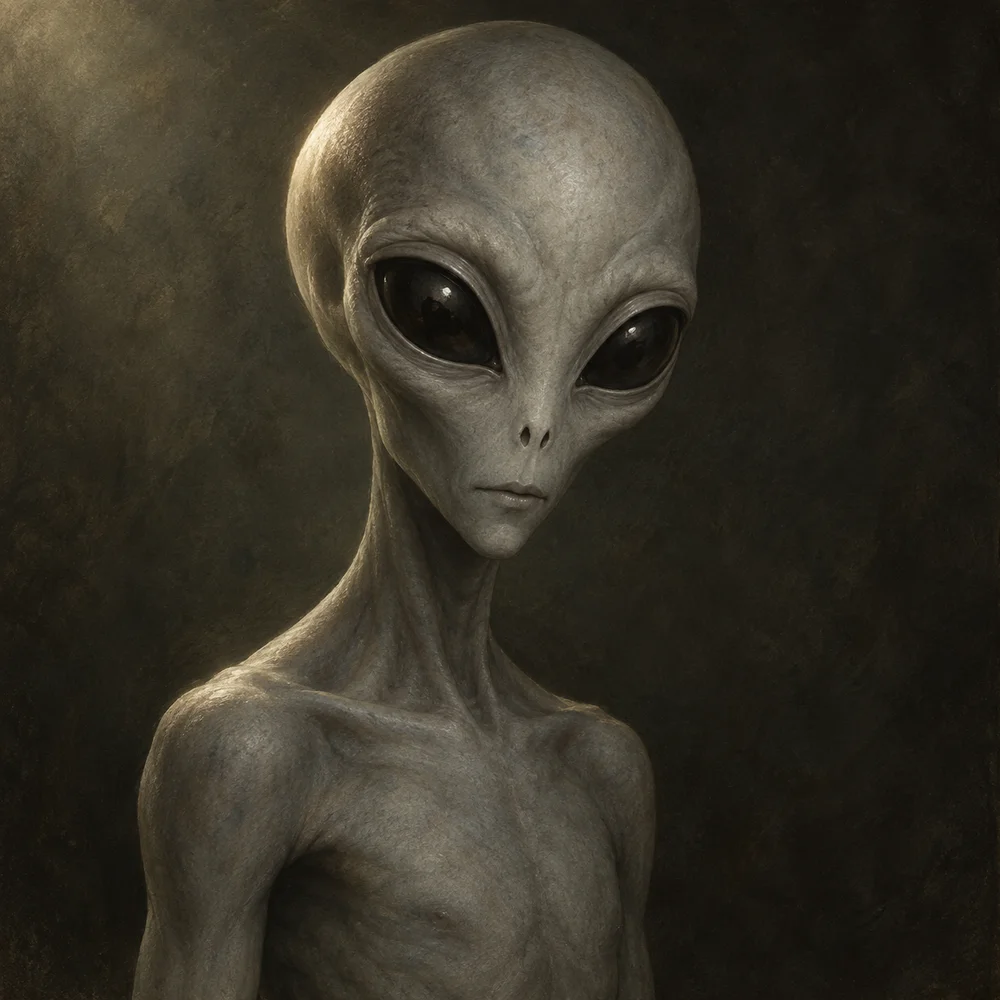
- Appearance in lore & art
- A hairless humanoid with a large head, slight body, small mouth, and oversized dark eyes. The familiar portrait combines descriptions that are not identical across accounts.
The story
Greys are closely associated with missing-time and abduction narratives: witnesses describe examinations, apparent mental communication, and encounters they struggle to remember. Jacobs’s account of the abduction literature describes little grey beings with large black eyes and distinguishes stories of encounters from reports of distant objects. The label covers a recurring character type, rather than one agreed description.
Sources: The Threat: publisher’s description and author excerpt
How the image developed
Betty and Barney Hill’s reported September 1961 encounter in New Hampshire is a key reference point in abduction history. UNH preserves their papers, star-map correspondence, and an alien bust commissioned by Betty. These document how the story was recorded and represented. Whitley Strieber’s Communion, first published in 1987 about experiences beginning in 1985, supplied another widely recognizable large-eyed face. Strieber’s own presentation emphasizes an unknown experience; the cover should not be mistaken for an independently verified portrait of an extraterrestrial.
Sources: An Extra(terrestrial) Special CollectionUsing the Betty & Barney Hill CollectionCommunion: the author’s account
What the record supports
The archives establish that these accounts and images exist. They do not establish the beings’ biology or home world. Some abduction narratives involve recalled experiences and hypnosis; a 2002 study found greater false recall and recognition in groups reporting recovered or repressed abduction memories than in controls. That laboratory result is relevant to evaluating memory evidence, but it cannot diagnose a particular witness or settle every reported encounter.
Sources: Using the Betty & Barney Hill CollectionMemory distortion in people reporting abduction by aliens
Nordics & Pleiadians
- Also called
- Human-looking visitors; Space Brothers; overlapping Pleiadian traditions
- Claimed origin
- Venus in Adamski’s account; the Pleiades in other traditions. These are different claims.
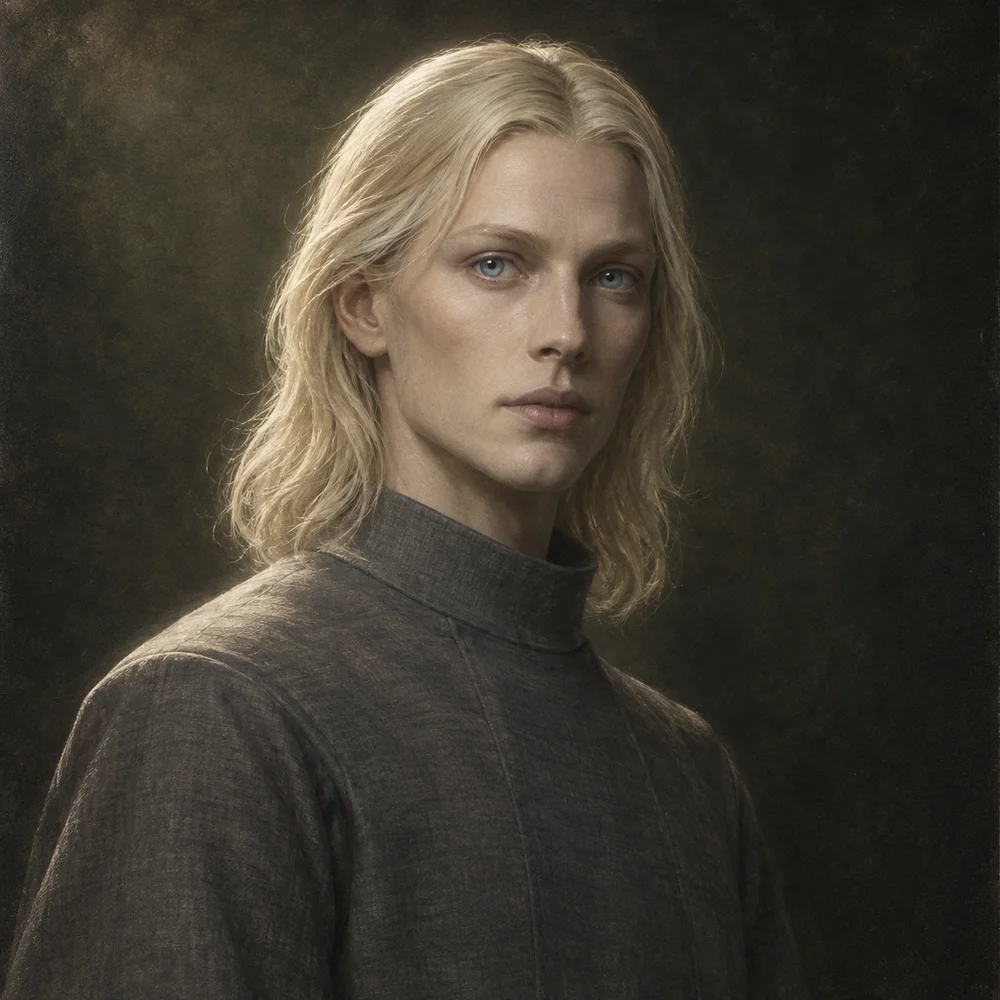
- Appearance in lore & art
- Human-looking visitors, frequently portrayed with long fair hair. “Nordic” describes an appearance in UFO lore; “Pleiadian” describes an alleged origin, not necessarily the same being.
The story
These visitors tend to arrive as teachers or messengers. George Adamski’s contribution to Flying Saucers Have Landed (1953) described a human-looking, long-haired visitor in the California desert. The alleged meeting took place on November 20, 1952; Adamski associated the visitor with Venus and a warning about nuclear weapons. Historian of religion Robert Pearson Flaherty places such messages within the Cold War contactee movement and its spiritual background.
Sources: Flying Saucers Have Landed: Adamski’s accountExtraterrestrial/UFO Religion
A family of different traditions
Later accounts shifted the celestial address. Billy Meier’s contact claims, publicized from the 1970s, concern beings called Plejaran. Separately, Barbara Marciniak says she began channeling a Pleiadian collective in May 1988; her 1992 book Bringers of the Dawn presents spiritual teachings. Her own description calls them multidimensional spirit beings. Grouping these traditions helps compare their themes, but should not erase the differences between a claimed physical meeting and a channeled message.
Sources: Extraterrestrial/UFO ReligionBarbara Marciniak and the PleiadiansBringers of the Dawn
What the record supports
The books document what their authors claim, not a confirmed population of human-looking extraterrestrials. Modern measurements show that Venus’s surface has extreme heat and pressure, creating a serious problem for a literal picture of ordinary human life there. That finding concerns the Venusian setting; it does not test every later spiritual interpretation or establish anything about inhabitants of the Pleiades.
Sources: Venus facts
Reptilians
- Also called
- Reptoids; lizard-like humanoids; Draconians in some versions
- Claimed origin
- Draco in some narratives; other versions describe an interdimensional origin.
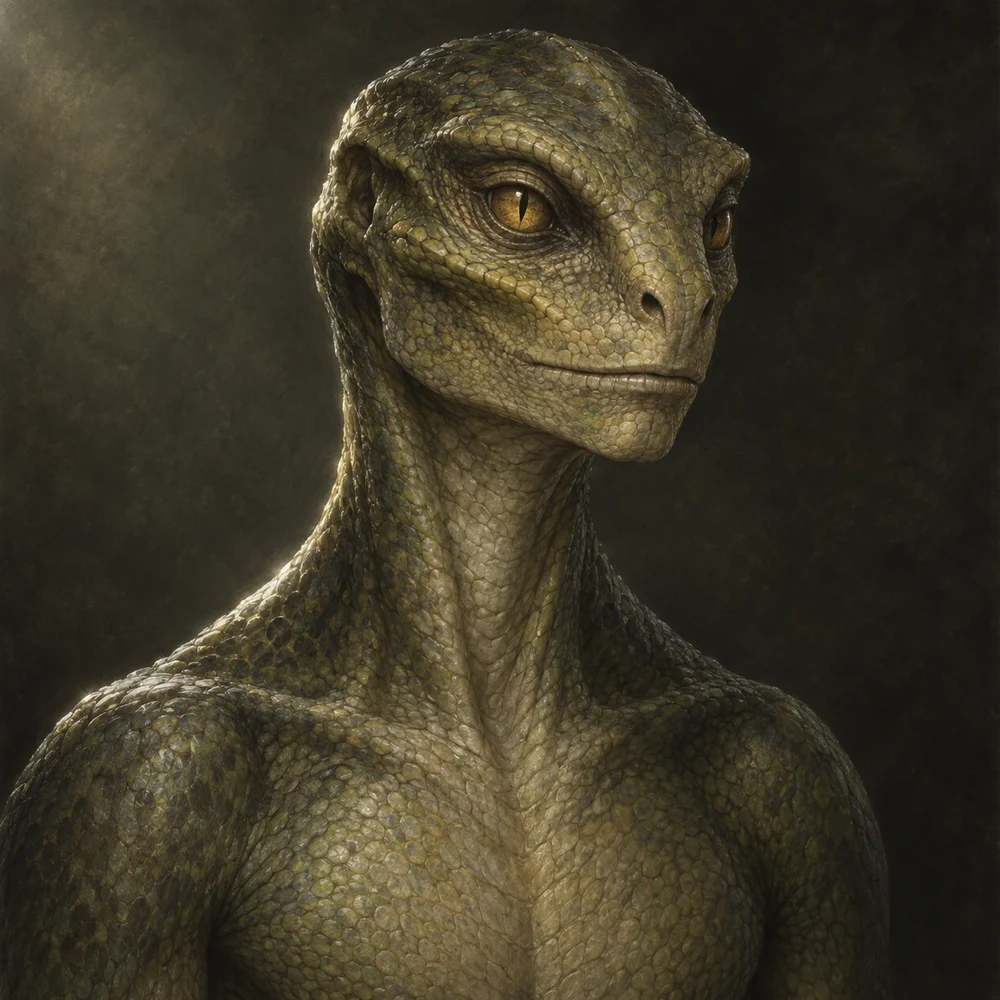
- Appearance in lore & art
- A humanoid interpreted as reptile-like. Scales and slit pupils in this portrait are imaginative design choices, not anatomical observations verified by researchers.
The story
Two strands are often bundled under this name. Abduction literature includes descriptions of reptile-like beings encountered alongside Greys. In The Threat, Jacobs explicitly acknowledges uncertainty over whether the reported types are actually distinct. A separate conspiracy tradition claims that shape-shifting beings secretly occupy positions of power. Those are different propositions: a report of an unusual figure does not establish a hidden political system.
Sources: The Threat: descriptions of insectlike beings (PDF, p. 59)Hope and Fear: Modern Myths, Conspiracy Theories and Pseudo History
How the idea spread
David Icke’s The Biggest Secret (1999) was a major vehicle for the shape-shifting narrative. Historian Ronald H. Fritze traces its mixture of New Age ideas, secret-elite theories, and supposed origins in Draco. He also describes a later shift toward interdimensional explanations. This changing origin story is one reason there is no consistent Reptilian taxonomy: different storytellers use the same word for different kinds of entity.
Sources: Hope and Fear: Modern Myths, Conspiracy Theories and Pseudo History
What the record supports
The sources establish a history of claims. They provide no verified transformation, biological specimen, or independently demonstrated extraterrestrial identity. Allegations that real people are secretly nonhuman are unsupported. An illustrator can imagine a reptile-like intelligence without treating those allegations as evidence. The useful research question here is how the narrative developed and what would independently test it.
Sources: Hope and Fear: Modern Myths, Conspiracy Theories and Pseudo History
Mantids
- Also called
- Mantis beings; insectoids; insectlike beings
- Claimed origin
- No consistent home world is established even within the cited account.
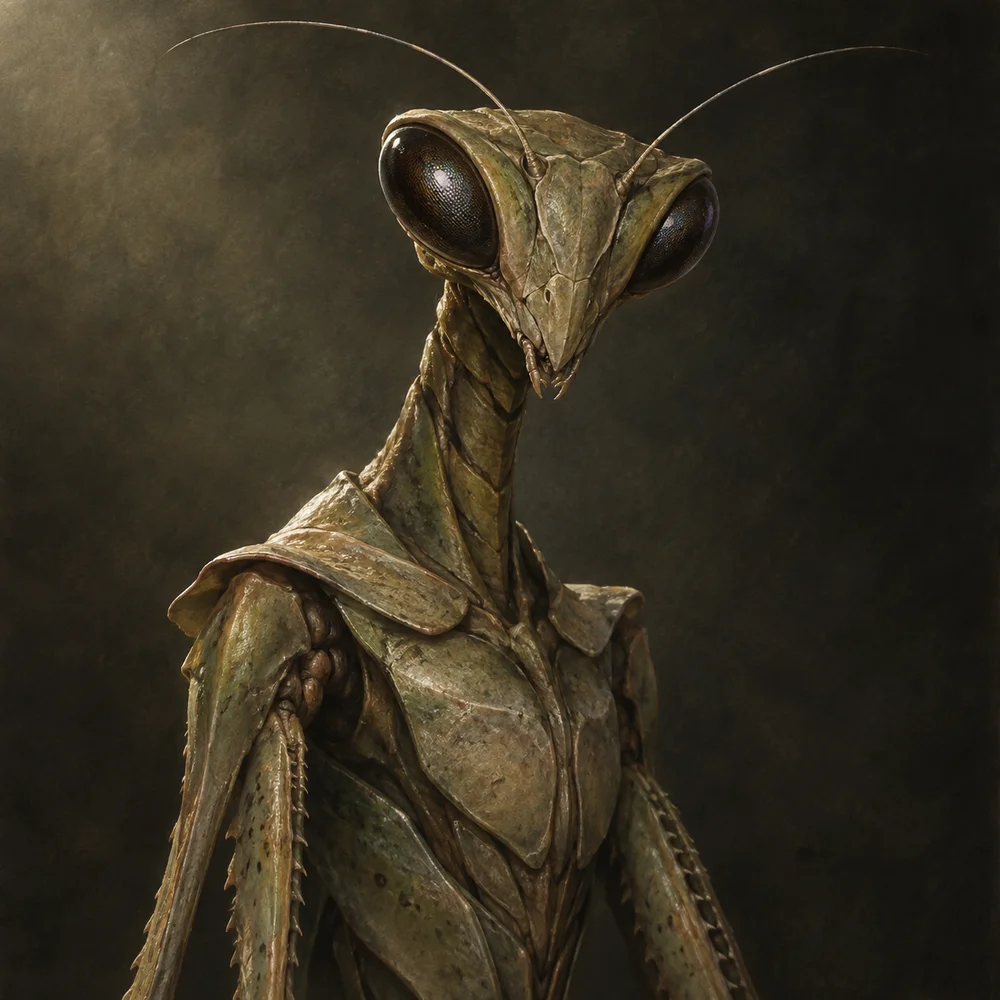
- Appearance in lore & art
- An elongated, insect-like figure compared with a praying mantis or giant ant. The segmented body, compound eyes, and fine textures shown here are an artist’s interpretation.
The story
In Jacobs’s The Threat (1998), some interviewees describe very tall insectlike beings, sometimes wearing a cape or high-collared robe. Within those accounts, they appear to observe or direct other beings and sometimes communicate mentally. This is the source of a recognizable supervisory Mantid motif. It records a reported role in a narrative, not an observed alien social hierarchy.
Sources: The Threat: descriptions of insectlike beings (PDF, p. 59)
How the account was assembled
The publisher describes The Threat as drawing on more than 700 hypnotic-regression interviews. In his own introductory chapter, Jacobs discusses the difficulty of separating recollection, fantasy, and confabulation. A large interview total is not the same as a large set of independently corroborated events. How the interviews were conducted and how much detail existed before questioning matter when evaluating the resulting patterns.
Sources: The Threat: publisher’s description and author excerpt
What the record supports
The mantis comparison provides a memorable visual category. It does not tell us whether a reported figure was an organism, an altered-state experience, a memory construction, or something else. Research has linked some abduction interpretations to sleep paralysis and associated experiences; that is a possible explanation for some accounts, not a universal explanation for all of them. No validated Mantid anatomy or origin follows from the cited material.
Sources: Sleep paralysis, sexual abuse, and space alien abduction
Arcturians
- Also called
- Arcturian guides or collectives in channeling literature
- Claimed origin
- An association with Arcturus in spiritual lore; no verified place of origin.
- Appearance in lore & art
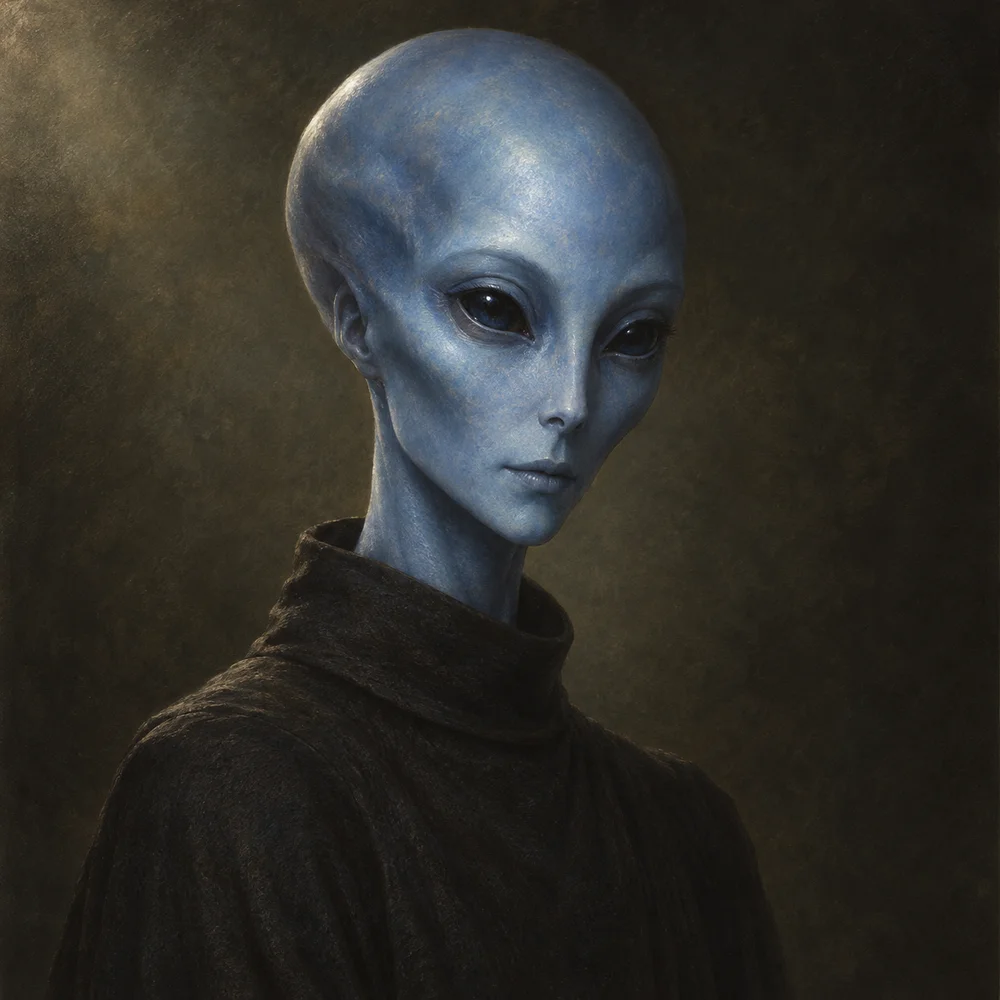
- We, the Arcturians describes small, hairless beings with pale grey skin, sometimes given beige or green tones. Our blue-toned portrait is a stylized interpretation, not a literal rendering of that account.
The story
Arcturian accounts are often framed as spiritual guidance rather than a report of a landed craft. A traceable publication is We, the Arcturians (1990), by Norma J. Milanovich, Betty Rice, and Cynthia Ploski. Its synopsis describes beings speaking through Milanovich and offering to help humanity through a spiritual transition. The stated themes include education, free will, and a change in consciousness.
Sources: We, the Arcturians: publication record and synopsis
What the book describes
The text includes instructions for drawing a face, describes hairless beings with pale grey skin, and presents claims about telepathic communication and a spiritually organized society. It also addresses its own use of “planet Arcturus,” explaining the word planet symbolically as a home or state of consciousness. This is a metaphysical account, rather than an astronomical description of a measured inhabited planet. A star’s name in the narrative does not independently identify its speakers.
Sources: We, the Arcturians: appearance and home-world claims (PDF)
What the record supports
These sources document an Arcturian spiritual tradition, without independently verifying its speakers or their biology. A channeled description remains a claim even when it includes precise physical details. The portrait’s color and facial structure are artistic choices. Ideas about consciousness may be meaningful to their readers while remaining separate from a demonstrated discovery of extraterrestrial life.
Sources: We, the Arcturians: publication record and synopsisWe, the Arcturians: appearance and home-world claims (PDF)
Anunnaki
- Also called
- Anunna; Anunnaku — names with an ancient religious history
- Claimed origin
- Nibiru in Zecharia Sitchin’s modern interpretation.
- Appearance in lore & art
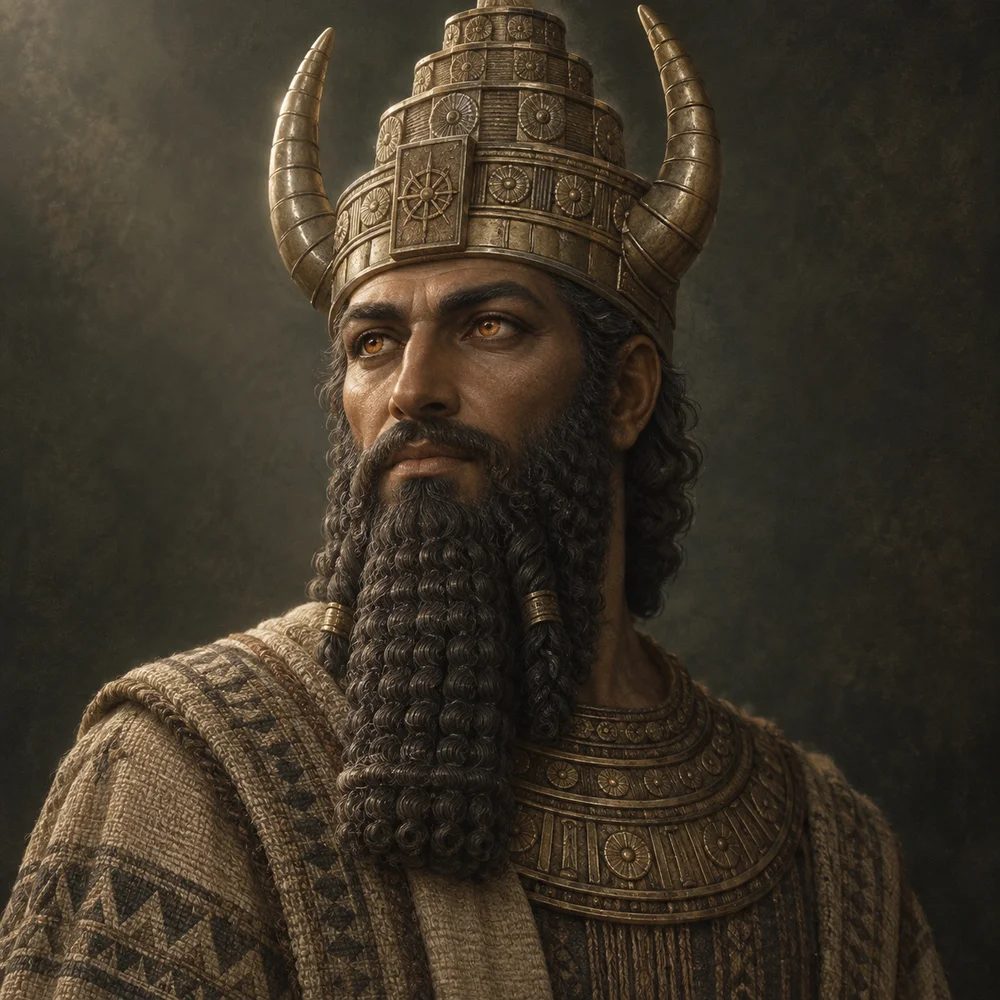
- Ancient sources refer to a group of deities, not one alien body type. This imagined figure borrows a beard, robe, and headdress from a broad Mesopotamian visual vocabulary.
The ancient name
In Mesopotamian texts, Anunna and related forms designate groups of gods, with the membership and meaning changing over time. Assyriologist Nicole Brisch describes associations with deciding fates and, in some texts, the underworld. Her Oracc reference also notes that no depictions of the Anunna as a group are known, only depictions of individual deities. There is no ancient, standardized portrait of an “Anunnaki species.”
The modern alien interpretation
Zecharia Sitchin’s The 12th Planet, first published in 1976, recast the Anunnaki as visitors from Nibiru involved in human origins. The publisher presents claims about genetic intervention and a planet returning every 3,600 years. Those statements summarize Sitchin’s proposal; publisher copy is not independent verification. The space-traveler interpretation is a modern addition to a much older religious vocabulary.
Sources: The 12th Planet: 1976 first-edition recordThe 12th Planet: the publisher’s presentation of Sitchin’s claims
What the record supports
The ancient texts support the existence of Mesopotamian beliefs about gods. They do not, through the shared name alone, establish Sitchin’s visitors or genetic engineering. Comparing his claims with specialist accounts exposes the distinction between an ancient source and a later interpretation of it. Our portrait illustrates that modern speculation; it is neither a photograph nor a reconstruction of an authenticated extraterrestrial artifact.
Sources: Anunna (Anunnaku, Anunnaki): a group of godsThe 12th Planet: the publisher’s presentation of Sitchin’s claims
Could real alien life look completely different?
Yes—the search is not limited to beings that resemble us. NASA’s search includes biosignatures, signs that biology might leave behind, and technosignatures, possible signs of technology. Neither requires a Grey face, a humanoid body, or a visitor to Earth. These six profiles were selected to compare recurring traditions with traceable sources, not to rank which beings are most likely to exist. There is no defensible probability ranking in the material reviewed here.
Sources: UAP frequently asked questions
How to read the sources
An archive can verify when someone recorded a claim. A claimant’s book can explain exactly what was asserted. A publisher’s synopsis can establish how a book presents itself. Scholarly history can trace a story’s development, and scientific research can test particular explanations. Those are different jobs. This guide compares them without treating a famous name, repeated description, or number of interviews as independent confirmation. The dates refer to reported events or publications, not the discovery of a species.