Stanton Friedman
A nuclear physicist who became one of the UFO field’s most recognizable lecturers and advocates. He helped revive interest in Roswell and argued openly that some UFO reports involved extraterrestrial craft.
- KNOWN FOR
- Roswell investigations · Flying Saucers Are Real · Majestic 12
Sources reviewed September 16, 2026
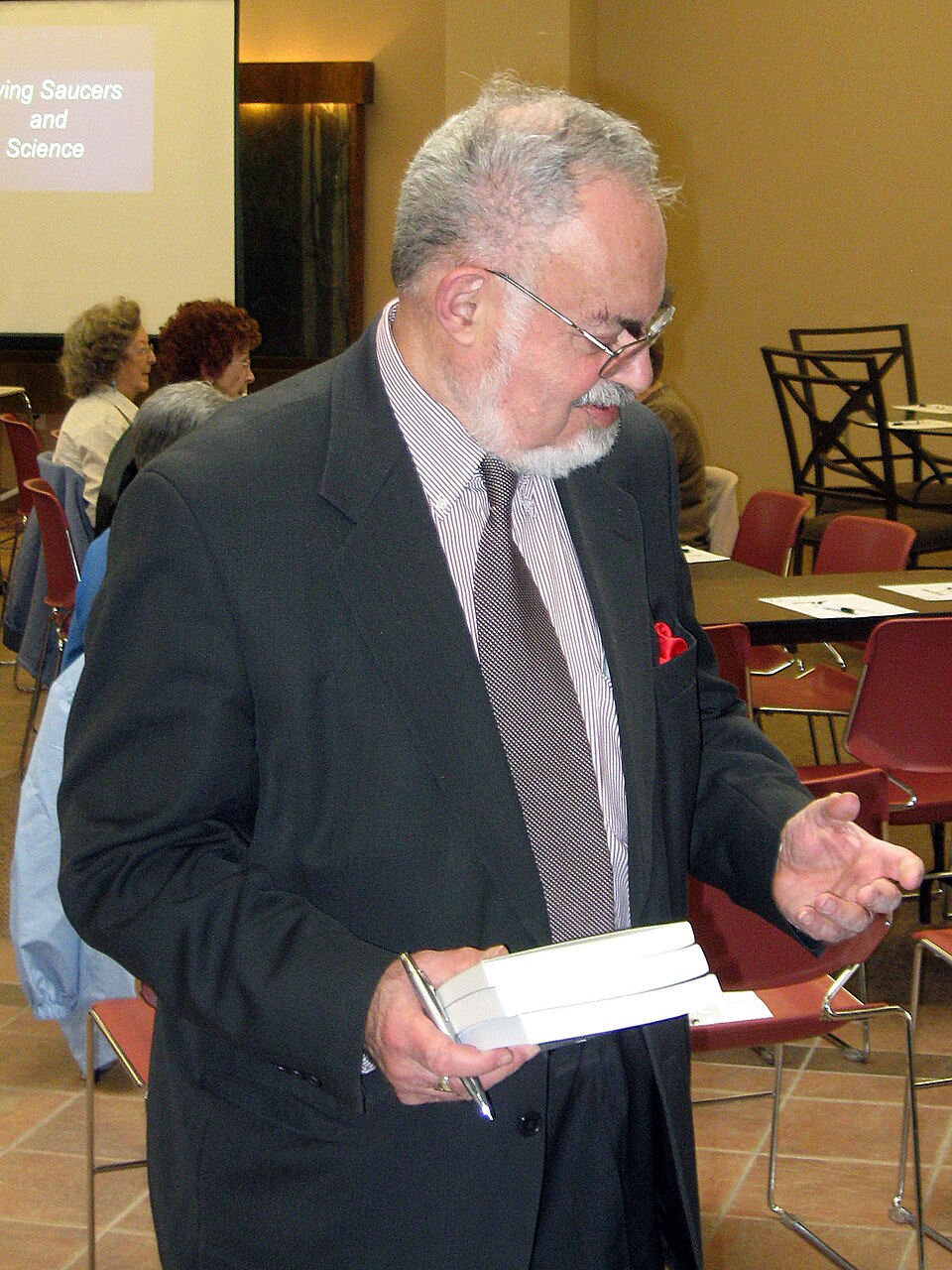
A career in nuclear engineering
Friedman earned bachelor’s and master’s degrees in physics at the University of Chicago in 1955 and 1956. His professional biography in the 1968 congressional UFO symposium record describes work for companies including General Electric, Aerojet, General Motors, and Westinghouse. Projects involved nuclear aircraft, radiation shielding, and nuclear rocket research. These were substantial technical credentials, though he did not hold a doctorate. His later conclusions about UFOs were his own arguments, not findings issued by those employers.
Sources: Prepared statement for the 1968 congressional UFO symposium
From engineering to public advocacy
Friedman’s lecture Flying Saucers Are Real announced a much firmer position than simply asking for more data. In a written statement included in the 1968 congressional symposium, he argued that some reports represented intelligently controlled extraterrestrial vehicles. He eventually left industrial work to pursue UFO research, writing, and lecturing full time. Radio Canada International’s obituary describes that transition around 1970 and the decades of public appearances that followed. The congressional record preserves his position; inclusion in a hearing record does not imply congressional endorsement.
Sources: Prepared statement for the 1968 congressional UFO symposiumRenowned authority on UFOs dies
Helping bring Roswell back
Friedman played an important part in the renewed attention to Roswell after contacting former intelligence officer Jesse Marcel in 1978. The story expanded from the brief 1947 press controversy into a much larger body of later interviews and claims. Friedman and Don Berliner co-authored Crash at Corona, advancing a crash-retrieval interpretation. Much of this renewed narrative depended on recollections recorded decades after the event, so the date of a statement and the speaker’s firsthand access matter. Later official records searches, including the GAO’s 1995 review, provide a separate documentary line of inquiry.
Sources: Stanton T. Friedman: life, research, and publicationsResults of a search for records concerning the 1947 crash near Roswell
The dispute over Majestic 12
Friedman also investigated purported Majestic 12 documents, which described an alleged secret group overseeing recovered extraterrestrial technology. He defended the authenticity of selected documents while rejecting others. The FBI’s account supplies an important counterpoint: when it received a purported Majestic 12 memorandum in 1988, an Air Force inquiry identified that document as fake. That finding should be attached to the document the FBI describes, rather than casually extended to every item ever circulated under the label. The broader episode illustrates why provenance and independent authentication are essential.
Sources: Stanton T. Friedman: life, research, and publicationsMajestic 12
An influential and inspectable legacy
Friedman died in 2019 after decades as a prominent figure in UFO conferences, broadcasts, and books. His influence combined technical fluency, persistent archival work, and an unusually direct commitment to an extraterrestrial explanation. The Provincial Archives of New Brunswick preserves his papers and audiovisual material, allowing that public career to be studied as history. Readers can recognize his importance without treating his confidence as a substitute for evidence. The strongest way to engage with his legacy is to compare the original records, his interpretation of them, and the objections raised against it.
Sources: Renowned authority on UFOs diesStanton T. Friedman fonds