Cynthia Hind
From a furniture business in Harare to witness interviews and self-published newsletters, Cynthia Hind built a record of African UFO stories. Her Ariel School work came before John Mack’s famous visit, preserving details that later retellings sometimes smooth away.
- KNOWN FOR
- UFO Afrinews · African encounters · Ariel School
Published
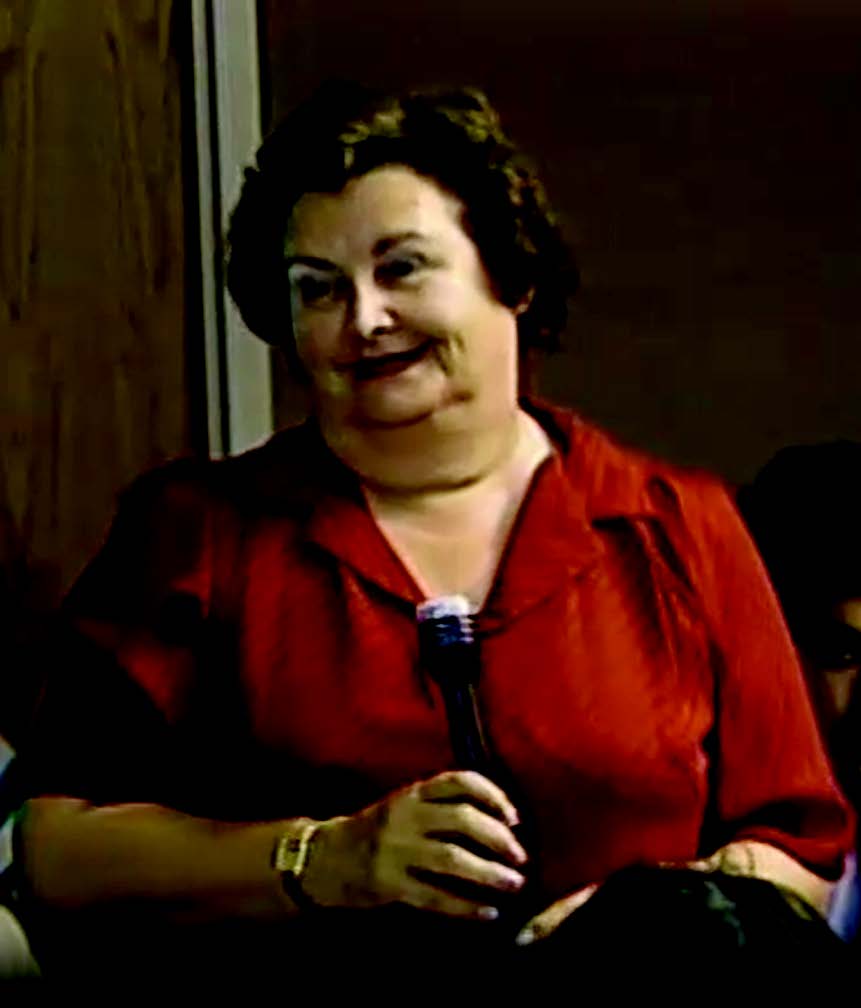
A businesswoman becomes a field investigator
Hind grew up in Namaqualand, South Africa, studied at the University of Cape Town, and served in the South African Women’s Air Force during the Second World War. After years in England, she settled in what was then Rhodesia, where her family established a furniture factory. Her biographical account describes responsibility for buying fabrics and a later move into full-time writing. It is an unexpectedly practical background for someone remembered for interviewing people about beings in silver suits and lights over southern Africa.
Sources: Cynthia Hind: biographical account
A continent in a mailed newsletter
Hind joined MUFON in 1974 and became its African continental coordinator in 1981. UFOs: African Encounters appeared in 1982; UFOs Over Africa followed in 1997. Between them came UFO Afrinews, launched in July 1988. Twenty-two issues appeared before her death in 2000. The surviving scans preserve the texture of a small investigative network: numbered cases, correspondence, drawings, follow-ups, and reports that might otherwise have remained local newspaper curiosities. Her importance is partly editorial—making scattered stories available to people far from their settings.
Sources: Cynthia Hind: biographical accountUFO Afrinews: the preserved collection
At Ariel before the famous visitor
After the September 16, 1994 reports at Ariel School, Hind spoke to children and visited with BBC cameraman Tim Leach. She was instrumental in bringing the case to John Mack’s attention. The order matters: by the time the Harvard psychiatrist arrived later that year, local interviews, family discussion, and media coverage already surrounded the sighting. Hind’s place was at the beginning of that public record, not as an assistant added after an American investigation had started.
Sources: A Closer Look at Encounters and the Ariel School SightingThe Children of Ariel School: Case No. 96
Details that do not fit a single drawing
Her February 1995 report describes children recalling a black-and-green object, a golden one, unusual legs, and figures with large eyes and long black hair. These particulars are more unruly than the standardized silver saucer of later summaries. The July follow-up preserved further statements, drawings, a site plan, and discussion of soil tests. They do not establish an extraterrestrial landing, but they let a reader examine how the case was assembled: which children said what, what the investigator asked, and where descriptions converged or diverged.
Sources: The Children of Ariel School: Case No. 96Ariel School Report, continued
The interviewer belongs in the evidence
Hind believed the case deserved serious attention. That conviction also makes her methods part of its history. Gideon Reid criticizes the recorded group interviews for interruptions, suggestions, and opportunities for children to influence one another. Mack’s associate Callimanopulos later described twelve interviews over two days and emphasized the apparent consistency and environmental themes. These are different investigators’ accounts, produced at different stages. Keeping them separate makes the record more interesting and more useful than treating every later statement as simultaneous, independent corroboration.
Sources: A Closer Look at Encounters and the Ariel School SightingExploring African and Other Alien Encounters
The archive beyond one school
Hind died in 2000, shortly after the final UFO Afrinews issue. Her books also followed reports of strange beings at the La Rochelle estate and an alleged abduction involving two Johannesburg women, reminders that Ariel was only one part of her work. The digitized newsletters keep that wider landscape accessible. They preserve both the witnesses she wanted heard and the assumptions she brought to their stories—a record of African UFO investigation with its own people, places, and unresolved arguments.
Sources: Cynthia Hind: biographical accountUFO Afrinews: the preserved collection
Sources & further reading
Cynthia Hind: biographical accountNOUFORS · Compiled from books and MUFON symposium materialUFO Afrinews: the preserved collectionUFO Afrinews archive · Twenty-two issues, 1988–2000The Children of Ariel School: Case No. 96Cynthia Hind · UFO Afrinews no. 11 · February 1995, pp. 19–23Ariel School Report, continuedCynthia Hind · UFO Afrinews no. 12 · July 1995, pp. 7–13Exploring African and Other Alien EncountersDominique Callimanopulos · Participant’s report, 1995A Closer Look at Encounters and the Ariel School SightingGideon Reid · Skeptical Inquirer · 2025Discuss this person
Compare notes with other readers: witness details, sources, and the parts that still do not add up.
Open the discussion