John E. Mack
A Pulitzer-winning biographer and Harvard psychiatrist began listening to people who said they had met nonhuman beings. John Mack’s journey led from consulting rooms to a Zimbabwean playground, and into a dispute over what listening can establish about reality.
- KNOWN FOR
- Abduction · Ariel School · Harvard inquiry
Published
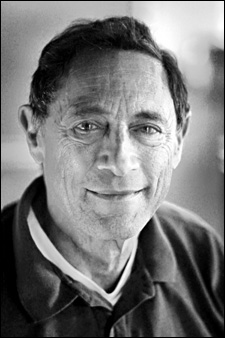
The psychiatrist on the floor with a toy truck
Born in 1929, Mack built a distinguished career before entering UFO debates. He established the psychiatry department at Cambridge Hospital and won a Pulitzer Prize for A Prince of Our Disorder, his biography of T. E. Lawrence. Harvard’s memorial remembers a department leader sitting with a little boy pushing a toy truck, briefly welcoming a colleague before returning his attention to the child. Nightmares, nuclear danger, and the inner lives of patients were longstanding concerns. His later work grew from that habit of listening closely.
Budd Hopkins opens an unexpected door
Mack credited artist and abduction researcher Budd Hopkins with introducing him to people reporting alien encounters. Beginning in 1990, he heard accounts of paralysis, transport through walls, examinations, and encounters with strange beings. He preferred the term experiencers. To PBS, he described being struck by their apparent sincerity, distress, and recurring details. He came to interpret the reports as a genuine mystery with physical and spiritual dimensions. That conclusion was Mack’s assessment; a compelling clinical interview does not independently establish an external visitor.
Abduction and the Harvard inquiry
Abduction: Human Encounters with Aliens appeared in 1994, bringing Mack into a national media storm. Harvard Medical School appointed a committee to examine his work. In his later account, he described fifteen months of hearings, lawyers, patient affidavits, and arguments about standards. The inquiry ended with a dean’s admonition to maintain clinical and investigative standards; it did not validate alien abduction. Mack understood the conflict as a challenge to a restrictive worldview. Critics questioned how he tested alternatives and distinguished research from therapeutic affirmation.
Sources: Messengers from the UnseenKidnapped by UFOs? transcript
The children beyond the playground
Later in 1994, Mack and Dominique Callimanopulos visited Ariel School in Zimbabwe, following local investigator Cynthia Hind’s work. Callimanopulos reported interviewing twelve children over two days. They described large-eyed beings near the school grounds; some associated the encounter with images of ecological destruction. One girl spoke of trees falling and people dying. These interviews helped turn a playground sighting into a story about humanity’s future. They were later interviews with a subset of pupils, not an untouched record of what every child independently reported on the day.
When empathy becomes an argument about evidence
The strongest dispute concerned method. NOVA examined hypnosis, suggestion, and claims that apparent consistency could arise without extraterrestrial contact. It also presented Donna Bassett’s account of deliberately offering Mack an invented abduction story. Mack defended taking experiencers seriously, while acknowledging in his 2002 essay that hypnotic relaxation was of limited value for deciding factual truth and that the physical evidence could not stand on its own. His work leaves a difficult question: how can one respect a disturbing experience while testing the explanation attached to it?
Sources: Kidnapped by UFOs? transcriptMessengers from the Unseen
A life larger than its most controversial chapter
Mack’s environmental interpretation of encounters connected to an older concern with collective survival. He had helped establish the Nuclear Psychology Program in 1982 and worked on the psychological dimensions of international conflict. In September 2004 he was killed by a car in London, where he had traveled for a Lawrence symposium. The setting returns his biography to its other subject: a psychiatrist fascinated by the ways extraordinary lives and experiences disturb the stories a society tells about itself.
Sources: John E. Mack: Faculty of Medicine memorialInterview with John Mack
Sources & further reading
John E. Mack: Faculty of Medicine memorialHarvard Gazette · 2005Messengers from the UnseenJohn E. Mack · Oberlin Alumni Magazine, 2002 · Reprinted by the John E. Mack InstituteInterview with John MackPBS NOVA · Kidnapped by UFOs?Exploring African and Other Alien EncountersDominique Callimanopulos · Participant’s report, 1995Kidnapped by UFOs? transcriptPBS NOVA · Competing accounts and research criticismDiscuss this person
Compare notes with other readers: witness details, sources, and the parts that still do not add up.
Open the discussion