George Knapp
The Las Vegas journalist whose 1989 interviews brought Bob Lazar’s story to television. His work connects local investigative reporting, the accounts surrounding Skinwalker Ranch, and decades of broadcasting about UFOs and government secrecy.
- KNOWN FOR
- Bob Lazar reporting · Skinwalker Ranch · WEAPONIZED
Sources reviewed September 16, 2026
An investigative reporter in Las Vegas
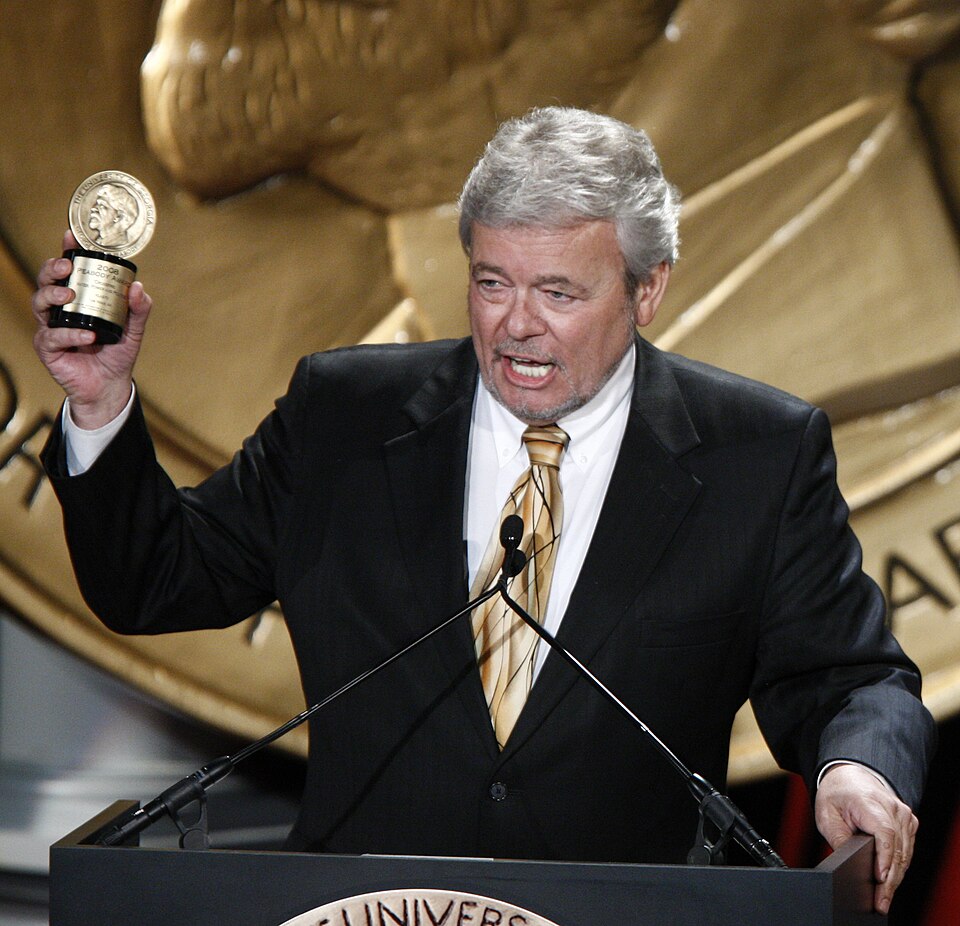
Knapp joined Las Vegas television station KLAS in 1981 and built a reporting career that extended well beyond UFOs. His work on Crossfire: Water, Power and Politics received a 2008 Peabody Award. That investigation examined a proposed Nevada water pipeline and its implications for rural communities, ranchers, and Native Americans. The award documents his standing in investigative journalism; it recognized the water reporting, rather than certifying any of his later or earlier conclusions about unexplained phenomena.
Sources: George Knapp: journalism and broadcasting careerCrossfire: Water, Power and Politics
Bringing Bob Lazar’s account to television
Knapp’s 1989 KLAS reports introduced viewers to a man initially identified as “Dennis,” who alleged that recovered craft were being studied near Area 51. The source subsequently appeared as Bob Lazar. Knapp’s December interview pursued the details of Lazar’s claimed assignment, briefing materials, and propulsion system. These broadcasts helped turn an obscure Nevada installation into a familiar symbol of UFO secrecy. They also provide a record of the original claims against which later retellings can be compared.
Sources: The 1989 Bob Lazar reportingGeorge Knapp’s December 1989 interview with Bob Lazar
The Skinwalker Ranch book
In 2005, Knapp and biochemist Colm A. Kelleher published Hunt for the Skinwalker, about reported disturbances at a ranch in northeastern Utah. The book brought together accounts of unusual lights, animals, apparent objects, and other experiences investigated by the National Institute for Discovery Science. It helped connect UFO discussion with a much broader paranormal tradition. Its accounts are best approached with attention to who witnessed each event, which records survive, and what was independently measured; publication alone does not resolve those questions.
Sources: Hunt for the Skinwalker
Radio and long-form conversations
Knapp also became a familiar voice through Coast to Coast AM. His WEAPONIZED podcast with filmmaker Jeremy Corbell offers another format for interviews, historical cases, and discussion of military and government claims. Compared with a short television report, these conversations give sources more room to describe their experiences and theories. They also make Knapp’s interpretation part of the presentation. A guest’s account, the hosts’ assessment, and independently available documentation remain different kinds of information even when they appear in the same episode.
Sources: George Knapp: journalism and broadcasting careerAbout WEAPONIZED with Jeremy Corbell & George Knapp
His place in the public record
Knapp’s importance lies partly in continuity: the same reporter who interviewed Lazar became a coauthor of the Skinwalker account and a prominent host for later UFO discussion. His work offers a route through several decades of the subject’s public history. The most useful starting points are the dated broadcasts, complete interviews, and credited books themselves. They preserve the wording and context of an allegation more reliably than a brief quotation or a social-media summary detached from its original source.
Sources: The 1989 Bob Lazar reportingGeorge Knapp’s December 1989 interview with Bob LazarHunt for the SkinwalkerAbout WEAPONIZED with Jeremy Corbell & George Knapp