Whitley Strieber
A horror novelist’s account of a night at his country cabin put an enormous-eyed face on bookshop shelves. Communion made Whitley Strieber a witness inside his own mystery, while the letters he and Anne received expanded it into an archive of other people’s experiences.
- KNOWN FOR
- Communion · The visitors · Dreamland
Published
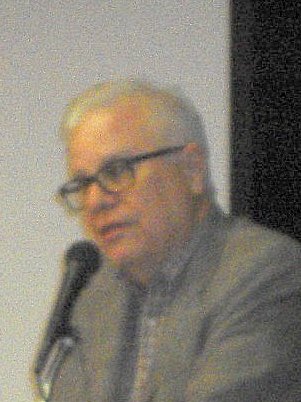
The novelist before Communion
Strieber had already made a career out of unsettling readers. Born in San Antonio in 1945, he worked in advertising before becoming a full-time writer. The Wolfen and The Hunger became films; his fiction dealt in predation, unstable identities, and threats hidden inside ordinary life. That background later became part of the argument around Communion. Admirers saw a skilled author struggling to describe something unprecedented; detractors saw a horror writer presenting another frightening story under a nonfiction label. His earlier profession establishes neither explanation.
Sources: Anne and Whitley Strieber Collection
December 26, 1985: the cabin
Strieber locates the pivotal encounter at his secluded cabin in upstate New York on December 26, 1985. In Communion he describes a deeply disturbing episode involving strange figures, bodily procedures, and fragmentary recollection. The opening places the family in a quiet rural retreat reached by a private dirt road, making the reported intrusion intimate rather than spectacular. Later reflection and hypnosis became part of his effort to reconstruct it. This is his autobiographical account, not a separately documented recovery of a person from a spacecraft.
The face in the bookshop window
Published in 1987, Communion paired its subtitle, A True Story, with Ted Seth Jacobs’s painting of a being with immense dark eyes. The image gave an ambiguous narrative a startlingly definite face. Yet the author’s framing remained a struggle with something unknown, rather than a straightforward identification of visitors from a named planet. The distinction matters: the cover could be taken in at a glance, while the book’s uncertainty about memory, perception, and the nature of its visitors required a much slower reading.
Anne and the people who wrote back
Readers sent accounts of their own experiences, turning a single household’s story into an extended correspondence. Anne Strieber was central to the couple’s work with that material. The Anne and Whitley Strieber Collection at Rice preserves letters, transcripts, and material about his other books; the university acquired it in 2017. These records let researchers study what people reported and how they responded to Communion. Their preservation is evidence of a remarkable cultural response, not institutional certification that the events in every letter occurred as interpreted.
Sources: Anne and Whitley Strieber CollectionOpening the Archives of the Impossible
From one encounter to an ongoing conversation
Strieber returned to the visitors in Transformation and Breakthrough, developing an account of continuing contact rather than a single episode resolved by publication. Dreamland, which Rice dates his hosting of to 1998, gave him a venue for conversations with other experiencers, researchers, and writers. His relationship to the subject is consequently unusual: he is simultaneously the person making a claim, a novelist interpreting it, and a broadcaster helping other people describe experiences of their own.
Sources: Whitley’s Space: the cabinOpening the Archives of the Impossible
What the archive can—and cannot—settle
The enduring interest is the space between an intense personal conviction and an uncertain public explanation. Strieber’s own book description emphasizes that the phenomenon remains insufficiently understood. Rice’s finding aid, meanwhile, describes correspondence and transcripts and asks researchers to protect letter writers’ identities. That is a useful way into this material: follow the changing account, the household around it, and the voices it drew out, while keeping a collection of testimonies distinct from independent proof of their proposed cause.
Sources & further reading
Anne and Whitley Strieber CollectionRice University · Woodson Research Center · Finding aidCommunionWhitley Strieber · Unknown Country · Author’s book descriptionCommunion: an excerptWhitley Strieber · 1987 text reproduced by Beyond CommunionCommunion: publication and cover archiveBeyond Communion · Book materials and artist interview linksWhitley’s Space: the cabinWhitley Strieber · Unknown Country · Personal recollectionOpening the Archives of the ImpossibleRice University · Conference announcement, 2022Discuss this person
Compare notes with other readers: witness details, sources, and the parts that still do not add up.
Open the discussion