“The Moon is falling!”
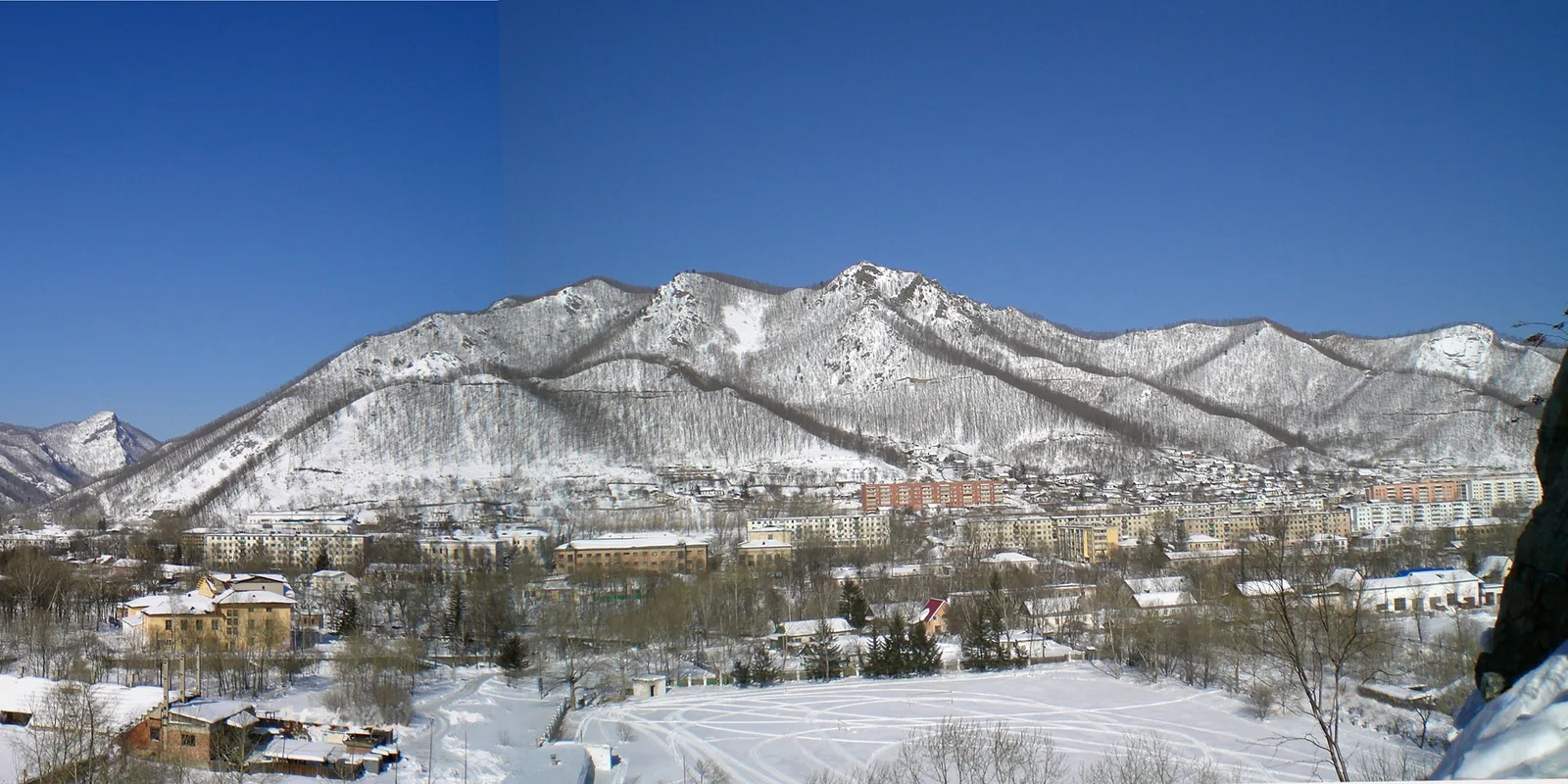
Wednesday, January 29, 1986, was a frozen evening in Dalnegorsk, a town of some 50,000 people strung along the Rudnaya river valley in the mountains of the Soviet Far East, about 200 miles northeast of Vladivostok as the crow flies. At 7:55 p.m. a group of boys were still at the Stroitel (“Builder”) stadium, skating and playing hockey after dark, when their goalie shouted that the Moon was falling. One of them, who was never named, later remembered looking up and seeing that it really was falling. It was not the Moon but a huge ball, bright orange as an orange. It crossed from the direction of the television tower over the state bank, the stadium and the bus station without any roar of engines, then flashed on the hill beyond, as if a dozen welders had struck their arcs at once. The boys threw down their sticks and stared until their eyes hurt; his still ached the next morning. Vladimir Kondakov, a mechanic for the town’s food supply office, was at the bus station. The ball flew so low he thought it would clip the smokestack of the town’s lead-zinc ore plant. It was perfectly round, with no bumps or hollows, and looked like metal, the color of stainless steel heated to a faint glow. He took it for some kind of military shell. He heard nothing, not even when it came down, but where it fell the ground caught fire. The first published account, written three weeks later, credited the sighting to two schoolboys, Sergei Olkhov and Alyosha Maslov: a red, glowing ball, about the size of a football to their eyes, came in almost level from the southwest, from the direction of the Goreloye district, and lit the ground so that the shadows of trees moved. Near the bus station it dived, hit the cliff with a dull sound, flashed, bounced, flashed again and dropped onto the rocks. The fire it started burned for about an hour.
Sources: Высота 611Земля большая, а упали именно сюдаDalnegorsk
A town of lead and boron
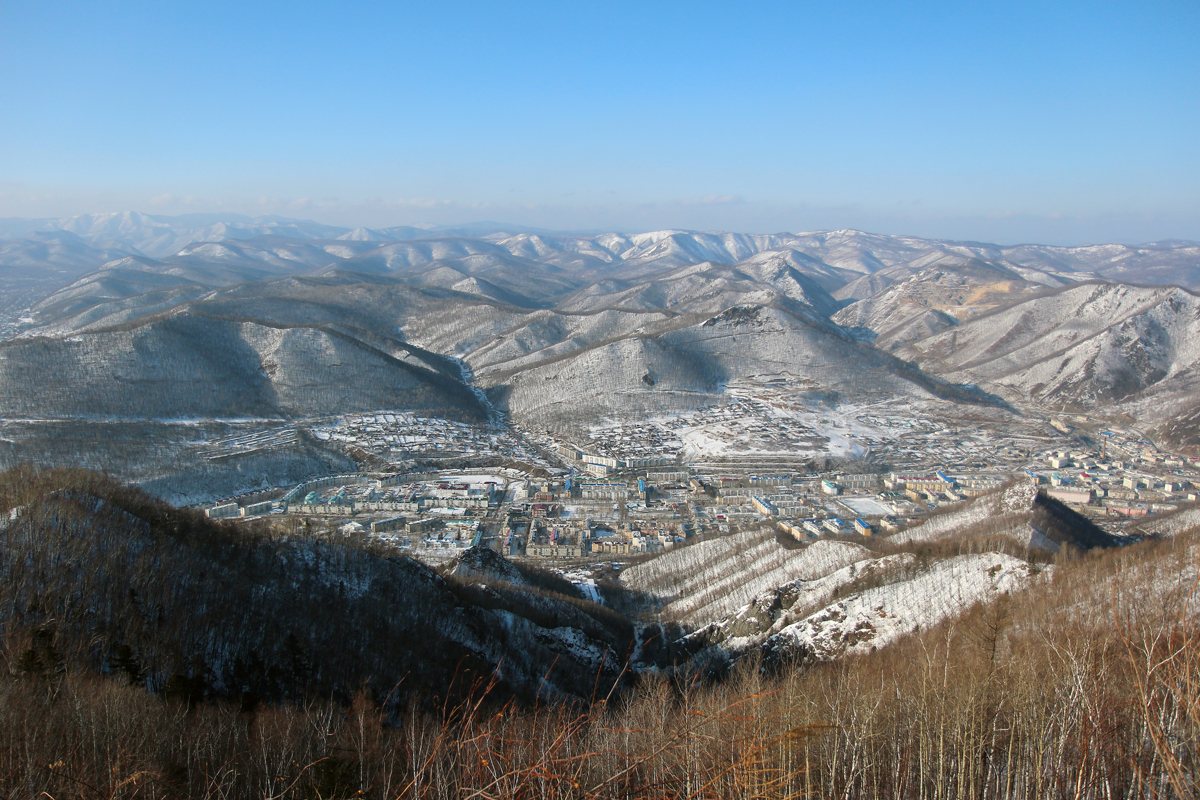
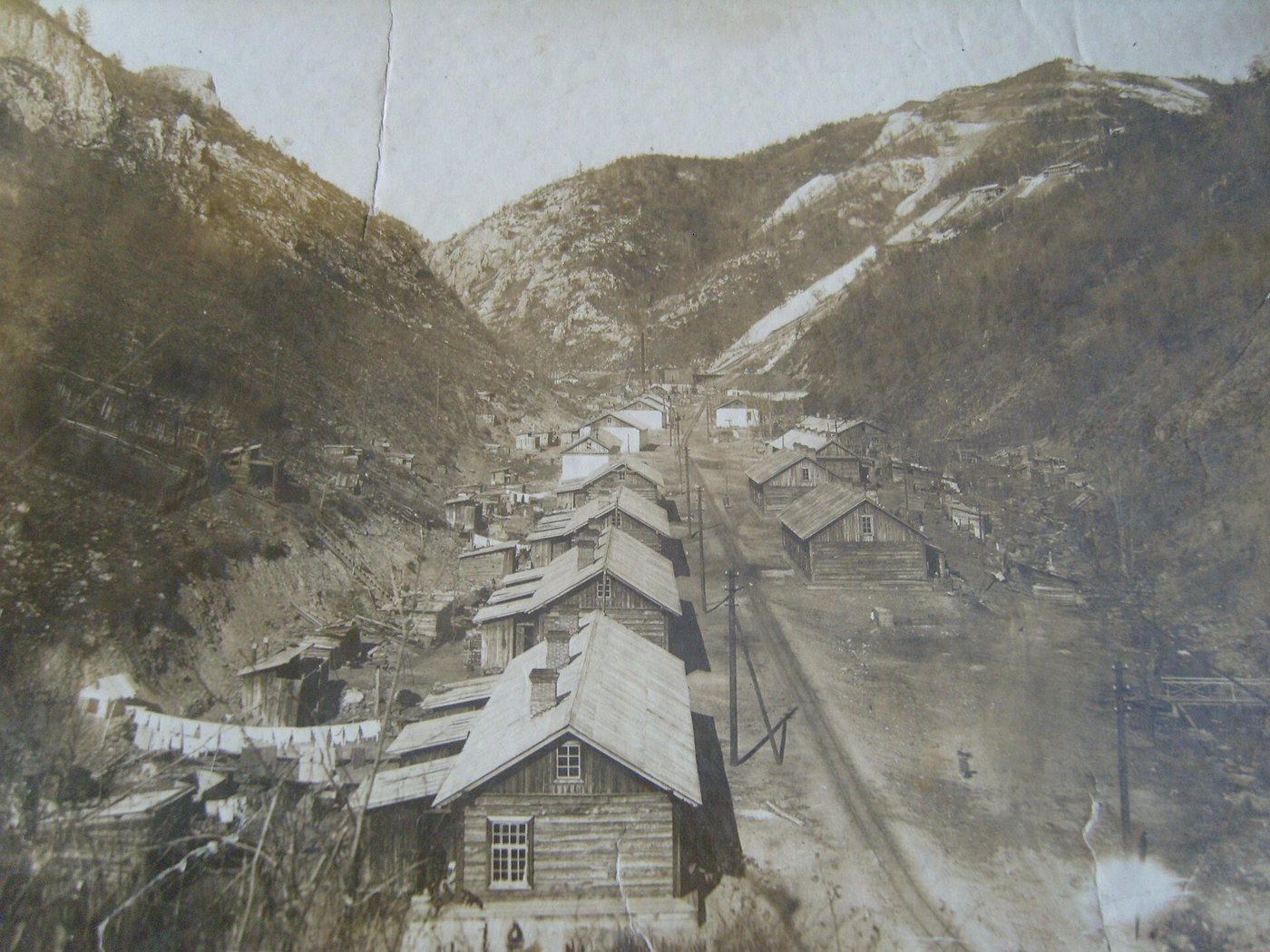
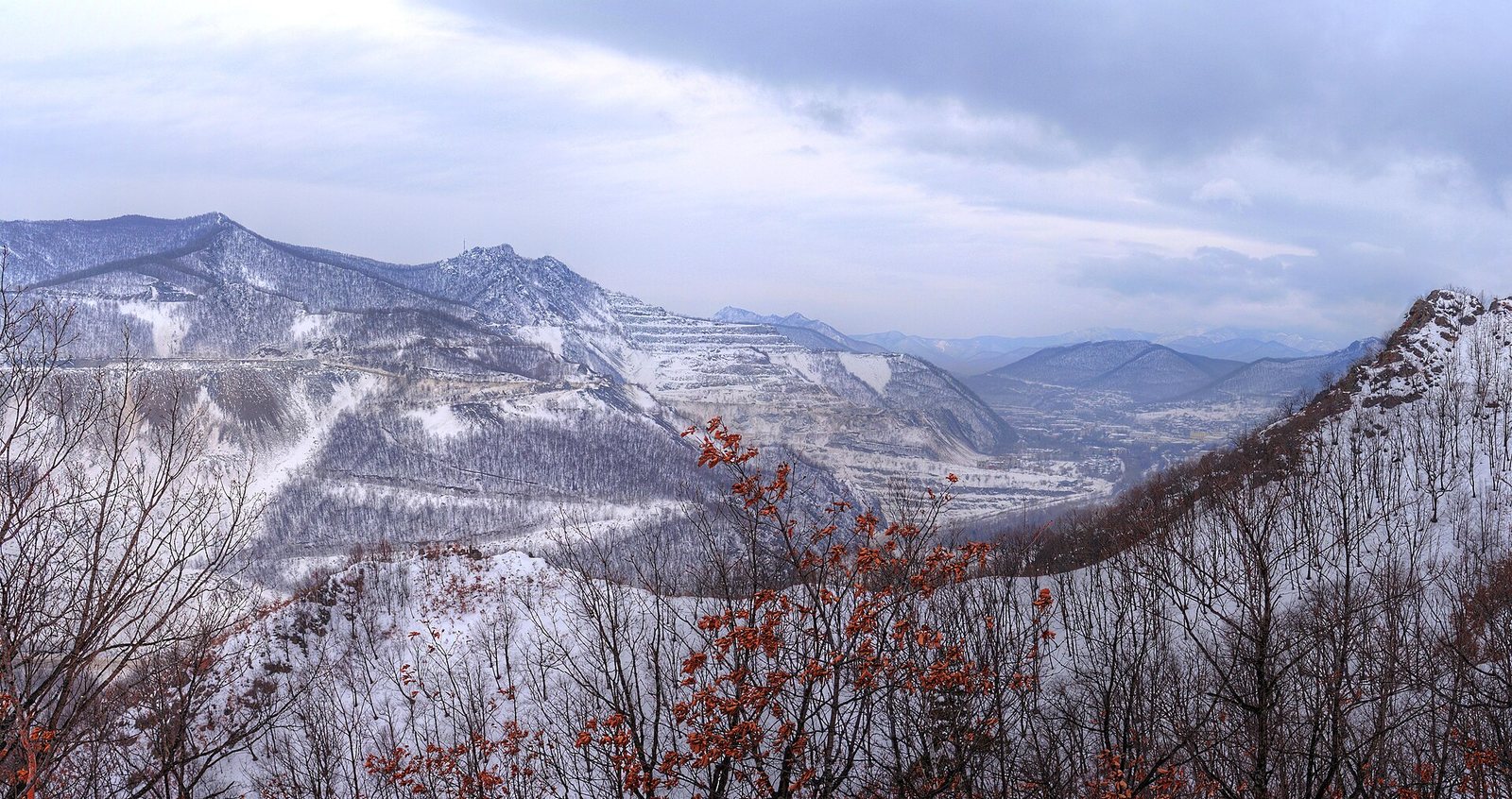
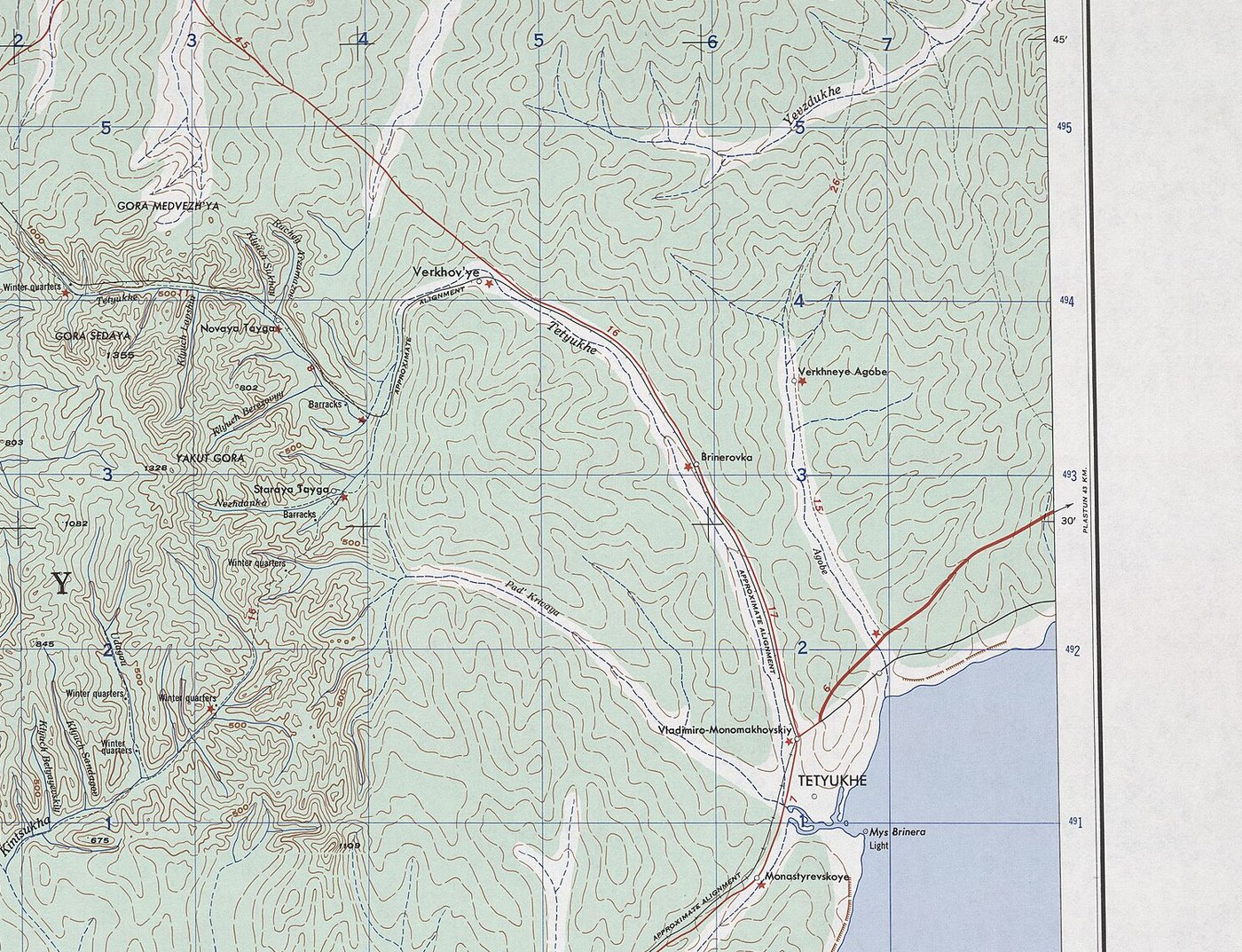
The ball fell on a town built on metal. The settlement began in 1897 as Tetyukhe, from a Chinese name meaning the river, or valley, of wild boars, around a silver-lead-zinc deposit staked by the Vladivostok merchant Jules Bryner; his son Boris kept a concession on the mines into the Soviet era, and Boris’s son was the actor Yul Brynner. In December 1972, as the Soviet Union erased Chinese place names from its Pacific borderland, Tetyukhe became Dalnegorsk, roughly “far in the mountains,” and its river became the Rudnaya, the ore river. By 1986 the town lived on two giants: the Dalpolimetall lead and zinc combine, whose narrow-gauge ore trains still run through town, and the Bor chemical plant (bor is Russian for boron), which mines boron from an open pit in the hills. Height 611 sits right in the middle of it all. It is the local name for Izvestkovaya, or Limestone, Hill, a steep, wooded ridge rising about a mile from the bus station, its summit 611 meters, about 2,000 feet, above sea level. From the top you can see the whole town and the boron mine. The object had come down on a ledge just below that summit, in full view of the valley.
Sources: DalnegorskДальнегорскЗемля большая, а упали именно сюдаВысота 611
The teacher on the ledge
The first to climb was the family of one of the schoolboys. Then came Valery Dvuzhilny, a biology teacher in his mid-thirties at School No. 1 and a member of the Geographical Society, who ran the school’s local-history club and was already reading everything he could find about UFOs. One of his students, Konstantin Timush, remembered in 2020 that the teacher got going instantly, “from half a turn,” as the Russian saying has it, and dragged the club up the hill with an army metal detector. By most accounts they went up on the third day, climbing for forty minutes up a slope so steep and snowy that a reporter who followed the path in 2020 wondered how they managed it. The ledge was easy to find: elsewhere the snow lay 20 to 24 inches deep, but on this rocky shelf, about ten feet square, there was none at all. It was strewn with blackened chips of siliceous shale whose broken faces were perfectly fresh, and it smelled sharply of chemicals, like wood being dry-distilled. Silvery metal was splashed over the chips and the rock wall beside them, and scattered across the shelf in beads, the smallest less than a millimeter across. It proved to be lead. At the edge stood a burned stump, and it was the stump Dvuzhilny never forgot. In an interview quoted after his death he described one part turned to charcoal by some incomprehensible force and the other into impossible drips of black glassy mass, as if black oil had run down it. “Wood, and it melted?!” he asked. Nothing that looked like wreckage was ever found. By his own count Dvuzhilny went back up about a hundred times over the following years, gathering frozen drops of metal.
Sources: Земля большая, а упали именно сюдаКонец «русского Розуэлла»Высота 611Дальнегорский НЛО: возвращаясь к событиям 1986 года
Beads, spheres and the mesh
What came down off the hill was a few ounces of debris, and it went a long way. Dvuzhilny’s 1990 article lists about 60 grams of lead-alloy beads, most of them pierced by tiny channels leading inside, which researchers compared with the droplets thrown off by industrial plasma-spraying equipment; about 15 grams of iron spheres two to four millimeters across, which tool steel would not cut and only a diamond tool could; and the find everyone called the setochka, the little mesh, a black, brittle, glassy material full of holes. Each iron sphere seemed to have its own recipe, one iron with aluminum, manganese, nickel and chrome, another iron with tungsten and cobalt, and all the samples were magnetized. A. Kulikov, a carbon specialist at the Institute of Chemistry of the Soviet Academy of Sciences’ Far Eastern branch, told Dvuzhilny that it was impossible to understand what the mesh was: it resembled glassy carbon, formed, most likely, at extremely high temperatures. It would not dissolve in strong acids. It withstood up to 3,000 degrees in a vacuum (other versions say 2,800 °C) yet burned in air at 900, and it was an insulator when cold, a semiconductor when warmed and a conductor after heating in a vacuum. Under the microscope some samples held quartz threads 17 microns thick, a third of a human hair, some single and some twisted by the dozen into neat plaits, and inside one of them ran a thread of gold. The specialists’ verdict, Dvuzhilny wrote, was unequivocal: such a technology was impossible. Specialists at the academic town in Tomsk reported something stranger still: after heating in a vacuum, the gold, silver and nickel detected in the mesh were gone, and molybdenum and beryllium sulfide had appeared; five months later the sulfide had nearly vanished too. By 1989 Dvuzhilny could say that researchers at three academic centers and eleven research institutes had looked at the finds, and the youth magazine Molodoi kommunist quoted the metal physicists of Bor and Dalpolimetall as saying no branch of industry would ever combine such a set of elements. By 1991 the samples themselves were said to be vanishing. Four people, Dvuzhilny reported, had watched a large piece disappear, a crucible with a sample fell to a laboratory floor and was never found, and a plate of quartz threads vanished from an electron microscope in Vladivostok.
Sources: Дальнегорский НЛО: возвращаясь к событиям 1986 годаЗемля большая, а упали именно сюдаUSSR: Media Report Multitude of UFO SightingsUFO Crash/Retrievals: The Inner Sanctum, Status Report VILatest Soviet Reports: Dramatic Increase in Sightings
Six bounces and lead from Baikal
The more witnesses Dvuzhilny found, the stranger the fall became. Two groups of schoolgirls, watching from different places, said the ball did not simply fall: for half an hour it rose and sank again six times, creeping north, its light brightening as it climbed and dimming as it dropped. That seemed absurd until 1988, when V. Skavinsky of the Institute of Geology and Geophysics in Novosibirsk walked the site with a proton magnetometer and found six magnetized points in the shale. The geologist V. V. Gernik argued that the magnetized shale ruled out both a plasma blob and a self-destructed satellite. Then came the lead. Isotope analysis traced it not to Dalnegorsk’s own mines but to the Kholodninskoye deposit in the northern Baikal region, some 1,400 miles to the west, and Yu. D. Pushkarev, a doctor of geological and mineralogical sciences, remarked that aliens might have been working the deposit for their own needs. The teacher took the idea seriously. He noted witnesses who said a ball had been seen two weeks earlier, flying from northern Baikal toward Primorye, and he reasoned that visitors might refuel their plasma engines with Earth’s lead the way a driver stops at filling stations instead of towing a tank of gasoline. His working hypothesis, published in 1990, was a damaged alien scout probe. Its guidance, he proposed, had failed over the geological fault that runs north to south through the town; it crash-landed, tore two or three cubic meters of rock (roughly 70 to 100 cubic feet) off the ledge, tried to climb away, sent a distress signal, recorded that signal magnetically into the rocks and then destroyed itself at least three feet above the ground, which is why its metal survived only as beads. One witness, he added, insisted the ball had risen at last and flown off to the northeast, so the rest might still lie somewhere in the taiga.
Sources: Дальнегорский НЛО: возвращаясь к событиям 1986 годаGreat Soviet UFO Flap of 1989 Centers on Dalnegorsk CrashКонец «русского Розуэлла»UFO Crash/Retrievals: The Inner Sanctum, Status Report VI
They came back for it
In Dalnegorsk the story became a rescue mission. On February 6, 1986, at 8:30 p.m., Dvuzhilny reported, two yellow balls flew in from the north along the fault, circled Height 611 four times and vanished; in his 1990 article the date is February 8. Then, on the Saturday evening of November 28, 1987, between about 10 p.m. and midnight, the whole east coast of Primorye lit up. By Dvuzhilny’s count 32 objects, cigars, cylinders and spheres, crossed a dozen settlements at 500 to 2,500 feet, silent, following the valleys. In one of his accounts thirteen of them showed an interest in Height 611; in another, four passed right over it, three hung above the settlement and five lit up the hills to the northwest. His witness list reads like a town directory. Police officers Akhmedov, Kustov, Lyubimov and Zhivaev saw a blinding flame come in from the Goreloye side led by a dull sphere with red at its heart. Workers at the Bor quarry saw a cylinder as big as a five-story building, 650 to 1,000 feet long, its nose glowing like red-hot metal, heading straight at the pit. Levakov, a section chief at Bor and a former pilot, watched a great cigar with a yellow porthole in its middle drift past about a thousand feet up, and could not understand how anything flew with no wings, no engines and no sound. A kindergarten teacher named Markina saw a dark, tapering object, 33 to 40 feet long, with four square portholes, hover over School No. 27 and shine down a violet-blue beam that lit the ground without casting shadows, then sweep the hill with a reddish searchlight and slip over the ridge. As they passed over houses, he wrote, the objects knocked out television sets and the central telegraph. Dvuzhilny’s explanation tied it all together: the dying probe’s distress call had been answered. In 1988 residents watched a milky-white hemisphere swell above a yellow apartment block until it covered half the sky and melted away “like a rainbow,” and rumors spread through town that the aliens had lost one of their own in 1986 and had come back to find it.
Sources: Дальнегорский НЛО: возвращаясь к событиям 1986 годаКонец «русского Розуэлла»Great Soviet UFO Flap of 1989 Centers on Dalnegorsk CrashЗемля большая, а упали именно сюда
Glasnost’s crash story goes west
Soviet papers carried the story under glasnost, and the West was listening. On November 22, 1989, the US Foreign Broadcast Information Service, the CIA-run office that translated foreign media, circulated a press note on the Soviet UFO wave that led with “an amazing event that took place on Hill 611.” It quoted V. Vysotsky, a Doctor of Chemical Sciences, as saying that the mesh was without doubt evidence of a high technology and nothing natural or terrestrial. The MUFON UFO Journal, the magazine of the American Mutual UFO Network, named Dvuzhilny its director for the eastern USSR in December 1989 and reprinted the FBIS note in February 1990, noting that the Moscow ufologist Vladimir Azhazha was already pairing Dalnegorsk with Roswell. In June 1990 J. Antonio Huneeus laid out the whole case for readers of the New York City Tribune from Dvuzhilny’s own reports. Dvuzhilny told the international network ICUFON that on May 10, 1990, his group hosted two researchers from Beijing, and Moscow radio, monitored by FBIS, reported the first meeting of Soviet and Chinese ufologists in Dalnegorsk, adding that specialists linked the UFOs’ interest in the area to its wealth of minerals. But no Westerner got closer than Jacques Vallée. In Moscow in January 1990 the science-fiction writer Alexander Kazantsev told him the mesh had a complex, artificial structure, then allowed that it might have been made on Earth. At the Cosmos pavilion’s UFO exhibit Vallée was allowed to see and touch a piece: lead, metallic-looking parts said to resist acid, and glass fibers with fine gold wiring. Intriguing, he judged, but “an ordinary piece of human technology.”
Sources: USSR: Media Report Multitude of UFO SightingsDirector’s MessageSoviet Media UFO SightingsGreat Soviet UFO Flap of 1989 Centers on Dalnegorsk CrashSoviet, Chinese UFO Researchers to Share DataUSSR, PRC Scientists in Joint Study of UFO’sUFO Chronicles of the Soviet Union: A Cosmic Samizdat
Waiting at the stadium
At home, the story took on a life of its own. In 1990 V. Popov, a correspondent for TASS, the Soviet news agency, reported that a group of local contactees had spent five years in dialogue with an extraterrestrial “information center,” which had offered a recorded direct contact provided officials and the press were present. Popov proposed a time and place himself: the Stroitel stadium, 1 p.m. local time, October 13, 1990. The ufologists hurried to say that no show was promised, but people came anyway, from Khabarovsk, Vladivostok, Nizhny Novgorod, Kazan and even Tashkent, filling the hotel, camping in tents and renting beds in flats near the stadium for ten rubles a night. Sovetskaya Rossiya reported that troops had been put on alert just in case. The journalist Roman Tarasov remembered Muscovites, Ukrainians, Japanese and two Australians with binoculars and telescopes, and Dvuzhilny with some kind of radar and a huge battery, aiming at the sky. A local schoolboy who had been in the crowd said decades later that it had waited for a miracle, and the miracle never came. Nothing landed.
Sources: Земля большая, а упали именно сюдаИнопланетян ждали всерьез: 40 лет назад в Приморье произошло самое загадочное «крушение НЛО»
A saucer on the summit
Height 611 had become a town industry. The journalist Gennady Isikov, who never believed in the aliens, launched a UFO supplement to a local paper and then a newspaper called Vysota 611 with Dvuzhilny; by his account it ran for 25 years and at its peak sold 60,000 copies across the Far East. “The Earth is big, and yet they fell right here,” Isikov recalled in 2020, summing up the town’s mood, and he was frank about his method: to keep circulation up you need sensations. The American TV series Sightings aired a segment on the hill in 1995, the Las Vegas reporter George Knapp came in 1996 and carried home a sample, and in 2004 the Moscow group Kosmopoisk, led by Vadim Chernobrov, climbed up with Dvuzhilny and took about 30 kilograms of rock, wood and metal back to Moscow. Dvuzhilny, by then the Far East’s most famous ufologist, died in October 2014 at 63. What became of his finds depends on whom you ask: in 2020 the museum said they were with his family, and in 2026 one report placed part of them in the town museum while another said no one knows for sure. A plaque on the summit now says that an unidentified flying object fell there on January 29, 1986, and that he was the first to investigate the site, and a flying saucer cast by Dalpolimetall stands beside it.
Sources: Земля большая, а упали именно сюдаPsychic VibrationsВ Москву привезли обломки НЛОВысота 611, Дальнегорск, В. Чернобров, 2004 (крушение НЛО в 1986)Прощай, наш главный по чудесам!НЛО в Дальнегорске: что известно о загадке светящегося объекта 1986 годаИнопланетян ждали всерьез: 40 лет назад в Приморье произошло самое загадочное «крушение НЛО»Высота 611
What the record rests on
Almost everything known about the fall comes through one man. Dvuzhilny wrote the first report, in the town paper Trudovoe slovo on February 22, 1986; gathered the witness statements; kept the samples; and relayed the laboratory results in articles such as his 1990 piece in the magazine Priroda i chelovek (“Nature and Man”). No original laboratory report has been published in full, and the results reach us mostly as his summaries or as newspaper paraphrases. The independent traces are thinner but real. Several townspeople told reporters their own memories decades later, the FBIS translations show what Soviet papers printed in 1989 and 1990, and Vallée’s 1992 book records his own handling of a fragment. The English Wikipedia article on the case was deleted in 2021 for lack of reliable sources; the article’s creator, who said he had lived there at the time and thought the story “a bunch of BS,” still argued it was notable enough to keep.
Sources: Земля большая, а упали именно сюдаДальнегорский НЛО: возвращаясь к событиям 1986 годаUSSR: Media Report Multitude of UFO SightingsUFO Chronicles of the Soviet Union: A Cosmic SamizdatArticles for deletion/Height 611 UFO incident (2nd nomination)
How the story drifted
The object changed shape as it traveled. Dvuzhilny’s first report in February 1986 gave it a trail of sparks and white smoke and a dull thud on impact; by 1990 he wrote that there was no tail or plume at all and only one witness heard a faint thump. Its size ran from a football to half the Moon’s disc to two meters (about six and a half feet) across, and in Flying Saucer Review it arrived from the northwest instead of the southwest. The fire lasted an hour for most witnesses and more than an hour for one boy’s mother, but only one or two minutes for V. M. Korytko, the editor of Trudovoe slovo. The first survey is dated two days, three days or five days after the fall. Mikhail Gershtein found that the yellow balls of February 6 had a single source, a third-grader who said he watched for about an hour and who described them falling onto the hill, not vanishing; no second impact site was ever found. The November 1987 armada numbered 32 or 33 objects, and a 2026 retelling moves it to 1988 with 36. In retellings Dvuzhilny, a school biology teacher, became a Doctor of Sciences leading an Academy of Sciences expedition. In English, Mantle and Stonehill’s account turned the ball’s speed of 15 meters per second into 15 meters per hour, and by 2012 the sample Knapp brought home was on show at the National Atomic Testing Museum in Las Vegas as an “Authentic Alien Artifact.”
Sources: Земля большая, а упали именно сюдаДальнегорский НЛО: возвращаясь к событиям 1986 годаКонец «русского Розуэлла»Latest Soviet Reports: Dramatic Increase in SightingsВысота 611Высота 611Высота 611: 40 лет назад в Дальнегорске упал НЛОThe Dalnegorsk UFO Crash: Roswell Incident of the Soviet UnionPsychic Vibrations
Plasma, a meteor or a spy balloon
The first theories were Soviet. By 1989 the Tomsk geologist V. N. Salnikov had proposed a plasmoid, a ball of plasma running along the geological fault and a high-voltage line and soaking up metals as it went; critics replied that the metals would have required impossible concentrations in the air. The physicist Yuri Platov of IZMIRAN, the Soviet institute for the ionosphere and terrestrial magnetism, told the weekly Poisk that the finds were the remnants of an unsuccessful Soviet rocket launch. The Soviet defense ministry expert Colonel Alexander Plaksin called it a bolide, a bright meteor, while laboratories in Kyiv found none of the iron-nickel minerals and crystal patterns typical of meteorites. The skeptics’ favorite explanation came from Valentin Psalomshchikov, a state weather-service expert on UFO reports. He argued the object was a drifting reconnaissance balloon, invisible and silent at night, moving at a typical wind speed of 15 meters per second, whose thermite self-destruct charge turned it into a fireball before its suspension broke. On that reading the mesh is burned carbon-fiber fabric, the lead is ballast shot, and the gold-in-quartz threads are cabling for video and radio gear. Alexander Sergeev of the Russian Academy of Sciences’ commission against pseudoscience told Takie Dela in 2020 that this effectively closes the question, and Paul Stonehill, coauthor of Russia’s Roswell Incident, said in 2012 that a Western reconnaissance probe was most likely.
Sources: Great Soviet UFO Flap of 1989 Centers on Dalnegorsk CrashUSSR: Media Report Multitude of UFO SightingsВысота 611Конец «русского Розуэлла»Земля большая, а упали именно сюда«Русский Розуэлл». Почему уфологи не могут разгадать тайну НЛО в ДальнегорскеPsychic Vibrations
Rockets, lightning and living plasma
There are other earthly suspects. Answering a Freedom of Information request, US Space Command reported in 1991 that no large object had re-entered over the region on January 28–30, 1986, but that a Soviet rocket body that decayed on January 27 might have stayed up another half-orbit; Dvuzhilny had long argued that 15 meters per second was far too slow for falling rocket debris. The journalist Valery Bolshakov wrote in 2013 that ball lightning had struck a hilltop where a relay hut had burned a couple of years earlier, leaving the droplets already there. The physicist Vadim Tsytovich of the Prokhorov Institute of General Physics offered the strangest earthly answer of all: a giant ball lightning, with the magnetized spirals in the samples perhaps the remains of self-organizing inorganic structures of the kind his team had modeled in dusty plasma. For the 1987 armada, Gershtein points to the third stage of the Proton rocket that had launched the satellite Cosmos 1897 two days earlier, re-entering in flames over Primorye and Japan. Dvuzhilny never accepted any of it, and in Dalnegorsk the museum’s guides still offer three versions: a flying saucer, a bomb test, and lightning.
Sources: UFO Crash/Retrievals: The Inner Sanctum, Status Report VIДальнегорский НЛО: возвращаясь к событиям 1986 годаЗемля большая, а упали именно сюдаВысота 611Конец «русского Розуэлла»
Classification note
Height 611 is filed as a crash report because it rests on an object seen to fall and on material said to have been recovered from the impact site, the same footing as Kecksburg and Roswell. No close-encounter kind is assigned: the witnesses saw a light cross the sky and strike a hill, the ledge was examined days later, and no occupants were ever reported. The later sightings are part of the story, but they are separate events with separate explanations, and the 1987 armada in particular has a strong case for a rocket re-entry.
Sources: Дальнегорский НЛО: возвращаясь к событиям 1986 годаКонец «русского Розуэлла»
- 1897
Jules Bryner stakes the silver-lead-zinc deposit on the Tetyukhe river, and the mining settlement of Tetyukhe is founded.
- DEC 1972
Tetyukhe is renamed Dalnegorsk in the Soviet campaign against Chinese place names in the Far East.
- 29 JAN 1986 · 7:55 PM
A silent red-orange ball crosses Dalnegorsk from the southwest and strikes a ledge on Height 611, where it burns for about an hour.
- LATE JAN–EARLY FEB 1986
Valery Dvuzhilny and his school club find a snowless, scorched ledge strewn with lead beads, iron spheres and black mesh.
- 6 FEB 1986
Two yellow balls are reported circling Height 611 four times.
- 22 FEB 1986
Dvuzhilny’s first account of the fall appears in the town newspaper Trudovoe slovo.
- 28 NOV 1987
Some 32 objects are reported over Primorye’s east coast between 10 p.m. and midnight, several of them around Height 611.
- 1988
A proton-magnetometer survey reports six magnetized points on the site.
- 22 NOV 1989
An FBIS press note on the Soviet UFO wave leads with the event on “Hill 611.”
- JAN 1990
Jacques Vallée examines a Dalnegorsk fragment at a UFO exhibit in Moscow and judges it human technology.
- 13 OCT 1990
Crowds from across the Soviet Union wait at a Dalnegorsk stadium for a promised alien landing; nothing arrives.
- 26 MAR 1991
US Space Command reports no large re-entry over the region on January 28–30, 1986.
- 1996
George Knapp visits Dalnegorsk and takes home a sample, later shown in a Las Vegas museum.
- 2004
Kosmopoisk climbs the hill with Dvuzhilny and carries about 30 kilograms of samples to Moscow.
- OCT 2014
Valery Dvuzhilny dies at 63.
- JUL 2021
English Wikipedia deletes its article on the incident for lack of reliable sources.
Sources & interviews
Дальнегорский НЛО: возвращаясь к событиям 1986 годаValery Dvuzhilny · text of his article in Priroda i chelovek, 1990, no. 2, pp. 54–58, as reposted on LiveJournal (otrageniya), November 11, 2020Земля большая, а упали именно сюдаSofya Koreneva, photographs by Natalia Bulkina · Takie Dela · October 19, 2020 · quotes Dvuzhilny’s first report in Trudovoe slovo, February 22, 1986Конец «русского Розуэлла»Mikhail Gershtein · UFOCOM · written after Dvuzhilny’s death in October 2014, page dated February 17, 2024Высота 611Valery Bolshakov on UFO tourism in Dalnegorsk, March 10, 2009, with an appended reprint of “Krushenie NLO v Dalnegorske,” Lipetskaya nedelya, no. 14, April 7, 2004 · Debri-DV archiveВысота 611Alexander Rempel · Vladivostok (newspaper), no. 999 · June 29, 2001Высота 611Nataliya Leskova · Itogi, no. 25 (784) · June 20, 2011 · Internet Archive copyВ Москву привезли обломки НЛОPravda.ru, after the weekly Zhizn · March 31, 2004 · on the Kosmopoisk expeditionВысота 611Vadim Chernobrov, Entsiklopediya zagadochnykh mest Rossii (2004), entry reproduced by Kosmopoisk Far East«Русский Розуэлл». Почему уфологи не могут разгадать тайну НЛО в ДальнегорскеLife.ru · January 25, 2020Инопланетян ждали всерьез: 40 лет назад в Приморье произошло самое загадочное «крушение НЛО»Komsomolskaya Pravda, Far East edition · January 29, 2026НЛО в Дальнегорске: что известно о загадке светящегося объекта 1986 годаVLADIVOSTOK1.RU · January 29, 2026Высота 611: 40 лет назад в Дальнегорске упал НЛОPrimaMedia · January 28, 2026Прощай, наш главный по чудесам!Komsomolskaya Pravda, Far East edition · October 23, 2014 · obituary of Valery DvuzhilnyВысота 611Dalnegorsk Museum and Exhibition CenterUSSR: Media Report Multitude of UFO SightingsForeign Broadcast Information Service, Foreign Press Note · November 22, 1989 · CIA FOIA release via the Internet ArchiveUSSR, PRC Scientists in Joint Study of UFO’sForeign Broadcast Information Service, London · May 22, 1990 · from Moscow Domestic Service, May 21, 1990 · CIA FOIA release via the Internet ArchiveSoviet, Chinese UFO Researchers to Share DataAustralian UFO Bulletin · September 1991 · citing ICUFON · Internet ArchiveGreat Soviet UFO Flap of 1989 Centers on Dalnegorsk CrashJ. Antonio Huneeus · New York City Tribune, June 14, 1990 · reprinted in UFO Newsclipping Service, no. 253, August 1990 · Internet ArchiveDirector’s MessageWalter H. Andrus Jr. · MUFON UFO Journal · December 1989 · Internet ArchiveSoviet Media UFO SightingsMUFON UFO Journal, no. 262 · February 1990 · Internet ArchiveLatest Soviet Reports: Dramatic Increase in SightingsGordon Creighton · Flying Saucer Review, vol. 35, no. 3 · September 1990 · Internet ArchiveUFO Chronicles of the Soviet Union: A Cosmic SamizdatJacques Vallée · Ballantine Books, New York, 1992, pp. 102–103, 127–128 · Internet ArchiveUFO Crash/Retrievals: The Inner Sanctum, Status Report VILeonard H. Stringfield · self-published, July 1991 · includes a report by Dvuzhilny and the US Space Command letter of March 26, 1991 · Internet ArchiveThe Dalnegorsk UFO Crash: Roswell Incident of the Soviet UnionPhilip Mantle and Paul Stonehill · Pravda.ru · February 4, 2010 · extract from their book UFO Case Files of RussiaPsychic VibrationsRobert Sheaffer · Skeptical Inquirer, vol. 37, no. 1 · January/February 2013 · Internet ArchiveArticles for deletion/Height 611 UFO incident (2nd nomination)Wikipedia · closed as delete, July 2021DalnegorskWikipediaДальнегорскWikipedia (Russian)Высота 611, Дальнегорск, В. Чернобров, 2004 (крушение НЛО в 1986)UnionKOSMOPOISK on YouTube · Kosmopoisk expedition to the site, 2004Spotted an error, or know a better source? Write to hello@uap.fun.
Connected files
The Acorn in the WoodsA fireball, a wooded hillside and a recovery story: Kecksburg’s object was also seen falling, also judged a meteor or space debris, and also left townspeople certain something landed.The Roswell IncidentThe template Dalnegorsk was fitted to by 1990; both stories turn on scraps of strange material, and skeptics explain both as secret balloons, though no project has ever been named for Dalnegorsk.The Three-Eyed Giants of VoronezhThe other glasnost-era sensation, carried west in the same wave of Soviet press reports and FBIS translations in 1989 and 1990.Jacques ValléeHandled a fragment of the Dalnegorsk object in Moscow in January 1990 and called it an ordinary, if intriguing, piece of human technology.George KnappVisited Dalnegorsk in 1996 and brought back the sample later displayed in Las Vegas as an alien artifact.Discuss this case
Compare notes with other readers: witness details, sources, and the parts that still do not add up.
Open the discussion