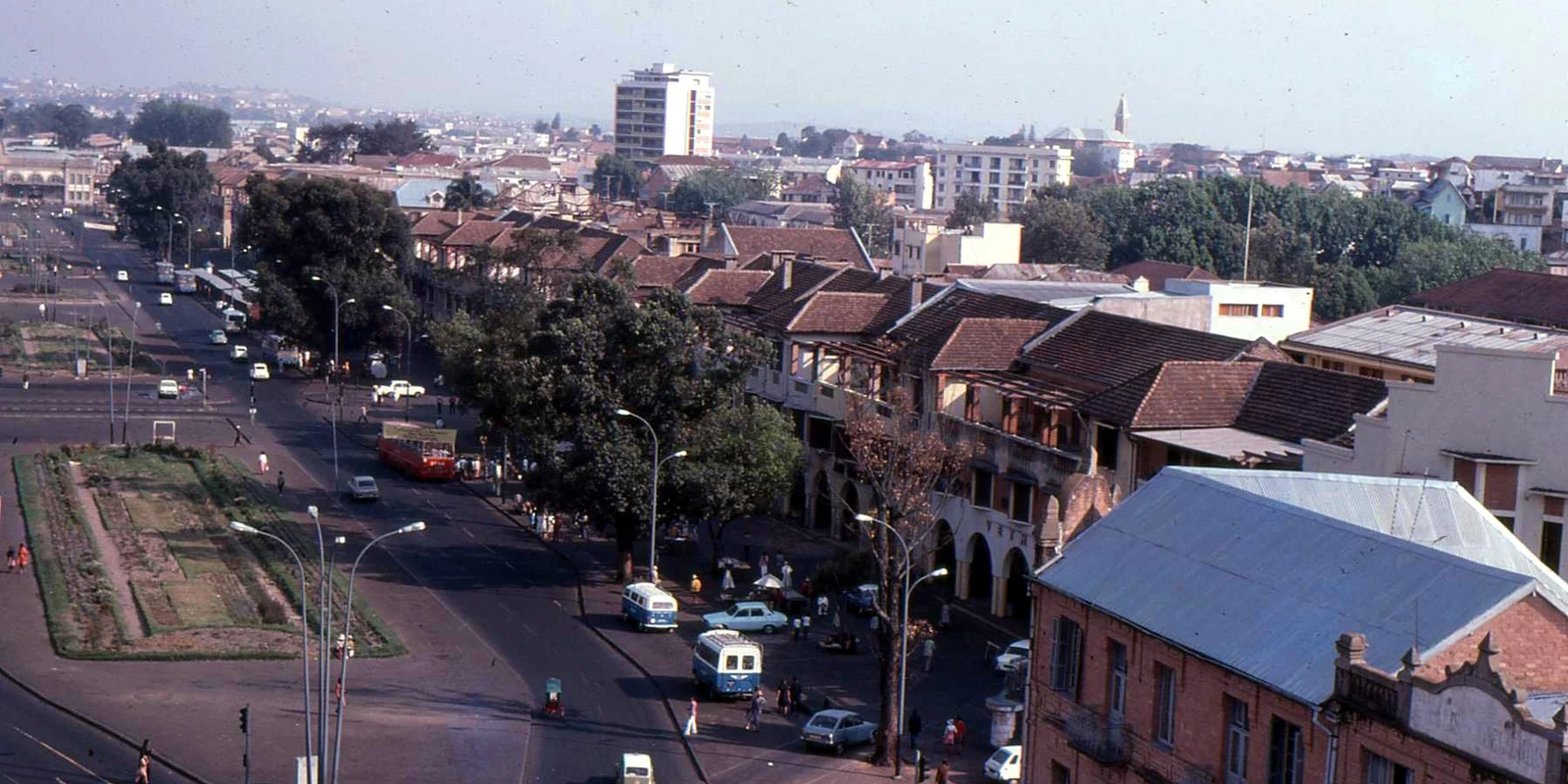
Mail day on the Avenue de la Libération
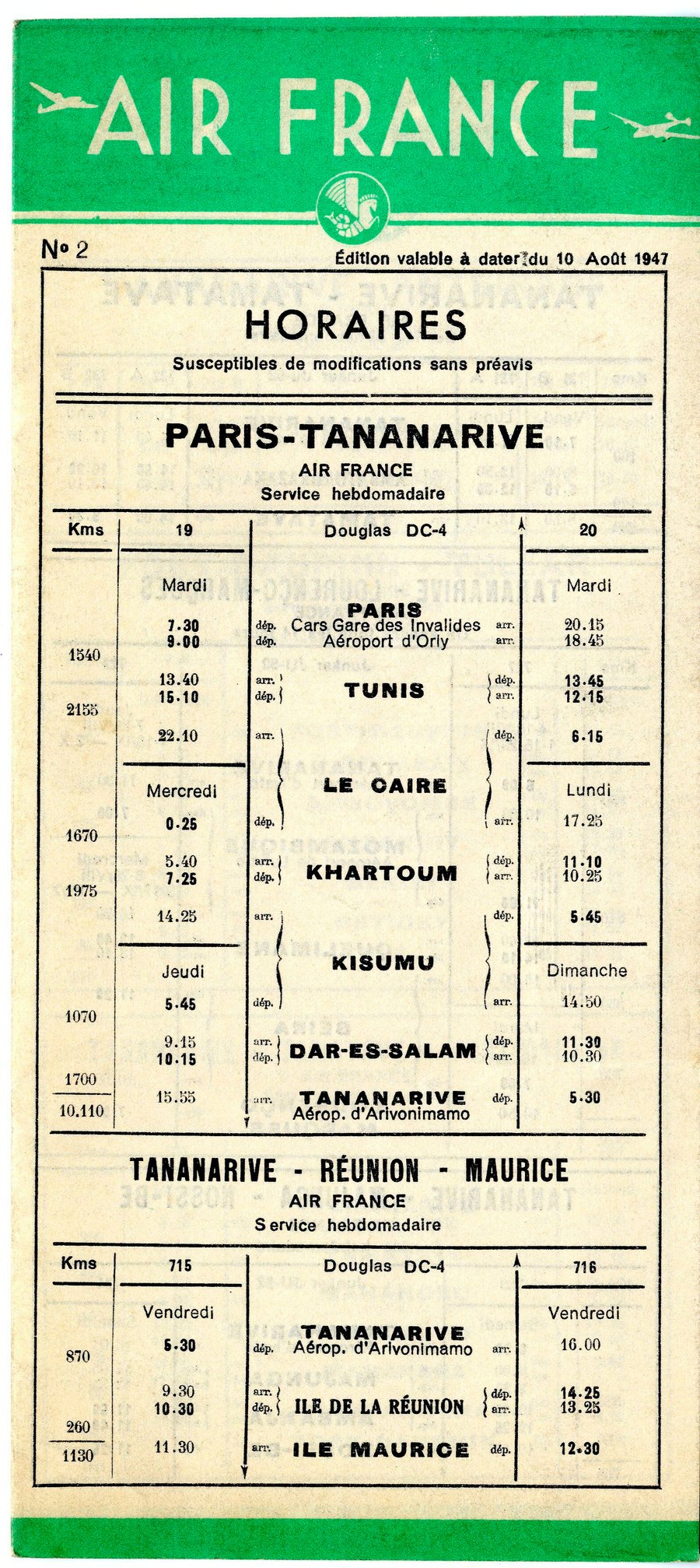
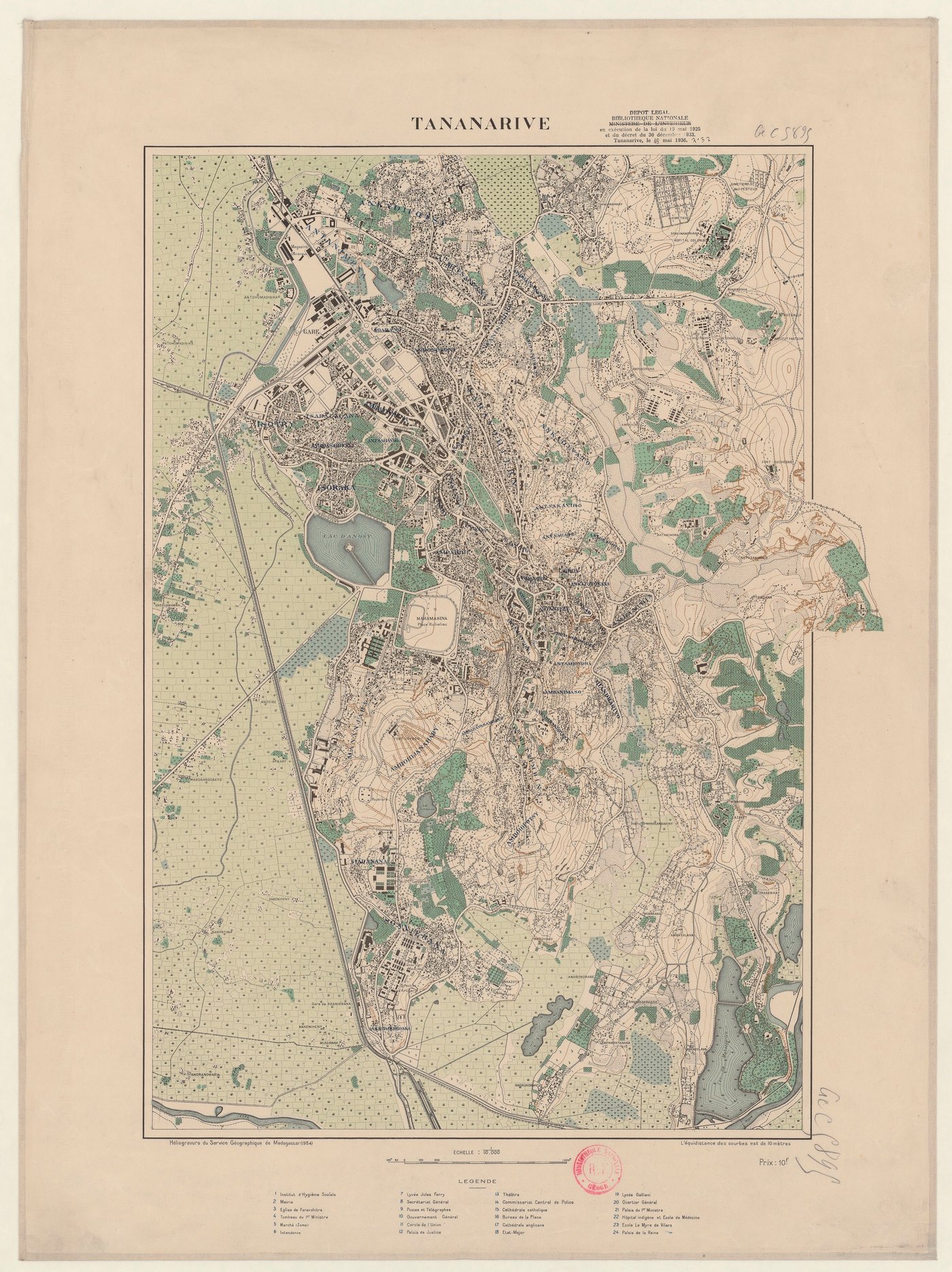
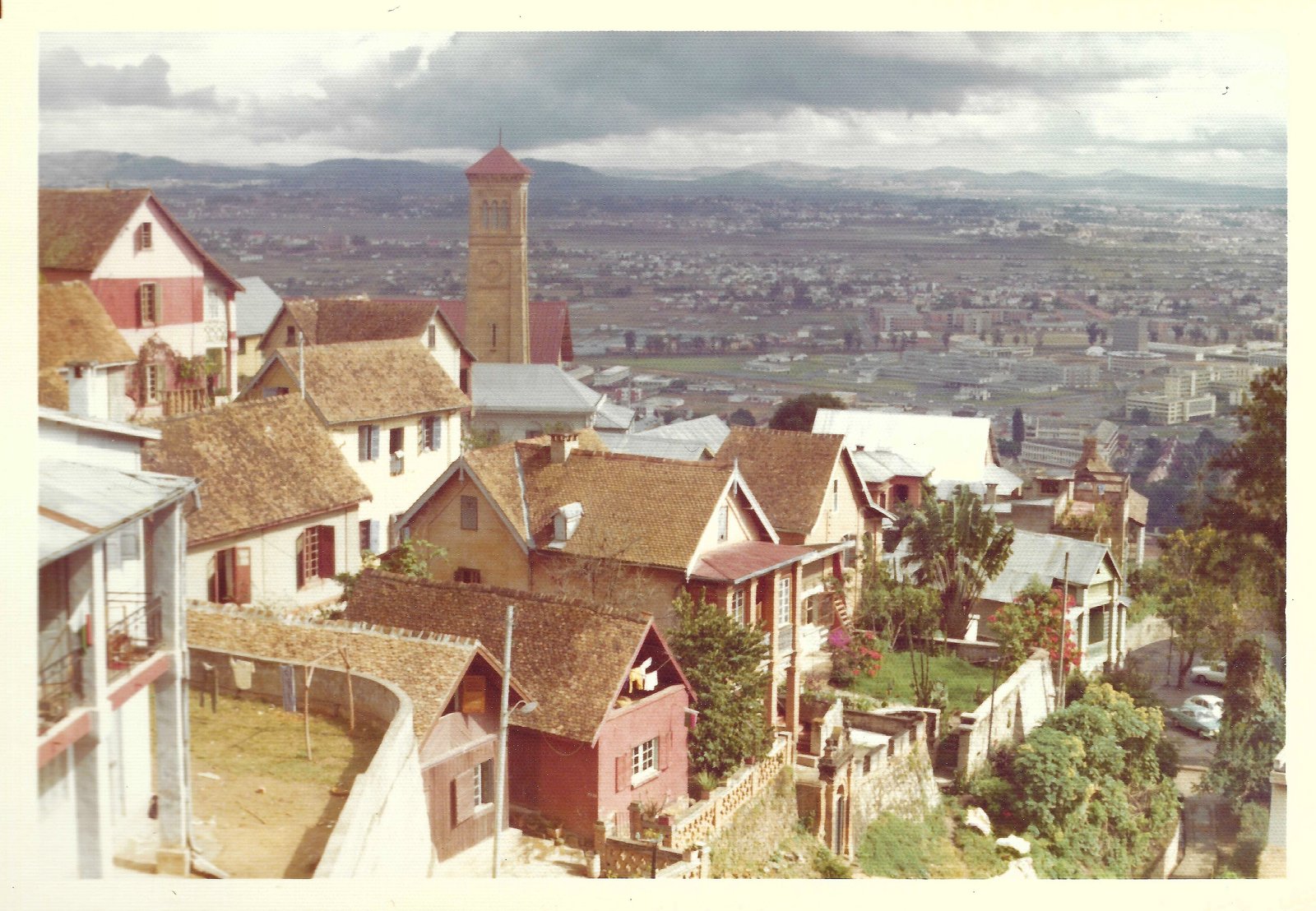
In August 1954 Tananarive, today’s Antananarivo, was the capital of a French colony, a city of perhaps 175,000 spread over a horseshoe of hills on Madagascar’s high plateau. On the crest of its central ridge stood the Rova, the royal compound of the old Merina kingdom, with the stone palace of its last queens. Below, the broad central avenue, first called the Avenue Fallières and by then the Avenue de la Libération, ran from the Soarano railway station to the great market at Analakely. The Air France agency stood on the avenue, near the town hall. That Monday the avenue had already had one spectacle: at nine in the morning troops paraded there for Roger Duveau, the island’s deputy in Paris and now secretary of state for overseas France, who had flown in on the Saturday to a welcome of villagers lining the road from Ivato airfield. That day he addressed the island’s Representative Assembly, and Radio-Tananarive broadcast the speech. On Monday evenings the mail from France was handed out there, and that Monday a knot of pilots, cabin crew and ground staff was waiting for it. Among them was Edmond Campagnac, a graduate of the École Polytechnique who ran Air France’s technical services on the island and was himself a professional pilot and flight instructor. By his account, the first Constellation of the week had just flown over the city. It was six o’clock and twilight: the dry southern winter gives the highlands, he wrote, skies of an extraordinary purity, and there was not a single cloud. Offices were emptying, the pavements were crowded, and a few shops had already turned their lights on.
Sources: Similitudes et contrastes avec l’observation de TananariveLe Journal de MadagascarLe Journal de MadagascarAvenue de l’Indépendance (Antananarivo)Antananarivo
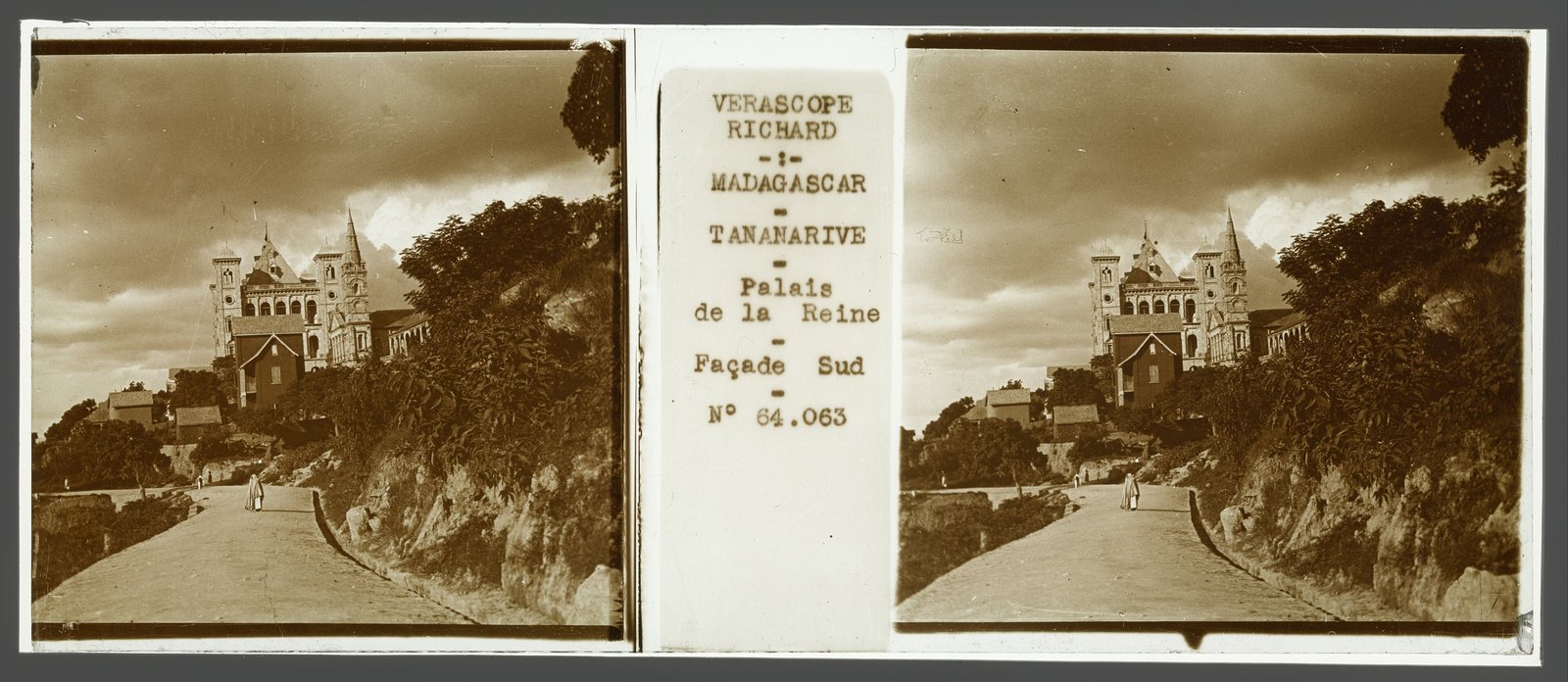
A green ball over the Queen’s Palace
What caught their eye, Campagnac wrote in 1964, was “a big luminous ball of a brilliant electric green” falling out of the east on a straight line tilted at about 45 degrees. Everyone took it for a meteorite. It seemed to graze the Palais de la Reine, the great stone palace of Manjakamiadana on the crest of the Rova, and dropped out of sight behind the hills south of the city. The group braced for an explosion, given the apparent size of the thing. None came. By then most of the passers-by around them had seen it too, and every face on the street was turned south. In a 1974 radio interview Campagnac put it more vividly: the ball had fallen “almost vertically, exactly like an aerolite.”
Sources: Similitudes et contrastes avec l’observation de TananariveOVNI sur Tananarive
The lens and the fuselage
About half a minute later, Campagnac wrote, the ball reappeared over the Governor’s Palace, headed straight for the market, then turned sharply and ran along the left side of the Avenue de la Libération. It looked smaller now and slower. As it drew level with the Air France agency, the watchers could separate its parts. In front was a big, intensely luminous green “lens.” Some forty meters behind it came a cigar-shaped “fuselage” with the sheen of aluminum and no visible portholes, about as long, he judged, as a DC-4’s. Some fifty meters farther back, a few orange “flames” flickered on and off. The craft made no sound, not even the faint hiss of a glider. Campagnac and the aircrew around him put its speed at about 400 kilometers an hour. He then made a pilot’s triangulation: people in a side street had seen it coming toward his group while his group saw it pass on the far side of the avenue, so he reckoned it was flying at about 100 meters, 250 to 300 meters from where he stood. And as it turned into the avenue, he wrote, “the lighting of the whole city went out,” which only made the electric green stand out more. A total silence fell over the crowd. Everyone was, in his word, dumbfounded.
Sources: Similitudes et contrastes avec l’observation de Tananarive
Past the station and over the zebu
The object held a straight, level course north, passed the railway station, then turned abruptly left and vanished behind the northwestern arm of the hills. From first sight to last, Campagnac put the whole show at about two minutes. Afterward he heard that it had crossed the city’s zebu park—zebu are the humped cattle of Madagascar— at very low altitude, “sowing indescribable confusion among the animals.” The next morning, at Ivato airfield, he ran into a friend who had come to ask for help rounding up herds at La Sakay, the new farming settlement for families from Réunion, “some hundred kilometers” away as the crow flies. Something had skimmed over the herds there the evening before, at about six, and scattered them. Campagnac did the arithmetic: if it was the same craft, it had gone on at something like 4,000 kilometers an hour. Years later René Fouéré of the GEPA group, who printed Campagnac’s account, said he had met someone at a family wedding who had known Bertholon, the witness at La Sakay, well, and still remembered the affair perfectly.
Sources: Similitudes et contrastes avec l’observation de TananariveAnkadinondry Sakay
Father Coze’s missing report
Campagnac wrote that the city was so shaken that an inquiry was opened, at the request of General Fleurquin, the air commander in Madagascar, to reconstruct the visitor’s path. The work went to “Reverend Father Coze,” whom Campagnac called the director of the Tananarive observatory: the Jesuit Observatory of Ambohidempona, founded in 1889. Coze, he said, had himself been at the observatory when the green ball fell, and like everyone else had first taken it for a meteorite. Some 20,000 people were thought to have seen the object, Campagnac wrote, and Coze must have questioned about 5,000 of them. He added that Coze, recently seriously ill, had written to promise him a copy of the report as soon as possible. It never came. Coze died a few years later, and no one has found the report since: not Campagnac, not the French researchers who searched the colonial archives, and not a 2026 inquiry at the Jesuit archives at Vanves, whose archivist said they hold no papers of Father Coze or of the observatory’s actual director, Father Charles Poisson; Coze, it seems, was Poisson’s deputy. Alessandri adds that Campagnac left Tananarive soon after the sighting, having taken part only in the start of the inquiry. The chain of command, at least, fits: Pierre Fleurquin, a fighter pilot who had led a Free French Spitfire squadron on D-Day, had taken command of the air forces in French East Africa and Madagascar on July 17, 1954, a month before the sighting, though he was not made a general until the following year.
Sources: Similitudes et contrastes avec l’observation de TananariveL’ovni de Tananarive en 1954 : une illusion de masse chez les ufologuesTananarive, 16 août 1954 : l’étrange survol de la capitale malgachePierre Fleurquin
The adjutant in the dentist’s chair
Through the 1960s the story rested on Campagnac alone. Then, on December 10, 1969, he told it on the French television debate Les Dossiers de l’écran. Of about 300 calls to the switchboard, five were about Tananarive: one caller said he had been there and seen nothing unusual; four said they had seen it. One, a Monsieur Grimout, later wrote to the researcher Joël Mesnard, and his 1973 letter is the most vivid account of all. He had been an adjutant in the Tananarive garrison company, thirty-five years old, and had booked a dentist after work. He was in the chair—kept wide awake, he joked, “by the joy of being under the drill”— on the second or third floor of a building on the Avenue de la Libération, its big room open onto a terrace over the street. He saw the thing coming down at 25 to 30 degrees over the hill opposite, stopped the dentist and pointed it out to him and to his wife, and all three ran out onto the terrace. To him it was “a dark mass” against a light-gray sky—about a hundred meters long, he reckoned, adding “I am a gunner”—with about ten lights along it “like lit portholes,” and behind it a trail of blue, dark-red and white sparks, “like the sparks from grinding a piece of iron,” twice as long as the object. He watched it finish its dive, make a slow 90-degree turn, accelerate and vanish over the horizon in a few seconds. Three or four seconds after he first saw it, he said, the whole of Tananarive lost power, for about ten minutes. They sat on the edge of the terrace in the dark, not quite willing to say “flying saucer,” while the dental work waited, since it could not be done without current. “I believe the press spoke only of a general power failure, nothing else.”
Sources: L’ovni de Tananarive en 1954 : une illusion de masse chez les ufologuesSimilitudes et contrastes avec l’observation de Tananarive
A birthday, a calendar and a photographer
The Malagasy witnesses came later still. In 1988 and 1989 a local UFO club, CREDO, through its member Louis Rakotoarijaona, gathered statements while corresponding with the French investigator François Toulet, and Mesnard published them in Lumières dans la nuit in 1994. A policeman, Razafimashatratra, on duty outside a cinema on the avenue, had noted a “flying saucer” at 6 p.m. on August 16, 1954 on a calendar he kept; the detailed report he wrote, he said, burned in the fire that gutted the town hall. Jeanne Rafaramala Noro, a secretary at the town hall, was certain of the date because it was her birthday. Leaving the office just after six, a few meters from the town-hall gate, she saw “a very luminous flying object, green in color” about a hundred meters over her head, “a cigar of about 30 or 40 meters” trailing red sparks. It came from the direction of the Rova, passed over the avenue and the Soarano station, and disappeared westward behind the hills. She had been so frightened, she said, that she hid under a tree. Rafalimanana, a photographer at the Photo Hova studio on the avenue, was coming out of the shop where he bought his photographic supplies every Monday when he saw an oval of luminous orange a few dozen meters overhead, followed by blinding red sparks. “I was so scared, because the lighting had gone out as it passed.” He did not yet know, he added, anything about flying saucers.
Sources: L’ovni de Tananarive en 1954 : une illusion de masse chez les ufologuesL’observation de TananariveL’« OVNI malgache » du 16 août 1954
The herdsman’s son at La Sakay
The fourth statement came from Joseph Rabenaviro, who in 1954 was eighteen and helped his father, the keeper of the European settlers’ zebu at Sakay, “thousands and thousands” of them. At about half past six that evening, as the light began to fail, the animals suddenly bolted: “something quite long, very bright and extremely brilliant” was coming down fast and very low over the herd, silent, from east to west, with “a powerful and rapid bearing.” Many of the animals ran off and were not seen again. The next morning the settlers who owned the herd arrived, and the family told them what had happened. “These foreigners did not believe us,” he said, “and immediately they drove my father from his job and from Sakay for good.” The family left that same day for Tsiroanomandidy. “Everything I say here is true,” his statement ends, “and I sign it.”
Sources: L’ovni de Tananarive en 1954 : une illusion de masse chez les ufologuesAnkadinondry Sakay
Three saucers for the Great Island
The Madagascar papers of 1954 did eventually find saucers of their own, just not this one. On October 26 Agence France-Presse cabled from Tananarive that “for the first time, it is thought, a mysterious craft has been reported over Madagascar”: an elongated object “with the appearance of a fluorescent tube,” seen at half past four on the Sunday morning over the Pic Saint-Louis at Fort-Dauphin by a company agent named Beaux, who insisted it could not have been a shooting star. On December 29 Le Journal de Madagascar, noting that a rival paper had twice reported flying saucers in the Malagasy sky, went to ask the weather office, which explained that every night, around half past two, it released a lit balloon seventy-five centimeters wide and followed it by theodolite up to eight or nine thousand meters. And on January 21, 1955, the Malagasy paper Fandrosoam-Baovao counted three saucer visits to the island: over Fort-Dauphin, over Tananarive “towards the end of the year that has just ended,” and, a few days earlier, over the coast at Majunga and Mitsinjo, where the district chief, a Monsieur Quesnot, had watched a blue-green disc the size of the Moon light up the country for nearly eight seconds. None of them mentions a green ball in August.
Sources: Soucoupes volantes en France et dans l’UnionÉchos malgachesSerait-ce de la soucoupe volante visitant Madagascar ?L’ovni de Tananarive en 1954 : une illusion de masse chez les ufologues
How the story grew
Each retelling added something, and even the clock moved: six o’clock in 1964, a quarter to six in 1974, five o’clock by 1999. In 1967 Kuifje, the Dutch edition of the Tintin weekly, told its young readers that the pilot of a French airliner had seen “a green ball with a metal hull” over Tananarive, along with 20,000 other people. At the 1969 television debate Campagnac said the lights had not gone out all at once but one after another, with the craft, as Fouéré put it, marking “the leading edge” of the outage. In the 1974 radio interview the sun “was reflecting on the surface,” though in 1964 he had called the hour dusk, the herd had smashed its fences, the army and police had to be called to round the zebu up, and there were “two UFOs.” Asked what they were, the polytechnicien answered that, short of a civilization hidden in some marvelously secret place on Earth, he did not think they were terrestrial. In 1972 the American astronomer J. Allen Hynek put it in The UFO Experience as one of his close encounters of the second kind, with the observers listed as the “Chief of technical service, Air France; three pilots and three engineers.” In 1981 Charles Bowen’s English version, tripped up by the French lentille, which means both lens and lentil, turned the lens into “a lentil-shaped device” and the zebu park into a zoo whose animals stampeded through the fences. The COMETA report of 1999, written by a private group of retired French generals, engineers and officials, heard Campagnac in person and described “a sort of metallic rugby ball preceded by a green lens,” seen by several hundred witnesses; it noted that no trace of an inquiry could be found in Air Force archives. Jean-Jacques Velasco of the French space agency’s UFO office added dogs howling across the city. In 2004, aged 87, Campagnac told a Réunion paper that he had also seen a floating cylinder over an Asian forest, that nobody had a camera because everyone was just leaving work, and that “we Westerners keep our heads down too much.” He quoted Paul Valéry on why the authorities kept quiet: “Politics is the art of preventing people from meddling in what concerns them.” The same article claimed, without giving a source, that General de Gaulle had taken the case very seriously and wanted a UFO research unit independent of the Americans. By 2021 MUFON France was counting 200,000 “potential witnesses,” more than the whole city’s population in 1950.
Sources: Similitudes et contrastes avec l’observation de TananariveKuifje, 1967, no. 43The UFO Experience: A Scientific InquiryOVNI sur TananariveUFO Casebook: Sightings and side effectsL’ovni de Tananarive en 1954 : une illusion de masse chez les ufologuesTananarive, Madagascar, 19541954 : Tananarive, Madagascar
What was written down, and when
Nothing about the sighting has been found in writing from August 1954. Le Journal de Madagascar, whose issues for that week report Duveau’s visit down to the passenger lists, carries no word of a green ball, a stampede or a blackout, and in October the news agency believed Madagascar had never had a saucer report at all. Joël Mesnard searched the colonial archives in France and the French- and Malagasy-language papers of Madagascar for that August, for the autumn, and for the years on either side, and found no mention of the object or even of a power cut. The first published account is Campagnac’s own, ten years later, in the GEPA group’s bulletin in 1964. He did not know the exact date, only that it was a Monday in August. The date now attached to the case, August 16, comes from witnesses found in 1988 and 1989: the policeman’s calendar note and the secretary’s birthday. August 16, 1954 was indeed a Monday. The one contemporary mention of a saucer over Tananarive, in Fandrosoam-Baovao in January 1955, places it at the end of the year, when the capital’s own paper was blaming such reports on the night weather balloon. Mesnard also found that at least one other aerial phenomenon over the city, at another time, may have been folded into the 1954 story.
Sources: L’ovni de Tananarive en 1954 : une illusion de masse chez les ufologuesSimilitudes et contrastes avec l’observation de TananariveLe Journal de MadagascarSoucoupes volantes en France et dans l’UnionÉchos malgachesSerait-ce de la soucoupe volante visitant Madagascar ?Tananarive, 16 août 1954 : l’étrange survol de la capitale malgache
Where the witnesses agree, and where they part
Laid side by side, the accounts agree on a lot: around six, at dusk, in a crowd (Grimout alone put it at half past six or later); a brilliant, silent object crossing low over the Avenue de la Libération from the direction of the Rova toward the Soarano station and disappearing west behind the hills; red or orange sparks trailing behind; and zebu stampeding at La Sakay. They disagree on what the thing looked like—a green lens leading an aluminum fuselage, a dark mass with lit portholes, a green cigar, an orange oval, a long brilliant shape—and on how long it lasted: two minutes for Campagnac, fifteen to twenty seconds for Grimout. Only Campagnac and Grimout describe turns; the secretary, a few meters from the town-hall gate next door to the Air France agency, and the photographer describe a straight run. Grimout’s compass directions contradict Campagnac’s outright, but a reader of Lumières dans la nuit later checked on the spot that the dentist’s office, the only one on the avenue, faced west, not east, so Grimout seems to have reversed his bearings throughout.
Sources: L’ovni de Tananarive en 1954 : une illusion de masse chez les ufologuesSimilitudes et contrastes avec l’observation de Tananarive
The blackout
The failure of the city’s lights is the detail that made Tananarive a classic of electromagnetic effects, and it has the most versions. In 1964 Campagnac wrote that the lighting of the whole city went out at once. From 1969 he described the lights failing one after another as the craft passed and coming back on behind it. Grimout remembered a general power failure lasting about ten minutes, beginning three or four seconds after he saw the object. The photographer said the lighting went out as it passed. None of this has been found in the local press, which Grimout thought had reported only a power cut. On a skeptics’ forum, one member suggested that street lighting was probably switched on by hand, and others that a brilliant light overhead could simply make the lamps look dead. Robert Alessandri, who treats the case as a meteor, allows that a startled worker or a fault at a transformer might explain a real outage, and notes that there is no documented case of a meteor cutting power.
Sources: Similitudes et contrastes avec l’observation de TananariveOVNI sur TananariveL’ovni de Tananarive en 1954 : une illusion de masse chez les ufologuesL’ovni de Tananarive en 1954
The case for a meteor
The strongest challenge comes from Alessandri, who in 2013 and 2020 rebuilt the path from the witnesses’ positions. A consistent southeast-to-west-northwest track, he argued, crossed some 157 degrees of sky, passed about 106 kilometers from the city at its closest and ran about 940 kilometers in all; covering that in about forty seconds gives 23.5 kilometers per second, slowish for a meteor but consistent with a near-Earth asteroid on a low orbit moving the same way as the Earth. On that track the fireball would have passed near Sakay at around fifty kilometers up, which could explain the zebu. The turns, in his reading, came from witnesses who thought a huge, bright object had to be close, and then had to account for it vanishing over the horizon. He found no known meteor shower that fitted. The skeptic Éric Maillot added a family memory: his grandfather, born and raised in Madagascar, had seen “this… bolide” himself, streaking past without any double turn. The Belgian researcher Marc Hallet concluded that, as he had been able to check indirectly, a magnificent meteor had probably crossed the city, but that nobody else remembered the anomalies Campagnac described. Alessandri also argues that the “hills” that hid the object were probably tall trees—those along Campagnac’s side of the avenue stood more than twenty meters high—and that five thousand witnesses points to something high in the sky, not skimming the roofs. Against this, Patrick Gross, who has collected every version, finds no contradictions and no later additions in Campagnac’s story. In a 2001 television debate beside Campagnac, Velasco listed what he found significant: the object’s path, the lights going out and coming back on, the animals, and the variety of the witnesses. “Mr. Campagnac may have read science fiction,” he said, “but it is rather doubtful that the Malagasy peasants had all been influenced by American science-fiction comics.” A meteor does not explain a metallic hull flying level at rooftop height, or a city going dark.
Sources: L’ovni de Tananarive en 1954 : une illusion de masse chez les ufologuesUn numéro spécial OVNI vraiment hors sérieLes Arcanes de l’UfologieL’ovni de Tananarive en 1954Tananarive, Madagascar, 1954
A city that half remembers
Fifty years on, the Journal de l’Île of Réunion asked six people who had lived in Tananarive in 1954, among them a former radio announcer, whether they remembered the night. All of them, the paper reported, either burst out laughing or said the story was completely unfounded. In 2017 Jean-Pierre Razafy, a baby in 1954, whose mother was chief curator of the Rova and whose family lived in the Tranovola palace right beside Manjakamiadana, wrote that no one in his family ever mentioned a flying object passing over the palace, though he conceded they might have been at their country house for the winter holidays. Against that stand the policeman, the secretary, the photographer, the herdsman’s son, Grimout and his Réunionnaise colleague who told him “a lot of people” had seen it, and Fouéré’s chance encounters: a train passenger whose friend reached Tananarive two months later and found people still talking about it, and a wedding guest who had known Bertholon, the witness at Sakay.
Sources: L’ovni de Tananarive en 1954 : une illusion de masse chez les ufologuesL’« OVNI malgache » du 16 août 1954Similitudes et contrastes avec l’observation de Tananarive
Classification and evidence note
The case rests on witness memory, most of it recorded ten to thirty-five years after the event: Campagnac’s 1964 account and his later interviews, Grimout’s 1973 letter, and four statements gathered in Madagascar in 1988 and 1989. Father Coze’s report, the policeman’s written report and any Air Force file are all missing, and no photograph is known. The date of August 16 comes from the later witnesses. The archive files the case as a mass sighting and treats the reported blackout and zebu stampede as testimony, not established fact. A bright meteor remains the leading explanation, but it does not account for everything the witnesses described.
Sources: Similitudes et contrastes avec l’observation de TananariveL’ovni de Tananarive en 1954 : une illusion de masse chez les ufologuesL’observation de TananariveObservation d’Antananarivo
- 1952
The first families from Réunion settle at La Sakay, west of Tananarive.
- 17 JUL 1954
Pierre Fleurquin takes command of the air forces in French East Africa and Madagascar.
- 14 AUG 1954
Secretary of State Roger Duveau lands at Ivato for an official visit.
- 16 AUG 1954 · 9:00 AM
Troops parade on the Avenue de la Libération for Duveau, who addresses the Representative Assembly later that day.
- 16 AUG 1954 · ABOUT 6:00 PM
Outside the Air France agency, Campagnac and a crowd leaving work see an electric-green ball fall past the Queen’s Palace and vanish behind the southern hills.
- SECONDS TO MINUTES LATER
The light returns low over the avenue as a green lens leading a silent metallic hull; witnesses report the city lights going out, and the object disappears west past the Soarano station.
- ABOUT 6:30 PM
At La Sakay, a brilliant shape skims low over the zebu herds from east to west and scatters them.
- 17 AUG 1954
Campagnac meets a friend at Ivato asking for help rounding up the herds; the settlers dismiss the herdsman who reported it.
- AFTER THE SIGHTING
By Campagnac’s account, Father Coze of the Tananarive observatory questions thousands of witnesses for the air command; the report is never found.
- 24 OCT 1954
A “fluorescent tube” over Fort-Dauphin becomes, according to AFP, the first craft thought to have been reported over Madagascar.
- 29 DEC 1954
Le Journal de Madagascar traces two saucer reports to the weather office’s nightly lit balloon.
- 21 JAN 1955
Fandrosoam-Baovao reports saucers over Fort-Dauphin, Tananarive and Majunga, placing the Tananarive one at the end of 1954.
- 1964
Campagnac publishes the first account, “Une observation exceptionnelle,” in the GEPA bulletin.
- 10 DEC 1969
Campagnac tells the story on Les Dossiers de l’écran; four viewers phone in to confirm it.
- 1972
J. Allen Hynek lists the case in The UFO Experience as a close encounter of the second kind.
- 1973
Former garrison adjutant Grimout writes to Joël Mesnard about watching the object from a dentist’s terrace.
- 1974
In a radio interview, Campagnac adds sunlight on the hull, broken fences and two UFOs.
- 1981
Charles Bowen’s English retelling turns the zebu park into a stampeding zoo.
- 1988–1989
CREDO gathers statements from a policeman, a town-hall secretary, a photographer and the herdsman’s son.
- JUL–AUG 1994
Lumières dans la nuit no. 328 publishes Mesnard’s dossier with the Malagasy statements.
- 1999
The COMETA report lists the case and notes no trace of an inquiry in Air Force archives.
- 16 AUG 2004
On the fiftieth anniversary, Campagnac, 87, describes “a very big metallic rugby ball”; six former residents laugh the story off.
- 2013–2020
Robert Alessandri reconstructs a 940-kilometer meteor path.
- 2026
A search of the Jesuit archives at Vanves finds no papers of Father Coze.
Sources & interviews
Similitudes et contrastes avec l’observation de TananariveRené Fouéré · Phénomènes Spatiaux no. 24 (GEPA) · June 1970, pp. 10–11 · reprints Edmond Campagnac’s “Une observation exceptionnelle” from the Bulletin du GEPA no. 6 (1964) · transcribed by Patrick GrossLe Journal de MadagascarTananarive · August 18, 1954 · the Monday parade on the Avenue de la Libération for Secretary of State Roger Duveau, and the crowds along the road from Ivato · BnF GallicaLe Journal de MadagascarTananarive · August 21, 1954 · Duveau’s speech of August 16 to the Representative Assembly, broadcast on Radio-Tananarive · BnF GallicaSoucoupes volantes en France et dans l’UnionMaroc-presse · October 27, 1954, page 3 · an AFP dispatch from Tananarive dated October 26 on the Fort-Dauphin sighting · BnF GallicaÉchos malgachesLe Journal de Madagascar · December 29, 1954, page 1 · the weather office’s answer to two reports of saucers over Madagascar · BnF GallicaThe UFO Experience: A Scientific InquiryJ. Allen Hynek · Henry Regnery, Chicago · 1972 · case CE II-3 in the close encounters of the second kindOVNI sur TananariveJean-Claude Bourret · La Nouvelle Vague des Soucoupes Volantes (France-Empire, 1976), pp. 23–25 · Campagnac interviewed by Euloge Boissonnade, probably on France Inter in 1974 · transcribed by Patrick GrossTananarive, Madagascar, 1954Patrick Gross · UFOs at close sight · case page and index of every published version, updated 2021L’ovni de Tananarive en 1954 : une illusion de masse chez les ufologuesRobert Alessandri · Univers OVNI · November 22, 2013, revised April 2020 · quotes Grimout’s 1973 letter, the four Malagasy statements from Lumières dans la nuit no. 328 (1994) and the Journal de l’Île of August 16, 2004Serait-ce de la soucoupe volante visitant Madagascar ?Fandrosoam-Baovao (Tananarive) · January 21, 1955 · French translation transcribed by Patrick GrossUFO Casebook: Sightings and side effectsCharles Bowen · The Unexplained, vol. 3, issue 28 (Orbis, London) · 1981, pp. 558–560L’observation de TananariveRR0 · summary following VSD hors-série no. 1 (July 1998) and Lumières dans la nuit no. 328Tananarive, 16 août 1954 : l’étrange survol de la capitale malgacheOVNI 66 blog · June 2026 · a search of the Jesuit archives at Vanves for Father Coze’s reportL’« OVNI malgache » du 16 août 1954Jean-Pierre Razafy · Labodiplo blog · May 20, 2017 · a Malagasy retelling by a son of the Rova’s chief curatorUn numéro spécial OVNI vraiment hors sérieÉric Maillot · Cercle Zététique · a critique of VSD’s 1998 UFO specialL’ovni de Tananarive en 1954UFO-Scepticisme forum · thread from November 22, 2013 · Robert Alessandri, Éric Maillot and others debate the meteor reading1954 : Tananarive, MadagascarMUFON France · May 8, 2021 · the popular modern version, with 200,000 potential witnessesLes Arcanes de l’UfologieMarc Hallet · self-published, Liège · 2005, pp. 94–95AntananarivoWikipedia (English) · the city’s population in 1950, after Shillington’s History of AfricaKuifje, 1967, no. 43The Dutch edition of the Tintin weekly · an article on flying saucers, one of the earliest popular retellingsObservation d’AntananarivoWikipedia (French)Pierre FleurquinWikipedia (French) · the air commander who took over in French East Africa and Madagascar on July 17, 1954Avenue de l’Indépendance (Antananarivo)Wikipedia (French) · Avenue Fallières, then Avenue de la Libération, renamed in 1960Ankadinondry SakayWikipedia (French) · the settlement scheme for Réunionnais farmers begun in 1952Spotted an error, or know a better source? Write to hello@uap.fun.
Connected files
The Silver Threads over FlorenceTen weeks later, another crowd in the streets of a city watched bright objects cross the sky during the great sighting wave of 1954.The Night the Pumps StoppedAnother case in which the machinery on the ground reportedly failed as the object passed.The Levelland NightEngines and headlights dying one after another on the Texas plains, the classic American case of electrical effects.The Giants of GáldarAn island crowd off the African coast, a vast glowing shape, and an explanation that almost fits.The Rocket in Lake KölmjärvWhere Tananarive’s skeptics see a meteor, the 1946 ghost-rocket investigators faced the same question of bolides and turning lights.Discuss this case
Compare notes with other readers: witness details, sources, and the parts that still do not add up.
Open the discussion