Seven minutes at Umm al-Aish
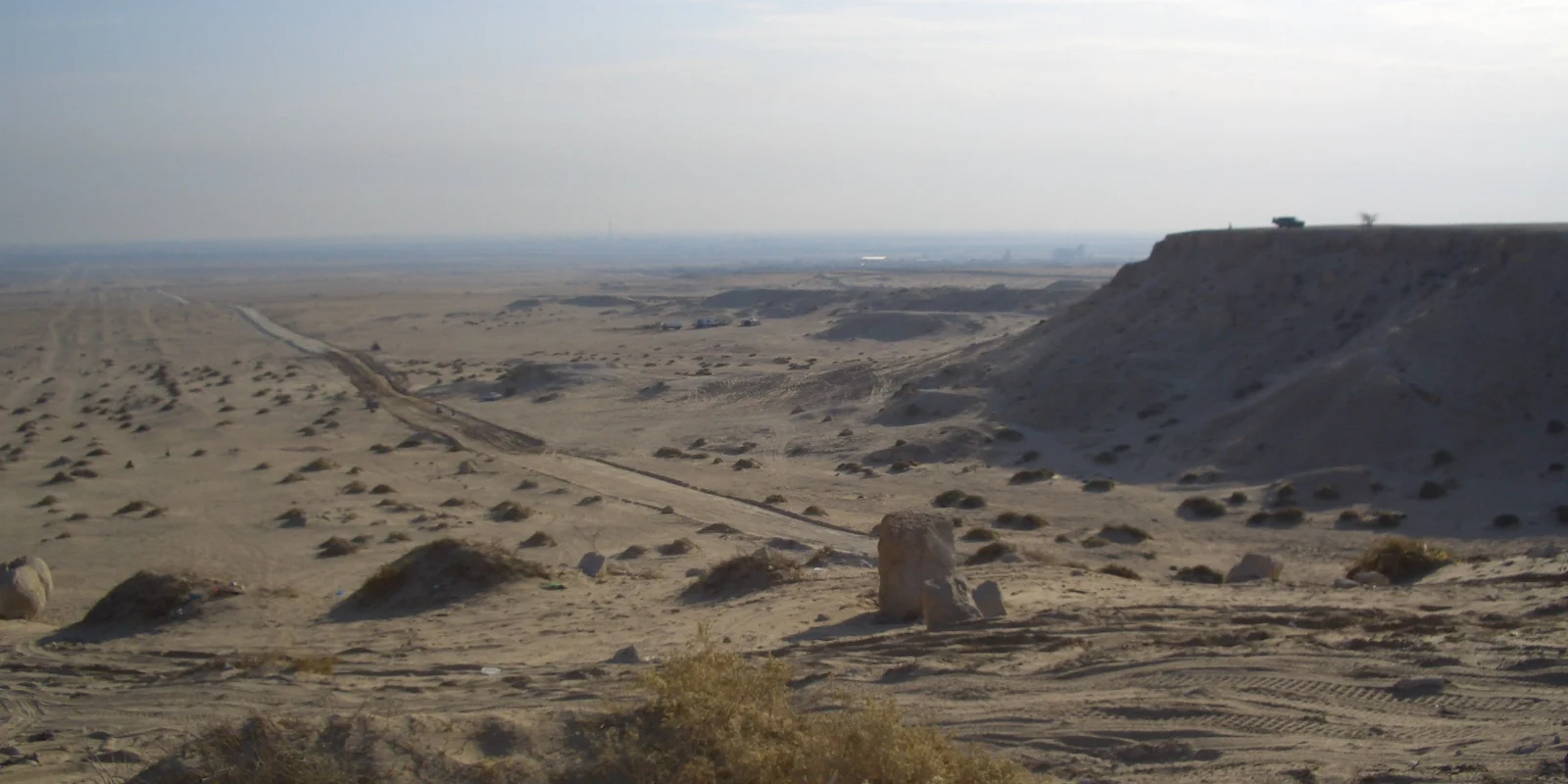
The story reached the world on November 13 and 14, 1978, in a United Press International dispatch that ran from Indianapolis to Johannesburg. “The first flying saucer reported in oil-rich Kuwait came without sound, was as big as a jumbo jet, cylindrical in shape, and had a huge dome and a flashing red light,” it began. “After seven minutes in a Kuwaiti oil field, it took off without a trace.” The witnesses were seven technicians of the Kuwait Oil Company, one of them an American. The object had come down on Friday at Umm al-Aish, in the northern oil fields, about 250 yards from a pumping station, and while it sat there the telecommunications failed and the pumps stopped. As soon as it took off, the witnesses said, the pumping equipment started working again. They said they had been “frozen with horror,” that they had hesitated to go any closer, and that they were certain there were no human beings inside. It was, they insisted, definitely not a helicopter.
Sources: Oil workers report seeing flying saucer: first for KuwaitWorld round-up: Kuwait — huge UFO makes silent landingUFOs over Kuwait
The open door
The Kuwaiti press, which ran the story in its largest type, told it with more texture. According to Agence France-Presse, the daily Al-Qabas published a statement from the director general of public security, Brigadier Mohammed Al-Hamad, who allowed in the wire reports that, if true, it was a first for his country, and said it had begun when technicians at the oil company’s control center saw on their computer panels that the Umm al-Aish station had stopped working. Seven men were sent out to see why. They found the station’s main door standing open and its equipment idle for no reason they could see, and some 250 meters away a disc-shaped object topped with a red dome, larger than a plane. As they edged toward it, it began to rise vertically and was gone. Back at the station, the equipment was running as if nothing had happened. Italian agency reports drawn from Al-Qabas and Al-Watan told it differently. In their version four employees approached an object bathed in a powerful light, and their repeated calls to the Interior Ministry would not go through because every line in the area was dead. Police later found a door numbered 24 at a satellite station standing open, though the guard swore he had the key and had never unlocked it. An American UFO newsletter, drawing on the press office of the United Arab Emirates embassy in Washington and U.S. papers, added that the thing had glowed a bright orange-red and had come down silently “in a motion like a falling leaf.”
Sources: Oil extraction at a standstill due to UFOVisitati dagli UFO anche i paesi del petrolio?UFO landing shuts down oilfield in KuwaitForeign sighting backlog: Kuwaiti landingOil workers report seeing flying saucer: first for Kuwait
Gathering Centre No. 24
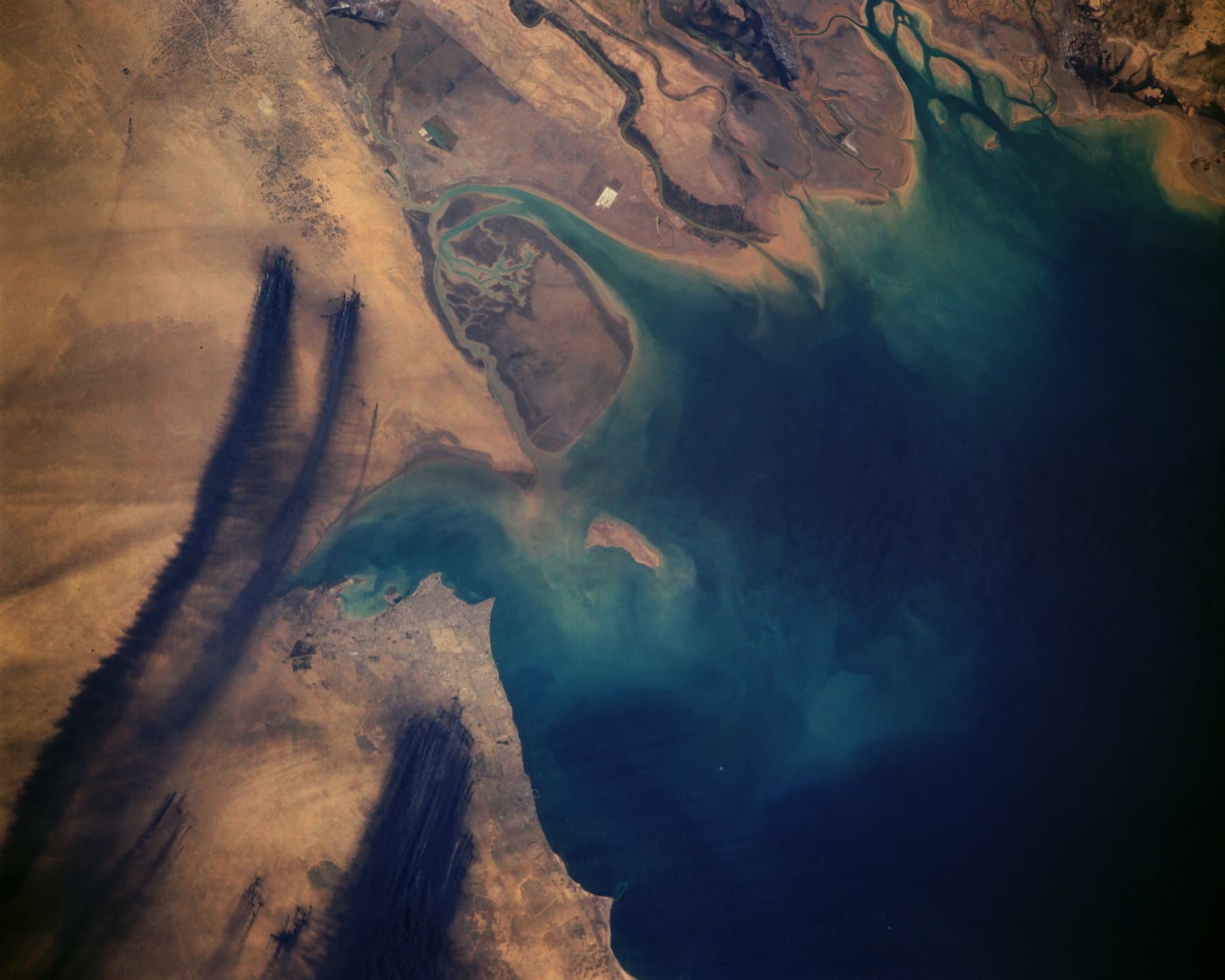
The committee that later investigated the case put the first sighting a little earlier and a little farther from the headlines. By its account, published in the Kuwait Times in January, it happened at 12:50 a.m. on November 9, 1978, near the oil company’s Gathering Centre No. 24, north of Kuwait City, one of the stations where crude from the northern wells was gathered before being pumped on. One group of people saw the flying object from about 100 meters away and another from about five kilometers; they judged it about 45 meters across, hanging some 20 meters above the ground, and it stayed in sight for around ten minutes before it disappeared. At 4 a.m. the same night it was seen again near the same place. The Kuwait Times had reported in November that the sighting at Centre No. 24 was confirmed by the staff of Centre No. 15, who said they watched the object switch off its lights and vanish. A German translation of the committee’s list adds that Centre No. 24 shut down. The wire reports and the committee are probably describing the same long night; the American wire services filed it under Friday, November 10.
Sources: Kuwait: Regeringskomiteens rapport om UFOerUFOs über KuwaitUFOs in Arab nationsUFOs over Kuwait
Cameras for the night shift
The object did not stay away. On November 15 a UPI dispatch from Beirut said it had been seen again at Umm al-Aish while investigators were still looking into its first appearance. Rumors went round that the cabinet had discussed it; on November 16 Brigadier Al-Hamad denied that any cabinet committee existed, said Kuwait lacked the technical means to confirm or deny that a UFO had crossed its airspace, and left the matter to the Kuwait Institute for Scientific Research (KISR), whose team, with police and soldiers, combed the landing area and found nothing. The same day the Kuwait Times reported that the oil company had issued cameras to its field staff so they could photograph the object if it came back; two days later a company spokesman denied it. Then on Tuesday, November 21, between 5:30 and 6 a.m., workers at the Sabriya field near the Iraqi border watched an object fly over a twenty-foot water tower and hover for half an hour. As before, the long-distance lines went dead while the internal phones kept working, so the men could call their supervisor, who ran outside in time to see it. Yet one man, the Arab Times reported, had been given a camera by the oil company “to record just such a reoccurrence,” and took a number of pictures. On November 24 UPI reported that the film had come back blank.
Sources: UFOs in Arab nationsUFOs over KuwaitForeign sighting backlog: Kuwaiti landingVisitati dagli UFO anche i paesi del petrolio?Reaparece otroInvisible UFO
A committee of scientists
By then the government had moved. Around November 20 it set up a special committee, and the Minister of State for Cabinet Affairs, Abdul Aziz Hussein, told reporters, the AP said, that it would be made up of scientists, civil aviation officials and Interior Ministry representatives. KISR, of which Hussein was chairman, took the lead, with engineers and officials from the ministries of the Interior, Defense, Communications, and Electricity and Water, and from civil aviation. A marine biologist at the institute, P. G. Jacob, wrote to American UFO groups that the Sabriya photographs and the eyewitness statements had been handed to a special committee of the Council of Ministers, and that the details would probably never be published. A West German diplomat, answering a letter from a Mannheim UFO investigator, doubted the results would ever be released. The AP story offered yet another picture of the first landing, in the words of a seven-man repair crew: “a cylindrical body much resembling a Boeing 747 jumbo jet with a red dome.”
Sources: Kuwait forms panel after UFO sightingsKuwait: Regeringskomiteens rapport om UFOerUFOs in Arab nationsForeign sighting backlog: Kuwaiti landingCENAP Report no. 35
Down the Gulf
The lights seemed to travel south. At 6:30 p.m. on November 23, eleven people in Abu Dhabi saw a “fluorescent, wedge-shaped object” flash for a few seconds in a swath of glittering orange light, and the United Arab Emirates’ telecommunications agency told its staff, particularly at its satellite earth stations, to watch for UFOs and to photograph and track any that came back. On December 2, the Emirates’ national day, Abdullah Mohammed Salimeen, a young man who worked in the immigration office, was strolling along the shore at Dubai with a friend when he saw something hanging in the southern sky at about 150 meters. Puzzled, he took it at first for holiday fireworks, and raised his Polaroid. An American bulletin, working from a German translation, later had his head aching as he watched. The first two frames came out blank. The third, printed in the Arab Times, showed what the paper called “a disc with a dome protruding in the middle and completely lit up rather like a neon sign or fluorescent tube.” Writing in the MUFON UFO Journal that winter, the American researcher Richard Hall called it the Arab world’s first UFO “flap,” as far as was known in the West, spread along some five hundred miles of the Gulf coast opposite Iran, at the very time that Australia and New Zealand were having a wave of their own.

Sources: UFOs over KuwaitUFOs in Arab nationsKuwait: Regeringskomiteens rapport om UFOer
An item at the United Nations
Kuwait even reached New York. On November 27, 1978, while the committee was starting its work, the astronomer J. Allen Hynek addressed the United Nations Special Political Committee, which was debating a proposal from Grenada to study UFOs. Arguing for a way to share reports between nations, he offered a single example: “a brief news item about a UFO sighting made in Kuwait by a number of highly qualified engineers.” It was important, he said, that scientists everywhere learn whether there was any merit in such a report, and help investigate it. Too much, he added, remained in “newsclip” status, and was being lost.
Sources: Ufologists and the United Nations
Eight sightings on the list
The committee’s final tally ran to eight sightings. After the two of November 9 and a sighting at 5:30 a.m. on November 21, which it placed between Gathering Centres No. 23 and 24 and which matches the Sabriya report, people saw the object at 5:30 a.m. on November 23 near Kuwait’s satellite earth station at Umm al-Aish. At 11:30 on November 29 someone photographed it and gave the pictures to the Defense Minister, Sheikh Salem Al-Sabah. At 12:50 a.m. on December 1 an army radar officer near the border post facing Umm Qasr saw it flying fast toward Iraq. At about 4:30 a.m. on December 13 a senior police officer on duty at the Messilah palace saw it, and the next day it was seen again by a group of men at work at Umm al-Aish. The report named its trustworthy engineers and officers: Lieutenant Colonel Mohammed Al-Qutami, First Lieutenant Dawood Al-Qannai, an army sergeant, two policemen, three oil company men (Abdul Aziz Al-Awadi, Ali Hussain Al-Bloushi and Abdul Aziz Mohammed) and an Indian employee of the American engineering firm Bechtel.
Sources: Kuwait: Regeringskomiteens rapport om UFOerUFOs über Kuwait
A country with its radars switched off
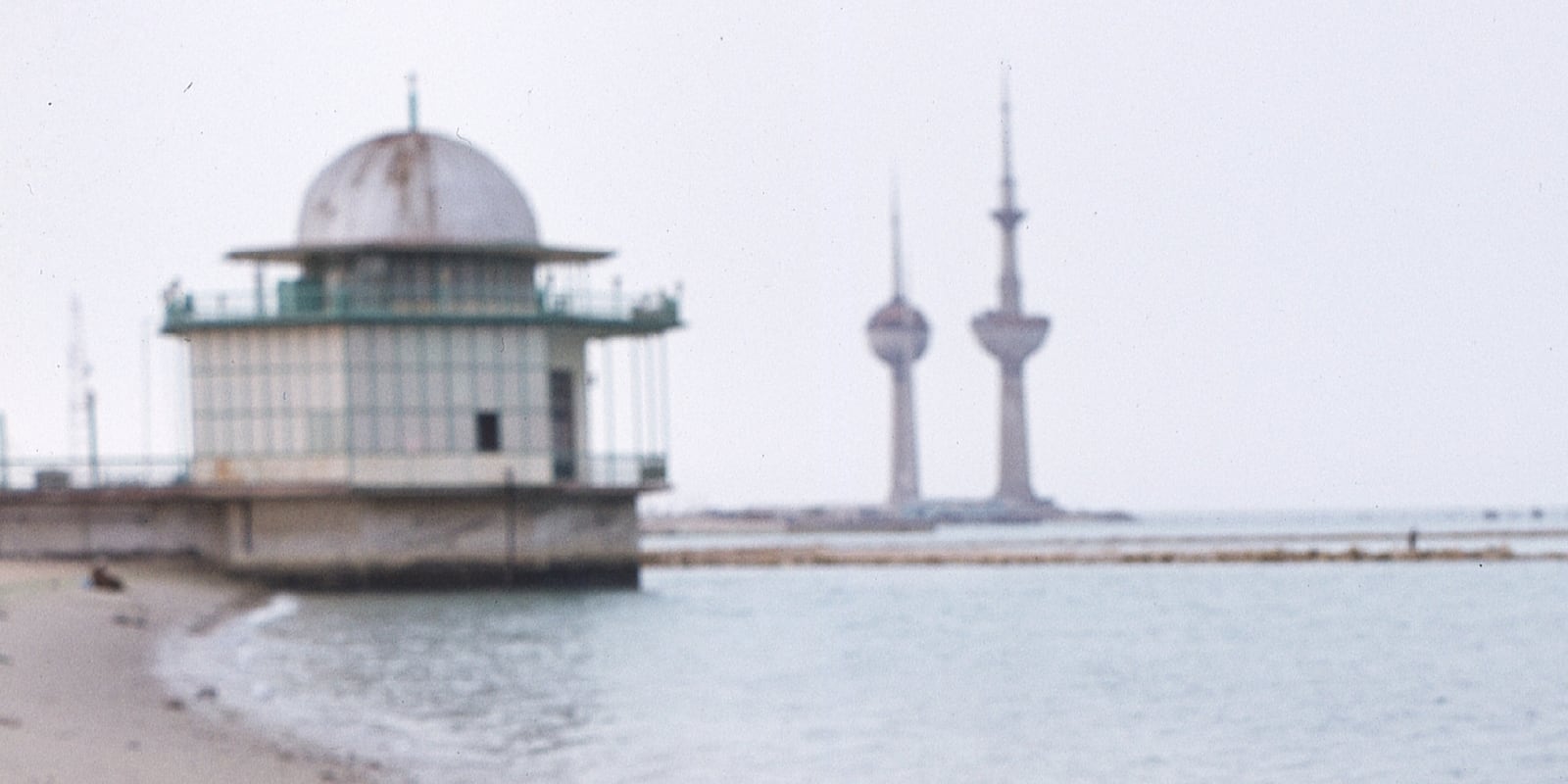
All that winter, it was a nervous season to see things in the sky over Kuwait. Across the head of the Gulf, Iran was sliding into revolution, and the U.S. embassy would soon record speculation that the lights were helicopters or hovercraft carrying refugees or money out of the country. The Kuwaiti press reported that the night visitors had gone undetected by the search radars of the country’s new American-built I-Hawk (Improved Hawk) missile system. When the Defense Minister asked why, the commander of the air defense force blamed the equipment. The truth, the U.S. ambassador cabled in a confidential report, was simpler: the radars were being run only during the force’s working hours, 7:30 a.m. to 1 p.m., and at the time of the sightings they had been switched off. The commander had not wanted to admit it. To save the reputation of American hardware, the embassy arranged for a U.S. Army team to put on two demonstrations in early January 1979, tracking Kuwaiti A-4 jets as targets. “I am completely satisfied that the equipment works as a system and that it can destroy even very low flying aircraft,” the chief of staff, Sheikh Mubarak, said afterward, adding that the systems “must work like this everyday.” A visit by the commander of Saudi Arabia’s air defenses, planned for December, was put off until the radars had passed their test.
Sources: U.S. demonstration proves effectiveness of Kuwait’s I-Hawk missile and radar systems“UFO” sightings cause security concern in Kuwait
Two hundred pages
On January 19, 1979, the committee handed its report, two hundred pages long in English and Arabic, to Abdul Aziz Hussein; it was released the next day. It came with data, experiments, illustrations and photocopies of letters from agencies around the world that had written in since November, and a tally, source unstated, of 5,887 UFO sightings worldwide. The team had examined soil and dust from the landing area under microscopes and X-rays, and photographed the area from the air with high-sensitivity film, including aerographic film 2402, described in translation as infrared; the samples showed no sign of radioactivity or electromagnetic radiation. It dismissed as baseless the idea that the objects were spy craft sent by interested powers, and it disagreed with those who believed they came from other planets or galaxies, though it saw no reason research should not proceed on that assumption. It pointed out that the landing areas were oil zones full of tall gas flares, and suggested the UFOs might be nothing more than reflections of gas, vapor or dust mixed with moisture. And it asked the government to take the question seriously: to keep supporting the investigation, set up rapid warning systems and observation posts, and guard the oil fields. Included was a drawing made from the witnesses at Umm al-Aish: a domed disc with a row of window-like cells.
Sources: Kuwait: Regeringskomiteens rapport om UFOerUFOs über Kuwait“UFO” sightings cause security concern in Kuwait
Groping in the dark
The report landed in the middle of a new sighting. On Saturday, January 20, at least ten people watched a bright object over Kuwait City, and an Arab Times cameraman, Ali Shash, photographed it. It seemed to rotate as it hovered, changing from circular to something more triangular, then “disappeared in the direction of Iran at great speed.” Two of his pictures, blots of light, were on the front page the next morning, and the U.S. embassy noted that the release of the report became “something of a media event.” The Council of Ministers took up the committee’s proposals on January 21 and told it to keep studying, at home and abroad, and to look into a station that would watch for earthquakes as well as UFOs and meteors. At a press conference at the institute, the director, Adnan Shehab Eddin, the researcher Rateb Abu Eid and the deputy director of civil defense, Major Khaled Al-Gand (Al-Akoud in another translation), said the committee attached special importance to the new photographs, but admitted it was “groping in the dark.” It could neither confirm nor deny that UFOs had appeared over Kuwait. Its seven-point summary repeated the gas-flare explanation and rated meteors probable. It ruled out reflections from flying insects, doubted that the witnesses had merely imagined things after reading the first newspaper report, and conceded that it could not entirely rule out an advanced technology beyond its reach. The witnesses’ descriptions, it observed, matched the flying saucers of the cinema.
Sources: UFOs in Arab nationsUFOs über KuwaitKuwait: Regeringskomiteens rapport om UFOer“UFO” sightings cause security concern in KuwaitThe story of the first UFO sighting in Kuwait
The pumps that restarted themselves
The most intriguing detail in the whole affair was never in the report. On January 29, 1979, Ambassador Frank Maestrone sent Washington an unclassified telegram headed “‘UFO’ sightings cause security concern in Kuwait,” copied to the embassies around the Gulf and in London, the Secretary of Defense and the U.S. European Command, and, under the State Department’s routine distribution, to offices including NASA, the CIA and the NSA. Some local wags, he wrote, had made light of the first sightings, “which came near the end of the long and traditionally exuberant holiday celebrations of Id-al-Adha.” But the embassy had since learned of something that “confounded some of our most level-headed Kuwaiti friends,” and might have been what persuaded the government to take the matter seriously. A senior official of the oil company told the embassy that the object that first appeared over the northern fields had done strange things to the company’s automatic pumping equipment. The system was designed to shut itself down when a failure threatened serious damage, and could only be restarted by hand. When the UFO appeared, it shut itself down. When the UFO vanished, it started itself up again. “This event,” the ambassador noted, “was not addressed by the KISR committee report.” The institute’s representative, Rateb Abu Eid (Ratib Abu Id in the cable), had told an embassy officer that the scientists did not know enough about the phenomena to say with certainty that they were not spaceships. “Even those who are not inclined to believe in visitors from outer space,” the cable concluded, “do tend to think something strange has been going on in Kuwaiti airspace.”
Sources: “UFO” sightings cause security concern in KuwaitU.S. State Department UFO documents, reviewed and released February 7, 2000Kuwait Oil UFO/E-M Incidents; Nov. 9 – Dec. 14, 1978
Terror in Kuwait
Outside Kuwait the story grew wilder. In 1979 a newsstand magazine, UFO Update!, ran “Terror in Kuwait,” a first-person “eye witness report” billed as the work of an American oil executive writing under the pen name Vincent Barns. In his telling the craft was round, silver and twice the size of a 747. Its dome rotated to show a window and a tube like a gun barrel; in the dead radio room a man told him, “Everything’s simply gone dead”; a blue beam left him drowsy and dreamlike; figures that looked both human and alien waved at him through a transparent inner dome; and the ground he stood on seemed to rise into a room the size of a football field, full of turning wheels and humming, before he found himself back outside with only ten minutes gone. None of it appears in any other account, and the magazine printed the UPI clipping beside it. In June 1981 the London monthly The Middle East added that, according to one report, molten glass had later been found on the sand where it landed, and that the Sabriya film had come back blank “as if it had been exposed to x-rays.” The Kuwait Times, for its part, answered the visitors with a mock open letter: Kuwaitis did not hold it against them that they had cut the phones for seven minutes, “because we are accustomed to such events.”
Sources: UFO terror in Kuwait! From summer 1979Gulf UFOsForeign sighting backlog: Kuwaiti landing
The half moon over Wafra
Kuwait’s skies had one more act. At about 9 p.m. on June 20, 1980, the operations director of Kuwait Airways, the pilot H. Shamlan, was bringing flight KU542 down from Cairo through 15,000 feet toward the Wafra beacon in the south of the country when he and his crew saw “a huge ball of bright light shaped like a hemisphere (half a moon shape),” perhaps ten miles across, northwest of Kuwait City and moving east. It stayed in view until the airliner dropped below the haze on its approach. The crew of KU708, inbound from Khartoum ninety miles out, reported the same thing, and neither Kuwait’s radar nor their own weather radar showed a trace. The embassy’s acting deputy chief of mission, who knew Shamlan, judged him level-headed and competent. In its cable of July 8, 1980, the embassy recalled that the 1978 UFO had done strange things to the oil company’s pumping system, and reported that some wags were now blaming Kuwait’s current power failures on UFOs.
Sources: U.S. State Department UFO documents, reviewed and released February 7, 2000Kuwait Oil UFO/E-M Incidents; Nov. 9 – Dec. 14, 1978
It happened in Kuwait
At home the case settled into memory, and memory moved it. A 2004 book on strange happenings in Kuwait, Sanad Rashid Dakhil’s Hadath fi al-Kuwait (It Happened in Kuwait), dated the Umm al-Aish landing to 1970, and Arabic websites and later English retellings repeat the date, some telling it as two separate landings, one of them beside the satellite station. In 2020 the newspaper Al-Qabas returned to its own 1978 coverage in a video segment, recalling the engineers and technicians at Umm al-Aish, the seven minutes, the American expert, and the police chief who vouched for them, and replaying an old Kuwait TV interview with a man who had seen a saucer over the Qadsia sports club. Beneath it, viewers added what their families remembered: an elder who said even wristwatches stopped and started again; a grandfather who saw it glowing low over a dark road on his way to the station; a rumor that the saucers had come to drink the station’s electricity. Others quoted the actor Saad Al-Faraj’s stage catchphrase, which translates roughly as “I’d like to believe it, but it’s a stretch.” A Kuwaiti blogger calls it the first UFO sighting in the Arab world.
Sources: طبق طائر فوق نادي القادسية.. قصة حدثت في سنة 1978طبق طائر فوق نادي القادسية.. قصة حدثت في سنة 1978حدث في الكويتHistory of UFO sightings in KuwaitDo Arabs believe in aliens?First UFO sighting in the Arab world was in KuwaitThe story of the first UFO sighting in Kuwait
What survives
The committee’s two-hundred-page report has never been published and does not appear to be online; its findings survive in the Kuwait Times and Arab Times of January 21 and 24, 1979, known today mainly through Danish and German translations that UFO groups made from clippings sent by readers in the Gulf and by the West German embassy. The contemporary Kuwaiti coverage in Al-Qabas, Al-Watan and Al-Anba is known through wire reports. The strongest primary documents are American: the embassy’s unclassified cable of January 29, 1979, released under the Freedom of Information Act and publicized by Citizens Against UFO Secrecy in October 1979, released again in 2000 and declassified in the State Department’s 2014 systematic review; its confidential companion cable on the air-defense radars; and the 1980 cable on the Kuwait Airways sighting. None of the photographs taken at Sabriya, handed to the Defense Minister or published on January 21 is available under a free license, and we have found no published analysis of any of them.
Sources: “UFO” sightings cause security concern in KuwaitU.S. demonstration proves effectiveness of Kuwait’s I-Hawk missile and radar systemsJust Cause vol. 1 no. 8U.S. State Department UFO documents, reviewed and released February 7, 2000Kuwait: Regeringskomiteens rapport om UFOerUFOs über KuwaitKoweit, observations de 1978
How the details moved
The first landing has several dates: 12:50 a.m. on November 9 in the committee’s list, Thursday, November 9 in the Kuwait Times, Friday, November 10 in the UPI story, and 1:09 GMT on November 10 in the MARCEN account, which cites the UAE embassy press office and U.S. papers. Its distance from Kuwait City is 90 miles in the American papers, 150 kilometers in the South African one and 50 kilometers in the French and Italian agency reports. The witnesses number seven in the wires and four in the Italian account; the wires include an American, while the committee’s named witnesses include army and police officers and an Indian Bechtel employee but no American. The object is cylindrical with a dome, a disc with a red dome, and, in the committee’s figures, about 45 meters across, hovering 20 meters up rather than landing. The satellite station’s mysterious door numbered 24 may be an echo of Gathering Centre No. 24.
Sources: Oil workers report seeing flying saucer: first for KuwaitWorld round-up: Kuwait — huge UFO makes silent landingOil extraction at a standstill due to UFOVisitati dagli UFO anche i paesi del petrolio?UFO landing shuts down oilfield in KuwaitKuwait: Regeringskomiteens rapport om UFOer
Explanations on offer
The committee’s own leading suggestion was the oil fields themselves: light from tall gas flares, distorted by humid air, vapor and dust. The Mannheim investigator Hansjürgen Köhler agreed. The committee also rated meteors probable. The Center for UFO Studies judged that later reports from Abu Dhabi and from a pilot over Kuwait on November 29 sounded like meteors, but filed the Umm al-Aish landing as a close encounter of the second kind with electromagnetic effects. The American embassy recorded talk of helicopters or hovercraft out of revolutionary Iran; commenters on the Al-Qabas video suggested a floodlight at the Qadsia club for the Kuwait City photographs, and a technical fault that an American employee pinned on a flying saucer to keep the crew out of trouble. None of these accounts for everything the first witnesses described: a large object at close range for several minutes, silent, and, if the oil company official was right, able to stop and restart equipment that should have needed a human hand.
Sources: Kuwait: Regeringskomiteens rapport om UFOerUFOs über KuwaitForeign sighting backlog: Kuwaiti landing“UFO” sightings cause security concern in Kuwaitطبق طائر فوق نادي القادسية.. قصة حدثت في سنة 1978
The pumps rest on one source
The self-restarting pumps rest on one unnamed senior oil company official speaking to American diplomats some weeks later, in a cable dated January 29, 1979; the embassy noted that the committee report did not address it. The earlier wire reports say the pumps started working again when the object left; the MARCEN account says the station started functioning by itself; and in the AFP account the men found the station idle with its door open, then running normally on their return. No station log, engineering report or statement by the American technician has surfaced.
Sources: “UFO” sightings cause security concern in KuwaitOil workers report seeing flying saucer: first for KuwaitUFO landing shuts down oilfield in KuwaitOil extraction at a standstill due to UFO
Classification and evidence note
This archive files the Kuwait case as a close encounter of the second kind because its core report is of a large object on or near the ground, at close range, with interference to machinery and communications, as recorded in the contemporary wire reports and in the U.S. embassy’s account of the pumping system. Several witnesses reported it, and a government-appointed scientific committee investigated it without reaching a firm conclusion. The first-person “Terror in Kuwait” magazine story and the 1970 dating found in later retellings are treated as lore, not testimony.
Sources: Oil workers report seeing flying saucer: first for Kuwait“UFO” sightings cause security concern in KuwaitForeign sighting backlog: Kuwaiti landingUFO terror in Kuwait! From summer 1979
- 9 NOV 1978 · 12:50 AM
Near Kuwait Oil Company Gathering Centre No. 24, two groups watch an object about 45 meters wide hover 20 meters above the ground for ten minutes.
- 9 NOV 1978 · 4:00 AM
The object is seen again near the same gathering centre.
- 10 NOV 1978
By the wire services’ date, seven technicians see a domed object land near the Umm al-Aish pumping station for seven minutes.
- 13–14 NOV 1978
UPI and AFP carry the story worldwide; Al-Qabas publishes the security chief’s account.
- 15–16 NOV 1978
A second appearance at Umm al-Aish is reported; Brigadier Al-Hamad says Kuwait cannot confirm or deny a UFO.
- C. 20 NOV 1978
The government forms a committee of scientists and officials led by the Kuwait Institute for Scientific Research.
- 21 NOV 1978 · 5:30–6:00 AM
An object hovers over a water tower at the Sabriya field for half an hour; a worker’s film later comes back blank.
- 23 NOV 1978
A sighting near the satellite earth station at Umm al-Aish; that evening, eleven people in Abu Dhabi see an orange wedge.
- 27 NOV 1978
J. Allen Hynek cites the Kuwait engineers’ sighting at the United Nations.
- 29 NOV 1978
Photographs of the object are handed to the Defense Minister, Sheikh Salem Al-Sabah.
- 1 DEC 1978 · 12:50 AM
An army radar officer near the border post facing Umm Qasr sees the object race toward Iraq.
- 2 DEC 1978
In Dubai, Abdullah Mohammed Salimeen photographs a glowing domed disc on the third frame of his Polaroid.
- 13–14 DEC 1978
A police officer at the Messilah palace, then workers at Umm al-Aish, report the last sightings on the committee’s list.
- EARLY JAN 1979
U.S. Army demonstrations show Kuwait’s I-Hawk radars work when they are switched on.
- 19–21 JAN 1979
The committee delivers its report; as it is released, Ali Shash photographs a light over Kuwait City, and the cabinet orders further study.
- 23 JAN 1979
At a press conference the committee says it is “groping in the dark.”
- 29 JAN 1979
Ambassador Maestrone cables Washington about the sightings and the self-restarting pumps.
- 20 JUN 1980
Two Kuwait Airways crews see a vast luminous hemisphere; the embassy reports it on July 8.
- 2004
Sanad Rashid Dakhil’s book It Happened in Kuwait dates the Umm al-Aish landing to 1970.
- 5 MAY 2020
Al-Qabas revisits its 1978 coverage in a video segment.
Sources & interviews
“UFO” sightings cause security concern in KuwaitU.S. Embassy Kuwait to the Secretary of State · telegram KUWAIT 0486, January 29, 1979, signed by Ambassador Frank E. Maestrone · unclassified · WikiLeaks Public Library of U.S. DiplomacyU.S. demonstration proves effectiveness of Kuwait’s I-Hawk missile and radar systemsU.S. Embassy Kuwait · telegram KUWAIT 0508, January 29, 1979, originally confidential · the separate telegram on the air-defense radars cited in KUWAIT 0486 · WikiLeaks Public Library of U.S. DiplomacyU.S. State Department UFO documents, reviewed and released February 7, 2000Computer UFO Network (CUFON) · transcriptions of FOIA case 199404243, including KUWAIT 0486 and the July 1980 cable KUWAIT 3223 · archived copyKuwait Oil UFO/E-M Incidents; Nov. 9 – Dec. 14, 1978Francis Ridge · NICAP · 2012 · with the State Department cables on the Kuwait sightingsOil workers report seeing flying saucer: first for KuwaitUnited Press International · Indianapolis Star, November 14, 1978, reproduced in the UFO Newsclipping Service no. 112, November 1978 · Internet ArchiveWorld round-up: Kuwait — huge UFO makes silent landingFlying Saucer Review vol. 25 no. 2 · 1979 · quoting the UPI story in the Rand Daily Mail, Johannesburg, November 14, 1978 · Internet ArchiveKuwait forms panel after UFO sightingsAssociated Press · Arkansas Gazette, November 24, 1978, reproduced in the UFO Newsclipping Service no. 113, December 1978 · Internet ArchiveInvisible UFOUnited Press International · The Guardian, London, November 24, 1978, reproduced in the UFO Newsclipping Service no. 114, January 1979 · Internet ArchiveOil extraction at a standstill due to UFOAgence France-Presse · Crónica, Buenos Aires, November 14, 1978, citing Al-Qabas, in the English translation printed in the UFO Newsclipping Service no. 115, February 1979 · Internet ArchiveVisitati dagli UFO anche i paesi del petrolio?Lidia Parenti · Notiziario UFO vol. 2 no. 2 · February 1979 · Italian agency reports of November 13, 15 and 22, 1978, citing Al-Qabas, Al-Watan and Al-Anba · Internet ArchiveUFO landing shuts down oilfield in KuwaitMARCEN Journal vol. 2 no. 1 · January 1979, p. 52 · from the press office of the United Arab Emirates embassy in Washington and U.S. newspapers · Internet ArchiveReaparece otroUnited Press International from Beirut · Crónica, Buenos Aires, November 15, 1978 · Internet ArchiveJust Cause vol. 1 no. 8Citizens Against UFO Secrecy · September 1979 · lists KUWAIT 0486 as “Document P” among State Department papers released under the Freedom of Information Act · Internet ArchiveUFOs over KuwaitThe A.P.R.O. Bulletin vol. 27 no. 7 · January 1979 · from the Kuwait Times, the Arab Times, UPI and CENAP · Internet ArchiveUFOs in Arab nationsRichard Hall · MUFON UFO Journal no. 133 · January–February 1979 · with the letter of KISR biologist P. G. Jacob and the Kuwait Times and Arab Times reports · Internet ArchiveCENAP Report no. 35Hansjürgen Köhler · Centrales Erforschungsnetz außergewöhnlicher Himmelsphänomene, Mannheim · 1978–79 · with the West German embassy in Kuwait’s letter of December 12, 1978 · Internet ArchiveUFOs über KuwaitHansjürgen Köhler · CENAP Report no. 37 · 1979 · German translations of the Arab Times and Kuwait Times reports of January 24, 1979 on the KISR committee, with the witness drawing · Internet ArchiveKuwait: Regeringskomiteens rapport om UFOerUFO-NYT no. 4, 1980, pp. 161–166 · SUFOI, Denmark · Danish translations of the Kuwait Times of January 21 and 24, 1979 on the KISR report, and the Arab Times of December 10, 1978 · Internet ArchiveUfologists and the United NationsInternational UFO Reporter vol. 3 no. 10–11 · October–November 1978 · J. Allen Hynek’s statement to the UN Special Political Committee, November 27, 1978 · Internet ArchiveForeign sighting backlog: Kuwaiti landingInternational UFO Reporter vol. 5 no. 1a · January 1980 · Center for UFO Studies · Internet ArchiveGulf UFOsThe Middle East magazine · June 1981, p. 45 · Internet Archive (restricted)First UFO sighting in the Arab world was in KuwaitMark · 2:48AM (248am.com), Kuwait · 2013The story of the first UFO sighting in KuwaitMark · 2:48AM (248am.com) · May 23, 2021 · on a Kuwait TV interview with the Arab Times photographer Ali Shash and an eyewitnessUFO terror in Kuwait! From summer 1979Mark · 2:48AM (248am.com) · September 30, 2025 · with photographs of UFO Update! no. 3 and the embassy cablesطبق طائر فوق نادي القادسية.. قصة حدثت في سنة 1978Hadi Darwish · Bein Al-Sutour, Al-Qabas · May 5, 2020 · Arabic-language video segmentHistory of UFO sightings in KuwaitParanormal Arabia · February 2010Do Arabs believe in aliens?Kuwait Times · December 2, 2017حدث في الكويتSanad Rashid Dakhil · It Happened in Kuwait · 2004 · Goodreads recordطبق طائر فوق نادي القادسية.. قصة حدثت في سنة 1978AlQabas TV · YouTube · 2020 · with viewers’ recollections in the commentsKoweit, observations de 1978Patrick Gross · Les OVNIs vus de près · A–Z entry, updated August 2010Spotted an error, or know a better source? Write to hello@uap.fun.
Connected files
The Tehran InterceptTwo years earlier across the Gulf, another brilliant light, instruments that failed on approach, and a U.S. attaché’s cable to Washington.The Levelland NightThe classic case of machinery dying in a UFO’s presence and starting again once it left, on the oil and cotton plains of West Texas.The Landing at Trans-en-ProvenceAnother landing report put to government scientists, who analyzed the soil where the object was said to have touched down.The Lights beside the Newspaper PlaneNew Zealand’s sightings of December 1978, part of the same season Richard Hall saw stretching from the Gulf to the South Pacific.J. Allen HynekThe astronomer who held up the Kuwait engineers as an example when he addressed the United Nations in November 1978.Discuss this case
Compare notes with other readers: witness details, sources, and the parts that still do not add up.
Open the discussion