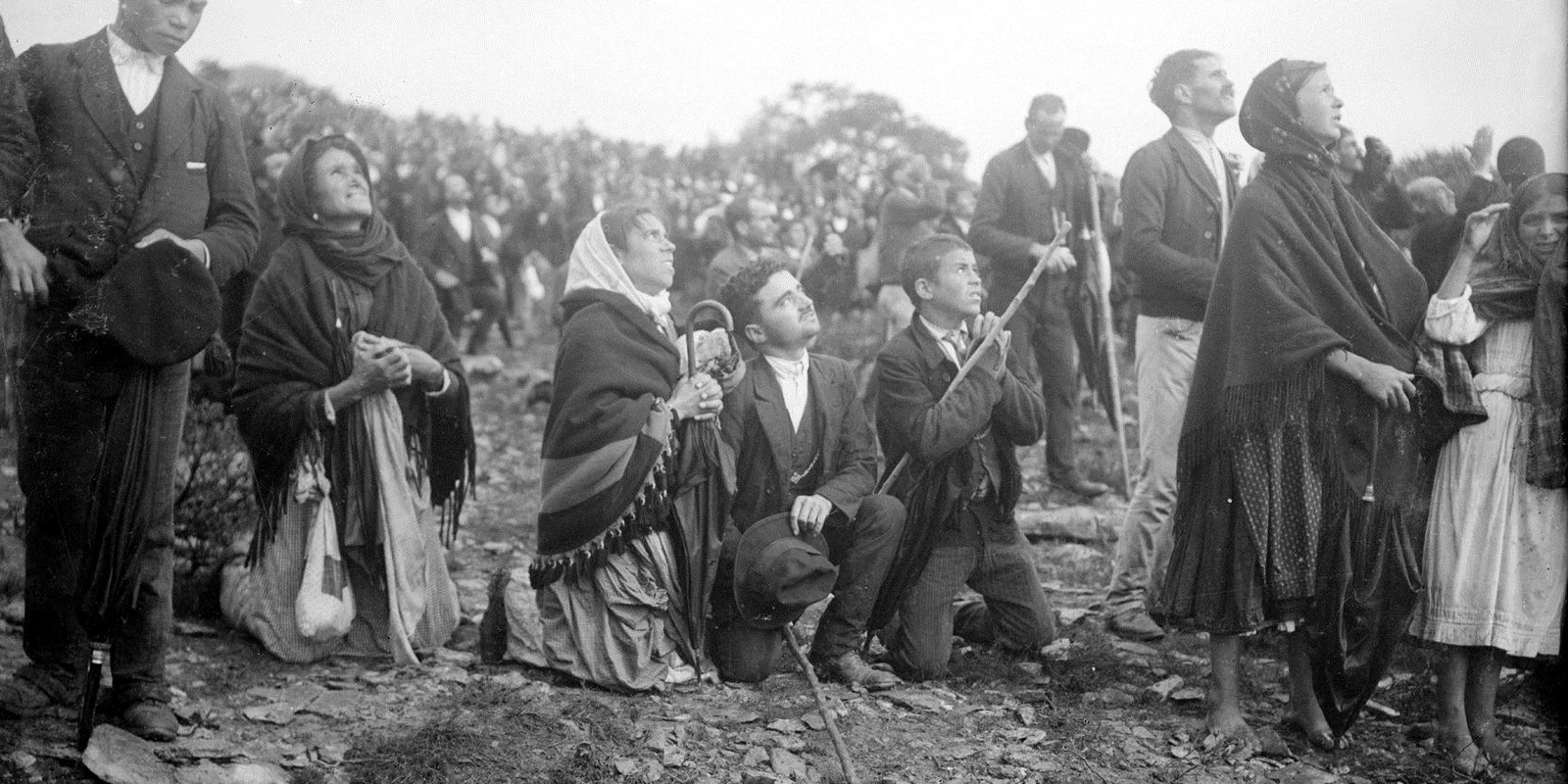
Three children and a flash of lightning
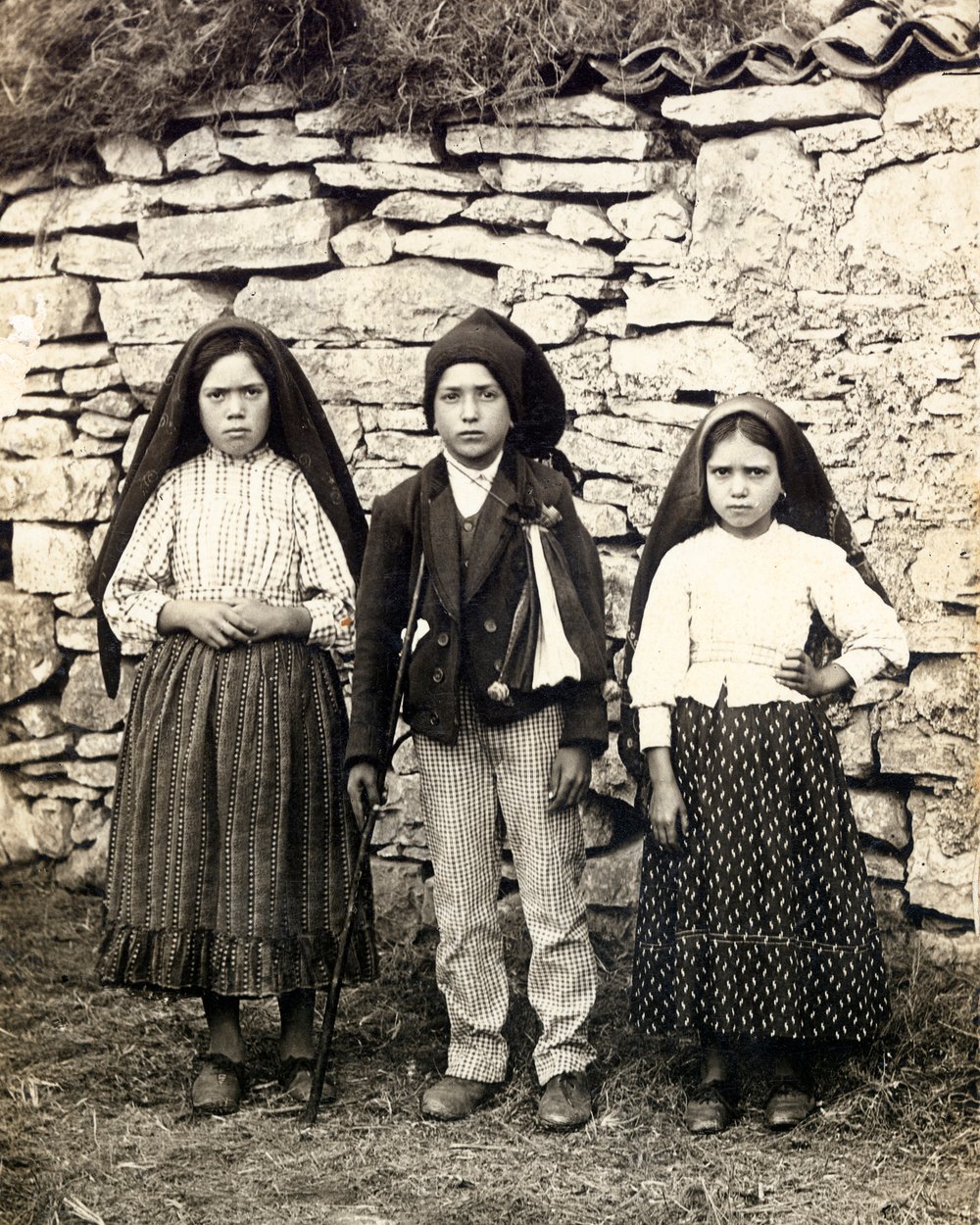
In 1917 Portugal was a fiercely anticlerical republic, not yet seven years old, and its soldiers were fighting in France. Fátima was a parish of stone-walled hamlets on the dry limestone plateau of the Serra de Aire, and the Cova da Iria was a hollow belonging to the parents of Lúcia dos Santos, a ten-year-old shepherd girl from the hamlet of Aljustrel. On Sunday, May 13, Lúcia was grazing the family’s sheep there with her cousins Francisco and Jacinta Marto, eight and seven. The account the parish priest, Father Manuel Marques Ferreira, took down from them about two weeks later is plain and strange. First they saw “um relâmpago,” a flash of lightning, then another, and then “uma mulher,” a woman, standing on top of a small holm oak. She wore white stockings, a white skirt worked with gold, a white jacket and a white mantle, a gold cord and very small earrings, and she held her hands raised. She told them to come back on the thirteenth of each month for six months. Then, the priest wrote, she “abalou pelo ar acima,” went off up into the air. The children called her simply the Lady; the faithful would call her Our Lady. They went home and could not keep the secret, and by June a few dozen curious neighbors were following them to the tree.
Sources: Interrogatórios do pároco de Fátima (maio–julho de 1917)Aparições de Fátima
The small lady in the knee-length skirt
The Lady of the earliest interrogations is not the one on the holy cards. In June she arrived “em linha oblíqua do lado do nascente,” on a slanting line from the east, and her gold-corded skirt “só chegava ao joelho,” came only to the knee. She had black eyes and was “de meia altura,” of middling height. In July, seven-year-old Jacinta told the priest she had seen “uma mulher pequena,” a small woman, the size of a neighbor’s daughter then about fifteen, and that when the woman left, “the sky opened and her feet were left caught while her body was already hidden.” A priest who questioned Jacinta in October wrote down that the Lady was as tall as Virgínia, a twelve-year-old village girl: 1.1 meters. Canon Manuel Nunes Formigão, a professor at the seminary of Santarém who came to question the children in the autumn, recorded two gold cords falling from her neck to a gold tassel at her waist and small yellow rings at her ears. Lúcia told him she sometimes had to look away because “ela às vezes cega,” she is sometimes blinding; Francisco could look at her face only a little “por causa da luz,” because of the light. Formigão confided his own worry to his notes: a Lady whose dress reached only to the knees was “the gravest difficulty” against the apparition being supernatural, and might be “a mystification prepared by the spirit of darkness.”
Sources: Interrogatórios do pároco de Fátima (maio–julho de 1917)Interrogatório do Padre José Ferreira de LacerdaInterrogatórios do Cónego Manuel Nunes Formigão
A voice like a bee
The crowd could not see the Lady or hear her. What some of them heard instead became one of the most quoted details in the case. Maria Carreira, a neighbor later known as Maria da Capelinha, Maria of the Little Chapel, for the chapel she tended, testified in 1923 that in June, when Lúcia spoke to the tree, she heard “uma zunida,” a buzzing, coming from it, without making out a single word. At the end she heard something like the whistle of a firework rocket gathering speed and saw a light cloud rise from the holm oak and drift away to the east, and afterward the top shoots of the little tree were bent eastward, “como se os vestidos os tivessem tombado nessa direção,” as if the Lady’s clothes had pushed them over. In July, a villager named Jacinto de Almeida Lopes heard from the tree “a very faint voice like the buzzing of a bee,” and on October 11, 1917, another villager told Canon Formigão that a rumbling had been heard in July and August and that some people claimed to hear the sound of the answers. The first newspaper notice, in Lisbon’s O Século on July 23, reported a noise “like the rumble of thunder,” quoted the seer describing “a kind of very pretty doll” with a halo that called to her in a thin, melodious voice, and wondered whether the whole business was a scheme to turn the Serra de Aire into a miracle spa to rival Lourdes.
Sources: Processo canónico: depoimentos de setembro de 1923Inquérito paroquialInterrogatórios do Cónego Manuel Nunes FormigãoEspeculação financeira?
The administrator and the thunderclap
On August 13 the children never reached the tree. Artur de Oliveira Santos, the republican administrator of Vila Nova de Ourém, took them from the Fátima presbytery in his carriage and held them in Ourém for two days; Lúcia later said he threatened to fry them in oil. The crowd waiting in the Cova, some five or six thousand by the parish priest’s count that month, saw signs of their own anyway. Leonor de Avelar e Silva Constâncio, who was there, wrote in October that the sky was covered by a light cloud like the finest white lace, pink in places, that the sun hid for an instant and left everyone lit by “uma luz esquisita,” an odd light, with yellow patches on the ground and on their clothes and a sharp drop in temperature. Someone cried out to look at the mist around the tree; to her it looked like smoke rising in light spirals, as if from a perfume burner, and a man from Lapas shouted that he could see the Lady between two clouds. A witness told the 1918 parish inquiry of a loud, inexplicable bang beside the tree that frightened the whole crowd, so that some people fainted, and of a cloud with the colors of the rainbow forming near the sun. Jacinta’s father, Manuel Pedro Marto, swore in 1923 that after the bang he saw dust and mist and “uma espécie de globo luminoso girando nas nuvens,” a kind of luminous globe turning in the clouds. On August 19 the Lady returned to the children at Valinhos, a pasture near their homes. Lúcia’s mother testified in 1923 that the sprig of holm oak her daughter brought back smelled like nothing she had ever smelled, and Jacinta’s mother that her son João, eleven, heard “a roar like a rocket” as the vision left, though he saw nothing.
Sources: Relato de Leonor de Avelar e Silva ConstâncioInquérito paroquialProcesso canónico: depoimentos de setembro de 1923Interrogatório oficial de Lúcia
Stars at noon
By September 13 the crowd had grown to between fifteen and thirty thousand. Constâncio saw only a slight eclipse of the sun, but many around her saw what she called a tiny cloud “como que um pequenino floco de algodão branco,” like a little flake of white cotton, which crossed the sky from east to west like a shooting star and vanished “as if suddenly submerged.” Some said they had seen two such stars, some three. A professor from the Santarém seminary, Dr. António Maria de Figueiredo, came to the parish priest’s house that afternoon expressly to declare that he had seen “stars in a region below the stellar region.” A villager told the 1918 inquiry of falling things that looked like white flowers, which others called stars. In 1922 Inácio António Marques described the sun darkening until the moon and stars showed, and then, very high up and crossing from east to west, “uns corpos muito pequeninos, brancos como a neve,” some very small bodies white as snow: “Some say they were doves, but one could plainly see they were not birds.” The most famous account of the day is also one of the latest. Monsignor João Quaresma, later vicar-general of Leiria, described, in an account Father John de Marchi printed decades later, a luminous globe gliding slowly and majestically from east to west, and a little girl beside him crying that the Lady was rising again. Asked what he thought the globe was, his companion answered that it was Our Lady. Quaresma’s own conclusion was the sentence that ufologists would quote for decades: the children had seen the Mother of God, and “we had been granted the grace of seeing the carriage that had carried her from Heaven to the barren heath of the Serra de Aire.”
Sources: Relato de Leonor de Avelar e Silva ConstâncioInquérito paroquialDepoimento de Inácio António MarquesA Verdadeira História de Fátima
Rain on the Cova da Iria
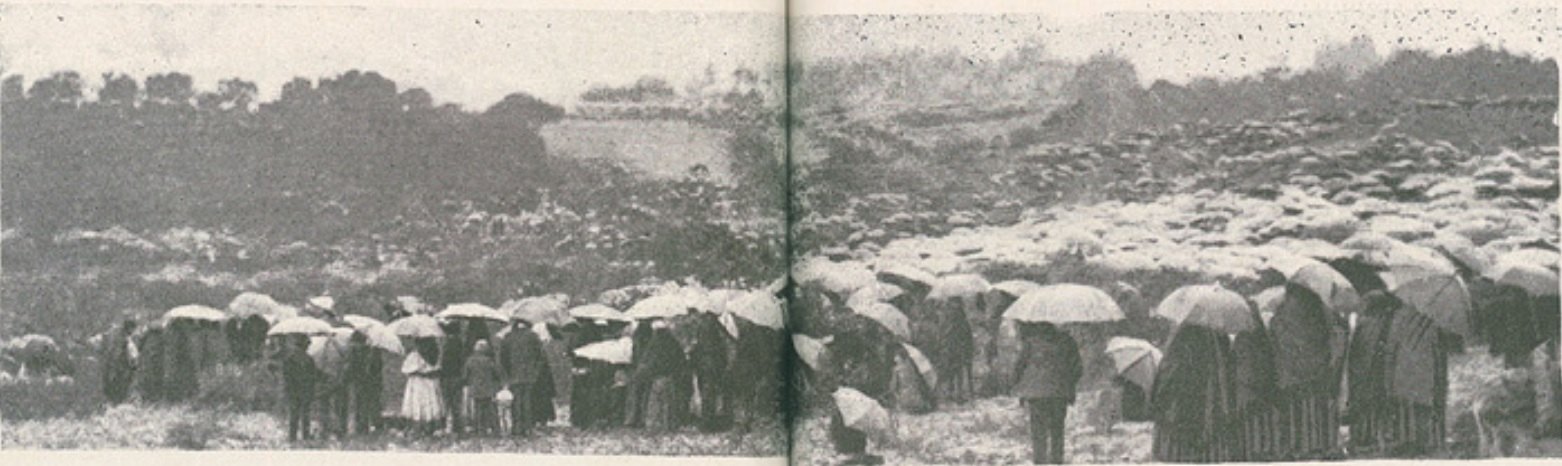
Lúcia had said that on October 13 the Lady would perform a miracle “so that everyone would believe,” and the promise was national news. O Século, the country’s largest daily and no friend of the Church, sent its star reporter Avelino de Almeida with the photographer Judah Bento Ruah. Along the road above the Cova, Almeida reported, someone counted more than a hundred automobiles and more than a hundred bicycles; a boy from an open motor coach told him that all he had seen at the Cova was “stones, carts, cars, horses and people.” At about ten the sky closed completely and it began, in Almeida’s words, to rain in earnest. It had rained in the night for the first time in months, Constâncio noted, and the fields were parched. Tens of thousands of people waited in the mud under umbrellas, wet through, singing and praying; Almeida cited dispassionate estimates of thirty or forty thousand. Even the hour was in dispute. Portugal had moved its clocks to match the warring powers, while country people kept to what Almeida called “a hora antiga,” the old hour; Constâncio was told it was “the true one.” The children arrived after one by the official clock, close to solar noon.
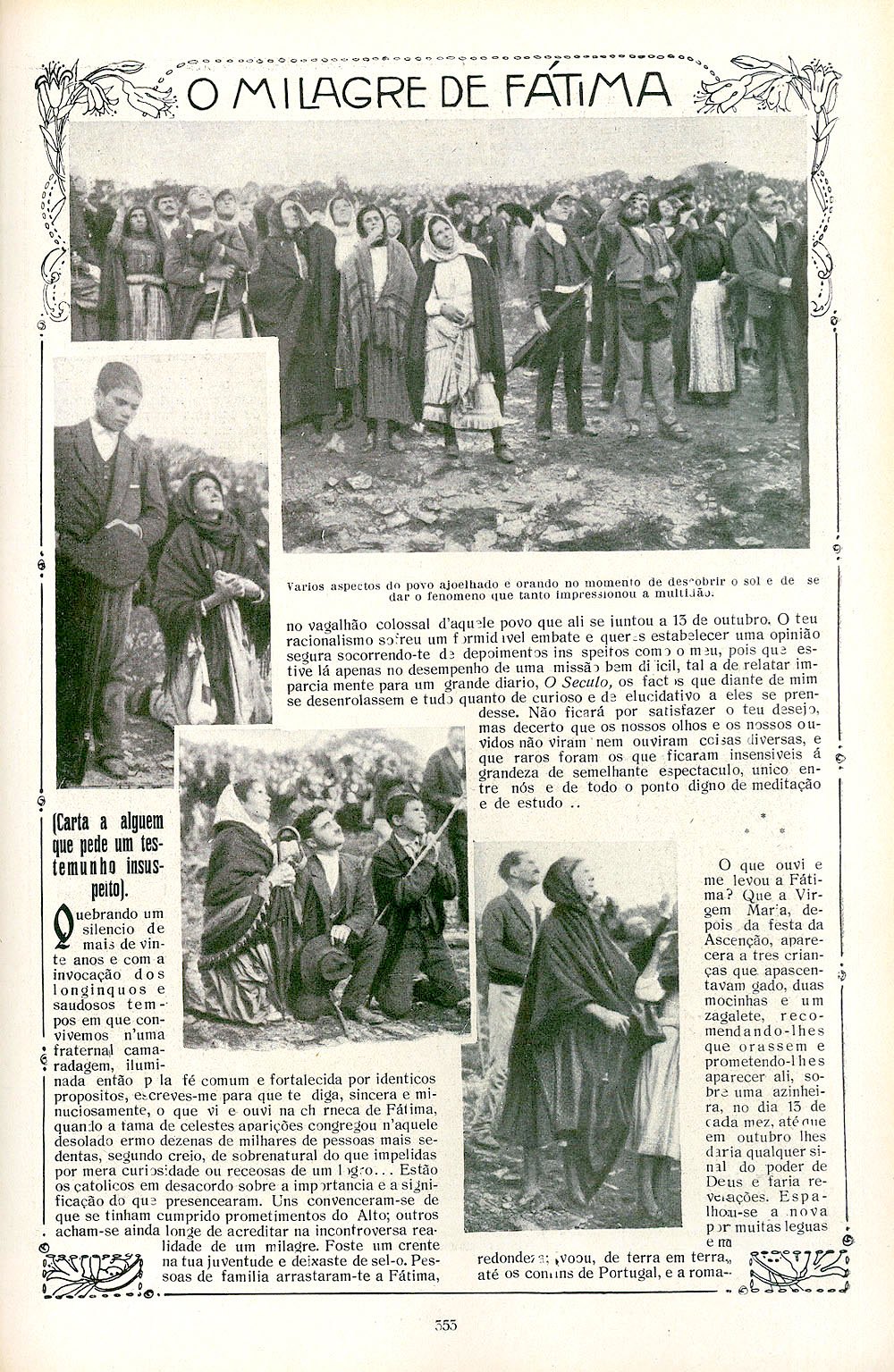
Sources: Coisas espantosas! Como o sol bailou ao meio dia em FátimaRelato de Leonor de Avelar e Silva ConstâncioCartas de Gonçalo de Almeida Garrett e relato de José Maria de Proença de Almeida GarrettO milagre de Fátima (Carta a alguém que pede um testemunho insuspeito)
A plate of dull silver
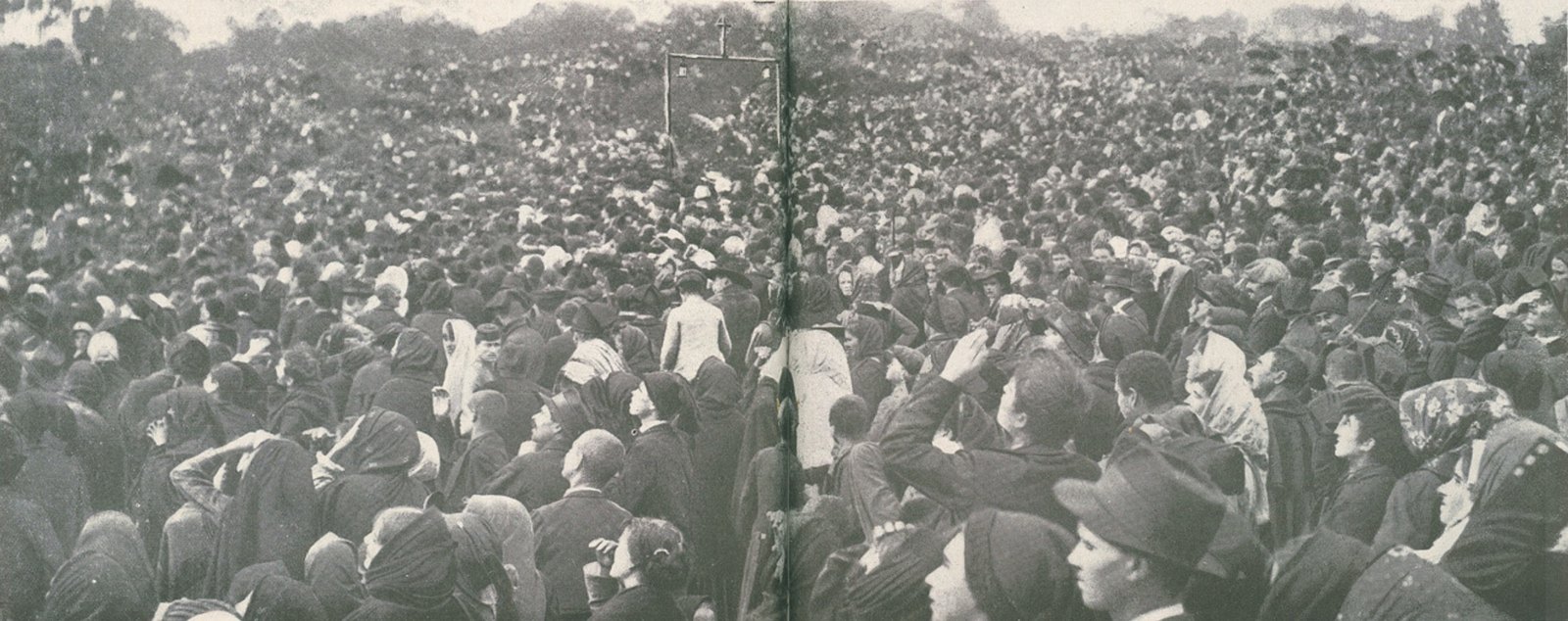
Almeida filed from Ourém that night, and O Século printed his story on October 15 under the headline “Coisas espantosas! Como o sol bailou ao meio dia em Fátima,” Astonishing things! How the sun danced at midday at Fátima. The rain stopped, he wrote, and the whole vast crowd turned toward the sun, standing free of cloud at the zenith. “O astro lembra uma placa de prata fosca”: the orb looked like a plate of dull silver, and one could stare at its disc without the least effort. “Não queima, não cega.” It did not burn; it did not blind; it was as though an eclipse were under way. Then a colossal shout went up, and before the dazzled eyes of the people “o sol tremeu,” the sun trembled, and made sudden movements never seen before, “outside all cosmic laws”; the sun “danced,” in the peasants’ phrase. Others, Almeida reported, swore it spun on itself like a firework wheel, or dropped almost low enough to scorch the earth, or changed color one shade after another. On the step of the Torres Novas motor bus an old man recited the Creed aloud with his face to the sun. That same evening, in a letter from Monte Redondo, a priest named Manuel Pereira da Silva described the sun with a sharp rim coming down as far as the clouds and spinning “like a wheel of fire” for more than eight minutes, while everything went almost dark and every face turned yellow, and the whole crowd knelt in the mud. A woman from Coimbra felt heat “as if we had walked into a heated greenhouse” as the sun came lower and lower, turning silver, then bright purple, red and emerald green.
Sources: Coisas espantosas! Como o sol bailou ao meio dia em FátimaCarta do Padre Manuel Pereira da SilvaRelato de Maria Augusta Saraiva Vieira de Campos
A disc cut from mother-of-pearl
The most careful eyewitness account came from José Maria de Proença de Almeida Garrett, whose father, the Coimbra mathematician Gonçalo de Almeida Garrett, quietly suggested that Canon Formigão ask him for it. He did so on December 18, 1917, apologizing that two months had passed and he had taken no notes. He stood on the road about a hundred meters from the tree and went by official time. Three times, as the crowd prayed, he saw a thin bluish column of smoke rise straight up from where the children were, a couple of meters above the heads, and then vanish; he assumed it was a censer, and was told later that nothing had been burned. When the sun came out through thin cirrus, he rejected the comparison he had heard at Fátima to a disc of dull silver. It was brighter and richer than that, he wrote, with shifting tints like “the orient,” the luster, “of a pearl,” sharp-edged “like a gaming board,” “a burnished disc cut from the mother-of-pearl of a shell.” The disc began to whirl on itself at a furious speed. Then, as a cry went up, “o sol, conservando a celeridade da sua rotação, destaca-se do firmamento e sanguíneo avança sobre a terra”: the sun, still spinning, broke away from the sky and came blood-red toward the earth, threatening to crush them under the weight of its huge fiery millstone. “They were seconds of terrifying impression.” At one point the whole landscape turned amethyst, down to the shadow of an oak; he covered his eyes to test for damage to his retina, and the purple remained. Later everything went the color of old yellow damask, and the people around him looked sick with jaundice. A peasant beside him said in amazement, “This lady is yellow.” Days afterward he stared at the sun on purpose to compare, and saw only irregular yellow blotches that moved with his gaze.
Sources: Cartas de Gonçalo de Almeida Garrett e relato de José Maria de Proença de Almeida Garrett
The globe that shook with electricity
Not everyone described the sun at all. A Viseu woman writing as “J.” in the Correio da Beira of November 10, 1917, said that at one o’clock, where the cloud had drawn back, “apareceu um globo, prateado,” a silvery globe appeared, making a small turn and showing here and there through the clouds, three times at intervals of three or four minutes. A brilliant red cloud or flame covered it, and then “that globe or sphere shook nervously as if driven by electricity” and seemed to swell, as if it wanted to plunge down to the earth, or to speak to it. João Maria Lúcio Serra, writing that November, saw soft beams of light of an oval shape standing at equal distances around the red-orange horizon, reflected on the ground. Maria Carreira testified in 1923 that her daughter, standing on a stone a meter from the tree, felt a blow on the face and saw a beautiful light, and that she herself saw “uma bola, não inteiramente redonda, como um ovo,” a ball not quite round, like an egg, in the colors of the rainbow but far brighter, with a tail a meter and a half long, which passed quickly close to the holm oak and vanished a hand’s breadth from the ground. Among sixteen villagers who gave sworn statements at Porto de Mós on October 25, one saw Our Lady with the Child Jesus on her left arm. Lúcia herself, she told the parish priest three days later, had seen a sequence of figures beside the sun: Saint Joseph with the Child, Our Lord, and the Lady in several guises. She also told the crowd, by several accounts, that the war would end that day and the soldiers would soon be home. It did not end for another thirteen months.
Sources: Relato publicado no Correio da BeiraRelato de João Maria Lúcio SerraProcesso canónico: depoimentos de setembro de 1923Depoimentos de testemunhas de Porto de MósInterrogatórios do pároco de Fátima (maio–julho de 1917)Interrogatórios do Cónego Manuel Nunes Formigão
From apparition to UFO
For forty years Fátima belonged to the Church. The earliest explicit saucer reading on record appeared in the Australian Flying Saucer Review in September 1960, beside an article titled “Angels Are Men from Space”: at noon, it said, a bright disc “taken by many for the sun” appeared at the zenith, and it could not have been the sun, “because the eyewitnesses looked at it without being dazzled.” It illustrated the point with what it called Alfredo de Fendrica’s “contemporary photograph” of the sky at Fátima. The sun photographs cited in the 1930 canonical report, the Sanctuary’s editors note, were taken by Alfredo J. de Mendonça on May 13, 1921. In Paris in 1962 the songwriter Paul Misraki, writing as Paul Thomas, argued in Les Extraterrestres that religious miracles, Fátima above all, could share a cause with modern saucer sightings; Jacques Vallée, who visited him that September, noted that a Catholic bishop had told Misraki his reading was perfectly valid.
Sources: Sky Phenomenon at FatimaRelatório da Comissão CanónicaForbidden Science: Journals 1957–1969
Vallée’s Fátima
Vallée built the case into ufology’s canon. In Anatomy of a Phenomenon (1965) he wrote of “a silvery disk which flew through the sky” before seventy thousand witnesses, and quoted the Spanish writer Antonio Ribera comparing the Lady to a white explorer passing himself off as “the great white god” to win the trust of natives. In Passport to Magonia (1969) he counted Fátima among church-recognized cases that are “nothing more than UFO phenomena.” In The Invisible College (1975) he laid out the whole sequence as a UFO case: luminous spheres, heat waves, the “falling-leaf” motion of a saucer, the bee-like buzzing that he called “a typical sound associated with modern-day UFOs,” two skeptical priests on September 13 whom he nicknamed, in ufology’s own jargon, “men in black,” one of whom called the globe “a heavenly vehicle.” He also repeated, without naming its source, a claim that two witnesses who watched the disc through binoculars had seen a ladder and two entities.
Sources: Anatomy of a PhenomenonPassport to MagoniaThe Invisible College
The Portuguese dossier
The ufological reading acquired its most serious advocates at home. In 1978 the historian Fina d’Armada was allowed into the Sanctuary archives, and with the Porto researcher Joaquim Fernandes she published Intervenção Extraterrestre em Fátima (Extraterrestrial Intervention at Fátima) in 1982; the English version, Heavenly Lights, appeared in 2005 with a foreword by Vallée. Their method was to go back to the first interrogations, before decades of devotion reshaped them, and assemble a composite portrait of the being the children actually described: about 1.1 meters tall, looking twelve to fifteen, a skirt that never passed the knees, something on her head that covered ears and hair, and from her neck a cord with “uma bola luminosa,” a luminous ball, at waist height. She moved neither her face nor her lips when she “spoke,” they wrote, and did not move her legs when she withdrew backward into the sky. In their reading the ball became a “heart” in Lúcia’s 1941 memoir and, a few dozen pages later, the Immaculate Heart of Mary. D’Armada tracked down surviving witnesses. Lúcia’s sister Maria dos Anjos told her she too had heard the buzzing when Lúcia listened to the Lady, and when asked whether it sounded like a swarm, answered: “Não. Só uma!” No. Just one. The same archives held a detail Fernandes calls a fourth seer: Maria Carreira testified that on July 28, 1917, her twelve-year-old daughter Carolina and a seven-year-old girl from Espite saw a small, very beautiful, fair-haired figure beside the holm oak, and that Lúcia later said the Lady called it an angel.
Sources: As “aparições” de Fátima, 1917Heavenly Lights: The Apparitions of Fátima and the UFO PhenomenonProcesso canónico: depoimentos de setembro de 1923
A chapel, a bomb and a verdict
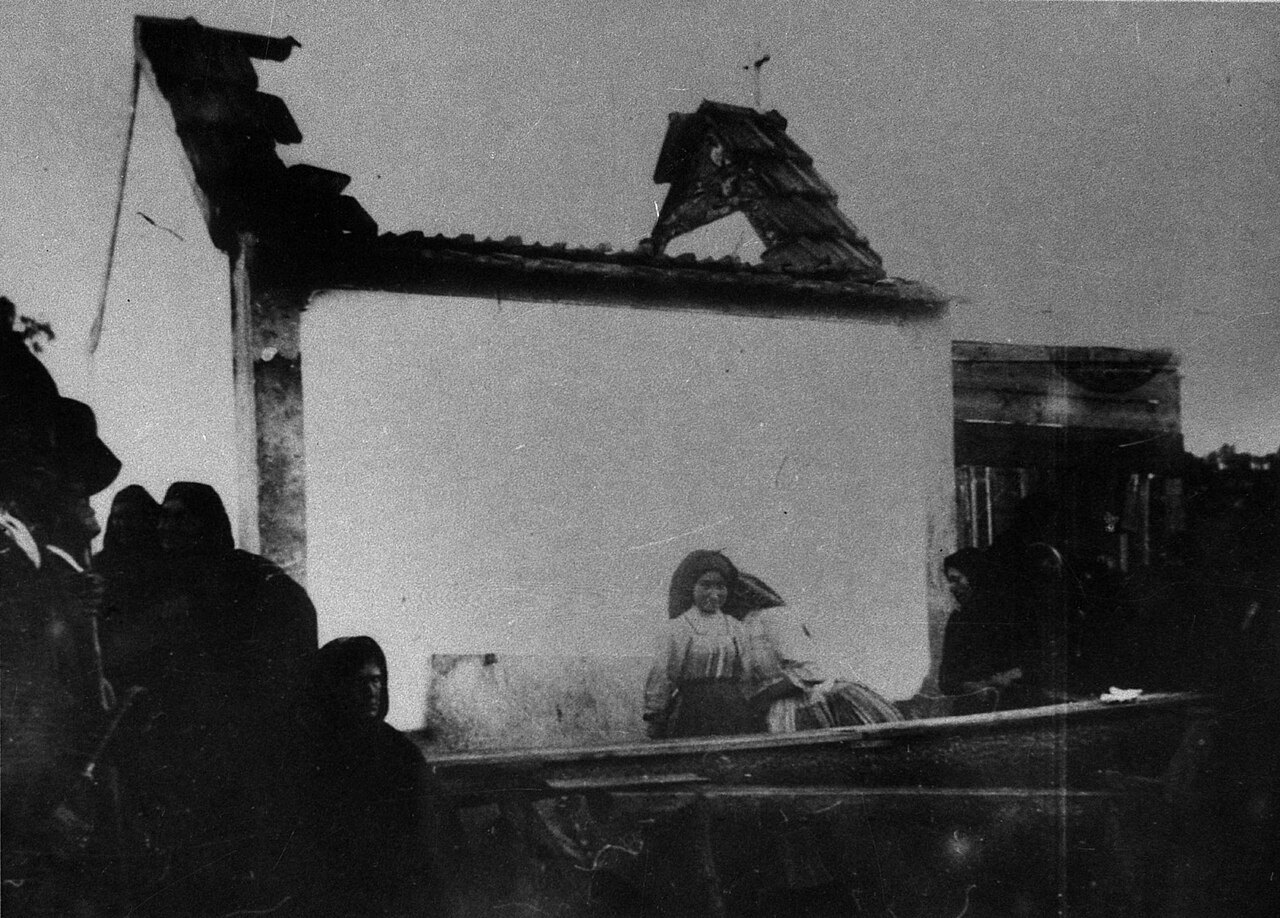
Francisco and Jacinta Marto both caught the influenza of 1918. Francisco died at home on April 4, 1919; Jacinta died in a Lisbon hospital on February 20, 1920. Villagers built a small chapel over the site of the tree between April and June 1919, and the first Mass was permitted there on October 13, 1921. On March 6, 1922, someone blew its roof off with dynamite; it was rebuilt that year. In May 1922 the new bishop of Leiria, José Alves Correia da Silva, opened a canonical inquiry, and on October 13, 1930, he declared the children’s visions “worthy of belief.” Lúcia became a nun and, between 1935 and 1941, wrote memoirs that added an Angel of Peace who had appeared to the children three times in 1916 and a figure “like a statue of snow” seen in 1915. The 1917 interrogations record only Lúcia’s memory of a white figure on a tree in the hills, “a person wrapped in a sheet,” seen the year before the apparitions. The third part of a secret she said the Lady had entrusted to her was published by the Vatican on June 26, 2000. Lúcia died in 2005, aged ninety-seven; Francisco and Jacinta were canonized at Fátima in May 2017, a century after the first flash of lightning.
Sources: Aparições de FátimaA Providência DivinaInterrogatórios do Cónego Manuel Nunes FormigãoProcesso canónico: depoimentos de setembro de 1923The Real Secrets of Fatima
What was written down, and when
Few UFO cases have a paper trail like this. The Sanctuary’s Documentação Crítica de Fátima prints the parish priest’s notes of the children’s accounts from May, June and July 1917; Canon Formigão’s interrogations from September to November; Avelino de Almeida’s two articles; a priest’s letter written the same night; the Porto de Mós depositions of October 25; and a series of eyewitness letters from October to December 1917. A second layer comes from the parish inquiry of 1918–1919 and the canonical depositions of 1922–1924, when memories were five or six years old. A third comes from Father de Marchi’s interviews in the 1940s and from Lúcia’s memoirs of 1935–1941. Many of the best-known details belong to the later layers: Quaresma’s “carriage,” the view of the sun reported by a schoolboy at Alburitel, some sixteen kilometers away, and the soaked clothes that were suddenly dry, which first appear in the 1922 statement of Inácio Marques. The contemporary layer has its own marvels: the silver plate, the firework wheel, the amethyst light, the silvery globe, the stars at noon.
Sources: Interrogatórios do pároco de Fátima (maio–julho de 1917)Coisas espantosas! Como o sol bailou ao meio dia em FátimaDepoimento de Inácio António MarquesA Verdadeira História de Fátima
How the story grew
The crowd grew in the retelling. Almeida reported estimates of thirty to forty thousand on October 15 and fifty thousand two weeks later; the parish priest gave forty to fifty thousand in 1918; Formigão’s pamphlet of 1923 and the 1930 canonical report gave seventy thousand, the figure ufology adopted, and later devotional books reached a hundred thousand. The parish priest’s month-by-month series of 1918, from the three children in May to fifty people in June and tens of thousands by October, became, rounded along the way, Vallée’s progression of “3, 50, 4,500, 18,000, 30,000, 70,000.” The monthly lore also drifted. The famous “rain of petals” that vanished before touching the ground is recorded in these words for a pilgrimage of May 13, 1923, while witnesses of September 1917 spoke of stars, white flowers and snow-white bodies. The “sun photographs” were pictures taken in 1921, and another newspaper picture of the miracle was, according to Vallée, a photograph of an eclipse. And the witness who saw the sky from the veranda of his house at São Pedro de Moel, the poet Afonso Lopes Vieira, grew in distance from about thirty-three kilometers, some twenty miles, to the “thirty miles” of the 1960 saucer article.
Sources: Coisas espantosas! Como o sol bailou ao meio dia em FátimaO milagre de Fátima (Carta a alguém que pede um testemunho insuspeito)Relatório do pároco de FátimaRelatório da Comissão CanónicaThe Invisible CollegeMiracle of the SunSky Phenomenon at Fatima
Where the witnesses agree, and where they part
On a few points the 1917 accounts agree closely: the rain stopped as the children arrived; the sun or something in its place could be looked at without pain; it seemed to spin or tremble; colors washed over the crowd and the landscape, with yellow faces most often mentioned; and it seemed to approach the earth. The phenomena lasted about eight to ten minutes by Gonçalo Garrett’s count. Beyond that the witnesses diverge. Almeida saw a trembling, dancing plate; Garrett saw a spinning pearl that fell blood-red; the Correio da Beira writer saw a silvery globe crossing the clouds three times; Maria Carreira saw an egg-shaped rainbow ball with a tail; some saw nothing but a pale sun, and one Porto de Mós villager saw the Virgin and Child. Gonçalo Garrett himself noted in December that since October people claimed to see the sun spin and flash on many days: “Muito será imaginação,” much of it will be imagination. He also passed on that the Bishop of Portalegre had seen the sun rotate and change color at Torres Novas on October 20.
Sources: Coisas espantosas! Como o sol bailou ao meio dia em FátimaCartas de Gonçalo de Almeida Garrett e relato de José Maria de Proença de Almeida GarrettRelato publicado no Correio da BeiraProcesso canónico: depoimentos de setembro de 1923Depoimentos de testemunhas de Porto de Mós
What the scientists saw
Nothing unusual about the sun was recorded anywhere else. The Lisbon astronomer Frederico Oom observed that if the phenomenon had been cosmic, the observatories could not have failed to register it, “and that is precisely what is missing”; the canonical commission took the same silence as proof of a supernatural cause. Garrett’s father thought the effects were atmospheric, produced in the air over the Cova on the image of the sun. The physicist Auguste Meessen, who stared at the sun himself in 2002 and saw it turn at once into a gray disc with a brilliant rim, argued at a 2003 conference in Porto that the dance, the colors and the approach are retinal afterimages and motion illusions produced by staring at a sun dimmed by humid air, “a highly remarkable illusion.” He also rejected the UFO reading on geometry: a craft screening the sun would cast a cone of shadow, and people near its edge would have seen a partial eclipse, which nobody reported. Steuart Campbell proposed high-altitude dust in 1989, and the Benedictine priest and physicist Stanley Jaki a lens of ice crystals in 1999, though he held that its timing was the miracle. Joe Nickell points to thin cloud, suggestion and the afterimages of sun-gazing, and to a later apparition site where more than two hundred people looked through a filtered telescope and saw nothing unusual.
Sources: Relatório da Comissão CanónicaCartas de Gonçalo de Almeida Garrett e relato de José Maria de Proença de Almeida GarrettApparitions and Miracles of the SunMiracle of the SunThe Real Secrets of Fatima
Classification and evidence note
The archive files Fátima as a mass sighting. Its evidence is unusual for this archive: dozens of written accounts from 1917 itself, some of them sworn and many gathered by clergy who were testing a claim of the supernatural, alongside photographs of the crowd but none of the sky. The children’s visions are testimony about a figure only they could see. The crowd’s observations are testimony about the sky, recorded within days or weeks and in some cases within hours. No observatory recorded an anomaly, and no photograph shows one. The UFO interpretation began in 1960 and rests on reading those documents, not on new evidence. The Church’s verdict, the ufologists’ craft and the physicists’ afterimages all start from the same pages.
Sources: Interrogatórios do pároco de Fátima (maio–julho de 1917)Relatório da Comissão CanónicaSky Phenomenon at FatimaHeavenly Lights: The Apparitions of Fátima and the UFO Phenomenon
- 5 OCT 1910
The Portuguese monarchy falls; the new republic separates church and state.
- 13 MAY 1917
After two flashes of lightning, Lúcia, Francisco and Jacinta see a woman in white on a holm oak in the Cova da Iria.
- 13 JUN 1917
About fifty onlookers; a buzzing from the tree, and a light cloud drifting east.
- 13 JUL 1917
Thousands attend; witnesses hear a rumbling and a bee-like voice.
- 23 JUL 1917
O Século runs the first press report, suspecting a mineral-spring scheme.
- 13 AUG 1917
The Ourém administrator detains the children; the crowd hears a thunderclap and sees a colored cloud and an odd light.
- 19 AUG 1917
The Lady appears to the children at Valinhos.
- 13 SEP 1917
Tens of thousands see stars at noon, white falling bodies and, by later accounts, a luminous globe crossing from east to west.
- 27 SEP 1917
Canon Formigão questions the children for the first time and worries about the Lady’s short skirt.
- 13 OCT 1917
After a morning of pouring rain, a crowd of tens of thousands sees the sun turn to a dull silver disc, spin, change color and seem to fall.
- 15 OCT 1917
Avelino de Almeida’s “How the sun danced at midday at Fátima” appears in O Século.
- 25 OCT 1917
Sixteen witnesses give sworn statements at Porto de Mós.
- 29 OCT 1917
Ilustração Portuguesa publishes Almeida’s letter and the crowd photographs.
- 18 DEC 1917
José Maria de Almeida Garrett writes his account of the mother-of-pearl disc.
- 4 APR 1919
Francisco Marto dies of influenza.
- 20 FEB 1920
Jacinta Marto dies in Lisbon.
- 6 MAR 1922
The chapel over the apparition site is dynamited.
- 13 OCT 1930
The Bishop of Leiria declares the visions worthy of belief.
- 1935–1941
Lúcia writes her memoirs, adding an Angel of Peace in 1916 and a snow-white figure in 1915.
- SEP 1960
The Australian Flying Saucer Review argues the disc was not the sun.
- 1962
Paul Misraki’s Les Extraterrestres links Fátima to saucer sightings.
- 1975
Jacques Vallée’s The Invisible College presents Fátima as a UFO case.
- 1978
Fina d’Armada enters the Sanctuary archives and interviews surviving witnesses.
- 26 JUN 2000
The Vatican publishes the third part of Lúcia’s secret.
- 2003
Auguste Meessen presents his afterimage explanation at a Porto conference.
- 2005
Heavenly Lights brings the Portuguese UFO dossier to English readers; Lúcia dies.
- 13 MAY 2017
Francisco and Jacinta are canonized at Fátima on the centenary.
Sources & interviews
Interrogatórios do pároco de Fátima (maio–julho de 1917)Father Manuel Marques Ferreira’s notes of the children’s first accounts · Documentação Crítica de Fátima: Seleção de documentos (1917–1930), Santuário de Fátima, 2013, Docs. 1–3Especulação financeira?O Século (Lisbon) · July 23, 1917 · the first press report, from a correspondent at Meia-Via · DCF selection, Doc. 4Interrogatórios do Cónego Manuel Nunes FormigãoCanon Formigão’s questioning of the three children on September 27, October 11 and 13, and November 2, 1917, with his private doubts · DCF selection, Docs. 10, 11 and 22Interrogatório do Padre José Ferreira de LacerdaOctober 19, 1917 · where Jacinta measures the Lady against a twelve-year-old girl · DCF selection, Doc. 15Carta do Padre Manuel Pereira da SilvaA letter written at Monte Redondo at 9:30 p.m. on October 13, 1917, hours after the event · DCF selection, Doc. 12Coisas espantosas! Como o sol bailou ao meio dia em FátimaAvelino de Almeida · O Século (Lisbon) · October 15, 1917, datelined Ourém, October 13 · DCF selection, Doc. 13Relato de Leonor de Avelar e Silva ConstâncioWritten in late October 1917 · an eyewitness of August 13, September 13 and October 13 · DCF selection, Doc. 17Depoimentos de testemunhas de Porto de MósSixteen sworn statements taken by Father Joaquim Vieira da Rosa on October 25, 1917, at the Patriarchate’s request · DCF selection, Doc. 19O milagre de Fátima (Carta a alguém que pede um testemunho insuspeito)Avelino de Almeida · Ilustração Portuguesa no. 610 (Lisbon) · October 29, 1917, pp. 353–356 · page scan on Wikimedia Commons; text in DCF selection, Doc. 21Relato publicado no Correio da BeiraSigned “J.” (Maria José de Lemos Queirós), written October 30 and printed in Correio da Beira (Viseu) on November 10, 1917 · DCF selection, Doc. 23Relato de João Maria Lúcio SerraDated November 13, 1917 · the evenly spaced oval lights on the horizon · DCF selection, Doc. 25Relato de Maria Augusta Saraiva Vieira de CamposA Coimbra pamphlet written October 19, 1917 · DCF selection, Doc. 26Cartas de Gonçalo de Almeida Garrett e relato de José Maria de Proença de Almeida GarrettThe father’s letter of December 3, 1917, and the son’s eyewitness account of December 18, 1917, both sent to Canon Formigão · DCF selection, Docs. 28 and 29Inquérito paroquialDepositions of Jacinto de Almeida Lopes (December 20, 1918) and Manuel Gonçalves Júnior (December 31, 1918) for the parish inquiry · DCF selection, Docs. 39–40Relatório do pároco de FátimaFather Manuel Marques Ferreira · August 6, 1918 · with his month-by-month crowd estimates · DCF selection, Doc. 36Depoimento de Inácio António MarquesNovember 23, 1922 · the white bodies of September and the drying of wet clothes · DCF selection, Doc. 72Processo canónico: depoimentos de setembro de 1923Sworn statements of Maria Rosa dos Santos, Manuel Pedro and Olímpia Marto, Maria Carreira and others, September 23–28, 1923 · DCF selection, Doc. 80Interrogatório oficial de LúciaJuly 8, 1924, at the Asilo de Vilar in Porto · DCF selection, Doc. 82Relatório da Comissão CanónicaApril 13, 1930 · quotes the astronomer Frederico Oom of the Lisbon observatory; the editors’ footnote identifies the “sun photographs” as May 1921 pictures by Alfredo J. de Mendonça · DCF selection, Doc. 120A Providência DivinaBishop José Alves Correia da Silva of Leiria · pastoral letter of October 13, 1930, declaring the visions worthy of belief · DCF selection, Doc. 133A Verdadeira História de FátimaFather John de Marchi · Portuguese edition of his 1940s–1950s compilation of interviews, including Monsignor João Quaresma’s account of September 13 and the Alburitel witness · PDF hosted by the Fatima CenterSky Phenomenon at FatimaAustralian Flying Saucer Review, vol. 1, no. 3 · September 1960, pp. 6–7 · the earliest explicit UFO reading found, printed beside “Angels Are Men from Space”Forbidden Science: Journals 1957–1969Jacques Vallée · North Atlantic Books, 1992 · entry of September 18, 1962, on a visit to Paul MisrakiAnatomy of a PhenomenonJacques Vallée · Henry Regnery, Chicago · 1965 · “Fatima: the Miraculous UFO,” pp. 204–207, drawing on Misraki and on Antonio Ribera in Flying Saucer Review (1964)Passport to MagoniaJacques Vallée · Henry Regnery, Chicago · 1969 · Fátima among the church-recognized cases that are “nothing more than UFO phenomena”The Invisible CollegeJacques Vallée · E. P. Dutton, New York · 1975 · chapter “What Happened at Fatima,” reprinted in Dimensions (1988)As “aparições” de Fátima, 1917Joaquim Fernandes · Revista Athena · May 11, 2017 · the composite portrait of the Lady drawn by Fernandes and Fina d’Armada from the Sanctuary archives, and d’Armada’s 1978 interviewsHeavenly Lights: The Apparitions of Fátima and the UFO PhenomenonJoaquim Fernandes and Fina d’Armada · EcceNova, 2005; Anomalist Books reprint · translated by Andrew D. Basiago and Eva M. Thompson, foreword by Jacques ValléeApparitions and Miracles of the SunAuguste Meessen (Université catholique de Louvain) · International Forum “Science, Religion and Conscience,” Porto, October 23–25, 2003 · proceedings, Universidade Fernando Pessoa, pp. 199–219The Real Secrets of FatimaJoe Nickell · Skeptical Inquirer vol. 33, no. 6 · November–December 2009Miracle of the SunWikipedia (English) · summaries of Steuart Campbell (1989), Stanley Jaki (1999) and Kevin McClure (1983), and De Marchi’s quotation of the poet Afonso Lopes VieiraAparições de FátimaWikipedia (Portuguese) · chronology from the children’s births to the 2017 canonization, after the Sanctuary’s own timelineSpotted an error, or know a better source? Write to hello@uap.fun.
Connected files
The Silver Threads over FlorenceAnother crowd looking up, and white filaments falling from the sky, cousins of the white flowers and snow-white bodies reported at Fátima in September 1917.The Sky Battle over NurembergGlobes, crosses and a darkened sun read as a sign from God, centuries before anyone thought of saucers.The Sign of ShambhalaTen years after Fátima, a shining oval over the Gansu uplands was taken as a spiritual sign by the people who saw it.The Night the Sky Waved BackPriests as witnesses, figures in the light, and an event that ufologists and churchmen read in very different ways.The Ariel School EncounterSchoolchildren who said a being gave them a message without words, and a message they carried into adulthood.Discuss this case
Compare notes with other readers: witness details, sources, and the parts that still do not add up.
Open the discussion