A terrace nobody used
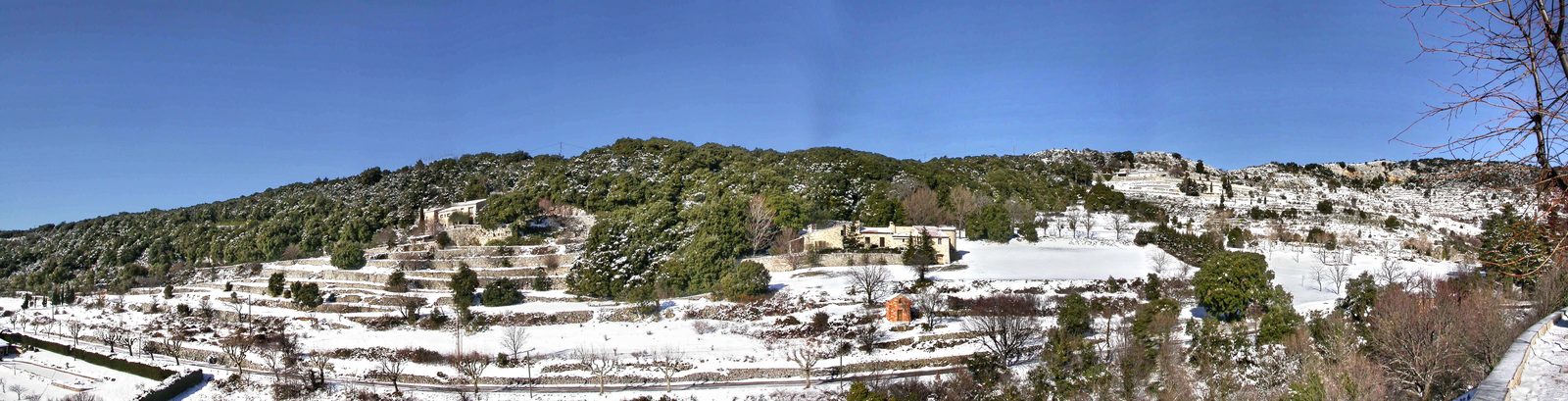
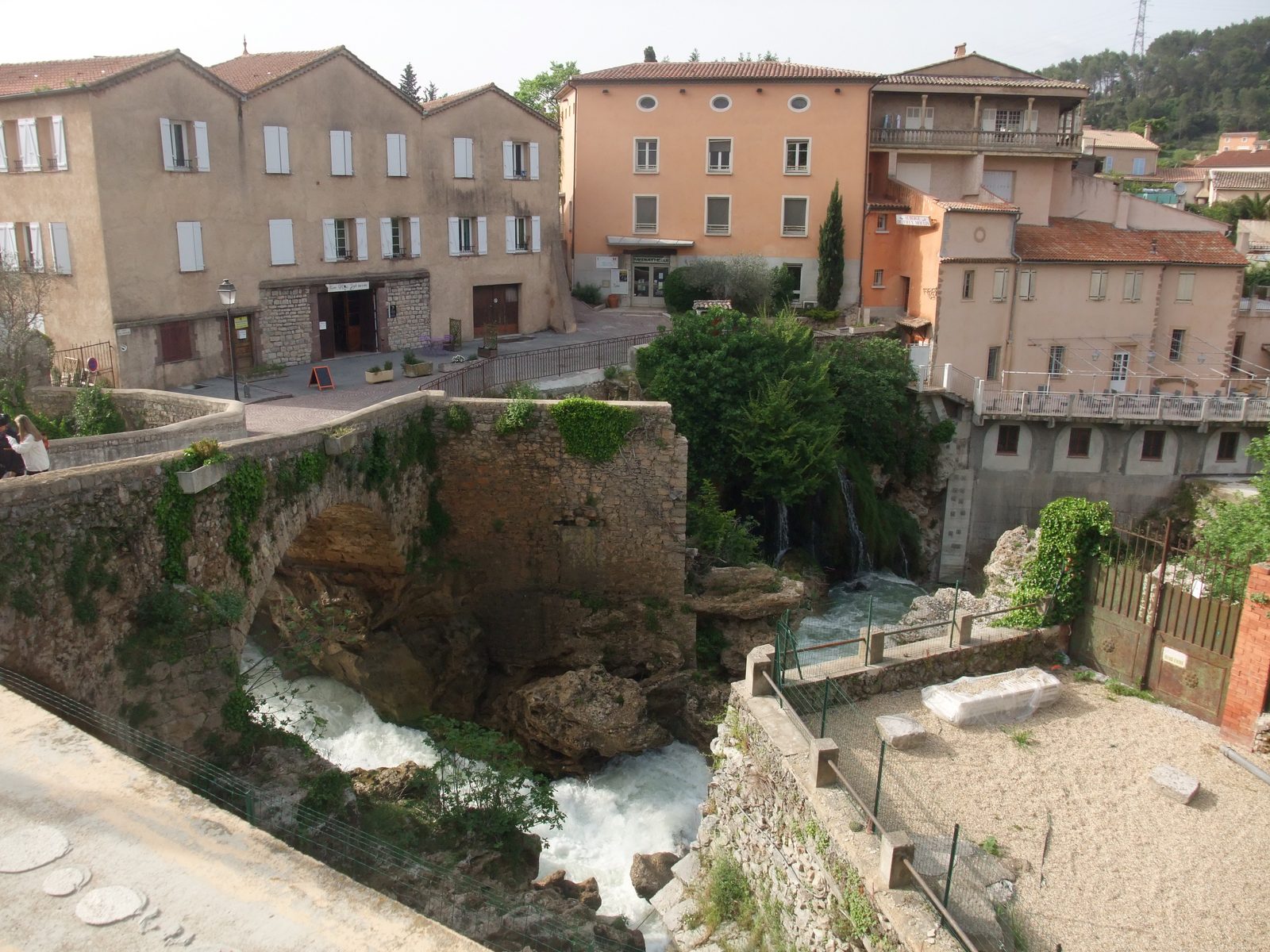
Trans-en-Provence sits three kilometers south of Draguignan, where the Nartuby river drops through the middle of the village in a series of small cascades. Two kilometers east of the village, on the north flank of the valley, Renato Nicolaï and his wife had lived for nearly fourteen years in a house built on a restanque, one of the dry-stone terraces that step up the Provençal hillsides. A path ran along the base of the house to a flat platform of packed earth and wild alfalfa about thirty-one meters long and eleven wide, bounded by a retaining wall some two to two and a half meters high and a big pine at its edge. Investigators from GEPAN, the French space agency’s UFO unit, later recorded that the platform was “practically never frequented,” except sometimes for a game of pétanque, the local boules. Nicolaï was an Italian-born mason and works foreman in his early fifties. He had suffered a heart attack in 1973, with a relapse, and had not worked since November 1979, when his firm closed. He lived on a disability pension; his wife cleaned the social security office in Draguignan. He told GEPAN he almost never read, not even the newspapers, and that the abbreviation OVNI, the French term for UFO, meant nothing to him until the investigators explained it.
Sources: Enquête 81/01 – Analyse d’une trace · Note technique n° 16Procès-verbal n° 28/1981 · Observation d’un objet volant non identifiéReport on the Analysis of Anomalous Physical Traces: The 1981 Trans-en-Provence UFO Case
A faint whistle at five o’clock
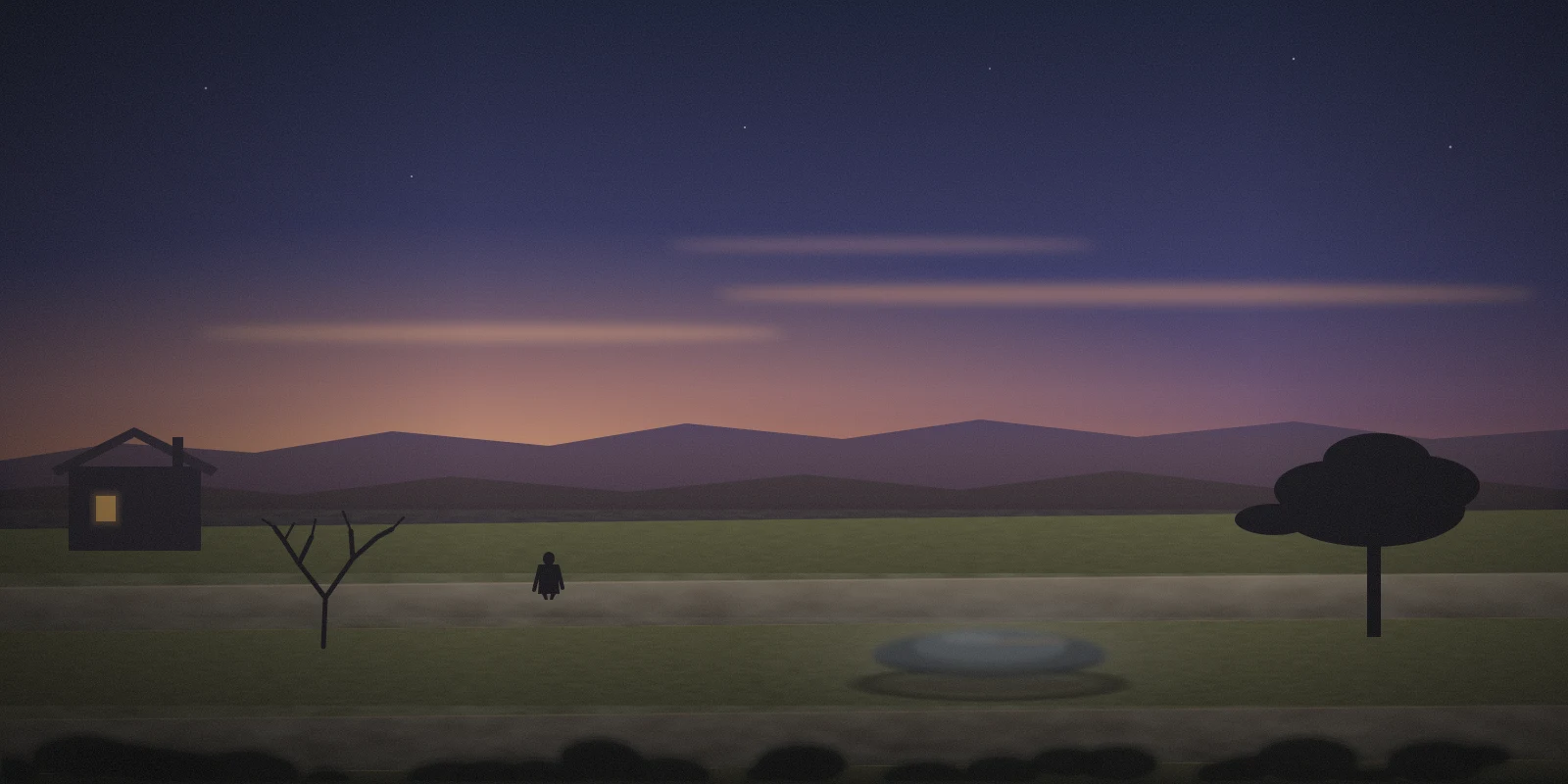
January 8, 1981 was a clear, dry Thursday. The weather station at Le Luc, seventeen kilometers away, logged 6.8 degrees Celsius at five o’clock, thirty percent humidity, a light south-easterly breeze and two-eighths cloud. Nicolaï was behind the house, as he was practically every day, building a concrete shelter for a water pump. “It was about 5 p.m. The weather was turning colder,” he told the gendarmes the next morning. “My attention was attracted by a slight noise, a sort of faint whistling. I turned around and I saw a device in the air at the height of a big pine tree on the edge of the property. This device, which was not spinning, was coming lower towards the ground.” He saw no flames below it or around it. As it kept descending he walked toward the stone cabin above his house and put himself against its wall, where he could see over the roof of his house. “From that position I clearly saw the device resting on the ground. Right away it lifted off, still emitting a slight whistling sound. Reaching a point above the trees it left at high speed towards the forest of Trans, that is towards the northeast.” He put himself about thirty meters from the landing site; the gendarmes’ telex gave the whole sighting about a minute, and GEPAN’s later reconstruction thirty to forty seconds.
Sources: Procès-verbal n° 28/1981 · Observation d’un objet volant non identifiéReport on the Analysis of Anomalous Physical Traces: The 1981 Trans-en-Provence UFO CaseEnquête 81/01 – Analyse d’une trace · Note technique n° 16Les OVNI du CNES : 30 ans d’études officielles · chapitre 13, Trans-en-Provence
Two saucers, the color of lead
“The device had the shape of two saucers, one inverted on top of the other,” his deposition continues. “It must have measured about 1.5 m in height. It was the color of lead. This device had a ridge all the way around its circumference.” As it lifted off he saw its underside: four openings through which neither flame nor smoke escaped, two round pieces “that could be reactors or feet,” which projected about twenty centimeters below the body, and two other circles “which looked like trapdoors.” It kicked up a little dust as it left the ground. GEPAN, reconstructing the scene with him forty days later, arrived at a diameter of about two and a half meters and a height of 1.7 to 1.8 meters, a gray “like zinc,” a sound like a fairly strong gust of wind, and an impact he compared to a stone falling on the ground. The four circles underneath, he said, were the size of a mason’s bucket. The story shifted at the edges with each telling. The gendarmes’ first telex to the space agency said the object had stopped a meter above the ground and raised no dust; a private investigator who came on January 13 wrote down that it had “fallen” between two tall trees and rested motionless against the retaining wall while the witness watched from eighty meters. His own sketches gave the craft proportions from squat to pancake-flat. Within days of the sighting he was also telling two private investigators that it had struck the wall of the restanque, marked the stone and brought down a small fall of rock, a detail that appears in neither the gendarmerie file nor GEPAN’s report.
Sources: Procès-verbal n° 28/1981 · Observation d’un objet volant non identifiéReport on the Analysis of Anomalous Physical Traces: The 1981 Trans-en-Provence UFO CaseEnquête 81/01 – Analyse d’une trace · Note technique n° 16Les OVNI du CNES : 30 ans d’études officielles · chapitre 13, Trans-en-Provence
‘Atterrissage OVNI’
When his wife came home that evening he told her what he had seen, and she thought he was joking. Skeptical investigators who later pieced together the household’s evening add that he told her, the same night, that the extraterrestrials had brought back the family cat, missing for several days. What convinced her was the ground. The next morning, in daylight, he showed her a circle about two meters across, and she telephoned the neighbors, who appear in the file simply as Monsieur and Madame M. The couple came over, looked at the trace and advised the Nicolaïs to call the gendarmerie; the gendarmes’ own synthesis records that it was Madame M. who telephoned the Draguignan brigade at 11:20 on January 9. Nicolaï told Le Monde two years later that he regretted his wife had been so talkative: she told a neighbor, who told another, “so I was obliged to inform the gendarmes.” Two senior gendarmes arrived at about 11:30 and, in the flat language of a procès-verbal, the French police report, established the facts, took his deposition, photographed the site and collected samples. Their telex, relayed through the gendarmerie’s national directorate to the space agency that afternoon, went out under the heading ATTERRISSAGE OVNI, UFO landing. It described an ovoid object about three meters across, matte gray, without portholes or antenna, no beings aboard, no effects felt, and traces recorded by the Draguignan brigade: “two arcs of circle resembling tire skid marks, length 80 cm, width 10 cm.” The brigade checked for high- and low-tension lines, railways and electric fences, found none, watched their compass for anomalies and saw nothing, and called on a local society for the study of space phenomena, which did not turn up. The file was closed on February 5 and sent to the public prosecutor, the prefect, the air force’s fourth region and the minister of defense.
Sources: Procès-verbal n° 28/1981 · Observation d’un objet volant non identifiéReport on the Analysis of Anomalous Physical Traces: The 1981 Trans-en-Provence UFO CaseLes OVNI du CNES : 30 ans d’études officielles · chapitre 13, Trans-en-ProvenceEnquête 81/01 – Analyse d’une trace · Note technique n° 16
Forty days later, the space agency
GEPAN, the small unit inside the national space agency CNES that studied unidentified aerospace phenomena, learned of the case on Monday, January 12, from a message the gendarmerie had left on its answering machine. Heavy rain had fallen over the weekend, and the group decided not to rush; it asked the gendarmerie to send its samples to the laboratories as fast as possible, and the gendarmes’ telex reached Toulouse that afternoon. The site was not left alone. A private investigator walked the terrace on January 13 and photographed the marks in visible and infrared light; journalists and sightseers followed; a well-known novelist’s private institute took its own samples. GEPAN’s team, among them the unit’s director Alain Esterle and its engineer Jean-Jacques Velasco, arrived on February 17, forty days after the event, and found the two arcs still visible, lighter now, on soil “strongly compacted, forming a crust of about one centimeter” that had been rubbed over a short distance. They surveyed the property, redrew the witness’s sketches, took a fresh series of alfalfa samples along a line out to ten meters, and wrote to the army. The army’s light aviation branch, the ALAT, replied that an Alouette II helicopter had crossed the region at two hundred meters at about 16:30 that afternoon; the army’s chief of staff reported only a tank firing inert shells more than twenty-five kilometers to the north. Two years of laboratory work followed at Toulouse, Boussens, Pau, Metz and the INRA agricultural research station at Avignon. The result, dated March 1, 1983, was Technical Note 16, Analysis of a Trace.
Sources: Enquête 81/01 – Analyse d’une trace · Note technique n° 16Réponse de l’Aviation légère de l’armée de terreReport on the Analysis of Anomalous Physical Traces: The 1981 Trans-en-Provence UFO CaseLes OVNI du CNES : 30 ans d’études officielles · chapitre 13, Trans-en-Provence
‘It fell like a stone and didn’t break’
What impressed Nicolaï was the machine. He turned it over in his mind for weeks, ran through airplanes and helicopters, and rejected them: “It is not possible to land here, there are places in the valley that are much more practical, much flatter.” To the GEPAN team in his kitchen he repeated, again and again, “It made almost no noise, it moved vertically, it fell like a stone and it didn’t break,” and he concluded: “It’s probably a military device, there are some nearby.” He meant the army’s vast maneuver camp to the north, one of the largest in France, whose name the note blanks out, and he held to that explanation through the gendarmes, the journalists and the private investigators who trooped through his garden. The investigators noted that he admired the thing’s flying performance and the precision of its landing. Asked, as everyone asked him, whether he had seen extraterrestrials, he answered frankly, “and even with a little smile,” that he had never seen anything of the kind. He believed in God, he said, and the sighting had changed nothing about that. He was, the note records, an exhausted man; after the quick reconstruction on the terrace he went inside to rest while the team took its samples.
Sources: Enquête 81/01 – Analyse d’une trace · Note technique n° 16Report on the Analysis of Anomalous Physical Traces: The 1981 Trans-en-Provence UFO Case
‘An event of great magnitude’
The note’s conclusion is careful and, for an official document, strange. The investigation had found nothing in the witness’s successive accounts or his behavior that pointed to “invention, exaggeration or distortion,” but “the absence of proof not being proof of absence,” that was not enough to certify his testimony. The terrain had not allowed a precise measurement of mass, pressure or heat. “It was nevertheless possible to show qualitatively the occurrence of an event of great magnitude, which caused mechanical deformations, heating, and perhaps some deposit of trace materials.” The possible interpretations, shock or friction, remained “too diverse and vague” to confirm the witness’s narrative outright. The plants told the same story in a different language: the differences between samples near the trace and far from it fell along logarithmic curves against distance, “a new confirmation of an event of great magnitude at this spot.” Whether it matched the witness’s description, the authors wrote, “remains to be seen.” They ended by admitting the inquiry raised more questions than it answered, but this time “the questions seem to be well posed,” which made it “more enriching than any made so far.” When Jacques Vallée’s translation of the note appeared in the Journal of Scientific Exploration in 1990 under Velasco’s name, alongside a paper by the biochemist Michel Bounias and Vallée’s own report of a return visit, the case crossed the Atlantic with a reputation it has never lost: Popular Mechanics called it in 2001 “perhaps the most completely and carefully documented sighting of all time.”
Sources: Enquête 81/01 – Analyse d’une trace · Note technique n° 16Report on the Analysis of Anomalous Physical Traces: The 1981 Trans-en-Provence UFO CaseWhen UFOs Land
The witness who wouldn’t play along
Nicolaï never became a believer, a lecturer or a bore. He showed no lasting interest in UFOs, changed nothing about his life and, by the skeptics’ own account, “visibly enjoyed playing with the various investigators,” making them beg before he posed for the innumerable photographs that ran in the press, his answers accompanied by “a little mischievous smile.” His French was uncertain enough that listeners could not always tell irony from grammar. On FR3’s regional news in January 1984 he walked the terrace again beside Captain Cormier of the Draguignan gendarmerie, who gave the camera his own view of the marks on the ground. On the TF1 talk show Ciel, mon mardi! in November 1989 he told the studio, “I saw… it’s a tale, let’s say! The proof that one can find on the ground there, people, scientists, picked something up. I say: I too dream in the night.” The investigator Michel Figuet reported that Nicolaï once confided, “There are so many fools in the world. One day I’ll tell you the whole truth.” Madame M. eventually said that from her garden, which overlooked his house, she had seen and heard nothing that evening, and the mayor told Paris Match in 1997 that the contradictions in the story made the whole saucer business “a masquerade.” Against this stands the space agency’s own line. In 2006 Jacques Patenet, then head of GEIPAN, the unit’s later incarnation, said on the radio: “one cannot cast doubt on what the witness says.”
Sources: Les OVNI du CNES : 30 ans d’études officielles · chapitre 13, Trans-en-ProvenceAffaire de Trans-en-ProvencePhénomène d’ovni à Trans en Provence
A ring, or two arcs
Everything rests on the marks. The gendarmes described “two concentric circles, the first 2.20 m in diameter, the second 2.40 m,” leaving a ring ten centimeters wide on which two diametrically opposed sections about eighty centimeters long carried “black striations similar to skid marks.” Their scale drawing, however, showed the ring as a dotted extrapolation: what was actually visible, on their photographs and on the infrared exposures taken on January 13, were the two short arcs and a linear track, and the private investigator who saw them first thought they looked “rather like a horseshoe,” as though metal had been dragged; GEPAN never used the gendarmes’ phrase “tire skid marks.” Skeptics later added that wheel tracks ran from the path into the trace on the January 13 photographs, that an outbuilding had been built about twenty meters away the month before, which meant vehicles and cement on the platform, and that by the time GEPAN arrived the ground had been walked over by onlookers, journalists and amateur samplers. GEPAN, for its part, had recorded the platform as practically unused. In 1998 the Sturrock panel, a group of scientists that heard Velasco present the case, suggested the iron residue could have come from gardening tools or a metal watering barrel.
Sources: Procès-verbal n° 28/1981 · Observation d’un objet volant non identifiéEnquête 81/01 – Analyse d’une trace · Note technique n° 16Les OVNI du CNES : 30 ans d’études officielles · chapitre 13, Trans-en-ProvenceUFOs: An Assessment of Thirty Years of Official Studies in France
Soil under the microscope
The soil sample from the ring, a hundred grams scraped from two centimeters of depth on January 9, made the rounds of five French laboratories. At the CNES center in Toulouse the microscope showed “strongly compacted earth” with a crust six to seven millimeters thick, curved striations with a polishing effect, and a flint that had been pressed into the ground and planed flat. Elf Aquitaine’s laboratory at Boussens found the black deposit was made only of iron or iron oxide, “literally plated onto the grains of limestone,” about a micron thick, with no chromium, manganese or nickel and no organic residue of hydrocarbon combustion; from the state of the calcite it judged the shiny deposit had been heated to at least 250 or 300 degrees Celsius and to no more than 600. An electron-diffraction study at the university in Toulouse found crystal lines in the ring sample that the control lacked, one of them a single-crystal constituent that heating reference soil to a thousand degrees for two hours failed to reproduce. A laser microprobe at Metz picked up phosphate ions and spectra with “analogies to certain polymers or petroleum residues,” and read the macroscopic black particles as combustion residues. The spark-source laboratory at Pau, the least impressed, called the differences between ring and control “hardly significant,” suggested the phosphorus and zinc might come from a zinc-phosphate primer, thought the black deposit could be carbon-black paint, and recommended comparing it with the paint on the undersides of heavy machinery. The note’s synthesis: a strong mechanical pressure, probably a shock; heating of the soil, perhaps from the shock, not exceeding 600 degrees Celsius; and small amounts of iron, phosphate and zinc.
Sources: Enquête 81/01 – Analyse d’une trace · Note technique n° 16Analyses SNEAP · laboratory report on the soil samplesReport on the Analysis of Anomalous Physical Traces: The 1981 Trans-en-Provence UFO Case
Bounias and the aging alfalfa
The most remarkable results came from the wild alfalfa, Medicago minima, that grew on the platform. Michel Bounias, a biochemist at the INRA station in Avignon, received the first plants, cut at a meter and a half from the trace, and their controls from twenty meters, then a second series taken along one line at 0, 1.5, 2.1, 3.5 and 10 meters on February 17. In the first series chlorophyll a was down 33 percent, chlorophyll b 28 percent and pheophytin 31 percent; beta-carotene had fallen by 50 to 57 percent and violaxanthin by 80 percent in the young leaves. In the second series the pigments rose with distance from the center, the ratio of degraded to active chlorophyll fitting the inverse of distance with a correlation of 0.99, while glucose at the center was up and sucrose down. The young leaves, he wrote, had shifted “towards a composition more characteristic of old leaves,” a kind of premature aging. Even a million rads of gamma radiation, in his earlier experiments on the laboratory plant Arabidopsis, had produced losses no larger than these, and of a different pattern; the shift from chlorophyll to pheophytin, he thought, “could be linked to the action of an energetic field of an electrical type,” and he later argued for pulsed microwaves. The glucose response in the second series fell off with the square of the distance, “like most electromagnetic events,” he wrote. Two years after the event, in February 1983, he sampled the same line again; in his 1990 paper those plants were homogeneous and served as a control, though in 1984 he had told the press that some disturbances persisted, attenuated. Nobody but Bounias, he stressed, knew in advance when, where or what would be sampled. He was sure to the end, telling a television crew in 1991, “I am certain there were abnormal biochemical disturbances.” Critics answer that all the plants came from a single line along a trampled path, that the central sample was mechanically damaged, that nobody knew what normal winter alfalfa on that terrace looked like, and that persistence two years later argues for something in the ground rather than a half-minute visitor.
Sources: Biochemical Traumatology as a Potent Tool for Identifying Actual Stresses Elicited by Unidentified SourcesEnquête 81/01 – Analyse d’une trace · Note technique n° 16Les OVNI du CNES : 30 ans d’études officielles · chapitre 13, Trans-en-Provence
Vallée’s California samples
By 1984 there was talk of contamination. A neighbor, Michel Figuet reported, remembered a tractor drilling on the Nicolaï property, where a well had been sunk in 1966 and water found at about thirteen meters, and with it cement, barite and bentonite. Vallée, who had championed the case abroad, went back to the terrace on November 19, 1988 with his wife and with Bounias, interviewed the Nicolaïs again and found “any trace of the event had long been obliterated.” Velasco supplied him with two small soil samples the gendarmes had taken on January 9, one from the surface and one from depth, and Vallée had them examined as a personal favor at “a large, well-equipped California laboratory” that asked not to be named. Under the scanning electron microscope both contained aluminum, silicon, calcium and iron, the surface sample also potassium, and one field of view showed some evidence of copper: “No elements were detected in Q1 and Q2 that were not normal constituents of dust and dirt.” Nothing indicated cement powder, oil or the chemical contaminants tractors and industrial vehicles leave behind. Vallée took this as support for the French laboratories and for “the truthfulness of the witness’ testimony.” It is also, read the other way, a finding of nothing.
Sources: Return to Trans-en-ProvenceLes OVNI du CNES : 30 ans d’études officielles · chapitre 13, Trans-en-Provence
The tire in the room
The skeptical case has been building since 1984, when Michel Monnerie proposed that a bon vivant and practical joker, needled by a neighbor’s enthusiasm for flying saucers, dressed up some vehicle marks on his terrace as a prank on his wife and found himself unable to back out once the gendarmes arrived. Figuet suggested a cement mixer in 1985 and later presided over a group that published its own dossier in 1995; Éric Maillot and his co-authors assembled the file in 2007. Their chemistry is the strongest card: carbon black, zinc and phosphate are the ordinary constituents of tire rubber, and the gendarmes’ first instinct had been “tire skid marks.” They point out that GEPAN broke its own rule of reaching a trace within forty-eight hours, sampled the plants along one axis when it used four at L’Amarante, another trace case a year later, and could not fix a lower bound for the heating. They also chart Velasco’s estimate of the object’s mass sliding from four or five tons in 1994 to “between 250 kilos and a ton” in 2001 and 500 to 700 kilograms in 2004, roughly the weight of a car. Maillot’s question stands in for the rest: what object, resting on the ground and emitting pulsed microwaves, heats the soil to less than 600 degrees and leaves no thermal mark on the plants growing in it? Velasco never conceded. “The relationship between witness and trace has been established,” he wrote in 2004; the trace was made by a heavy, lens-shaped object, and a metallic one, he argued, because the samples held zinc. The object, he told an interviewer, had landed almost tangentially against a two-meter wall.
Sources: Les OVNI du CNES : 30 ans d’études officielles · chapitre 13, Trans-en-ProvenceUFOs: An Assessment of Thirty Years of Official Studies in FranceInterview de Jean-Jacques VelascoAffaire de Trans-en-Provence
Classification and evidence note
This archive classifies Trans-en-Provence as a reported close encounter of the second kind because a single witness described an object on the ground at about thirty meters and gendarmes photographed and sampled a physical trace on the spot the next morning. The label describes the account, not its cause. The evidence consists of the January 9, 1981 deposition and telex, the gendarmerie photographs and scale drawing, the soil samples of January 9 and the plant samples of January 9, January 23 and February 17, five laboratory reports, the March 1983 technical note, the three 1990 papers and the 2007 skeptical dossier. GEIPAN keeps the case in class D, unexplained after investigation, and publishes the full file on its site. The decisive limits are a single witness, a trace reached by the scientists forty days late, and a site that had been walked over, rained on and sampled by others in between. Sources were reviewed September 27, 2026; review again by September 2028 or if GEIPAN reclassifies the case or new laboratory work on the archived samples is published.
Sources: Trans-en-Provence (83) 08.01.1981 · case 1981-01-00849Enquête 81/01 – Analyse d’une trace · Note technique n° 16Les OVNI du CNES : 30 ans d’études officielles · chapitre 13, Trans-en-Provence
- 8 JAN 1981 · ABOUT 4:30 PM
An army Alouette II helicopter crosses the region at two hundred meters, according to the army’s later reply to GEPAN.
- ABOUT 5:00 PM
Building a pump shelter behind his house, Renato Nicolaï hears a faint whistle and sees a lead-colored craft descend past the big pine onto the terrace below.
- MOMENTS LATER
From the wall of the stone cabin he watches it resting on the ground; it lifts off with the same whistle and leaves at speed toward the forest of Trans, to the northeast.
- EVENING
His wife comes home and thinks he is joking.
- 9 JAN 1981 · MORNING
He shows her a two-meter circle on the platform; she telephones the neighbors, who advise calling the gendarmerie.
- 11:20–11:30 AM
Madame M. calls the Draguignan brigade; two senior gendarmes arrive, take the deposition, photograph the two arcs and collect soil and alfalfa.
- AFTERNOON
The gendarmerie’s telex, relayed through its directorate in Paris, reaches CNES: ATTERRISSAGE OVNI, an ovoid gray object, and two arcs “resembling tire skid marks.”
- 10–11 JAN 1981
Heavy rain falls on the terrace.
- 12–13 JAN 1981
GEPAN finds the gendarmerie’s message on its answering machine and asks for the samples to be sent to the laboratories; a private investigator photographs the marks in visible and infrared light.
- 23 JAN 1981
The gendarmes collect control plants twenty meters from the trace at GEPAN’s request.
- 5 FEB 1981
Procès-verbal n° 28/1981 is closed and sent to the prosecutor, the prefect, the air force and the ministry.
- 17 FEB 1981
GEPAN reaches the terrace forty days after the event, reconstructs the sighting with the witness and takes a second series of soil and plant samples.
- 1981–1982
Laboratories at Toulouse, Boussens, Pau and Metz analyze the soil; Michel Bounias at INRA Avignon analyzes the alfalfa.
- 1 MAR 1983
GEPAN publishes Technical Note 16, Analysis of a Trace, concluding that an event of great magnitude occurred at the spot.
- 3 JAN 1984
FR3 broadcasts Nicolaï and Captain Cormier of the gendarmerie walking the terrace, ten months after GEPAN’s report.
- 19 NOV 1988
Jacques Vallée returns to the property with Bounias and later has the 1981 soil samples analyzed in California.
- 7 NOV 1989
On TF1’s Ciel, mon mardi! Nicolaï says: “it’s a tale, let’s say… I too dream in the night.”
- 1990
The Journal of Scientific Exploration publishes the Velasco, Bounias and Vallée papers together.
- MAY 2001
Popular Mechanics calls Trans-en-Provence “perhaps the most completely and carefully documented sighting of all time.”
- 2007
Rossoni, Maillot and Déguillaume publish the skeptical dossier as GEIPAN begins putting its case files online; the case stays in class D.
Sources & interviews
Trans-en-Provence (83) 08.01.1981 · case 1981-01-00849GEIPAN · CNES · the official case page, classification D, with the gendarmerie file, laboratory reports and photographs · updated June 23, 2021Enquête 81/01 – Analyse d’une trace · Note technique n° 16GEPAN · CNES · March 1, 1983 · 67-page technical note with the site survey, witness interviews, soil and plant analysesProcès-verbal n° 28/1981 · Observation d’un objet volant non identifiéGendarmerie nationale · brigade de Draguignan · telex of January 9, deposition, synthesis of facts and photo plate · closed February 5, 1981Analyses SNEAP · laboratory report on the soil samplesSociété nationale Elf Aquitaine (Production), Boussens · 1981 · microprobe study of the black deposit and its temperature rangeRéponse de l’Aviation légère de l’armée de terreALAT · 1981 · reply to GEPAN’s letter of July 21, 1981 on military flights over Trans-en-ProvenceReport on the Analysis of Anomalous Physical Traces: The 1981 Trans-en-Provence UFO CaseJean-Jacques Velasco · Journal of Scientific Exploration 4(1) · 1990 · abridged English translation of the technical note by Jacques ValléeBiochemical Traumatology as a Potent Tool for Identifying Actual Stresses Elicited by Unidentified SourcesMichel Bounias · INRA Avignon · Journal of Scientific Exploration 4(1) · 1990 · the alfalfa analyses, including the 1983 resamplingReturn to Trans-en-ProvenceJacques Vallée · Journal of Scientific Exploration 4(1) · 1990 · the 1988 visit and the California laboratory analysisLes OVNI du CNES : 30 ans d’études officielles · chapitre 13, Trans-en-ProvenceDavid Rossoni, Éric Maillot and Éric Déguillaume · book-e / Cercle zététique · 2007 · the skeptical dossier, with the private investigators’ notes and television transcriptsUFOs: An Assessment of Thirty Years of Official Studies in FranceDavid Rossoni, Éric Maillot and Éric Déguillaume · Skeptical Inquirer 33(1) · January/February 2009Interview de Jean-Jacques VelascoPatrick Gross · ufologie.patrickgross.org · 2001 · the SEPRA director on the mass, metal and landing angle of the objectWhen UFOs LandJim Wilson · Popular Mechanics · May 2001 · archival copy · the Pocantico conference and the ‘most completely and carefully documented sighting’ linePhénomène d’ovni à Trans en ProvenceFR3 Côte d’Azur Actualités · INA · January 3, 1984 · Renato Nicolaï and Captain Cormier of the Draguignan gendarmerie on cameraOvnis : retour sur trois phénomènes inexpliqués qui ont défrayé la chronique en région PACAFanny Velten · France 3 Provence-Alpes-Côte d’Azur · June 1, 2025 · Valensole, Trans-en-Provence and the case todayAffaire de Trans-en-ProvenceWikipédia · French edition · the case, the GEPAN findings and the skeptical analysis with its cited television and press sourcesConnected files
The Socorro ArroyoAnother lone witness, another landed object with legs, and burned brush and depressions in place of a ring in the soil.The Levelland NightThe textbook second-kind case, where the physical effect was stalled engines rather than a ring in the soil.Rendlesham ForestEleven days earlier in England: indentations, radiation readings and an official memo that skeptics and believers still read in opposite directions.The kinds of close encountersWhy a sampled trace makes Trans-en-Provence a second-kind case, whatever pressed the ring into the terrace.Discuss this case
Compare notes with other readers: witness details, sources, and the parts that still do not add up.
Open the discussion