Three flags in a drowned volcano
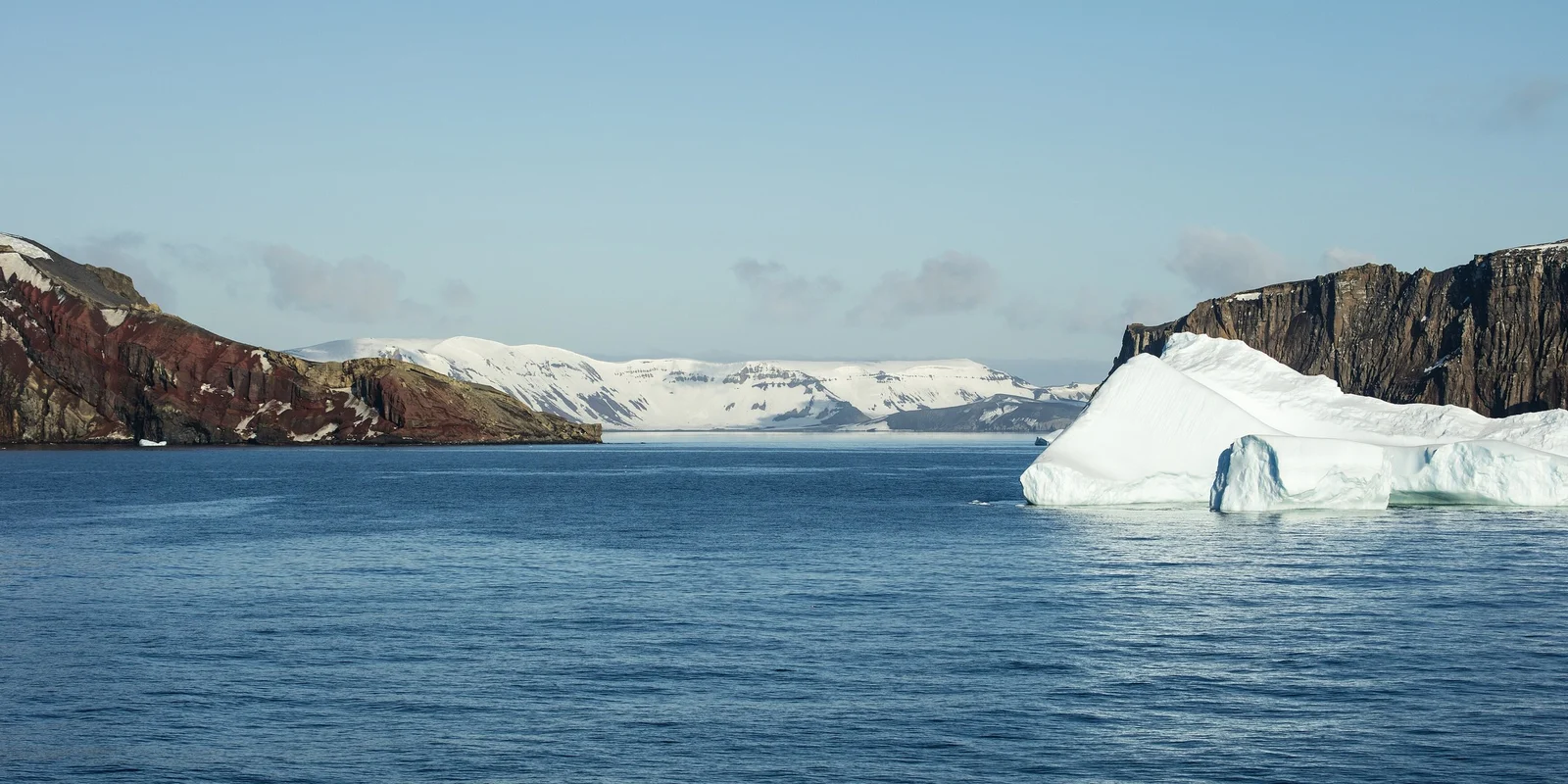
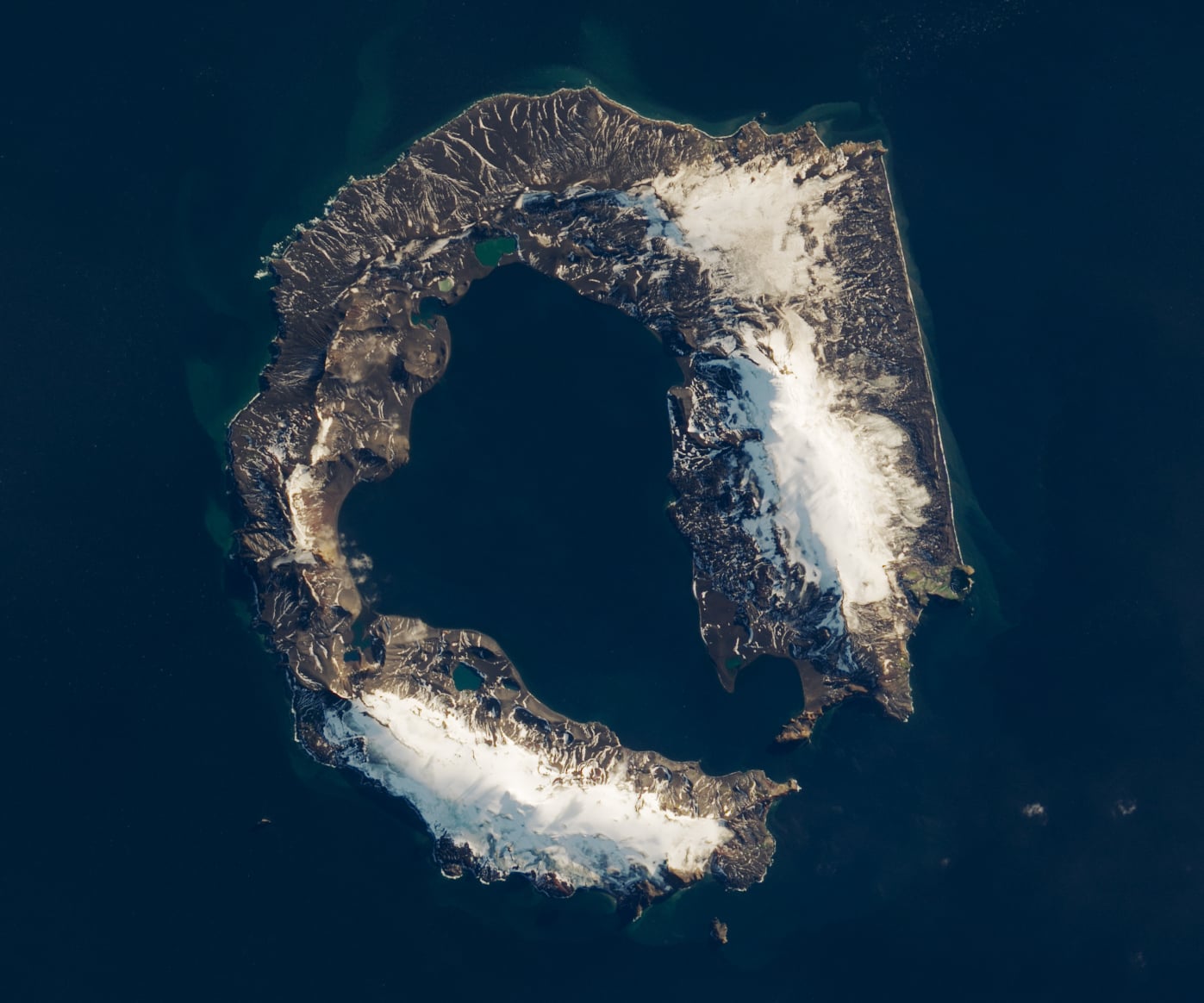
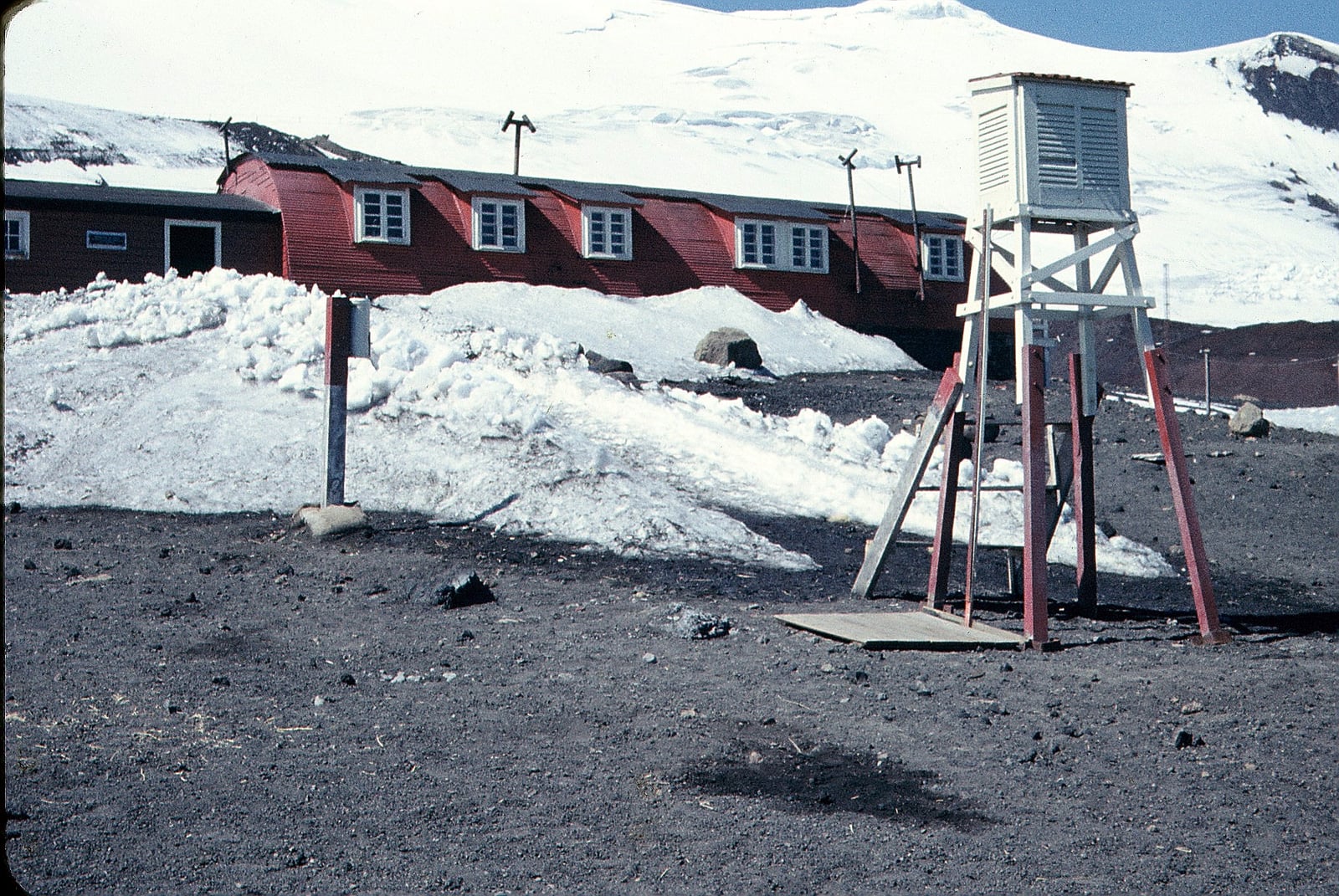
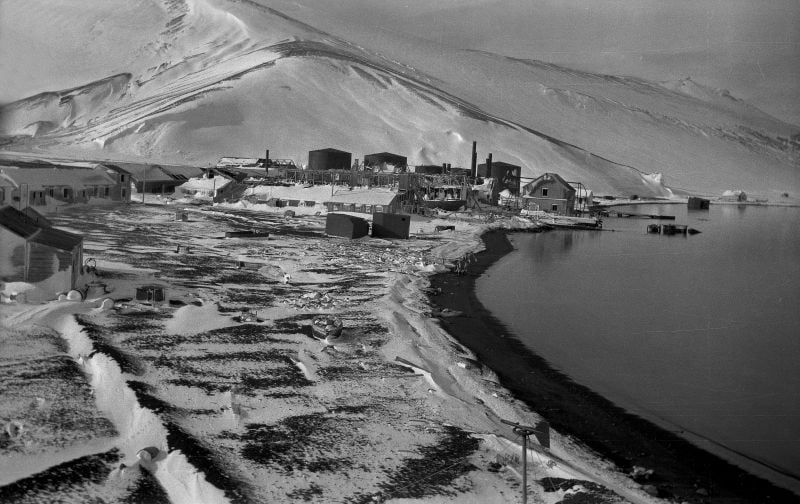
Deception Island is a volcano whose crater the sea has flooded. A ring of ash and ice about fifteen kilometers across encloses a bay, Port Foster, reached through a single gap in the wall called Neptune’s Bellows. In 1965 three countries that all claimed this corner of Antarctica kept stations around its shore. The Argentine Navy’s Destacamento Naval Decepción, the Chilean Air Force’s Base Presidente Pedro Aguirre Cerda on Pendulum Cove and the British Antarctic Survey’s Base B, set in the old whaling station at Whalers Bay, stood around the shore in a rough triangle about seven kilometers on a side. Twelve years earlier, Royal Marines had landed and burned the new Argentine and Chilean huts built beside the British base. Now the three garrisons were radio neighbors and occasional guests at one another’s stations. In the southern winter the bay froze solid. Daylight, the Argentine commander reported, ran from about 10:20 in the morning to 3:30 in the afternoon, “followed by 16 hours of darkness.”
Sources: Deception Island UFO SightingsAvistamientos OVNI en la Antártida en 1965Deception Island incidentOvnis en la Antártida: hace 60 años los gobiernos de Argentina y Chile afirmaron haber avistado platos voladoresThe Island Shaped Like a Horseshoe
A yellow light in June
The first sign came in early winter. At 7:50 on the evening of June 7, Jorge Stanich, the Argentine detachment’s civilian meteorologist, saw a pale yellow light, ringed by a fuzzy halo, hang motionless to the southwest for five seconds. In the small hours of June 8 he saw it again, below a low overcast, for four seconds; the detachment commander, Daniel Perissé, later wrote that Stanich heard “a grave sound of hardly any intensity” two minutes after it went. On the afternoon of June 18, according to the Chilean Air Force radiogram printed in Santiago the next day, the whole Chilean garrison watched “a celestial body with the luminous intensity of a first-magnitude star” appear over the east of the island sixty degrees above the horizon, make a 180-degree turn to the left, turn again through ninety degrees and head off south, gone at 4:40. The Argentine cables later dated this Chilean sighting to June 20; the Chilean base commander himself was quoted giving June 13.
Sources: Unidentified Flying Objects Sighted in AntarcticaTranslation of official UFO reports from the Naval Ministry of ArgentinaDeception Island UFO SightingsAvistamientos OVNI en la Antártida en 1965
The Chilean watch
On the evening of Saturday, July 3, the sky over Deception did something rare for the season: it cleared. At 7:20, a sergeant on the weather round at Pedro Aguirre Cerda, Luis Moya, spotted a light, and nine men of the twelve-man garrison came out to watch. It was yellowish-red, then green, yellow and orange, crossing the southwest of the island on a swaying course at high speed, and behind it, Perissé later wrote, trailed “a wake, apparently steam.” For about twenty minutes it hung, moved and hung again, until cloud swallowed it. Corporal Uladislao Durán Martínez did not wait. “I ran for my camera, praying on the way that I would have time to prove we weren’t the victims of an optical illusion,” he told Clarín. “I took ten shots in all… The film is color, and I’m sure they came out well.” Some frames, he said, he took directly and some through a theodolite, the swiveling sighting scope weathermen used to follow their balloons, and some through a pair of binoculars someone handed him. There was no darkroom on the base; the film would have to wait for the relief ship.
Sources: Avistamientos OVNI en la Antártida en 1965Deception Island UFO SightingsUAOs Over AntarcticaRadio interview with the commander of the Pedro Aguirre Cerda base
Sixty-two minutes at the Argentine station
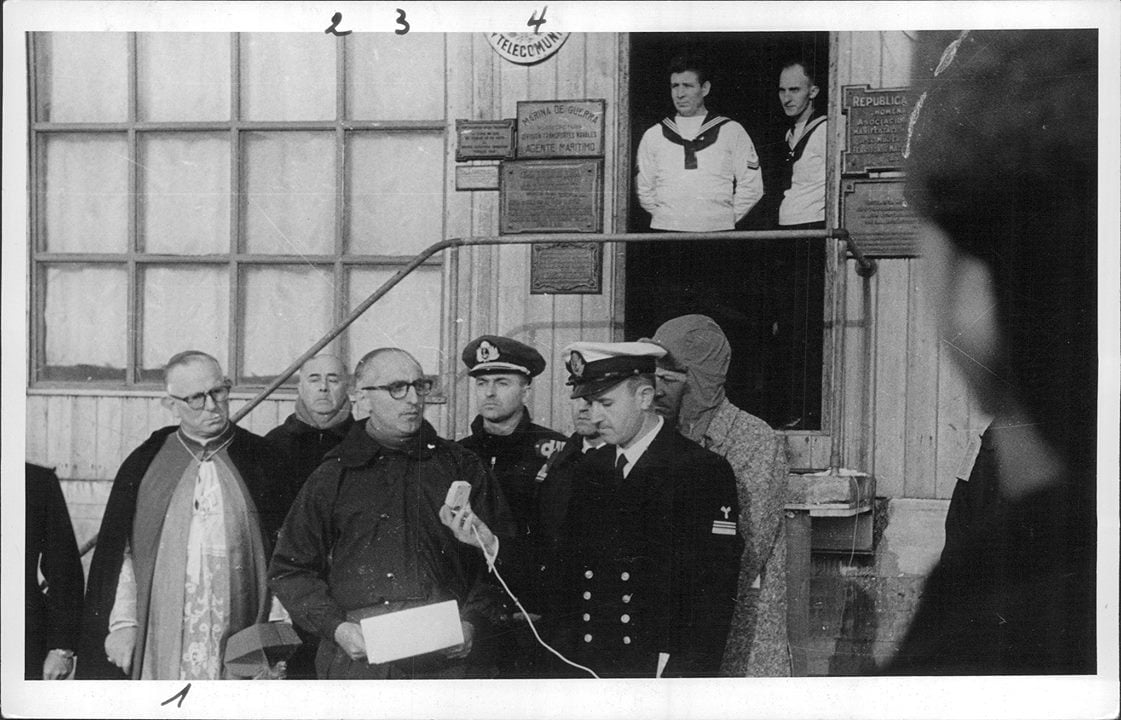
Two minutes after the Chilean sighting ended, it was the Argentines’ turn. At 7:42, Aldo Irusta, a petty officer taking the evening weather observation, saw a light to the north-northwest about thirty degrees up. On the Naval Intelligence questionnaire he later filled in, he compared it to “a Bunsen-burner flame, shaped like a rugby ball.” The detachment commander, Lieutenant Daniel Perissé of the naval infantry, turned out his men and the three Chilean airmen who happened to be staying at the station, one of them there to have a fracture treated by the Argentine doctor. They watched with the naked eye, with binoculars and through the theodolite. The radiogram sent to Buenos Aires the next day described a red center with borders “changing from yellow to green to orange to blue to white,” the size of the head of a half-inch nail, round to oval. It hovered, accelerated, reversed. The questionnaire noted that it slipped behind the low stratus but showed against the high cirrus. For one hour and two minutes it held the sky, and at 8:44 it drew away to the northwest, shrinking and climbing. Stanich tried to photograph it with slow film and no tripod.
Sources: Unidentified Flying Objects Sighted in AntarcticaAvistamientos OVNI en la Antártida en 1965Deception Island UFO SightingsTranslation of official UFO reports from the Naval Ministry of Argentina
The cook at Base B
The British were the odd ones out. When the National Investigations Committee on Aerial Phenomena (NICAP), the leading American civilian UFO group of the day, asked the British government about the sightings, the British Antarctic Survey’s director, Sir Vivian Fuchs, forwarded the only message Base B had sent: “Flickering red-green-yellow light observed from British base 2300Z 2nd July due north, it had moved in two waves quickly from the west then reversed along this course for a short distance before returning again to the north where it remained stationary for about 20 minutes.” The time, 2300 GMT on July 2, was early evening at Deception, a day before the Chilean and Argentine sightings. The Argentine and Chilean cables credited the British with five witnesses. Decades later Vicente-Juan Ballester Olmos and his Spanish and Argentine colleagues of FOTOCAT, a catalogue of UFO photograph cases, traced the man behind that line: Bernard Chappel, the base cook, who also stood shifts as a weather observer. “I observed a bright bottle green coloured orb high in the night sky whilst I was assessing cloud cover,” he wrote to them. At first he took it for a planet; then “the light disappeared towards the horizon at a phenomenal speed, before returning minutes later hovering for a short while before disappearing once more in the opposite direction.” He had kept quiet, he said, because he was by far the youngest man on the base. His colleague Peter Bird remembered Bernie as someone who liked a tall story. Another, the pilot Jules Brett, did not believe he had made it up.
Sources: Avistamientos OVNI en la Antártida en 1965Unidentified Flying Objects Sighted in AntarcticaIndirect Physical Evidence
Needles at Orcadas
Hours before the Chilean watch, eight hundred and forty kilometers to the east-northeast, two meteorologists at Orcadas, the old Argentine station on Laurie Island in the South Orkneys, had already seen something. José Mazzucchelli and Eduardo Jarriek spotted it at 5:03 that afternoon. Their commander’s first radiogram, the next morning, described a round, white, not very bright light with a clean outline, crossing “west to east” on a parabolic path about thirty degrees up for fifteen seconds before cloud hid it. Two days later a second cable added the detail that made the story famous. The station’s variometers, instruments that record small changes in the Earth’s magnetic field, had reacted: “Two variometers working affected by magnetic field disturbance at the time object sighted.” The base chief, Lieutenant Miguel Sosa, told La Prensa it had been “a slight disturbance of the variometers,” but one that “would indicate the object was made of highly magnetic material.”
Sources: Unidentified Flying Objects Sighted in AntarcticaAvistamientos OVNI en la Antártida en 1965Deception Island UFO Sightings
The Navy speaks
Chile went first. On the morning of July 6, El Mercurio printed the base commander’s radiogram: nine men had seen “the curious celestial body,” the British had seen something the day before, Corporal Durán had taken ten color slides, and “there were no prior communications between the bases that could induce a psychosis of this kind.” The commander, Squadron Leader Mario Jahn Barrera, spoke to the Santiago press by radio: “Our observation was not a hallucination or a collective psychosis… I can say it was not a star, because it had very rapid and continuous movement… my knowledge of man-made craft reaches nothing like it, in its shape, its speed and its maneuverability in the air.” That evening the Argentine Navy issued a communiqué headed “Sighting of unidentified flying objects in the Argentine Antarctic.” It described “a flying object of lenticular shape, solid appearance, predominantly red and green, at moments with yellow, blue, green, white and orange hues,” seen in exceptionally clear weather under a waning moon, silent, changing speed, at times stationary, watched by eleven men for fifteen to twenty minutes, “photographs being taken.” A second bulletin a day later raised the witnesses to seventeen and ruled out “a sounding balloon, a star or an airplane.” The Buenos Aires evening paper La Razón wondered aloud whether the two militaries meant to confront “three billion earthlings” with the evidence of visitors from other worlds.
Sources: Avistamientos OVNI en la Antártida en 1965Radio interview with the commander of the Pedro Aguirre Cerda baseA flying object over Antarctica wasn’t identifiedOvnis en la Antártida: a 50 años del avistamiento en la isla DecepciónOvnis en la Antártida: hace 60 años los gobiernos de Argentina y Chile afirmaron haber avistado platos voladores
A winter of saucers
The Antarctic object led the front page of every Argentine paper, and Argentina had what Clarín called, fifty years later, a collective psychosis that lasted all winter. Seven young hikers saw a UFO near Pilar; lights were photographed over Bahía Blanca; on August 1 the binoculars at the Palermo racecourse swung from the track to a strange globe in the sky until the loudspeakers announced five minutes to post. The Navy’s own UFO officer, Commander Omar Pagani, wrote to NICAP with two more reports: on July 7 a coast guard post on Gable Island in the Beagle Channel had watched a silver disk hover for two or three minutes and leave a bright ray that lit the water, its men, Pagani said, knowing nothing of the Antarctic news; and on July 8 the Army’s Esperanza base reported an object like Deception’s. Wire services carried the story abroad, growing as it went; one French paper had “a whole flotilla” of red and green saucers circling for more than two hours. The American naval attaché in Buenos Aires sent translations of the four base radiograms to Washington, and in August the State Department asked its embassy for more.
Sources: El ovni que se paseó por la Antártida y disparó la psicosis argentinaTranslation of official UFO reports from the Naval Ministry of ArgentinaUnidentified Flying Objects Sighted in AntarcticaCelestial Body Observed over AntarcticaLe Méridional, July 8, 1965Avistamientos OVNI en la Antártida en 1965
Ten slides in the dark
The Argentine pictures came to nothing. Stanich’s slow film showed, as he put it in 2006, “nothing, absolutely nothing, at most an insignificant dot that could have been anything”; Perissé later said they had shot from indoors, through double-glazed windows. Everyone waited for Durán’s ten color slides, which could not be developed until the Chilean relief crew came south. When the relief crew came home in January 1966, its members told the Chilean researcher Pablo Petrowitsch the photos had come out badly because the photographer was inexperienced; a later account says the Air Force declared them fogged. Jahn Barrera, years afterward, said people had imagined special cameras, “and we only had our own, which were for taking pictures of the ice and the seals.” In 1969 Commander Sergio Bravo, head of Chile’s weather service, told the Madrid paper ABC that he had interviewed the man who saw it, “a student of mine. But there were no photos.” Project Blue Book, the U.S. Air Force’s UFO investigation, logged the Chilean pictures among images that appeared in the press but were never submitted. Clarín’s anniversary piece summed up the choice: “Either a conspiracy or blank frames: choose your own adventure.”
Sources: Avistamientos OVNI en la Antártida en 1965El ovni que se paseó por la Antártida y disparó la psicosis argentinaDeception Island UFO Sightings
The commander who wanted to see
At the center of the story stood Daniel Perissé, not yet thirty in 1965 and, by several accounts, a man already fascinated by the unexplained. Before the July sightings he had been planning telepathy experiments between Deception and volunteers abroad with the Instituto Argentino de Parapsicología. Peter Bird, writing to his mother that November, called him the instigator of July’s “flying saucer scare” and claimed that someone had told Perissé about a colored light as a joke. The Condon Report, the University of Colorado UFO study funded by the U.S. Air Force, quoted the British base leader, David Walter, recalling that the one British observation, the cook’s, “was looked upon as rather a joke,” and that the Chileans’ phenomena were reported above the Argentine base while the Argentines’ were placed above the Chilean one. Pablo Justo, a civilian engineer at the Argentine station, told the FOTOCAT team he saw nothing at all and that those who did were all Perissé’s subordinates. Perissé never stopped investigating. He sat on the Navy’s UFO commission from 1966 to 1974, told the Deception story at the MUFON symposium in Washington in 1987, and yet told the researcher Luis Burgos in 1991 that in the light of modern technology he could no longer say it had been a UFO.
Sources: Avistamientos OVNI en la Antártida en 1965Indirect Physical EvidenceDeception Island UFO SightingsDaniel Perissé1965: cuando los ovnis invadieron la Antártida
The volcano’s verdict
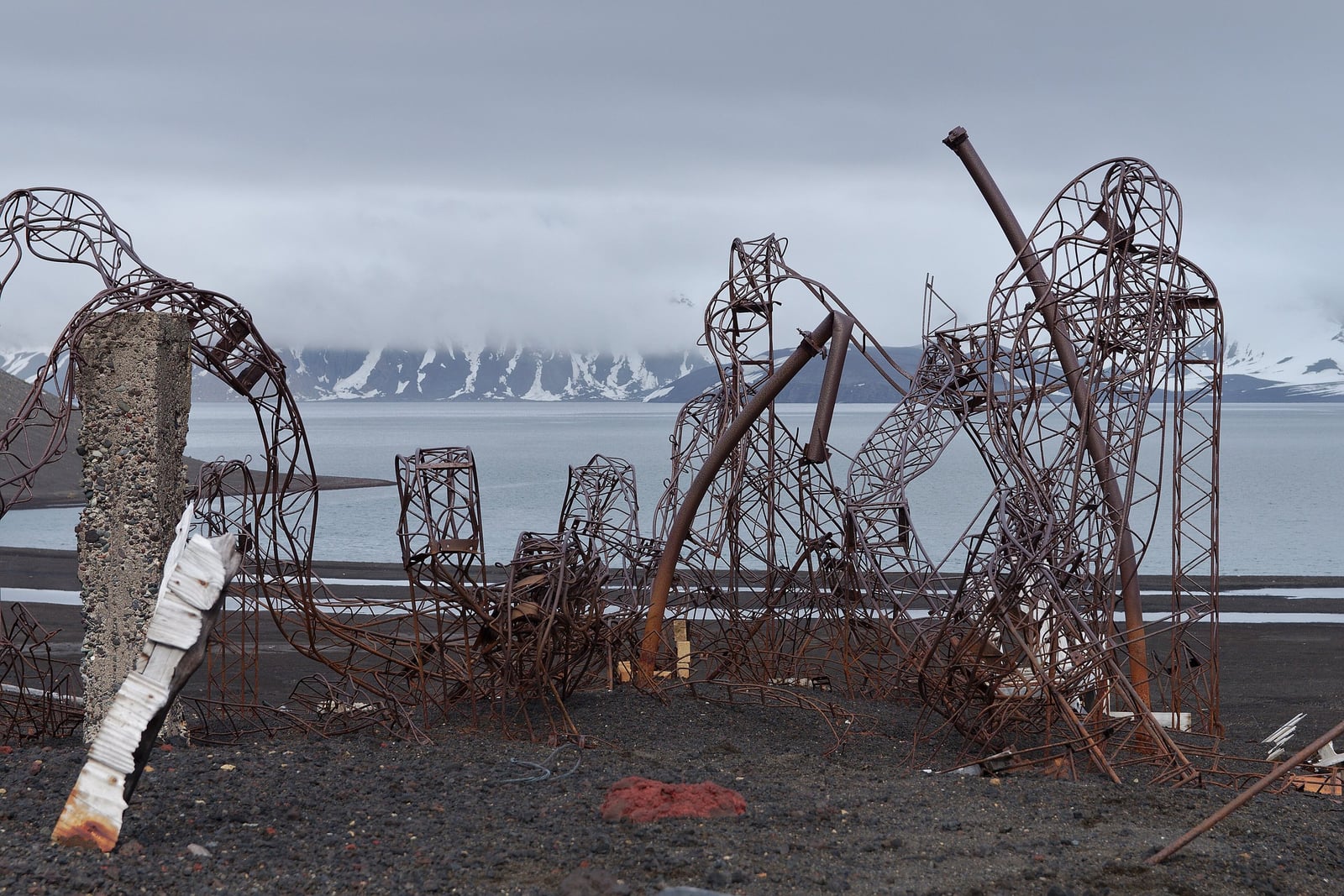
Deception kept its own counsel. On December 4, 1967, the volcano erupted inside the bay; the Chilean base was evacuated and abandoned that day, and the British withdrew. A second eruption in February 1969 sent mudflows through Biscoe House at Whalers Bay, and Base B was never reoccupied. The Argentine station became a summer-only camp. The ruined huts joined the island’s older ghosts: Fuchs’s history of the survey tells of the “Deception ghost” of the early 1960s, a completely bandaged figure that appeared only in the whalers’ cemetery, and of footsteps in an empty loft one night as ghost stories were being told, with the Argentine commander among the listeners. Later tellers went further, speaking of alien bases under the ice and of a photograph of an oval object over the 1967 eruption, which the Corrientes paper El Litoral calls unpublished and does not show. The Chilean commander’s later life took a darker turn: Mario Jahn Barrera became deputy director of Pinochet’s secret police, the DINA, ran Chile’s aeronautical museum for eighteen years, and in 2012, a year before his death, was sentenced for a 1975 DINA killing.
Sources: Deception IslandAvistamientos OVNI en la Antártida en 1965Un ovni visto sobre la AntártidaThe 1965 Deception Island sightingsMario Jahn Barrera
What the 1965 record holds
The closest thing to a primary record is four Argentine base radiograms, sent between June 23 and July 6 and translated verbatim by the U.S. naval attaché in Buenos Aires on July 16, 1965. They are the source for the times, durations and nail-head size given above, and for the words “some photography taken.” Beside them stand the Chilean Air Force radiograms printed in Santiago, the Argentine Navy communiqué of July 6 and Bulletin 172, Commander Pagani’s letter to NICAP of July 9, the handwritten Naval Intelligence questionnaires that later resurfaced, and in London the file AIR 2/17982 with Fuchs’s letter quoting Base B’s one-line signal. The State Department’s airgram of September 4 reported that more information was unlikely before the summer change of personnel. No photograph or Chilean Air Force file has been produced, and the Orcadas magnetograms are known only from the microfilm copies the Condon Report’s team examined; Chile’s official UFO committee told a researcher in 2003 that it held nothing from 1965.
Sources: Unidentified Flying Objects Sighted in AntarcticaTranslation of official UFO reports from the Naval Ministry of ArgentinaCelestial Body Observed over AntarcticaAvistamientos OVNI en la Antártida en 1965
How the story grew
The numbers moved from the start. The first Navy communiqué gave eleven witnesses and fifteen to twenty minutes; the radiograms and Perissé’s later accounts gave seventeen and sixty-two. The British sighting is dated June 2, July 2 or July 3 in different papers, and credited to five men or to one. In English translations, including the one in Perissé’s own 1987 paper, the lenticular object became “a giant, lens-shaped flying object”; the APRO Bulletin, newsletter of the Aerial Phenomena Research Organization, added that it “hovered motionless for about 15 minutes at an estimated altitude of about 5 thousand meters.” Neither detail is in the Spanish communiqué. APRO also had the Orcadas instruments registering the object for an hour and two minutes, and the physicist Charles Maney used its altitude to estimate a magnetic field of forty-nine million oersteds, though the variometers were 840 kilometers from Deception. Recent Argentine retellings add a transport ship called Punta Médanos whose compasses pointed straight at the object; FOTOCAT, which reproduces the official texts, contains no such incident. Perissé himself converted a nail head at arm’s length into a craft seventy-five to ninety meters across.
Sources: Avistamientos OVNI en la Antártida en 1965UAOs Over AntarcticaAntarctica, July 3, 1965Ovnis en la Antártida: a 50 años del avistamiento en la isla DecepciónUn ovni visto sobre la AntártidaDeception Island UFO Sightings
The Orcadas variometers
The magnetic disturbance at Orcadas was the case’s strongest claim to instrumental evidence and has not survived scrutiny. The Orcadas commander’s first cable, on the morning of July 4, says nothing about it; it enters the Navy record in a second cable on the evening of July 6, though the Chilean radiogram had already passed the claim along. The Condon Report’s team examined microfilm of the Orcadas magnetograms and found that the deviation during the sighting was “small, an order of magnitude lower than deviations observed during magnetic storms, and well within normal daily fluctuations.” An Argentine Navy officer, Captain José María Cohen, called the variations normal; a later Navy history records that the Orcadas geomagnetic instruments had been failing from February to June 1965. Stanich said in 2006 that a magnetic storm happened to be under way. Perissé wrote in 1987 that he could not vouch for the instruments’ existence or say he had seen the recording, and the original recordings left the Navy when Pagani retired with the service’s UFO files.
Sources: Indirect Physical EvidenceAvistamientos OVNI en la Antártida en 1965Deception Island UFO SightingsUnidentified Flying Objects Sighted in Antarctica
Ordinary explanations
The FOTOCAT team, after six years with the documents and the surviving witnesses, concluded that the reports were “distant observations of luminous phenomena that are barely distinguished in appearance from a first-magnitude star.” They matched Orcadas to a meteor; the Chilean sighting to Echo II, a giant reflective NASA balloon satellite, bright and low over Deception from 7:20 to 7:33 that evening, or to a bright star; and the Argentine sighting to Mars, Spica or Arcturus, which in sixty-two minutes would have drifted about as far as the witnesses reported. Stanich recalled the object kept slipping out of the theodolite, as a star does at high magnification. The station’s second-in-command, Adolfo Cabral, who watched through binoculars from indoors, told the Argentine researcher Rubén Morales it was a bright star that sank behind a hill in the normal time for the Earth’s rotation. In 1965 the physicist Félix Cernuschi called the lights auroral and said the Navy had made Argentina a laughing-stock; La Plata Observatory pointed to Echo II, which Perissé rejected in La Nación. Perissé himself had allowed that atmospheric refraction might have altered its appearance. Against all this stand the witnesses’ own descriptions of a light that hovered, accelerated and reversed, and the insistence of the Chilean commander, an Air Force pilot, that nothing man-made he knew could match its speed and maneuverability.
Sources: Avistamientos OVNI en la Antártida en 1965Celestial Body Observed over AntarcticaEl ovni que se paseó por la Antártida y disparó la psicosis argentinaIndirect Physical Evidence
Classification and evidence note
This archive files Deception Island as a military encounter: the witnesses were naval, air force and civilian personnel at government stations, and the reports reached the public through official Argentine and Chilean channels and were passed on by U.S. military and diplomatic cables. No close-encounter classification is given, because no one reported a landing, occupants or physical effects on the witnesses, and the claimed magnetic effect at Orcadas did not hold up. The sighting rests on eyewitness estimates of lights at night, made by eye, through binoculars and through a theodolite. Its photographs were announced but never shown, and many of its most-quoted details entered in later retellings. What remains is a well-documented moment when two governments told the world their men had seen something they could not identify.
Sources: Unidentified Flying Objects Sighted in AntarcticaAvistamientos OVNI en la Antártida en 1965Deception Island UFO SightingsIndirect Physical Evidence
- FEB 1953
Royal Marines burn new Argentine and Chilean huts beside the British base at Whalers Bay.
- 7–8 JUN 1965
Argentine meteorologist Jorge Stanich twice sees a stationary yellow light for a few seconds.
- 18 JUN 1965
The Chilean garrison watches a star-like light turn twice and head south, gone at 4:40 p.m., by the Chilean radiogram’s account.
- 2 JUL 1965 · 2300 GMT
At British Base B, a flickering red-green-yellow light moves in from the west and hovers due north for about twenty minutes.
- 3 JUL 1965 · 5:03 PM
Two meteorologists at Orcadas see a round white light cross the sky for fifteen seconds.
- 3 JUL 1965 · 7:20 PM
Nine men at the Chilean base watch a colored light for about twenty minutes; Corporal Durán takes ten color slides.
- 3 JUL 1965 · 7:42–8:44 PM
The Argentine detachment and three Chilean visitors follow the light by eye, binoculars and theodolite for sixty-two minutes.
- 6 JUL 1965
El Mercurio prints the Chilean radiogram; the Argentine Navy issues its communiqué on a solid, lens-shaped flying object; Orcadas reports variometer disturbances.
- 7 JUL 1965
Navy Bulletin 172 raises the witness count to seventeen; wire services carry the story worldwide; a silver disk is reported over the Beagle Channel.
- 16 JUL 1965
The U.S. naval attaché in Buenos Aires sends Washington a translation of the four base radiograms.
- 4 SEP 1965
The American embassy answers a State Department request: more information must wait for the summer relief.
- 22 OCT 1965
Sir Vivian Fuchs sends the Ministry of Defence’s Air Staff the one line Base B had signalled about its light.
- JAN 1966
Durán’s film reaches Santiago; the slides are reported to have come out badly, and none is ever published.
- 4 DEC 1967
Deception Island erupts; the Chilean base is abandoned, and a 1969 eruption ends the British base.
- 1969
The Condon Report finds the Orcadas magnetic deviation within normal daily fluctuations.
- 1987
Daniel Perissé presents the Deception sightings at the MUFON symposium in Washington.
- 2013
FOTOCAT Report no. 3 compiles the documents and witness interviews, and attributes the lights to a meteor, the Echo II satellite and a bright star or Mars.
Sources & interviews
Avistamientos OVNI en la Antártida en 1965Vicente-Juan Ballester Olmos, Manuel Borraz Aymerich, Heriberto Janosch González and Juan Carlos Victorio Uranga · Informe FOTOCAT no. 3 · completed December 2012 · 183 pp. with English conclusions · draws on the Argentine Navy questionnaires, UK National Archives file AIR 2/17982, British Antarctic Survey letters and interviews with surviving witnessesDeception Island UFO SightingsDaniel A. Perissé, translated by Willy Smith · MUFON 1987 International UFO Symposium Proceedings, pp. 142–154 · the Argentine detachment commander’s own accountUnidentified Flying Objects Sighted in AntarcticaU.S. Naval Attaché, Buenos Aires · Department of Defense Intelligence Information Report 5 804 0048 65 · July 16, 1965 · verbatim translation of four Argentine base radiograms supplied by the Navy Hydrographic Service · scan via NICAPCelestial Body Observed over AntarcticaAmerican Embassy Buenos Aires · Department of State Airgram A-208, confidential · September 4, 1965 · reply to Circular Airgram CA-1887 · copy via NICAPTranslation of official UFO reports from the Naval Ministry of ArgentinaCmdr. Omar R. Pagani, Argentine Navy, letter to NICAP of July 9, 1965 · NICAP New York translation, July 27, 1965A flying object over Antarctica wasn’t identifiedClarín (Buenos Aires) · July 7, 1965 · NICAP New York translation, July 16, 1965Radio interview with the commander of the Pedro Aguirre Cerda baseEl Mercurio (Santiago) · July 7, 1965 · NICAP New York translation, July 26, 1965UAOs Over AntarcticaThe A.P.R.O. Bulletin · July–August 1965 · transcription via NICAPLe Méridional, July 8, 1965Patrick Gross · UFOs at close sight · French press clipping with the “flotilla of saucers” wire storyIndirect Physical EvidenceRoy Craig · Scientific Study of Unidentified Flying Objects (the Condon Report), Section III, Chapter 4 · 1969 · on the Orcadas magnetograms and Base BAntarctica, July 3, 1965Francis L. Ridge · NICAP case directory · with the Richard Hall summary and scans of the 1965 documentsEl ovni que se paseó por la Antártida y disparó la psicosis argentinaClarín · July 2015 · fiftieth-anniversary feature, reposted on Historia de la Flota de MarOvnis en la Antártida: a 50 años del avistamiento en la isla DecepciónLuis Emilio Annino · CEFORA · 2015Ovnis en la Antártida: hace 60 años los gobiernos de Argentina y Chile afirmaron haber avistado platos voladoresRubén Morales · Los Andes (Mendoza) · June 20, 20251965: cuando los ovnis invadieron la AntártidaAlejandro Agostinelli · Factor 302.4 · December 9, 2012The 1965 Deception Island sightingsPatrick Gross · UFOs at close sight · case page with press referencesArgentine officials on UFOsPatrick Gross · UFOs at close sight · quotations collected by Luis Burgos of the Fundación Argentina de UfologíaUn ovni visto sobre la AntártidaEl Litoral (Corrientes) · June 23, 2024Daniel PerisséWikipedia (Spanish)Mario Jahn BarreraWikipedia (Spanish)Deception Island incidentWikipedia · the 1953 British removal of the Argentine and Chilean hutsDeception IslandWikipedia · geography, stations and the 1967–1970 eruptionsThe Island Shaped Like a HorseshoeNASA Earth Observatory · Landsat 8 image of March 23, 2018OVNIS en la ANTARTIDA | El evento de la Isla Decepción 1965Testigos de lo Oculto · YouTube · Spanish-language retellingSpotted an error, or know a better source? Write to hello@uap.fun.
Connected files
The Lights that Hunted ColaresSouth America’s other military UFO file: a Brazilian Air Force operation whose photographs and reports were held back for decades.The Tehran InterceptAnother government-reported light that changed colors and moved like no aircraft, with claimed instrument effects that became the heart of the case.The Night the Sky Waved BackA remote mission, a crowd of witnesses led by the man in charge, and a string of lights over several nights.The Lights beside the Newspaper PlaneSouthern Hemisphere lights at the edge of the world again, where film was taken and the arguments over planets and refraction never quite ended.Inside Project Blue BookThe U.S. Air Force project that logged the Antarctic reports as information only and listed the Chilean slides as never submitted.Discuss this case
Compare notes with other readers: witness details, sources, and the parts that still do not add up.
Open the discussion