A fire near the krans
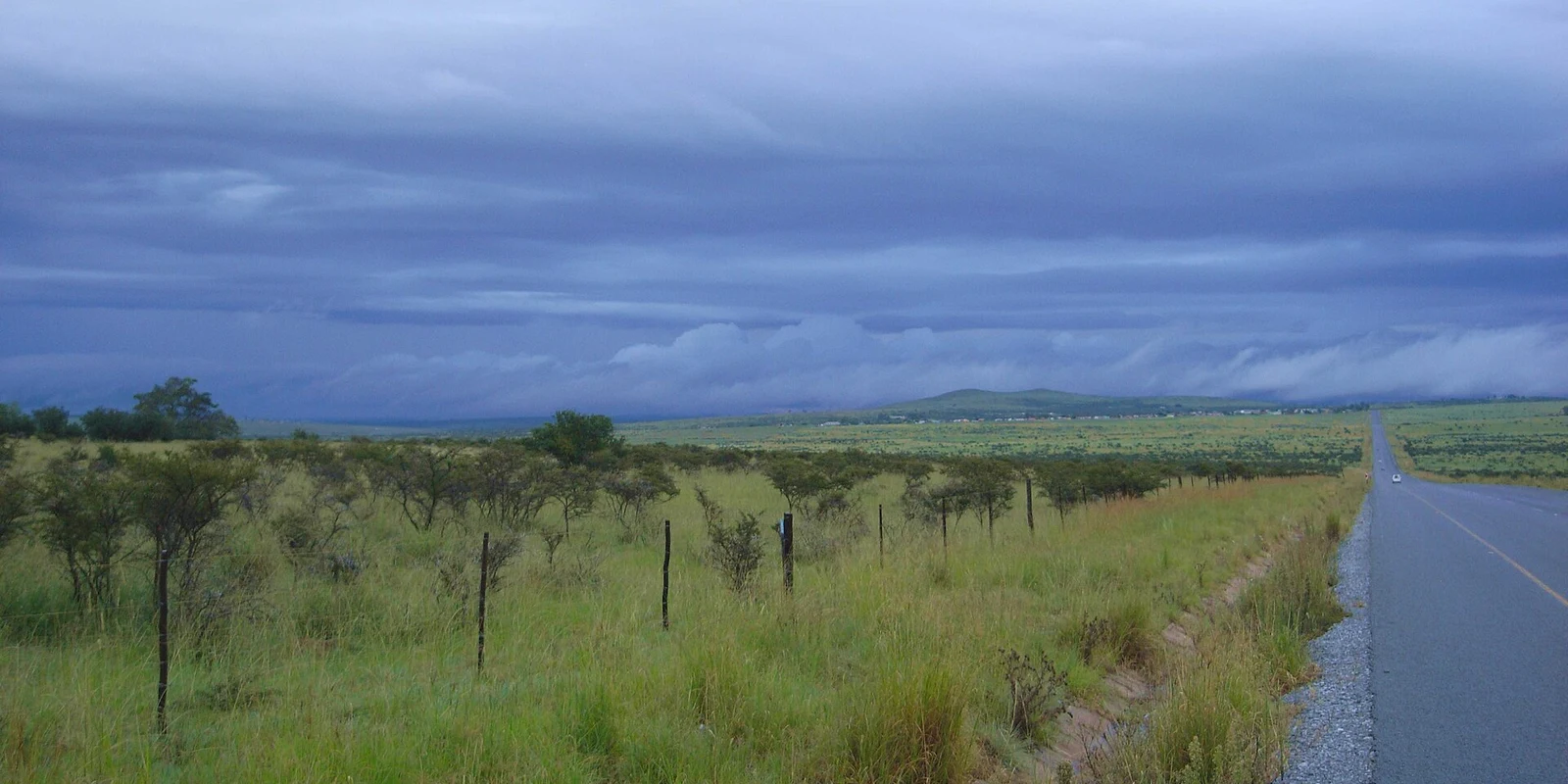
Monday, June 26, 1972, was a clear, mild winter morning in the Eastern Cape. On Braeside, a farm about 15 kilometers outside Fort Beaufort, a farmhand later named in the records as Boer de Klerk was out in the veld near the farm reservoir when he saw smoke near the krans, the rocky outcrop, and then a ball of fire hanging at the height of the trees. The farm belonged to Bennie Smit, whom the papers would call a down-to-earth plumber from East London, a crack shot and, years later, an acclaimed hunter. By Smit’s own account, published in the Sunday Times the following Sunday, “At 9am one of my labourers reported that he had seen smoke near the krans and then a big ball of fire.” Smit went to look. “Sure enough, there was a fiery ball, hovering at treetop height. It was about 2½ feet across with flames shooting out. My man shouted, and it moved sideways for about 300 yards and disappeared behind a big bush.” When it came back it was changing color: “When I first looked it was a big, red ball, but now it was green and it suddenly changed to a yellowish-white.” Nine nights earlier, at midnight, a neighbor about a kilometer away, Fraser Moss, had heard a drumming noise in the sky and seen nothing.
Sources: The 1972 South African ‘Flap’The South African FlapStop Press: South Africa: Farmer and Police fire shots at UFONotice to unidentified flying objects: try to avoid South AfricaSouth African police fire at UFO
The .303
“I was shocked and felt this thing could be dangerous,” Smit said. “I hurried back to the house to fetch my .303 rifle and phoned the police. I went back to the spot and fired several shots. I am sure my eighth shot hit it, as I heard a thud. It moved up and down and disappeared behind the trees again.” Twenty-five years later he told it with more fear in it. He had gone into the bush thinking his labourers had gone to the wrong camp and lit a fire there to keep warm, and found them cowering in a shed, muttering about something in the bush. “When I saw it, my whole body got goosebumps. I sprinted home and got my .303 and told someone to call the police. I knew I was safe if I had my gun.” In the version printed by the Danish newspaper Aalborg Stiftstidende, Smit explained why he had not fired sooner: at first his men were in the line of fire, and when the object dipped he fired at its star.
Sources: The 1972 South African ‘Flap’The South African FlapFarmer shoots at UFO in 1972UFO fik en varm velkomst i Sydafrika
Two policemen and a joke about Martians
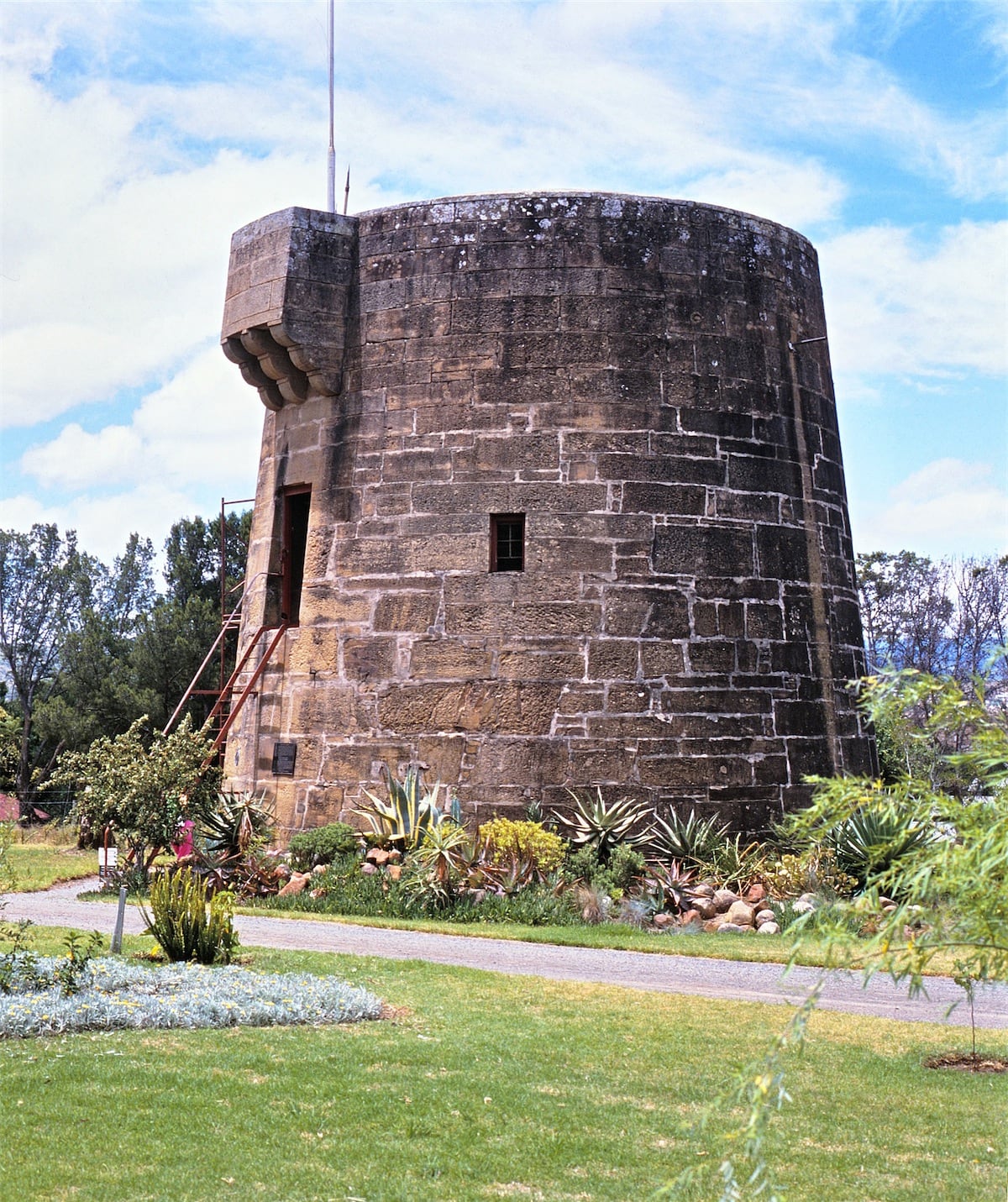
At the police station in Fort Beaufort, a garrison town of the old frontier wars at the meeting of the Kat and Brak rivers, the call reached Sergeant P. C. Kitching. He had eight years in the South African Police. He persuaded his station commander, Warrant Officer P. R. van Rensburg, to come with him; Van Rensburg later said Kitching had burst into his office three times before he gave in. They reached Braeside at about nine or ten, depending on the account, and found Smit coming out of the thick bush, sweating. “Bennie’s first words were that he thought the UFO could be from outer space,” Van Rensburg recalled. “I then joked that the Martians had come to steal his sheep. Then I saw it coming out of the trees and I did not want to believe my eyes.” Kitching, in an account he wrote for a Canadian investigator decades later, remembered the first quiet minutes differently. Seven of them, four labourers, two policemen and the farmer, stood looking at a hill about 150 meters off, and saw nothing, and were skeptical. Then “I saw an object which emerged from the thick bush and vegetation at the foot of the hill and hovered just above the vegetation. It moved slowly to our right and again disappeared behind the thick bush… I had the feeling that we were being watched.”
Sources: Stop Press: South Africa: Farmer and Police fire shots at UFOFarmer shoots at UFO in 1972South African police fire at UFOFort Beaufort
A black, shiny thing that shied away
What the policemen saw was not a ball of fire. “After Mr. Smit and Sgt. Kitching had fired a couple of shots in the direction of the ball of fire,” Van Rensburg told the press, “we saw a round, black, shiny object about 2½ feet in diameter emerge from behind a tree. It slowly disappeared from sight and then reappeared. Shots fired had no effect, but when anyone approached it shied away behind the bushes.” Kitching, speaking to Flying Saucer Review’s correspondent Ivan Clark that year, described an egg-shaped thing about three meters long, floating lengthwise and half hidden behind vegetation, blue-black like the metal of a revolver, which began to glow red all over while they watched; then a bright, star-like light appeared on one side of it, blinking at intervals. Smit, in the wire story, saw “a star-like protuberance at the right end of the oval-shaped object, something that seemed to grow in size as the white light it emitted grew in intensity.” The Natal Daily News, briefed by the police in Grahamstown, settled on “an oval object, gun-metal in colour, about 3/4 m across. It glowed and frequently changed colour from green to yellow to white.” Whatever it was, it seemed to listen. When the labourers shouted from the bush, it sank out of sight; when people came near, it moved off. Smit’s men tried to drive it out of the bush, one report said, much as they would herd livestock.
Sources: The 1972 South African ‘Flap’The South African FlapLanding ved Fort Beaufort: interview med politifolkene, and Den sydafrikanske mini-bølge 1972Notice to unidentified flying objects: try to avoid South AfricaMysterious VisitorsWorld Atlas of UFOs
Fifteen shots
It was Kitching who had taken Smit’s rifle. “I fired three shots at it, hitting with each shot,” he wrote. “During firing at it, I saw a sharp bright light, flickering on the right of the craft, just above it.” The policemen told Clark in 1972 that of the fifteen rounds the seventh struck, with what Kitching called a dull sound, and that the object rolled from side to side and then ran through red, green and yellow. The first newspaper accounts counted at least fifteen .303 rounds, some fired by Smit from as close as seven meters; a New Zealand wire story had the police firing pistols from eight yards. By a later account, after Smit fired at the star-like light, the object stopped changing color and stayed a dark gun-metal body. None of it seemed to do any harm. Smit said that it moved slowly while all fifteen shots were fired and that its course was unaffected. Years later he said the bullets had bounced off. Van Rensburg would one day be asked why he had ordered his sergeant to shoot. In a quotation collected by the American researcher Bob Gribble, he replied only: “The matter is closed.”
Sources: South African police fire at UFOLanding ved Fort Beaufort: interview med politifolkene, and Den sydafrikanske mini-bølge 1972Mysterious VisitorsNotice to unidentified flying objects: try to avoid South AfricaLooking BackThe 1972 South African ‘Flap’Farmer shoots at UFO in 1972
The handkerchief on a stick
Then Smit went in after it; in the policemen’s version told to Clark, this walk came first, and the volley only after it failed. The men cut a reed, or a stick, and tied a white handkerchief to the end so that the policemen on the rise could follow him through the bush and shout directions. “I was just as scared as the others and was relieved when Bennie decided to go into the bush with the stick,” Van Rensburg said in 1997. Smit found it. “Suddenly I saw it about 20 yards away, now greyish-white, I fired two quick shots, but with a loud whirring noise it veered off over treetops, cutting a path through the foliage. It disappeared quickly from sight.” In the Sunday Tribune he added a detail that later writers kept returning to: “When it disappeared in the dense bush we could hear it crashing through the undergrowth, but when we followed we could see no sign of its passage.” To APRO’s South African representative, Frank Morton, he insisted that the trees and bushes had parted for the thing as it went, and that no blast of air had done it. It left nothing burned. By Kitching’s account, it turned upright before it veered off. The watchers on the rise never saw it leave. Kitching never understood, he wrote, how the object could “have vanished into thin air.” Smit’s dog, his constant companion, was missing the whole time.
Sources: Farmer shoots at UFO in 1972The 1972 South African ‘Flap’The South African FlapSouth African police fire at UFO
Nine marks in the clay
Where the object had hung, Smit found a circle of what the wire story called fist-like imprints in the sand. On Wednesday, Brigadier A. Vosloo, the police divisional commissioner for the Eastern Cape, led a squad out from Grahamstown at dawn; twelve policemen combed about four square kilometers, and a flying instructor, Sandy Matthew, and an amateur photographer, Brian Lawrie, took some forty aerial photographs looking for scorched bush. The police photographed the marks and took plaster casts. An order to release the photographs to the press was later countermanded. Clark counted three sets of three prints in damp clay, each about 6½ centimeters across and twisted slightly clockwise, as though a leg had been screwed into the ground; Van Rensburg dug one out to show him. C. S. Kingsley, a geology lecturer at Fort Hare University who had been a government geologist on the 1967 Antarctic expedition, examined samples and called the prints “definitely not animal or human.” Fine parallel streaks in them suggested “metal rather than something soft and fleshy.” The Pretoria News described the prints as round, about ten millimeters deep at the center and shallower toward the rim, “as if a spherical object had made them.” Van Rensburg never forgot the depth. “There were nine marks in the clay and the three-legged craft looked like it had landed there three times,” he said in 1997. “The marks were very deep — at least twice the depth my heeled shoes made. I weighed 90kg and hardly made a mark.”
Sources: Stop Press: South Africa: Farmer and Police fire shots at UFOMysterious VisitorsThe 1972 South African ‘Flap’Landing ved Fort Beaufort: interview med politifolkene, and Den sydafrikanske mini-bølge 1972The South African FlapFarmer shoots at UFO in 1972
The train crash and the fruit bottles
The samples had a strange journey. A parcel of plaster casts went north by train to the laboratories of the Council for Scientific and Industrial Research (CSIR) in Pretoria on June 29, and never arrived: The Star reported that it was lost in a train crash at Norvalspont. Van Rensburg later said he had offered to carry the samples himself and was told to send them by train. A second parcel did reach Pretoria, two samples packed in canned-fruit bottles, one of ordinary soil and one from the landing site. “The soil samples were tested in a number of ways,” a CSIR spokesman said, “but no significant differences could be found between them.” The Pretoria News reported that if anything had touched the ground, it had done so without changing the soil, and that there was nothing to indicate a rocket.
Sources: The 1972 South African ‘Flap’Farmer shoots at UFO in 1972South African Mini-Wave, 1972—Part 2
Is it legal to shoot a flying saucer?
Within a day or two, as Flying Saucer Review put it, the South African press was enjoying a field day. The question was not whether the men had seen something. The New Zealand Press Association’s correspondent in Johannesburg summed it up: “The national debate concerns the proper protocol for receiving extra-terrestrial visitors.” A police general, quoted as D. A. Bester, said: “I know of no law which forbids you to shoot at an invader from outer space.” The Natal Mercury was appalled that “policemen and a farmer could have tried to shoot out of the sky in broad daylight what might have been a spacecraft from a friendly planet.” Tom Geary, director of the Johannesburg Planetarium, advised that “Shooting them is the last thing one should do. Show you’re friendly and observe them as long as possible.” Uli Resnik, a Johannesburg scientist, said the police had been lucky the object was impervious to bullets: “It was suicidal to shoot at it. If it had exploded it could have destroyed the entire area.” Professor Arthur Bleksley, one of the country’s best-known scientific voices on the subject, asked why visitors would come to Fort Beaufort at all, and East London’s Daily Dispatch replied in a leader that perhaps they liked “a sensible system of roads along which cars actually move without obstruction,” unpolluted air, and “an earth crust that is not honeycombed with mining tunnels.” Van Rensburg’s superiors were less amused. “All they really wanted to know was what Act we had used to decide to fire at the craft and one superior was not amused when I joked, ‘the Stock Theft Act’.” He and Kitching, he said, were severely reprimanded.
Sources: South African Mini-Wave, 1972—Part 2Notice to unidentified flying objects: try to avoid South AfricaLanding ved Fort Beaufort: interview med politifolkene, and Den sydafrikanske mini-bølge 1972Looking BackThe 1972 South African ‘Flap’Mysterious VisitorsFarmer shoots at UFO in 1972
The town comes to watch
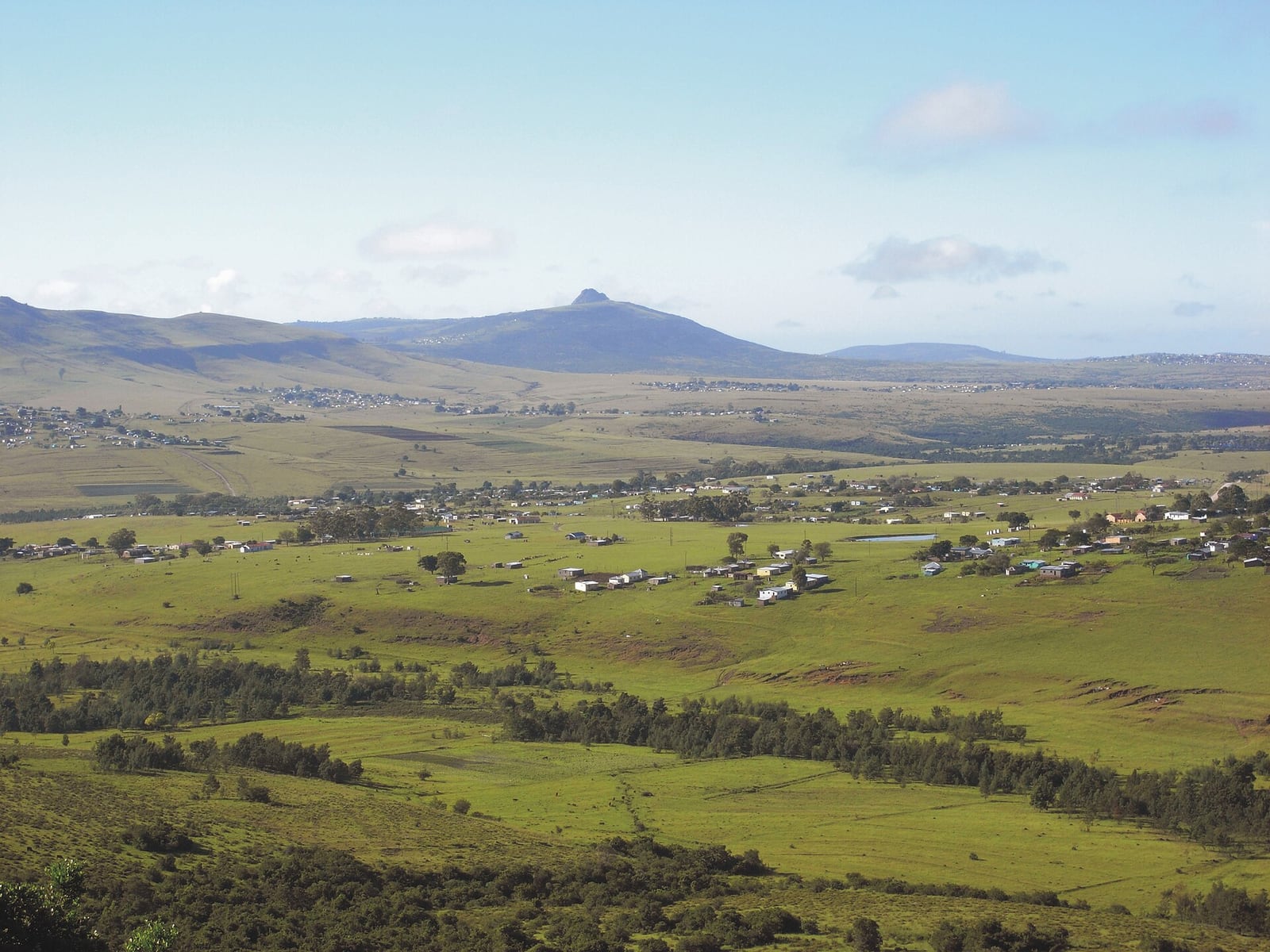
The thing, or something like it, would not leave. On the evening of Sunday, July 2, a crowd in Fort Beaufort watched a saucer-shaped light flashing red, blue, green and yellow pass over the town sending down a steady ray, and sent two boys running to the police station to say it seemed to be landing. The next evening the town council adjourned its meeting, and nine carloads of people drove out to Braeside and, The Star reported, “saw an object rise from the undergrowth and head in the direction of Grahamstown.” On July 7 a man at the Savoy Hotel in town saw a UFO hovering over Smit’s farm. Smit had a theory of his own. Shown a photograph of a light over Port Elizabeth, he told the Rand Daily Mail on July 8 that the thing was “definitely manmade,” that it had a base on his farm, and: “I’m going to catch it.” He planned, Clark heard, to use a big net. Kitching remembered the town engineer, Dr. D. Verschoor, interrupting a council meeting a couple of days after the shooting to show the councillors a UFO. On July 9 Dennis Gordon, a Rand Daily Mail reporter and apparently the man who had interviewed Smit standing in his newly planted field of lucerne, or alfalfa, saw a bright light in the sky that he could not explain. In the 1997 retelling, an army delegation from Grahamstown had sealed the farm off for almost two days, and sightseers with picnic baskets watched from the edge of the Fort Fordyce bush next door; a military spokesman in Grahamstown told the same reporter that every officer at the 1972 scene had retired and all the files had been destroyed.
Sources: The 1972 South African ‘Flap’South African police fire at UFOFarmer shoots at UFO in 1972Landing ved Fort Beaufort: interview med politifolkene, and Den sydafrikanske mini-bølge 1972
The reservoir bursts
In the early hours of Saturday, July 8, twelve days after the shooting, two explosions were heard and flashing lights were seen over the district. That night, or by daybreak in other accounts, on Braeside, Smit’s reservoir, a brick-and-cement tank some eight meters across holding thousands of gallons, burst apart. Kitching remembered large concrete blocks lying up to twenty meters away; in 1997 the chunks were still scattered in the bush, twenty-five meters off. At the time Van Rensburg thought the collapse could be ordinary wear and tear. The retellings drew it closer to the object. A French UFO magazine, digesting a Belgian one, reported in 1973 that Smit had told the police he saw the UFO minutes before, and wondered whether the reservoir was retaliation for his aggression. Cynthia Hind, the Harare-based investigator, wrote that Smit admitted to her he had heard the object shortly before the reservoir burst, the same whirring, low over his roof, heading for the Fordyce bush. “I didn’t go outside to look. What’s the use, no-one wanted to believe me.” Hind filed it among the cases in which UFOs seemed drawn to water. “Coincidence,” she asked, “or some significance with WATER?” And in August the object came back. Smit’s brother-in-law, R. Rudman, and several farmhands watched a light over the farm for ten minutes; it slowly dimmed, grew smaller and vanished while he went for a camera. De Klerk, who had seen it first, said it was the same thing he had seen in June.
Sources: The 1972 South African ‘Flap’South African police fire at UFOFarmer shoots at UFO in 1972En Afrique du SudUFO Afrinews, no. 5Water and its significance with regard to UFOs: Case No. 27, Fort Beaufort, Cape, South AfricaReport from South Africa and Rhodesia
“How can you shoot a ghost?”
The case spread through the Eastern Cape and beyond. That November, when strange holes appeared in a school tennis court at Rosmead, the police commandant at Middelburg said his men’s reports tallied with the Fort Beaufort object, and Middelburg’s postmaster promised, “We would not shoot at the object like they did at Fort Beaufort.” Charles Bowen of Flying Saucer Review devoted a special supplement to the affair; a decade later he quoted a newspaper commentator who said the men had only been behaving in the traditional South African way of life: “what we don’t understand, we shoot.” Hind gave the case a chapter of her 1982 book UFOs: African Encounters and told a London audience in 1984 that at the time no one had even mentioned outer space, though Van Rensburg remembered Smit’s first words differently. To De Klerk, who saw it first, it was a ghost, “and how can you shoot a ghost?” Hind herself wondered whether it had been a very strange, rather sinister satellite. What puzzled her most was the way it moved: “the fiery object reacted to the voices of the labourers.”
Sources: Report from South Africa and RhodesiaOccupants reported in Cape Province, and UFO damage at Rosmead?Landing ved Fort Beaufort: interview med politifolkene, and Den sydafrikanske mini-bølge 1972The aliens strike backCynthia Hind’s lecture to BUFORA, London, November 3, 1984World Atlas of UFOs
The UFO Bar
Smit kept the rifle. In 1997, at sixty-seven, he told the Sunday Independent’s David Macgregor the story again over red wine in the bar of the Savoy Hotel in Fort Beaufort, which by then he owned and which the locals had renamed the UFO Bar while he was away in France; he let the name stand only after they threatened a boycott. He had been ridiculed for twenty-five years, he said, by professors and scientists among others. “I still don’t believe in aliens and am sceptical they even exist — despite what I saw. It gave me goosebumps.” He had come to think it was a military spy craft that had broken down over his farm. “I wanted to catch the UFO,” he said, “and then we would have had real answers. It was on my farm for a week but I failed. If I was the only one that saw it, I would have been convinced I was either mad or drunk. At least five [of] us saw it that Monday morning and we couldn’t all have been mad.” Van Rensburg, retired to Port Alfred, had turned down American talk shows, as Smit had. “I really don’t know what it was. If a scientist came tomorrow with proof and said it was aliens I would agree,” he said. “If they said it wasn’t, I would also agree. I still think the marks were not made by a human being.”
Sources: Farmer shoots at UFO in 1972
What survives
No South African newspaper of June and July 1972 has been found online, but the coverage survives in unusual detail through the UFO periodicals that reprinted it: the Sapa wire story of June 27 in Flying Saucer Review, the Natal Daily News of June 28 in Brinsley Le Poer Trench’s Mysterious Visitors, Smit’s own account from the Sunday Times of July 2 in the APRO Bulletin and in C. David Oakley-Hill’s dated chronology of the 1972 South African sightings, and the New Zealand Press Association feature in the UFO Newsclipping Service. Ivan Clark’s interview with Van Rensburg and Kitching, printed in Flying Saucer Review in the autumn of 1972, survives only in a Danish translation; Bowen’s FSR Case Histories Supplement 11, the fullest contemporary dossier, has not been found. Later testimony comes from David Macgregor’s interviews with Smit and Van Rensburg in 1997 and from Kitching’s own written account, posted by the Canadian investigator Brian Vike. The police photographs, the plaster casts and the aerial photographs have not surfaced. No photograph of the object is known.
Sources: Stop Press: South Africa: Farmer and Police fire shots at UFOMysterious VisitorsThe South African FlapThe 1972 South African ‘Flap’Notice to unidentified flying objects: try to avoid South AfricaLanding ved Fort Beaufort: interview med politifolkene, and Den sydafrikanske mini-bølge 1972Farmer shoots at UFO in 1972South African police fire at UFO
The contradictions
The accounts disagree on almost every number. The first sighting was at 8 or at 9 a.m., and the police arrived at 9, at 10, or after 10. The object was 2½ feet across, three-quarters of a meter, one meter, just over a meter, or three meters long; a ball of fire, a round black sphere, an egg, an oval, a barrel, and by the 1990s a 44-gallon drum with three legs. Smit’s eighth shot hit it, or Kitching’s seventh, or all three of Kitching’s; fifteen shots were fired, or ten. The imprints were a circle of fist-sized marks, more than ten, nine of 6½ centimeters, nine of 7 centimeters, or nine of 10 centimeters sunk 25 to 30 millimeters into the clay; one magazine had three holes from three hollow legs. The 1972 reports speak of a thud; bullets that simply bounced off appear only in 1997. The policemen are P. R. van Rensburg and P. C. Kitching in the wire copy and elsewhere Pieter, Peter or Philip, and Piet; the farmer is often Smith. Wikipedia dates the case to 1971. The army cordon appears only in 1997, and the claim that Smit saw or heard the object just before his reservoir burst appears first in 1973, after the police had suggested wear and tear.
Sources: Stop Press: South Africa: Farmer and Police fire shots at UFOThe 1972 South African ‘Flap’The South African FlapMysterious VisitorsLanding ved Fort Beaufort: interview med politifolkene, and Den sydafrikanske mini-bølge 1972South African police fire at UFOUFO Research Newsletter, vol. II, no. 7Cynthia Hind’s lecture to BUFORA, London, November 3, 1984Farmer shoots at UFO in 1972Looking BackList of reported UFO sightings in South AfricaEn Afrique du Sud
Explanations
No official explanation was ever offered. Van Rensburg told Sapa that he had never encountered anything like it and could offer no suggestion as to its identity. Captain O. J. M. Calitz, the acting district commandant in Grahamstown, suggested that it “could perhaps have been a swarm of bees”; the two policemen, Clark reported, refused to accept explanations such as satellites or elephants suffering from some peculiar disease. Bleksley remained entirely skeptical, and later thought schoolchildren might have staged the Rosmead case. The CSIR found nothing unusual in the soil. Smit thought the object man-made, a military device, and Hind wondered about a satellite; Brigadier Vosloo was reported to have called it a controlled device, and one early commentator guessed at a small unmanned probe doing exploratory work. Against a swarm of bees stand hours of daylight observation by two policemen, the shots, the prints that a geologist judged neither animal nor human, and the witnesses’ agreement that the object answered to their voices.
Sources: Stop Press: South Africa: Farmer and Police fire shots at UFOThe 1972 South African ‘Flap’Landing ved Fort Beaufort: interview med politifolkene, and Den sydafrikanske mini-bølge 1972Looking BackMysterious VisitorsFarmer shoots at UFO in 1972
Classification and evidence note
This archive files the Braeside shooting as a close encounter of the second kind: an object watched at close range by at least four people, two of them police officers, for several hours in daylight, fired on repeatedly, and associated with nine imprints that police photographed and cast. The contemporary record establishes that the police responded, fired Smit’s rifle, searched the farm and sent samples to Pretoria, and that the CSIR found no difference in the soil. It does not establish what the object was, whether any shot struck it, or whether the reservoir’s collapse twelve days later had anything to do with it.
Sources: Stop Press: South Africa: Farmer and Police fire shots at UFOMysterious VisitorsThe 1972 South African ‘Flap’The South African Flap
- 17 JUN 1972 · MIDNIGHT
A neighbor of Smit’s, Fraser Moss, hears a drumming noise in the sky but sees nothing.
- 26 JUN 1972 · C. 8–9 AM
Farmhand Boer de Klerk sees smoke near the krans and a ball of fire hovering at treetop height on Braeside.
- 26 JUN 1972 · MORNING
Smit fetches his .303, phones the police in Fort Beaufort, and fires several shots at the object.
- 26 JUN 1972 · C. 9–10 AM
Warrant Officer van Rensburg and Sergeant Kitching arrive; a black, shiny object emerges from the trees and is fired on.
- 26 JUN 1972 · BEFORE NOON
Smit goes into the bush with a handkerchief on a stick, fires two shots from about 20 yards, and the object whirs away through the treetops.
- 27 JUN 1972
The Sapa report appears in The Star; the police photograph a circle of imprints and take samples.
- 28 JUN 1972
Brigadier Vosloo’s squad of twelve policemen combs the farm; about forty aerial photographs are taken.
- 29 JUN 1972
Plaster casts sent by train to the CSIR in Pretoria are lost in a crash at Norvalspont.
- 1 JUL 1972
A police general, D. A. Bester, tells the Rand Daily Mail he knows of no law against shooting at an invader from outer space.
- 2 JUL 1972 · 8 PM
A crowd in Fort Beaufort watches a flashing, saucer-shaped light that appears to be landing.
- 3 JUL 1972 · EVENING
The town council adjourns; nine carloads of people drive to Braeside and see an object rise from the undergrowth.
- 7 JUL 1972
The Daily Dispatch answers Professor Bleksley’s “Why Fort Beaufort?”
- 8 JUL 1972
Smit tells the Rand Daily Mail the object is man-made and vows to catch it.
- 8 JUL 1972
Two explosions are heard in the early hours; that night Smit’s brick-and-cement reservoir bursts apart.
- 13 JUL 1972
The CSIR reports no significant difference between the Braeside soil and ordinary soil.
- 20–24 AUG 1972
Smit’s brother-in-law and farmhands watch a light over the farm for ten minutes; De Klerk says it is the same object.
- NOV 1972
At Rosmead, police say their reports tally with the Fort Beaufort object.
- 1982
Cynthia Hind devotes a chapter of UFOs: African Encounters to the case.
- 1997
On the 25th anniversary Smit and Van Rensburg tell the Sunday Independent their stories in the Savoy Hotel’s UFO Bar and in Port Alfred.
- OCT 2013
Kitching’s own written account of firing three shots is posted by Brian Vike.
Sources & interviews
Stop Press: South Africa: Farmer and Police fire shots at UFOFlying Saucer Review, vol. 18, no. 4, July–August 1972, pp. 26–27 · reprinting the Sapa report in The Star, Johannesburg, June 27, 1972 · Internet ArchiveMysterious VisitorsBrinsley Le Poer Trench · Souvenir Press, 1973, pp. 152–153 · reprinting “Saucer Trail Probe,” Natal Daily News, June 28, 1972 · Internet ArchiveThe 1972 South African ‘Flap’C. David Oakley-Hill · first published in GEMINI, vol. 1, no. 4, October–December 1972; reprinted in the New BUFORA Journal, no. 7, April 2003, pp. 26–33 · a dated chronology quoting the Sunday Times, Sunday Tribune, Star, Rand Daily Mail and Pretoria News · Internet ArchiveThe South African FlapThe A.P.R.O. Bulletin, September–October 1972, pp. 1, 3–4 · from clippings and a personal contact with Bennie Smit by Frank D. Morton, APRO’s representative for South Africa · Internet ArchiveLanding ved Fort Beaufort: interview med politifolkene, and Den sydafrikanske mini-bølge 1972UFO-NYT, no. 1, January–February 1973, pp. 13–15 · Danish translations of Ivan Clark’s interview with the two policemen and Charles Bowen’s “South African mini-wave, 1972,” part 1, from Flying Saucer Review, vol. 18, no. 5, September–October 1972 · Internet ArchiveSouth African Mini-Wave, 1972—Part 2Charles Bowen · Flying Saucer Review, vol. 18, no. 6, November–December 1972 · with the Daily Dispatch leader of July 7, 1972 · Internet Archive, Flying Saucer Review collection, file 106Notice to unidentified flying objects: try to avoid South AfricaNew Zealand Press Association feature from Johannesburg, a New Zealand paper, September 1972 · UFO Newsclipping Service, nos. 42–43, October–November 1972 · Internet ArchiveUFO Research Newsletter, vol. II, no. 7October–November 1972 · summarizing Malcolm Balfour’s report from the farm in the National Enquirer, October 15, 1972 · Internet ArchiveUFO fik en varm velkomst i SydafrikaAalborg Stiftstidende, July 29, 1972 · reprinted in Ufologen, 1972, no. 1 · Internet ArchiveList of reported UFO sightings in South AfricaWikipedia · its Fort Beaufort entry gives the year as 1971Report from South Africa and RhodesiaThe A.P.R.O. Bulletin, January–February 1973, pp. 4–5, 7 · Frank D. Morton on the August 1972 return of the object to Braeside and the Rosmead case · Internet ArchiveEn Afrique du SudLumières dans la Nuit, no. 124, 1973, pp. 18–19 · a digest of Visiteurs Spatiaux, no. 29 (GESAG, Brussels), from its South African correspondent John de Coster · Internet ArchiveThe aliens strike backCharles Bowen · The Unexplained: Mysteries of Mind, Space & Time, part 66, Orbis, London, p. 1320 · Internet ArchiveCynthia Hind’s lecture to BUFORA, London, November 3, 1984BUFORA Bulletin, no. 18, July 1985 · Internet ArchiveWater and its significance with regard to UFOs: Case No. 27, Fort Beaufort, Cape, South AfricaCynthia Hind · UFO Afrinews, no. 4, March 1991, pp. 17–18 · Internet ArchiveUFO Afrinews, no. 5Cynthia Hind · January 1992, pp. 21–22 · on the reservoir that burst at Braeside · Internet ArchiveWorld Atlas of UFOsJohn Spencer (ed.) · Hamlyn, 1991 · with Cynthia Hind’s essay “UFOs within African culture” · Internet ArchiveLooking BackBob Gribble · MUFON UFO Journal, no. 290, June 1992 · citing The Star (Johannesburg), June 29, 1972, and the Auckland Star, September 18, 1972 · Internet ArchiveFarmer shoots at UFO in 1972David Macgregor · Sunday Independent (Johannesburg), Eastern Cape News, 1997 · as reposted to the UFO UpDates mailing list, November 23, 1997 · Wayback MachineSouth African police fire at UFOThe account of the former Fort Beaufort police sergeant who fired at the object, posted by Brian Vike · The Vike Factor · October 2013Occupants reported in Cape Province, and UFO damage at Rosmead?Flying Saucer Review, vol. 19, no. 1, January–February 1973 · Internet Archive, Flying Saucer Review collectionFort BeaufortWikipedia · on the town’s frontier history and its Martello towerSpotted an error, or know a better source? Write to hello@uap.fun.
Connected files
The Little Men of KellySeventeen years earlier in Kentucky, farm men fired rifles at visitors who seemed untouched by the bullets.Cynthia HindThe investigator who kept the Braeside case alive in African UFO research and heard De Klerk call it a ghost.The Ariel School EncounterHind’s most famous African case, where the witnesses were schoolchildren instead of policemen.The Socorro ArroyoAnother police officer, another daylight object in the scrub, and landing marks measured by the authorities.The Landing at Trans-en-ProvenceA farm, a landing trace and soil samples sent to a national laboratory, with very different results.Discuss this case
Compare notes with other readers: witness details, sources, and the parts that still do not add up.
Open the discussion