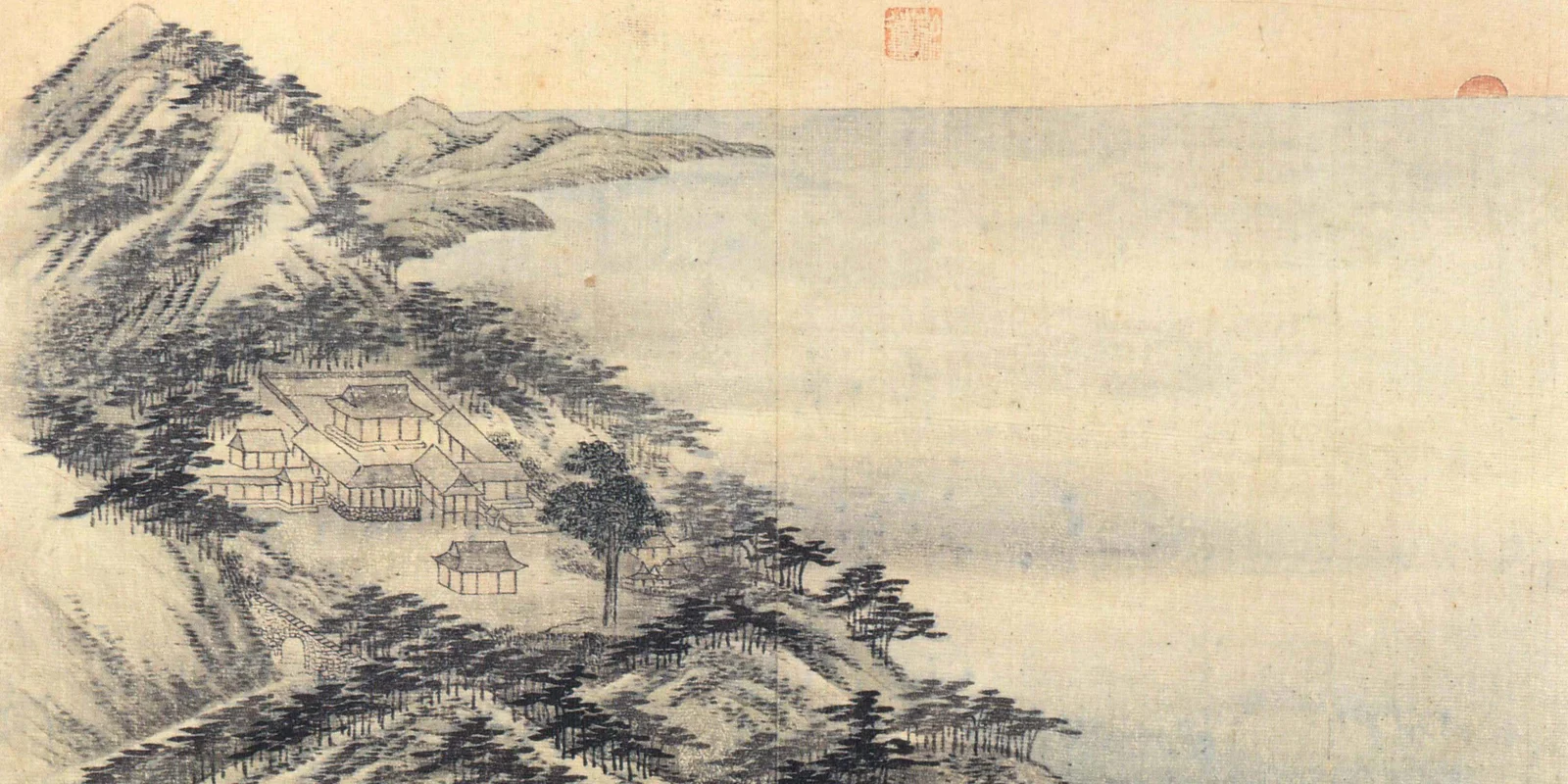
Thunder out of a blue sky
The 25th day of the eighth month, in the first year of King Gwanghae’s reign, began as a flawless autumn day. In Ganseong, a strategic county on the northern stretch of Korea’s east coast, the sky was blue and the sun white, and there was not one speck of cloud in any direction. Sometime in the snake hour, between about nine and eleven (the Joseon day ran in twelve two-hour watches named for the zodiac animals), a sound like thunder broke out overhead and seemed to travel from north to south. Everyone looked up. Out of the empty sky, in two places, something like smoke was faintly issuing. It had the form of a halo around the sun, the governor’s report says. It shook and moved for a long while before it stopped, and it gave off a thundering sound like a leather drum. On the Western calendar the day was Tuesday, September 22, 1609. It was only the beginning. Before the afternoon was out, officials in four more districts of Gangwon Province, and in places as far off as Seoul and the northwestern frontier, would report something in the same clear sky.
Sources: 강원도에서 일어난 기이한 자연현상에 대해 강원 감사 이형욱이 치계하다배릉 때에 의금부·병조 등의 직무 태만과 간성 군수의 체직을 사간원이 건의하다1609년 조선 UFO 사건
The governor’s dispatch
The account comes from Yi Hyeong-uk, governor of Gangwon since late January 1609, who gathered the reports of his district magistrates at the provincial seat in Wonju and sent them to the capital as a chigye, an urgent dispatch by courier. It reached the court, and the royal annals, the day-by-day chronicle compiled for each reign, file it under the 25th day of the ninth lunar month, October 22, exactly one lunar month after the events. Yi was not a man the chroniclers admired. When he was named magistrate of the frontier port of Dongnae in 1600, a court historian wrote that he was clumsy and mediocre, without talent or strategy, and wondered how such a man could hold a key border post. His report on the sky, though, is careful. It goes district by district, gives the hour for each, notes the weather and the direction of travel, and describes each thing by comparison with something a reader could hold: a halo, a length of cloth, a jar, a basin, a mat. It adds no opinion about what any of it was.
Sources: 강원도에서 일어난 기이한 자연현상에 대해 강원 감사 이형욱이 치계하다이정험·심집·한찬남 등에게 관작을 제수하다정엽·김권·이지완 등에게 관직을 제수하다조선시대 UFO, 흑인병사 이야기 담은 조선왕조신록 토크콘서트
A red streamer and a falling jar
In Wonju itself, in the same snake hour, something red, like a length of cloth, streamed a long way across the daylight sky from south to north, while the heavens rumbled loudly and then fell silent. At Gangneung, on the coast, in the same hour, the sun was bright and clear when suddenly there was an object in the sky, making a faint sound. It was shaped like a large jar, pointed at the top and wide at the bottom, and it went from the middle of the sky toward the north, sliding down as if it would fall to the earth. As it came down it stretched to three or four jang, somewhere around ten meters, a jang being a Joseon length of about three meters, and turned a deep red. Behind it, wherever it had passed, a white vapor hung in an unbroken line and took a long time to fade. Only after it had vanished did the sound arrive, a rumbling in the sky whose echo, the report says, shook heaven and earth.
Sources: 강원도에서 일어난 기이한 자연현상에 대해 강원 감사 이형욱이 치계하다1609년 강원도 하늘에서는 ‘천둥소리’가 울렸다
Fire like a basin over Chuncheon
Inland at Chuncheon, in the mountains west of the coastal range, the weather was clear except for a small cloud that briefly showed in the southeast. At the horse hour, around noon, there was a fiery light shaped like a large basin. It rose in the southeast and traveled a long way north, as fast as an arrow. After a good while the fire faded, and in its place a blue-white smoke swelled out, curling and trailing, and would not disperse. A little later came a sound like thunder and drums together, shaking heaven and earth before it stopped.
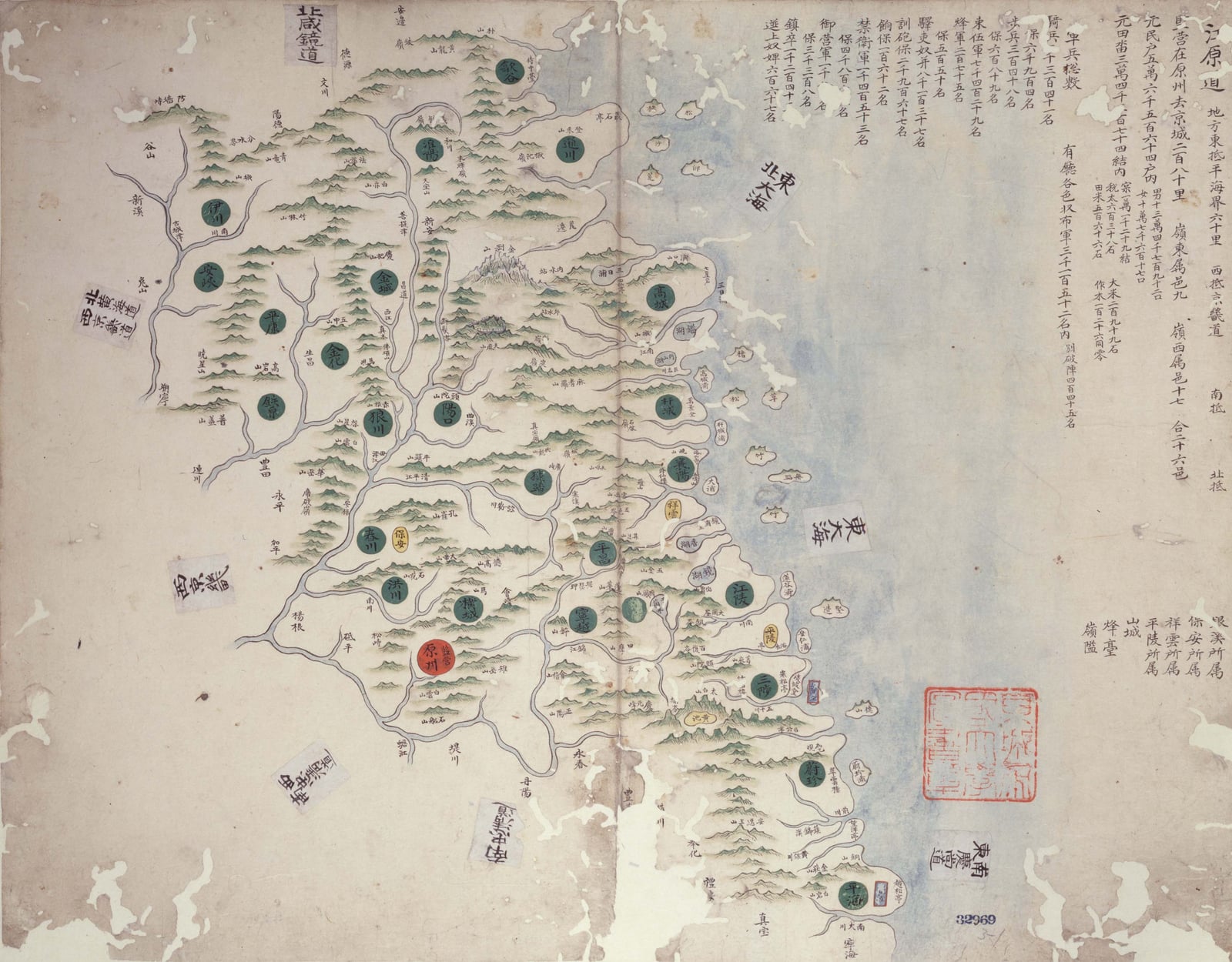
Sources: 강원도에서 일어난 기이한 자연현상에 대해 강원 감사 이형욱이 치계하다강원도에서 일어난 기이한 자연현상에 대해 강원 감사 이형욱이 치계하다
The light in the courtyard
Yangyang’s report is the one that made the story. The house belonged to Jeon Mun-wi, a pumgwan, a local gentleman of official rank. At the sheep hour, between about one and three in the afternoon, a round light suddenly appeared on the ground in the middle of his courtyard, beneath the eaves, gleaming like a dish or basin. At first it seemed to be touching the earth. Then it curved upward about one jang, a vapor floating in the air, about one arm-span around and as long as half a bolt of cloth. Its east side was white, its middle glowed blue-green and its west side was red. It looked like a rainbow, turning and coiling, shaped like a furled banner. Halfway up the sky it turned entirely red, pointed at the top and cut off square at the base, and climbed to a little north of the zenith, where it became a white cloud, “bright and lovely.” Then, as if stuck to the face of the sky, it flew and moved, pushing and thrusting as though it were alive. Suddenly it broke in the middle into two pieces. One went a jang or so southeast and vanished like smoke; the other floated where it was, shaped like a cloth mat. A little later thunder rolled several times, and at last a sound like the beating of a drum came out from inside it and went on for a long while before it stopped.
Sources: 강원도에서 일어난 기이한 자연현상에 대해 강원 감사 이형욱이 치계하다강원도에서 일어난 기이한 자연현상에 대해 강원 감사 이형욱이 치계하다
A daylight star, and cannon fire in the northwest
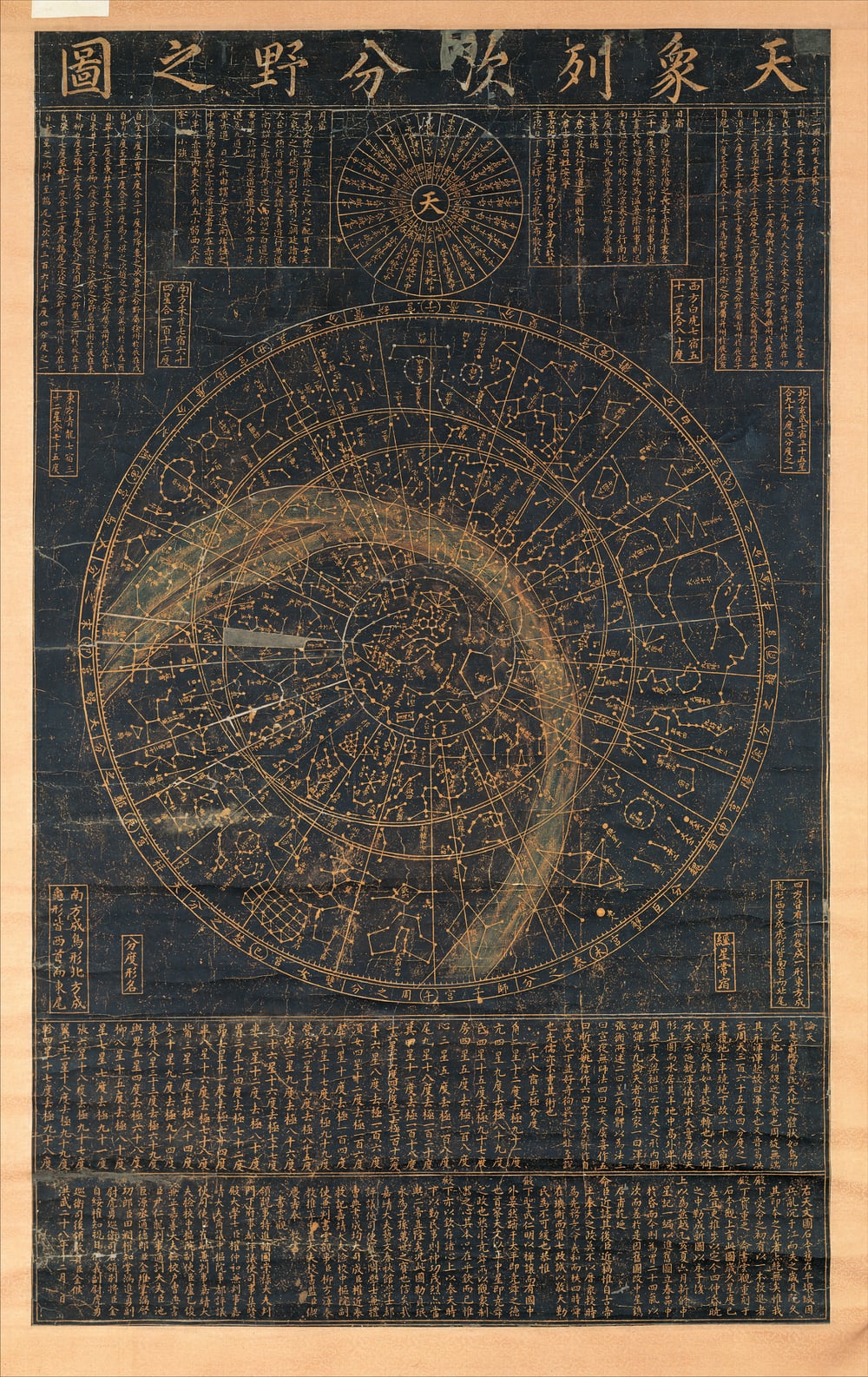
Gangwon was not alone. Under the same day, the 25th of the eighth month, the annals record the court’s own observation, presumably made in Seoul: at the horse hour a yingtou star, the name for a meteor seen in daylight, appeared. In words later struck from the draft, it came out of the middle of the sky heading northeast. It was as big as a basin, went fast like a torch and made a booming, rumbling sound. Far to the northwest, at Seoncheon on the coast of Pyeongan Province, the air was clear at the same hour, with not a wisp of cloud, when a sound like a cannon being fired came from the eastern edge of the sky. Startled people looked up and saw a heavenly fire shaped like a bundle of straw hanging at the sky’s edge. It vanished in an instant, and where it had passed, the annals say, the gate of heaven opened wide, in the shape of a waterfall. In the eighteenth century the historian Yi Geung-ik, listing the portents of Gwanghae’s first year in his Yeollyeosil gisul, noted simply: a yingtou star fell in the northeast, Venus showed by day, and the Han River ran red.
Sources: 사시에 태백성이 나타나고 오시에 영두성이 나타나다선천군에서 불덩어리가 떨어지다연려실기술 별집 제15권, 천문전고, 재변과 상서
Heaven’s warnings
In Joseon Korea a thing in the sky was never just a thing in the sky. Under the old doctrine that Heaven and the ruler answer each other, portents were reprimands, and the king was expected to fear them, examine himself and invite criticism. The royal observatory, the Gwansanggam, kept watch day and night and wrote up each anomaly with its time, position, size and color; provincial governors like Yi reported what their districts saw. The yingtou star had a grim pedigree. The Jin shu, the Chinese dynastic history whose astronomical treatise Joseon scholars knew well, says that where it falls, the army beneath is overthrown and blood flows for a thousand li, or Chinese miles. The court historian who wrote up the Seoul sighting used it as a weapon. Since his accession, he wrote, the king had not once held the royal lectures; frank critics were dismissed, royal in-laws meddled in government and wicked men had their way; and now a baleful yingtou star had flown in broad daylight, one of the great portents, and still the king did not start up in fear. “The altars of state are in peril!” The next day the Right State Councillor, Sim Hui-su, told the king that yesterday, in broad daylight, there had again been a portent of fire-light, most alarming and dreadful, asked why Heaven’s warnings came so often, and begged to be relieved of office.
Sources: 사시에 태백성이 나타나고 오시에 영두성이 나타나다晉書 卷十二 志第二 天文中우의정 심희수가 왕도에 대해 아뢰다조선은 왜 천문관측에 목숨을 걸었을까조선 하늘에 출몰한 괴이한 형상 미확인 비행물체(UFO)미지의 불빛…화광(UFO)에 대한 다양한 기록들
A deposed king’s chronicle, and a name misread
Gwanghaegun had reason to fear omens. He had taken the throne in 1608 after years in which the Ming court refused to recognize him as heir; his elder brother, Prince Imhae, was killed in exile in 1609; and Gangwon was hard pressed, its people drained by the ginseng tribute and worn out by logging corvée, in the words of a historian’s note later struck from the draft chronicle. In 1623 he was deposed, and the men who overthrew him compiled his record. That is why his chronicle is called an ilgi, a daily record, rather than a sillok, a veritable record. It was also never printed, and two manuscript copies survive: a working draft, with deletions marked, and a clean fair copy. In the draft the Yangyang report ends with a sentence later struck out: at that time the sky was clear, with not a speck of haze at the four horizons. Both copies name the courtyard’s owner as 全文緯, Jeon Mun-wi. But the modern Korean translation of the fair copy, the one most readers see online, gives his surname as Kim, and it is as Kim Mun-wi that he has entered nearly every retelling since, in Korean and in English.
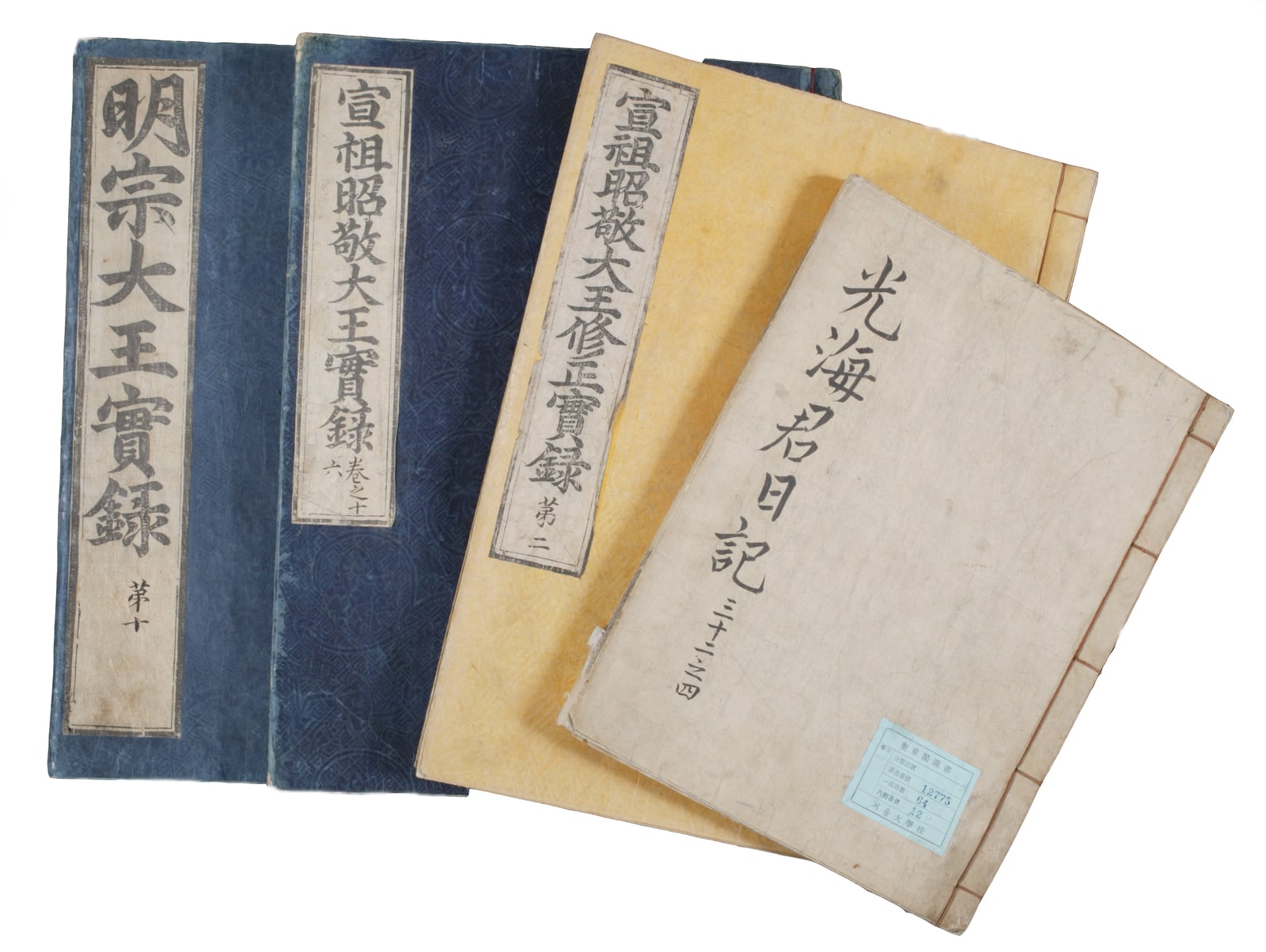
Sources: Gwanghaegun of Joseon강원도에서 일어난 기이한 자연현상에 대해 강원 감사 이형욱이 치계하다강원도에서 일어난 기이한 자연현상에 대해 강원 감사 이형욱이 치계하다영동 아홉 고을의 재변·이사에 대한 강원도 관찰사 이형욱의 치계호리병, 세숫대야 모양을 하고, 무지개 처럼 하늘에 떠 있어
Found on a CD-ROM
For nearly four hundred years the report sat in the annals. What brought it out was technology: in the mid-1990s the Annals of the Joseon Dynasty were issued on CD-ROM, and around 2002 a television writer, Park Ji-eun, then scripting historical segments for SBS’s Surprise Story Land, bought a set and read it every day. Finding the 1609 entry, she later wrote, was almost inevitable. She pitched it as a dramatized episode; the computer graphics and the scale of the shoot killed it, and the show aired a documentary segment, “Mystery File: Do UFOs Exist?”, on January 26, 2003, instead. In December 2006 the OhmyNews citizen reporter Choi Hyung-kook, a history student, set it among the dust rains and drought of 1609 and wondered whether the thing in Kim Mun-wi’s courtyard had come to abduct something. A forum essay posted on FMKorea in January 2010 argued that the halo and the cloth were other ways of describing a disc, that the jar, the mat and the water jar described its raised center, and that Yangyang’s “washbasin” looked like the most accurate observation. In spring 2010 the science writer Lee Seong-gyu, in a book reading the annals through science, allowed that it might be a meteor but called something rising from the ground in Yangyang hard to explain that way.
Sources: “별그대” 박지은 작가 “작가 양심 걸고 절대 표절 아니다”조선시대에도 UFO가 출현했다?UFO 관련 조선왕조실록의 기록“광해군 1년, 세숫대야 모양 비행체가 하늘로 솟아”
The alien who stayed
The story then left the documentaries. Kang Kyung-ok’s comic Seolhui, serialized from late 2007, first in the magazine Pop Toon and later on the portal Daum, imagined a girl caught up in the 1609 incident, healed by aliens and left ageless, still searching four centuries later for a love reborn; its run on Daum briefly pushed the Gwanghaegun record into the site’s trending searches. In August 2010 the cable channel tvN opened its series Joseon X-Files: Gichal Birok with a two-part story, “The Secret Light,” in which an inspector from the Office of the Inspector General investigates an enormous UFO sighted in Gangwon, with Governor Yi Hyeong-uk, played by Noh Young-guk, as a character. Park Ji-eun had not let go of her idea. For ten years, she said, the idea stayed with her and she kept synopsis notes. The concept she started from was this: “What if what came to Joseon then really was a UFO? What if an alien who came to Earth on it couldn’t go back to his planet because of some incident, and has been living here ever since?” The result was My Love from the Star, which SBS aired from December 18, 2013. Its first episode opens with narration from the annals over the Gangwon sky, and a saucer passing over the bridal palanquin of a girl in 1609. Time stops, and the alien Do Min-joon steps out to save her. In the present day he tells the camera that the UFO recorded in the annals was what brought him to Joseon. In episode five the comic actor Kim Soo-ro turned up as Governor Yi Hyeong-uk, ordering the girl arrested to hush up the sighting.
Sources: [전문] “별에서 온 그대” 표절의혹 제기한 설희 만화가 강경옥 입장보니…“한복 입은” 과학수사 X-파일조선X파일 기찰비록Joseon X-Files“별그대” 박지은 작가 “작가 양심 걸고 절대 표절 아니다”You Who Came From the Stars Episode 1 Recap“수지 합류” 별그대 카메오 군단, 누가 있었나?My Love from the Star
Who owns four hundred years?
My Love from the Star became a hit across Asia, and the 1609 record rode along with it. It also started a fight. Two days after the premiere Kang Kyung-ok wrote on her blog that the Gwanghaegun record was a fact anyone could use, but that an ageless person who had lived four hundred years since it was her own concept for Seolhui. Park Ji-eun answered with a long statement laying out her 2003 pitch and suggesting that the misunderstanding arose because both works took the same historical incident as their motif. Kang sued in May 2014 and withdrew the suit that summer. Newspapers ran explainers on what the annals really said, and the UFO researcher Seo Jong-han, head of the Korean UFO Investigation and Analysis Center, told one outlet that the Yangyang account was quite unusual and that the witnesses had likely seen a UFO-like object. In 2016 the National Archives of Korea, warming up for an international archives congress in Seoul, put the “Joseon UFO incident” first on the program of a public talk concert on the annals. A year later its publicity chief counted the annals’ UFO sightings, meaning their reports of fire-light, by reign: sixty under King Injo, twenty-seven under Sukjong, seventeen under Gwanghae.
Sources: [전문] “별에서 온 그대” 표절의혹 제기한 설희 만화가 강경옥 입장보니…“별그대” 박지은 작가 “작가 양심 걸고 절대 표절 아니다”강경옥, “별에서 온 그대” 상대로 3억 손해배상 소송 “설희 줄거리는?”“설희” 강경옥 작가, “별그대” 표절 소송 취하 “이제 여기서 끝내겠다”“별그대” 도민준이 탄 UFO, 조선 역사기록 보니[별에서 온 그대]로 본 조선시대 UFO 목격담, 진실은?조선시대 UFO, 흑인병사 이야기 담은 조선왕조신록 토크콘서트조선시대 UFO목격 사건, 조선에 온 명나라 흑인병사 등 기록 조선왕조실록에 “풍성”[역사속 공무원] UFO 뜨면 행자부가 출동?
What survives
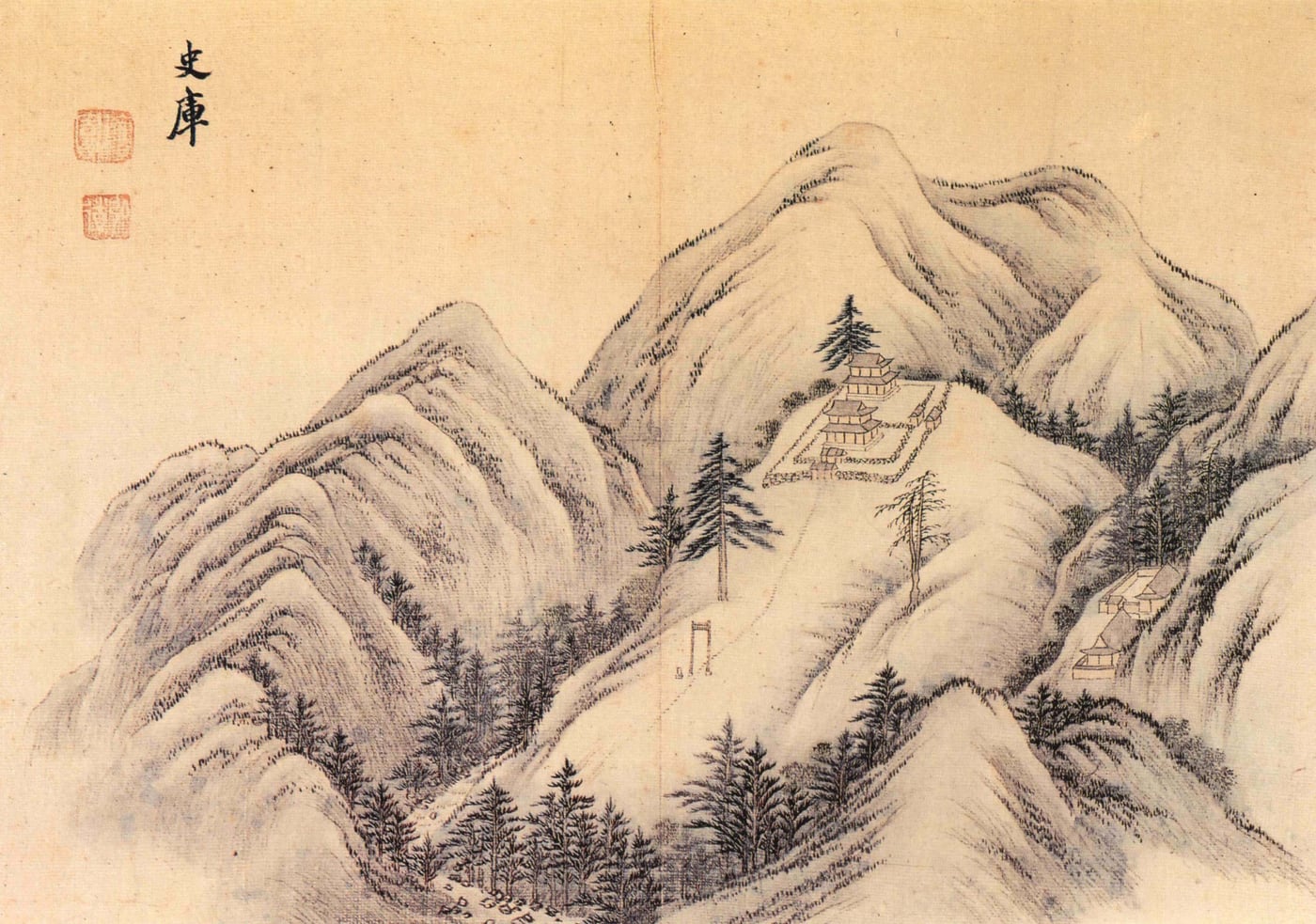
The case rests on the royal annals: Yi Hyeong-uk’s dispatch, entered under October 22, 1609, in both the draft and the fair copy of the Gwanghaegun Ilgi, and two entries under the day itself: the court observatory’s record, presumably made in Seoul, and a report from Seoncheon. They are official records, written up for the court from reports sent in by district magistrates, and the Gangwon account passed through at least two hands, the magistrates’ and the governor’s, before a compiler copied it. None of the original local reports survives, and neither does the royal secretariat’s diary for 1609, which, like all its volumes before 1623, was lost to war and to fires during Yi Gwal’s rebellion of 1624. No local memoir or later Gangwon record of the day has been identified. Jeon Mun-wi appears nowhere else in the annals. Quotations from the classical Chinese are this archive’s translations, checked against the modern Korean translation on the National Institute of Korean History’s Sillok database.
Sources: 강원도에서 일어난 기이한 자연현상에 대해 강원 감사 이형욱이 치계하다강원도에서 일어난 기이한 자연현상에 대해 강원 감사 이형욱이 치계하다사시에 태백성이 나타나고 오시에 영두성이 나타나다선천군에서 불덩어리가 떨어지다
How the story drifted
The retellings rarely read the classical text. The Korean translation’s choices for the shapes, a gourd bottle for Gangneung’s “large jar” and a washbasin for Yangyang’s “dish,” became the saucer vocabulary of the lore. The lunar dates were read as Western ones: retellings give the sightings as August 25, 1609, and the report as September 25, and the drama’s narration cites a record dated September 25 of events on August 25, 1609. Wonju’s “red, like cloth” was typed as “red pear” (one vowel apart in Korean) in a 2017 National Archives column. A 2012 English blog, part hand-translated and part machine-translated, garbled the report so badly that at one point the object was “created by Vero.” One arm-span became six feet in diameter; the local gentleman became a much-respected high official with a lot to lose by lying; and one English writer said the drama was based on a UFO crash landing in Korea that year, though the drama shows no crash. An English article of 2023, claiming to quote the annals, added peasants with headaches and hearing loss, a king who excused them from the fields, a pulsating burgundy object that grew to five or seven meters, and a verdict from official scientists that it was an “ancient salute.” None of it is in the annals. A 2026 newspaper feature added that Gwanghaegun took the event as a very ill omen, which the annals do not say either.
Sources: 강원도에서 일어난 기이한 자연현상에 대해 강원 감사 이형욱이 치계하다You Who Came From the Stars Episode 1 Recap[위크엔드] 외계인 · UFO…넌 어느 별에서 왔니?[역사속 공무원] UFO 뜨면 행자부가 출동?UFO recorded in the Annals of the Choson Dynasty (Korean Royal History)UFO Sightings in Old Joseon?Ten Times Historic People (Maybe) Saw AliensAncient records of incredible UFO phenomena in the skies of Korea“호리병 모양의 비행체는 무엇?”…조선시대부터 현재까지, 한국서 목격된 “UFO”
Explanations
The court observatory’s entry named its own answer in 1609: a yingtou star, a meteor seen in daylight. The modern favorite is the same idea in new terms, a daylight fireball, a meteor bright enough to be seen at noon, breaking up over the peninsula. Namuwiki, Korea’s largest wiki, lays out the case: the same day and hours across Seoul, Pyeongan and Gangwon, and in the reports a jar- or basin-like fire, a white trail and thunder afterward. The details fit what big fireballs do: their smoke trains can hang and twist in the sky for many minutes, and their sonic booms arrive after the light has gone. The vessel words fit too. Korean chroniclers had long sized meteors by comparison with household objects; a 2005 study of 3,861 meteor records from the Korean chronicles, compared against Chinese and Japanese ones, drew on that habit, though it does not discuss 1609. A 2014 newspaper feature said astronomers took it for a meteor, and a 2016 report on the National Archives event called the meteor reading persuasive. Against it stands Yangyang: a light that began on the ground in a courtyard, rose slowly, changed color, turned into a cloud, moved “as though it were alive,” split and then drummed, in the sheep hour that followed the horse-hour fireball. The heritage agency wrote in 2022 that the Joseon observatory could clearly tell meteors from unidentified flying objects. Seo Jong-han and Lee Seong-gyu both singled out the Yangyang light as the part a meteor does not easily explain. Whether Jeon Mun-wi’s household watched a lingering fireball train at the wrong hour, something else entirely, or a story that grew between courtyard, magistrate and governor, the annals do not say.
Sources: 사시에 태백성이 나타나고 오시에 영두성이 나타나다강원도에서 일어난 기이한 자연현상에 대해 강원 감사 이형욱이 치계하다1609년 조선 UFO 사건Analysis of historical meteor and meteor shower records: Korea, China, and Japan조선은 왜 천문관측에 목숨을 걸었을까[위크엔드] 외계인 · UFO…넌 어느 별에서 왔니?조선시대 UFO, 흑인병사 이야기 담은 조선왕조신록 토크콘서트조선 하늘에 출몰한 괴이한 형상 미확인 비행물체(UFO)[별에서 온 그대]로 본 조선시대 UFO 목격담, 진실은?“광해군 1년, 세숫대야 모양 비행체가 하늘로 솟아”
Classification note
The Gangwon record is filed as a mass sighting because five districts, and on the same day the court observatory and Seoncheon, reported something in a clear daylight sky, with sound. No close-encounter kind is assigned: the only report of something at close range, the Yangyang courtyard light, reaches us secondhand through a magistrate and a governor, and it describes a light and a vapor, not a craft. The UFO label belongs to the television age. The annals call the court’s daylight object a yingtou star and give the Gangwon report no label at all; its modern Korean heading calls them strange natural phenomena. Jacques Vallée and Chris Aubeck’s 2010 catalogue of pre-modern aerial wonders lists a sighting in China in 1609 but not this one.
Sources: 강원도에서 일어난 기이한 자연현상에 대해 강원 감사 이형욱이 치계하다사시에 태백성이 나타나고 오시에 영두성이 나타나다Wonders in the Sky: Unexplained Aerial Objects from Antiquity to Modern Times조선시대 UFO, 흑인병사 이야기 담은 조선왕조신록 토크콘서트
- 1600
Yi Hyeong-uk is named magistrate of Dongnae; a court historian calls him clumsy and without talent.
- 27 JAN 1609
Yi Hyeong-uk is appointed governor of Gangwon Province.
- 22 SEP 1609 · MORNING
In the snake hour Ganseong, Wonju and Gangneung report thunder from a clear sky, a halo-like vapor, a red streamer and a falling red jar trailing white vapor.
- 22 SEP 1609 · NOON
A basin-shaped fire crosses Chuncheon; the court records a daylight meteor, big as a basin, with a roar; Seoncheon hears a cannon-like boom and sees a fire like a bundle of straw.
- 22 SEP 1609 · AFTERNOON
In Yangyang a round light rises from Jeon Mun-wi’s courtyard, becomes a white cloud, splits in two and drums.
- 23 SEP 1609
Right State Councillor Sim Hui-su calls the previous day’s daylight fire-light alarming and asks to resign.
- 22 OCT 1609
Governor Yi’s dispatch on the five districts is entered in the court record.
- 1623
Gwanghaegun is deposed; his enemies later compile his chronicle, the Gwanghaegun Ilgi.
- 26 JAN 2003
After a pitch to dramatize the 1609 record is dropped, SBS airs “Mystery File: Do UFOs Exist?”
- 12 DEC 2006
OhmyNews publishes “Did UFOs appear in the Joseon era too?”
- NOV 2007
Kang Kyung-ok’s comic Seolhui begins in Pop Toon, with a heroine made ageless in 1609.
- AUG 2010
tvN’s Joseon X-Files opens with “The Secret Light,” a UFO over Gangwon.
- 18 DEC 2013
My Love from the Star premieres on SBS, opening with the 1609 record.
- MAY–JUL 2014
Kang Kyung-ok sues the drama’s makers, then withdraws the suit.
- 18 JUL 2016
The National Archives of Korea features the “Joseon UFO incident” at a public talk concert.
- MAR–APR 2023
Kangwon Ilbo runs a three-part series on the 1609 records.
Sources & interviews
강원도에서 일어난 기이한 자연현상에 대해 강원 감사 이형욱이 치계하다Gwanghaegun Ilgi (draft copy), book 20, 1st year of Gwanghae, 9th month, 25th day · Annals of the Joseon Dynasty, National Institute of Korean History · classical Chinese original with modern Korean translation강원도에서 일어난 기이한 자연현상에 대해 강원 감사 이형욱이 치계하다Gwanghaegun Ilgi (fair copy), book 20, 1st year of Gwanghae, 9th month, 25th day · Annals of the Joseon Dynasty, National Institute of Korean History사시에 태백성이 나타나고 오시에 영두성이 나타나다Gwanghaegun Ilgi (draft copy), book 19, 1st year of Gwanghae, 8th month, 25th day · Annals of the Joseon Dynasty, National Institute of Korean History선천군에서 불덩어리가 떨어지다Gwanghaegun Ilgi (draft copy), book 19, 1st year of Gwanghae, 8th month, 25th day · Annals of the Joseon Dynasty, National Institute of Korean History영동 아홉 고을의 재변·이사에 대한 강원도 관찰사 이형욱의 치계Gwanghaegun Ilgi (draft copy), book 22, 1st year of Gwanghae, 11th month, 24th day · Annals of the Joseon Dynasty, National Institute of Korean History이정험·심집·한찬남 등에게 관작을 제수하다Gwanghaegun Ilgi (draft copy), book 11, year of accession, 12th month, 22nd day · Annals of the Joseon Dynasty, National Institute of Korean History정엽·김권·이지완 등에게 관직을 제수하다Seonjo Sillok, book 131, 33rd year of Seonjo, 11th month, 4th day · Annals of the Joseon Dynasty, National Institute of Korean History배릉 때에 의금부·병조 등의 직무 태만과 간성 군수의 체직을 사간원이 건의하다Gwanghaegun Ilgi (draft copy), 1st year of Gwanghae, 8th month, 30th day · Annals of the Joseon Dynasty, National Institute of Korean History우의정 심희수가 왕도에 대해 아뢰다Gwanghaegun Ilgi (draft copy), book 19, 1st year of Gwanghae, 8th month, 26th day · Annals of the Joseon Dynasty, National Institute of Korean HistoryGwanghaegun of JoseonWikipedia연려실기술 별집 제15권, 천문전고, 재변과 상서Yi Geung-ik · eighteenth century · Institute for the Translation of Korean Classics database晉書 卷十二 志第二 天文中Jin shu, Treatise on Astronomy, book 12 · Fang Xuanling and others, Tang court, 648 · Wikisource (Chinese)Analysis of historical meteor and meteor shower records: Korea, China, and JapanHong-Jin Yang, Changbom Park and Myeong-Gu Park · Icarus vol. 175, no. 1, May 2005, pp. 215–225 · arXiv:astro-ph/0501216조선시대에도 UFO가 출현했다?Choi Hyung-kook · OhmyNews · December 12, 2006UFO 관련 조선왕조실록의 기록FMKorea forum post · January 18, 2010“광해군 1년, 세숫대야 모양 비행체가 하늘로 솟아”Yonhap review of Lee Seong-gyu’s UFO가 날고 트랜스젠더 닭이 울었사옵니다 (Sallim Friends, 2010) · Seoul Shinmun · May 11, 2010“한복 입은” 과학수사 X-파일Yu Sang-ho · Hankook Ilbo · September 1, 2010 · on tvN’s Joseon X-Files: Gichal Birok조선X파일 기찰비록Wikipedia (Korean) · tvN series, 2010, cast and episode listUFO recorded in the Annals of the Choson Dynasty (Korean Royal History)youngit blog · August 11, 2012[전문] “별에서 온 그대” 표절의혹 제기한 설희 만화가 강경옥 입장보니…Jeon Gi-yeon · Ajunews · December 20, 2013“별그대” 박지은 작가 “작가 양심 걸고 절대 표절 아니다”Edaily · December 22, 2013 · full text of the writer’s statementYou Who Came From the Stars Episode 1 RecapFighting! My Love Affair with Asian Dramas · December 30, 2013[별에서 온 그대]로 본 조선시대 UFO 목격담, 진실은?Starnewsk · January 22, 2014“별그대” 도민준이 탄 UFO, 조선 역사기록 보니Kim Jong-sung · OhmyNews · February 4, 2014“수지 합류” 별그대 카메오 군단, 누가 있었나?Kang Seon-ae · SBS News · February 10, 2014[위크엔드] 외계인 · UFO…넌 어느 별에서 왔니?Kwon Do-kyung · Herald Economy · April 11, 2014강경옥, “별에서 온 그대” 상대로 3억 손해배상 소송 “설희 줄거리는?”Seoul Shinmun · May 20, 2014“설희” 강경옥 작가, “별그대” 표절 소송 취하 “이제 여기서 끝내겠다”Etoday · July 4, 2014My Love from the StarWikipedia · SBS drama, December 18, 2013 – February 27, 2014Joseon X-FilesWikipedia · tvN series, 2010조선시대 UFO, 흑인병사 이야기 담은 조선왕조신록 토크콘서트Park Kyung-eun · Kyunghyang Shinmun · July 18, 2016조선시대 UFO목격 사건, 조선에 온 명나라 흑인병사 등 기록 조선왕조실록에 “풍성”Ra Dong-cheol · Kukmin Ilbo · July 18, 2016[역사속 공무원] UFO 뜨면 행자부가 출동?Choi Jung-gi, head of public relations, National Archives of Korea · Seoul Pn, Seoul Shinmun · June 25, 2017조선은 왜 천문관측에 목숨을 걸었을까Lee Ki-hwan · Kyunghyang Shinmun · September 13, 2017조선 하늘에 출몰한 괴이한 형상 미확인 비행물체(UFO)Cultural Heritage Administration of Korea · monthly Munhwajae Sarang · November 29, 20221609년 강원도 하늘에서는 ‘천둥소리’가 울렸다Oh Seok-gi · Kangwon Ilbo · March 21, 2023호리병, 세숫대야 모양을 하고, 무지개 처럼 하늘에 떠 있어Oh Seok-gi · Kangwon Ilbo · March 28, 2023미지의 불빛…화광(UFO)에 대한 다양한 기록들Oh Seok-gi · Kangwon Ilbo · April 4, 2023Ancient records of incredible UFO phenomena in the skies of KoreaAnomalien · May 5, 2023UFO Sightings in Old Joseon?LA Seoulite · June 20, 2023Ten Times Historic People (Maybe) Saw AliensSelme Angulo · Listverse · March 24, 20241609년 조선 UFO 사건Namuwiki · revision of December 3, 2024 · Internet Archive copy“호리병 모양의 비행체는 무엇?”…조선시대부터 현재까지, 한국서 목격된 “UFO”Bang Seung-min · Segye Ilbo via Daum · August 8, 2026Wonders in the Sky: Unexplained Aerial Objects from Antiquity to Modern TimesJacques Vallée and Chris Aubeck · Tarcher/Penguin, New York, 2010 · Internet ArchiveSpotted an error, or know a better source? Write to hello@uap.fun.
Connected files
Utsuro-bune: The Woman in the Hollow BoatTwo centuries later, on Japan’s Pacific coast, another East Asian record told of a strange round arrival, and later readers recast it, too, as a flying saucer.The Sky Battle over NurembergEurope’s best-known early-modern sky portent, forty-eight years earlier: Nuremberg saw globes and tubes at dawn, read them as a warning from God and printed a broadsheet for sale, while Gwanghae’s court kept its portents in manuscript.The Swarm across the SunAnother pre-saucer sky record that later writers enlarged; its first readers, like Gwanghae’s court, reached for meteors before anyone reached for anything stranger.Jacques ValléeWonders in the Sky, his 2010 catalogue with Chris Aubeck, gathered hundreds of pre-modern sky reports, including one from China in 1609, but missed the Gangwon dispatch.Discuss this case
Compare notes with other readers: witness details, sources, and the parts that still do not add up.
Open the discussion