A searchlight on the fell
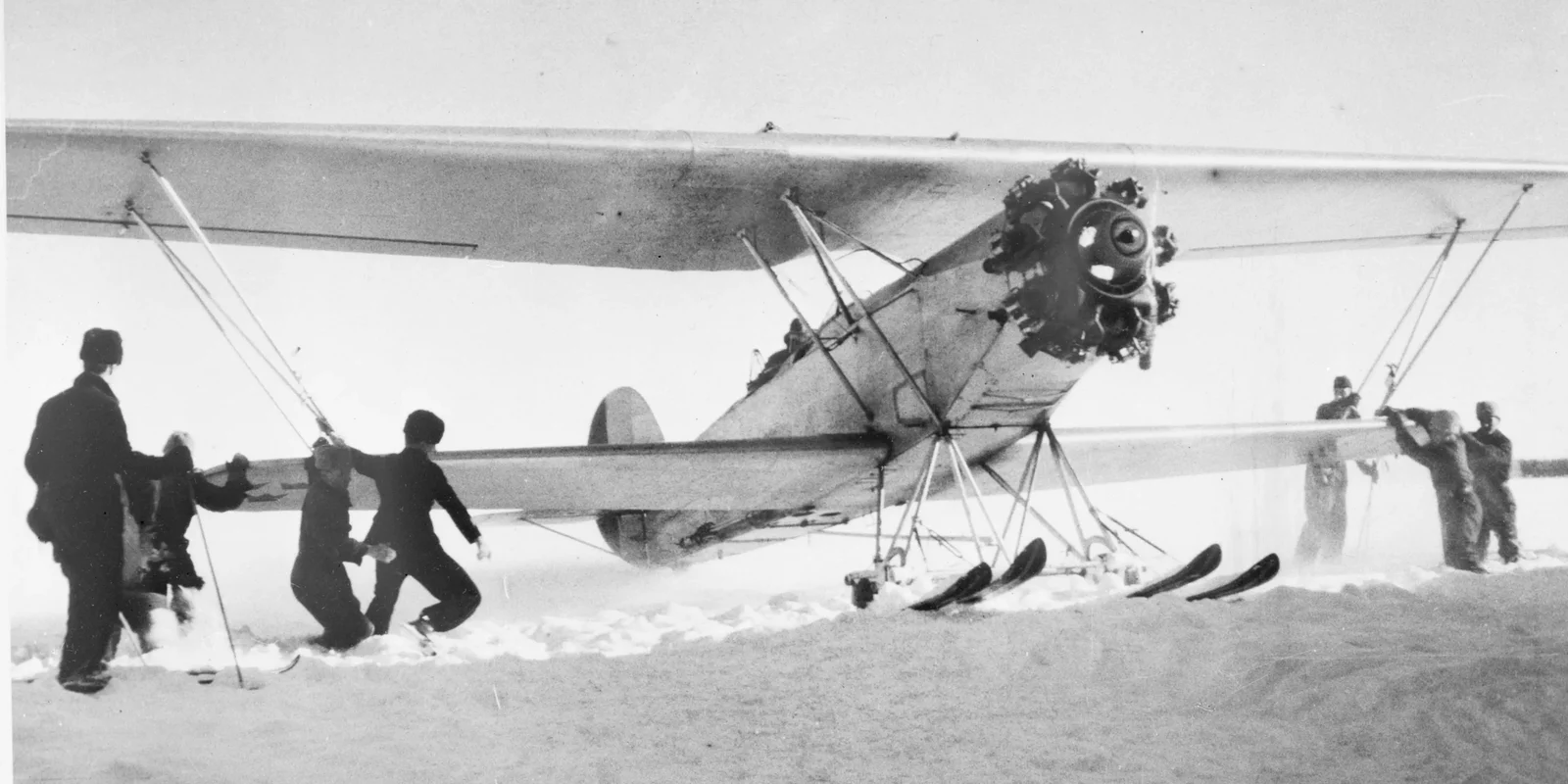
The story reached print on December 12, 1933, in Umebladet, a conservative daily in Umeå on the Gulf of Bothnia, and within two days the Stockholm paper Nya Dagligt Allehanda had his story. He was Gunnar Ågren, a crown forest ranger in Sorsele parish, in the Lapland interior where the new inland railway had opened only that autumn, “a trusted parish official whose reliability no one need doubt,” and his story, the paper admitted, sounded like an adventure novel. In the last week of November he had been staying at a farm he owned at Fjällsjönäs, on the lake of Fjosokken, tenanted by a family named Eriksson. One evening, as dusk settled over the great empty fells, he saw an aeroplane far off. He and the farm people watched it sink slowly onto the snowfield on the plateau of Guvertefjället, stay about ten minutes, and lift again, showing lanterns and a powerful searchlight with which it lit the snow; then it circled the landing place for the better part of an hour, searchlight pointed down, before heading north along the railway. The Fjällsjönäs people saw it every evening at the same hour for a week. The 4th Air Corps at Östersund said it had flown no exercises in the Västerbotten mountains, and the Boden air-ambulance had not been over the Sorsele fells. By December 13 Umebladet had the ranger’s own words: he had seen the light again the evening before, at twenty past five, in hazy weather, “a strong glow” far off toward the fell, moving fast and circling as on the other nights. Whether it was an aeroplane he could not say for certain, since he had only ever seen it after dark, but “someone has put forward the theory that it was some kind of heavenly body, and that is quite absurd, that such a thing should circle around up there day after day.” Fjällsjönäs, the paper concluded, had suddenly become the center of the newspapers’ interest. The district police chief in neighboring Stensele, Liedén, soon told Västerbottens-Kuriren that the first observations went back to November 17 and that the flying light had been seen “in almost all the Lapland parishes, in Arvidsjaur, in Malå, in Vilhelmina, in Dorotea,” and in Åsele, Tärna, Sorsele and Stensele; by mid-December, as the Swedish UFO historian Clas Svahn notes, his Sorsele colleague was saying the Fjosokken object must have been the northern lights, since no engine was heard. In Stockholm the state meteorologist, Dr. B. Rolf, offered another candidate on December 23. “Is it Venus playing spirit smuggler?” the headline asked; at this time of year, he said, the planet’s light could be uncommonly strong, and “it can very well look as if it hops and dances.”
Sources: Mystiskt flygplan över LapplandsfjällenSvar å interpellation angående vissa otillåtna flygningar i övre NorrlandSpökflygaren i NorrlandSpökflygarens vinterEr det Venus som leker spritsmugler?The Ghost Fliers of the 1930s — A Status Report (May 1982)
Smugglers and the ambulance pilot
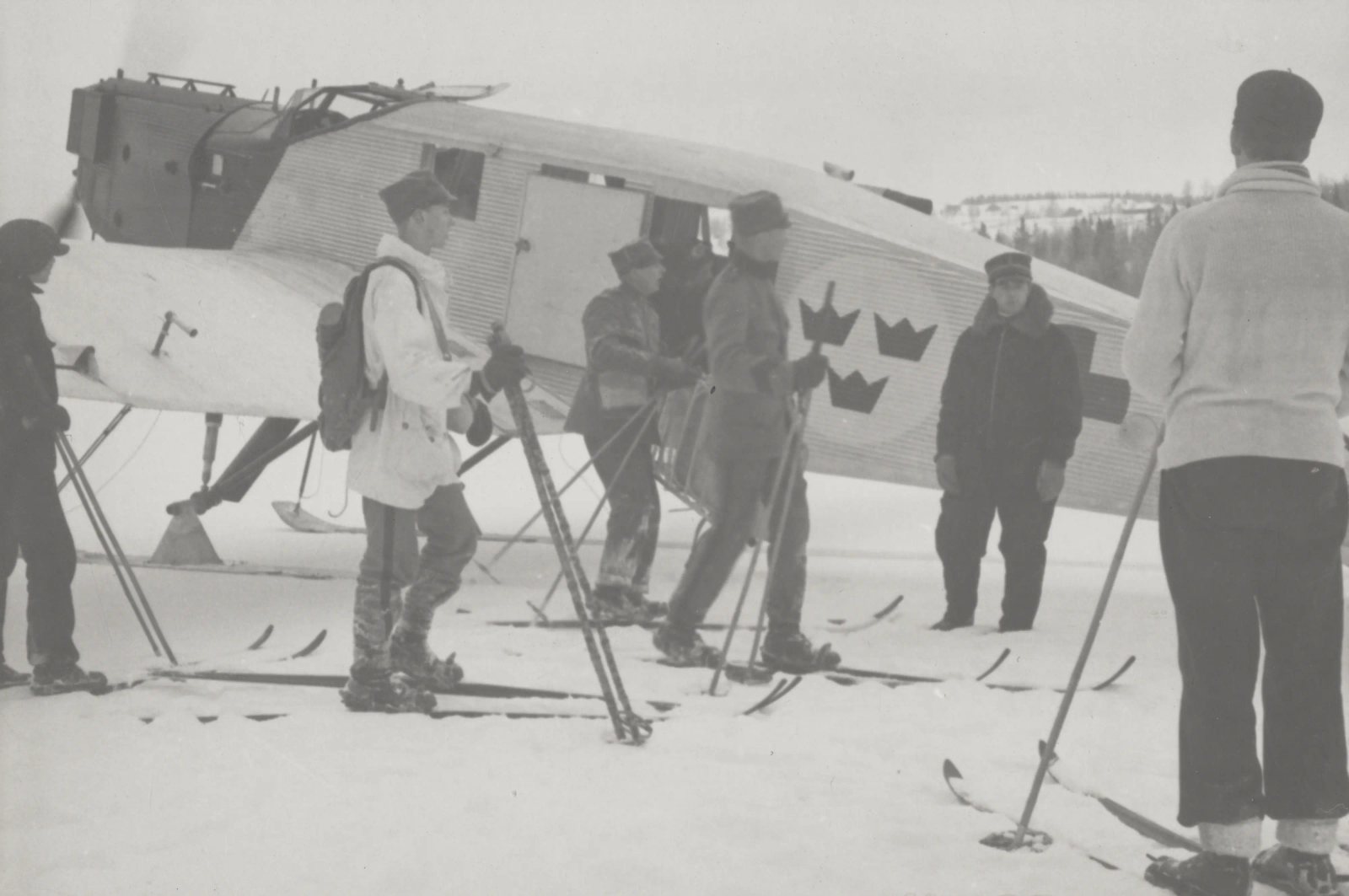
The first theory was liquor. Spirit smuggling across the Gulf of Bothnia was a going trade, run from mother ships to the Swedish and Finnish coasts, and Finland’s coast guard kept a plane at Vaasa to hunt the runners. Two days after the Umebladet story, the only active aviator in the far north, Sergeant Gunnerfeldt of the Boden air-ambulance, gave the press its first expert opinion, and a week or so later a memorandum: a smuggler’s plane could carry its load from the Norwegian coast at Nordranen to Storuman, “16 Swedish miles, about an hour’s flying” (a Swedish mile is ten kilometers), at a freight cost of “about 90 öre per kilo,” just under one krona. The memo was reprinted at length in the Riksdag, the Swedish parliament, three years later by the Social Democrat Elof Lindberg of Umeå, who noted that hardly any newspaper had accepted the sergeant’s authority, that the air force’s own reconnaissance soon showed his landing theory untenable, and that Gunnerfeldt nonetheless persisted “and eventually got the military commander, Major General Reuterswärd, on his side.” The air-ambulance itself, a Junkers on skis, turned up in the military files as one of the things witnesses had mistaken for the intruder; on Christmas Eve it made two real flights, taking off at a quarter past nine at night into a snowstorm over Överkalix, with bonfires marking the landing place, to fetch a ten-year-old boy hurt by an accidental shot from a Browning.
Sources: Svar å interpellation angående vissa otillåtna flygningar i övre NorrlandThe Ghost Fliers of the 1930s — A Status Report (May 1982)Ett mystiskt flygplan över KalixtraktenEn spennende flyvningSpökflygarens vinter
Christmas Eve over Kalix
On Christmas Eve, between five and six in the afternoon, a machine came in from the Gulf of Bothnia, passed over Skagsudden on the Kalix coast and continued west, “carrying a searchlight whose beam went searching over the landscape,” as the Finnish news agency reported it from Luleå. From the island of Storön outside Kalix came word of an earlier plane, crossing east to west late on the evening of December 2 (some Finnish-language papers misprinted it as December 23), and the Norrbottens-Kuriren dug up older ones: a Finnish state plane over the coast at midday in mid-October, a machine seen flying east by the Malören lighthouse staff on November 7. The population, the Luleå dispatch said, was convinced the visits had to do with the spirit smuggling from ships in the Gulf. Across the border the same explanation was being tried on Norwegian ground. On December 28 the police chief in Mosjøen, Ole Tobias Olsen, told Aftenposten that an aeroplane had visited Lyngvær, a remote spot on one of the outermost islands of Helgeland “known as an old smugglers’ nest,” at least three times in December, on the 12th, the 14th and over Christmas; the sheriff of Vik set out for it in a customs cruiser and was turned back by a storm, and when he got there found nothing. On Friday evening, December 29, at about six, people at Joesjön in Tärna watched the light cross the border toward Hattfjelldal, and that night the Hattfjelldal sheriff and his wife saw lights pass high over a mountain toward Vik. In the last days of December the government in Stockholm began planning, and the 4th Air Corps at Östersund was told by telegraph to get in touch with the police. On December 30 two motorists on the road at Muorjevaara, east of Gällivare, watched the machine pass at 50 or 60 meters, “quite plainly.” And on January 2 the Washington Times told its readers that Swedish army aviators had been ordered to chase a mysterious airplane sighted for several weeks over Lapland, lately heard flying toward Norway in a heavy snowstorm. “It is thought he is a smuggler.”
Sources: Ett mystiskt flygplan över KalixtraktenLuulajan tullinhoitaja syyttää merivartiostomme koneita aiheettomastiDet mystiske fly har besøkt LyngværSpökflygaren i NorrlandMystery Aeroplanes of the 1930s, Part 2Major von Porat rapporterer til general VirginSwedish Army Fliers Hunt Mystery PlaneSvar å interpellation angående mystiska flygningar över övre Norrland
A grey monoplane over the station
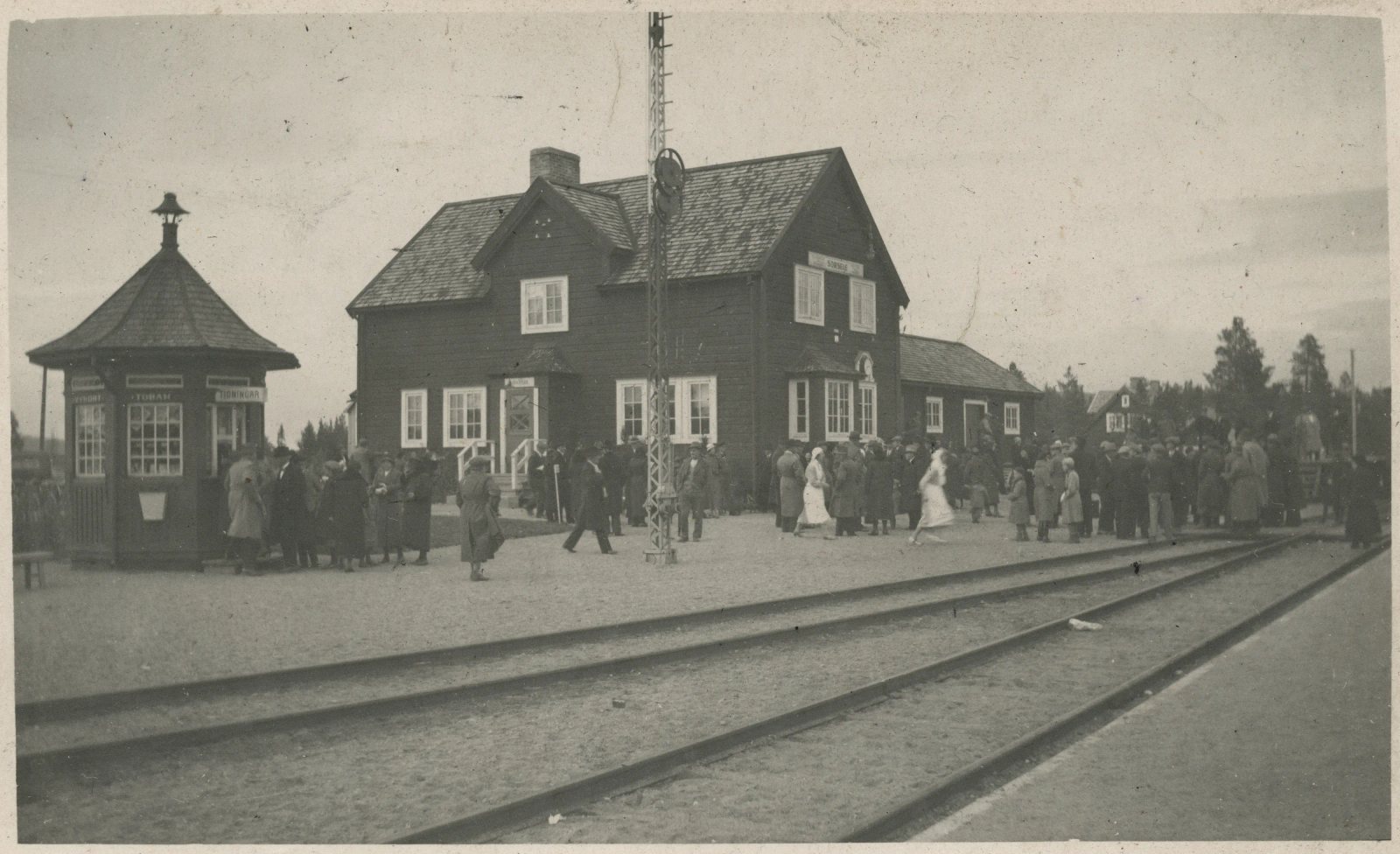
The most circumstantial of the early reports came from Sorsele at New Year. Olof Hedlund, a young man employed by the kiosk company in Vilhelmina, had gone late at night to check the stock of printed matter in the station kiosk at Sorsele. “While I was in there,” he told the Oslo paper Dagbladet, “I suddenly hear a strange sound that seemed to come from above, from the sky.” Over the station building hovered a large aeroplane whose outline he could see clearly, far bigger than the military machines he had seen up there, with a single wing and a fully enclosed cabin; it had no wheels, “either floats or skis,” and “astonishingly good silencers,” making hardly any noise. It was half past three in the morning. Västerbottens-Kuriren added that it was grey and lacked every identifying mark, and that it had glided over Sorsele with its engine cut, in moonlight; the Finnish wires carried it as a large grey monoplane on skis or floats, without letters of any kind, and Keel’s digest adds that it circled the station three times and left northward along the railway. Hedlund, the Dagbladet reporter noted, had done his military service in the air arm and “should know what he is talking about.” But a policeman who spoke with him the next day said the man had then not mentioned a word about any mysterious plane, and the station attendant, Emil Strand, had noticed nothing. Lindberg later dissected the story in the Riksdag: the station hand on duty that night, much of it out in the yard, had neither seen nor heard a machine, and the postal clerk who met the kiosk manager right after the supposed quarter-hour visit had talked with him about this and that “without hinting with a single word that he had been lucky enough to be the first who had really seen the ghost flier in the flesh”; only later in the morning did he feel the need to proclaim it. “That it was at first swallowed in Boden is, however, known.” It was swallowed in Östersund too. On January 2 Major Gösta von Porat of the 4th Air Corps reported to the chief of the Air Force, General Eric Virgin, that several people had seen the machine and the glow of its searchlight on various occasions, among them two former conscripts of his own corps; the plane had evidently come in from Norway and flown over the lakes, especially Storuman, inside a triangle bounded by Tärna, Stensele and Sorsele, and he meant to send three aircraft once the county administration asked for them. “By all appearances it must be a plane that has been seen in the mountains of the wilderness,” Virgin told Dagbladet; he had doubted its existence as long as he could. A search from Östersund, 400 kilometers into the wilds, would be “a big and costly affair,” needing petrol and oil depots in the mountains, and the plane’s base was “surely on the Norwegian side.”
Sources: Olof Hedlund forteller om spøkelsesflyet over SorseleFrk. Gidsken Jakobsen om spøkelsesflyeneMajor von Porat rapporterer til general VirginSvar å interpellation angående vissa otillåtna flygningar i övre NorrlandMystery Aeroplanes of the 1930s, Part 2
Rain of reports
“The reports stream in as thick as the drops in a cloudburst,” the Norrbottens-Kuriren wrote on January 8, 1934, and Svahn says that on some days more than a hundred came in. In Luleå the engine of the Karlsvik bus was taken for an aeroplane; a man at Notviken took a railway signal for a ghost plane flying low; on January 10 a rumor that a machine had come down at Sunderbyn sent a caravan of cars to the spot. Tourists at Gällivare, hunters from Malmberget and a driver in Luleå all reported, on the same day, a light-grey, very fast monoplane of remarkable wingspan without markings. On January 9, just before six in the evening, Viktor Rhén and two friends at Liikavaara watched “a moving star, which rose and sank in space above the mountains to the west”; after about five minutes it turned, and they were sure it must have been an aeroplane, though “no engine hum was heard because of the long distance.” In nearly nine reports out of ten, Svahn notes, it was so dark that only “the lanterns and the searchlights” were seen.
Sources: Spökflygarens vinterSvar å interpellation angående vissa otillåtna flygningar i övre Norrland
Red and green over Holmögadd
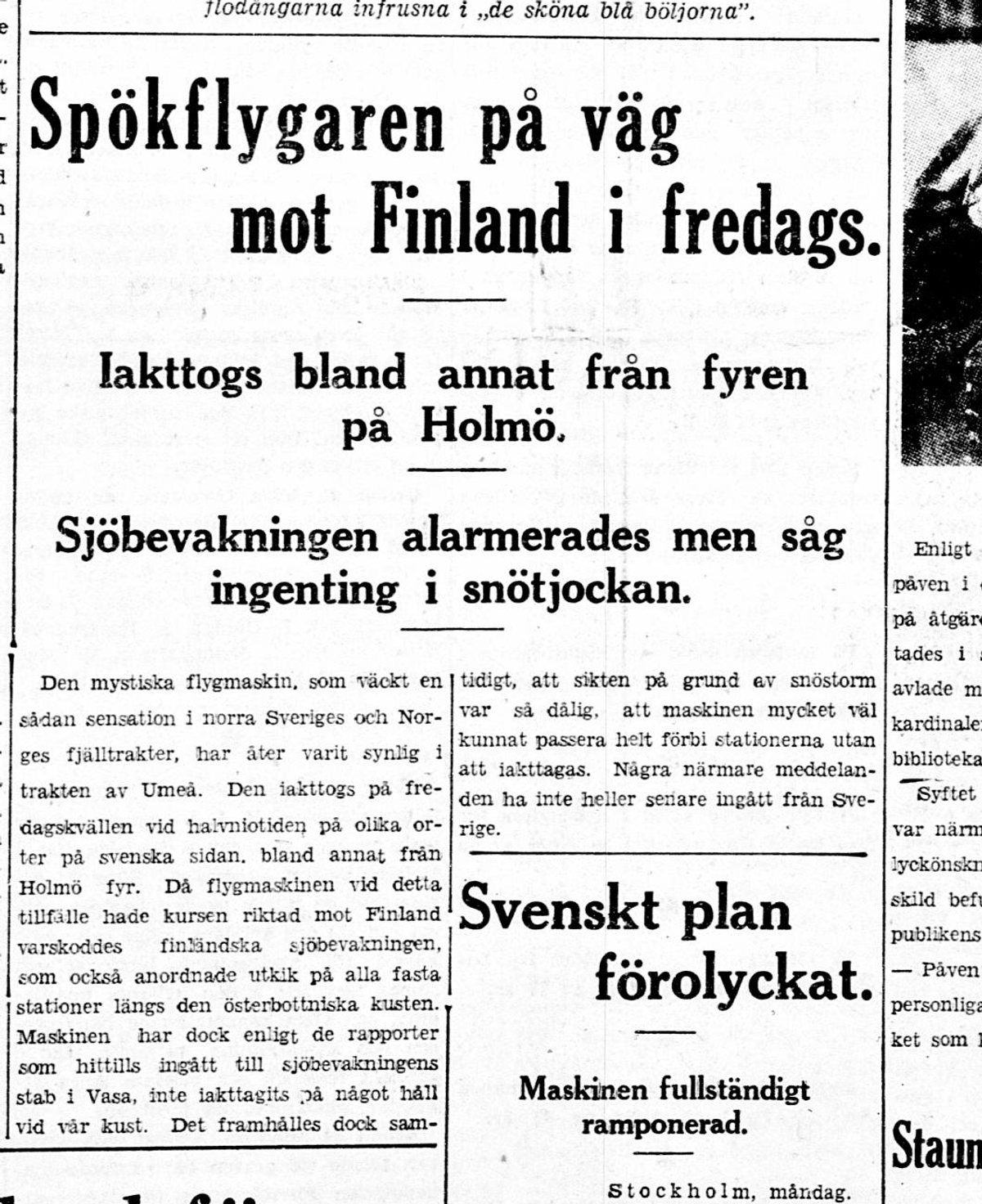
The most striking of the coastal reports came from the lighthouse at Holmögadd, at the mouth of the Kvarken strait. At three minutes to eight on the evening of January 6, as Lindberg later reconstructed it from the keeper’s own account, the keeper Ruthqvist saw a strange light steering toward the lighthouse, called his staff and his family, and within half a minute seven people were watching two lights, one red and one green, approaching fast. A full gale was blowing and the surf roared so loudly that no engine could have been heard even directly overhead. The lights passed about 600 meters out to sea at perhaps 400 meters and dipped suddenly to 150 meters off the Valsöarna islets. Then they climbed again and, at exactly 8:02 by the keeper’s watch, vanished east-northeast over the sea toward Finland. At the same moment the coast guard Nyman on Holmön saw a strange red light in the direction of the lighthouse, “most like the light from an exhaust pipe,” and people at Täfteå on the mainland saw it too. The Finnish coast guard was alerted and put lookouts on every station along the Ostrobothnian coast. Nobody there saw anything in the snow. The flier came back on the evening of Tuesday, January 9. At about 9:40 the keeper Sandberg saw the red and green lanterns racing in over the western Kvarken some fifty meters above the water, straight for the lit tower, and called out the whole station; all seven watched as the machine swung north-east past Gaddströmmen, climbed to about a hundred meters, made a tight turn seven or eight nautical miles out and came straight back at the lighthouse. Then it began to circle the island of Grossgrundet, “lap after lap,” for the better part of an hour. “It was clear that the flier was looking for something,” Lindberg reported, though no ship or signal could be seen from the tower. In the turns the two wing lights merged into one and the keepers thought they could make out an “inner light,” the lit instrument panel in front of the pilot’s seat; the wind, five meters a second, lay straight along the machine’s course, so no engine could be heard. At last it climbed in a sharp spiral to about 1,500 meters, turned east and flew off over the Kvarken at about 10:55, an hour and a quarter after it came.
Sources: Svar å interpellation angående vissa otillåtna flygningar i övre NorrlandSpökflygaren på väg mot Finland i fredags · Svenskt plan förolyckatSpökflygaren · Gidsken Jakobsen och löjtnant Nissinen
The hunt
The Swedish Air Force of 1934 was small, biplane-equipped and had no station in the north. The aviation historian Jan Waernberg, who went through the files in the 1990s, found that the first reconnaissance was flown by two, then four, Fokker S 6 biplanes of the 4th Air Corps (F 4) from Frösön outside Östersund, fitted with skis, joined by the Viking, a light plane owned by the Stockholms-Tidningen newspaper, whose crew saw the light at Vilhelmina, took off after it and lost it. In January a few planes of the 1st Air Corps at Västerås moved to Umeå and Holmsund on the coast. It was brutal flying. Eric Hemtke, an observer in the back seat of an S 6, was recalled from Christmas leave in a hurry he said he never experienced again, “not even during WWII”; it was snowing and 18 below, and his aircraft crashed on its first mission, pilot and observer surviving by “sheer wonder.” When his commander put down on a lake to ask a farmhouse where they were, the people inside refused to open the door “out of fear for the ghost flier,” taking the airmen in bearskins, parachutes and face masks for the thing itself. On Sunday, January 7, one of the three Östersund planes, which had landed on a lake at Tärna, tipped over as it tried to take off again from the ice. Svenska Pressen, following Dagens Nyheter, said it had climbed into a violent snow squall that pressed down a wing at fifty meters and flipped it onto its back, the machine “completely wrecked” and the crew almost unhurt; a Norwegian paper said it rolled onto its side on the ice, broke a wing and put the pilot in the Tärna hospital. It went to Umeå on a truck. Waernberg counts six crashes in all. On January 11 the defence minister, Ivar Vennerström, summarized the air force’s secret report: the chief of the 4th Air Corps had concluded on January 10 that no secret air base detectable from the air existed in the areas searched, no report of unknown fliers had reached the ministry from the Boden fortress zone or any other forbidden area, and the Finnish authorities said they had no reports at all. The minister saw no reason for further measures. On January 20 Aftenposten reported that the Swedish Air Force meant to end the search shortly if nothing new happened; that there had been two mystery planes was “considered established,” but since the Swedish authorities began their intense work “the aeroplanes have not shown themselves.”
Sources: Ghost Flier Mystery Still UnresolvedSpökflygaren på väg mot Finland i fredags · Svenskt plan förolyckatSvensk militærfly havarert i TärnaSpökflygaren. Svenska flygvapnets rapportDet svenske flyvevåben akter å slutte eftersøkningenOlof Hedlund forteller om spøkelsesflyet over Sorsele
General Virgin’s mass suggestion
Virgin, a 57-year-old army officer who had run the young air force since 1931, shifted his line by the week. On January 10 he told Örnsköldsviks-Posten he did not believe in the hypothesis of Russian experiments, “though I must admit that we know practically nothing about what it is really about,” and did not believe in a spirit smuggler either. “I am also clear that it must be a question of more than one machine, but what the matter concerns I dare not pronounce. The aircraft must have some depot, and this lies, in my opinion, outside the country, but cannot be in Russia,” perhaps, he agreed when asked, on the Norwegian coast or somewhere in the Gulf of Finland. The next day, at Härnösand, he said it could be taken as established that a foreign plane had been seen over Västerbotten some time ago, which was in itself nothing remarkable, since a properly marked aircraft had every right to fly over Swedish territory except over fortifications. The rest he found curious: “that this mass delusion about appearing flying machines could arise on the strength of the more or less mysterious lights that people have believed they saw in the sky. The whole thing must be described as an unusually widespread mood of panic and a mass suggestion.” Svahn gives the fuller text: “It must be clear to everyone that it would be sheer childishness for a flier who had something up his sleeve to keep appearing above densely populated places with searchlight and lanterns fully visible. Would a spirit smuggler or a spy really behave that way?” The press was already dividing along party lines. Anders Liljegren, who later read a dozen Swedish papers for the whole winter, found that the right-wing press wrote up the incidents and blamed the Russians while the left tended to skepticism or blamed the Germans. In mid-January the Soviet envoy in Stockholm, Alexandra Kollontai, denied the rumors, her colleague in Helsinki, Boris Stein, called the affair “a fabricated newspaper sensation,” and in early February Tass declared the Finnish papers’ claims of Soviet planes “provocative,” since “it goes without saying that no Soviet Russian plane has flown over Norwegian, Swedish or Finnish territory.” The Communist Hilding Hagberg of Luleå told the Riksdag on February 2 where the Russian story had come from: a journalist at Umebladet, who was also the local correspondent of TT, the Swedish news agency, had written a line about Russian fliers as an office joke and seen it go out by accident onto the front page of Västerbottens-Kuriren. “Now I’m sitting here in the soup,” the man had told him.
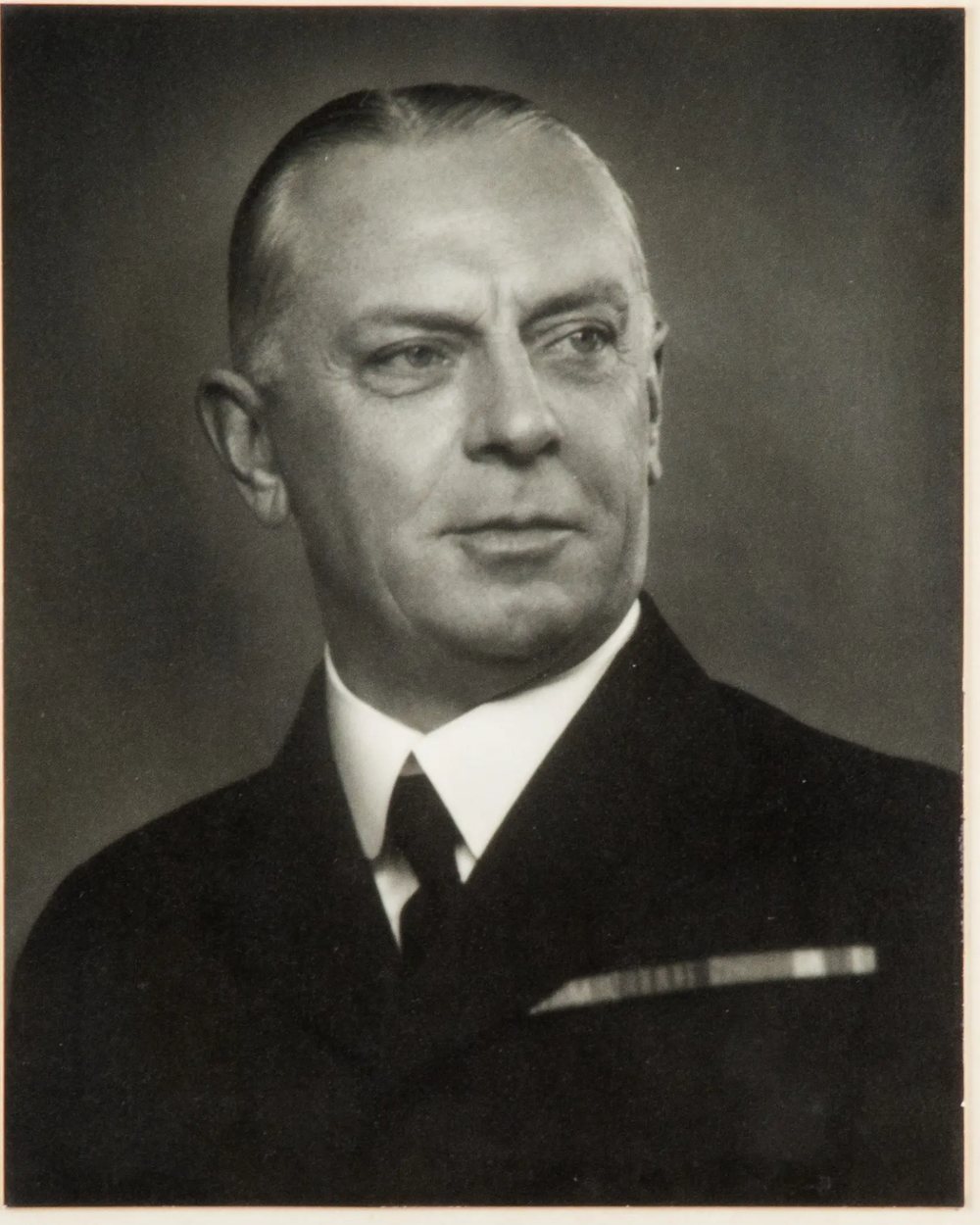
Sources: Spökflygaren · Gidsken Jakobsen och löjtnant NissinenEn sällsynt utbredd panikstämning och en massuggestionSpökflygarna höra icke hemma i Ryssland anser general VirginSpökflygarens vinterThe Ghost Fliers of the 1930s — A Status Report (May 1982)Spökflygaren under militär observationTass dementererSvar å interpellation angående mystiska flygningar över övre NorrlandEric Virgin (militär)
Over the forbidden zone
Then the flier went to Boden. The fortress, a ring of forts in the hills above the Lule river, was the strategic heart of the north, and the air over it was closed to all aircraft. Around January 20, as the prime minister later told the Riksdag, the first reports came in of flights over the prohibited zone, and with them, in Lindberg’s words, the ghost flying “became a military concern” in which “the espionage point of view dominated”; on Sunday the 21st the Grahn brothers, church wardens at Vindeln, watched by daylight what one called the largest machine he had ever seen, grey and apparently with two wings, and at Haparanda the customs chief, Ström, said there was no doubt whatever that a ghost flier had circled the town, its engine “so loud that it penetrated right into the rooms.” At noon on Monday, January 22, “some thirty men of the Boden garrison,” returning from an exercise, saw a machine flying very high that they took for the ghost flier and were sure was not Swedish; the fortress commandant dismissed it as hearsay. But the man above him did not. On January 26 and 27 the military commander of Upper Norrland, Major General Pontus Reuterswärd, a 62-year-old infantryman who had himself been commandant of Boden until the year before, told the Norrbottens-Kuriren and the Finnish press that “aircraft have been observed by trustworthy persons, military as well as civilian, so that it may be considered established that flights have really taken place within the forbidden area,” that only aircraft faster than the strangers could keep the zone clear, and that for want of means effective action had been impossible. The garrison went on watch. Sven Karlsson, then a junior non-commissioned officer in Boden’s A 8 artillery regiment, told Svahn in 1989 how Colonel Lagerfeldt ordered him to take a patrol of six conscripts seven kilometers on skis to the top of Degerberget to man a 90-centimeter searchlight, each patrol arriving at dusk just after one in the afternoon and being relieved a day later. “When you stood there it was easy to see all sorts of things,” he said; the soldiers more than once took the Big Dipper for something mysterious. “But it also happened that we heard aircraft noise. As a rule they went from east or southeast toward northwest. But we never saw the planes themselves.” He heard engines four or five times; a bell rang down into the rock shelter, and by the time he had run up in boots and fur the sound was gone. The same day as Reuterswärd’s statement, the leader of the Right, Admiral Arvid Lindman, put an interpellation to the prime minister: “Public opinion demands clarity and wants its anxiety stilled.” On January 30, at Reuterswärd’s request, fighters were ordered to Boden, Bristol Bulldogs of the 1st Air Corps from Västerås, four by the prime minister’s account, three by the wires. A chain of ground observation posts was organized across Norrbotten and Västerbotten, radio-interception units were brought up from the south, and military attachés in the neighboring capitals were told to collect everything they could.
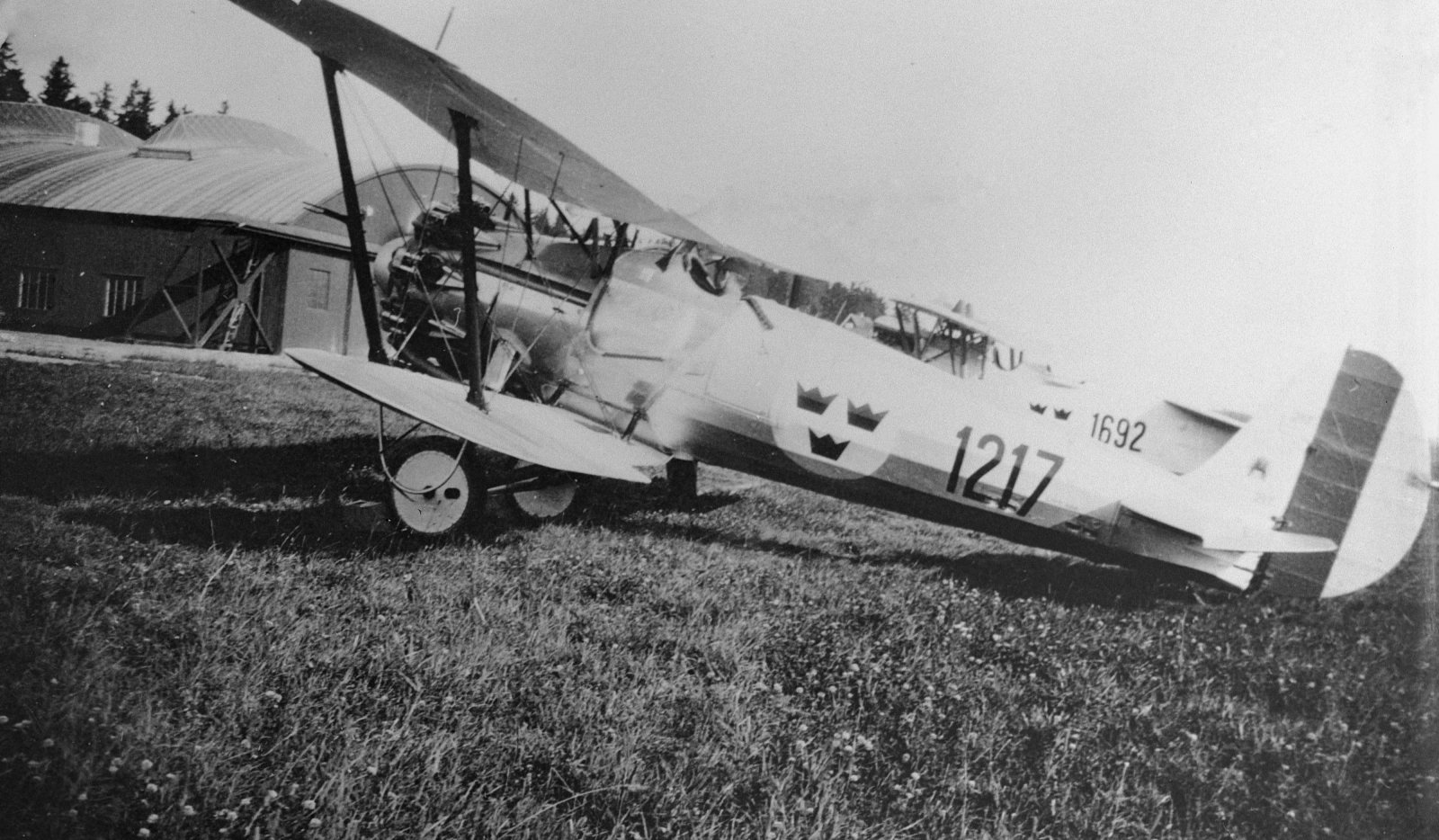
Sources: 30 man i Boden se spökflygMystisk fyrbåk av snö · Brinnande fallskärm över Siljan · Tullförvaltare Ström i HaparandaKenraalimajuri Reuterswärd: lennot kielletyllä alueella toteennäytettySpökflygarens vinterInterpellation angående mystiska flygningar över övre NorrlandSvar å interpellation angående mystiska flygningar över övre NorrlandGhost Flier Mystery Still UnresolvedThe Ghost Fliers of the 1930s — A Status Report (May 1982)Pontus Reuterswärd
Lights off Kemi
Finland had laughed first. In Hufvudstadsbladet on January 11 the aviator Captain Väinö Bremer, passing on the word of Lieutenant Nissinen, head of the coast guard’s aircraft, that the fliers had never been seen in Finland, set out the difficulties: a landplane could not touch down in that terrain, a seaplane could not land on frozen lakes, skis were the only possibility and even then it was “completely incomprehensible” that nobody had found their landing places or petrol depots. “The only possibility would be quite simply that the machines were sent out from a mother ship fitted with a catapult.” Three days later the General Staff’s Lieutenant Colonel A. J. Svensson said the likeliest explanation was fliers coming from the west and working “with an aircraft carrier out in the Atlantic,” while Japanese fliers setting up secret petrol depots were “completely improbable.” Then, at a quarter past six on the evening of Tuesday, January 23, a light was seen out to sea off Kemi, at the head of the Gulf: first only the glow of an exhaust, then, as eyes adjusted, the whole outline of a machine, which cruised off the town for about half an hour, always over the sea, and faded away to the south. The editors of Pohjolan Sanomat watched it from the attic windows of their own building with two visiting notables, the councillor Antti Junes and the agronomist Heikki Lampén, and a border inspector confirmed with the Swedes that it was none of theirs. The same evening a machine with the same lights was seen high over Övertorneå church heading for Boden, and another at Pello in Turtola crossing to the Swedish side: “ghost fliers have therefore been seen at the same time at Kemi, Övertorneå and Turtola, so they must be three in number.” Colonel Tauno Ilmoniemi, commanding the North Ostrobothnia military district, traveled to Kemi; the planes had been seen only by local police and border guards, in the dark, the press was told, and the Chief of the General Staff, Lennart Oesch, let it be known that the border guard had long since been ordered to watch, and declined to give his own opinion.
Sources: Spökflygaren · Gidsken Jakobsen och löjtnant NissinenDe mystiska flygarna icke setts till i FinlandSalaperäinen lentokone Kemin edustallaSpökflygare ha alltså samtidigt setts i Kemi, Övertorneå och TurtolaSpökflygaren under militär observation
The beacon on the ice
On January 26 fishermen from Maksniemi found, on the ice half a kilometer off Ruumiskari, a beacon: a tower of snow a meter high, iced hard, with a storm lantern on top and a ten-liter spirit canister soldered to it as an oil tank, visible some ten kilometers out to sea, which had burned day and night from January 11 to the 14th, when the oil ran out, with ski and foot tracks leading toward the mainland. Who had built it was never discovered. On February 3 Ilmoniemi staged a reconstruction: at 7:35 in the evening an army Fokker flew the same course off Kemi as the ghost flier had on January 23, three times, with its lanterns lit, and Junes, the three editors and the other witnesses declared the lights “precisely the same as on January 23, though a little weaker.” From this, the colonel concluded, “an unknown flying machine really did move over Kemi” that evening, while the engine noise heard at Karihaara on January 31 “evidently came from one of our own machines.” By February 10 Oesch was saying, in a statement the Kemi newspaper carried, that most of the northern reports had proved false, that some pointed to an unknown aircraft, and that the only firmer cases were those on the eastern frontier, where an aircraft’s outline had been seen and its engines clearly heard, “from which it may be concluded that these machines have been Soviet Russian,” though even of these, he added, one could not yet be fully certain.
Sources: Mystisk fyrbåk av snö · Brinnande fallskärm över Siljan · Tullförvaltare Ström i HaparandaÖverste Ilmoniemi meddelar: spökflygningen över Kemi rekonstrueradKenraali Oeschin lausunto kummituslentäjistä · Fagerfjäll
The sea serpent of the air
Norway, with its long coast of fjords and islands, had the richest run of reports, and its press dubbed the thing “the sea serpent of the air.” Two voices set the tone early. Hjalmar Riiser-Larsen, the polar aviator, recalled for Morgenbladet on January 3 how in 1915 people in the Trondheimsfjord had been “so absolutely sure of having seen a plane” that he investigated, and found two small boys who had walked out on an autumn evening with a lantern. “People see so incredibly much in the air,” he said; the reported observations all lay along one latitude, which suggested a planet, and it would be strange for a machine on unlawful business to keep showing itself with its lights on. Gidsken Jakobsen, the aviatrix of Narvik, took the opposite view. “You ask if I believe in the ghost flier’s existence? Yes, that you can rely on!” she told Hufvudstadsbladet by telephone. There was not one but many, at least four, Russian or perhaps Japanese fliers “spreading communist propaganda or spying,” and she had asked the government to put its air troops in motion; though five days earlier, to Helgeland, she had spoken of two large Junkers, one on skis and one on floats, and regretted that her own machine was waiting for parts from Germany. Around Rørvik and the Vikna islands the plane was reported landing on the sea, at Kvaløy for a quarter of an hour on January 11 with both side lanterns showing, at Sleipskjær the same night, at Kvalpsundet and Oksbosen in Flatanger a day or two later; the customs cutter Ørnen ran aground going after it, and the Nordland sprang a leak in a gale on the Folla. The captain of the coastal steamer Dronning Maud reported that his passengers had several times been sure they saw the ghost flier on the run north from Trondheim, a light that seemed to rock up and down: the officers took a bearing each time, and each time it was Venus. The one close-range account of the whole wave came from Tromsø at the end of January. The skipper of the freighter Tordenskjold, Sigvard Olsen, and the seaman Lars Olsen said that in the middle of the night on outer Malangen, outward bound from Tromsø for Kabelvåg, a great aeroplane had come straight at them and glided over the vessel “while powerful searchlights played over the deck, and it was as light as midday.” It was a big grey machine, the skipper said, much like the Latham, Amundsen’s flying boat. Forward in it he saw a man, probably the pilot, in a light hooded windbreaker and big goggles. “The machine had no marking; they looked for that specially.” It sped off up the fjord, and later in the voyage, between Brettesnes and Svolvær, a large white-painted vessel like a yacht, lying backing in the fjord, stood out to sea as the Tordenskjold approached. Both men were willing to swear to it, and Nordlys, which interviewed the skipper again, concluded that “the mysterious plane is something other than visions” was now “beyond any doubt.” In the last week of January the Defence Department sent a naval lieutenant, Kjær, north in a customs vessel as its ghost-flier expert, with orders to every police chief from Molde to Finnmark to report to him.
Sources: Riiser-Larsen om de mystiske flyFrk. Gidsken Jakobsen om spøkelsesflyeneSpökflygaren · Gidsken Jakobsen och löjtnant NissinenDen mystiske flyvemaskin gikk ned på sjøen ved KvaløyPassasjerene på «Dronning Maud» så spøkelsesflySpøkelsesflyet holdt på å renne «Tordenskjold» i senkAt det mystiske fly er annet enn syner må nu være hevet over enhver tvilStrålkastarljuset från spökflygaren på ett norskt fraktfartygSpøkelsesflyeneMystery Aeroplanes of the 1930s, Part 3: The Landings
The Riksdag debate
On February 2, 1934, Prime Minister Per Albin Hansson answered Lindman in the Second Chamber. “That flights of the kind mentioned in the interpellation have really taken place has not yet been fully established,” he said. “Some of the information that has come out in this connection probably deserves no attention. In certain cases the observer has demonstrably been mistaken, and in other cases too the imagination seems to have been given too free a rein. Other reports, however, are of a nature to deserve credence and attention.” He laid out what had been done: planning since the last days of December, air reconnaissance first over the Västerbotten Lapland, then the lower province and part of the Gulf, from which it could be concluded that no bases or depots for foreign aircraft existed on Västerbotten’s land, along the coast or out in the Gulf; a ground air-watch wherever the so-called ghost flier had been seen, also negative; stricter guard at Boden; the aircraft ordered there on January 30. “Certain other measures taken or planned ought not to be made public.” Not one of the Boden sentries had yet seen anything, he added; the fortress reports rested on civilians and on “half of a troop that was out on exercise.” Lindman wanted listening apparatus, searchlights and, if need be, gunfire. Karl Kilbom of the Socialist Party found “nothing but ghost flying” in the affair; whether it was political ghost flying he would not say definitely, “but if so, so much the worse,” a new kind of saw-filer scare, the pre-war panic about Russian spies disguised as itinerant saw-filers. He mocked the Leksand affair, in which a burning object like a parachute had come down on Lake Siljan, leaving colored paper, cotton waste and a smell of paraffin: “a whole fire bomb of tissue paper,” as he put it, the work of a local dentist. Hagberg, who noted that Nya Dagligt Allehanda had exposed the dentist on the Sunday, called the affair a prank on the Swedish people, “exploited without conscience” to win a stronger air force. Dagens Nyheter’s headline the next morning, over caricatures of the four speakers, read: “The ghost flights not fully established.”
Sources: Svar å interpellation angående mystiska flygningar över övre NorrlandMystisk fyrbåk av snö · Brinnande fallskärm över Siljan · Tullförvaltare Ström i HaparandaThe Ghost Fliers of the 1930s — A Status Report (May 1982)
The aeroplane on Fagerfjell
The strangest single episode was Norwegian. On the afternoon of February 6, 1934, a sensational message reached Tromsø from Målselv: a flying machine of foreign nationality had crashed on Fagerfjell. The sheriff at Moen, Valderhaug, explained that a man named Hans Jørgensen at Fugleli had seen an aeroplane up on the mountain the evening before, Monday, February 5, told others, and they had seen it too; looked at through binoculars, two men appeared to be working beside it. Among the witnesses, the papers said, was an elderly lieutenant who lived at Fugleli. On Tuesday morning the plane was still there and made two attempts to take off, both failing; no engine had been heard on Monday, but a snowstorm was raging, and on Tuesday a woman feeding the animals on Mårtensson’s farm heard one from the mountain. The sheriff sent eight men who knew the terrain up with his deputy and reported to Colonel Faye of the Tromsø regiment, who alerted General Johannessen of the 6th Division in Harstad. The first party found nothing; that night four people at Målsnes saw a plane with two lanterns fly off south-east “straight from the area of the Fager mountain.” Three more parties climbed the next day, and Tidens Tegn reported that one patrol had found two parallel tracks in the snow, about 75 meters long and 80 centimeters wide, with footprints around them, 300 or 400 meters from where the plane had been seen. Lieutenant Kjær took command. Riiser-Larsen, asked for his view, thought it likely a German plane had landed. Then it collapsed. The Finnish wire service reported on February 8 that the men on the spot had concluded that no aeroplane could take off from the place, and that the tracks in the snow were the work of storm gusts. On February 10 Adresseavisen quoted one of the searchers by telephone: “the mysterious aeroplane on the plateau was a stone!” Per Brøyn, writing for a Norwegian UFO bulletin in 1989, gives the stone’s size as six meters long and four high; Svahn, who has seen the Norwegian General Staff’s files in the National Archives (Riksarkivet) in Oslo, notes that it suspected the Germans too.
Sources: Fremmed flyvemaskin styrtet ned på Fagerfjellet i MålselvDer sendes nye ekspedisjoner idagEn flyvemaskine av ukjent nasjonalitetMystery Aeroplanes of the 1930s, Part 3: The LandingsKenraali Oeschin lausunto kummituslentäjistä · FagerfjällSpøkelsesflyeneSpökflygarens vinter
Written off
By the middle of February the reports were thinning. Finland’s foreign minister, Antti Hackzell, told the press on February 14 that the experts now regarded the stories as “products of fantasy and optical illusions” caused by sounds and lights such as mirages and the northern lights, “rather plentiful in these northern regions,” and on March 9 the Finnish General Staff closed its inquiry: most of the reports had proved “completely without foundation,” some left open the possibility that a ghost machine had been about, but no confirmation had been obtained; if fliers had moved in the area “they must have been very skilful and had very good machines”; the authorities believed the whole thing came down to a mass suggestion. “As far as the General Staff is concerned,” Hufvudstadsbladet wrote, “the ghost fliers have thus had an official burial.” Sweden had gone first. On March 3 the Air Force recalled its searchers and, in the words relayed to Helsinki, “definitively written off the problem on the grounds that ‘there never was any ghost flier.’” Twenty-four army aircraft had taken part, twenty-two landplanes and two seaplanes; every piece of Norrland had been flown over, the airmen had talked with the people who claimed to have seen the ghost flier, and all of them, questioned later, “ended by saying that they could not state with full certainty that what they saw was definitely an aeroplane.” The last Swedish contribution was a hoax: in mid-April a mysterious light over Skellefteå fell at Stavaträsk and was picked up by a schoolboy, a rubber balloon about a meter across with an electric lamp and battery hung from it on a string.
Sources: Utrikesminister Hackzell: fantasiprodukter och synvillorSpökflygarna ha fått en officiell begravningRuotsin ilmavoimat lopettaneet kummituslentäjän etsinnätI Sverige ha spökflygarna avskrivitsSpökflygarens vinter
An insult to the nation
Norway did not give up so easily. General Johannessen told Aftenposten on March 9 that “there may well be something in the reports,” his division was still logging engine noises over Varanger, Porsanger, Vesterålen, Bardu, Lofoten and Målselv in the first week of March, and Lieutenant Kjær, going home after some seven weeks in the north, said there was no reason to doubt some of the witnesses who had both seen the plane and heard its engine. The Oslo paper Tidens Tegn ran its own radio listening posts and claimed to have caught mysterious signals that included the words “Odessa” and “Sevastopol.” On April 30 the Norwegian chief of staff, Colonel Ruge, said the winter’s reports were still being worked through; the 6th Division’s view was that flights appeared to have taken place, but by whom could not be established. That same day, in Luleå, Reuterswärd made public his own conclusion, which had gone into a seventeen-page secret memorandum to the defence minister two days earlier, a document that Liljegren found, when he read it in 1978, made no secret of his belief that the Russians were to blame. A comparative study of the reports showed, the general said, “that there can be no doubt that during the month of January, that is, before the military air watch was organized, unauthorized air traffic was observed on a large scale within the whole military area, including the area closed to air traffic around Boden fortress”; whether it had continued after the watch was set up could not be established with certainty. “It is absurd,” he said, “to try to explain the matter away as optical illusions. It cannot be denied that a flight over Sweden insulting to the nation has taken place.” Virgin, who had called it mass suggestion, was gone within the month: on May 4 the government granted his discharge from June 1 (he went on to advise the Abyssinian government), and Colonel Torsten Friis took over the air force. The radio-interception units, Waernberg found, had picked up strange coded messages traced to the Murmansk area, though no connection to the flights was ever proved; the ghost flights, he wrote, were the starting point of Swedish signals intelligence. That autumn the 1930 Defence Commission was briefed in secret at Boden (Lindberg, a member, saw the military staff’s material there), and in 1936 it voted to strengthen the air force, a decision Liljegren thinks the ghost flier did much to shape. In 1939 Sweden began building its northernmost wing, F 21 at Luleå. One of its first commanders was Gösta von Porat, who had chased the ghost flier from Östersund; by the time he retired in 1946 he had watched another invasion of unknown objects over Norrbotten, the ghost rockets.
Sources: Spökflygarens vinterGeneral Johannessen: det kan jo være noget i meldingene6. divisjon: motordur over Varanger, Porsanger, Vesterålen, Bardu, Lofoten og MålselvPremierløitnant Kjær om undersøkelseneSpökflygarna verklighet, tror svensk generalThe Ghost Fliers of the 1930s — A Status Report (May 1982)Generalmajor Virgin beviljad avskedEric Virgin (militär)Ghost Flier Mystery Still UnresolvedInterpellation angående vissa otillåtna flygningar i övre Norrland
Two general staffs, two verdicts
The Swedish General Staff worked on the material for more than a year. Its chief, Major General Oscar Nygren, sent his findings to the defence minister in a letter dated July 8, 1935, and the ministry released the core of it to the press. “The investigation carried out,” it read, “has given the result that it must be considered established that flights by aircraft whose nationality could not be determined took place during the winter of 1933–1934 over northern Scandinavia, over Swedish as well as Norwegian territory. The flights very probably took place at great height and mostly over very sparsely populated areas. Only at certain places suitable for orientation do the fliers appear to have come down, to get their bearings or for some other purpose, to so low a height that they attracted attention.” The flights had in some measure the character of circuits of varying extent; in certain cases several aircraft had flown at once over different areas; and some circumstances suggested that they had, at least at times, been based on ships off the Norwegian coast. Of the 96 Swedish reports, the defence minister told the Riksdag in 1937, only twelve had been judged fully credible, 46 with the trustworthy reports from the neighbors added in. Norway’s 6th Division came to the same place: in December 1936 its commander, General Erichsen, said that the existence of mysterious aircraft was “beyond every doubt.” Finland reached the opposite conclusion. At a press conference in Helsinki on January 4, 1937, after a second winter of reports, the General Staff presented its statistics for December 14, 1933 to February 19, 1934: of the light phenomena, 37 were explained by stars, planets, car lamps and the like, ten were unexplained but not aircraft, and ten were too vague to judge; of the sounds, sixteen were natural, thirteen were the army’s own aircraft, six were Swedish army planes, eleven were vague, three came from motor racers, and five remained unexplained. “Not one of the observed light phenomena derives from an aeroplane,” the staff concluded, while for the sounds no absolutely certain conclusions could yet be drawn. Dr. Vilho Väisälä of the meteorological institute’s kite station at Ilmala lectured on halos, lightning glow reflected through gaps in the cloud, the northern lights and shooting stars, and told of a lady who had watched Venus in the belief that it was a sonde balloon, and of a person who had watched a sonde balloon turn into a zeppelin “which even flew the German colours aft.” To test how a real intruder would be seen, the Finnish Air Force had secretly flown its own planes over the ghost-flier districts to imitate it. “The effect has been overwhelming,” the staff said. “The planes were immediately observed, their sound was heard clearly and for many minutes,” and they proved far easier to spot and locate than the ghost planes. A petrol drum reportedly cached for the ghost flier turned out to be a sauna water barrel, and a set of aircraft tracks had been cut by a timber sledge.
Sources: Interpellation angående vissa otillåtna flygningar i övre NorrlandSvar å interpellation angående vissa otillåtna flygningar i övre NorrlandNorsk general erkänner spökflygets existensGeneralstabens undersökning av spökflygetSpökflyget inför pressenKummituslentokoneita ei ole olemassa, osoittavat tutkimuksetKummituslentäjiin eivät viranomaisemme uskoSpökflygarens vinterKummituslennot Lapissa ja muualla Suomessa 1933–1937
The second winter and Lindberg’s Venus
That Finnish verdict came in the middle of a new wave. The ghost flier had come back in the winter of 1936–37, on a smaller scale. Two workers at Byske reported a double-decker flying machine that the locals identified as a sea eagle. At Boden a major, a captain, a sergeant-major, two fortress policemen and a policeman saw a light and heard an engine, and Sergeant Gunnerfeldt was sent up to reconstruct it in the air. In February 1937 Reuterswärd wrote to the minister that foreign air activity in recent months “may be considered established,” and told Aftonbladet on February 12 that more than a third of Sweden lay open to a flying enemy and that “it is absurd to try to explain the matter away as an optical illusion.” Searchlights and listening apparatus were deployed in the north; nothing was found, and the reports ceased. On February 13, 1937, Elof Lindberg of Umeå rose in the Riksdag to demand an impartial inquiry. He quoted General Oesch, who had told a Swedish paper a few days earlier that the Finnish lights “have turned out to be stars, car headlights and so on, and the sounds have come from car or boat engines,” in some cases from telephone wires, and that the only aircraft positively identified had been Russian fliers who had strayed a few kilometers over the eastern border by mistake. On May 18 Lindberg answered the minister with a speech that fills most of fifteen pages of the printed protocol, the most thorough contemporary dissection of the reports. “The newspapers’ reports stimulated interest in astronomical studies,” he said, “and strange things were discovered in various places. The planet Venus happened to be above the horizon and produced, because of atmospheric conditions, the most peculiar light sensations.” A fellow member, Jacobson of Vilhelmina, had stood with a hundred other people watching a light that many were convinced was an aeroplane, “and only when some people went up to the upper floor of a house and switched off the lights did they realize that it was a planet playing the ghost flier.” He went through the Sorsele kiosk manager and the Lubboträsk railwayman, who had followed two low aircraft for a quarter of an hour on a clouded night and explained that their lights reflected off the snow (“I know both Venus and Jupiter,” the man had told reporters, “but it was overcast that night”). He tied the Holmögadd lights to a German-flagged spirit runner from Kiel, seized by Finnish customs in the ice on December 28, 1933, with 3,000 liters still aboard and most of a cargo guessed at 20,000 liters already landed on the Swedish side: a man had been arrested at Långroudden just after Christmas with liquor traced to the ship, and the crew said 3,000 liters had been meant for Täfteå, exactly where the mysterious lights were seen a few days later. The Finnish verdict, he argued, meant that the Finnish reports among the 46 must be struck out; of the 96 Swedish reports, 84 had already proved untrustworthy. Lindberg ended with the hope “that the planet Venus will complete its orbit” and that an objective inquiry would be made “of this originally tragicomic but by now so sorry affair,” whose only reality might prove to be a smuggler’s search plane. The minister declined a new inquiry.
Sources: Interpellation angående vissa otillåtna flygningar i övre NorrlandSvar å interpellation angående vissa otillåtna flygningar i övre NorrlandSpökflygarens vinterGeneralstabens undersökning av spökflyget
Keel, the four boxes and the aviation historians
The ghost flier slept for a generation. In 1970 and 1971 John Keel, working from Åke Franzén’s hand copies of four Swedish newspapers and Lucius Farish’s clippings from the American press, published a four-part series in Flying Saucer Review that catalogued more than a hundred reports and argued that “the 1934 mystery airplane wave was impossible,” since no nation had the planes, the skill or the motive to fly blind in Arctic blizzards with searchlights blazing. When Keel visited Sweden in 1976, the Defence Department assured him no records of the 1930s investigation existed. Anders Liljegren found them the next year. The war archivist confirmed four boxes of secret documents labeled “Spökflygaren” in the files of the Military Command of Upper Norrland, three dated 1934 and one 1937, and on September 1, 1977, the defence minister, Eric Krönmark, gave him permission to read them. In September 1978 he spent two days with about a thousand folio pages: a quarter routine military padding, three-quarters police and military interrogation records, often meticulous, with maps and signed affidavits, in which many sightings were solved (“planets & stars; viewing the ambulance plane, or some known aviator; prank balloons; car headlights, and even some hoaxes”) and “in a great many cases no answer was found.” The High Command cleared publication in November 1979. Since then a Gothenburg folklorist, Jan Wall, has gathered more than a thousand contemporary written testimonies and concluded that the twelve best cases lack substantial evidence; Waernberg has documented the air force’s hunt; and Swedish aviation historians have argued for a decade in their society’s journal over whether the fliers were Soviet bombers out of Alexandrovsk and Kandalaksha or German naval aircraft testing radio navigation and night photography. For the Soviet side, Ingemar Strandberg recalled being lifted to a window as a six-year-old in Boden by his father, one winter night in 1934, to see a huge four-engined monoplane with two blue-white exhaust flames roar over the house. Svahn, after studying the Norwegian files, leans toward German spy flights by Heinkel He 60 floatplanes from the cruiser Leipzig off the north Norwegian coast, “combined with a large portion of pure war psychosis”; Waernberg objects that the German evidence is “one year too late,” from the summer of 1934; Liljegren gives the Soviet theory “three marks out of four.” In 2007 the Finnish historian Erkki Hautamäki added Soviet bombers rehearsing an attack on Sweden. As Liljegren wrote in 2001, no one has found, in a Russian or German archive, the operation orders for the ghost flights.
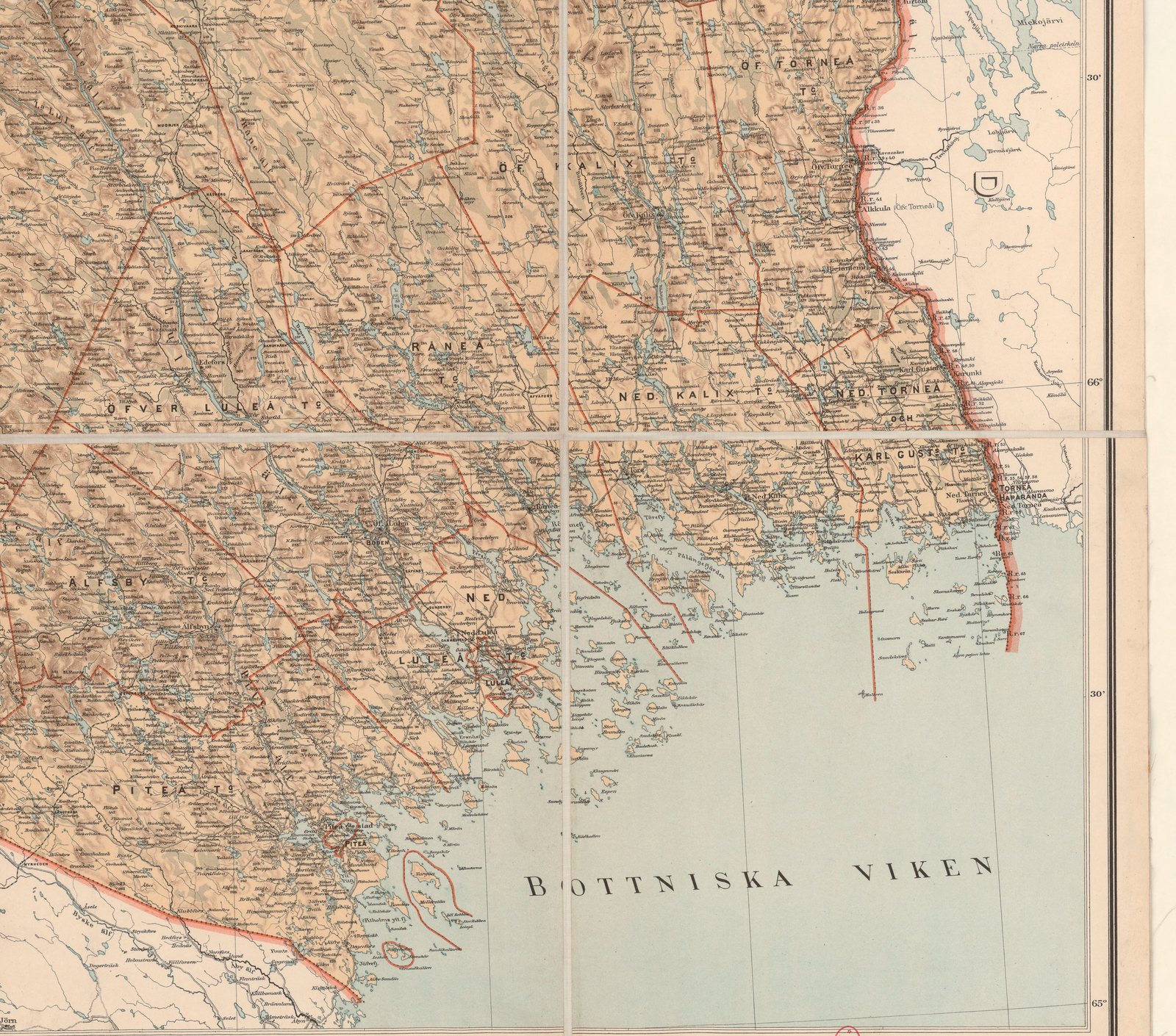
Sources: Mystery Aeroplanes of the 1930s, Part 1Mystery Aeroplanes of the 1930s, Part 2The Ghost Fliers of the 1930s — A Status Report (May 1982)Ghost Fliers and Rockets: Study ProjectsGhost Flier Mystery Still UnresolvedSpökflygarens vinterNy teori om spökflygarna
What survives
The Swedish Military Archives hold the four boxes of the Upper Norrland command, some 1,000 to 1,700 pages of police interrogations, maps, affidavits, orders and Reuterswärd’s memorandum; the Norwegian National Archives (Riksarkivet) in Oslo hold the Norwegian General Staff’s file, including a Swedish secret list of 96 observations from September 1933 to February 23, 1934; the Finnish General Staff’s statistics were read out at its 1937 press conference. The Riksdag protocols of January 27 and February 2, 1934 and February 13 and May 18, 1937, with the quoted General Staff conclusion of July 8, 1935, are online in full. The Norwegian press of the winter, from Aftenposten and Dagbladet to Nordlys in Tromsø and the Helgeland weeklies, is searchable at the National Library of Norway, and the Finnish-Swedish press at the National Library of Finland, which carried the Swedish wire traffic day by day, including Virgin’s and Vennerström’s statements and the Air Force’s March write-off. The Swedish newspapers of the winter are not freely searchable online and are known mostly through those relays, Keel’s digest of Franzén’s copies, Liljegren’s clipping files and Svahn’s reading. The Archives for UFO Research in Norrköping holds Swedish, Norwegian and Finnish archive material on paper and microfilm, and the AFU newsletters of 1982 to 2001 are on the Internet Archive.
Sources: The Ghost Fliers of the 1930s — A Status Report (May 1982)Ghost Flier Mystery Still UnresolvedSpökflygarens vinterSvar å interpellation angående vissa otillåtna flygningar i övre NorrlandGeneralstabens undersökning av spökflygetI Sverige ha spökflygarna avskrivits
How the details moved
Even the beginning moves. The first observations are November 17 in the Stensele police chief’s account, the last week of November at Fjosokken in the ranger’s, Christmas Eve at Kalix in Keel’s, and September 1933 on the Swedish secret list. The Storön plane is December 2 in the Luleå dispatch and December 23 in some Finnish-language reprints of it. The Tordenskjold encounter is the night after Tuesday, January 23, in the Tromsø telegram and January 19 in the Norwegian chronology. The Holmögadd lights are Friday evening, January 5, at about half past eight in Svenska Pressen and January 6 at 7:57 to 8:02 in Lindberg’s reconstruction; the hour-long circling over Grossgrundet is Monday the 8th in Keel and Tuesday the 9th in Lindberg. The Tärna crash of January 7 left its crew almost unhurt in the Swedish account and put the pilot in hospital in the Norwegian one. The planes the air force lost are two in Keel, “several” in Svahn and six in Waernberg; Hansson told the Riksdag that four aircraft were ordered to Boden, and the wires said three. The General Staff’s letter is dated July 8, 1935 in the defence minister’s answer, but Lindberg put it in July 1936. The report counts run 96 Swedish, 234 Norwegian and 137 Finnish in Waernberg, 207 Norwegian in a recent Norwegian study, 112 Finnish in the General Staff’s own period, and the 46 “credible” reports are often misread as a count of real aircraft. Reuterswärd’s verdict exists as a secret memo of April 28 in the archive and a press statement of April 30 in the newspapers, so the date depends on whether a writer worked from the archive, as Liljegren did, or from the press, as Keel did. The Tordenskjold’s machine is a grey Latham-like flying boat with one goggled man in one Tromsø telegram and a light-grey two-propeller biplane with lit cabin windows in another; the pilot wears a hooded windbreaker in one and a light fur cap in the Finnish wire. Fagerfjell is February 5 in the Norwegian and Finnish press and February 6 in Svahn; Kjær was appointed on January 23 by one Norwegian account and January 26 by another. Keel calls von Porat head of the air force; he commanded the 4th Air Corps. The Finnish zeppelin began as Dr. Väisälä’s anecdote of a sonde balloon that a watcher saw turn into a German airship; Hufvudstadsbladet merged it with the Venus story into an Ilmala official who saw a flag-flying zeppelin while her binoculars were on Venus, and Svahn followed that version. And the Sorsele witness is the same man in every version, a kiosk employee named Hedlund, whom Keel’s source made “a reliable man with a good reputation” and Lindberg a sensation-seeker.
Sources: Spökflygaren i NorrlandMystiskt flygplan över LapplandsfjällenEtt mystiskt flygplan över KalixtraktenSpökflygaren på väg mot Finland i fredags · Svenskt plan förolyckatSvensk militærfly havarert i TärnaSvar å interpellation angående vissa otillåtna flygningar i övre NorrlandMystery Aeroplanes of the 1930s, Part 1Mystery Aeroplanes of the 1930s, Part 2Ghost Flier Mystery Still UnresolvedSvar å interpellation angående mystiska flygningar över övre NorrlandInterpellation angående vissa otillåtna flygningar i övre NorrlandSpökflygarna verklighet, tror svensk generalSpøkelsesflyet holdt på å renne «Tordenskjold» i senkKenraali Oeschin lausunto kummituslentäjistä · FagerfjällSpøkelsesflyeneOlof Hedlund forteller om spøkelsesflyet over SorseleSpökflyget inför pressenGeneralstabens undersökning av spökflygetSpökflygarens vinterKummituslentokoneet
Explanations on offer
Misperception explains most of it, and the men on the spot said so at the time: Venus and Sirius, the Big Dipper over Degerberget, the Dronning Maud’s bearings, Riiser-Larsen’s two boys with a lantern, the ambulance plane, the air force’s own searchers, car headlights, buses, railway signals, telephone wires singing in the wind, the sea eagle of Byske, the sauna barrel and the timber sledge. Hoaxes account for a few: the Leksand dentist’s tissue-paper bomb, the Stavaträsk balloon, Umebladet’s accidental Russians. Smugglers were the first theory and remain the most concrete: Lindberg’s pairing of the Holmögadd lights with the seized spirit runner and its landing points, and the Lyngvær “smugglers’ nest,” are the kind of explanation that fits dates and places, though neither was proved, and a smugglers’ air arm on the scale of the American “Nighthawks,” a liquor-running ring whose thirty aircraft Stockholms-Tidningen described in January 1934, existed nowhere in Scandinavia. The Soviet theory had the Swedish command, the Finnish chief of staff (for the eastern frontier cases), the Murmansk radio traffic, Tidens Tegn’s “Odessa” and a six-year-old’s memory of a four-engined bomber over Boden, and in 1946, in the summer of the ghost rockets, Svensk Tidskrift was still picturing Soviet flying boats working from a mother ship off Lofoten; it has no document. The German theory has the Norwegian General Staff, Riiser-Larsen’s guess at Fagerfjell, the later catapult-ship and radio-navigation trials, and a chronology that its critics say is a year late. Collective delusion, Robert Bartholomew’s framing, has the Finnish statistics and the Finnish imitation flights on its side: real planes were seen, heard and recognized at once; the ghost flier was seen in nine cases out of ten as lights alone. What none of these dispose of is the residue the Swedish General Staff admitted: a dozen Swedish reports it could not explain, low passes by machines without marks at places useful for orientation, the beacon on the ice off Kemi that somebody built and nobody claimed, and the point Keel and Waernberg both press, that the ghost flier flew on the worst nights of the Arctic winter, in weather that kept every known aeroplane on the ground.
Sources: Svar å interpellation angående vissa otillåtna flygningar i övre NorrlandGeneralstabens undersökning av spökflygetThe Ghost Fliers of the 1930s — A Status Report (May 1982)Ghost Flier Mystery Still UnresolvedSpökflygarens vinterLittle Green Men, Meowing Nuns and Head-Hunting Panics: A Study of Mass Psychogenic Illness and Social DelusionMystery Aeroplanes of the 1930s, Part 1Interpellation angående vissa otillåtna flygningar i övre NorrlandMystisk fyrbåk av snö · Brinnande fallskärm över Siljan · Tullförvaltare Ström i HaparandaPassasjerene på «Dronning Maud» så spøkelsesflyRiiser-Larsen om de mystiske flySpökflygare
Classification note
This archive files the ghost fliers as a mass sighting: several hundred reports from three countries over three months, logged by police, customs and three general staffs, with the Swedish, Norwegian and Finnish armed forces all engaged. It carries no close-encounter code. The reports describe aircraft, lights and engine sounds at a distance; the handful of landings and the one occupant report rest on single newspaper accounts, and the best-attested landing turned out to be a stone. The case stands at the head of the Scandinavian line that runs through the ghost rockets of 1946 and the Hessdalen lights, and at the head of the “mystery aeroplane” literature that John Keel built from it.
Sources: The Ghost Fliers of the 1930s — A Status Report (May 1982)Mystery Aeroplanes of the 1930s, Part 1Interpellation angående vissa otillåtna flygningar i övre Norrland
- 17 NOV 1933
First observations of a flying light around Stensele and Sorsele, according to the Stensele district police chief.
- LATE NOV 1933
Forest ranger Gunnar Ågren and the Eriksson family at Fjällsjönäs watch a machine land nightly on Guvertefjället and circle with a searchlight.
- 12–14 DEC 1933
Umebladet prints the story; Sergeant Gunnerfeldt of the Boden air-ambulance proposes liquor smugglers.
- 23–24 DEC 1933
A state meteorologist suggests Venus; a machine with a searching beam passes over Kalix from the Gulf of Bothnia on Christmas Eve.
- 28–29 DEC 1933
The police chief of Mosjøen reports three visits to the smugglers’ nest at Lyngvær; the Hattfjelldal sheriff sees lights over the mountains.
- 31 DEC 1933
Olof Hedlund sees a grey, unmarked monoplane over Sorsele station at half past three in the morning.
- 2–3 JAN 1934
Von Porat reports to Virgin; Virgin says it must be a plane; Riiser-Larsen recalls two boys with a lantern.
- 5–9 JAN 1934
Red and green lights pass the Holmögadd lighthouse in a gale, seen by seven people; on the 9th the machine circles Grossgrundet for an hour.
- 7 JAN 1934
A search plane overturns on the ice at Tärna.
- 11–12 JAN 1934
Vennerström publishes the Air Force’s finding of no secret base; Virgin calls the affair mass suggestion at Härnösand.
- 11–14 JAN 1934
A lantern on a snow tower burns day and night on the ice off Kemi; the customs cutter Ørnen runs aground chasing landings at Vikna.
- 22 JAN 1934
Some thirty men of the Boden garrison see a high aircraft at noon; the commandant calls it hearsay.
- 23 JAN 1934
Finland’s first report, off Kemi at 6:15 p.m.; that night or a few days earlier (accounts differ), a grey machine lights the Tordenskjold’s deck on Malangen.
- 26–27 JAN 1934
Reuterswärd says flights over the forbidden zone are established; Lindman interpellates the prime minister; the Leksand dentist’s fire bomb falls on Lake Siljan.
- 30 JAN 1934
Bristol Bulldog fighters are ordered from Västerås to Boden.
- 2–3 FEB 1934
Per Albin Hansson tells the Riksdag the flights are not fully established; Finland re-enacts the Kemi flight and finds the lights matched.
- 5–10 FEB 1934
A plane is seen to land on Fagerfjell in Målselv; searchers find 75-meter tracks, then a stone.
- 3–9 MAR 1934
The Swedish Air Force ends a search in which 24 army aircraft took part, saying there never was a ghost flier; the Finnish General Staff gives the fliers an official burial.
- 28–30 APR 1934
Reuterswärd’s secret memorandum blames the Russians; in public he calls the flights an insult to the nation.
- 4 MAY 1934
Virgin is granted his discharge from June 1; Torsten Friis takes over the Air Force.
- 8 JUL 1935
The General Staff concludes that flights by aircraft of undetermined nationality took place over northern Scandinavia.
- 4 JAN 1937
The Finnish General Staff announces that none of its light phenomena were aircraft, and describes its imitation flights.
- 18 MAY 1937
Defence Minister Nilsson gives the Riksdag the figures, 96 reports and 12 credible; Lindberg answers with Venus.
- 1970–71
John Keel publishes Mystery Aeroplanes of the 1930s in Flying Saucer Review.
- 1 SEP 1977
Defence Minister Krönmark lets Anders Liljegren read the four boxes marked Spökflygaren.
Sources & interviews
Mystiskt flygplan över LapplandsfjällenÅbo Underrättelser · December 14, 1933, p. 1 · reprinting Nya Dagligt Allehanda’s interview with the forest ranger Gunnar Ågren of Fjällsjönäs · National Library of Finland digital collectionsEr det Venus som leker spritsmugler?Aftenposten, Oslo · December 23, 1933 · the state meteorologist Dr. B. Rolf on the planet Venus · National Library of NorwayEtt mystiskt flygplan över KalixtraktenHufvudstadsbladet, Helsinki · December 27, 1933, p. 3 · the Christmas Eve flight over Skagsudden and the Storön report · National Library of Finland digital collectionsLuulajan tullinhoitaja syyttää merivartiostomme koneita aiheettomastiHelsingin Sanomat · December 28, 1933, p. 4 · the Norrbottens-Kuriren’s older sightings, wired from Luleå: the Finnish state plane in mid-October, the Malören lighthouse on November 7, Storön on December 2 · National Library of Finland digital collectionsEn spennende flyvningLofotposten, Svolvær · December 27, 1933 · after Norrländska Socialdemokraten, the Boden air-ambulance’s two Christmas Eve flights · National Library of NorwaySpökflygaren i NorrlandHufvudstadsbladet · December 30, 1933, p. 8 · relaying Västerbottens-Kuriren’s interview with the Stensele district police chief Liedén, and the light seen from Joesjö heading for Hattfjelldal · National Library of Finland digital collectionsDet mystiske fly har besøkt LyngværNordlands framtid · December 29, 1933 · police chief Ole Tobias Olsen of Mosjøen and sheriff Jacobsen of Vik on the old smugglers’ nest in Helgeland · National Library of NorwaySwedish Army Fliers Hunt Mystery PlaneThe Washington Times · January 2, 1934, p. 5 · Library of Congress, Chronicling AmericaOlof Hedlund forteller om spøkelsesflyet over SorseleDagbladet, Oslo · January 3, 1934 · the kiosk employee’s account of the monoplane over the station, and the policeman who doubted it · National Library of NorwayMajor von Porat rapporterer til general VirginAftenposten · January 3, 1934 · the 4th Air Corps commander’s report, the Tärna–Stensele–Sorsele triangle and Virgin’s first statement · National Library of NorwayRiiser-Larsen om de mystiske flyMorgenbladet, Oslo · January 3, 1934 · the polar aviator on two boys with a lantern in 1915 and on planets · National Library of NorwayFrk. Gidsken Jakobsen om spøkelsesflyeneHelgeland · January 6, 1934 · Norway’s aviatrix on two large Junkers machines · National Library of NorwaySpökflygaren på väg mot Finland i fredags · Svenskt plan förolyckatSvenska Pressen, Helsinki · January 8, 1934, p. 1 · the Holmö lighthouse sighting and the crash of a Swedish Army plane at Tärna · National Library of Finland digital collectionsSpökflygaren · Gidsken Jakobsen och löjtnant NissinenHufvudstadsbladet · January 11, 1934, pp. 4–5 · Gidsken Jakobsen by telephone from Narvik, Captain Väinö Bremer on a catapult mother ship, and General Virgin to Örnsköldsviks-Posten · National Library of Finland digital collectionsSvensk militærfly havarert i TärnaNordlands Avis · January 12, 1934 · one of the three Östersund search planes wrecked on the ice, its pilot in hospital · National Library of NorwaySpökflygaren. Svenska flygvapnets rapportHufvudstadsbladet · January 12, 1934, p. 5 · Defence Minister Vennerström on the Air Force’s secret report of January 10 · National Library of Finland digital collectionsDen mystiske flyvemaskin gikk ned på sjøen ved KvaløyMorgenbladet · January 12, 1934 · the Vikna landings and the customs cutters · National Library of NorwayEn sällsynt utbredd panikstämning och en massuggestionHufvudstadsbladet · January 13, 1934, p. 3 · General Virgin’s statement at Härnösand on January 12 · National Library of Finland digital collectionsSpökflygarna höra icke hemma i Ryssland anser general VirginÖsterbottningen · January 13, 1934, p. 3 · National Library of Finland digital collectionsDe mystiska flygarna icke setts till i FinlandSvenska Pressen · January 13, 1934, p. 1 · Lieutenant Colonel A. J. Svensson of the Finnish General Staff · National Library of Finland digital collectionsPassasjerene på «Dronning Maud» så spøkelsesflyHarstad Tidende · January 17, 1934 · Captain Brækhus takes a bearing on Venus · National Library of NorwayDet svenske flyvevåben akter å slutte eftersøkningenAftenposten · January 20, 1934 · two machines “considered established,” none seen since the search began · National Library of Norway30 man i Boden se spökflygÅbo Underrättelser · January 24, 1934, p. 1 · the garrison sighting of January 22 and the fortress commandant’s denial · National Library of Finland digital collectionsSalaperäinen lentokone Kemin edustallaHelsingin Sanomat · January 24, 1934, p. 4 · Finland’s first report, the evening of January 23 · National Library of Finland digital collectionsSpökflygare ha alltså samtidigt setts i Kemi, Övertorneå och TurtolaHufvudstadsbladet · January 26, 1934, p. 3 · National Library of Finland digital collectionsSpökflygaren under militär observationSvenska Pressen · January 26, 1934, p. 1 · Colonel Ilmoniemi’s journey to Kemi, General Oesch’s orders to the border guard and the Soviet envoy Stein’s denial · National Library of Finland digital collectionsKenraalimajuri Reuterswärd: lennot kielletyllä alueella toteennäytettyPohjolan Sanomat, Kemi · January 27, 1934, p. 3 · the military commander of Upper Norrland on the Boden overflights · National Library of Finland digital collectionsStrålkastarljuset från spökflygaren på ett norskt fraktfartygHufvudstadsbladet · January 29, 1934, p. 1 · the Tordenskjold skipper’s account, by telegram from Tromsø · National Library of Finland digital collectionsInterpellation angående mystiska flygningar över övre NorrlandArvid Lindman · Andra kammarens protokoll 1934:6, § 20 · January 27, 1934 · Riksdagen open data (OCR text)Mystisk fyrbåk av snö · Brinnande fallskärm över Siljan · Tullförvaltare Ström i HaparandaHufvudstadsbladet · January 28, 1934, pp. 1, 7 and 9 · the beacon at Ruumiskari, the Leksand hoax and the customs chief who heard the engine indoors · National Library of Finland digital collectionsAt det mystiske fly er annet enn syner må nu være hevet over enhver tvilNordlys, Tromsø · January 31, 1934 · the Tordenskjold skipper re-interviewed, and the Rotsund sighting of January 19 · National Library of NorwaySpøkelsesflyet holdt på å renne «Tordenskjold» i senkDunderlandsdølen · February 1, 1934 · the Tromsø telegram with Sigvard and Lars Olsen’s account and the white vessel · National Library of NorwaySvar å interpellation angående mystiska flygningar över övre NorrlandPer Albin Hansson, with Arvid Lindman, Karl Kilbom and Hilding Hagberg · Andra kammarens protokoll 1934:8 · February 2, 1934 · Riksdagen open data (OCR text)Tass dementererHelgeland · February 3, 1934 · the Soviet news agency on “provocative” Finnish reports · National Library of NorwayÖverste Ilmoniemi meddelar: spökflygningen över Kemi rekonstrueradHufvudstadsbladet · February 5, 1934, p. 6 · the Finnish Air Force re-enactment of February 3 · National Library of Finland digital collectionsDer sendes nye ekspedisjoner idagAftenposten, Oslo · February 7, 1934 · Colonel Faye on the Fagerfjell search and the plane with two lights seen from Målsnes · National Library of NorwayEn flyvemaskine av ukjent nasjonalitetNordlands Nytt · February 8, 1934 · wire reports from Tromsø and Oslo: the four witnesses in Målselv, the elderly lieutenant at Fugleli and Captain Riiser-Larsen’s view · National Library of NorwayFremmed flyvemaskin styrtet ned på Fagerfjellet i MålselvHelgeland · February 7, 1934 · the Tromsø report with sheriff Valderhaug, Hans Jørgensen of Fugleli, Colonel Faye and General Johannessen · National Library of NorwayKenraali Oeschin lausunto kummituslentäjistä · FagerfjällPohjois-Pohja, Kemi · February 10, 1934, p. 1 · the Chief of the General Staff on the Finnish reports and the Finnish wire report on the Fagerfjell search · National Library of Finland digital collectionsUtrikesminister Hackzell: fantasiprodukter och synvillorHufvudstadsbladet · February 15, 1934, p. 3 · National Library of Finland digital collectionsRuotsin ilmavoimat lopettaneet kummituslentäjän etsinnätHelsingin Sanomat · March 4, 1934, p. 8 · 24 army aircraft, a completely negative result, and witnesses who could no longer be sure · National Library of Finland digital collectionsI Sverige ha spökflygarna avskrivitsHufvudstadsbladet · March 8, 1934, p. 1 · “there never was any ghost flier” · National Library of Finland digital collectionsGeneral Johannessen: det kan jo være noget i meldingeneAftenposten · March 9, 1934 · National Library of NorwaySpökflygarna ha fått en officiell begravningHufvudstadsbladet · March 10, 1934, p. 1 · the Finnish General Staff closes its inquiry · National Library of Finland digital collectionsPremierløitnant Kjær om undersøkelseneAndøya avis · March 13, 1934 · National Library of Norway6. divisjon: motordur over Varanger, Porsanger, Vesterålen, Bardu, Lofoten og MålselvHarstad Tidende · March 14, 1934 · National Library of NorwaySpökflygarna verklighet, tror svensk generalHufvudstadsbladet · May 1, 1934, pp. 1 and 7 · General Reuterswärd’s public conclusion of April 30, and the Norwegian chief of staff Ruge still at work · National Library of Finland digital collectionsGeneralmajor Virgin beviljad avskedHufvudstadsbladet · May 5, 1934, p. 5 · Virgin leaves the Air Force on June 1; Torsten Friis succeeds him · National Library of Finland digital collectionsNorsk general erkänner spökflygets existensHufvudstadsbladet · December 13, 1936, p. 7 · General Erichsen of the 6th Division · National Library of Finland digital collectionsGeneralstabens undersökning av spökflygetHufvudstadsbladet · January 5, 1937, pp. 3 and 8 · the Finnish General Staff press conference of January 4, 1937, with the statistics of December 14, 1933 to February 19, 1934 and the imitation flights · National Library of Finland digital collectionsSpökflyget inför pressenÅbo Underrättelser · January 5, 1937, p. 1 · Dr. Väisälä’s lecture on halos, lightning glow, the northern lights and shooting stars, with the lady who watched Venus for a sonde balloon · National Library of Finland digital collectionsKummituslentokoneita ei ole olemassa, osoittavat tutkimuksetHelsingin Sanomat · January 5, 1937, p. 5 · National Library of Finland digital collectionsKummituslentäjiin eivät viranomaisemme uskoMaaseudun Tulevaisuus · January 5, 1937, p. 4 · the sauna water barrel and the timber-sledge tracks · National Library of Finland digital collectionsInterpellation angående vissa otillåtna flygningar i övre NorrlandElof Lindberg · Andra kammarens protokoll 1937:10, § 8 · February 13, 1937 · quoting the General Staff’s findings and General Oesch · RiksdagenSvar å interpellation angående vissa otillåtna flygningar i övre NorrlandDefence Minister Janne Nilsson and Elof Lindberg · Andra kammarens protokoll 1937:32 · May 18, 1937 · with Lindberg’s case-by-case review of the 1933–34 reports · Riksdagen open data (OCR text)Spökflygarens vinterClas Svahn · UFO-Sverige · with his 1989 interview of Sven Karlsson of the Boden searchlight patrol and the Norwegian archive materialThe Ghost Fliers of the 1930s — A Status Report (May 1982)Anders Liljegren · AFU Newsletter no. 24 · Archives for UFO Research, Norrköping · 1982, pp. 6–8 · on the four boxes of secret files in the Swedish Military Archives · Internet ArchiveGhost Flier Mystery Still UnresolvedAnders Liljegren · AFU Newsletter no. 41 · September 2001, pp. 1–3 · summarizing eight articles in Svensk Flyghistorisk Tidskrift, 1992–2001, by Jan Waernberg, Eric Hemtke, Owe Bergfeldt, Ingemar Strandberg, Lennart Andersson and Sven-Erik Ersbacken · Internet ArchiveGhost Fliers and Rockets: Study ProjectsAFU Newsletter no. 38 · 1995 · on Jan Wall’s collection of more than a thousand contemporary testimonies · Internet ArchiveMystery Aeroplanes of the 1930s, Part 1John A. Keel · Flying Saucer Review vol. 16, no. 3 · May–June 1970 · from Åke Franzén’s hand copies of Swedish newspapers · Internet Archive (FSR collection, file 93)Mystery Aeroplanes of the 1930s, Part 2John A. Keel · Flying Saucer Review vol. 16, no. 4 · July–August 1970 · the Sorsele, Tärnaby and Boden reports and the search · Internet Archive (FSR collection, file 91)Mystery Aeroplanes of the 1930s, Part 3: The LandingsJohn A. Keel · Flying Saucer Review vol. 17, no. 4 · July–August 1971 · the Tordenskiold occupant report and the Fagerfjell search · Internet Archive (FSR collection, file 97)SpøkelsesflyenePer Brøyn · NIVFO-bulletin 1989, reprinted by Skeptica · July 1, 2004 · on Lieutenant Kjær, the Tromsø press and the Fagerfjell stoneCharles Fort, the Fortean Society & Unidentified Flying ObjectsLoren E. Gross · 1976, pp. 46–48 · the New York Times coverage of January 1934 to January 1935 · PDF at the Sign Historical GroupSpökflygareSvensk Tidskrift · 1946 · a ghost-rocket commentary looking back at the fighter detachment sent to Norrbotten and the theory of Soviet flying boats and a mother ship off LofotenNy teori om spökflygarnaLars-Henrik Andersson · Norrbottens-Kuriren · October 30, 2007 · on the Finnish historian Erkki Hautamäki’s theory of Soviet bomber rehearsalsKummituslennot Lapissa ja muualla Suomessa 1933–1937Kalevi Mikkonen · blog · March 26, 2026 · the Finnish General Staff’s 112 cases, Colonel Siilasvuo’s observer network and the Veitsiluoto arrest of 1936Little Green Men, Meowing Nuns and Head-Hunting Panics: A Study of Mass Psychogenic Illness and Social DelusionRobert E. Bartholomew · McFarland, 2001 · the Swedish ghost fliers as a collective delusion, drawing on Liljegren and Svahn · Internet Archive (lending library)KummituslentokoneetFinnish Wikipedia · with the report counts for Norway, Finland and Sweden, after Atso Haapanen’s Kummituslennot: vakoilijoita vai ufoja? (2015)Eric Virgin (militär)Svenska Wikipedia · chief of the Swedish Air Force, February 26, 1931 to June 30, 1934Pontus ReuterswärdSvenska Wikipedia · commandant of Boden 1930–33, major general and military commander of Upper Norrland 1933–37Spotted an error, or know a better source? Write to hello@uap.fun.
Connected files
The Rocket in Lake KölmjärvTwelve years later the same province, the same military and some of the same officers hunted the ghost rockets.The Lights of HessdalenAnother Scandinavian valley where lights in the winter dark drew the authorities, the press and the crowds.The Foo Fighters of the RhineThe next generation of mystery lights seen from aircraft in wartime, explained in turn as enemy weapons and misperception.The Belgian UFO WaveA later European wave in which an air force scrambled fighters after unidentified aircraft and a nation argued over what its citizens had seen.John KeelThe writer who rediscovered the ghost fliers in 1970 and made mystery aeroplanes part of UFO lore.Discuss this case
Compare notes with other readers: witness details, sources, and the parts that still do not add up.
Open the discussion