The first lights find the night freight
In the early hours of December 21, a Safe Air Argosy carried newspapers south from Blenheim toward Christchurch, following the coast where black water pressed against the snow-backed Kaikōura ranges. Captain Vern Powell and First Officer Ian Pirie reported lights that appeared to keep company with the four-engine freighter. One was described over the radio as a bright red glow at the aircraft’s ten o’clock position—range uncertain, but, in the crew’s judgment, airborne. Wellington controllers were not merely listening: their screen showed unidentified targets in the same broad theatre, including one said to turn and track with the Argosy for miles.
Sources: Investigations of Unidentified & Radar Sightings, East Coast South Island — December 1978UFO: A True Story — Catalogue Record F1910
Targets around Cape Campbell
The official file makes clear that December 21 was not a single neat encounter. Aircrews, controllers and people on the ground contributed overlapping episodes around Cape Campbell, Clarence and the coast north of Kaikōura. Radar contacts appeared, vanished and reappeared; estimates of impossible speed came from positions painted on successive sweeps rather than a continuous precision track. A warrant officer at Woodbourne also reported a light from the ground. This untidy cluster—the stronger independent radar-and-visual part of the legend—had no film, and later summaries often blended its details into the better-known flight ten nights later.
Sources: Investigations of Unidentified & Radar Sightings, East Coast South Island — December 1978UFO: A True Story — Catalogue Record F1910New Zealand's X-Files Are Out
A camera crew boards the Merchant Enterprise
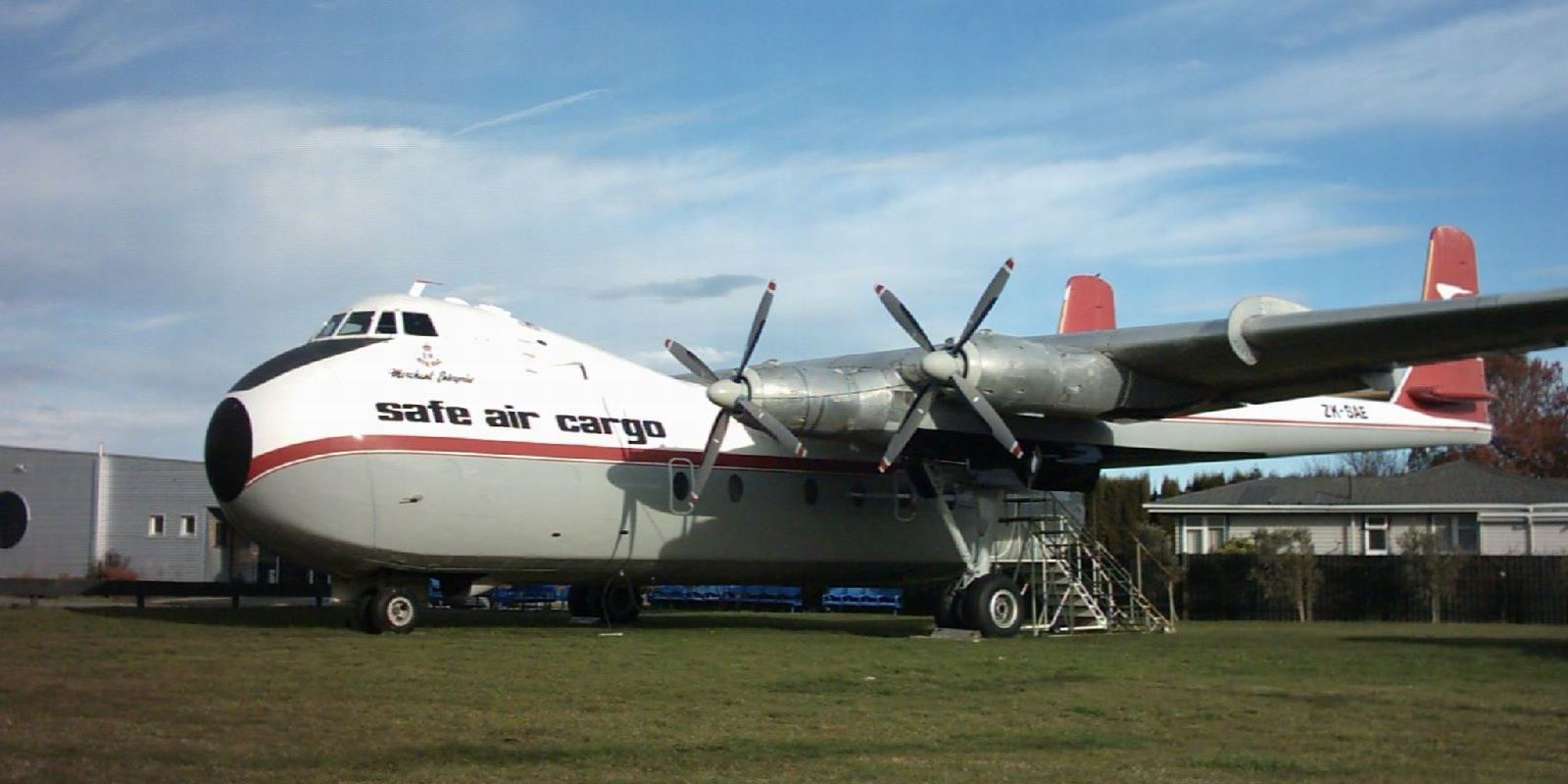
The reports reached Melbourne’s Channel 0, which sent reporter Quentin Fogarty to make a follow-up. On December 30 he climbed aboard Safe Air’s ZK-SAE, the twin-boom Argosy Merchant Enterprise, with Wellington cameraman David Crockett and sound recordist Ngaire Crockett. Captain Bill Startup and First Officer Bob Guard expected an ordinary Wellington–Christchurch newspaper run. The journalists expected background footage. At 11:46 p.m., with the hold full of the next morning’s papers, the ungainly freighter lifted out of Wellington and entered a story already waiting along its route.
Sources: Investigations of Unidentified & Radar Sightings, East Coast South Island — December 1978ZK-SAE Merchant Enterprise and the Kaikōura FlightUFO: A True Story — Catalogue Record F1910
Come to the flight deck—now
Around ten minutes after midnight, south of Cape Campbell, Startup and Guard began seeing lights toward Kaikōura. Startup called the television team forward. In the cramped, noisy cockpit, Crockett aimed a 16 mm colour camera through the window while Ngaire’s recorder captured Fogarty’s commentary and fragments of the air-ground conversation. Lights appeared ahead and to starboard: sometimes a small white point, sometimes several lights, sometimes something brighter with a reddish cast. Wellington advised the Argosy of targets behind it, then to its right, then apparently alongside. At one point Fogarty’s voice turned the confusion into the line remembered from the case: “Let’s hope they’re friendly.”
Sources: Investigations of Unidentified & Radar Sightings, East Coast South Island — December 1978UFO: A True Story — Catalogue Record F1910Photometric Properties of an Unidentified Bright Object Seen off the Coast of New Zealand
Something flying in formation
Near the reporting point called Kaikoura East, the aircraft changed to Christchurch frequency. Wellington then relayed that a target had appeared one or two nautical miles behind. It was next reported about four miles astern, another about four miles to the right, and finally a return apparently flying beside the Argosy for at least half a minute. The crew soon reported a flashing light drifting behind on the right, and Wellington described a target in that direction. This sequence is compelling because the tower tape supplies its order and timing. It is not a perfect lock between eye and scope: the radar generated other unexplained returns that night, and the crew could not visually confirm every position called from Wellington.
Sources: Investigations of Unidentified & Radar Sightings, East Coast South Island — December 1978Photometric Properties of an Unidentified Bright Object Seen off the Coast of New Zealand
Christchurch at 1:01 a.m.
The Argosy landed at Christchurch at 1:01 a.m. Newspapers came off while pilots, journalists and a local radar operator compared what they had seen. Ngaire Crockett chose not to fly the return leg. Christchurch television journalist Dennis Grant took her place, bringing fresh film. At 2:16 a.m. the aircraft departed north for Blenheim. Barely three minutes later, while climbing through scattered low cloud, the cockpit saw a brilliant yellow-white-orange light appearing and disappearing near the cloud tops to the right. The return journey would create the footage that travelled around the world.
Sources: Investigations of Unidentified & Radar Sightings, East Coast South Island — December 1978UFO: A True Story — Catalogue Record F1910
The orb below the wing
Startup switched the Argosy’s weather radar to ground-mapping mode and obtained a strong return roughly 18–20 nautical miles away in the same azimuth as the light. As the aircraft climbed northeast, the indicated range fell to perhaps 10–12 miles before the return moved beyond the scope’s right edge. All aboard placed the light below their horizon. Crockett filmed yellow-white ellipses, red fringes and overexposed forms through the cockpit window. With the 240 mm lens, one blurred image swelled into the famous ringed oval that seemed to have a bright lower half and a transparent dome. Focused frames remained tiny—on the order of milliradians—and supplied no resolved hull or surface detail.
Sources: Investigations of Unidentified & Radar Sightings, East Coast South Island — December 1978Photometric Properties of an Unidentified Bright Object Seen off the Coast of New ZealandPhotometric Properties of an Unidentified Bright Object Seen off the Coast of New Zealand: Comments
Startup turns toward it
At about 13,000 feet, Startup banked roughly ninety degrees toward the light. It did not settle directly ahead as he expected; during the manoeuvre, its apparent position and brightness changed. Fogarty narrated it dropping, rising and coming back toward them, while the turning aircraft itself was rotating every sightline in the windows. The light ultimately passed far down the right side and was last seen beneath or behind the aircraft. This was the sensory heart of the story: a working cargo plane abandoning its route in darkness, a camera changing lenses, reporters calling motions in real time, and an intense light that seemed to answer the turn without ever becoming a clearly photographed machine.
Sources: Investigations of Unidentified & Radar Sightings, East Coast South Island — December 1978Photometric Properties of an Unidentified Bright Object Seen off the Coast of New ZealandUFO: A True Story — Catalogue Record F1910
Film cans race to television
Merchant Enterprise reached Woodbourne near 3:00 a.m. Fogarty interviewed the pilots, then carried the film to Melbourne, where Channel 0 rushed it onto prime-time news on New Year’s Eve. International networks followed. Unlike a solitary recollection, Kaikōura arrived with colour film, two audio recordings, named professional witnesses and radar operators discussing targets as events unfolded. David Crockett’s 1979 documentary preserved the participants’ early accounts. The original television material remains copyrighted and is not reproduced here; the archival catalogue confirms its production, witnesses and contents.
Sources: UFO: A True Story — Catalogue Record F1910Investigations of Unidentified & Radar Sightings, East Coast South Island — December 1978ZK-SAE Merchant Enterprise and the Kaikōura Flight
The government sends an Orion
Public pressure reached Prime Minister Robert Muldoon, who asked to be informed of Defence’s conclusions. An RNZAF P-3 Orion searched the area on January 2 without finding a matching phenomenon, while a Skyhawk was held ready for a fresh report. Police, the RNZAF, civil aviation specialists, Carter Observatory and the Department of Scientific and Industrial Research fed material into the inquiry. The eventual Air Staff position was not that one thing had caused every report. It proposed a basket: planets and unusual refraction, boat and land lights, anomalous radar propagation and a Japanese squid fleet. Its formulation—“almost all” sightings explainable by natural but unusual phenomena—left a residue rather than a solved event.
Sources: Investigations of Unidentified & Radar Sightings, East Coast South Island — December 1978Kaikōura Lights, 31 December 1978New Zealand's X-Files Are OutGovernment Officials Couldn't Explain Kaikōura Lights UFO Sightings, Documents Show
A film becomes an optics argument
Channel 0 gave the film to American optical physicist Bruce Maccabee, who visited New Zealand, interviewed witnesses and published a photometric calculation in Applied Optics. Using film density and the aircraft-radar range, he estimated a luminous intensity above 100,000 candela and argued for an unknown phenomenon. DSIR scientists William Ireland and M. K. Andrews attacked the assumptions, especially distance, focal length and the pairing of radar return with photographed light. Their exchange continued in the journal; two decades later Ireland made the ordinary alternative vivid: several intensely lit squid boats about six kilometres away, distorted by an Argosy window and filmed out of focus.
Sources: Photometric Properties of an Unidentified Bright Object Seen off the Coast of New ZealandPhotometric Properties of an Unidentified Bright Object Seen off the Coast of New Zealand: CommentsGhost Squid Boats in the SkyInvestigations of Unidentified & Radar Sightings, East Coast South Island — December 1978
The file that preserved both sides
Kaikōura’s afterlife is unusually tangible. ZK-SAE survives at Blenheim under the care of the Marlborough Argosy Trust. The New Zealand Defence Force declassified AIR 1080/6/897 in 2010: crew interviews, radar specifications, DSIR tests, correspondence and Maccabee’s opposing analysis share the same file. A separate government record says DSIR duplicated some of Crockett’s shapes by shining a torch through an Argosy window, yet still called the objects “UFOs until identified” and judged an extraterrestrial result extremely remote. The case endured not because the paperwork hid an answer, but because it exposed how film, radar and perception can look mutually confirming while refusing to become one clean event.
Sources: Investigations of Unidentified & Radar Sightings, East Coast South Island — December 1978Kaikōura Lights, 31 December 1978Government Officials Couldn't Explain Kaikōura Lights UFO Sightings, Documents ShowZK-SAE Merchant Enterprise and the Kaikōura Flight
Sources & interviews
Investigations of Unidentified & Radar Sightings, East Coast South Island — December 1978New Zealand Defence Force · AIR 1080/6/897 Volume 1 · 1978–1981 · Declassified December 2010Kaikōura Lights, 31 December 1978Archives New Zealand · New Zealand Permanent Mission to the United Nations record · ABHS 6958 W5579 Box 227 · 1979UFO: A True Story — Catalogue Record F1910Ngā Taonga Sound & Vision · V & F Productions · David Crockett · 1979 · Contemporary documentary cataloguePhotometric Properties of an Unidentified Bright Object Seen off the Coast of New ZealandBruce S. Maccabee · Applied Optics 18(15), 2527–2528 · August 1, 1979Photometric Properties of an Unidentified Bright Object Seen off the Coast of New Zealand: CommentsW. Ireland and M. K. Andrews · Applied Optics 18(23), 3889–3890 · December 1, 1979Ghost Squid Boats in the SkyWilliam Ireland · New Zealand Skeptic 56 · Spring 2000 · Retrospective optical analysisGovernment Officials Couldn't Explain Kaikōura Lights UFO Sightings, Documents ShowBen Strang · Radio New Zealand · July 31, 2021 · Reporting from declassified Archives New Zealand recordsNew Zealand's X-Files Are OutStacey Wood, Michelle Duff and Kirsty Johnston · The Dominion Post / Stuff · December 23, 2010ZK-SAE Merchant Enterprise and the Kaikōura FlightThe Marlborough Argosy Trust · History of the preserved aircraft involved in the December 30–31 flightArgosy Aircraft Blenheim — ZK-SAE Merchant EnterpriseIngolfson · Wikimedia Commons · July 2005 · Public-domain photographConnected files
The Lights beside Flight 1628Another freight crew watched luminous companions while ground radar supplied suggestive but incomplete support.The Lakenheath Radar NightA radar-visual aviation classic whose strength changes when its separate episodes are pulled apart.The Belgian UFO WaveMultiple nights, radar tracks and bright lights produced another famous case that resists a single explanation.The Green Light over MansfieldA professional flight crew’s close-call narrative became durable without a confirming radar tape or photograph.Discuss this case
Compare notes with other readers: witness details, sources, and the parts that still do not add up.
Open the discussion