
A plane built to find airstrips
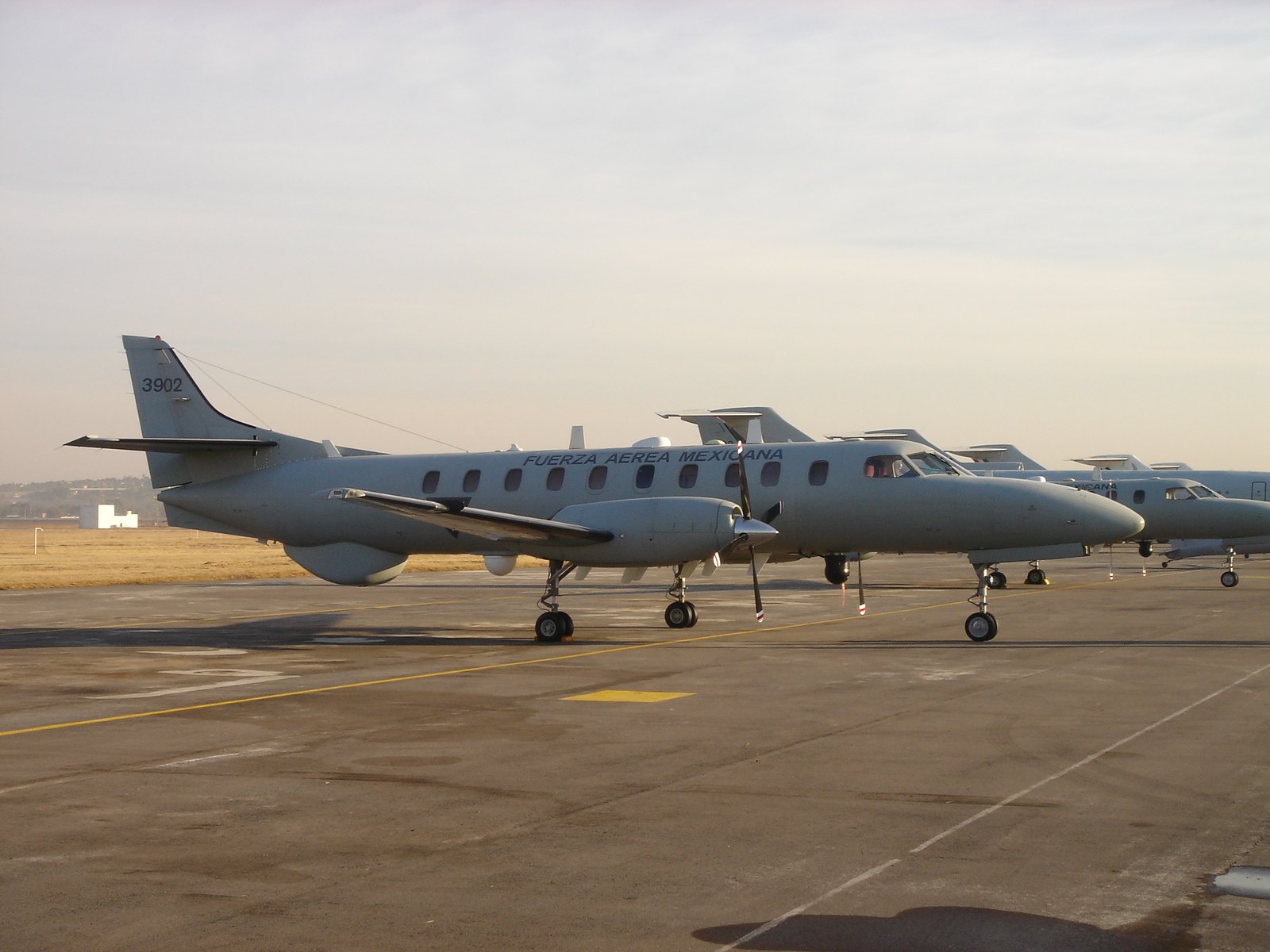
The 501st Air Squadron of the Fuerza Aérea Mexicana flew Fairchild Merlin C-26A twin turboprops, American-built surveillance planes assigned to the drug flights that crossed the south of the country. Under the fuselage hung a Star SAFIRE II made by FLIR Systems, the company whose name, short for forward-looking infrared, has become the generic word for such cameras: a gyro-stabilised turret that sees heat rather than light, so that a warm engine or a sunlit roof glows white against cool sky and a target no eye could find in haze shows up as a point of brightness. It had four fields of view, from a 25-degree wide angle down to an electronically doubled zoom of 0.4 degrees. Beside it worked a Telephonics AN/APS-143 Ocean Eye surface-search radar whose returns the crew could couple to the camera, so that the turret swung toward whatever the radar found. The camera recorded to a Mini-DV cassette with a data strip burned into the picture: date, local time, latitude and longitude to a hundredth of a minute, and three numbers that would decide the case. The turret’s azimuth, how many degrees it was pointing left or right of the aircraft’s nose; its elevation, how many degrees above or below level; and the field of view, how wide a slice of sky the picture covered. The radar, on this flight, recorded nothing; the only trace of what its operator saw is his voice on the camera’s audio track. On Friday, March 5, 2004, one of these Merlins was on a patrol from Copalar in Chiapas to Ciudad del Carmen on the Campeche coast, the lagoon country where smugglers’ Cessnas land on dirt strips, and at 12:55 by the tape the crew were already looking for a lagoon and talking about flying a pattern “more or less like an arc.” The Secretary of National Defense would tell a radio interviewer in May that the same plane had helped catch a light aircraft with over a thousand kilos of cocaine two days before he spoke. The press counted eight men aboard; the Secretaría de la Defensa Nacional, Sedena, the ministry that runs both the army and the air force, would say three officers and name none. Three were later put in front of a camera: Major Magdaleno Castañón Muñoz in command, as the wire stories name him, Lieutenant Mario Adrián Vázquez Téllez at the infrared console and Lieutenant Germán Marín Ramírez at the radar. The plane flew at 10,500 feet in Maussan’s briefing, 3,500 meters in the wire stories, through what the US Navy optical physicist Bruce Maccabee, the ufologists’ favourite photo analyst, read off the day’s weather report as nice flying weather: hazy, a six-mile-an-hour tailwind from the southeast, scattered cumulus with their tops at the aircraft’s height.
Sources: A Study of the March 5, 2004 Radar and FLIR Sightings during a Surveillance Flight by the Mexican Department of DefenseThe big news Mexican military UFO report of 2004“I Forbade Any Talk of UFOs or Flying Saucers” — Gerardo Clemente Vega García, Mexican Secretary of DefenseMuestran flotilla de ovnis por televisiónSedena confirma avistamiento de ovnis en México detectado por la Fuerza Aérea MexicanaThe Campeche, Mexico ‘Infrared UFO’ Video
A target that would not show itself
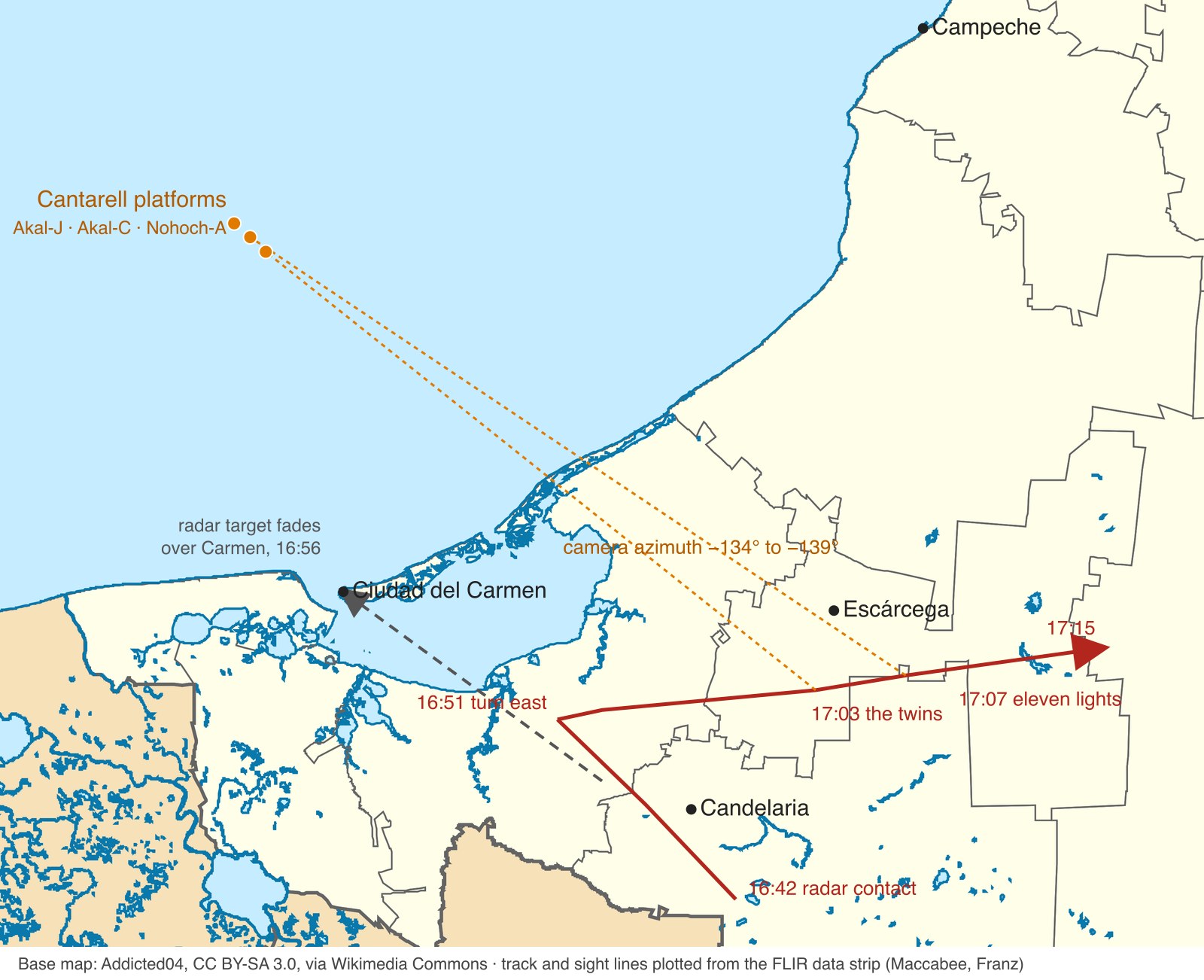
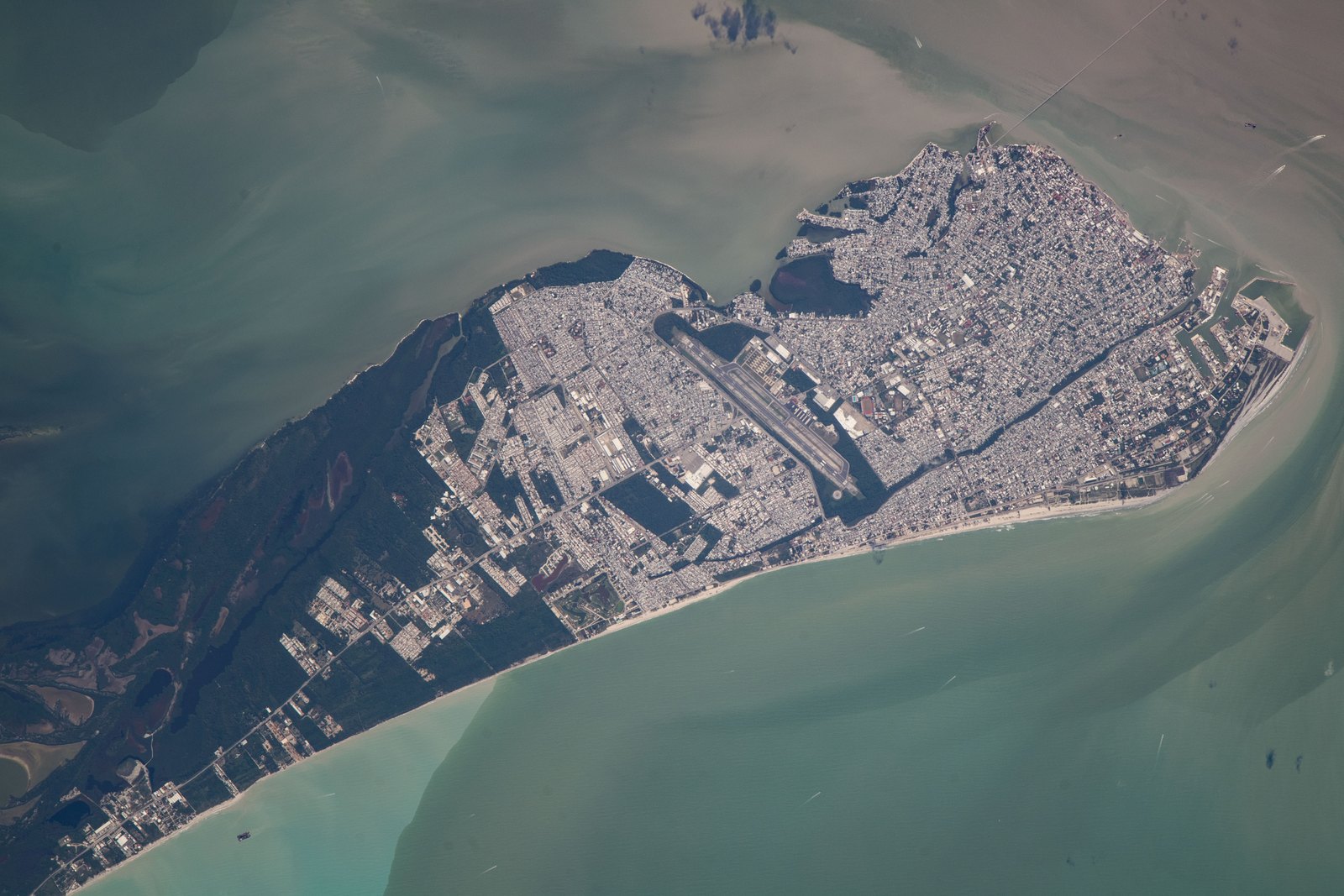
The camera had recorded a few minutes around one o’clock and then nothing for three and a half hours. When it came back on at 16:42 the radar already had something, and the crew were calling it out in the airmen’s clock-face shorthand, twelve o’clock being dead ahead: “OK, it’s almost at 12 o’clock, 2.9 distance, 75 speed,” the distance in nautical miles, the speed in knots. A moment later someone identified a runway below them called Candelaria. The target had appeared, as Maccabee reconstructed it, about five miles ahead and thirty degrees to the left near that town, moving northwest more slowly than the Merlin, and the crew assumed a small plane had just lifted off a clandestine strip. “A traffic,” one voice says at 16:45. Another asks for the headquarters officer, a Captain Danzón, “to let him know that we are reading a target.” “It’s marking 2-106 of speed and has a heading of 301.” The Merlin turned to follow, and for roughly ten minutes closed to about 2.3 miles and no nearer, while the target’s speed rose and fell in a way the radar man found strange. Nobody could see it through the windows. The camera, which can pick out the hot engines and the warm skin of an aircraft, found nothing where the radar said it was. “What is it Juarez? Juarez what is it?” “It’s a point.” Juárez is a fourth crewman the tape names and no document identifies. At 16:51:24 a very bright heat source appeared twelve degrees right of the nose and four degrees below the horizontal, held for a few seconds, and was gone. Eight seconds later the recorder went off while the pilot, low on fuel, began a right turn of nearly a hundred and fifty degrees toward the base. When it came back on a minute later the Merlin was flying due east, and the target was behind it. “It’s now at our 7 o’clock position at 10.5 miles distance. Its course is 2-8-3 with a speed of 3-3-4.” That is 334 knots, about 380 miles an hour. “I don’t have it on the screen but the radar is still marking the distance at 37 miles.” “It’s now over Carmen.” “It’s passing by Carmen.” “It’s turning.” It faded at the edge of the set’s range, somewhat more than forty miles behind the plane. Marín would later tell Maussan that the speeds had jumped, 60 to 120 to 300 knots, and on Mexican television, “no sé de 60 nudos e incrementándose a 120, 220 o 300 nudos, cosa que jamás había visto,” something he had never seen. “Just a light,” a voice says at 16:59. “It couldn’t be distinguished.”
Sources: A Study of the March 5, 2004 Radar and FLIR Sightings during a Surveillance Flight by the Mexican Department of DefenseThe big news Mexican military UFO report of 2004Unidentified, Invisible Aerial Objects Videotaped in Infrared by Mexican Air Force PilotsLos ovnis de Campeche (México), de actualidad nuevamenteUFOs appear in Mexico (again)!
The twins
When the tape resumed after the turn the camera was looking at the side and top of a cloud. The operator searched for the light he had lost before the turn, and at 16:52:49 a dimmer one, or more likely a different one, slid out from behind the right edge of the cloud. “Here it goes! Here it goes!!” It seemed to sit at the cloud’s distance or beyond it, at the plane’s own level, and to keep pace with the plane. “What could it have been?” “Don’t know. It went on the other side - exactly where I had it.” “At least we have contact with it on the FLIR,” a voice says, “and we’ve had radar contact all the time,” though the radar target was by then forty miles away on the far side of Ciudad del Carmen and this light was off the left wing. It was blocked by small clouds, then lost behind a larger one, and the recorder went off again. At 17:03:34 it came back on, and a voice reports a light at seven o’clock, same altitude. “Look how it appears. It looks like it’s in two parts.” “The strange thing is, that it has a point traveling in front position. A little point, in front of it.” The pair that now filled the screen were so bright that they saturated the sensor and bloomed into two fat white discs side by side, the lights the analysts would call “the twins,” with a line of fainter companions beside them. The data strip read a turret azimuth of about minus 134 degrees, that is, 134 degrees to the left of the nose and well behind the wing, an elevation of plus two to three degrees, and the medium field of view, a window 3.4 degrees wide. “It’s not there? There goes another one.”
Sources: A Study of the March 5, 2004 Radar and FLIR Sightings during a Surveillance Flight by the Mexican Department of DefenseThe big news Mexican military UFO report of 2004UFO’s or simply Oil Well Gas flames? Part I: Reference Data
“Son diez, once objetos”
Between 17:03 and 17:09 the camera operator pulled the turret back along the line and began to count. “There are more coming. There are more... they are behind. There are ten, eleven objects.” “There are many objects.” “Commander what’s that?” The operator, Téllez to his crewmates, pushed the zoom to its limit, the narrowest field of 0.4 by 0.3 degrees. “My God, what’s that.” “What’s that? Let’s see. Try to focus.” “It’s at maximum.” “Follow that one Tellez, don’t leave it.” The lights were strung out roughly in a line and in small groups, two clusters of three that the analysts would call “the triplets,” and as the crew watched, one of them split into two. “One, two, three, four, five, six, seven, I have eight on the screen.” “Eight, nine, ten, eleven, counting all the ones in the back.” “Two, four, six, eight, ten, eleven.” The commander went on the radio: “Listen we don’t know what are we seeing, they are luminous objects that are flying at the same altitude as us. We do not know what their distance is.” The radar operator had nothing. “At 9. I don’t think the Radar may read it, we have a blind angle there, Sir.” “We have 20 degrees of blind angle there.” The lights passed behind clouds that Maccabee later placed about twenty-five miles from the plane by parallax, the shift of nearer things against farther ones as the aircraft moved, and were lost; the operator switched the recorder off at 17:09. The crew never saw them through the glass. In Spanish, as the lines were later quoted in Mexico: “Ahí van más, mire más atrás, son diez, once objetos.” “¿Qué es eso Dios mío?” “Están a nuestra altura, no puede ser.”
Sources: The big news Mexican military UFO report of 2004A Study of the March 5, 2004 Radar and FLIR Sightings during a Surveillance Flight by the Mexican Department of DefenseOvnis en la Plataforma Nacional de TransparenciaIncidente OVNI del Escuadrón 501 en CampecheUFOs appear in Mexico (again)!
“No estamos solos”
The recorder was off for nearly six minutes. When it came back on at 17:14:58 there was one very bright light and two fainter ones at nine o’clock against a featureless background, and the radar operator had a new contact of his own. “They are at 12 he said.” “No. They are at 1.” “Well that’s one, but we have another at 9.” “We have them ahead - in the middle and at 8.” Someone laughs: “Fasten your seatbelts!” “Don’t be frightened.” The radar man gives his numbers: “The one that we have at 1 from our position, I have it at 19 miles, at 1 o’clock from our position, going at 52 knots.” “Does that means we are surrounded?” “Well... I don’t know.” “Boys, today is your lucky day!” Then, at 17:16, with a light visible through the arc of the left propeller: “We are not alone.” Laughter. “Yes, we are not alone, right. It’s true. How strange this is, they are surrounding us.” “Couldn’t be a fucking plane - it’s stopped there!” The radar contact at one o’clock crept closer, 14.8 miles, then 10, at 52 knots on a heading of 99. At 17:19 the camera swung forward and found the moon just risen off the nose; the analysts would use that moonrise to check the plane’s heading and the turret’s readings. At 17:26 the commander was reporting to base again: “The Radar has them. The FLIR has them. We are seeing on the FLIR a luminous object, it has an opposite course to us but it doesn’t leave us, it’s two miles behind us.” “It does not move apart from us, no, it doesn’t move apart from us.” “Correct, who knows what it is.” “Is it still with us, Marin?” “Yes I still have it here.” At 17:27: “The one that we had at 1 is lost now.” “It just left the Radar.” “How weird is all this.” The Merlin went home for fuel. The lines that Mexico would quote for twenty years were the Spanish ones: “Los tenemos adelante, en medio y atrás.” “Hoy es tu día de suerte.” “No estamos solos.” “¡Qué cosa tan rara! Nos están rodeando, ¿eh?”
Sources: The big news Mexican military UFO report of 2004Ovnis en la Plataforma Nacional de TransparenciaA Study of the March 5, 2004 Radar and FLIR Sightings during a Surveillance Flight by the Mexican Department of DefenseThe Campeche, Mexico ‘Infrared UFO’ VideoUFOs appear in Mexico (again)!
Two options
The cassette went up the chain. “This was brought to the Secretariat of Defense,” the Secretary, General Gerardo Clemente Ricardo Vega García, said two months later in a translation of his radio interview: it was analysed with pilots and technical people on the staff. His first thought, he said, was drug planes, until he saw with the crew that the lights were behind the aircraft, off its nose and to its sides, and “dije, ya no pueden ser tantos aviones,” there could not be so many aircraft. The airport at Ciudad del Carmen, he said, had reported nothing at all flying in the area. The crew, when Maussan interviewed them, were sure of what their screens had shown. “La distancia más cercana (a que estaban) fue de dos millas,” Castañón said: the nearest they came was two miles, and experience told them that at that distance a thing could be identified. “Les dimos seguimiento y creo que sintieron que los estábamos persiguiendo,” we followed them and I believe they felt we were pursuing them; when they stopped following, he said, the objects disappeared. “¿Sentí temor? Sí,” Marín said. “Un poco de miedo porque estábamos ante algo que nunca había pasado.” “No sabría decir qué era,” said Vázquez, the infrared operator, “pero deben ser completamente reales,” and there was no way, he insisted, to put anything into the FLIR that was not out there. The Secretariat’s communications director, Brigadier General Efrén Martínez Guzmán, would later write that the staff had seen “dos opciones: archivarlo como secreto o bien entregarlo a una persona que conociera sobre el asunto, tratando de evitar que se prestara a choteo,” two options: file it as secret, or hand it to someone who knew the subject, trying to keep it from becoming a joke. The person they knew was Jaime Maussan, a presenter on Televisa, the country’s dominant television network, who had been Mexico’s face of the UFO since the eclipse of July 11, 1991, when viewers across the country filmed a bright point beside the darkened sun and his broadcasts made it the start of a national wave; skeptics such as Tim Printy identify the point as the planet Venus. On April 20 a senior officer telephoned him; on April 21 he met the general and his staff; on April 22 he was given a copy of the tape. “No veía la utilidad de que se quedara eso grabado ahí, guardado,” Vega told W Radio: he saw no use in leaving it recorded and put away, “(y) tomé la decisión de que se le diera a una gente que ha estado trabajando toda su vida con esto para que hiciera buen uso de ella. Por eso se le dio a Maussán.” On May 1 Maussan sat the three officers down at the Secretariat and recorded their interviews.

Sources: Son centellas, no ovnis: científicos“I Forbade Any Talk of UFOs or Flying Saucers” — Gerardo Clemente Vega García, Mexican Secretary of DefenseWhy Mexican Scientists Did Not Get UFO EvidenceMuestran flotilla de ovnis por televisiónLa Sedena y los OVNISMexican Air Force Pilots Film 11 UFOs — case 263Mexican Air Force Pilots Film 11 UFOsUFOs appear in Mexico (again)!
“Historic news”
Maussan previewed the case on Sunday, May 9, on his program for Multimedios in Monterrey. On Monday night Televisa’s national newscast ran the pictures, and the network announced that a frame-by-frame analysis showed sixteen objects “cuyos movimientos y características no tienen -hasta ahora- una explicación científica.” At eleven on Tuesday morning, May 11, Maussan held a press conference at the Hotel Sevilla Palace in Mexico City, showed fifteen minutes of the tape, played the crew’s interviews and handed out a briefing document in which the Merlin was “surrounded by eleven mysterious round shaped objects camouflaged with a certain unknown advanced technology,” the major declared a red alert and switched off the aircraft’s lights, and nine new objects arrived “like coming from nowhere.” None of that is on the tape, where the lights are counted at nine o’clock and the feeling of encirclement comes from adding one radar blip at one o’clock to the camera’s line of heat sources, but it is the version the world received. “This is historic news,” Maussan told the reporters. “Hundreds of videos (of UFOs) exist, but none had the backing of the armed forces of any country... The armed forces don’t perpetuate frauds.” “They were invisible to the eye but they were there, there is no doubt about it. They had mass, they had energy and they were moving about.” A Defense Department spokesman confirmed to the Associated Press, on the usual condition of anonymity, that the tape had been filmed by the Mexican Air Force and declined to say more; the ministry told Reuters the same. By evening the story was on every wire, often with the Merlin, a turboprop that carries no weapons, transformed into “military jets” that chased the lights. The count was eleven in English and sixteen in Spanish. La Jornada, the capital’s left-wing daily, had already decided what it thought: “Como si de estos días para acá el circo fuera poco, ahora la Fuerza Aérea pretende recetarnos una de Ovnis,” as if the circus of recent days were not enough, now the Air Force wants to prescribe us a dose of UFOs.

Sources: Mexican Air Force Pilots Film 11 UFOsMexico Air Force video creates UFO stirMuestran flotilla de ovnis por televisiónFuerza Aérea detecta 16 ovni en el cielo de CampecheMexican Air Force Pilots Film 11 UFOs — case 263The big news Mexican military UFO report of 2004Unidentified, Invisible Aerial Objects Videotaped in Infrared by Mexican Air Force Pilots
The general on the radio
On Wednesday morning Vega García took the telephone on Carlos Loret de Mola’s W Radio program. Mexico that spring was living through the videoescándalos, a season of leaked tapes of politicians that had begun in March with footage of a Mexico City legislator stuffing bundles of cash into a briefcase, and the general knew what was being said: it was already being claimed, he told Loret, that the tape was a distraction from current affairs. “That is not my purpose, nor do I as a military man engage in such activities.” He had, he said, forbidden any talk of UFOs or flying saucers, “porque se presta a choteo,” because it invites ridicule, and the Air Force had spoken only of “some very strange contacts that were incomprehensible in this situation.” Asked whether he had a hypothesis of his own: “I have no hypothesis. All I can say is that those white spots are there, they were recorded, and that is all the information we have.” It was not, he said, a matter of national security. “Es el punto de vista de Maussan,” he said of the ufologist’s reading of the tape: “para eso se le dio, para que pudiera sacar él sus conclusiones,” that was why he was given it, so that he could draw his own conclusions. Loret told him the scientific community was annoyed. “Nosotros no sabíamos quiénes eran (los científicos). No los conocemos,” the general answered: we did not know who the scientists were; we do not know them. The material, he added, was available to anyone who wished to analyse it.
Sources: “I Forbade Any Talk of UFOs or Flying Saucers” — Gerardo Clemente Vega García, Mexican Secretary of DefenseWhy Mexican Scientists Did Not Get UFO EvidenceSon centellas, no ovnis: científicosLa Fuerza Aérea de México podría haber registrado un avistamiento de ovnis, pero ya no tiene los videos
Ball lightning for a day
That was not what the physicists had found. Rafael Navarro González and Julio Herrera Velázquez of the Institute of Nuclear Sciences at the Universidad Nacional Autónoma de México, UNAM, the national university, had telephoned the Secretariat for the radar frequency, the plane’s height and speed and the speed of the lights, La Jornada reported on Thursday, and had received one answer: “la información que ustedes solicitan es clasificada.” That afternoon the university held its own press conference and put out a bulletin: the phenomena recorded from the Sedena plane “son centellas o descargas eléctricas, que por primera vez pudieron haberse presentado en la parte alta de la atmósfera,” ball lightning or electrical discharges, seen for the first time high in the atmosphere, and not, the scientists made clear, ships with extraterrestrials in them. Navarro showed a laboratory video of a tiny plasma ball and suggested that, since discharges are drawn to metal, the lights had tried to approach the aircraft. The director of the Institute of Astronomy conceded that nothing could really be concluded without the camera’s characteristics and the distances. Other Mexican scientists had already offered meteor fragments, space junk and weather balloons. Maussan’s side found an ally in the meteorological service: Alberto Hernández Unzón, its deputy manager, said on Maussan’s program on about May 17 that March 5 had stable stratus and no conditions for lightning, that no balloons had been launched, and, in Santiago Yturria’s translation, that “to say that these lights on the video are ball lighting or electrical sparks is nonsense.” The Secretariat, meanwhile, protested a cartoon in La Jornada, and General Martínez Guzmán’s letter drew the lesson that the episode “deja como enseñanza la necesidad de que en posteriores ocasiones no se proporcione nada,” that on future occasions nothing should be provided at all. The columnist Raúl Trejo Delarbre wondered in La Crónica why a ministry responsible for national security, holding a recording it could not explain, had gone to a journalist “célebre por las convicciones que ha manifestado sobre el origen extraterrestre de los OVNIS” instead of to the country’s astronomers. Maussan wrote back that he had been “extraordinariamente cuidadoso en no mencionar el termino extraterrestre,” and that the general deserved recognition, not criticism.
Sources: Son centellas, no ovnis: científicosCentellas o descargas eléctricas, los fenómenos registrados desde un avión de la SedenaThe big news Mexican military UFO report of 2004La Sedena y los OVNISUnidentified, Invisible Aerial Objects Videotaped in Infrared by Mexican Air Force Pilots
The numbers on the screen
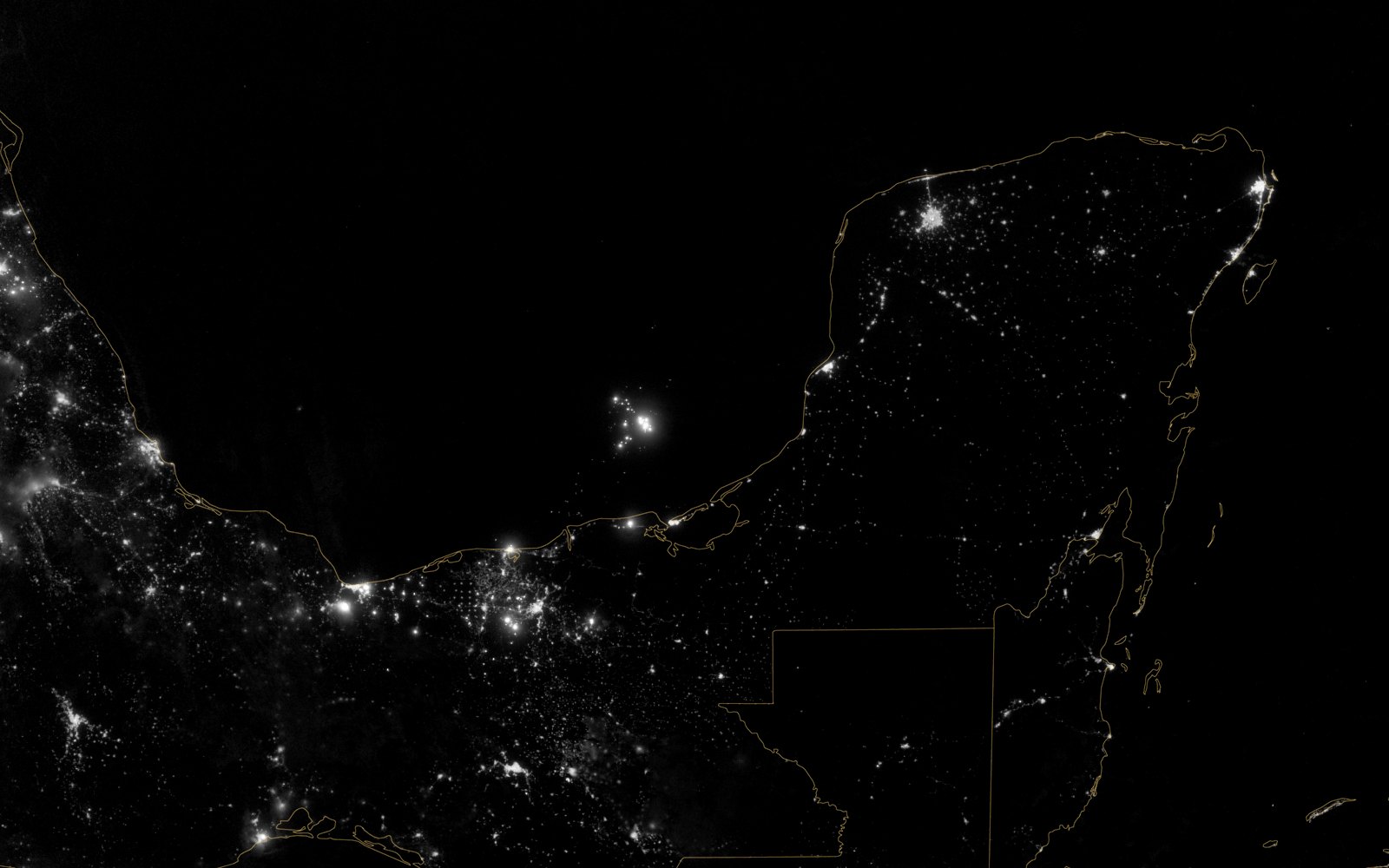
The tape had been on the internet for days before anyone read the data strip. On a skeptics’ forum, by May 14, a poster named Richard Gemmell noticed that the turret’s bearings pointed out over the Gulf, and someone else suggested oil platforms. The man who made the argument was Alejandro Franz Navarrete, an Aeroméxico captain and former air-traffic controller who had flown the Carmen coast in light aircraft in the 1970s and had crossed swords with Maussan before. His pages went up at alcione.org in the second half of May, and on May 26 he posted them to the ufologists’ mailing list under the title “UFOs Or Simply Oil Well Flames?” His case rested on one observation anyone could check: while the lights seemed to drift and split and keep pace with the plane, “the AZIMUTH (Az) NEVER CHANGES more than TWO or FOUR degrees.” The camera was reading between minus 134 and minus 139 degrees while the plane flew east, which meant it was pointing a little west of northwest, and in that direction, about eighty kilometers off the coast at Ciudad del Carmen and more than a hundred miles from the plane, lay the Cantarell complex, the largest oil field in Mexico, where, as Sheaffer would put it, more than two hundred wells on nine platforms burned off gas from booms day and night. The clouds moved across the picture; the lights behind them did not. From 3,500 meters the horizon is some 211 kilometers away, as Robert Sheaffer pointed out in the Skeptical Inquirer when Maussan objected that flames 125 to 200 kilometers off could not have been seen, and, as Tim Printy noted, the same camera had imaged clouds, rivers, shorelines and the moon on the same tape. The infrared engineer John Lester Miller told Sheaffer that the crew’s inability to see the lights meant nothing: “These systems are specifically designed to detect objects that cannot be seen by the human eye.”
Sources: UFO’s or simply Oil Well Gas flames? Part I: Reference DataUFOs Or Simply Oil Well Flames?The Campeche, Mexico ‘Infrared UFO’ VideoUFOs appear in Mexico (again)!Ovnis mexicanos: caso cerrado
Three platforms
In June an aerospace engineer in Fairfax, Virginia, James C. Smith, did the hard part, and published it in eSkeptic on July 24. The Defense Meteorological Satellite Program’s averaged night-lights data showed a good correlation between the camera’s pointing and the bright platforms but could not separate one flare from another; Landsat satellite scenes at fifteen to thirty meters per pixel could, each flare saturating the sensor, so he located every one, built a three-dimensional model of the camera’s view, and matched the “ten UFO” segment of 17:06:53 to three platforms: “Akal-C with 4 flares, Akal-J with 4 flares and Nohoch-A with 2 flares,” at 110 to 120 miles. The light that split in two was “one more distant flare seeming to move from behind a closer one due to the motion of the aircraft.” An earlier bright light on the tape, at 82 miles, matched the onshore flares at Atasta. The strongest objection was the elevation: the strip read plus two to three degrees, above level, where platforms on the sea should have read nearly two degrees below. Smith, Sheaffer and a former FLIR Systems engineer, Tim Wescott, answered that the turret was in a mode slaved to the airframe, so that a plane cruising nose-up tilts the reading by a few degrees; the researcher Brad Sparks found from the moonrise that the camera read a degree low when the moon stood 1.3 degrees high, and used it to argue against the flares, and Printy turned the figure around, since an error that points low ahead points high behind. Printy, an amateur astronomer in New Hampshire, then measured the pictures. Akal-C’s four flares, spread over about 1,725 feet, should have spanned 95 to 97 pixels in the narrowest field; he counted 94. Nohoch-A’s pair should have been 35; he counted 34. The Chilean analyst Andrés Duarte reached the same end by his own route, and the physicist Claude Poher, the founder of GEPAN, the French space agency’s official UFO study group, concluded from the moonrise that the elevation was miscalibrated and the lights distant, and in September announced to the list twenty-nine photographs of the Gulf flares. By late October NARCAP, the National Aviation Reporting Center on Anomalous Phenomena, the pilot-report group run by Richard Haines, which had first complained of a broken chain of custody, was applauding the captain “for his attention to detail as well as his objectivity.”
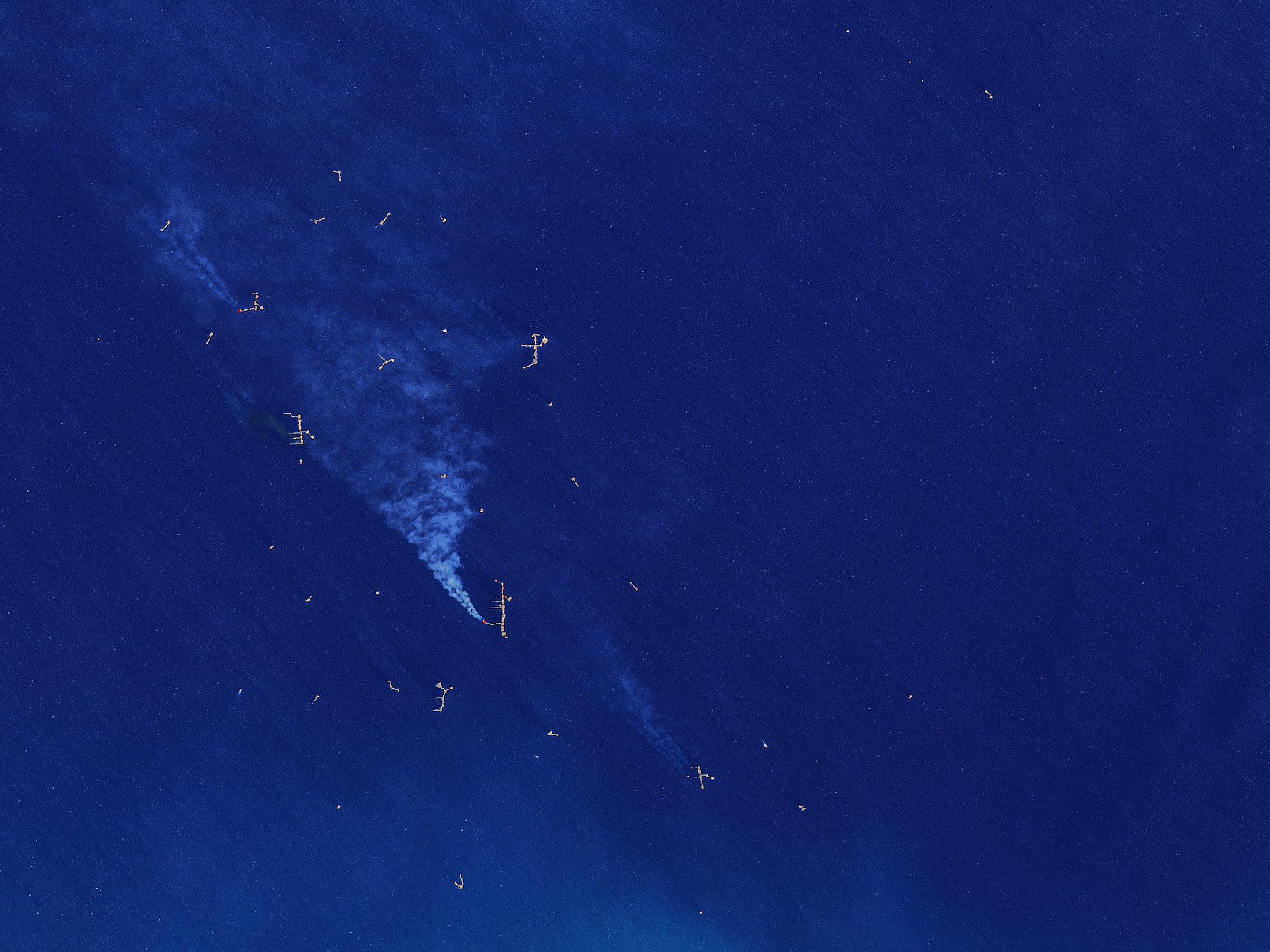
Sources: The Mexican Air Force UFO Affair: Aliens, Ball Lightning, or Flares?The Campeche, Mexico ‘Infrared UFO’ VideoUFOs appear in Mexico (again)!FLIR Conclusion: Mexican Air Force FLIR images are Oil Well flames!Ovnis infrarrojos de Campeche: una explicación viableUFO UpDates, September 2004Observation de Campeche
“Pelican poop,” and a change of mind
The list did not take it well. “Oil rig flares tracked on radar at near the aircraft’s altitude! Absolutely amazing!” wrote the researcher Ray Stanford the next day, before declining to spend his day “wading around in Pelican poop,” a pelican being, in that world, a debunker, and suggesting the captain’s motive was “your old dislike of Jaime Maussan.” David Rudiak set a mock multiple-choice examination in which the final option was “F. Invisible, flying oil wells, etc., etc., etc.” Alfred Lehmberg added “Soaring lighthouses and gassy pelicans?” Santiago Yturria, Maussan’s collaborator in Monterrey, wrote that the Merlin’s radar “cannot detect oil flames at any distance,” and in late September that “the Cantarel oil flames hoax was exposed on national television” during a two-hour live broadcast of Maussan’s Grandes Misterios, which, by Franz’s account, accused him of discrediting the Air Force and named his employer on the air. “Words mean nothing,” Yturria wrote, “the phenomena means everything.” The most interesting mind on the believers’ side was Maccabee’s. Within the week he had called it “a radar-non-visual-infrared case, which makes it unique.” On May 27 he wrote that the lights emerging from a cloud with dark sky behind them “proves that they were at cloud level and not on the ground.” He asked the Air Force for a calibration flight along the same track, was told one would be flown, and waited. By September 17 he had looked again: “I have looked carefully for clear evidence of this ‘undiminished brightness in front of clouds’... and have found none. What I have found by triangulation... is large distances to the lights.” “It is likely that the objects were much farther away than the clouds and the motion past clouds is an illusion. The key question is: were they above the horizon?” His hundred-odd-page study, released on December 27, allowed that “if the flir elevation calibration when looking to the left was off by several degrees (despite calibration using the moon elevation), then these groups of lights might have been distant (ca. 100 mi) ground lights (e.g., gas flames).” In January he wrote that after hours of trying to find a perfect match himself, “I essentially ‘threw up my hands in despair’,” and that Smith’s work made the oil-field hypothesis plausible for many if not all of the lights. The test flight was never flown. Franz flew his own instead: on September 3 and 4, 2004, from the flight deck of Aeroméxico MD-80s at 31,000 and 33,000 feet, he filmed lights over the Gulf “very similar to the FLIR ‘lights’”; on October 29 a National Geographic crew flew the route with him from Villahermosa in a chartered King Air; on April 14, 2005 he recorded the Cantarell flares in infrared and colour side by side. In 2012 the network’s series Chasing UFOs chartered a FLIR flight over the same track on a day when, as it happened, the platforms were not flaring, and got nothing, but its co-host, the geoscientist Ben McGee, drew the sight lines from the strip’s coordinates to the platforms and reproduced the eleven-light pattern on paper, split included. “Either you had some sort of craft hovering directly over each tower,” he said, “or it was just the towers.”

Sources: UFOs Or Simply Oil Well Flames?UFO UpDates, September 2004UFO UpDates, January 2005Unidentified, Invisible Aerial Objects Videotaped in Infrared by Mexican Air Force PilotsA Study of the March 5, 2004 Radar and FLIR Sightings during a Surveillance Flight by the Mexican Department of DefenseFLIR Conclusion: Mexican Air Force FLIR images are Oil Well flames!Famous Mexican UFO video debunked by TV hostMexican Air Force UFO Video — Oil Rigs
The file that went to a journalist
Mexico had passed its first federal freedom-of-information law in 2002, and the Secretariat of National Defense soon learned what that meant. On June 16, 2004, a citizen asked for the electronic files of the supposed UFOs. The reply came on a blank sheet, without letterhead or signature: “el material que solicita fue entregado al señor Jaime Maussan, por lo que únicamente en esta Secretaría quedó en resguardo y en calidad de secreto,” what remained with the ministry was held as secret. In 2007 the Secretariat said it held no physical evidence of UFOs, only the record of “puntos luminosos en Campeche el 5 de marzo de 2004,” and that the information had been given “en original” to the journalist, who had passed it to various research centers, “desconociéndose cuál fue su naturaleza,” its nature remaining unknown. In 2008 two more requesters were told to ask Maussan for a copy. In 2016 the ministry answered on letterhead, with the articles of the law, that “no se cuenta con información escrita de la entrega del video,” there was no written record of the handover, and offered a YouTube link to the press conference. In 2019, asked for the crew’s number, ranks, ages and psychological evaluations, and for the handover document, it reported that “después de realizar una búsqueda exhaustiva” no documentary evidence had been found. Then, in September 2021, answering the journalist Laura Sánchez Ley, it produced the only official description of the event that exists, which she summarised on Twitter: an Air Force aircraft on March 5, 2004 “tuvo un avistamiento OVNI en la costa de Campeche... Sus radares detectaron 3 ECOS y el FLIR STAR detectó un grupo de blancos térmicos,” with three officers aboard whose names it would not give. Nothing in the record shows the Air Force ever adopting, or rejecting, the flares, and no later statement by any of the three officers has surfaced.
Sources: El día que la SEDENA creyó que había ovnis en México y entregó la única copia del video a Jaime MaussanLa Fuerza Aérea de México podría haber registrado un avistamiento de ovnis, pero ya no tiene los videosOvnis en la Plataforma Nacional de TransparenciaSedena confirma avistamiento de ovnis en México detectado por la Fuerza Aérea Mexicana
Sixteen, then eighteen
The story has gone on growing in the way Michael Shermer described on CNN in the first week, as Smith quoted him, “like a fisherman’s tale, growing with each retelling”: eleven objects became sixteen, then eighteen, and in later Mexican retellings the UNAM physicists’ ball lightning, offered for a day and not pursued, has become the accepted answer, attributed in one 2023 account to the Secretariat itself, while Cantarell drops out altogether. When the US Navy’s own infrared cockpit videos surfaced in 2017, the Campeche tape was rediscovered as their Mexican precursor, filmed eight months before the Nimitz pilots met their Tic Tac, and Maussan showed it again on September 12, 2023 at the Chamber of Deputies’ assembly on anomalous phenomena, the session remembered for the two desiccated bodies from Peru he presented as non-human, telling the deputies that the objects were visible to the naked eye, which is the one thing the crew always denied. In July 2025 a reporter asked President Claudia Sheinbaum about it at her morning press conference. “Esa estuvo buena,” she said, that’s a good one; they would leave it to the scientists, and ask the Defense ministry.
Sources: The Mexican Air Force UFO Affair: Aliens, Ball Lightning, or Flares?Así fue el día en que la Sedena grabó 16 supuestos ovnis en el cielo de CampecheEste es el video de avistamiento de ovnis que grabó la Sedena en 2004 y llegó a manos de MaussanFuerza Aérea Mexicana captó presencia de 11 objetos anómalos en 2004: Maussan¿Sheinbaum cree en los ovnis? Esto dice sobre los presuntos avistamientos reportados por la Fuerza Aérea
What survives
The primary record is the FLIR tape. It runs in segments from 12:55 to 13:16 and from 16:42 to 17:28 local time, with the data strip and the crew’s intercom audio; Maussan’s office told Linda Moulton Howe it held thirty-one minutes of running clock, eleven of them in infrared. Publicly it survives only as the copy given to Maussan on April 22, 2004, and in the broadcast and internet versions descended from it. The Secretariat said in 2004 that what remained with it was held as secret, in 2007 that the original had gone to the journalist, and since 2016 that it has no written record of the handover. The radar was not recorded: everything known about the targets is what Lieutenant Marín said aloud. The airport at Ciudad del Carmen, by the Secretary’s account, reported nothing flying. Around the tape stand the videotaped crew interviews of May 1, Maussan’s briefing document, Vega García’s radio interview of May 12, the UNAM bulletin of May 13, the Secretariat’s letter to La Jornada, and the transparency-law replies of 2004 to 2021. The analyses are the record’s second layer: Franz’s pages (now only in the Wayback Machine), Smith’s satellite matching, Sheaffer’s article, Printy’s nine pages of measurements, Poher’s photographs and Maccabee’s study, which includes a frame log of the whole tape. Franz’s own flights of 2004 and 2005, the National Geographic flight of October 2004 and the 2012 television reconstruction are documented by their makers, not independently.
Sources: Unidentified, Invisible Aerial Objects Videotaped in Infrared by Mexican Air Force PilotsEl día que la SEDENA creyó que había ovnis en México y entregó la única copia del video a Jaime MaussanLa Fuerza Aérea de México podría haber registrado un avistamiento de ovnis, pero ya no tiene los videosA Study of the March 5, 2004 Radar and FLIR Sightings during a Surveillance Flight by the Mexican Department of DefenseUFOs appear in Mexico (again)!FLIR Conclusion: Mexican Air Force FLIR images are Oil Well flames!
The contradictions
The commander is Magdaleno Castañón Muñoz in the wire stories and in the crew interviews, and Magdaleno Jasso Núñez in Maussan’s own briefing; no official document names anyone, and the tape addresses a “Juárez” who appears in no list of the crew. The crew numbered eight in the press and three officers in the Secretariat’s 2021 reply. The lights were eleven to the crew and the Associated Press, sixteen to Televisa and EFE, fourteen to an amateur astronomical society that proposed balloons, “as many as 15” to Maccabee, and eighteen in a 2025 retelling. The altitude is 10,500 feet on Maussan’s sheet and 3,500 meters, 11,480 or 11,500 feet, in the press. The first contact is “approximately 17:00” in the briefing and 16:42 on the tape. Marín said the eleven infrared targets never appeared on radar and that the radar showed one, then a second at one o’clock, then a third behind; the briefing document has radar and FLIR showing eleven objects in a circle. The crew said the nearest object was two miles away; the analysts put the lights at a hundred miles. The briefing has the major switching off the aircraft’s lights; the tape has no such moment and the wires do not mention it. Whether the Secretariat “released” the video, as the wires said, or handed it to one man “para que pudiera sacar él sus conclusiones,” as the Secretary said, is a difference the ministry itself later underlined. The flares explanation was credited by one reporter to Julio Herrera, who wrote to Franz that he could not say where the idea originated but that it “may explain many things.”
Sources: Muestran flotilla de ovnis por televisiónMexican Air Force Pilots Film 11 UFOs — case 263The big news Mexican military UFO report of 2004Sedena confirma avistamiento de ovnis en México detectado por la Fuerza Aérea MexicanaA Study of the March 5, 2004 Radar and FLIR Sightings during a Surveillance Flight by the Mexican Department of DefenseFLIR Conclusion: Mexican Air Force FLIR images are Oil Well flames!Este es el video de avistamiento de ovnis que grabó la Sedena en 2004 y llegó a manos de MaussanCampeche (Mexique), 5 mars 2004
Explanations and objections
In the first week Mexican scientists offered meteor fragments (José de la Herrán), re-entering space debris and then ball lightning (the UNAM’s Navarro and Herrera), and weather balloons (the Sociedad Astronómica Urania); the meteorological service said the weather allowed no lightning and no balloons were launched. The astronomer James McGaha called the images equipment artifacts, an idea the analysts set aside because the lights pass behind clouds. The explanation that has held is the one Franz proposed on May 26 and Smith, Sheaffer, Printy, Poher, Duarte, Maccabee in part, and McGee confirmed by independent routes: the lights behind the left wing were the gas flares of the Cantarell platforms Akal-C, Akal-J and Nohoch-A and their neighbours, 100 to 120 miles away and above the horizon from 10,500 feet, their apparent flight an illusion made by nearer clouds. The believers’ objections were the elevation readings, the brightness of lights seen “through” clouds, the radar, and the crew’s certainty that they had been surrounded. The radar never showed the camera’s lights, by the radar operator’s own account; the one-o’clock contact of 17:15 to 17:18, 52 knots on a heading of 99, Brad Sparks matched on the UFO UpDates list to a truck on Highway 186 between Escárcega and Xpujil. What no analysis has explained is the first target: a radar return that appeared about five miles ahead near Candelaria, was followed for ten minutes to within 2.3 miles without ever being seen or giving off heat, and reached about 380 miles an hour before fading over Ciudad del Carmen. Maccabee called it “quite close to the airplane, yet remains unexplained,” and in 2014 was still objecting that nobody had touched it. Without a radar recording it cannot be examined now.
Sources: Centellas o descargas eléctricas, los fenómenos registrados desde un avión de la SedenaThe big news Mexican military UFO report of 2004UFOs appear in Mexico (again)!The Mexican Air Force UFO Affair: Aliens, Ball Lightning, or Flares?The Campeche, Mexico ‘Infrared UFO’ VideoOvnis infrarrojos de Campeche: una explicación viableA Study of the March 5, 2004 Radar and FLIR Sightings during a Surveillance Flight by the Mexican Department of DefenseFamous Mexican UFO video debunked by TV hostCampeche (Mexique), 5 mars 2004
Classification and evidence note
This is an instrument case: no witness saw anything with their eyes, and the two sensors were never shown to be looking at the same object. It is filed as a military encounter without a close-encounter classification. The infrared lights are explained to the standard of a measured match between the picture and the platforms, with the proviso that the match was made by outside analysts on a broadcast-quality copy, not by the Air Force on the original. The first radar target is unexplained and unexaminable. What would settle what remains is the original cassette, the ground radar record from Ciudad del Carmen on March 5, 2004, and the calibration flight Maccabee asked for in May 2004, which was promised and never flown.
Sources: A Study of the March 5, 2004 Radar and FLIR Sightings during a Surveillance Flight by the Mexican Department of DefenseThe Campeche, Mexico ‘Infrared UFO’ VideoEl día que la SEDENA creyó que había ovnis en México y entregó la única copia del video a Jaime Maussan
- 5 MAR 2004 · 12:55 PM
The Merlin C-26A of the 501st Air Squadron is on patrol between Copalar and Ciudad del Carmen; the FLIR tape records the crew looking for a lagoon.
- 5 MAR 2004 · 4:42 PM
Near Candelaria the radar has a target about five miles ahead; the crew report a suspected drug plane to base and follow it for ten minutes without seeing it or finding its heat.
- 5 MAR 2004 · 4:51 PM
A bright heat source appears off the nose for a few seconds; low on fuel, the Merlin turns east for home; the radar target continues toward Ciudad del Carmen at about 380 miles an hour and fades beyond forty miles.
- 5 MAR 2004 · 5:03 PM
Behind the left wing, at 134 degrees to the left, two saturating lights appear beyond the clouds, “the twins.”
- 5 MAR 2004 · 5:06 PM
“Son diez, once objetos”: the FLIR operator counts eleven lights at the plane’s height; the radar, with a twenty-degree blind angle there, shows nothing; the recorder goes off at 5:09.
- 5 MAR 2004 · 5:14–5:28 PM
A radar contact at one o’clock, 19 miles out at 52 knots, closes to 10 miles; “No estamos solos”; the moon appears off the nose at 5:19; the last contact leaves the radar at 5:27.
- MAR–APR 2004
The Secretariat of National Defense analyses the tape with its pilots and technicians and decides to hand it to someone who “knew the subject.”
- 20–22 APR 2004
Jaime Maussan is called to the Secretariat, meets General Vega García and his staff, and receives a copy of the tape.
- 1 MAY 2004
Maussan records interviews with the three officers at the Secretariat.
- 9–10 MAY 2004
Maussan previews the case on Multimedios; Televisa’s newscast airs the tape and counts sixteen objects.
- 11 MAY 2004
Press conference at the Hotel Sevilla Palace: “historic news”; a Defense Department spokesman confirms the tape is the Air Force’s; the story goes around the world.
- 12 MAY 2004
Vega García on W Radio: no hypothesis, no national-security matter, no talk of UFOs “porque se presta a choteo.”
- 13 MAY 2004
La Jornada reports the UNAM physicists were told the data were classified; the university’s press conference proposes ball lightning.
- 14 MAY 2004
On a skeptics’ forum a poster notices that the camera bearings point over the Gulf; Alejandro Franz’s Cantarell pages begin to take shape.
- 17 MAY 2004
La Crónica quotes the Secretariat’s letter to La Jornada: in future, nothing should be provided; about the same day the meteorological service rejects ball lightning on Maussan’s show.
- 26 MAY 2004
Franz posts “UFOs Or Simply Oil Well Flames?” to UFO UpDates; Stanford, Rudiak and Maccabee reply within days.
- 16 JUN 2004
The first transparency-law request; the Secretariat replies that the material was given to Maussan and what remains is held “en calidad de secreto.”
- 24 JUL 2004
James C. Smith’s eSkeptic analysis matches the eleven lights to the flares of Akal-C, Akal-J and Nohoch-A.
- SEP–OCT 2004
Franz films the Gulf flares from an airliner; Maccabee concedes large distances; Poher announces twenty-nine photographs; Sheaffer’s article appears; Maussan’s show declares the “hoax” exposed; NARCAP applauds Franz; a National Geographic crew flies the route with Franz on October 29.
- 27 DEC 2004
Maccabee releases his study: the first radar target unexplained, the lights possibly gas flames if the elevation reading was off.
- 14 APR 2005
Franz records the Cantarell flares in infrared and colour side by side.
- 2007–2019
The Secretariat answers requesters that the original went to Maussan, that it has no written record of the handover and no documents on the crew.
- 2012–2014
National Geographic’s Chasing UFOs re-flies the track; Ben McGee’s sight-line reconstruction reproduces the eleven lights from the platform towers.
- 7 SEP 2021
The Secretariat’s only official description, as a reporter summarised it: “Sus radares detectaron 3 ECOS y el FLIR STAR detectó un grupo de blancos térmicos.”
- 12 SEP 2023
Maussan shows the tape at the Chamber of Deputies’ assembly on anomalous phenomena.
- 9 JUL 2025
Asked about the tape, President Sheinbaum says they will leave it to the scientists.
Sources & interviews
Mexican Air Force Pilots Film 11 UFOsAssociated Press · May 11, 2004 · the wire story from Jaime Maussan’s press conference, with the Defense Department spokesman’s anonymous confirmation and the crew’s quotes · reproduced by CBS News as a CBS/AP reportMexico Air Force video creates UFO stirReuters · May 11–12, 2004 · the ministry’s confirmation to the agency that it had provided the video; Maussan’s “mass” and “energy” · ABC News (Australia)Muestran flotilla de ovnis por televisiónAP and AFP · El Tiempo (Bogotá) · May 12, 2004 · the crew’s Spanish quotes, Televisa’s count of sixteen and La Jornada’s “circo” · El Tiempo archiveFuerza Aérea detecta 16 ovni en el cielo de CampecheEFE · El Tiempo (Bogotá) · May 12, 2004 · the Defense Secretariat “no tener una explicación” · El Tiempo archiveSon centellas, no ovnis: científicosLaura Poy · La Jornada · May 13, 2004 · Vega García’s words on W Radio, and Navarro and Herrera of the UNAM told their request was “clasificada” · the newspaper’s archive (the text also survives verbatim in a same-day reader comment on blog.com.mx)“I Forbade Any Talk of UFOs or Flying Saucers” — Gerardo Clemente Vega García, Mexican Secretary of DefenseFundación Cosmos · translated by Scott Corrales · May 12–13, 2004 · the W Radio “Hoy por Hoy” interview with Carlos Loret de Mola · reproduced by UFO EvidenceWhy Mexican Scientists Did Not Get UFO EvidenceMilenio de Monterrey and Fundación Cosmos · translated by Scott Corrales · May 13, 2004 · “Material Not Turned Over to Scientists Because We Do Not Know Them”; “those white spots are there, they were recorded, and that is all the information we have” · reproduced by UFO EvidenceCentellas o descargas eléctricas, los fenómenos registrados desde un avión de la SedenaBoletín UNAM-DGCS-355 · Universidad Nacional Autónoma de México · May 13, 2004 · the Institute of Astronomy and Institute of Nuclear Sciences press conferenceLa Sedena y los OVNISRaúl Trejo Delarbre · La Crónica de Hoy · May 17, 2004, with Jaime Maussan’s reply of May 20 · quotes the Defense Secretariat’s letter to La Jornada: “dos opciones: archivarlo como secreto o bien entregarlo a una persona que conociera sobre el asunto” · reposted on the author’s blog, 2005The big news Mexican military UFO report of 2004Patrick Gross · ufology.patrickgross.org · a compilation of the May 2004 materials: Maussan’s press-briefing document, the videotaped crew interviews, the Yturria–Velez English transcript of the FLIR tape’s audio, the Vega García interview and the meteorological service’s statement in Yturria’s translationMexican Air Force Pilots Film 11 UFOs — case 263UFO Evidence · the AP text and Jaime Maussan’s May 11, 2004 press-briefing document, “The Facts,” with the dramatised sequence of the encounterIncidente OVNI del Escuadrón 501 en CampecheExpediente Oculto · March 2012 · a Mexican retelling that preserves the cockpit lines in Spanish: “Ahí van más, mire más atrás, son diez, once objetos”Los ovnis de Campeche (México), de actualidad nuevamenteJosep Guijarro · Espacio Misterio · 2018 · quotes Lieutenant Marín’s broadcast account of the radar speeds, “cosa que jamás había visto,” and calls the Cantarell hypothesis imaginativeUnidentified, Invisible Aerial Objects Videotaped in Infrared by Mexican Air Force PilotsLinda Moulton Howe · Earthfiles · May 13–14, 2004 · interviews with Jaime Maussan and the US Navy optical physicist Bruce Maccabee in the first days: “a radar-non-visual-infrared case”; the tape’s thirty-one minutes of running clockUFO’s or simply Oil Well Gas flames? Part I: Reference DataCapt. Alejandro Franz Navarrete · alcione.org · May 2004 · the FLIR data bar readings, the platform coordinates and the first statement of the Cantarell hypothesis · Wayback Machine copy of 2015 (the site is gone)FLIR Conclusion: Mexican Air Force FLIR images are Oil Well flames!Capt. Alejandro Franz Navarrete · alcione.org · Part II, updated to 2009 · James C. Smith’s overlays, Tim Wescott on the INRPT mode, Julio Herrera’s letter, the National Geographic flight of October 29, 2004 and Franz’s own flights of 2004–2006 · Wayback Machine copy of 2015UFOs Or Simply Oil Well Flames?Alejandro Franz · UFO UpDates mailing list · May 26–27, 2004 · the post that put the Cantarell explanation in front of the ufologists, and the replies of Ray Stanford, David Rudiak, Alfred Lehmberg and Bruce Maccabee · the list’s monthly archive, May 2004 (PDF)UFO UpDates, September 2004UFO UpDates mailing list archive (PDF) · Bruce Maccabee’s September 17 triangulation note, Claude Poher’s photographs, Santiago Yturria’s “the Cantarel oil flames hoax was exposed on national television,” and Franz’s reply of September 30UFO UpDates, January 2005UFO UpDates mailing list archive (PDF) · Bruce Maccabee, January 5, 2005: “I essentially ‘threw up my hands in despair’”The Mexican Air Force UFO Affair: Aliens, Ball Lightning, or Flares?James C. Smith · eSkeptic, The Skeptics Society · July 24, 2004 (also in Skeptic vol. 11, no. 2) · the Landsat and DMSP matching of the “ten UFO” segment to Akal-C, Akal-J and Nohoch-A, and Michael Shermer’s “fisherman’s tale”The Campeche, Mexico ‘Infrared UFO’ VideoRobert Sheaffer · Skeptical Inquirer, vol. 28, no. 5 (September–October 2004), pp. 36–40 · with the infrared engineer John Lester Miller on what a FLIR sees; the horizon at 211 kilometers · Center for Inquiry PDFUFOs appear in Mexico (again)!Tim Printy · astronomyufo.com · August 2004, updated January 2005 · nine pages: the tape, the hypotheses, the moon calibration, the parallax triangulation and the pixel-by-pixel match of the flare groups to the platformsA Study of the March 5, 2004 Radar and FLIR Sightings during a Surveillance Flight by the Mexican Department of DefenseBruce Maccabee · August 11, 2004, revised to October 28 and released December 27, 2004 · the frame-by-frame log of the tape, the crew interviews, the weather report, the analysis of the first radar target and the appendix on the gas-flame explanation · Wayback Machine copy of the Word file from the author’s siteOvnis infrarrojos de Campeche: una explicación viableMario Méndez Acosta · Pensar, vol. 1, no. 4 (2004) · the Latin American magazine of the Center for Inquiry · the Chilean analyst Andrés Duarte’s conclusion that the images are hot, static objects more than 100 kilometers from the plane · Wayback Machine copyFamous Mexican UFO video debunked by TV hostOpen Minds · October 2, 2014 · Ben McGee’s sight-line reconstruction for National Geographic’s Chasing UFOs, with later comments by Bruce Maccabee and Alejandro FranzMexican Air Force UFO Video — Oil RigsMetabunk thread opened in 2019 · Mick West’s and flarkey’s flight-path and platform reconstructions, the NASA FIRMS hot spots for March 5, 2004 found by Vattic, and a 2022 re-upload of Franz’s 2005 comparison videoEl día que la SEDENA creyó que había ovnis en México y entregó la única copia del video a Jaime MaussanPriscila Pregunta · October 20, 2020 · a chronology of the transparency-law requests filed with the Defense Secretariat from 2004 to 2019 and its repliesOvnis en la Plataforma Nacional de TransparenciaCorriente Alterna, Universidad Nacional Autónoma de México · July 3, 2022 · the cockpit lines in Spanish and the Secretariat’s reply that the original video was handed to Maussan “para que lo hiciera llegar a diversos centros de investigación para su estudio”La Fuerza Aérea de México podría haber registrado un avistamiento de ovnis, pero ya no tiene los videosSinEmbargo investigation republished by Noroeste · July 2, 2021 · the 2016 reply: “No se cuenta con información escrita de la entrega del video”Sedena confirma avistamiento de ovnis en México detectado por la Fuerza Aérea MexicanaEl Heraldo de México · September 8, 2021 · the Secretariat’s reply to the journalist Laura Sánchez Ley, as she summarised it: “Sus radares detectaron 3 ECOS y el FLIR STAR detectó un grupo de blancos térmicos”Fuerza Aérea Mexicana captó presencia de 11 objetos anómalos en 2004: MaussanExcélsior · September 12, 2023 · the tape shown at the Chamber of Deputies’ assembly on unidentified anomalous phenomena¿Sheinbaum cree en los ovnis? Esto dice sobre los presuntos avistamientos reportados por la Fuerza AéreaInfobae México · July 9, 2025 · the president asked about the 2004 tape at her morning press conferenceAsí fue el día en que la Sedena grabó 16 supuestos ovnis en el cielo de CampecheEl Heraldo de México · July 27, 2023 · a later retelling in which the count has become sixteen and the ball lightning is attributed to the Secretariat itselfEste es el video de avistamiento de ovnis que grabó la Sedena en 2004 y llegó a manos de MaussanHeraldo Binario · July 9, 2025 · a retelling in which the lights have become “una serie de 18 objetos brillantes”Ovnis mexicanos: caso cerradoMarcianitos Verdes (Luis Ruiz Noguez) · October 17, 2021 · Kentaro Mori’s summary of how the flare explanation was reached, translated from Ceticismo AbertoCampeche (Mexique), 5 mars 2004RR0 · a French dossier with the chronology, the Poher, Sparks and Printy analyses and the discrepancies in the crew’s namesObservation de CampecheWikipédia (French) · overview, with the Franz, Smith and Poher analyses and the NARCAP statementsSpotted an error, or know a better source? Write to hello@uap.fun.
Connected files
Red Lights at Ten O’ClockThe other case in which an aircrew’s lights were traced to distant flare stacks, at Escombreras rather than Cantarell, and the pilot never accepted it.The Nimitz EncounterEight months later and nearly two thousand miles to the northwest, the US Navy’s infrared cockpit video to which the Campeche tape is now compared.The Heat Signature over AguadillaAnother government FLIR turret, another target nobody saw with their eyes, and another argument over what an infrared camera really shows.The Lights beside the Newspaper PlaneLights filmed from an aircraft at night, with radar and a crew who could see them, which Campeche never had.The Light beside Flight 674A Latin American air force’s own explanation of an airborne light, and a captain who dissented.Linda Moulton HoweCarried the case to the English-speaking world within two days and recorded Maccabee’s first, hopeful verdict.Discuss this case
Compare notes with other readers: witness details, sources, and the parts that still do not add up.
Open the discussion