
Flight 674 comes south
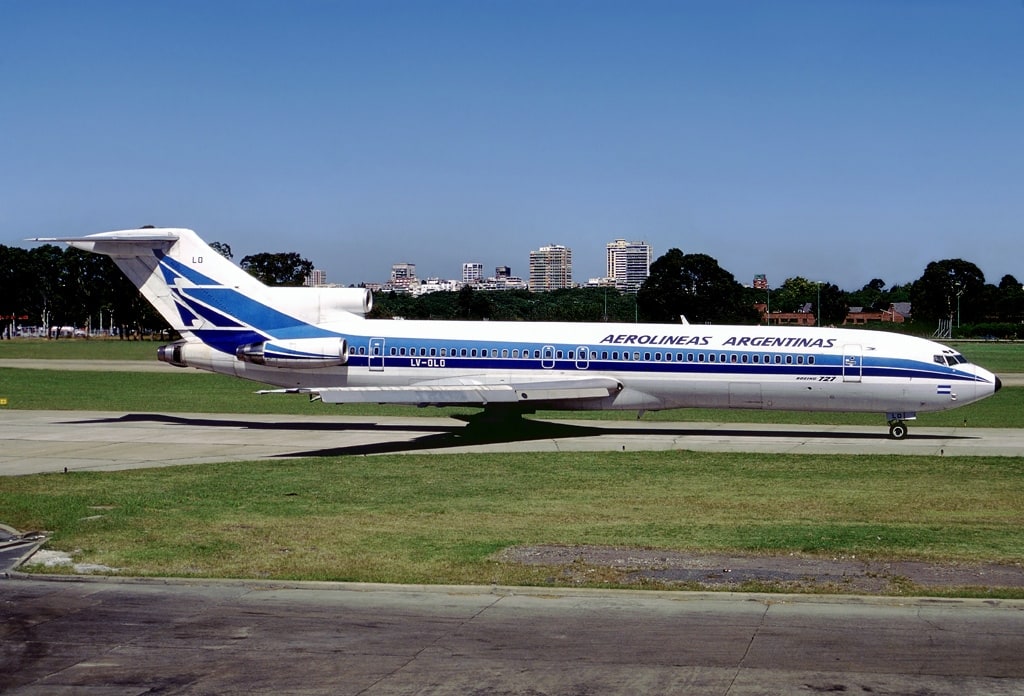
Monday, July 31, 1995, was the middle of the southern winter, and snowfalls had cut off much of the country around San Carlos de Bariloche, the ski town on the southern shore of Lake Nahuel Huapi, whose airport lies out to the east of town. Aerolíneas Argentinas flight 674, a Boeing 727 from Buenos Aires, was due to land that evening with 102 passengers on board. In the cockpit sat Captain Jorge Polanco, co-pilot Carlos Dortona and flight engineer Jorge Allende, and in the jump seat a guest, Roberto Benavente, who flew 747s for the same airline. The passengers included Mariano de Vedia, a La Nación journalist, in row 8 by a right-hand window, reading García Márquez. Years later Polanco would say that about thirty nuclear physicists were aboard, bound for an event in Bariloche, home of the Instituto Balseiro physics school. Somewhere behind the airliner, a twin-turboprop Piper Cheyenne of the Gendarmería Nacional, the border police, registered GN-705, was flying in to collect a sick patient for Buenos Aires. Commander Juan Domingo Gaitán was at the controls, with the aircraft’s commander, Rubén Cipuzak, in the right-hand seat and a mechanic behind them.
Sources: “Una luz blanca y extraña”Un piloto de Gendarmería también vio el OVNI: “Un plato sopero invertido”Un extraño fenómeno complicó el vuelo de un avión en BarilocheCaso “Bariloche” (31/Jul/1995): testimonios clave revelan plena coincidencia entre las posiciones observadas del OVNI y los puntos apuntados hacia las nubes por un reflector trazador de cieloOvnis: te juro que los viJorge Polanco, el expiloto de Aerolíneas Argentinas que asegura que hace 25 años vio un ovni
The town goes dark
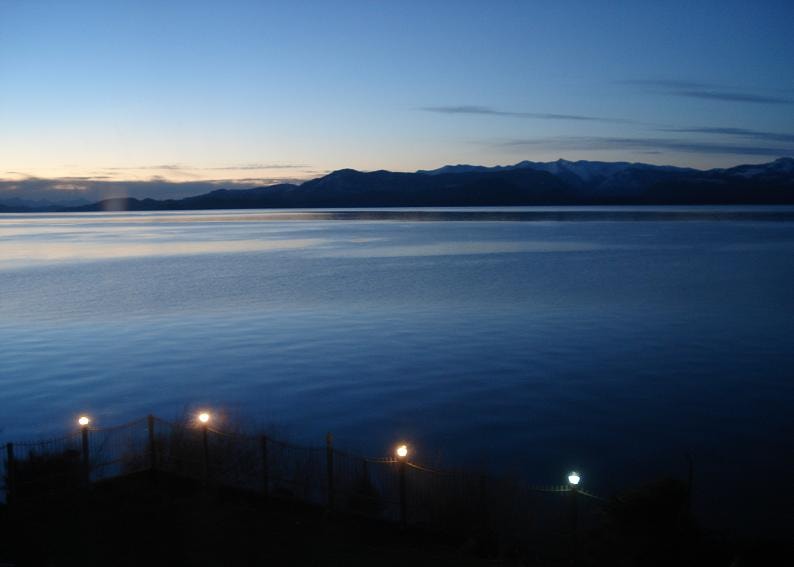
The night began to go wrong on the ground. At 7:30 p.m., by the account of the Air Force meteorological observer at the airport, Nicolás Araya, there was a drop in the power and a loud noise from the main switchboards, and the car-park lights went out. About twenty minutes later he walked out onto the field to read the temperature and, halfway across the apron, was “blinded by a strong yellow light.” He thought someone was shining a searchlight from the control tower; no one was. The light, he wrote, was moving at great height from west to east behind the tower. Around 8:15, Daniel García, the non-commissioned officer in charge of the operations shift, saw “a reflection like a flash, bluish white” over the light-aircraft parking area, the airport lights flickered, and soon after the whole of Bariloche and its airport went black. The electricity cooperative later said the protections had tripped at a transformer substation near the airport at 8:17. The airport started its emergency generator, and at 8:20 the tower taped its first call to the incoming 727: “We have the generator running; there was a momentary power cut.” The weather was 0°C, a wind off the mountains from the west, and a thin layer of cloud, two eighths of the sky, at 3,000 to 4,000 feet.
Sources: Caso Bariloche: declaraciones testimonialesCaso Bariloche: comunicaciones por radio“Una luz blanca y extraña”Caso Bariloche: informe meteorológico e investigación de la Fuerza Aérea
Traffic at eleven o’clock
Flight 674 came down from 31,000 feet to 10,000, passed over the airport’s radio beacon and, as the published approach requires, flew outbound away from it, descending toward 6,400 feet before turning back to line up with runway 28, which points west toward the town. The airport was still running on its generator, and the tower asked the crew to keep everyone on board after landing while it switched back to the town’s power. It was on this outbound leg, Polanco wrote that night, that the crew saw “the approach of lights of strong intensity on an opposite course.” The cockpit asked the tower whether it had traffic reported ahead of them. Not ahead, said the controller, Ramón Blanco, an Air Force non-commissioned officer: another aircraft was inbound and would reach the Limay reporting point in about four minutes. “We’re seven miles out, leaving seven thousand five hundred, and we have traffic on our left,” the 727 came back. “There it is, at eleven o’clock, it just changed course.” Blanco replied that the other traffic ought to be forty nautical miles from Bariloche. Minutes later the Gendarmería Cheyenne checked in over the Limay reporting point, and a little later it reported itself twenty-two miles out. The airport had no radar; the tower could only picture where each aircraft was from what its crew reported.
Sources: Caso Bariloche: comunicaciones por radioCaso Bariloche: declaraciones testimonialesCaso “Bariloche” (31/Jul/1995): testimonios clave revelan plena coincidencia entre las posiciones observadas del OVNI y los puntos apuntados hacia las nubes por un reflector trazador de cielo
“We think it’s a flying saucer”
As the 727 came around in the procedure turn, the lights closed in. In the statement Polanco wrote for the airport chief, co-signed by Dortona and Allende, the object “approaches from the south, placing itself on our right and continuously closing, showing green lights at its ends and a strong orange light in the middle.” Lined up with the runway eleven miles out, the airliner told the tower it had traffic on its right. The controller could see the 727, but not any other aircraft: the Gendarmería plane, he said, was still twenty-two miles out. Then came the transmission that made the case: “Yes, we have an object on our right flying formation with us, and above it we can see the other aircraft. The object has two bright flashing lights… uh… it’s… I don’t know, we think it’s a flying saucer.” The tower said, “Stand by.” The Gendarmería plane called in. And at that point the transcript breaks off: by the Air Force’s note, the tape kept turning for about four minutes without recording, and then stopped. A copy that later circulated among researchers holds about a minute of sped-up, barely audible exchanges from the gap. To the newspapers the next day Polanco said the light had come at them “on a collision course,” stopped about a hundred meters away, then made “a very strange turn” to match the airliner’s and settled alongside, the size of a commercial aircraft, two green lights at its tips and an orange one in the center that pulsed.
Sources: Caso Bariloche: declaraciones testimonialesCaso Bariloche: comunicaciones por radio“Una luz blanca y extraña”Un extraño fenómeno complicó el vuelo de un avión en BarilocheAnálisis de una copia de la cinta del caso Bariloche
The generator dies
On the ground García was watching from the airport chief’s office. He saw a very bright white-amber light come in on the opposite course and place itself to the right of the 727, “relatively close,” and follow it into the approach. Then the airport electrician, Bressa, came on the handheld radio in an alarmed voice: “the generator’s dying on me.” At 8:47 the runway lights went out and Blanco ordered a go-around. By Polanco’s statement, the crew were near 5,500 feet with the object beside them when “all the airport’s radio aids cut out, at the precise instant that the object pulls sharply away to the southeast.” He climbed to 10,000 feet. Blanco’s own log of that moment is plainer: anemometer out, tower heaters out, console light out, the north apron lights normal, and “VOR in normal service, ILS in normal service.” From the tower, he wrote, he watched the airliner head out toward the lake with the Gendarmería plane nearly overhead the airport, and saw the light too. Araya noticed that from about 8:30 the barometer in the weather office would not settle, rising and falling for fifteen minutes. When the airport was switched over to the cooperative’s restored power, the tape was running again. “We just saw the light again,” the tower told 674. The crew could see the Gendarmería plane, but not the light. “Well,” said the tower, “it was behind you.”
Sources: Caso Bariloche: declaraciones testimonialesCaso Bariloche: comunicaciones por radioCaso “Bariloche” (31/Jul/1995): testimonios clave revelan plena coincidencia entre las posiciones observadas del OVNI y los puntos apuntados hacia las nubes por un reflector trazador de cielo
The view from the Cheyenne
The men in the Gendarmería plane had the grandstand seat. Cipuzak, interviewed the following June by the UFO researchers Oscar Uriondo and Juan Pablo Gómez, said the 727 below them “looked like a little Christmas tree with all its lights on,” out over a black lake with the lights of the town to one side. Then an amber light, swelling and fading, passed beneath the Cheyenne “like we were a standing post,” at twice their speed or more: amber, and “the size of a pearl earring that women wear.” When Gaitán banked, the mechanic, leaning to the window, saw it too, the apparent size of a thumbnail, with a tiny green light beside it. The light rose straight up, stopped dead as if “waiting for the airliner,” and hung there in its path. “What was it? I don’t know,” Cipuzak said. “I hope someone explains to me some day what it was that we saw.” To Página/12 the week of the sighting he had given it a shape: “an object shaped like an inverted soup plate,” which gave off a blinding white light that at moments turned red or green, and which no aircraft could have flown. Gaitán, on television, put a speed on it: straight up at ninety degrees, “in one second or a bit less… Mach 3,” and then it stopped instantly “in the little gauze of cloud, which no one I know of can do.” Cipuzak said he had warned Polanco by radio, “A UFO is following you,” words that are not on the tower tape.

Sources: El caso BarilocheUn piloto de Gendarmería también vio el OVNI: “Un plato sopero invertido”Caso “Bariloche” (31/Jul/1995): testimonios clave revelan plena coincidencia entre las posiciones observadas del OVNI y los puntos apuntados hacia las nubes por un reflector trazador de cieloEl “ovni” de Bariloche, 20 años después
The heart in his mouth
Flight 674 landed at 9:09 p.m., the Cheyenne nine minutes later. “When I landed I had to wait five minutes in the cockpit,” Polanco told the papers, “because my heart was in my mouth.” Walking toward the tower, he said, he was caught up by García, the shift chief, “eyes popping,” unable to believe what he had seen. García took him to the airline’s office and asked for a written report, which Polanco wrote on the spot. There García also heard from Jorge Ezquerra, who drove for the airline and had been coming up the airport road: he had watched the light stay “stuck right beside” the plane until it broke away. A Gendarmería nurse arriving by car told the same. In the cabin the view was different. The flight attendant Ana María Cancela said the passengers grew nervous and “held hands and started to look at us to see what we would do,” but, with the cabin lit, the people in the front rows had to lean against the windows to see anything. De Vedia, the journalist in row 8, noticed only a jolt and the announcement that they could not land for want of lights, and learned the rest the next morning. East of town, in Dina Huapi, Berta and Silverio Cabral, a retired police sergeant major and his wife, had gone out in the blackout to buy cigarettes. They watched a light shed beams downward toward the city, like water from a shower head. Afterward, Berta said, “it seems a peace came over us,” and it never left.
Sources: “Una luz blanca y extraña”Un extraño fenómeno complicó el vuelo de un avión en BarilocheCaso Bariloche: declaraciones testimonialesOvnis: te juro que los viEl caso BarilocheEl “ovni” de Bariloche, 20 años después
Argentina looks up
By Tuesday the wires had it, and on Wednesday it was on the front pages. “The personnel of the weather service, of the control tower, the pilot and the crew of the plane sighted a UFO,” the airport commander, Major Jorge Oviedo, told Clarín, though he objected when Página/12 read him an agency line that an object had “placed itself” between the airliner and the runway: “That is an exaggeration.” Clarín quoted Allende putting the object’s speed at about 2,000 kilometers an hour, and García saying the tower’s instruments had swung “from one side to the other for no reason at all.” Polanco went from newscast to talk show, and twice to the lunch table of Mirtha Legrand’s long-running television program, once with Gaitán and the Cabrals. “Nobody can sell us that that was a device made on Earth,” he said, and, as the skeptic Heriberto Janosch and the journalist Alejandro Agostinelli later compiled his words, “I was a chosen one; many people have prepared themselves to have these contacts.” Carlos Ferguson of the Red Argentina de Ovnilogía declared that the case had “all the characteristics of a close encounter.” Others smelled a distraction: the director of a mobile observatory told Página/12 it sounded to him like a setup to “distract public attention,” at a moment when Ray Santilli’s film of a supposed Roswell alien autopsy was also in the news. The Air Force said it would not investigate. It was, it said, not a matter within its remit. Nor was it the airport’s first mystery: in 1968, airport staff and the weather station chief had reported a silent, silver craft the size of a DC-6, with no windows, passing over the field in the early afternoon.
Sources: Un extraño fenómeno complicó el vuelo de un avión en Bariloche“Una luz blanca y extraña”Un piloto de Gendarmería también vio el OVNI: “Un plato sopero invertido”“Distraen la atención”El “ovni” de Bariloche, 20 años despuésA 29 años del ovni de Bariloche, el avistamiento más famoso de la historia argentinaBariloche: the AFP dispatch of August 2, 1995, and the French pressLos ovnis conmovieron a vecinos de Bariloche en 1968
A gap in the tape, a crash in the storm
The case gathered the kind of shadows that keep a story alive. Those four silent minutes, falling just after the words “flying saucer,” drew the most scrutiny. When a copy of the audio circulated among researchers, Uriondo and Gómez identified the voice as Polanco’s; Dortona told them it was not his. Blanco, asked about it thirty years later, put the lost minutes down to the power failure; the tape resumed once the generator was running again. Then, on October 6, 1995, a Gendarmería plane crashed in a storm near Tres Algarrobos in Buenos Aires province, killing all four on board. One of them was Commander Juan Domingo Gaitán. The Air Force’s 2018 report identifies the aircraft as GN-705 itself. Polanco kept adding details of his own: he said in 2015 that unpublished photographs of the object existed, taken by a gendarme who was still alive. None have surfaced.
Sources: Caso Bariloche: comunicaciones por radioAnálisis de una copia de la cinta del caso BarilocheEl caso BarilocheAmpliación de investigación del caso Bariloche 1995: nuevas evidencias conducen a un origen multicausalGendarmesCaso “Bariloche” (31/Jul/1995): testimonios clave revelan plena coincidencia entre las posiciones observadas del OVNI y los puntos apuntados hacia las nubes por un reflector trazador de cieloCaso OVNI Bariloche: Jorge Polanco aporta datos desconocidos a 20 años del evento
The man with the sky tracer
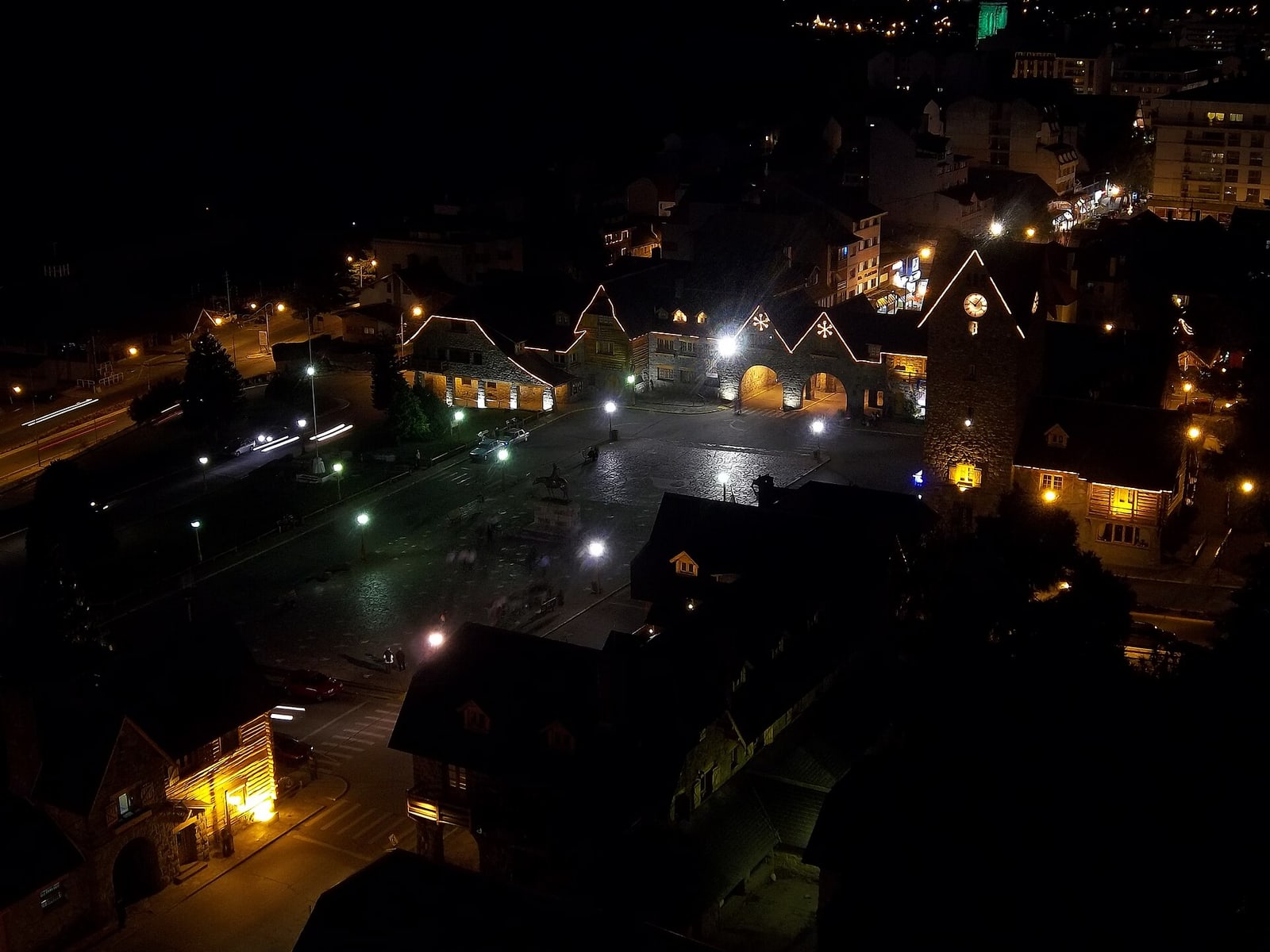
The skeptical answer began that first week. A meteorologist at the University of Comahue pointed to luminous weather phenomena, perhaps involving the snow; a physicist at the Bariloche Atomic Center would not rule out “a reflection of signals that could have confused the pilot”; and “a beam of light can do unimaginable things,” said an astrophysicist in Buenos Aires. Many in Bariloche, the passenger De Vedia reported, remembered the beams of light that the Cerebro and Rocket discotheques threw into the sky. Heriberto Janosch, a psychologist with the Argentine Center for the Investigation and Refutation of Pseudoscience, wrote to the Air Force, and in September Brigadier Horacio Genolet answered that it had ruled out conventional aircraft but not “reflections of lights on the cloud base.” In December he and Virgilio Di Pelino published a first analysis in the skeptics’ magazine El Ojo Escéptico, built on telephone calls made the day after the sighting: the town blackout was human error in switching transformers at the substation, on a night of record demand for heating; the airport generator might have been overloaded; snowcats with rotating spotlights had been grooming the slopes of Cerro Catedral. On December 28 the Air Force handed him its file. As early as 1996 a club technician told him of a 2,500-watt projector at one of the town’s discotheques, and in 2004 he traced two former employees of the Rocket, on the town’s lakeshore avenue. One, Sergio Segade, wrote: “even I saw it reflected in the sky that night and realized it was the projector.” The other, Juan Carlos Rivero, wrote that he had been trying out new equipment at the club that night “and by chance the power went out… we had a generator at the club, so we tested it.” It had never crossed his mind, he said, that the next day people would say they had seen a UFO.
Sources: Cuadernos de Ufología, 2nd series, nos. 19–20A 29 años del ovni de Bariloche, el avistamiento más famoso de la historia argentinaCaso Bariloche: informe meteorológico e investigación de la Fuerza AéreaEl “ovni” de Bariloche, 20 años despuésCaso Bariloche: 10 preguntasCaso Bariloche: una hipótesis plausibleCaso Bariloche: ¿hacia una solución definitiva?Caso “Bariloche” (31/Jul/1995): testimonios clave revelan plena coincidencia entre las posiciones observadas del OVNI y los puntos apuntados hacia las nubes por un reflector trazador de cielo
The Air Force closes the file
In 2018 the Argentine Air Force’s own commission for aerospace phenomena, CEFAe, reopened the case. Its director, retired Commodore Rubén Lianza, brought Rivero in, laid a transparent print of Cipuzak’s 1996 sketch of the light’s path over a three-dimensional map of Bariloche, and asked him to point, with a torch, in each direction he had aimed the searchlight that night, without letting him see the sketch. Rivero even brought a scale model of the Rocket building. The rods they fixed along his pointings traced, the report says, the same path. The beam went east with colored gel filters over the lamp and swept slowly to hold over Dina Huapi, the village fifteen kilometers east of town; then, filters off, it grazed the far shore of the lake, climbed to ninety degrees until it caught a layer of ice-crystal cloud and held there, and was pulled quickly back toward the vertical, where the building’s façade blocked any beam to the south. Lianza also found that the Gendarmería crew had misjudged their position: they were eleven miles out, not twenty-two, flying beside and above the airliner. Dortona, questioned in person by the Air Force, said the lights had seemed to him “unusual reflected lights” from the start. The Air Force declared the case “concluded.” In 2025 its successor, the Aerospace Identification Center (CIAE), went further and called the sighting “multicausal”: the formation “object” on the airliner’s right, it argued, was the Cheyenne’s own navigation lights, perhaps seen through a veil of cloud, together with the colored first sweep of the searchlight over Dina Huapi. To the obvious objection, that the crew radioed seeing the object and the other aircraft at the same moment, the report answers that the witnesses were looking at different lights, and that the co-pilot saw the Cheyenne above and to his right “as through a veil.” The light over the lake was the searchlight itself, whose operator signed a sworn statement before an Air Force lawyer. Benavente, the guest in the jump seat, told the CIAE: “Shapes, we saw none… The projector explanation, for me, is the most logical.” Blanco, the controller, remembered the light as “like a reflection of the Moon on water, but inside the cloud.” García, shown Cipuzak’s sketch, said: “This changes the whole story.”
Sources: Caso “Bariloche” (31/Jul/1995): testimonios clave revelan plena coincidencia entre las posiciones observadas del OVNI y los puntos apuntados hacia las nubes por un reflector trazador de cieloAmpliación de investigación del caso Bariloche 1995: nuevas evidencias conducen a un origen multicausal
Polanco’s object grows
Polanco never accepted any of it. Every time he told the story, the thing got closer and more alive. In 1995 it had stopped about a hundred meters off. In 2013 he told Revista Anfibia that it was “something thirty meters across, with a light on top, orange, that flickered as if it were breathing, and another green, a very strange green I had never seen in my damned life”; that he felt afterward “as if I’d been beaten with sticks”; and that at a gathering in his lawyer’s office, Supreme Court and federal judges had squabbled over his sketch. By 2015 it was “an inverted soup plate,” Cipuzak’s phrase of 1995, painted dark gray or black, thirty meters across and filling his side window for seven or eight minutes, and an American who worked at NASA had told him, eight months after the event, that they had given “a great deal of information” to Steven Spielberg for his first film. By 2020 it was ten meters from the wingtip, and his crew, he said, sat frozen and weeping. His wife, he recalled, had greeted his news in bed that night with “Go easy on the white wine, it’s bad for you.” He gave the object a purpose: the physicists on board, he suggested, meant “there is another world that is controlling and supervising us so we don’t kill each other.” On the thirtieth anniversary he called the Air Force explanation “absurd,” and in 2026 he described the light as “a gelatinous thing that seemed to breathe.” The ufologist Carlos Ferguson, who had championed the case in 1995, took Polanco’s side: “If you have a principal witness and you don’t call him, that in itself is a pseudo-investigation,” he said of the Air Force reports, and “telling pilots that they confused an object with the light of a nightclub is a lack of respect.”
Sources: Ovnis: te juro que los viCaso OVNI Bariloche: Jorge Polanco aporta datos desconocidos a 20 años del eventoLa noche en la que un ovni voló junto a un avión de Aerolíneas en BarilocheJorge Polanco, el expiloto de Aerolíneas Argentinas que asegura que hace 25 años vio un ovni“Me siguió durante 17 minutos”: el piloto argentino que vio un ovni contó detalles del hechoLa noche que un piloto avistó un ovni en Bariloche y los enigmas que aún persisten: “La explicación de la Fuerza Aérea fue absurda”“Nos persiguió durante 17 minutos”: el impactante relato del piloto argentino que vio un ovni y cuyo caso fue desclasificado por EE. UU.El caso Polanco de Bariloche figura en los archivos sobre ovnis desclasificados por EE. UU.
The case travels
For more than twenty years, the Air Force’s own report acknowledged, many researchers regarded Bariloche as “the Argentine perfect case,” and abroad it arrived without its doubts. In 1999 COMETA, a group of retired French generals and engineers, included it as a chapter of UFOs and Defense, citing France’s official UAP office, SEPRA, as its source. Their version had the object appear “on its right side” and fly “parallel to it,” move behind the airliner, rise vertically, stop, and vanish toward the Andes, while “the crew and passengers of flight AR 674, those on the other airplane, the airport controllers, and some of the inhabitants of San Carlos” watched “this unusual aerial ballet dumbfounded.” COMETA listed Bariloche beside the Tehran intercept and the American RB-47 case of 1957 as a case of lights going out and aircraft being shadowed; the same report carried the Tananarive sighting of 1954. When the Pentagon released a batch of UFO files in May 2026 that included the COMETA text, Argentine headlines announced that the United States had declassified the Bariloche case; Agostinelli pointed out that the only link was the French report. At home, the case became a byword, and in 2024 Damián Marsicano’s documentary La búsqueda put Polanco before the camera once more. When three Aerolíneas crews saw strange lights over Choele Choel in Río Negro in September 2022, the question they put to one another on the radio became a headline: “Did we just see Polanco’s UFO?”
Sources: Caso “Bariloche” (31/Jul/1995): testimonios clave revelan plena coincidencia entre las posiciones observadas del OVNI y los puntos apuntados hacia las nubes por un reflector trazador de cieloUFOs and Defense: What Should We Prepare For?Desclasificación OVNI en EE. UU.: ¿el comienzo de la “transparencia”?“Nos persiguió durante 17 minutos”: el impactante relato del piloto argentino que vio un ovni y cuyo caso fue desclasificado por EE. UU.La búsqueda: el documental que plantea las motivaciones de los investigadores de ovnis“¿Vimos el ovni de Polanco?”: el extraño fenómeno que protagonizaron tres aviones de Aerolíneas en el cielo de Río Negro
What survives
The Bariloche case is unusually well documented. The Air Force file that Heriberto Janosch received on December 28, 1995, contains the transcript of the tower tape from 23:20 UTC to 00:24 UTC and the written statements of Polanco (co-signed by Dortona and Allende), García, Blanco and Araya; Janosch separately obtained Brigadier Genolet’s reply of September 5, 1995, and the weather service’s report of March 1996, and published it all online, and an Argentine freedom-of-information request by the civilian UFO group CEFORA released the file again in September 2020. The contemporary press survives in Página/12’s scanned issues of August 2–4, 1995, in Clarín’s August 2 report as transcribed by Patrick Gross, and in wire stories reprinted abroad. Cipuzak’s formal incident report of August 2, 1995, and his 1996 sketch are known through the Air Force reports of 2018 and 2025, which also interview Dortona, Benavente, Blanco, García, Berta Cabral and the searchlight operators. No photograph or film of the light is known.
Sources: Caso Bariloche: índice de documentosCaso Bariloche: comunicaciones por radioCaso Bariloche: declaraciones testimonialesCaso Bariloche: informe meteorológico e investigación de la Fuerza AéreaEl Gobierno desclasificó documentos sobre el avistamiento de ovnis en Bariloche: qué revelan los archivos“Una luz blanca y extraña”Un extraño fenómeno complicó el vuelo de un avión en BarilocheCaso “Bariloche” (31/Jul/1995): testimonios clave revelan plena coincidencia entre las posiciones observadas del OVNI y los puntos apuntados hacia las nubes por un reflector trazador de cieloAmpliación de investigación del caso Bariloche 1995: nuevas evidencias conducen a un origen multicausal
The contradictions
The first-night accounts already disagree. Polanco’s statement has every radio aid failing at the moment the object pulled away; the controller’s log, written the same night, has the VOR and ILS working normally. Polanco had the object leave to the southeast; Página/12 quoted him saying the Gendarmería pilot saw it vanish near Cerro Otto, west of the town; García relayed the Gendarmería crew as losing it west-southwest. Clarín had the Cheyenne 600 meters above the airliner; the tape has the tower placing it twenty-two miles out while the airliner saw it overhead. The press garbled the altitudes, 12,000 meters descending to 3,000 in one paper, and gave the time as 8:15, 8:30 or later. The duration grew from fifteen minutes in Clarín’s first report to seventeen in Polanco’s later telling. Of those who described the light that night, only Polanco gave it a structure; Cipuzak spoke of a soup plate to Página/12 but, to Uriondo and Gómez, of an amber point the size of a pearl earring.
Sources: Caso Bariloche: declaraciones testimonialesCaso Bariloche: comunicaciones por radio“Una luz blanca y extraña”Un extraño fenómeno complicó el vuelo de un avión en BarilocheCuadernos de Ufología, 2nd series, nos. 19–20Caso Bariloche: una hipótesis plausibleEl caso Bariloche“Me siguió durante 17 minutos”: el piloto argentino que vio un ovni contó detalles del hecho
Explanations and objections
The official explanation, in the Air Force reports of 2018 and 2025, rests on three coincidences: a city-wide blackout over a sky with a thin layer of ice-crystal cloud; a second aircraft whose crew misreported its position by eleven miles, so that its lights were taken for unknown traffic; and a nightclub employee who, once the power failed, set up a new sky tracer and swept it across that cloud. The generator failure is put down to overload and the blinding flash Araya and García saw to a lamp standard surging before the cut. The case for something stranger has been argued by Uriondo and Gómez, who reject every conventional hypothesis: the Moon and Mars were in the wrong part of the sky, the weather did not favor optical effects, and there were, they argue, two objects, one of them the light Araya saw. As early as 1995, Carlos Angueira of the Asociación Amigos de la Astronomía had ruled out both a meteor and reflections on ice-crystal clouds. Ferguson objects that the Air Force never interviewed Polanco. On the timing, a table circulated online by a UFO group had Rivero packing up his searchlight by 8:31; the CIAE’s reconstruction, noting that he first had to carry it down from a second floor and set it up on the stairs, puts his test from about 8:27 to about 8:52.
Sources: Caso “Bariloche” (31/Jul/1995): testimonios clave revelan plena coincidencia entre las posiciones observadas del OVNI y los puntos apuntados hacia las nubes por un reflector trazador de cieloAmpliación de investigación del caso Bariloche 1995: nuevas evidencias conducen a un origen multicausalEl caso BarilocheEl caso Polanco de Bariloche figura en los archivos sobre ovnis desclasificados por EE. UU.A 29 años del ovni de Bariloche, el avistamiento más famoso de la historia argentinaUn extraño fenómeno complicó el vuelo de un avión en Bariloche
Classification and evidence note
This archive files Bariloche as an aviation encounter and, for the reports made that night, a close encounter of the second kind: a light that the captain placed a hundred meters from his aircraft, coinciding with a generator failure and erratic instruments in the tower. The documents establish that the city and airport lost power twice, that the tower recorded the crew reporting an object flying formation on their right, that the tape stopped for about four minutes at that point, and that ground staff and the Gendarmería crew independently reported a bright light near the airliner. They do not establish that the light was an object, or that it caused the power failures, which the electricity cooperative and the Air Force attributed to a substation fault and an overloaded generator. The Air Force regards the case as solved.
Sources: Caso Bariloche: comunicaciones por radioCaso Bariloche: declaraciones testimoniales“Una luz blanca y extraña”Caso “Bariloche” (31/Jul/1995): testimonios clave revelan plena coincidencia entre las posiciones observadas del OVNI y los puntos apuntados hacia las nubes por un reflector trazador de cieloAmpliación de investigación del caso Bariloche 1995: nuevas evidencias conducen a un origen multicausal
- 31 JUL 1995 · 7:30 PM
A power dip at Bariloche airport; the car-park lights go out.
- 31 JUL 1995 · C. 7:50 PM
Meteorological observer Nicolás Araya is blinded by a strong yellow light moving west to east behind the tower.
- 31 JUL 1995 · 8:17 PM
Protections trip at a substation near the airport and Bariloche goes dark; the airport starts its generator.
- 31 JUL 1995 · 8:20 PM
The tower tape begins; Aerolíneas Argentinas 674 descends from 31,000 feet.
- 31 JUL 1995 · C. 8:35 PM
Outbound on the approach, the 727 reports traffic at eleven o’clock that “just changed course”; the tower says the only other aircraft is forty miles away.
- 31 JUL 1995 · 8:31 PM
The electricity cooperative restores the town’s power.
- 31 JUL 1995 · C. 8:45 PM
On final, the crew radio “we think it’s a flying saucer”; the tape stops recording for about four minutes.
- 31 JUL 1995 · 8:47 PM
The airport generator fails and the runway lights go out; the 727 goes around and climbs to 10,000 feet.
- 31 JUL 1995 · 9:09 PM
Flight 674 lands; the Gendarmería Cheyenne follows at 9:18. Polanco, García, Blanco and Araya write statements.
- 2 AUG 1995
Clarín, Página/12 and La Nación report the sighting; Cipuzak files his incident report.
- 4 AUG 1995
Polanco, Gaitán and the Cabrals appear on Mirtha Legrand’s lunch program.
- 5 SEP 1995
Brigadier Genolet writes that the Air Force has ruled out conventional aircraft but not reflections on the cloud base.
- 6 OCT 1995
Commander Gaitán is killed with three others in the crash of a Gendarmería plane in Buenos Aires province.
- DEC 1995
Heriberto Janosch and Virgilio Di Pelino publish their analysis in El Ojo Escéptico; on December 28 the Air Force hands Janosch its file.
- 8 JUN 1996
Cipuzak tells Uriondo and Gómez of an amber light the size of a pearl earring.
- 1999
The French COMETA report includes Bariloche as a chapter of UFOs and Defense.
- MAR 2004
Former Rocket nightclub employees Sergio Segade and Juan Carlos Rivero write that new lighting equipment was being tested that night.
- 2018
The Air Force’s CEFAe reconstructs the searchlight’s sweeps and declares the case concluded.
- 9 SEP 2020
A freedom-of-information request by CEFORA releases the Air Force file.
- SEP 2022
Aerolíneas crews over Choele Choel ask whether they have seen “Polanco’s UFO.”
- 2025
The CIAE calls the sighting multicausal: the Gendarmería plane’s lights and the searchlight.
- MAY 2026
A Pentagon release that includes the COMETA report brings the case back into Argentine headlines.
Sources & interviews
“Una luz blanca y extraña”Graciela Mochkofsky · Página/12, Buenos Aires, August 2, 1995, p. 14 · with Polanco’s account, Major Oviedo’s interview and the Cooperativa de Electricidad statement · Internet ArchiveUn piloto de Gendarmería también vio el OVNI: “Un plato sopero invertido”Página/12, Buenos Aires, August 3, 1995 · with Carlos Ferguson of the Red Argentina de Ovnilogía · Internet Archive“Distraen la atención”Graciela Mochkofsky · Página/12, Buenos Aires, August 4, 1995 · with Alejandro Vega Ossorio and Roberto Mestorino · Internet ArchiveGendarmesPágina/12, Buenos Aires, October 7, 1995 · on the crash that killed Commander Juan Domingo Gaitán · Internet ArchiveUn extraño fenómeno complicó el vuelo de un avión en BarilocheMariano Cordero and Sibila Camps · Clarín, Buenos Aires, August 2, 1995, p. 8 · transcribed with an English translation by Patrick GrossBariloche: the AFP dispatch of August 2, 1995, and the French pressAgence France-Presse via Belga, with France-Soir, Libération and Le Télégramme of August 3, 1995 · transcribed by Patrick Gross, UfologieOVNI impresiona en BarilocheAssociated Press, August 1, 1995 · La Prensa Gráfica, San Salvador · Internet ArchiveCuadernos de Ufología, 2nd series, nos. 19–20Santander, 1995 · extracts from La Nación and Río Negro of August 2, 1995, and Roberto Banchs’s report · Internet ArchiveMUFON UFO Journal no. 332Walt Andrus · Mutual UFO Network, December 1995 · Internet ArchiveCaso Bariloche: comunicaciones por radioTranscript of the Bariloche tower tape, 23:20 UTC July 31 to 00:24 UTC August 1, 1995, from the Fuerza Aérea Argentina file handed to Heriberto Janosch on December 28, 1995 · Mitos del MilenioCaso Bariloche: declaraciones testimonialesWritten statements of Captain Jorge Polanco and of Air Force non-commissioned officers Daniel García, Ramón Blanco and Nicolás Araya to the Bariloche airport command, from the Fuerza Aérea Argentina file · Mitos del MilenioCaso Bariloche: informe meteorológico e investigación de la Fuerza AéreaBrigadier Horacio Genolet’s letter of September 5, 1995, and the Servicio Meteorológico Nacional report of March 18, 1996, obtained by Heriberto Janosch · Mitos del MilenioCaso Bariloche: índice de documentosHeriberto Janosch, Centro Argentino para la Investigación y Refutación de la Pseudociencia · Mitos del MilenioCaso Bariloche: 10 preguntasHeriberto Janosch · Mitos del Milenio · September 14, 2003Caso Bariloche: una hipótesis plausibleHeriberto Janosch · Mitos del Milenio · April 19, 2004Caso Bariloche: ¿hacia una solución definitiva?Heriberto Janosch · Mitos del Milenio · May 1, 2004El “ovni” de Bariloche, 20 años despuésAlejandro Agostinelli, with the 1995 El Ojo Escéptico report by Heriberto Janosch and Virgilio Di Pelino · Factor el Blog · July 31, 2015Caso “Bariloche” (31/Jul/1995): testimonios clave revelan plena coincidencia entre las posiciones observadas del OVNI y los puntos apuntados hacia las nubes por un reflector trazador de cieloComodoro (ret.) Rubén E. Lianza · Comisión de Estudio de Fenómenos Aeroespaciales, Fuerza Aérea Argentina · Informe 2018, pp. 51–80Ampliación de investigación del caso Bariloche 1995: nuevas evidencias conducen a un origen multicausalCentro de Identificación Aeroespacial, Fuerza Aérea Argentina · Informe 2025, pp. 130ff.El caso BarilocheJuan Pablo Gómez and Oscar A. Uriondo · Visión OVNI · multi-part study with interviews of Cipuzak, Dortona, Blanco and the CabralsAnálisis de una copia de la cinta del caso BarilocheOscar A. Uriondo and Juan Pablo Gómez · Gaceta OVNI · October 2004 · Wayback MachineUFOs and Defense: What Should We Prepare For?COMETA (Comité d’études approfondies), 1999 · English translation · chapter 2.5, “San Carlos de Bariloche (July 31, 1995), Source SEPRA” · Internet ArchiveOvnis: te juro que los viFederico Bianchini · Revista Anfibia · September 11, 2013Caso OVNI Bariloche: Jorge Polanco aporta datos desconocidos a 20 años del eventoFernando Silva Hildebrandt · Infobae, Ciencia y Misterios blog · June 23, 2015La noche en la que un ovni voló junto a un avión de Aerolíneas en BarilocheLM Cipolletti · July 30, 2020El Gobierno desclasificó documentos sobre el avistamiento de ovnis en Bariloche: qué revelan los archivosInfobae · September 18, 2020“Me siguió durante 17 minutos”: el piloto argentino que vio un ovni contó detalles del hechoInfobae · September 18, 2020Jorge Polanco, el expiloto de Aerolíneas Argentinas que asegura que hace 25 años vio un ovniMariano Jasovich · La Nación · 2020“¿Vimos el ovni de Polanco?”: el extraño fenómeno que protagonizaron tres aviones de Aerolíneas en el cielo de Río NegroInfobae · September 14, 2022A 29 años del ovni de Bariloche, el avistamiento más famoso de la historia argentinaC5N · August 2, 2024 · with the 1995 Clarín and La Nación clippingsLa búsqueda: el documental que plantea las motivaciones de los investigadores de ovnisC5N · August 24, 2024 · on Damián Marsicano’s filmLa noche que un piloto avistó un ovni en Bariloche y los enigmas que aún persisten: “La explicación de la Fuerza Aérea fue absurda”Infobae · August 13, 2025Los ovnis conmovieron a vecinos de Bariloche en 1968El Cordillerano · July 28, 2023El caso Polanco de Bariloche figura en los archivos sobre ovnis desclasificados por EE. UU.El Cordillerano · May 11, 2026 · with Carlos Ferguson“Nos persiguió durante 17 minutos”: el impactante relato del piloto argentino que vio un ovni y cuyo caso fue desclasificado por EE. UU.Infobae · May 11, 2026Desclasificación OVNI en EE. UU.: ¿el comienzo de la “transparencia”?Alejandro Agostinelli · Factor el Blog · May 11, 2026Spotted an error, or know a better source? Write to hello@uap.fun.
Connected files
The Lights Beside Flight 1628Nine years earlier over Alaska, another airline captain reported lights keeping pace with his jet that no one on the ground could identify.The Tehran InterceptCOMETA grouped the two cases together as aircraft shadowed by lights with electrical failures.The Green Lens over TananariveAnother sighting in the COMETA report that coincided with lights going out across a city.The Lights beside the Newspaper PlaneLights beside an aircraft at night, a crew with a camera aboard, and a long argument over what else was in the sky.Fifteen Minutes at Pampa LluscumaAcross the Andes in Chile, another famous South American case that the Argentine journalist Alejandro Agostinelli helped pick apart.Discuss this case
Compare notes with other readers: witness details, sources, and the parts that still do not add up.
Open the discussion