A foreman in a new town
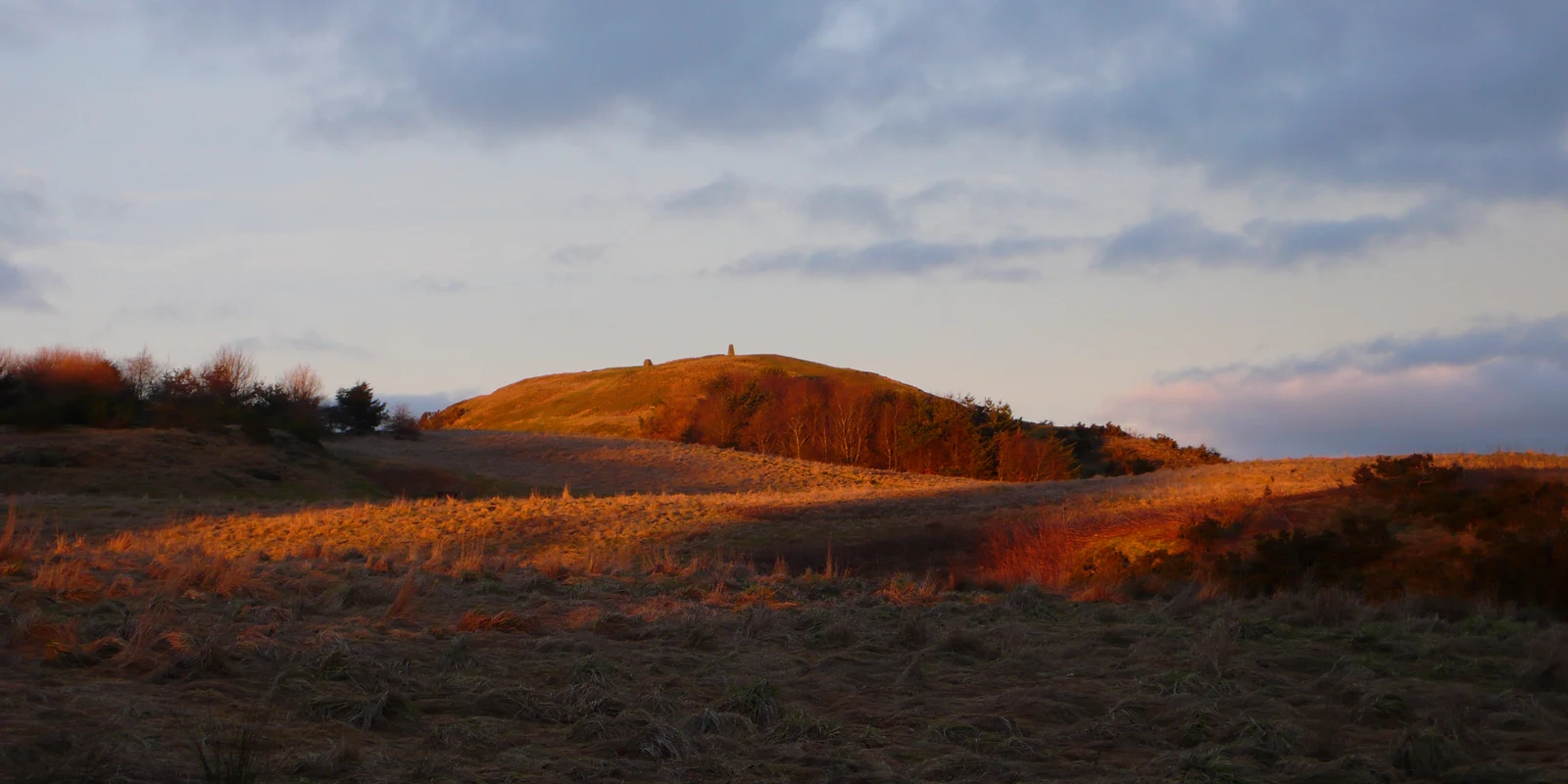
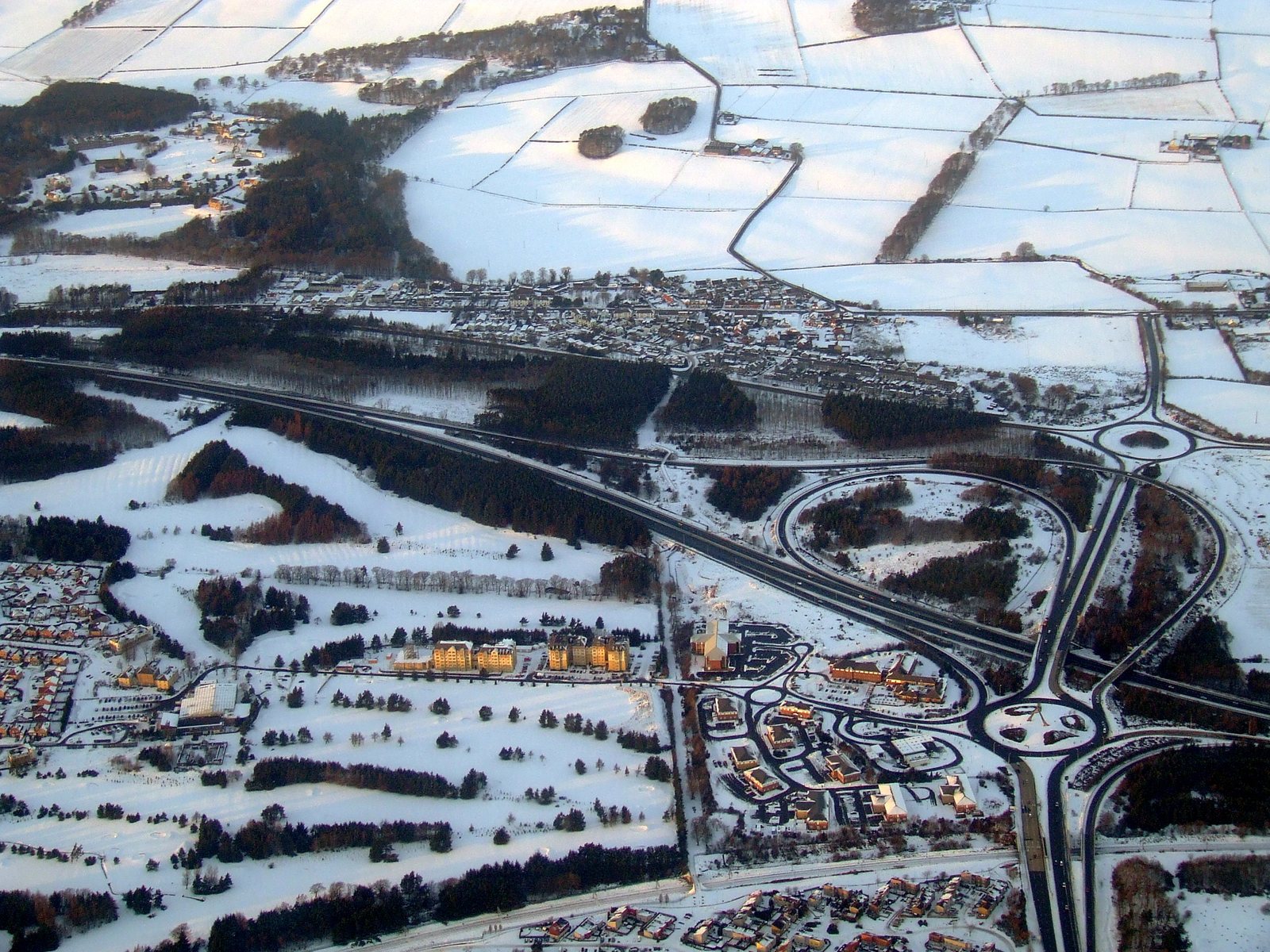
In 1979 Livingston was not yet twenty years old, a new town designated in 1962 and laid out across the West Lothian farmland about twenty kilometers west of Edinburgh, and much of its green space was still young forestry plantation. Robert David Taylor looked after a good deal of it. Born on July 25, 1918 near Pitlochry, he had worked all his life on the land in Scotland and, for the past sixteen years, for the Livingston Development Corporation, where he was foreman forester. He was 61, married to Mary, and lived at 4 Broomieknowe Drive in Deans with a red setter named Lara. Steuart Campbell, the Edinburgh architect who investigated the case for the British UFO Research Association (BUFORA), found him “honest and responsible, and not the sort of person to invent a tale or play a practical joke,” a man of “phlegmatic disposition” who reacted to his experience “as if it were merely a traffic accident.” He had heard of flying saucers and had no interest in them. The Economist, writing his obituary, pictured him with “a thick brush of white hair and a craggy outdoorsman’s face” in a house with very few books.
Sources: Close Encounter at Livingston · BUFORA Case History No. 1Robert TaylorThe UFO sighting investigated by the police
Where two rides met
Friday, November 9 was cold and raw. The meteorological office at Edinburgh Airport, eight miles east, logged about three degrees at ten o’clock, a light west-south-westerly wind and a sleet shower in the previous hour. Taylor started work at 7:45 at the Rosebank nurseries, took a squad out to a wood near Bellsquarry, filled in some time sheets, fueled his Bedford pick-up and went home for breakfast. At about ten past ten, by his own statement, he drove to Woodlands Park and on into Dechmont Woods, the plantations that wrap the north side of Dechmont Law, to check the fences and gates. He left the truck on a track and walked on with the dog, the traffic noise of the Edinburgh–Glasgow motorway a couple of hundred yards to the north muffled by the conifers. Where his ride, a grassy firebreak track through the plantation, met a cross-ride, there was a clearing. “As I cleared the trees and entered the clearing,” he told the police, “I saw this object in front of me.” He put the time at about 10:30; Campbell, reconstructing the morning, made it nearer 10:15.
Sources: Close Encounter at Livingston · BUFORA Case History No. 1The UFO sighting investigated by the policeRobert Taylor
The dome that kept disappearing
“It was about 30 feet high, but not as high as the trees,” his police statement continues. “It was grey in colour although I got the impression that the top of the dome shape changed from grey to translucent continually. The top of the object was dome shaped and had a flange around the middle on which were situated several antenna with objects similar to rotors on the top. There were also several round porthole type apertures on the dome shape above the flange. I do not know what the bottom of the object was like.” Talking to Campbell later he gave smaller figures, about six meters across and four high, hanging silent and still just above the grass, dark gray with a texture like emery paper. That surface would not keep still. Patch by patch, first in one place and then another, it lost its grain and turned smooth and shiny, so that Taylor, the Economist wrote, “could see the fir trees through it, as if it was trying to camouflage itself.” He could never be sure whether it had gone transparent or simply become a mirror of the woods. On the flange stood regularly spaced stems carrying shapes like propellers or bow ties, and they did not turn. To the Glasgow Herald four days later he said simply: “I was mesmerised.”
Sources: Close Encounter at Livingston · BUFORA Case History No. 1Robert Taylor
The sea mines
Then two smaller objects came out from under the dome, or behind it, too fast for him to see which, and raced toward him across the grass. “These objects were shaped like sea mines with about 6 legs attached thereto,” he told the police. “These spheres rolled towards me from one leg to another and they both arrived at my side.” They were the same gray, the same sandpaper texture, and he later told Campbell they were perhaps half a meter to a meter across. Each time a spike touched the ground it made a sucking or plopping noise; asked later to reproduce it, he agreed it sounded like the end of a vacuum-cleaner hose touched to the grass. One took station on either side of him. “At this time I was aware of a strong pungent smell which was overpowering. Although I was lapsing into subconscious I was aware of being grabbed on either side of my legs at the top of my thighs. I also felt pressure under my chin and a burning sensation on my chin.” He told Campbell he felt himself being pulled forward, toward the dome, his wellington boots dragging as he resisted, and that the smell was like burning brake linings. Choking, he fell forward and lost consciousness.
Sources: Close Encounter at Livingston · BUFORA Case History No. 1Close Encounter in Scotland
Half crawled, half staggered
“The next thing I knew was a whooshing sound and my dog, which had been running in the trees barking,” his statement goes on. He could not say whether the whoosh came before he blacked out or after he woke. When he opened his eyes the clearing was empty. Lara was circling him, barking wildly, and when he tried to calm her he found he had no voice. His legs would not hold him, so he crawled back up the track on his hands and knees, then walked unsteadily to the truck. He picked up the two-way radio to call the depot and could not speak into it. He tried to reverse, could not coordinate his hands and feet, and ran the pick-up off the path into soft ground, where it stuck. So he walked home by a short cut across fields and woods, more than a mile by Campbell’s later measurement, his voice returning on the way. Campbell, working back from an encounter at about 10:15 and timing each stage of the route, reckoned he had been unconscious for about twenty minutes. At home he had a frontal headache for hours, a burning chin, nausea, the taste of the smell still in his mouth, and a thirst that lasted two days.
Sources: Close Encounter at Livingston · BUFORA Case History No. 1The UFO sighting investigated by the police
‘No, a spaceship thing’
Mary Taylor saw him from the kitchen window at about 11:15, walking up the road. “He came into the house and I said to him, ‘What’s happened’ thinking there had been an accident,” she told the police. “His face was dirty as was his clothes. He said, ‘No, I’ve been attacked’. I said ‘With men’. He said ‘No, a spaceship thing’. I said to him ‘there’s no such thing and I’ll phone for the doctor’.” He would not have the doctor. He kept talking about the smell, which she could not detect, and asked for a bath. She ran it and telephoned his boss, Malcolm Drummond, the corporation’s landscape forestry manager, who came to the house and then drove up to the woods, found the abandoned truck and could not find anything else. The family doctor, Gordon Adams of the Blackburn health centre, arrived about midday to find his patient dressed and tidy on the sofa. “He said to me that I would not believe his story.” Adams found a graze on the left thigh and a barely visible graze under the chin, a normal temperature and blood pressure and no sign of head injury, and ordered him to Bangour General Hospital for a skull X-ray and an interview with a psychiatrist. Mary, meanwhile, found that his trousers were torn on both sides, just below the pockets.
Sources: Close Encounter at Livingston · BUFORA Case History No. 1
‘Very pronounced indentations’
Drummond had already been up to the woods once and found only the bogged-down truck. Now Taylor insisted the thing had been heavy and must have left marks, and with the doctor’s permission he led Drummond to the clearing itself. There, where he said the dome had stood, were two parallel tracks pressed into the long grass and a scatter of fresh holes around them. Drummond, who had been “very sceptical,” told the West Lothian Courier he was “astonished to find very pronounced indentations at the place. They looked as if a bulldozer had been placed and then lifted from the spot, without any tracks leading to or from the marks.” He had the corporation’s estates department fence the spot off. Then he telephoned the police. The ambulance came about one o’clock. At Bangour, after waiting some two hours without seeing a doctor, Taylor signed himself out. Later that day he and Mary set off for Keswick in the English Lake District, where his daughter lived, on a visit arranged in advance. It meant he was out of reach when the story broke. That same evening a Glasgow Herald reporter rang Campbell with a garbled version: a Livingston forestry worker attacked by “small furry creatures” from a transparent spacecraft. Taylor had described nothing of the kind.
Sources: Close Encounter at Livingston · BUFORA Case History No. 1Scotland’s Socorro: the Dechmont Robert Taylor UFO, 1979
A case of assault by unidentified object
Lothian and Borders Police had never handled anything like it, and they handled it the way they would any alleged assault. Detective Inspector MacDonald took officers to the clearing at two that afternoon; PC William Douglas measured and sketched the site and swept the woods for crane or vehicle tracks, and Detective Constable Ian Wark of Bathgate photographed and measured the marks. Officers examined the Bedford at the depot and found no sign of an accident and nothing aboard “which might give off fumes likely to cause hallucination.” On Sunday evening, when Taylor was back from Keswick, Douglas took his statement and his clothes. On November 12 Wark delivered the trousers, long johns, jumpers, vest and socks to the force’s forensic science laboratory in Edinburgh, whose report, L615/79, was headed “Case of assault by unidentified object.” Newspaper readers across Britain met the case over that weekend, and in the following days the police were quoted with rare sympathy. “Mr Taylor is a wholly respectable person, and his integrity is not in any doubt,” a spokesman told the West Lothian Courier; “This man definitely saw something,” another told the Daily Record. The Telegraph would call it, in Taylor’s obituary, “the only example of an alien sighting becoming the subject of a criminal investigation.” Forty years later Wark told the BBC: “I’d have to see it myself to believe it.” But he had interviewed Taylor three times and heard the same story each time. “He believed what he saw and there was no way he would make that up.”
Sources: Close Encounter at Livingston · BUFORA Case History No. 1Scotland’s Socorro: the Dechmont Robert Taylor UFO, 1979The UFO sighting investigated by the policeBob Taylor
The man who never changed his story
His obituarists agreed he was neither a crank nor a showman: he never sought publicity, never made money from the story, and held to his account for the remaining twenty-seven years of his life. For a long time he carried a camera whenever he went back to the clearing, in case the thing returned. In 1994, then 75 and recovering from a stroke, he told the Guardian what he thought of the latest scientific explanation: “I can assure you that Venus had nothing to do with it. I am pretty certain that what I saw was the real thing, a vehicle from outer space.” On the eve of the 25th anniversary in 2004 he told the Edinburgh Evening News: “I stand by every word of my account of the incident. I told it as it happened and it’s as clear as yesterday. It is the most amazing thing that ever happened to me. I know what I saw and it looked like a spaceship, a huge flying dome.” He died on March 14, 2007, aged 88. By then his trousers had toured lecture halls and, according to the Economist, spiritualist meetings, where psychics handled them and reported, “I feel pain from these trousers.”
Sources: The Livingston incident: Guardian (May 1994) and Observer (June 2002) reportsI’m after the aliens that beat up BobBob TaylorRobert Taylor
A boulder, a plaque and a council trail
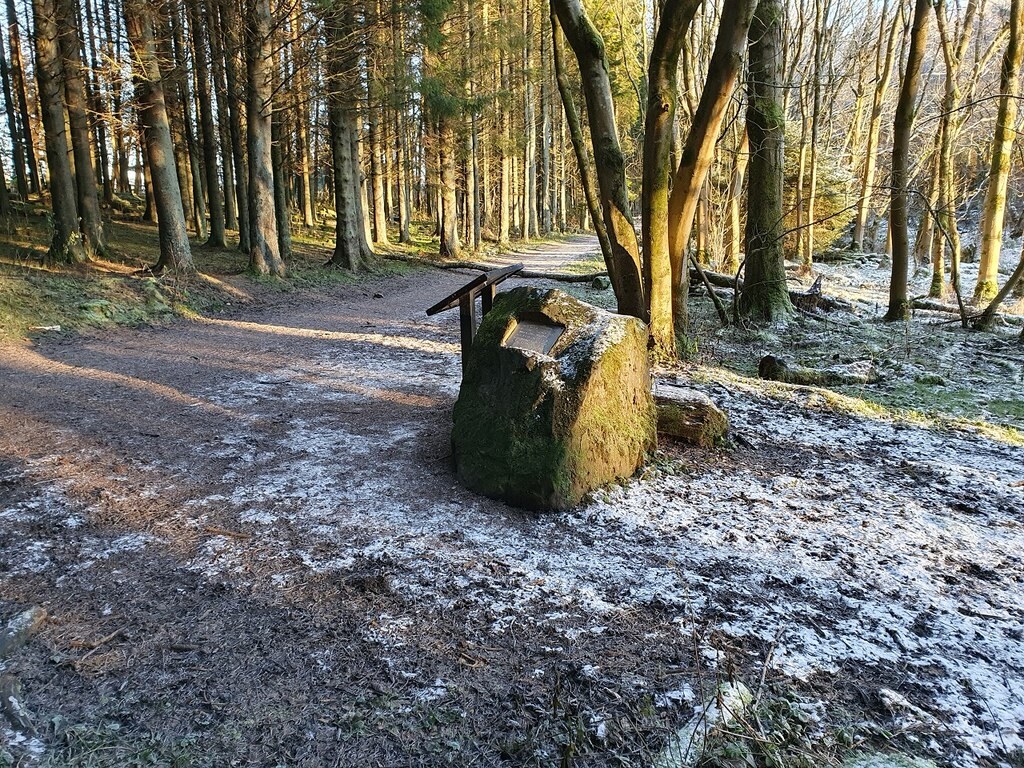
Around the turn of 1992 the Livingston Development Corporation set a plaque into a large boulder at the site (Campbell dates it to autumn 1991); it was stolen within months. In September 2018 West Lothian Council opened a UFO trail from the Deans side of Dechmont Law, with marker posts and a display board in the woods. The council styled its leaflet as a “Top Secret” police dossier, Case File Number 1013, and The Scotsman reported it as the only officially recognized UFO site in Scotland. “The Dechmont Woods encounter is Scotland’s most famous alleged UFO incident,” said Tom Conn, the councillor responsible. Malcolm Robinson of Strange Phenomena Investigations, who says he walked the clearing the day after and campaigned for three years for the trail, published a book-length study of the case for the 40th anniversary, weighing eleven explanations. The encounter has since been folded into the lore of the Falkirk Triangle, the belt of central Scotland around Bonnybridge, west of Livingston, whose wave of sightings began in 1992. The Economist closed its obituary with the flourish that the aliens were “just looking for Bob Taylor, or his dog, or his van.”
Sources: Report on the investigation of the Bob Taylor encounterWest Lothian Council create ‘UFO trail’ at site of famous close encounterDechmont Law UFO trail · Case File Number: 1013TV show to probe famous Livingston UFO encounter40 years on from the Dechmont incident, author looks back at baffling flying saucer sighting near LivingstonRobert Taylor
Two tracks and forty holes
The police record gives the marks in plain numbers. PC Douglas found “central marks” like those of a caterpillar tractor, “uniform in size,” which “indicated that an object of several tons had stood there but there was nothing to show that it had been driven or towed away”; his wide sweep of the soft, rain-soaked ground turned up no crane tracks. Around them were holes about three and a half inches across and as deep, each with a “toe” that cut under the turf, sometimes by four inches. “There appeared to be no rational explanation for these marks.” Wark measured two tracks each ten feet long and a foot wide, seven feet apart, each circled by twenty holes driven into the ground at an angle. Campbell, plotting the police measurements, found something stranger: each ring of holes slanted consistently in one direction around its track, one ring clockwise and the other counterclockwise. The holes exposed fresh earth and bore no imprint of any tool. Wark, recalling about 32 holes forty years later, put it this way: “These marks just arrived. They did not come from anywhere or go anywhere. They just arrived as though a helicopter or something had landed from the sky.” The report of the force’s Criminal Investigation Department (CID) adds the one note that sits awkwardly with a ten-thirty landing: rain water lay in the tracks, “which suggested that the marks had not been made that morning,” though Edinburgh Airport had logged a sleet shower in the hour before ten.
Sources: Close Encounter at Livingston · BUFORA Case History No. 1The UFO sighting investigated by the police
What the grass remembered
Campbell visited on November 10 with police officers and again a week later, and what he saw complicated the idea of a heavy machine. The ladder-like tracks were rungs of grass bent sharply around a square shape, each two or three centimeters wide and deep, and a day later the blades still held that shape. But the ground beneath did not appear to have been indented or crushed at all, and after snow had flattened the grass and it died back for the winter, the soil showed no trace of the tracks. Nothing was burned, scorched or withered, and the grass grew back normally in 1980. Visitors did not help. By the time Campbell arrived on the Saturday it was clear that many people had walked in and around the marks, and snow and sightseers soon obliterated them; the best record is a set of photographs a local amateur, Alistair Sutherland, took early on the Saturday morning, with hoar frost still on the grass. A soil sample taken from one hole within days and a control from a molehill went to a BUFORA chemist and to Glasgow University for X-ray fluorescence; the hole sample showed somewhat more manganese, rubidium and lead, but no one knew the local variation, and the vial broke in the post before the association’s trace team could test it properly. Radioactivity checks found nothing unusual.
Sources: Close Encounter at Livingston · BUFORA Case History No. 1Close Encounter in Scotland
Trousers in the laboratory
The clothes are the case’s most unusual exhibit, because a police forensic laboratory examined them in the ordinary course of an assault inquiry. Lester Knibb and Jennifer Hendry reported on November 22, 1979 that the trousers had “a tear at each hip,” the left a three-inch horizontal tear with short vertical tears joined to it, the right a one-inch tear with two two-inch verticals, and that “both of the tears were consistent with the material having been pulled up while the trousers were being worn.” The long johns had an S-shaped tear at the left hip “consistent with having been made at the same time.” Knibb told Campbell the tears had not been made by burning or cutting, nor by a single point such as a nail; their breadth, Campbell reported, “indicates a broad attachment,” like fabric grabbed with pincers and tugged rapidly upward. The only alternative Knibb offered was the wearer jumping downward and catching them on something. Campbell walked Taylor’s route home specifically to look for a place where that could have happened and found no point where he had to climb or jump. A white powder on the cloth, which the lab likened to maize starch, probably had a homely explanation, Campbell thought: the trousers reached headquarters in one of Mary Taylor’s grocery bags, which may have held flour. She threw the long johns away; the trousers passed to BUFORA and eventually to Malcolm Robinson, who has kept them since.
Sources: Close Encounter at Livingston · BUFORA Case History No. 1Close Encounter in ScotlandThe UFO sighting investigated by the police
A mirage of Venus, and a single seizure
Campbell’s own thinking traveled a long way. In November 1979, pressed by reporters for a view, he floated ball lightning, and later admitted it had been hard to resist interviewers “determined to extract further copy.” By 1982, having found that “investigation has not shaken the witness’s account,” he wrote that the account “should be accepted as true” and still leaned toward a natural electromagnetic phenomenon, while the Edinburgh doctor Patricia Hannaford suggested temporal-lobe epilepsy for the blackout, the smell only Taylor noticed and the weakness after. In The UFO Mystery Solved (1994) he settled on a mirage. Venus, at magnitude −3.7, stood low in the south-east, only three degrees above the horizon at azimuth 138°, with Mercury close by, both hidden in normal conditions by the crest of Deer Hill at just over five degrees; a mirage, he argued, could have lifted and magnified them into a dome and two spiked balls, and the sight triggered an epileptic seizure. “The mirage hypothesis explains why Taylor suffered an epileptic attack when and where he did.” Philip Mantle of BUFORA judged it “convincing to a point” but said it “stretches the imagination somewhat to have everything explained by this hypothesis.” The obstacles are real. By Campbell’s own figures both planets sat behind a hill in broad daylight, he admitted that “no upper air data are available to confirm” the mirage, and it would have had to look like solid objects a few yards away. No seizure was ever diagnosed. Taylor declined Dr Adams’s offer of a neurologist, but also said he never had a fit before or after. The meningitis in his notes was fourteen years old, though he had been admitted to hospital with severe headaches that July. Wark’s answer to the epilepsy theory was short: “But what about the marks on the ground?”
Sources: Close Encounter at Livingston · BUFORA Case History No. 1Scotland’s Socorro: the Dechmont Robert Taylor UFO, 1979The Livingston incident: Guardian (May 1994) and Observer (June 2002) reportsThe UFO sighting investigated by the police
Pipes, water towers and nightshade
The marks have attracted their own explanations. In 1982 Campbell recorded that the water board had been laying pipes within a hundred meters of the site, “but their pipes and equipment had not been left on the encounter site”; later, having seen plastic pipes in a neighboring field, he suggested that stacks of pipes might have been stored in the clearing and made the tracks. No record of pipes stored in the clearing has been published. In 2012 a local businessman, John Alison, argued for a transient ischaemic attack, a mini-stroke, with a dome-shaped water reservoir tower about two hundred yards away on the other side of the M8 supplying the image, and suggested that Drummond had searched the wrong side of the motorway; a year later a Livingston sign-maker, Phill Fenton, published a similar water-tower theory. Robinson’s reply was that Taylor always led investigators to the original clearing, not to a tank, and that he had seen the marks in the grass himself. In 2010 the writer David Slater offered the most baroque reading: deadly nightshade, which grows on the bings, the spoil heaps of West Lothian’s old shale-oil industry, around Livingston, whose poisoning brings a dry throat, loss of speech and hallucinations; the barking dog, seen double, as the spiked spheres; and the saucer in the Doctor Who serial City of Death, which the BBC had been showing that autumn, as the model for the dome. Slater offered it as speculation. None of these proposals accounts for everything at once: the grip on both hips, the rings of angled holes, and an account that, by the police’s own record, never changed and always led back to the same clearing.
Sources: Close Encounter at Livingston · BUFORA Case History No. 1Scotland’s Socorro: the Dechmont Robert Taylor UFO, 1979Author attempting to debunk Lothians UFO mysteryUFO investigator claims he has answer to one of Scotland’s greatest unexplained alien encounter mysteriesSpaceships, Spheres and the Devil’s Herb
Classification and evidence note
This archive classifies Dechmont Woods as a reported close encounter of the second kind because one witness described a craft and two objects at a few yards’ range in daylight, and because police the same afternoon recorded marks on the ground at the spot he named and their laboratory examined his torn clothing. The label describes the account, not its cause. The evidence consists of the police statements of Taylor, his wife, his doctor, PC Douglas and DC Wark, the CID report of January 7, 1980, forensic report L615/79, the police and Sutherland photographs as described in BUFORA’s 1982 case history, a small and compromised soil sample, the trousers, and 1979 press interviews. Nobody else saw the objects, the police have never released their photographs, and the site was trampled and snowed on within a day. Police Scotland confirmed in August 2023 that it still holds the file and refused to release it. Sources were reviewed September 29, 2026; review again by September 2028 or if Police Scotland releases the file or its photographs.
Sources: Close Encounter at Livingston · BUFORA Case History No. 1UFO sighting (Taylor), Livingston incident, Dechmont Woods encounter · FOI 23-1429
- 9 NOV 1979 · 7:45 AM
Robert Taylor starts work at the Rosebank nurseries, takes a squad to Bellsquarry, then goes home to breakfast.
- ABOUT 10:00 AM
He drives the Bedford pick-up into Dechmont Woods, parks on a track and walks on with his red setter, Lara.
- ABOUT 10:15–10:30 AM
Entering a clearing below Dechmont Law, he sees a silent gray dome with a flange; two spiked spheres roll toward him and seize his trousers; a choking smell, and he blacks out.
- MINUTES LATER
After perhaps twenty minutes unconscious, by Campbell’s estimate, he comes round unable to speak, crawls and staggers to the truck, cannot use the radio and bogs the pick-up in soft ground.
- ABOUT 11:15 AM
Mary Taylor sees him walking up the road home, dirty and exhausted: “No, a spaceship thing.”
- ABOUT MIDDAY
Dr Gordon Adams finds grazes to the thigh and chin and orders a head X-ray at Bangour; Taylor takes his boss, Malcolm Drummond, to the clearing and they find the marks.
- ABOUT 1:00 PM
Taylor goes to Bangour General Hospital by ambulance and signs himself out after about two hours without being seen.
- 2:00 PM
Detective Inspector MacDonald, PC Douglas and DC Wark examine, measure and photograph the fenced-off clearing.
- EVENING
The Taylors leave for Keswick; a Glasgow Herald reporter tells BUFORA’s Steuart Campbell of “small furry creatures.”
- 10 NOV 1979
The Scotsman, Glasgow Herald and Edinburgh Evening News carry the story; Alistair Sutherland photographs the marks in the hoar frost; Campbell visits with police.
- 11 NOV 1979
The Sunday Express takes the story across Britain; that evening police take Taylor’s statement and his clothing.
- 22 NOV 1979
The police forensic laboratory reports that both trouser tears are consistent with the cloth being pulled up while worn.
- 7 JAN 1980
The CID report concludes that extensive inquiries found nothing to show what made the marks.
- MARCH 1980
Campbell’s “Close Encounter in Scotland” appears in the Journal of Transient Aerial Phenomena.
- JULY 1982
BUFORA publishes Close Encounter at Livingston, its Case History No. 1, with the police documents as appendices.
- 1991–1992
The Livingston Development Corporation sets a commemorative plaque in a boulder at the site; it is stolen within months.
- 1994
Campbell’s The UFO Mystery Solved proposes a mirage of Venus and Mercury and an epileptic seizure; Taylor says Venus had nothing to do with it.
- 14 MAR 2007
Robert Taylor dies aged 88, never having changed his account.
- SEPT 2018
West Lothian Council opens a UFO trail to the clearing with marker posts and a display board.
- 31 AUG 2023
Police Scotland confirms it still holds the case file and refuses a freedom-of-information request to release it.
Sources & interviews
Close Encounter at Livingston · BUFORA Case History No. 1Steuart Campbell, edited by Charles F. Lockwood and Leslie W. Bayer · British UFO Research Association · July 1982 · with the police forensic report, officers’ and witnesses’ statements, the CID report and 1979 press transcripts as appendicesClose Encounter in ScotlandSteuart Campbell · Journal of Transient Aerial Phenomena 1(2) · March 1980 · the first report of the case in the UFO press, with the forensic scientist’s view of the trousersThe UFO sighting investigated by the policeSteven Brocklehurst · BBC News Scotland · November 9, 2019 · the police statements and an interview with Detective Constable Ian WarkThe Dechmont Woods UFO incident, forty years onBBC News Scotland · November 2019 · video report from the clearingBob TaylorThe Daily Telegraph · obituary · March 23, 2007Robert TaylorThe Economist · obituary · March 29, 2007I’m after the aliens that beat up BobGareth Edwards · Edinburgh Evening News · November 9, 2004 · archival copy · Taylor, whom the paper gave as 87, on the eve of the 25th anniversaryThe Livingston incident: Guardian (May 1994) and Observer (June 2002) reportsPatrick Gross · ufologie.patrickgross.org · compilation transcribing the Guardian’s 1994 interview with Taylor about Campbell’s Venus theoryReport on the investigation of the Bob Taylor encounterSteuart Campbell · 1994 · reposted by UFO Evidence · the investigator’s later summary, with the plaque and its theftScotland’s Socorro: the Dechmont Robert Taylor UFO, 1979Metabunk forum · 2024 · quotes Campbell’s The UFO Mystery Solved (1994), chapter 9, and reproduces the 1979 Daily Record and West Lothian Courier clippingsTV show to probe famous Livingston UFO encounterThe Scotsman · November 10, 2012 · Malcolm Robinson and Nick Pope on the caseAuthor attempting to debunk Lothians UFO mysteryThe Scotsman · August 13, 2012 · John Alison’s water-tower and mini-stroke theoryUFO investigator claims he has answer to one of Scotland’s greatest unexplained alien encounter mysteriesBrian McIver · Daily Record · November 22, 2013 · Phill Fenton’s water-tower theorySpaceships, Spheres and the Devil’s HerbDavid Slater · Anomalous Culture · May 30, 2010 · the deadly-nightshade and Doctor Who proposal40 years on from the Dechmont incident, author looks back at baffling flying saucer sighting near LivingstonThe Sunday Post · March 5, 2019 · Malcolm Robinson and his book on the caseDechmont Woods incident: BBC’s The One Show revisits Scotland’s most famous UFO encounterNeil Pooran · Edinburgh Live · February 27, 2020West Lothian Council create ‘UFO trail’ at site of famous close encounterThe Scotsman · September 30, 2018Dechmont Law UFO trail · Case File Number: 1013West Lothian Council · trail leaflet and map for the encounter siteUFO sighting (Taylor), Livingston incident, Dechmont Woods encounter · FOI 23-1429Police Scotland · freedom-of-information response of August 31, 2023 · the force confirms it holds the case file and refuses to release itSpotted an error, or know a better source? Write to hello@uap.fun.
Connected files
The Landing at Trans-en-ProvenceFourteen months later in Provence: another lone countryman, another craft on the ground, and a trace the authorities took to the laboratory.The Socorro ArroyoA police officer, a landed object and angled impressions in the ground that investigators measured the same day.The Burning Grid at Falcon LakeAnother man alone in the woods who came home injured after getting too close to a landed craft.Rendlesham ForestBritain’s other forest-clearing landing, a year later in Suffolk, with its own indentations and official paperwork.The kinds of close encountersWhy ground marks and torn clothing make Dechmont a second-kind case, whatever pulled at Taylor’s trousers.Discuss this case
Compare notes with other readers: witness details, sources, and the parts that still do not add up.
Open the discussion