The Plain of No Trees
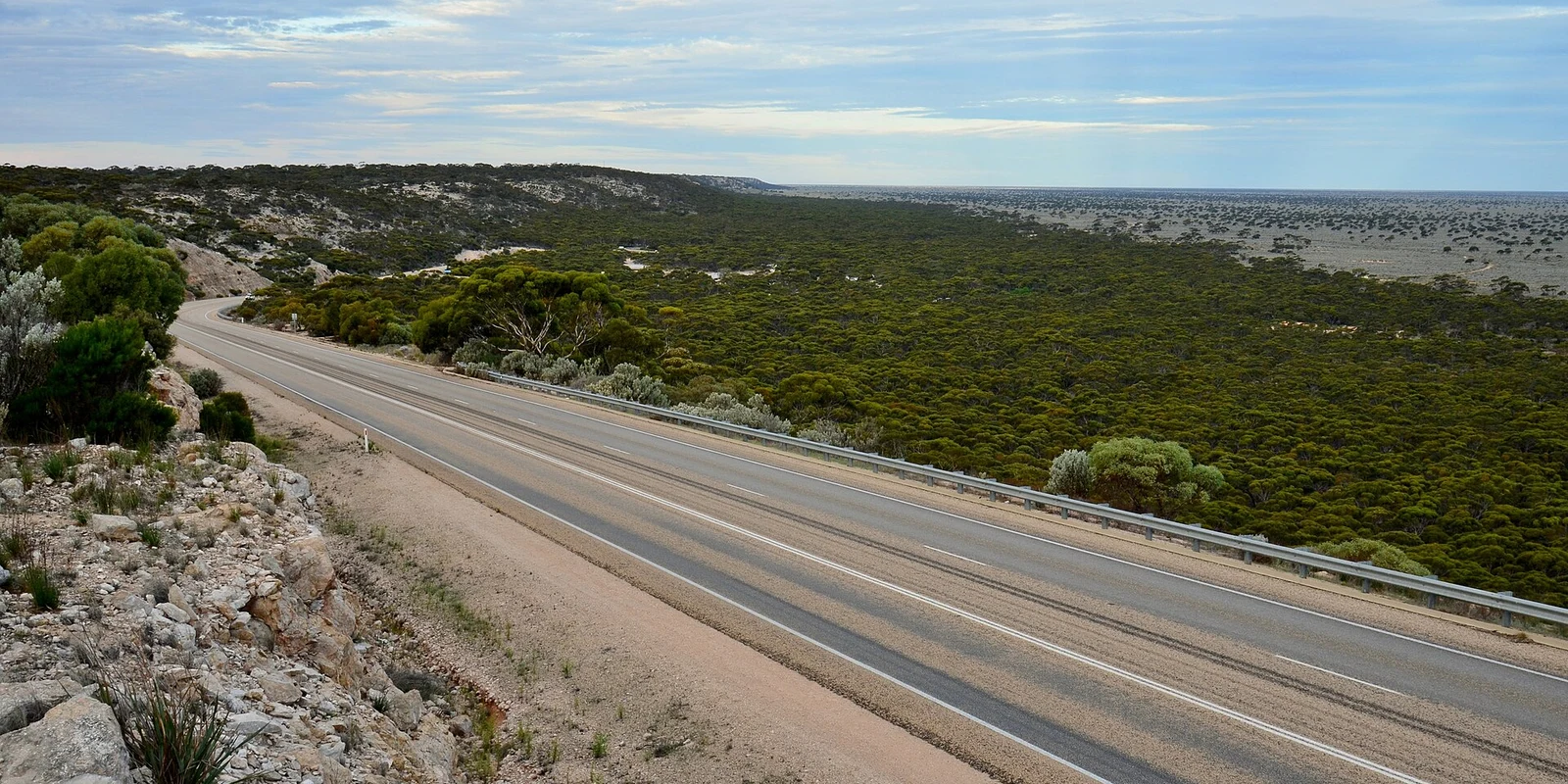
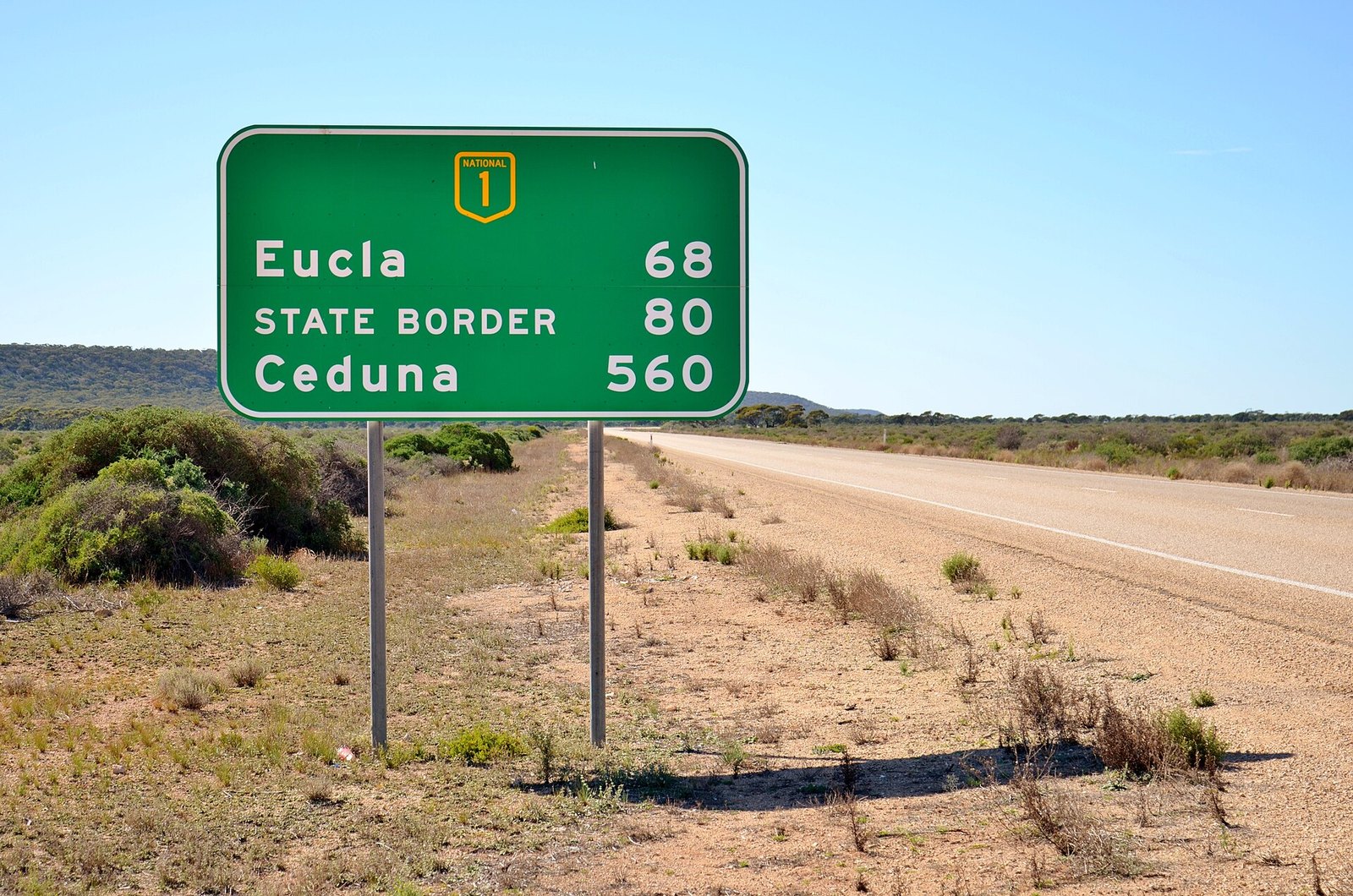
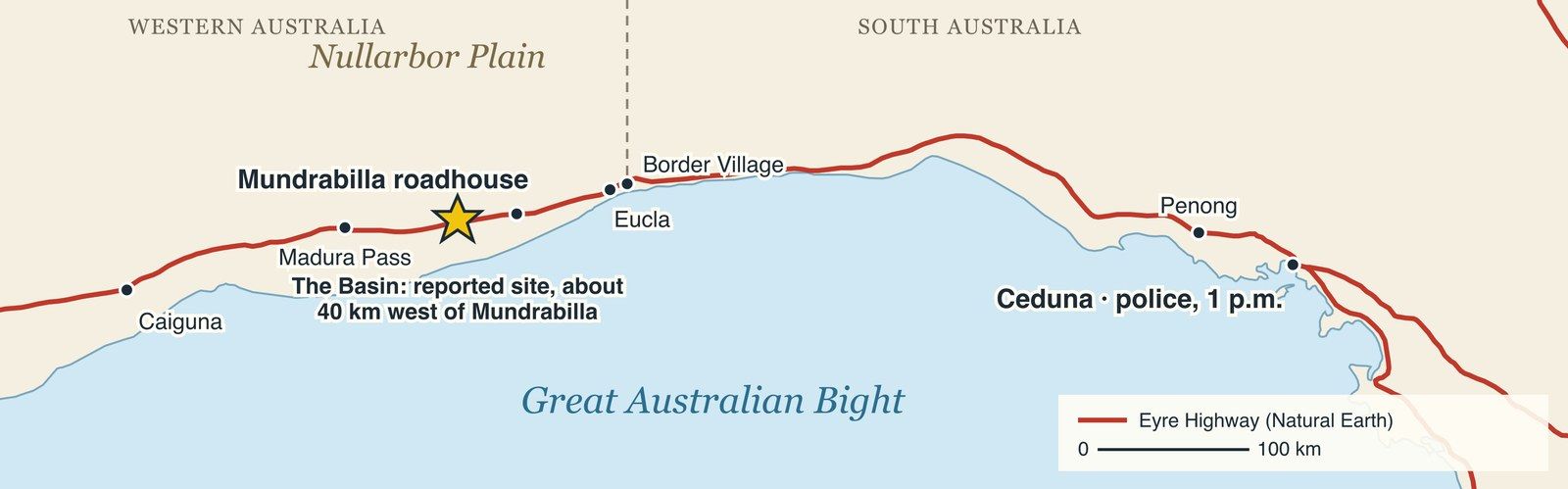
The Nullarbor takes its name from the Latin for “no tree,” and the Eyre Highway crosses its southern edge for more than a thousand kilometers between Norseman in Western Australia and Ceduna in South Australia, with nothing larger than a roadhouse in between. East of Madura the road drops down a limestone escarpment onto the Roe Plains, a strip of saltbush and mallee scrub between a line of hundred-meter hills to the north and the Great Australian Bight to the south. The locals call this stretch the Basin. Mundrabilla is a roadhouse and motel on it; Eucla, the last settlement in Western Australia, is some 68 kilometers farther east by the road sign, with a small police station; Border Village sits on the state line. The roadhouses along this section keep their own unofficial clock, Central Western Time, forty-five minutes ahead of Perth. Just over the border, South Australia was on daylight saving in January 1988, two and a half hours ahead of Perth, so the family’s night drive ran through three clocks, a muddle that would dog every later attempt to say when the encounter happened. The Nullarbor already had a place in Australian folklore: in 1971 and 1972 Eucla had been the center of world attention for the Nullarbor Nymph, a near-naked blonde said to run with kangaroos, who turned out to be a hoax staged by locals.
Sources: The Mundrabilla IncidentThe 1988 Nullarbor UFO Mystery – SolvedTime in AustraliaPress file: “What happened out there on the Nullarbor?” and other cuttings
A trip planned in an hour
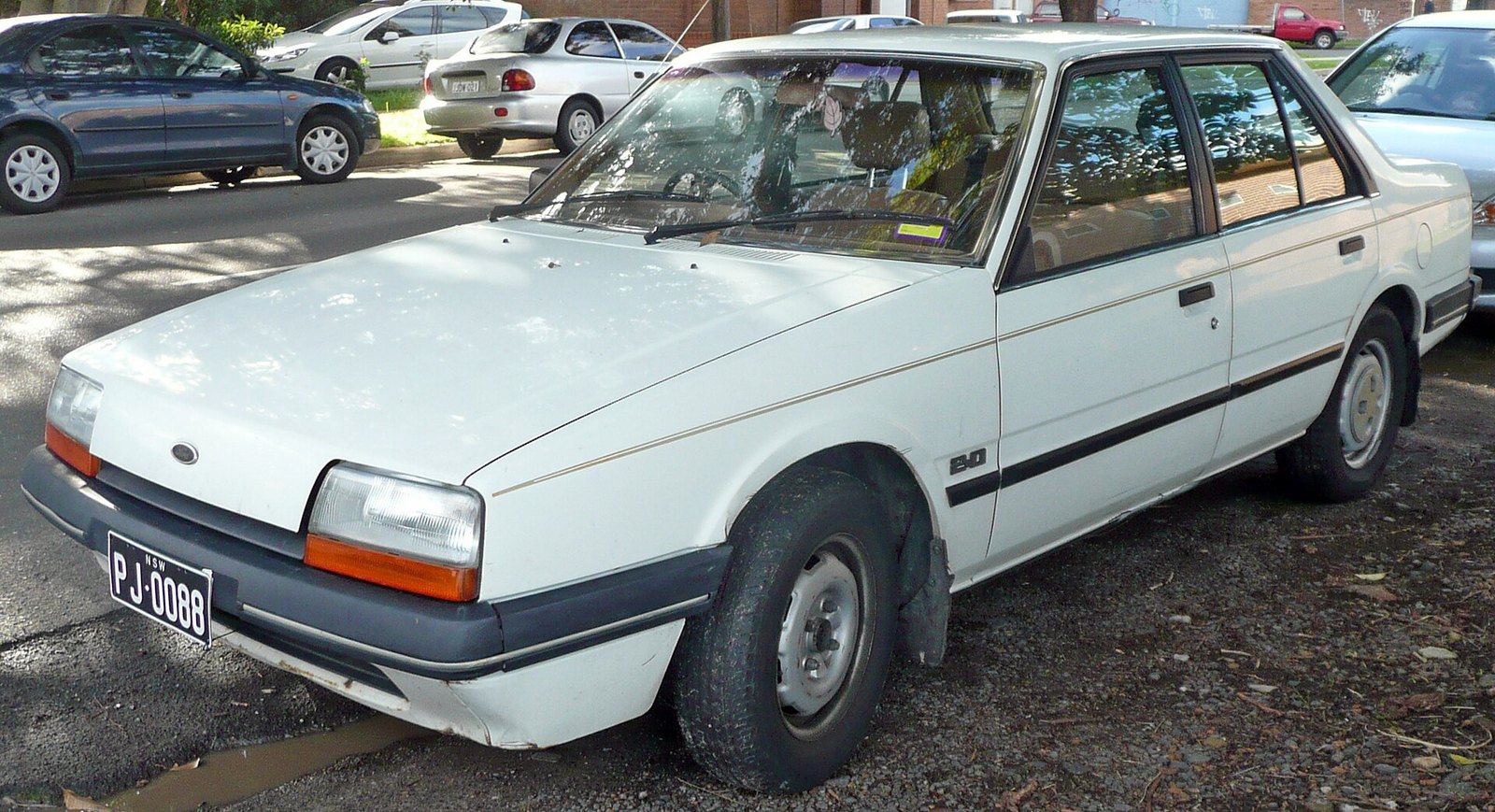
Faye Knowles, forty-three by the investigators’ count (forty-eight in some wire reports), lived with her sons Patrick, twenty-four, Sean, twenty-one, and Wayne, eighteen, in the Perth suburb of Midland. On January 19, 1988, they decided to drive to Melbourne to surprise her sister, though none of them, Henley later learned, had ever crossed the Nullarbor. By their own account to investigators, the planning took about an hour: they threw clothes into the boot, drew money from the bank, left a note for Mr. Knowles and set off at about three in the afternoon in a blue 1984 Ford Telstar sedan, with the family’s two dogs. They meant to make the crossing as fast as possible, sharing the driving and stopping only for fuel. At about 1:30 the next morning they pulled into the roadhouse at Caiguna, where two truck drivers, Graham Henley of Forest Hill, Victoria, and John “Porky” De Jong, noticed a woman and three young men fill a five-liter tin with petrol and head east.
Sources: The Mundrabilla Incident – An UpdateThe Mundrabilla IncidentAustralian family tells of close encounter with UFOUS TV firm interested in UFO report
Trucks in the dark
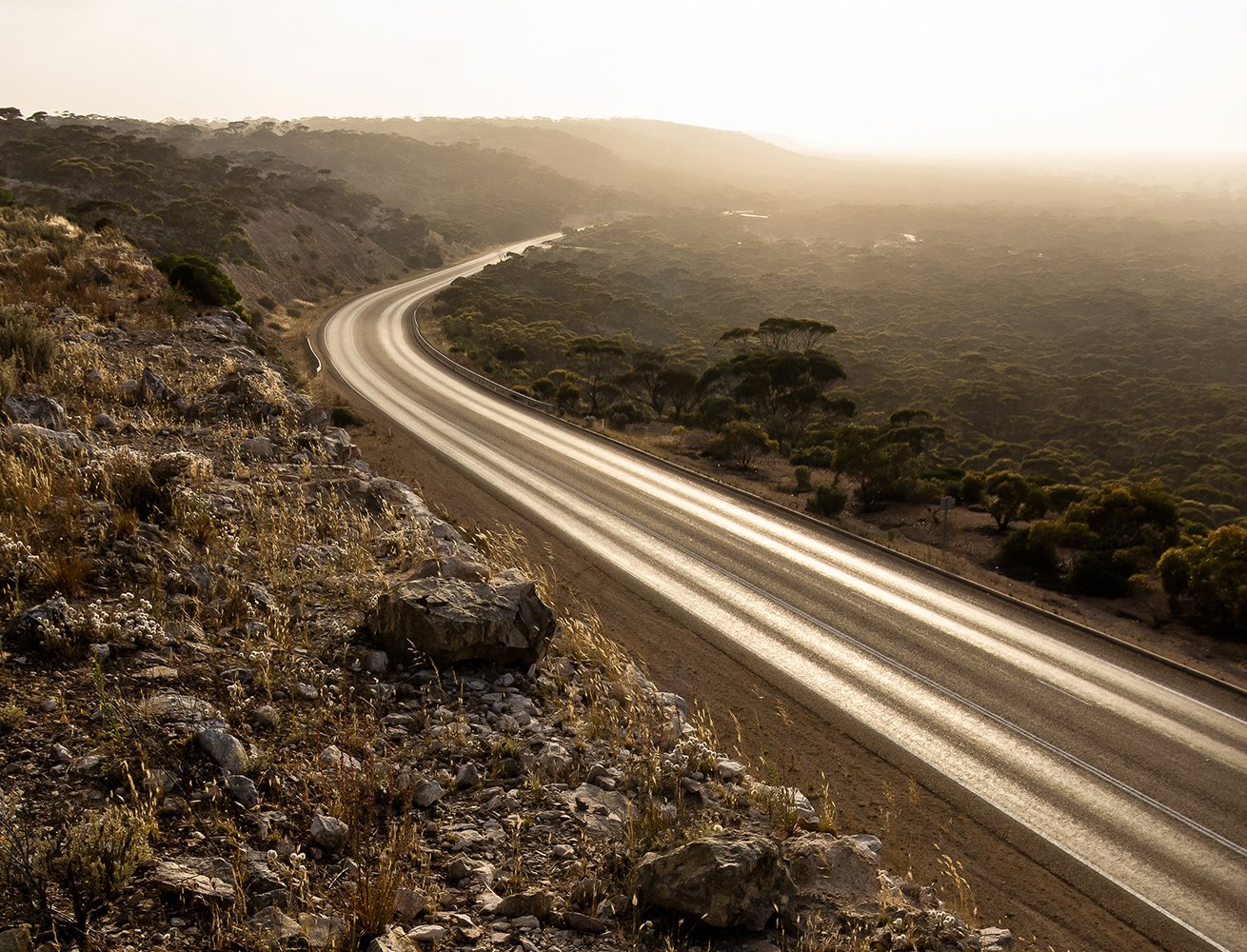
Henley and De Jong had set out together from Norseman, each in his own rig. By 3:30 a.m. they had reached the Madura Pass, and Henley noted a cloudless sky with no thunder or lightning anywhere; De Jong, checking his truck at the top of the pass, saw stars and no moon. There De Jong handed the wheel to his co-driver, a woman the investigators identified only as Anne, and climbed into the sleeper cab. Henley went on ahead and tried to raise De Jong on his radio for about forty kilometers without an answer. It was dark, the road was nearly empty, and the two trucks were far enough apart that Anne never saw Henley’s lights. Somewhere ahead of her, and behind Henley, the Knowles family’s Telstar was running east toward Mundrabilla.
Sources: The Mundrabilla Incident – An UpdateThe Mundrabilla Incident
An egg in an egg cup
Sean was driving, and by the truck drivers’ clocks it was a little before four in the morning. In the version the family gave the next day to Keith Basterfield and Ray Brooke of UFO Research (South Australia), an Adelaide group that also published as UFO Research Australia, he saw what he first took for a truck’s headlight coming toward them along the road from the east. It disappeared after “jumping about a bit,” reappeared, and kept coming, growing brighter and bigger; Sean said it looked like a “spaceship.” To the police they described a brilliant white light with a yellow core, about a meter wide, which blocked their view of the road and zig-zagged from side to side ahead of them. Sean drew it for a police officer at Ceduna, and the drawing became the case’s emblem: it looked, the officer wrote, like an egg in an egg cup, with the ground at the base of the cup. Then a westbound vehicle came the other way, a white Holden station wagon towing a caravan by the family’s later description. Swerving to miss the light, Sean nearly hit it; at the police station Faye and Sean said the light went after this second vehicle, circling round their right-hand side. Then it was behind them. Sean made a U-turn and drove west for a while, then turned again. Whether they were fleeing the light or following it was never clear; in the earliest press version Sean said “we stopped to go back and have a look.”
Sources: The Mundrabilla Incident – January 20th 1988: Report, edition twoThe Mundrabilla IncidentThe Mundrabilla Incident – An UpdateAustralian family tells of close encounter with UFOUFO encounter on Nullarbor Plain reported
Something on the roof
What happened next the family could never put in order, and the investigators eventually printed it as a list. There was a thump on the roof. Faye, sitting behind the driver, wound down her window and reached up, and felt something. To the police officer she said it was “soft, spongy and rubbery, and was hot,” though it did not burn her, and her hand came back covered in black-grey dust; to a Melbourne reporter Sean said she told him it felt like “a rubber suction pad.” A grey-black mist came into the car, with a smell the family likened to “dead bodies.” There was a whirring or humming noise; one of the boys called it “whirry,” not the “chuffy” sound of a helicopter, and Patrick later imitated it on television as “voom, voom, voom”; another of the family, as Henley relayed it, likened it to “a chain saw, a high pitched scream.” Their voices went slow and deep, like a 78 record played at 33, as Henley remembered their description. “It was like we were in a time warp,” Faye said. The dogs went crazy. Everyone was shouting and crying, and Faye believed they were going to die. Patrick, in the front passenger seat, said he opened his window and was showered with black powder, and had the impression that the thing was “taking over his body.” They believed the car had been lifted from the road and slammed back down, and then the right rear tire burst. Sean said he blacked out.
Sources: The Mundrabilla IncidentThe Mundrabilla Incident – An UpdateThe Knowles-Nullarbor EncounterAustralian family tells of close encounter with UFOThe Knowles Family Nullarbor UFO
Hiding in the scrub
When the car stopped they ran. The accounts disagree about the order of what followed. In the statement they gave police that afternoon they changed the wheel in a hurry, were about to drive off, saw the light again glowing white in the middle of the road ahead, drove the car behind roadside bushes and hid separately until it was gone. In the press version they hid first, for about half an hour, then came back and changed the tire. Henley, by now ten or fifteen kilometers ahead, later said that between about 3:55 and 4:10 he had seen a light in his rearview mirror for some five minutes, “like a big egg, like a fried egg hung upside down,” more like a projector light than a vehicle’s, and “too high up to be another truck.” He thought at first it was De Jong playing a trick on him. Behind the family, Anne passed two people waving on the far side of the road near the 40-kilometer post west of Mundrabilla, and 150 meters on a car parked facing back toward Perth. She asked De Jong whether to stop; he raised himself from the bunk and said no. Later a car overtook the truck at speed and, once past, ran for a while with its lights switched off, though to Anne the night was still far too dark to drive without them. The family later told Henley there had been cars everywhere along that stretch, but nobody in them; he put it down to drivers asleep in parked cars.
Sources: The Mundrabilla IncidentThe Mundrabilla Incident – An UpdateFishermen report UFO sightingUFO encounter on Nullarbor Plain reported
Four terrified people
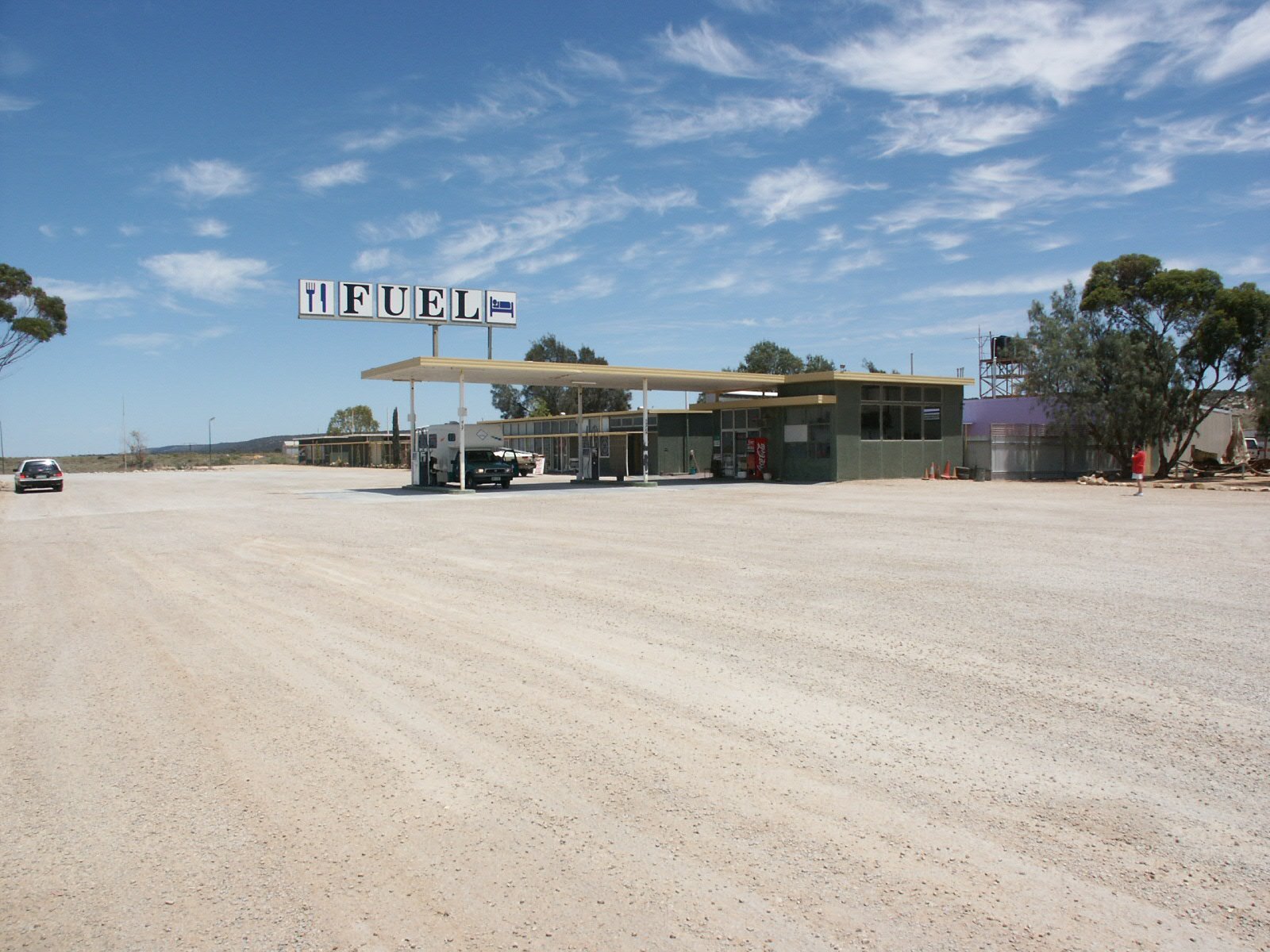
Henley had just pulled in at the Mundrabilla Motor Hotel and was walking to the back of his truck when the Telstar arrived. He recognized the four from Caiguna. “I cannot explain it,” he said in the first days, “but all I know is that I saw four very terrified people at 4.45 on Wednesday morning.” They all tried to talk at once: one said they had been burnt, another that they had been grabbed by a flying saucer, another that they had been picked up and dropped. The fourth opened and closed his mouth and only garbled sounds came out. One of the sons was barefoot and his feet were bleeding. Henley found a fine black dust on the wipers, the spoiler and the rear window, “like ground glass,” with a smell like Bakelite, “or just like as if you’d blown a fuse,” and four dents in the roof “as though the car had been picked up by a magnet.” When De Jong and Anne arrived, De Jong saw no ash at all, only the usual road dirt, but he smelled the Bakelite too, and thought the dents looked like the marks of a fist; Anne, by Henley’s account, sniffed the car and said, “Mum’s old jug used to smell like that.” Faye had a red blotch on the back of her left hand, where she said she had touched something on the roof. Henley felt it and found it “cold, not clammy, but cold like marble.” She kept repeating, “Someone’s going to get hurt.” Henley offered to load the car into his empty refrigerated van and drive them wherever they wanted to go. They refused, refueled from their tin and left for the east within half an hour. The roadhouse manager, Shirley Lundon, telephoned the police at Eucla.
Sources: The Mundrabilla Incident – January 20th 1988: Report, edition twoThe Mundrabilla IncidentThe Mundrabilla Incident – An UpdateFishermen report UFO sightingThe Mundrabilla Incident, parts I and II
Back to the spot
The truck drivers wanted to see the place for themselves. They borrowed a ute, a utility pickup, from the roadhouse and, with Anne, drove back west at low speed, looking for three things: rubber on the bitumen from a blowout, glass from the Telstar’s smashed driver’s mirror (the family said a kangaroo had hit it), and a jack and wheel brace the family said they had left behind. They found none of them. They did find, at the spot where Anne had seen the car, four sets of running toe-prints heading into the bush, and four sets of walking prints coming back along the roadside with dog paws among them, one barefoot, one in thongs (flip-flops) and two in shoes; the square impression of a jack; and signs that a car had left the road on a flat tire and returned on a good one before making a U-turn. De Jong remembered a skid mark of fifteen or twenty meters; Henley, interviewed by Bill Chalker months later, said about two meters, and said the U-turns showed in daylight three or four times. On the way back they found a man asleep in a car twenty kilometers west of Mundrabilla. Two Western Australian officers from Eucla reached the stretch at two in the afternoon and, by Sergeant Dennis Sutton’s account, found “nothing, no evidence”: no skid marks, footprints they could not attribute, no black ash. Someone had already found the jack; Norman later heard that a worker from Norseman had picked it up and left it there for its owner.
Sources: The Mundrabilla IncidentThe Mundrabilla Incident – An UpdatePress file: “What happened out there on the Nullarbor?” and other cuttingsUFO Encounters along the Nullarbor Plain
Five hundred kilometers to Ceduna
The family did not stop at Eucla, whose police station, they said, they never saw, nor at Penong, the first station in South Australia. They drove on for more than five hundred kilometers and at about one in the afternoon, South Australian time, Sean and Patrick walked into the police station at Ceduna. By chance a senior constable from the Port Lincoln crime-scene section was in town on other business. His statement, taken within hours, is the closest thing to a contemporary record. The brothers told him the light had been fifteen to eighteen meters ahead of the car, that they had been doing about 110 kilometers an hour when it landed on the roof, and that the encounter had happened at about 5:30 a.m., Western Australian time. He examined the Telstar in Poynton Street. There were superficial dents at the four corners of the roof. The outside of the car was covered with “a fine black/grey dust similar to a road film left on a vehicle in need of washing,” and the same dust was on the upholstery. All the tires had at least three-quarters of their tread; the burst one, produced from the boot, was fractured right round its outer side at the base of the tread. He lifted two samples of the dust on sticky tape. Sergeant Jim Furnell of the Ceduna police told reporters the family were “physically upset as if someone close had died”; Sergeant Fred Longley said there were “too many witnesses for us not to” take it seriously. Furnell telephoned Ray Brooke in Adelaide at about 2:30 p.m., and arranged for the family to drive on and meet the researchers.
Sources: The Mundrabilla IncidentThe Mundrabilla Incident – January 20th 1988: Report, edition twoUFO encounter on Nullarbor Plain reportedPress file: “What happened out there on the Nullarbor?” and other cuttingsUFO Encounters along the Nullarbor Plain
The tuna boats
By the next morning the story had a second set of witnesses. The Associated Press reported that crewmen of a tuna boat fifty miles away said a UFO had buzzed their vessel a few minutes later and their voices had become unintelligible, and Furnell said they could not have known about the family. United Press International, which spelled his name Fennell, had him counting four reports that night: the family, a truck driver followed by a UFO, a tuna-spotting aircraft that saw a bright light near the highway, and a trawler in the Bight. The Port Lincoln Times named the boat as the Empris Lady, whose crew had reported a bright white light through the pilot of their spotter plane, and added that the crew of another boat, the Monika, had reported a UFO a week earlier. Then the boats receded. In March an anonymous crewman of the Empris Lady, just back in port after two months at sea, told police he had been on watch at about half past midnight when a bright white light with red lights on top and green below came “very close” to the boat; he watched it for about thirty seconds, fetched another crewman, and saw it streak off northward ten seconds later. He was not sure of the day and said it might have been the same evening, though a statement Norman printed from a Canadian aboard the boat put it several days after. When the Adelaide investigators finally found the spotter pilot, a Mr. White, he described a color-changing light seen by the Monika’s crew of ten or twelve, with no structured object, no electrical effects and no change in anyone’s voice, and insisted he had heard about it a couple of days before the Knowles story went to air. Paul Norman of the Victorian UFO Research Society quoted the Monika’s owner as saying a newsman had invented the slow-motion voices.
Sources: Australia-UFOAustralian family tells of close encounter with UFOFishermen report UFO sightingA new UFO ‘sighting’Sailor says he saw an ‘unusual sight’The Mundrabilla Incident – An UpdateUFO Encounters along the Nullarbor Plain
A box of Eskies at Wudinna
The family never kept their appointment in Adelaide. Frank Pangallo, chief of staff at Channel 7 in Adelaide, got a tip from the police on Wednesday night, rang Ceduna to find out when the family had left, worked out when they would pass through Wudinna on the Eyre Peninsula, and called a former colleague, Paul Jackson, who ran the Eyre Highway Motel there. “I got him to sit out there on a box of Eskies and just wait until they came,” Pangallo told a Melbourne Sunday paper on January 24. Jackson flagged them down and took them inside while Pangallo flew in by light plane, arriving, he said, three hours before anyone else. The family signed an exclusive with Channel 7, for its program Hinch at Seven, at a reported price of $5,000 and three months’ silence toward other media. Pangallo hid the car on a property at Wudinna while film crews from four state capitals combed the town for it, and defended the deal by saying Mike Willesee’s team from the rival Nine network had been waving offers of up to $20,000 around the Eyre Peninsula. Basterfield and Brooke called it a case of “cheque book” journalism scoring over scientific evaluation; they got three hours in the Channel 7 studios the next day, talking to the family informally between television interviews. Brooke fielded almost a hundred calls from radio, television and newspapers in Australia and abroad in the first forty-eight hours, and appeared in the lead item of Channel 7’s six o’clock news. George Eberhart of the Center for UFO Studies in Chicago told the Sun, “I can’t think of any other case like it.” Aaron Spelling Productions, the makers of Dynasty, was reported in preliminary talks with Channel 7 for the rights to the story. The Canberra Times, surveying the week, found the tabloids “almost hysterical with joy at this gift at the end of the Silly Season,” but noted “no sign of a giant glowing chook.”
Sources: The Knowles-Nullarbor EncounterPress file: “What happened out there on the Nullarbor?” and other cuttingsThe Mundrabilla Incident – January 20th 1988: Report, edition twoRay Brooke – the passing of an Australian UAP researcherUS TV firm interested in UFO reportFor a while, something was rotten in the ACT
Brake dust
Channel 7 commissioned the Australian Mineral Development Laboratories, AMDEL, to examine the car at Wudinna on January 22. AMDEL’s analyst, Monty Luke, found “no evidence of any significant ash or dust on the body of the vehicle or in the interior.” There was black dust on the front wheels, which he sampled and compared with dust from brake pads: it was magnetite and brass, iron oxide, copper and zinc, “characteristic of dust from wearing brake pads and discs,” with “no significant foreign compounds.” His own table, though, showed the Telstar’s dust far richer than the brake-pad control in silicon, aluminum, copper, zinc and tin. A radiation meter found nothing above background on the roof, the seats or the wheels. The dents were “consistent with an object being pressed into the roof rather than an attempt to lift the roof,” and the tire damage was consistent with running on a deflated tire for an extended period, which, the report said, would account for the odor, smoke and vibration. Word of the findings was out well before the written report, which is dated January 29: the Melbourne Sunday papers carried them on January 24, and Basterfield and Brooke dated Seven’s formal announcement the 25th. On Saturday, January 23, relatives in Melbourne took Faye, Patrick and Wayne to a private hospital in Dandenong, where a doctor gave each of them a cup of coffee and told them to “take it easy”; on Channel 7 Faye said the tests were “calling us liars.” Pangallo said some of the dents were old wear and tear, though two looked fairly recent, and “Nobody’s really disputing that they didn’t see anything. It’s just that nothing hit the car.” He later told the Melbourne Sun the family were far too traumatized to talk and had been sedated twice; the Sun’s reporter added that she had rung them half an hour earlier, and that Sean had offered to talk if the paper paid. Meanwhile the police sample deflated in public. “That’s all bulldust,” the head of South Australia’s forensic police, Superintendent Schulz, told the Sun. He had two slides with a minuscule amount of grime, probably road grime, and no car to compare them with, because the press had hidden it in the shed of a west-coast hotel. There would be no examination, he said, because no offense had been committed in his state.
Sources: The Mundrabilla IncidentSamples from the Mundrabilla CE2The Knowles-Nullarbor EncounterPress file: “What happened out there on the Nullarbor?” and other cuttingsThe Mundrabilla Incident – January 20th 1988: Report, edition two
The car in the car park
On February 2 the Telstar, trucked from Wudinna to Adelaide, was made available in the Channel 7 car park, and the investigators went over it. From a few meters away the four dents were hard to see; close up they were small, shallow depressions near the corners of the roof with the paint unbroken, and there was no roof rack. The driver’s mirror was gone. The only black deposit was on the trims of the two front wheels, the ones with disc brakes, distributed as heavy braking would leave it. The burst tire, a Dunlop steel-belted radial with half its tread left, had blown out in a circle along the line where the steel belt ends, and its valve was missing; the spare now on the car was a retread. The floor was strewn with sand, food and drink containers. The day before, investigators from the Victorian UFO Research Society, Paul Norman among them, had vacuumed the interior for samples, and for Channel 7’s cameras their colleague John Auchettl jacked the front wheels off the ground and ran the speedometer to its full scale of 200 kilometers an hour. That demonstration answered a reader of the Melbourne Age who had asked to be shown a Telstar that could do 200, the speed Sean had given the Sun; to the Victorian society’s bulletin it proved that the same car could show 200 with its wheels spinning off the ground, as they would if something had lifted it.
Sources: The Mundrabilla IncidentOn the UFO TrailThe Knowles-Nullarbor Encounter
Dust under the microscope
Three sets of samples were taken, and none settled anything. AMDEL’s was brake dust. The police tape lifts, taken seven or eight hours after the event and six hundred kilometers from the scene, were split, and after negotiations that began in November 1988 half reached the Adelaide researchers; Basterfield sent his half through Stan Gordon of the Pennsylvania Association for the Study of the Unexplained to an analyst named J. Mathers, whose scanning electron microscope found two kinds of particle: crystals of sodium chloride, table salt, and ordinary clay. The Victorian society’s vacuumings went to Monash University in Melbourne and, through the American researcher Richard Haines, to a laboratory with a Philips scanning electron microscope, which Norman called the Philips Laboratory. The Monash mineralogist Alf Hohmann was reported by Australasian Post to have found mainly potassium chloride, a common substance in an uncommon quantity; Auchettl wrote of large black plate-like particles rich in chlorine and potassium chloride that showed “cooling under high velocity.” Haines’s report found the brake dust and the rear-floor dust quite different. The floor dust was mostly fibers, some cellulose and some “typical of pipe insulation but it is not asbestos,” and the analyst added that element 85, astatine, “is also possible in the sample as is a relatively long fiber of NaCl which is unusual.” Norman made much of the astatine; Haines himself said that until control samples from the region were tested, no one could know whether the floor dust was simply the ordinary accumulation of a trip across the Nullarbor. No one ever took soil from the site. A copy of Haines’s report, sent in by the Victorian society, ended up in a Royal Australian Air Force file now in the National Archives of Australia, the most substantial trace of the case in the surviving military papers. The only official military word in 1988 came from an RAAF spokesman at Edinburgh, the air base north of Adelaide, who knew of no military aircraft in the area.
Sources: Samples from the Mundrabilla CE2The Mundrabilla Incident – An UpdateParticle analysis of the Mundrabilla samplesUFO Encounters along the Nullarbor PlainA9755, 5: UFO reports (unusual aerial sightings), RAAF Headquarters Support Command, 1986–1992Australia-UFO
A story in two directions
As the investigators kept interviewing, the story moved two ways at once. The Victorian society heard more. Norman’s account, published in Timothy Good’s The UFO Report 1990, has the car radio full of static for a quarter of an hour before the encounter, a group of lights first mistaken for streetlights in country that had none, Patrick yelling “Why us?” and feeling as if his brains were being pulled from his head, Faye’s right hand and arm swollen when the Victorians met the family in Melbourne, the dogs’ hair falling out in clumps, and a service-station attendant at Border Village who smelled “hot insulation” and “definitely a scent like ozone” on the car. Even the touch on the roof grew in the retelling: soft and spongy in the police statement, a “rubber suction pad” in the first Melbourne papers, “huge suction caps locked on the roof like a leech” in a Sun feature at the end of January, and, as Faye told Judith Magee of the Victorian society, like the neck of a turtle-neck jumper. Norman counted the Knowles night as the fourteenth known case of a car lifted and dropped and concluded there was “reason to believe that this was an abduction attempt that failed.” He set it beside the Army Reserve helicopter that Larry Coyne’s crew said was drawn upward over Ohio in 1973, another attempt gone wrong in his view, and beside the 1978 disappearance of the young pilot Frederick Valentich over Bass Strait, which he suspected was an abduction that succeeded. Valentich’s father, Guido, was a member of the Victorian society. The Adelaide group, interviewing the family properly at last in 1988, heard less. The family could not say how high the car had gone, had never looked out to see the ground below, and could not say exactly where it had happened. Two U-turns became three or four. They denied having any cassette tapes in the car, though Henley believed tapes had been playing and had slowed like their voices. A Melbourne vet said the dogs had fleas, and the hair grew back. Sean, Patrick and Faye were hypnotized in Melbourne, and Faye and Patrick again in Adelaide; nothing new emerged, and no abduction story.
Sources: UFO Encounters along the Nullarbor PlainOn the UFO TrailThe Mundrabilla Incident – An UpdateThe Knowles-Nullarbor EncounterPress file: “What happened out there on the Nullarbor?” and other cuttings
UFO base booking office
The case left the family worse off. The car, which they now considered jinxed, was repossessed and sold at auction; by Jenny Randles’s account in Northern UFO News an entrepreneur who was also acting as the family’s agent bought it and took it on tour, charging people to see it, and Norman wrote that the family lost nearly $20,000, most of it tied up in the car. A Japanese television crew re-enacted the night on the Nullarbor and put two of the family under hypnosis again, and then, Norman said, cancelled the trip to Japan it had promised them. The Nullarbor kept the legend. Someone spray-painted “UFO base Booking Office” on the roadside west of Mundrabilla, another added “Cut rates for Earth,” the roadhouse sold UFO spoons, stubby holders, stickers and postcards, and a sign near the border warned travelers to beware of UFOs for the next 111 kilometers. On October 17, 1988, a Pioneer coach driver, Peter Chapman, reported a bright light pacing his bus near Mundrabilla; the Eucla sergeant vouched for him, and UFO Research Australia put it down to the planet Jupiter and misperceived vehicle lights. In 2018 the Internet Movie Database listed a feature called The Nullarbor in pre-production, its plot line “On a dark and lonely road an ordinary family encounter something extraordinary,” with the actor John Brumpton cast as Keith Basterfield, by then the investigator most sure the night had an ordinary explanation. Basterfield wrote that he did not know when production would begin.
Sources: UFO Encounters along the Nullarbor PlainUpdate on MundrabillaI tackled a Nullarbor alienThe 1988 Nullarbor UFO Mystery – SolvedUFO flew beside bus, says driverUFO was probably JupiterA UFO film – “The Nullarbor”
What survives
The core record is the written statement of the Port Lincoln crime-scene officer at Ceduna, taken a few hours after the event and printed in full by Basterfield and Brooke and again by Norman; the investigators’ interviews with the family, Henley, De Jong and Anne, and the spotter pilot; the AMDEL report of January 29, 1988, known from the extracts and tables the investigators printed; the investigators’ own inspection of the car on February 2; Haines’s electron-microscope report, a copy of which survives in an RAAF file at the National Archives of Australia; and the electron-microscope analysis of half the police tape lifts. The contemporary press is extensive: the AP and UPI wires, the Canberra Times and Port Lincoln Times on Trove, and the Melbourne papers reprinted in the Victorian society’s bulletin. The 1988 television interviews survive in a recording that Skeptoid transcribed. The Western Australian police, who had jurisdiction, left no published record beyond Sergeant Sutton’s remarks to the press. The Victorian society’s master report, said to run past 400 pages, was never released; a hundred-page digest was sold in a run of 100 copies, and in 1990 Basterfield complained that the society had never released its laboratory results. The consolidated document the Adelaide group promised has not surfaced online. No photograph of the light exists, and the car, toured and sold, has not been traced.
Sources: The Mundrabilla IncidentUFO Encounters along the Nullarbor PlainThe Mundrabilla Incident – An UpdateSamples from the Mundrabilla CE2A9755, 5: UFO reports (unusual aerial sightings), RAAF Headquarters Support Command, 1986–1992Australia-UFOAustralian family tells of close encounter with UFOUFO encounter on Nullarbor Plain reportedThe Knowles-Nullarbor EncounterThe Knowles Family Nullarbor UFOParticle analysis of the Mundrabilla samples
The contradictions
The time is 2:45 a.m. in the AP and Australian Associated Press (AAP) reports (AAP specified Queensland time), 4:10 in Basterfield’s catalogue, 4:20 a.m. central daylight time in Allan Brunt’s analysis, 5:00 in Norman’s figure caption and 5:30 Western Australian time in the police statement; Sergeant Furnell gave “8.30am Melbourne time.” By this archive’s calculation the sun rose near Mundrabilla that morning at about 4:44 Perth time, 5:29 on the local roadhouse clock, yet the truck drivers said it was still dark when the family’s car stood by the road, with only the first grey of dawn showing at Mundrabilla; a Melbourne feature written ten days later set the encounter against “the huge, orange sun just peeping over the horizon.” De Jong put his passing of the stopped car between 4:00 and 4:30 and his arrival at Mundrabilla at 4:45, and a car leaving Caiguna at 1:30 would reach the Basin at about that hour. How long it all lasted is just as elastic: fifteen or twenty minutes in De Jong’s estimate, ninety in Walt Andrus’s summary for the MUFON UFO Journal, the figure later retellings repeat. The driver was Sean in the police statement and Faye in the first wire stories. Faye reached up with her right hand from behind the driver, by her own account the next day, or with her left from the left-hand passenger seat, by what De Jong understood at the roadhouse. The speed was 110 kilometers an hour in the statement and up to 200 in Sean’s words to the Sun. The site was forty kilometers west of the roadhouse for De Jong, seventy to seventy-five for Henley, and forty kilometers east in one early report. The light was about a meter wide, “bigger than the car,” or “about three foot square” in Sergeant Longley’s words. The car was covered in “a thick coating of black ash” for one sergeant, in road film for the forensic officer, in nothing at all for De Jong and AMDEL. In January the family said two suitcases had been strapped to the roof without a rack and lost; Henley and De Jong saw no luggage on the roof and no rack. And the touch on the roof, the most quoted detail of all, is in the crime-scene officer’s statement that afternoon, but Sergeant Furnell insisted Faye never told him about it: “She certainly didn’t say that to us.” It came out, he said, only on television.
Sources: Australia-UFOThe Mundrabilla Incident – January 20th 1988: Report, edition twoA Reference Catalogue of UAP Reported from the Nullarbor Plain RegionThe 1988 Nullarbor UFO Mystery – SolvedUFO Encounters along the Nullarbor PlainThe Mundrabilla IncidentThe Knowles-Nullarbor EncounterAustralian family tells of close encounter with UFOFishermen report UFO sightingThe Mundrabilla Incident – An UpdatePress file: “What happened out there on the Nullarbor?” and other cuttingsThe Mundrabilla Incident, parts I and IITime in Australia
A theory a day
The first week produced a theory a day. Glen Moore of Wollongong University proposed the fall of a carbonaceous meteorite, likening it to the one at Murchison in Victoria in 1969; Professor Peter Schwerdtfeger of Flinders University and William Grey of the Canberra Skeptics, a dry electrical storm; Matthew James of the Melbourne Planetary Society, ball lightning; Allan Brunt, retired head of the South Australian Bureau of Meteorology, a badly distorted rising sun, adding that he would “go and jump in the lake” if the dust turned out to be extraterrestrial; Sergeant Furnell, privately, a meteorite. Others floated willy-willies, the outback’s whirlwinds, lifting the car. But Henley and De Jong had both noted a clear, starry sky with no lightning anywhere. AMDEL’s findings anchored the conventional case: brake dust, a deflated tire run on its rim, dents pressed in rather than pulled out. Ben Harris in the Skeptical Inquirer suggested the thump was the roped-on luggage bouncing on the roof, the dents the marks of luggage torn free in a spin, and the “suction pad” Faye felt perhaps the rubber pads of a roof rack.
Sources: The Knowles-Nullarbor EncounterSceptic gives theory on UFO sightingThe Mundrabilla IncidentPress file: “What happened out there on the Nullarbor?” and other cuttingsThe Nullarbor UFOThe Mundrabilla Incident – An UpdateThe Nullarbor UFO Incident: Dramatic Case Quickly Fades
The mirage and its doubters
In 1989 Brunt traded the sunrise for something subtler. The soundings at Forrest, a weather station about a hundred kilometers north of the highway, showed a strong temperature inversion along a thousand-kilometer ridge of high pressure, and he argued that a superior mirage of a distant vehicle’s headlights produced a vertically stretched, jumping light: the family’s first impression of a truck was right, and the rest was panic. Basterfield came to a similar view, telling the ABC in 2018 that the light never actually reached them and that a tire exploding at speed explains the vibration and the brake dust: “It was simply a case of misunderstanding.” Robert Bartholomew calls the night a small-group panic, and Brian Dunning of Skeptoid adds a tire rated for 180 kilometers an hour driven at 200 and dry-throated “morning voice.” Jenny Randles of the British UFO Research Association, who thought the world’s press had badly misrepresented the case, still filed it as “unknown, but probably unusual natural phenomenon.” Against all this stand Henley’s light in his mirror before he knew anything of the family; the drivers’ testimony that the family were genuinely terrified; Henley’s insistence that the debunking was “a lot of rot,” because the dust he touched was not brake dust, “the brakes weren’t even hot” and he could not dent the roof with his fist, and that the blowout was “the most unusual burst tyre I had seen in my life”; and the fact that no one ever identified the vehicle whose headlights would have made the mirage, or the car and caravan the family nearly hit.
Sources: The 1988 Nullarbor UFO Mystery – SolvedFlying saucers of Nullarbor just an illusionSouth Australia’s X-Files: Curious Adelaide cracks open our most mysterious UFO casesAustralian Family Suffer Bizarre Shared DelusionThe Knowles Family Nullarbor UFOUFO World 89Press file: “What happened out there on the Nullarbor?” and other cuttingsThe Mundrabilla Incident, parts I and IIThe Mundrabilla Incident – An UpdateUFO Encounters along the Nullarbor PlainUFOs in the 1980s: The UFO Encyclopedia, vol. 1, “Australian Ufology”
Classification and evidence note
This archive files the Knowles night as a close encounter of the second kind because the family reported physical effects, the dents, the dust and the burst tire, and investigators examined the car; the label describes what was reported, not what caused it. The resolution is disputed: the laboratory and most investigators, including the Adelaide group who did the most interviewing and documentation, explained the physical traces conventionally and favored a mirage and a blowout, while the light itself, Henley’s sighting and the family’s experience were never identified to everyone’s satisfaction. Quotations from the police statement, AMDEL and the truck drivers are taken from the investigators’ printed transcriptions; the press quotations come from the AP and UPI wires, Trove and the Victorian society’s reprints of the Melbourne papers; the family’s television words are as transcribed by Skeptoid. Times are given as each source gave them; where a source named its clock, so does this file.
Sources: The Mundrabilla IncidentUFO Encounters along the Nullarbor PlainThe Knowles-Nullarbor EncounterPress file: “What happened out there on the Nullarbor?” and other cuttingsThe Knowles Family Nullarbor UFO
- 1971–1972
The Nullarbor Nymph hoax puts Eucla in the world’s newspapers.
- 19 JAN 1988 · ABOUT 3 PM
Faye Knowles and her sons Patrick, Sean and Wayne leave Midland, Perth, for Melbourne in a blue 1984 Ford Telstar with two dogs.
- 20 JAN 1988 · ABOUT 1:30 AM
Truck drivers Graham Henley and John De Jong see the family buying petrol at Caiguna.
- 20 JAN 1988 · ABOUT 3:30 AM
The trucks reach the Madura Pass under a clear, moonless sky; De Jong’s co-driver Anne takes the wheel.
- 20 JAN 1988 · BEFORE DAWN
In the Basin west of Mundrabilla the family meet an egg-shaped light, swerve, turn back and forth, feel something land on the roof and burst a tire; Henley sees a light in his mirror for about five minutes.
- 20 JAN 1988 · ABOUT 4:45 AM
The family reach the Mundrabilla roadhouse in a state of terror; the manager phones Eucla police and the truck drivers drive back to inspect the site.
- 20 JAN 1988 · 1 PM SA TIME
Sean and Patrick report to Ceduna police; a Port Lincoln crime-scene officer takes a statement and tape lifts of the dust. Furnell phones Ray Brooke at about 2:30.
- 20 JAN 1988 · NIGHT
Channel 7’s Frank Pangallo has the family flagged down at Wudinna and signs them up; the car is hidden on a property.
- 21 JAN 1988
The story goes round the world on the AP and UPI wires, with tuna-boat crews said to have lost their voices; Basterfield and Brooke speak to the family between television interviews.
- 22 JAN 1988
AMDEL examines the car at Wudinna.
- 23 JAN 1988
Meteorites, dry lightning, ball lightning and the rising sun are proposed in the press.
- 23 JAN 1988
Faye, Patrick and Wayne are checked at a private hospital in Dandenong, Melbourne.
- 24–25 JAN 1988
The Melbourne Sunday papers report AMDEL’s finding; Channel 7 announces that the black material is mostly iron oxide from worn brake linings.
- 28 JAN 1988
Aaron Spelling’s company is reported negotiating for the story.
- 1–2 FEB 1988
The Victorian UFO Research Society vacuums the car; the Adelaide investigators inspect it in the Channel 7 car park.
- MID-FEB 1988
By Ben Harris’s account, the case has vanished from the mainstream press.
- 2 MAR 1988
An Empris Lady crewman tells Port Lincoln police of a light near the boat on an uncertain night in January.
- 17 OCT 1988
A Pioneer coach driver reports a light pacing his bus near Mundrabilla; UFO Research Australia later blames Jupiter.
- NOV 1988
South Australian police contact UFO Research Australia; after negotiations, half their tape-lift sample goes to the Adelaide investigators.
- 1989
Allan Brunt publishes his mirage explanation; Paul Norman calls the case an abduction attempt that failed.
- LATE 1989
An electron microscope finds only salt and clay in the police sample.
- JAN–FEB 1990
Basterfield summarizes all three sets of analyses in the International UFO Reporter.
- 23 FEB 2018
Basterfield tells the ABC the night was “simply a case of misunderstanding.”
Sources & interviews
The Mundrabilla Incident – January 20th 1988: Report, edition twoKeith Basterfield and Ray Brooke · UFO Research Australia and UFO Research (South Australia) · January 26, 1988 · With AAP and Advertiser clippings · Internet ArchiveThe Mundrabilla IncidentKeith Basterfield and Ray Brooke · UFO Research Australia Newsletter vol. 6 no. 1 · April 1988 (compiled March 17) · With the Ceduna police statement, the AMDEL report and the truck drivers’ interview · Internet ArchiveThe Mundrabilla Incident – An UpdateKeith Basterfield and Ray Brooke · UFO Research Australia Newsletter vol. 7 no. 1 · May 1989 · With Bill Chalker’s interview of Graham Henley and the tuna-spotter pilot’s account · Internet ArchiveMundrabilla: A Case BriefingKeith Basterfield and Ray Brooke · BUFORA Bulletin no. 30 · November 1988 · Internet ArchiveSamples from the Mundrabilla CE2Keith Basterfield · International UFO Reporter vol. 15 no. 1, pp. 11–13 · Center for UFO Studies · January/February 1990 · Internet ArchiveA Reference Catalogue of UAP Reported from the Nullarbor Plain RegionKeith Basterfield · Version 3 · December 2013 · Project 1947Ray Brooke – the passing of an Australian UAP researcherKeith Basterfield · UAP – scientific research (blog) · September 2018Australia-UFOAssociated Press wire, Sydney · January 21, 1988 · CompuServe Executive News Service copyAustralian family tells of close encounter with UFOUnited Press International, Sydney · January 21, 1988 · UPI ArchivesUFO encounter on Nullarbor Plain reportedThe Canberra Times, p. 7 · January 21, 1988 · Trove, National Library of AustraliaFishermen report UFO sightingPort Lincoln Times, p. 1 · January 21, 1988 · Trove, National Library of AustraliaA new UFO ‘sighting’The Canberra Times, p. 3 · January 22, 1988 · Trove, National Library of AustraliaSceptic gives theory on UFO sightingThe Canberra Times, p. 8 · January 23, 1988 · Trove, National Library of AustraliaFor a while, something was rotten in the ACTThe Canberra Times, p. 2 · January 24, 1988 · Week-in-review column · Trove, National Library of AustraliaUS TV firm interested in UFO reportThe Canberra Times, p. 9 · January 28, 1988 · Trove, National Library of AustraliaSailor says he saw an ‘unusual sight’Port Lincoln Times, p. 1 · March 3, 1988 · Trove, National Library of AustraliaLetter to the editor from Keith Basterfield, UFO Research (South Australia)Port Lincoln Times, p. 4 · March 17, 1988 · Trove, National Library of AustraliaThe Knowles-Nullarbor EncounterJohn Auchettl · Australian UFO Bulletin, Victorian UFO Research Society · March 1988 · With a press file from the Sun, Herald, Age, Sunday Press and Sunday Observer · Internet ArchivePress file: “What happened out there on the Nullarbor?” and other cuttingsAustralian UFO Bulletin, Victorian UFO Research Society · June 1988 · Reprints the Sun (Melbourne) feature of January 30, 1988 · Internet ArchiveOn the UFO TrailPaul Norman, with an editorial · Australian UFO Bulletin, Victorian UFO Research Society · September 1988 · Internet ArchiveParticle analysis of the Mundrabilla samplesJohn Auchettl · Australian UFO Bulletin, Victorian UFO Research Society · March 1989 · Internet ArchiveUFO Encounters along the Nullarbor PlainPaul Norman · chapter 8 of The UFO Report 1990, ed. Timothy Good · Sidgwick & Jackson · 1989 · Internet ArchiveA9755, 5: UFO reports (unusual aerial sightings), RAAF Headquarters Support Command, 1986–1992National Archives of Australia · Item 3533434 · Includes the VUFORS copy of Richard Haines’s electron-microscope report on the “Mundrabilla dust”The Mundrabilla Incident, parts I and IIWalt Andrus · MUFON UFO Journal nos. 239 and 240 · March and April 1988 · Internet ArchiveUFO World 89Jenny Randles (ed.) · British UFO Research Association · 1989 · Internet ArchiveUFOs in the 1980s: The UFO Encyclopedia, vol. 1, “Australian Ufology”Jerome Clark · Apogee Books · 1990 · Internet ArchiveThe Nullarbor UFOTim Mendham · the Skeptic (Australian Skeptics) vol. 8 no. 1 · 1988 · Reprinted in The Second Coming: UFOs, 1986 to 1990 collectionThe Nullarbor UFO Incident: Dramatic Case Quickly FadesBen Harris · Skeptical Inquirer vol. 12 no. 4, pp. 349–352 · Summer 1988 · Internet ArchiveThe 1988 Nullarbor UFO Mystery – SolvedA. T. Brunt · The Skeptic (UK) vol. 3 no. 5 · 1989 · Reposted in the Skeptic’s “From the archives” seriesFlying saucers of Nullarbor just an illusionAlex Harris · The Canberra Times, p. 19 · October 15, 1989 · Trove, National Library of AustraliaUFO flew beside bus, says driverThe Canberra Times, p. 4 · October 20, 1988 · Trove, National Library of AustraliaUFO was probably JupiterThe Canberra Times, p. 13 · October 28, 1988 · Trove, National Library of AustraliaI tackled a Nullarbor alienAustralasian Post · May 20, 1989 · Reprinted in International UFO Press no. 118 · Internet ArchiveAustralian Family Suffer Bizarre Shared DelusionRobert Bartholomew · It’s Catching, Psychology Today · September 2016The Knowles Family Nullarbor UFOBrian Dunning · Skeptoid episode 715 · February 18, 2020South Australia’s X-Files: Curious Adelaide cracks open our most mysterious UFO casesNicola Gage and Daniel Keane · ABC News · February 23, 2018Update on MundrabillaJenny Randles (ed.) · Northern UFO News no. 130 · 1988 · Internet ArchiveA UFO film – “The Nullarbor”Keith Basterfield · UAP – scientific research (blog) · June 2018Time in AustraliaWikipedia · On the unofficial Central Western Time zone used between Caiguna and Border VillageSpotted an error, or know a better source? Write to hello@uap.fun.
Connected files
The Green Light over MansfieldPaul Norman set the Knowles car beside the Army Reserve helicopter that its crew said was drawn upward over Ohio in 1973, another attempt gone wrong in his view.The Last Call over Bass StraitNorman suspected Frederick Valentich’s disappearance was a successful version of what he thought was attempted on the Nullarbor.The Levelland NightAnother night of drivers on empty highways meeting a light, and the classic case of vehicle effects.The Little Men of KellyAnother family that fled through the night to the police, and another case where investigators had to weigh obvious terror against thin physical evidence.Close encounters, explainedWhere the second kind, a close encounter that leaves physical traces, comes from.Discuss this case
Compare notes with other readers: witness details, sources, and the parts that still do not add up.
Open the discussion