A man on top of the coal
Zygmunt Jan Adamski (the spelling of his first name wanders from source to source) was a fifty-six-year-old miner at Lofthouse Colliery, born in Poland and a British citizen since the Second World War. From 1960 he and his wife Leokadia, “Lottie,” lived in Tingley, near Wakefield. She had multiple sclerosis and used a wheelchair, and he had applied for early retirement to look after her; the Coal Board turned him down. On Saturday, June 7, 1980, he was to give his god-daughter away at her wedding, and he had written his speech. A cousin and her son were visiting from Poland. On Friday, June 6, after a shopping trip to Leeds and lunch at home, he said at about 3:30 p.m. that he was going down to the local shop for potatoes, passed a cheery word with a neighbor, and was never seen alive again. Five days later, at about 3:45 on the afternoon of Wednesday, June 11, Trevor Parker, son of the owner of a coal yard beside the railway in Todmorden, found him lying on top of a heap of coal; Flying Saucer Review called it twenty feet high. The yard had been empty since 8:15 that morning, when, Parker assured the police, no body had been there. (Talking to researchers in 2008, Parker said he had left the yard at about eleven and come back at four to find the man face down, some ten feet up a pile of anthracite.) Two Todmorden constables arrived at 4:10: PC Alan Godfrey and a colleague who did not wish to be named. “He was lying on his back with his eyes open, looking straight up, no sign of rigor mortis,” Godfrey recalled in 2008. One of the ambulance crew greeted the police with “You’ve got a murder on your hands.” The man had been missing for five days but had about a day’s growth of beard and had evidently been eating; his shirt and watch were missing (other accounts say his watch and wallet); and on the back of his head, neck and shoulders was an irregular patch of burned-off skin smeared with a greasy substance, perhaps an ointment.
Sources: Death of a famous nameA Policeman’s LotThe mysterious death of Zigmund Adamski: a re-investigationZapper death sends UFO rumors flying
An intractable mystery
Dr. Alan Edwards, consultant pathologist at Halifax Infirmary, began the post-mortem at Hebden Bridge mortuary at 9:15 that night. Adamski had died of heart failure, which Edwards linked to his long-standing heart and chest complaints. The burn had not killed him. Edwards put it at about two days before death, which meant it had been inflicted after Adamski vanished, and no hospital or doctor in West Yorkshire or the surrounding counties showed any sign of having treated it; its cause, some corrosive agent, was never identified. The time of death is one of the case’s first contradictions. The coroner’s report as MUFORA read it in 1981 put death eight to ten hours before the body was found, about 7 a.m.; Jenny Randles, writing in 1983, gave Edwards’s estimate as between 11:15 a.m. and 1:15 p.m., which, she pointed out, meant the body had lain on the heap for three or four hours in daylight beside a busy line. Edwards acknowledged at the inquest that the effort of climbing the coal could itself have brought on a fatal attack. Flying Saucer Review reported that someone at the inquest had called the only obvious answer, “although ridiculous,” that the body had been put there “from above!” The coroner, James Turnbull, adjourned twice and on September 25, 1980, recorded an open verdict, frustrated, Randles wrote, that he could think of no other avenue to explore. The Todmorden press quoted him calling it “an intractable mystery,” with three questions unanswered: how Adamski came by the burn, why he had no shirt, and how he got from Tingley to Todmorden and on top of the coal. Lottie Adamski said of her husband’s body that he “looked frightened,” and clung to a theory of human kidnappers: he knew no one in Todmorden, she said, and “it is like someone has picked him up.” Another witness told the inquest, “I think he has been somewhere. … I think he has been abducted.” A few days after his body was found, a letter came from the Coal Board. It had changed its mind about his retirement. The story stayed local (“Wheelchair wife’s death probe agony,” ran one headline), but the Manchester UFO Research Association noticed it for one reason: the dead man shared his surname with George Adamski, the most famous flying saucer contactee of the 1950s.
Sources: Death of a famous nameShock, horror, UFO dramaA Policeman’s LotAll in the Line of Duty
Cows on the council estate
Alan Godfrey was thirty-three in November 1980, married with two children, and the village bobby for Walsden, a hillside village on the edge of Todmorden. Colleagues described him to Randles as practical, down to earth and a stickler for detail; before joining the police he had driven buses out of the Todmorden depot. He had not worn a watch since it, and he, were badly damaged in a violent arrest three years before. On the night shift of Thursday, November 27, the first call came in at one in the morning: a herd of cows was wandering, distressed, around a council estate on the slopes off Burnley Road. More calls followed, about twenty or thirty animals. Godfrey and a colleague cruised their white Ford Escort Panda car along Burnley Road and up the steep Ferney Lee Road into the estate, squinting through freezing rain, and found nothing. Soon after five, near the end of the shift, he went out alone for the last routine patrol. Outside the Town Hall he met PC John Allen. “I’ve already done the town patrol on foot,” Allen told him, as the Sunday Express later reconstructed the scene. “Everything’s okay.” “In that case,” said Godfrey, “I’ll see if there’s any sign of those cows.” The earliest accounts, Randles’s report in Flying Saucer Review in 1981, her Yorkshire Evening Post serial in 1983 and Godfrey’s own talks, all put what happened next in the early hours of Friday, November 28, 1980. Later retellings, including Randles’s own in 2015, moved it to the early hours of Saturday the 29th.
Sources: Mystery lights in road centreHanging over a country lane, a suspicious object that baffled a policemanA Policeman’s LotFlappy Valley: Part OneFlappy Valley, Part 3
Not a bus
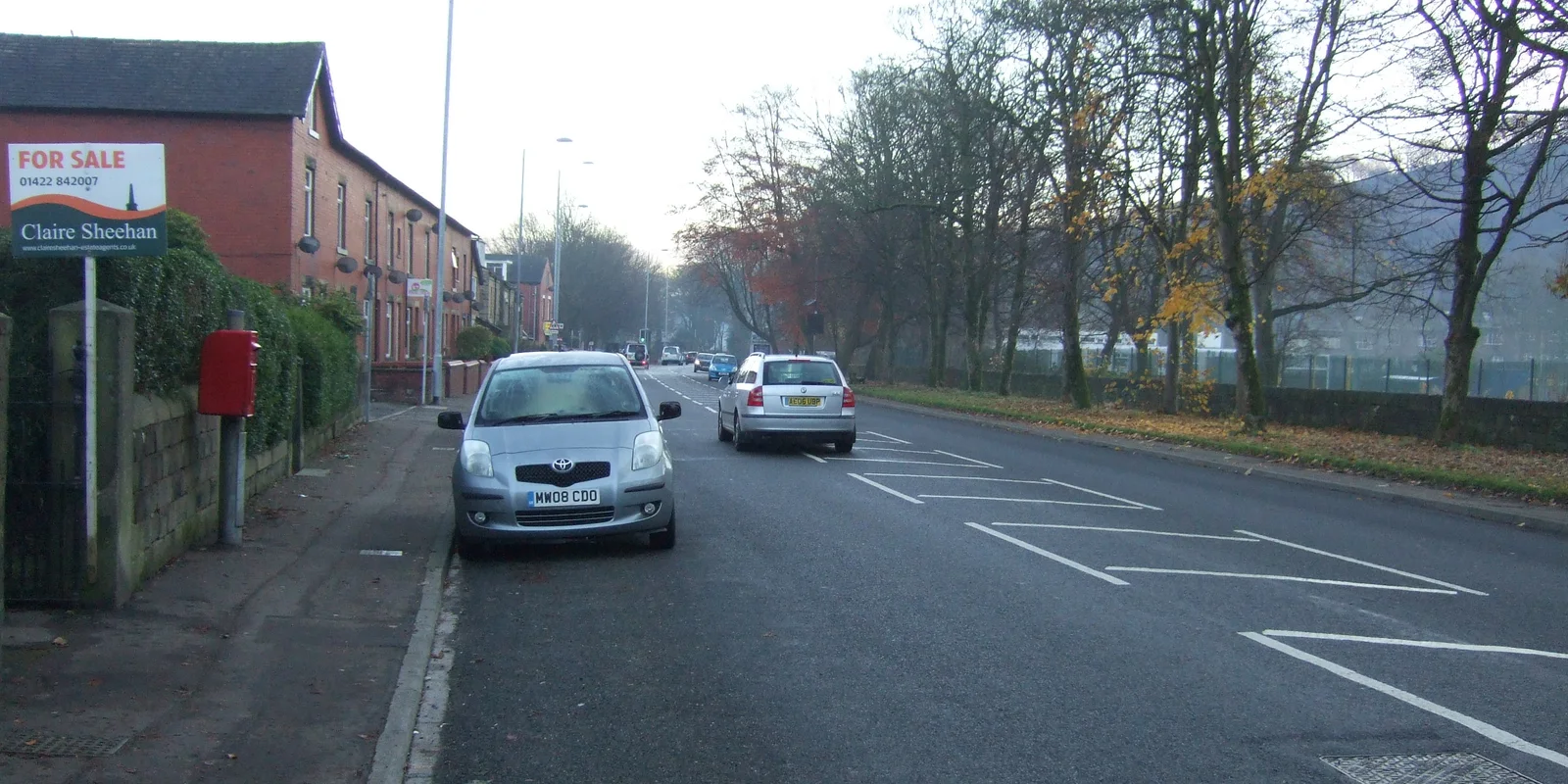
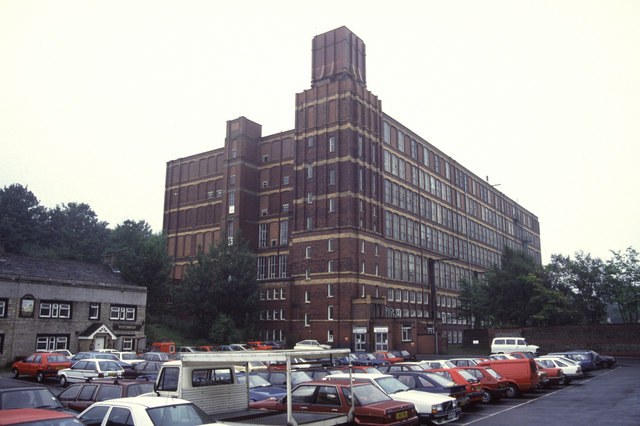
He was slowing to turn right into Ferney Lee Road when he noticed a light farther along Burnley Road. The rain had stopped. His first thought was the works bus that ran that way a few minutes later each morning, and he wondered idly why it was early, and why it had stopped. “It was strange, something attracted me to it,” he said. “I had thought it was a bus and I wouldn’t normally go to look at a bus.” He drove on and pulled up about a hundred feet short of it. It hung, he later said, where the drive-in to the car park of Mons Mill, a seven-story cotton mill set back from the road, made a wide hardstanding. In the June 1981 report, the thing was dome-shaped, its top flatter than its base, white, with fluorescent light pouring from the top and a row of square dark “windows” below it, five of them in later tellings. The top half was still; the lower half rotated, counterclockwise as seen from beneath. It spanned the road, about twenty feet across, and hung about five feet above the surface between two lamp standards, its top within two feet of the lamps, about twelve feet high by that first estimate and fourteen in later ones. It made no sound. He switched on his blue beacon and saw his headlights and the pulsing light reflected in it, so whatever it was, Randles wrote, “it had a physical substance.” Leaves on the roadside trees and bushes were shaking, though there was no wind to speak of, and the soaking road was dry in blotches under the object. He picked up his personal radio. “Sowerby Bridge Control from 3981.” Three times, nothing. He tried the car set. “Alpha Bravo Three to XB Control. I have a message for Sowerby Bridge. Over.” There was not even static, though he himself pointed out to the investigators that the valley was full of radio black spots. Then he propped his clipboard against the windscreen and began to draw.
Sources: A Policeman’s LotMystery lights in road centreHanging over a country lane, a suspicious object that baffled a policemanAlien contact: the Godfrey case
“It is not for your eyes”
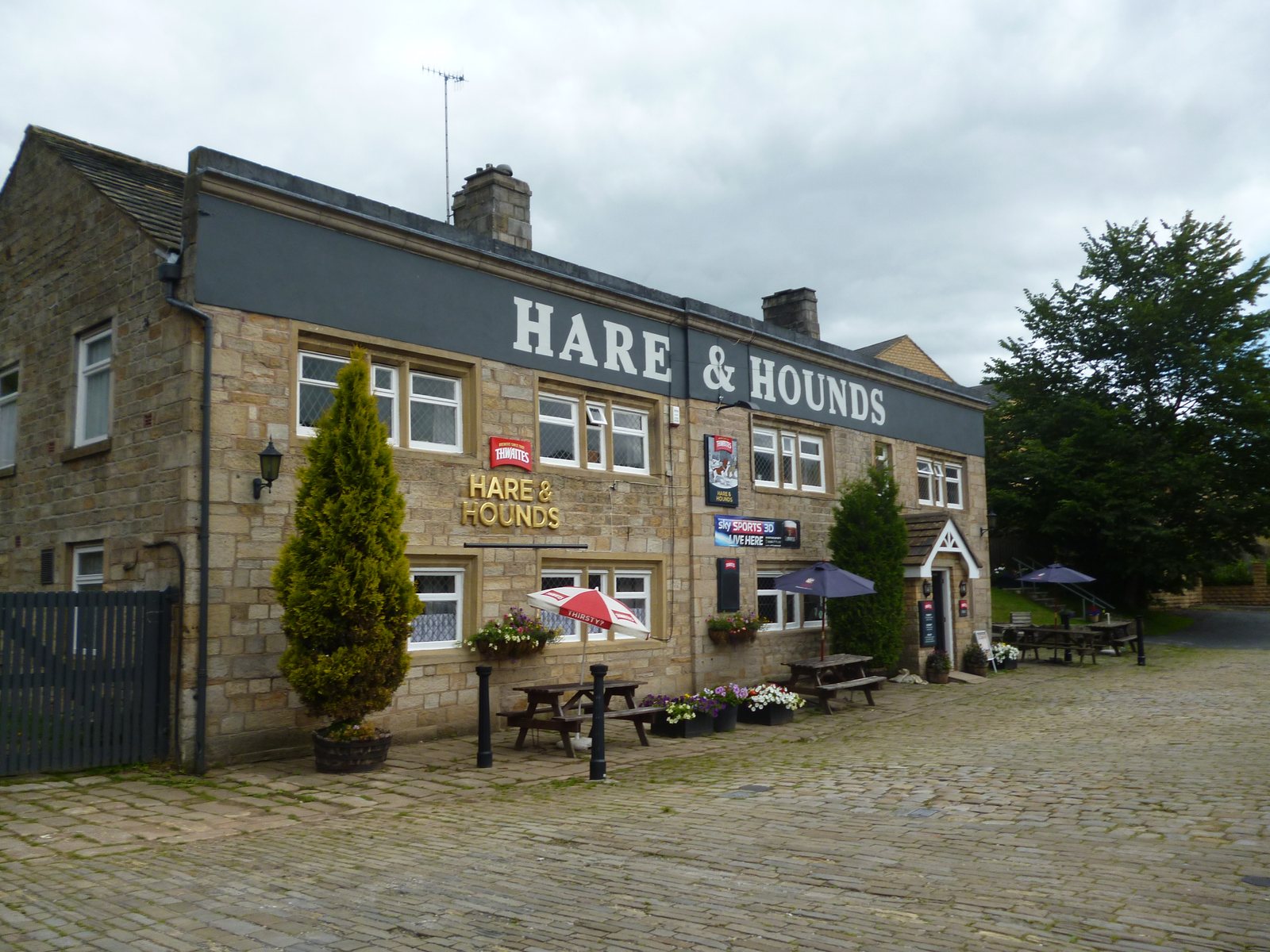
What happened next, in the words of the first report, was that “Alan was suddenly further down the road, past the point where the object had been.” He looked back. It was gone. The engine was still running and the car was in first gear, creeping forward; he had no memory of putting it in gear or driving. Then he heard a voice, dull but clear, which he thought was in his head, though it was hard to tell. In Flying Saucer Review, with his pseudonym in place of his name, it said: “You should not be seeing this. It is not for your eyes, Davies. You will forget it.” He later described it as “very much like his own thinking voice,” speaking in an odd monotone. In later tellings a flash comes first. “I started to sketch the object when there was a very large white flash of light many times brighter than a photo flash bulb,” he told Randles. “It blinded me. When the blindness went I found that I was further up the road and the object had gone. That’s it for my conscious memory.” How far he had gone also moved: about a hundred yards in the early accounts, thirty yards in a 2014 newspaper report, and, in a 1994 talk, several hundred yards, far enough to see the Hare and Hounds pub, with the car facing back toward town. He drove back past the empty spot into the town, picked up a colleague (two, in his 1994 telling: John Allen and Malcolm Agley), and returned to the site. At the station he found it was 5:30. His conscious memory accounted for about four minutes of the trip, so the investigators reckoned a lapse of roughly ten minutes. In later years it became fifteen, and then half an hour.
Sources: A Policeman’s LotA Policeman’s Lot: Part 2Flappy Valley, Part 3An Audience with Alan GodfreyFormer policeman’s story of a close encounter with a UFO pulls in crowdsDeath of a famous name
The one at Halifax
His colleagues told him he must have seen the “flying squad,” and he decided not to make an official report. Later he felt uncomfortable in his boots. The left one was split, and on his left instep was a small sore that a doctor diagnosed as a skin infection, possibly brought on by shock; Randles later photographed the boot, with “a long split, as if it had been dragged sideways.” The cows, bullocks in fact, turned up next morning across the road in Centre Vale Park. (In his 1994 talk Godfrey added that their tracks were confined to one spot and that the farmer later had them put down.) When he came back on duty the following night, the mood had changed. After he went home, a man driving from Burnley to Littleborough had come in to report a bluish-white light meandering along the valley near Todmorden at about 5 a.m. The inspector called Godfrey in. “Tell me what you saw.” He told him, and the inspector did not laugh. “I want you to get on to Bradford,” he said, “and make an abbreviated report. They’ll telex it to the Ministry of Defence.” When Godfrey phoned headquarters, the answer came back: “This isn’t the one at Halifax then.” Three Halifax officers, as Randles named them in 1983, John Porter, Howard Turnpenny and WPC Julie Baxter, searching the moors between Halifax and Hebden Bridge for stolen motorcycles near Cold Edge Dam, had watched a steel-blue ball of light over the moors to the north at 4:49 a.m. When they got out of the car it grew larger than the full moon, “pulsing in a low rhythmic throb,” and moved across the sky in arcs and zigzags before vanishing toward Todmorden: twenty minutes before Godfrey’s encounter, or so the story ran for thirty years. “It was completely alien to my understanding,” Porter said in 2008. In the first published version there were four officers, three men and a woman, who ducked as a brilliant ball swooped over their car, and the call was logged at 4:53. A school caretaker in his sixties, about to light the boilers at a school on a hill above the town, reported a ball of white light “tinged with blue” rising from the ground at about 5:45 and streaking away; he came to the station while Godfrey was being questioned by his superiors. A week after the encounter, encouraged by his superiors, Godfrey told his story to the local paper under his own name: “Amazing encounter in Calder Valley.”
Sources: Hanging over a country lane, a suspicious object that baffled a policemanMystery lights in road centreA Policeman’s LotFlappy Valley, Part 3An Audience with Alan GodfreyReview: the Firefly series on British close encountersProgress in West Yorkshire
PC Alan Davies
MUFORA found the case among a run of reports from the Rossendale valley on the Lancashire–Yorkshire border, and two members with useful day jobs took it on: Norman Collinson, a detective inspector in the CID, and Harry Harris, a Manchester solicitor who was giving Lottie Adamski free professional advice and had obtained a copy of the coroner’s report. Collinson and Mike Sacks questioned Godfrey while Harris videotaped the interviews. Randles had a personal line in: her family came from the next mill town, Bacup, and her cousin had married Godfrey’s sergeant. The investigators found no UFO books in his house; he seemed, they wrote, “more fond of music than of reading matter.” Their report, written in June 1981, appeared in Flying Saucer Review that August as “A Policeman’s Lot,” about one “PC Alan Davies, aged 33,” who, it said, requested anonymity. Randles admitted months later that he had not asked for it; the pseudonym was meant to keep the story under control, and his real name had been in the local paper the previous November anyway. The article opened with the coal-tip death and ended its teaser with a flourish: “the name of the mysterious dead man was Zygmund Jan Adamski!” It also pointed out how closely the encounter echoed the 1967 case of Herb Schirmer, a lone American patrolman who had been out checking on cows behaving oddly, met a “truck” on the road and lost about twenty minutes. The witness, the first summary noted, claimed never to have heard of it. Davies, the report said, was wavering about hypnosis, but a qualified hypnotist was lined up. The group admitted it was not convinced hypnosis produced valid data.
Sources: A Policeman’s LotShock, horror, UFO dramaAll in the Line of DutyProgress in West YorkshireFlappy Valley: Part One
Yosef, the dog and the robots
The sessions began in the summer of 1981, at Harris’s expense, eight or nine months after the encounter. A 1997 newspaper profile of Harris named the hypnotists as Dr. Joe Jaffe and the consultant psychiatrist Dr. Robert Blair, both dead by then; Randles described the psychiatrist who conducted the regression as eminently qualified and rather skeptical. Godfrey had only ever seen hypnosis as a stage act and at first refused. Mike Sacks, who was in the room, said the atmosphere was “electric.” A transcript of part of the first session, as printed after Godfrey’s 1994 talk, has him begin: “It’s a bus. Not a bus!” Then: “Flying saucer… Big… Not frightened… spinning… Light on dome.” The car would not go; there was a light; then blackness, something holding him, and a room with a table and “a him”: “6 foot, man, white sheet on him, a beard, skull cap, long nose, thin.” And others: “They’re horrible… Look small like 5 year old lads… About eight of them… they’re touching me.” “Heads like a lamp… Keep touching me, making noises like ‘me me me me me’.” The tall man’s name, Joseph, “just came into my head.” “They are robots, not human, they’re robots. There’s a bloody dog down there, horrible, looks like size of an Alsatian… Black hair.” Told to get onto the table, which was a bed, he answered, “Not bloody likely!” and then got on anyway; the man was talking without moving his mouth. “It’s in my head!” He was so agitated that the session was halted; the heart monitor, the report said, showed his pulse higher than a marathon runner’s. Elsewhere on the tapes, as the press later described them, he told of bracelets attached to his right arm and left leg, of being asked questions, and of an electrical probe fixed to the sole of his foot. Watching the tapes later, he told Harris’s wife, Susan, “His name was not Joseph, it was Yosef,” and Harris, who was Jewish, took it as further support: “Alan Godfrey said we were the first Jews he had ever met.” Godfrey has never vouched for the story. He read some UFO and science-fiction material out of curiosity between the encounter and the sessions, he told Randles, and accepts that it could have influenced them. “The hypnosis version is just what it is. It could be a true account of what happened or a combination of a conscious memory mixed up with other fictitious memories. Who knows which is the real thing, because I don’t.”
Sources: Shock, horror, UFO dramaAlien contact: the Godfrey caseHarry Harris and the UFO evidenceEditorial: The Aftermath of a Controlled LunacyReview: the Firefly series on British close encountersAn Audience with Alan GodfreySaltaire’s fresh look at flying saucersThe Night That Changed His LifeFlappy Valley, Part 3
“Amazing UFO death riddle”
In September 1981 a West Yorkshire UFO enthusiast who had read the Flying Saucer Review article gave a local reporter a garbled version of an “Adamski abduction.” On September 27 the Sunday Mirror splashed it across its front page under the banner “AMAZING UFO DEATH RIDDLE,” by John Sheard and Stewart Bonney, with Godfrey’s encounter wrongly placed on the day the body was found. The leaker turned out to be a representative of the group CONTACT, which called it “the biggest UFO story for years.” Godfrey’s superiors kept the reporters away from him. Abroad, an AAP wire story wondered whether the “Yorkshire Ripper” had been replaced by a “Yorkshire Zapper” from outer space, and quoted Turnbull: “It is quite the most mysterious death I have investigated in 12 years as coroner. I tend to believe that there may be some simple explanation. However, I do admit that the failure of forensic scientists to identify the corrosive substance which caused Mr Adamski’s burns could lend some weight to the UFO theory. As a coroner I cannot speculate, but I must admit that if I was walking over Ilkley Moor tomorrow and a UFO came down, I would not be surprised. I might be terrified, but not surprised.” A police spokesman was drier. “We haven’t been able to make inquiries on other planets,” he said. “We’ve got enough troubles down here.” Randles, whose holiday in the Welsh mountains the affair ruined, called the press claim that the officer had recalled a contact on the day of Adamski’s death “a TOTAL FABRICATION.” But the damage was done. “The Official Secrets Act is being dangled,” she wrote; contact between the witness and MUFORA had to cease, and the hypnosis sessions stopped “midtrack.” In October the Todmorden News reported that police had dropped their Adamski inquiry and forbidden officers to speak to the press. Then, by Godfrey’s account on November 29, 1981, a second Sunday Mirror exclusive by Sheard covered the hypnosis tapes. Godfrey said his own chief inspector and superintendent had urged him to talk. The next day, he said, he was summoned before the chief constable at Wakefield. Soon afterward his Panda car was replaced by a bicycle, he came back from a holiday in Majorca to find himself transferred to Halifax, he was told to wind up the Todmorden UFO Society he had started with a friend, Jim Reynolds, and he heard in his local pub that he had been barred from Todmorden police station.
Sources: Shock, horror, UFO dramaZapper death sends UFO rumors flyingEditorial: The Aftermath of a Controlled LunacyProgress in West YorkshireClose encounters of the Todmorden kindAn Audience with Alan Godfrey
Drummed out
MUFORA showed the hypnosis videotapes to a seminar in central Manchester on May 15, 1982, and in 1983 Randles built a book, The Pennine UFO Mystery, around the case. In August 1984, aged thirty-five and after a series of groin operations, Godfrey retired from the West Yorkshire Police on medical grounds. “I’ve been drummed out of the force,” he told the press. “The official reason was that I was medically unfit. In fact I think I became an embarrassment to the force. They just wanted me out.” A police spokesman replied that “retirement on medical grounds only takes place after careful consideration.” That October, Harry Harris was billed to show the hypnosis video to a UFO conference at the Victoria Hall in Saltaire. The same year, on BBC Breakfast Time, a sports presenter named David Icke compared Godfrey’s story to Betty and Barney Hill’s. In 1989 Godfrey told the Todmorden News that his superiors had sent him for medical examinations to show he was hallucinating, “but the doctors all gave me a clean bill of health mentally”; that losing his job had cost him his home; and that “the police even raided my leaving party to check for after-hours drinkers.” TV fees were no consolation: “There’s a sliding scale for interview fees, and I’m definitely on the bottom rung of the ladder!” Did he still watch the skies? “I don’t look. If one landed right in front of me, I’d turn around and run.” Two years earlier he had told the Sunday Express: “When you’ve had an encounter such as I had, it changes your whole outlook on life. Not in a religious sense, but you’re completely and utterly changed.” And: “All I can say is that I know what I saw.”
Sources: Editorial: The Aftermath of a Controlled LunacyPC ‘drummed out of force’Saltaire’s fresh look at flying saucersThe Alan Godfrey Abduction Case, 1980The Night That Changed His LifeHanging over a country lane, a suspicious object that baffled a policeman
Venus from an armchair
In 1987 an explanation came from the Scottish investigator Steuart Campbell, who had already argued that mirages lay behind many UFO reports. In the Journal of Transient Aerial Phenomena he noted that in the photograph of Godfrey at the spot in Randles’s book, the constable stood on the northeast side of Burnley Road, which, Campbell argued, meant his car had been facing southeast, back toward town, whatever Godfrey said about turning into Ferney Lee Road. In that direction, at 5:15, Venus was rising, brilliant at magnitude −3.8 and two degrees above the horizon; by 5:26 it stood exactly in line with the road. What Godfrey saw, Campbell concluded, was a mirage of Venus, enlarged and distorted by a temperature inversion. The Halifax officers had seen Venus rising (or, if they were really looking north, the stars Vega or Deneb), and Venus was “almost certainly” the caretaker’s light too. The hypnotic abduction “can have no basis in fact.” Randles answered in a furious letter. Campbell had never phoned Godfrey or visited the road. Under hypnosis Godfrey had described putting his indicator on to turn right into Ferney Lee Road, so he was heading northwest, away from Venus; looking back toward town, rows of houses blocked any view of the horizon; and she had placed him on that side of the road herself, for her camera, because otherwise she “would have been up against a wall or in a stream!” Campbell had also used her copyrighted photograph without permission. “Armchair theorists are all very well,” she wrote. “But there seems to be a surfeit of armchairs in cloud cuckoo land.”
Sources: The Todmorden UFO ExplainedCorrespondence: reply to Steuart Campbell
A week too early
The most damaging reappraisal came for the thirtieth anniversary, in a two-part Fortean Times article by Peter Brookesmith, David Clarke and Andy Roberts. Clarke had found the Halifax officers’ report in a Ministry of Defence file released at the National Archives in 2007, and it did not say what the story said. The report of “a very bright steel blue flashing light” was dated November 21, 1980, and its covering letter from West Yorkshire Police headquarters was dated November 24, four days before Godfrey’s encounter. “This demolishes one of the key claims made about Godfrey’s story,” they wrote: that the three constables had seen something the same night. Roberts added that nobody else had reported anything on one of the main trans-Pennine roads, lined in 1980 with mills that worked around the clock and changed shifts at six. The authors then offered their own answer. A tired constable at the end of a night shift, in drizzle, sees something at the bus stop opposite Mons Mill and thinks it is a bus, which is what he said first under hypnosis. He slips into an altered state of consciousness, and the bus becomes a UFO, built from a local landmark: the Futuro, a fiberglass prefab shaped like a flying saucer, made under license by Waterside Plastics of Todmorden and used as the information center for the town’s charter anniversary in 1971, which, the authors said, stood beside Burnley Road at various spots into the early 1980s. The bus’s exhaust would have shaken the leaves, and its heat and shelter would have left the dry patch. They noted that Godfrey had reported hallucinations and lost time before: a ball of light in his childhood bedroom, and in 1965 a phantom woman with a dog who stepped in front of his car, after which two hours went missing. Police doctors’ tests for epilepsy had been negative, they noted, but they did not know how thorough those tests were. Their re-examination, they concluded, suggested that “the UK’s most renowned ‘abduction’ was largely the creation of ufologists.”
Sources: A Policeman’s Lot: Part 2The Alan Godfrey Abduction Case, 1980Review: the Firefly series on British close encounters
Bob’s whirlwind
In late 2014 the mayor of Todmorden persuaded Godfrey, then sixty-seven, to give his first public talk in fifteen years, a sell-out charity evening at the Todmorden Hippodrome. “This was a nuts and bolts craft, not a trick of the mind,” he told the audience. “I would swear on the Bible it was from somewhere else.” As a result, a man got in touch with Randles. “Hi, Jenny. I was on that road at 5am… at the same time as this was happening to Alan Godfrey.” Bob, as Randles called him, had been driving a West Yorkshire double-decker Fleetline that morning, picking up drivers booked on the first morning services, and, he insisted, no other bus was on that road. If Godfrey had mistaken a bus that morning, Randles reasoned, Bob had to be driving it. At about 4:55, by his reckoning, with the park on his left and the Ukrainian Club on his right, he saw the litter and twigs ahead of him “blowing like a whirlwind.” “Higher up the trees nothing was moving.” He stopped right in the middle of a circle where the wet road had been swirled dry, wound down his window and put out his hand. “The updraft was amazing. It was not a wind blowing at me, like a stormy day. The draft was going upwards from off the road into the sky. But it only went up to about four feet.” He did not see Godfrey or any object, and when he passed again about ten minutes later the effects had gone. “I want this to go public. Something bloody strange went on.” He had also, it turned out, made panels for the Futuro house. Randles worked through the timings and concluded that Bob’s bus and Godfrey’s Panda could not have met at Mons Mill, though she granted the theory its strengths: an upward suction to four feet, a whirl of debris that might have hidden the lower deck, and some West Yorkshire Fleetlines with rounded roofs and five upper-deck windows, a bit like Godfrey’s drawing. Godfrey would have none of it. “The bus theory is so full of holes that it is laughable. For this to work the bus would have had to be sideways across the carriageway for me to see five upper deck windows.” And: “I drove the very buses that I supposedly mistook. I know what these looked like. They were also brightly coloured. I would have recognised one.” Randles leaned toward a third reading: something real and atmospheric, a rare stationary vortex, had been over the road that morning.
Sources: Former policeman’s story of a close encounter with a UFO pulls in crowdsFlappy Valley: Part OneFlappy Valley, Part TwoFlappy Valley, Part 3
Who or What Were They?
The story had long since left the valley. In “Gone Tomorrow,” an episode of ITV’s police drama Heartbeat aired in October 1995, PC Alf Ventress loses half an hour after a light descends on his patrol car; Randles credits the case with inspiring it. In 1991 the Poltergeist screenwriter Michael Grais made a one-hour reconstruction for CBS, Visitors From The Unknown, faking the coal heap with a pile of rocks spray-painted black, and came to Todmorden to plan a feature film to be shot in the town. London Weekend Television filmed its pilot of Strange…But True? in the town in 1993, with Turnbull saying that if UFOs proved to be involved he would “only raise half an eyebrow.” In July 1994 Harry Harris put Godfrey on the same bill at Scaitcliffe Hall as Colonel Charles Halt of Rendlesham Forest. At a charity talk in Halifax in 2002, filmed for the BBC’s Inside Out, Godfrey said he had been “not scared, just gobsmacked,” and in a 2013 television series the abductee Travis Walton came to Todmorden with the musician Shaun Ryder to hear about Adamski from him. Godfrey himself never linked the dead miner to his own encounter, as the tabloids had. “Godfrey has never believed that the two were connected,” Randles wrote in 1983, and in 2008 he was blunter about Adamski: “It’s a real mystery, although one thing I do know, it was nothing to do with any aliens. That’s a load of rubbish.” In October 2017, a year or two after being taken ill, he published his own book, Who or What Were They?, with a closing chapter by Randles calling the case “the greatest riddle of the 20th century.” Its last part describes what he saw as a campaign to wreck his career, with the Official Secrets Act, the USSR and a “Man from the Ministry”: “not so much men in black,” as Randles put it in a published interview with him, “more men in grey suits.” Thirty-seven years on, his position had not moved an inch from what he told the Sunday Express in 1987. “I do not know what happened to me and I have never pretended that I do. I know what I saw, though. And that was none of the things that some people have tried to say that it was – such as a bus or a vision of a futuristic prototype house that was made locally. Neither of them can fly. This thing did!”
Sources: That Time Heartbeat Did an Alien AbductionWho or What Were They? · Q&A between Jenny Randles and Alan GodfreyClose encounters of the Todmorden kindUFO Epicentre!An Audience with Colonel Charles HaltEx-policeman relives UFO close encounterShaun Ryder on UFOs · Sightings and Strange CasesShock, horror, UFO dramaThe mysterious death of Zigmund Adamski: a re-investigation
What is on paper
Almost everything about the encounter rests on Godfrey’s own word, recorded by a small circle of investigators. The earliest written accounts are MUFORA’s: a case summary in Northern UFO News in June 1981 and the UFOIN report of June 3, 1981, with its postscript of June 11, published in Flying Saucer Review that August under a pseudonym. Godfrey’s sketch, made on his clipboard at the scene, has been reproduced many times. Neither his official report, which he said was phoned to Bradford for telexing to the Ministry of Defence, nor the original local newspaper story of late 1980 has surfaced in what has been published since. The MoD file that Clarke and his co-authors cite, released at the National Archives in 2007, holds the Halifax officers’ report; on television in 2008 Clarke said he had found nothing there on Godfrey. The MoD registered file of UFO reports for August to December 1980, DEFE 24/1564, was opened on February 21, 2007, and is very probably that file, though that identification is an inference from the catalogue, not from the document itself. No photograph or sample of the dry patch on the road has been published, and the split boot is known from Randles’s photograph. The hypnosis sessions were videotaped by Harry Harris, but the tapes have been shown only at seminars, on television and in excerpts; Randles’s 1983 book gives an account of the sessions, and an excerpt from the first one was printed in a UFO magazine’s report of Godfrey’s 1994 talk.
Sources: All in the Line of DutyA Policeman’s LotHanging over a country lane, a suspicious object that baffled a policemanA Policeman’s Lot: Part 2Review: the Firefly series on British close encountersDEFE 24/1564 · UFO reports, August–December 1980Flappy Valley, Part 3The Todmorden UFO ExplainedAn Audience with Alan Godfrey
Friday or Saturday
Every account written in the first decade dates the encounter to the early hours of Friday, November 28, 1980: the Northern UFO News summary and Flying Saucer Review in 1981, The Unexplained in 1982 and 1983, the Yorkshire Evening Post serial in 1983, the Telegraph & Argus in 1984, the Sunday Express and Steuart Campbell’s critique in 1987. So do the report of Godfrey’s 1994 talk and the 2014 report of his Hippodrome talk. November 28, 1980, was a Friday. In 2011 the Fortean Times authors wrote of “that same night (28/29 November),” and in her 2015 series Randles herself put it in “the early hours of 29 November 1980,” with a light reported to the police “that Saturday” and a sighting at Walsden “37 hours after” on the Sunday. Northern UFO News, in 1982, had dated that same Walsden sighting to November 30, “two days after.” None of the later accounts explains the change, and this archive uses the earliest documented date.
Sources: A Policeman’s LotAll in the Line of DutyMystery lights in road centreDeath of a famous nameSaltaire’s fresh look at flying saucersHanging over a country lane, a suspicious object that baffled a policemanThe Todmorden UFO ExplainedAn Audience with Alan GodfreyFormer policeman’s story of a close encounter with a UFO pulls in crowdsA Policeman’s Lot: Part 2Flappy Valley: Part OneCase reports: Walsden, November 30, 1980
A story that grew
The details drift between tellings, as they do in most long-lived cases, and the drift is documented. The missing time was about ten minutes in 1981, fifteen in 1983 and 1994, and half an hour by 1993 and in Godfrey’s 2017 book. The object’s height went from about twelve feet to fourteen. The distance he found himself moved went from a hundred yards to thirty yards in one report and several hundred in another. Campbell pointed out that Godfrey first said he turned the car round, left it out when interviewed six weeks later, and then said he had driven back without turning; in 1994 Godfrey said that when he came to the car was already facing back toward town. The Halifax sighting was four officers, three men and a woman, who ducked as a light swooped over them at 4:50 in the 1981 report, and three named officers watching a pulsing light to the north at 4:49 in 1983. The hypnosis grew too: the first sessions were stopped by the press storm “midtrack,” and the bracelets, the foot probe and the name Yosef reached print years later. Some additions are Godfrey’s own later claims in public talks, such as the cows’ tracks confined to one spot, a farmer who had the animals put down and radar tracking across the continent, none of which appears in the 1981 reports. The Adamski facts drift as well: the distance from Tingley to Todmorden is given as twenty, thirty or more miles; his missing belongings as a shirt and watch, or a watch and wallet; and his time of death as about 7 a.m. or around noon.
Sources: A Policeman’s LotDeath of a famous nameAn Audience with Alan GodfreyUFO Epicentre!Who or What Were They? · Q&A between Jenny Randles and Alan GodfreyThe Todmorden UFO ExplainedMystery lights in road centreProgress in West YorkshireZapper death sends UFO rumors flying
The corroboration, witness by witness
The case was long presented as corroborated, and each supporting witness has weakened on inspection. The Halifax officers’ report, by the MoD file’s dates, belongs to November 21, a week earlier, and the 1981 and 1983 versions of it differ over how many officers there were, what they were searching for and what the light did. The Burnley-to-Littleborough driver reported a moving light, not an object on the road, and, Randles wrote in 2015, never came forward again. The school caretaker saw a blue-white light rising at 5:45, a quarter of an hour after Godfrey was back at the station; Campbell identified it as Venus. A Walsden farm family saw a white oval “with a bump on top” near the pylons two days later, and the same object weeks after that above their farmhouse, with the television going “snowy”: a sighting of its own, not of Godfrey’s object. Two Littleborough officers were said in a 2008 documentary to have seen an orb between pylons heading for Todmorden. Bob the bus driver is the closest thing to a second witness: he described the whirlwind and the swirled dry circle at the same spot, but saw neither Godfrey nor any object, and placed himself there some fifteen minutes earlier. Andy Roberts’s objection still stands: no one else on a busy trans-Pennine road at shift-change time has ever reported seeing either a UFO or a police car stopped beside a bus.
Sources: A Policeman’s Lot: Part 2A Policeman’s LotMystery lights in road centreFlappy Valley: Part OneFlappy Valley, Part TwoThe Todmorden UFO ExplainedCase reports: Walsden, November 30, 1980Review: the Firefly series on British close encounters
Hypnosis and the Adamski link
The abduction rests entirely on hypnotic regression, a method MUFORA itself said in 1981 it was not convinced could produce valid data, and Randles noted the risk of subjects creating an exciting story to please the hypnotist. Godfrey had read UFO literature in the months between the encounter and the sessions, and has said himself that the result could mix memory with fiction; Randles, who believes he saw something real, argues the case should be judged on his conscious recall alone. Campbell, the Fortean Times authors and the psychologist Chris French all treat the hypnotic material as confabulation. As for the dead miner, no evidence has ever connected him to the encounter beyond place, timing and his surname. MUFORA called any link between the death and UFOs “exceptionally tenuous,” found “not the slightest amount of evidence” connecting it to the encounter, and called the Sunday Mirror’s version a fabrication; Randles reported that Godfrey never believed the two were connected; and in 2008 Godfrey called an alien explanation for Adamski’s death “a load of rubbish.” The Adamski death remains officially unexplained under an open verdict, with theories that range from his widow’s belief that he was kidnapped to a CID idea, recalled by Godfrey, that acid had dripped on him as he slept under a lorry, which he said the pathologist ruled out; none has been proved.
Sources: A Policeman’s LotShock, horror, UFO dramaFlappy Valley, Part 3The Todmorden UFO ExplainedA Policeman’s Lot: Part 2Review: the Firefly series on British close encountersEditorial: The Aftermath of a Controlled LunacyThe mysterious death of Zigmund Adamski: a re-investigation
Classification and evidence note
This archive files Todmorden as a reported close encounter of the fourth kind because the only account of what happened in the missing minutes describes Godfrey being taken into a room and examined by a bearded man and small robot-like beings. The label describes the hypnotic account, which Godfrey himself does not vouch for; his conscious report is of a close-range object, a lapse of minutes and physical effects on the road, his radios and his boot. The evidence is Godfrey’s testimony and sketch, MUFORA’s 1981 reports and Randles’s later writing, the 1981 hypnosis transcripts as excerpted in print, the Halifax officers’ report in the MoD file, and the press record from 1981 onward. The Adamski death is documented through the post-mortem and inquest as reported by Randles and the press; the coroner’s file has not been made public.
Sources: A Policeman’s LotAn Audience with Alan GodfreyA Policeman’s Lot: Part 2Death of a famous nameThe mysterious death of Zigmund Adamski: a re-investigation
- 6 JUN 1980 · ABOUT 3:30 PM
Zygmunt Adamski, 56, leaves his home in Tingley, near Wakefield, to buy potatoes at the local shop and is not seen alive again.
- 11 JUN 1980 · ABOUT 3:45 PM
Trevor Parker finds Adamski’s body on top of a coal heap beside the railway in Todmorden; PC Alan Godfrey and a colleague arrive at 4:10.
- 11 JUN 1980 · 9:15 PM
Dr. Alan Edwards’s post-mortem finds heart failure and an unexplained burn on the head, neck and shoulders.
- 25 SEP 1980
At the third session of the inquest, coroner James Turnbull records an open verdict.
- 21 NOV 1980
The date on the West Yorkshire Police report of a “steel blue flashing light” seen by officers near Halifax, later tied to Godfrey’s encounter; police headquarters’ covering letter to the MoD is dated November 24.
- 28 NOV 1980 · 1 AM–3 AM
Calls report twenty to thirty cows roaming a council estate off Burnley Road; Godfrey searches without success.
- 28 NOV 1980 · ABOUT 5:10 AM
On Burnley Road by Mons Mill, Godfrey sees a rotating, windowed object hovering over the road, finds his radios dead and sketches it.
- MOMENTS LATER
He finds himself farther along the road with the object gone, and hears a voice: “It is not for your eyes.”
- 28 NOV 1980 · 5:30 AM
Back at the station, he finds more time has passed than he can account for; a caretaker reports a blue-white light rising at about 5:45.
- 28–29 NOV 1980 · NEXT NIGHT
Told of other sightings, Godfrey makes an official report by phone to Bradford for telexing to the MoD.
- EARLY DEC 1980
The local paper runs “Amazing encounter in Calder Valley,” under Godfrey’s own name.
- EARLY 1981
MUFORA’s Norman Collinson, Mike Sacks and Harry Harris investigate; Harris videotapes the interviews.
- SUMMER 1981
Regression sessions with the psychiatrists Joe Jaffe and Robert Blair produce the room, the bearded “Joseph,” the dog and the small robots.
- AUG 1981
Flying Saucer Review publishes “A Policeman’s Lot,” with the witness disguised as “PC Alan Davies.”
- 27 SEP 1981
The Sunday Mirror’s front page: “AMAZING UFO DEATH RIDDLE.” Contact between Godfrey and MUFORA is halted.
- 29 NOV 1981
By Godfrey’s account, a second Sunday Mirror story covers the hypnosis tapes; the next day he is summoned before the chief constable.
- 15 MAY 1982
MUFORA shows the hypnosis videotapes at a seminar in Manchester.
- 1983
Jenny Randles’s The Pennine UFO Mystery is published.
- AUG 1984
Godfrey, 35, retires from the police on medical grounds: “I’ve been drummed out of the force.”
- SEP 1987
Steuart Campbell proposes a mirage of Venus; Randles replies that Godfrey was driving the other way.
- 1991
CBS airs Michael Grais’s reconstruction, Visitors From The Unknown.
- 22 OCT 1995
ITV’s Heartbeat airs “Gone Tomorrow,” an abduction story drawn from the case.
- NOV 2010–JAN 2011
In Fortean Times, Brookesmith, Clarke and Roberts show the Halifax report was dated a week earlier and propose a bus seen in an altered state.
- LATE 2014
Godfrey’s charity talk at the Todmorden Hippodrome brings forward Bob, a bus driver who stopped in a whirlwind on the same stretch of road.
- 5 OCT 2017
Godfrey publishes Who or What Were They?
Sources & interviews
A Policeman’s LotJenny Randles for MUFORA · Flying Saucer Review 27(2) · August 1981 · pp. 3–6 · the UFOIN report of June 3, 1981, and postscript of June 11, with the witness called “PC Alan Davies” · via the Internet ArchiveAll in the Line of DutyNorthern UFO News 85 · ed. Jenny Randles, NUFON · June 1981 · the first case summary, with the witness as “Alan D” · via the Internet ArchiveEditorial: The Aftermath of a Controlled LunacyJenny Randles · Northern UFO News 89 · October 1981 · on the Sunday Mirror story and the end of the hypnosis sessions · via the Internet ArchiveProgress in West YorkshireJenny Randles · Northern UFO News 91 · December 1981 · on the pseudonym, the official ban and the second Sunday Mirror story · via the Internet ArchiveCase reports: Walsden, November 30, 1980Northern UFO News 95 · ed. Jenny Randles, NUFON · June 1982 · the farm family’s sighting two days after the encounter · via the Internet ArchiveAlien contact: the Godfrey caseJenny Randles · The Unexplained (Orbis) 78 · c. 1982 · p. 1546 · via the Internet ArchiveDeath of a famous nameJenny Randles · The Unexplained (Orbis) 151 · 1983 · pp. 3009–3013 · the Adamski disappearance, post-mortem and inquest · via the Internet ArchiveShock, horror, UFO dramaJenny Randles · The Unexplained (Orbis) 153 · 1983 · pp. 3058–3061 · MUFORA, the hypnosis sessions and the Sunday Mirror · via the Internet ArchiveZapper death sends UFO rumors flyingAAP from London · The Herald, Melbourne · October 2, 1981 · with the coroner James Turnbull’s comments · reprinted in UFO Newsclipping Service 147 · via the Internet ArchiveMystery lights in road centreJenny Randles · Yorkshire Evening Post · September 29, 1983 · part four of a serialization of The Pennine UFO Mystery, naming the Halifax officers · reprinted in UFO Newsclipping Service 172 · via the Internet ArchivePC ‘drummed out of force’Alastair Taylor · British national press · August 1984 · reprinted in UFO Newsclipping Service 182 · via the Internet ArchiveSaltaire’s fresh look at flying saucersTelegraph & Argus, Bradford · October 1, 1984 · on Harry Harris’s showing of the hypnosis video · reprinted in UFO Newsclipping Service 183 · via the Internet ArchiveHanging over a country lane, a suspicious object that baffled a policemanRalph Barker · Sunday Express · November 22, 1987 · reprinted in UFO Newsclipping Service 223 · via the Internet ArchiveThe Todmorden UFO ExplainedSteuart Campbell · Journal of Transient Aerial Phenomena 5(1) · September 1987 · pp. 9–13 · the Venus mirage hypothesis; the author’s title, “The Todmorden UFO Report Explained,” lost a word in production · via the Internet ArchiveCorrespondence: reply to Steuart CampbellJenny Randles · Journal of Transient Aerial Phenomena 5(2) · March 1988 · pp. 56–58 · letter dated October 17, 1987 · via the Internet ArchiveThe Night That Changed His LifePat Swift · News & Advertiser, Todmorden · February 10, 1989 · ParaNet transcriptionClose encounters of the Todmorden kindJohn Greenwood · News & Advertiser, Todmorden · May 31, 1991 · Michael Grais plans a film · reprinted in UFO Newsclipping Service 266 · via the Internet ArchiveUFO Epicentre!Amanda Harry · News & Advertiser, Todmorden · May 21, 1993 · on LWT’s pilot Strange…But True? · reprinted in UFO Newsclipping Service 288 · via the Internet ArchiveAn Audience with Alan GodfreyJonathan Dillon · UFO Times (BUFORA) 32 · 1994 · Godfrey’s talk at the Lions Social Club, Todmorden, on May 27, with a transcript of part of his first hypnosis session · via the Internet ArchiveHarry Harris and the UFO evidenceJewish Telegraph · early 1997 · naming the hypnotists and the “Yosef” remark · reprinted in UFO Newsclipping Service 332 · via the Internet ArchiveEx-policeman relives UFO close encounterKelly Thornham · Evening Courier, Halifax · November 28, 2002 · reprinted in UFO Newsclipping Service 407 · via the Internet ArchiveThe mysterious death of Zigmund Adamski: a re-investigationJohn Hanson, Dawn Holloway and David Sankey · UFOdata 14 · March/April 2008 · with Godfrey’s 2008 interview on the body · via the Internet ArchiveReview: the Firefly series on British close encountersSteve Johnson · UFOdata 16 · July/August 2008 · interviews with Godfrey, John Porter, Andy Roberts and Mike Sacks summarized · via the Internet ArchiveDEFE 24/1564 · UFO reports, August–December 1980The National Archives, Kew · Ministry of Defence registered file, opened February 21, 2007 · catalogue entryA Policeman’s Lot: Part 2Peter Brookesmith, David Clarke and Andy Roberts · Fortean Times 270 · January 2011 · pp. 46–49 · the MoD file date and the bus-and-altered-state hypothesis · via the Internet ArchiveFlappy Valley: Part OneJenny Randles · Fortean Times 325 · 2015 · the bus driver Bob’s account · via the Internet ArchiveFlappy Valley, Part TwoJenny Randles · Fortean Times 326 · 2015 · the timings of the bus and the patrol car · via the Internet ArchiveFlappy Valley, Part 3Jenny Randles · Fortean Times 327 · 2015 · Godfrey’s answers to the bus theory, and the split boot · via the Internet ArchiveFormer policeman’s story of a close encounter with a UFO pulls in crowdsJonathon Dillon · Lancashire Telegraph · late 2014 · Godfrey’s charity talk at the Todmorden HippodromeWho or What Were They? · Q&A between Jenny Randles and Alan GodfreyOuter Limits Magazine 11 · late 2017 · on Godfrey’s book (Oz Factor Books, October 5, 2017) · via the Internet ArchiveThe Alan Godfrey Abduction Case, 1980We Are the Mutants · August 23, 2017 · on the Todmorden Futuro house and Godfrey’s 1984 Breakfast Time appearanceAn Audience with Colonel Charles HaltJonathon Dillon · UFO Times (BUFORA) 33 · January/February 1995 · Halt and Godfrey on one bill at Scaitcliffe Hall, Todmorden, July 29, 1994 · via the Internet ArchiveShaun Ryder on UFOs · Sightings and Strange CasesTVmaze episode listing · season 1, episode 4 · first aired December 1, 2013That Time Heartbeat Did an Alien AbductionGoodreads author blog · on the episode “Gone Tomorrow,” ITV, October 22, 1995Spotted an error, or know a better source? Write to hello@uap.fun.
Connected files
Two Lost Hours on Route 3The template Godfrey’s story was measured against: a light on a night road, missing time, and an examination recovered under hypnosis, which David Icke raised beside him on Breakfast Time in 1984.Rendlesham ForestFour weeks after Burnley Road, lights in a Suffolk forest; in July 1994 Harry Harris put Colonel Charles Halt and Godfrey on one stage in Todmorden.The Spheres in Dechmont WoodsScotland’s great close encounter of the year before, a lone forester who blacked out beside the objects, and another case Steuart Campbell tried to explain as a mirage.Five Days in the PinesTravis Walton came to Todmorden with Shaun Ryder for a 2013 television series to talk to Godfrey about the Adamski death.The Lavender Field at ValensoleAnother lone witness at dawn, frozen in place by a landed craft, who held back part of his story for fear of being locked up, with marks left in the field.Close encounters, explainedHow a hovering object at a hundred feet makes a close encounter, and why the abduction recovered under hypnosis puts Todmorden in the later fourth kind.Discuss this case
Compare notes with other readers: witness details, sources, and the parts that still do not add up.
Open the discussion