A town east of Caracas
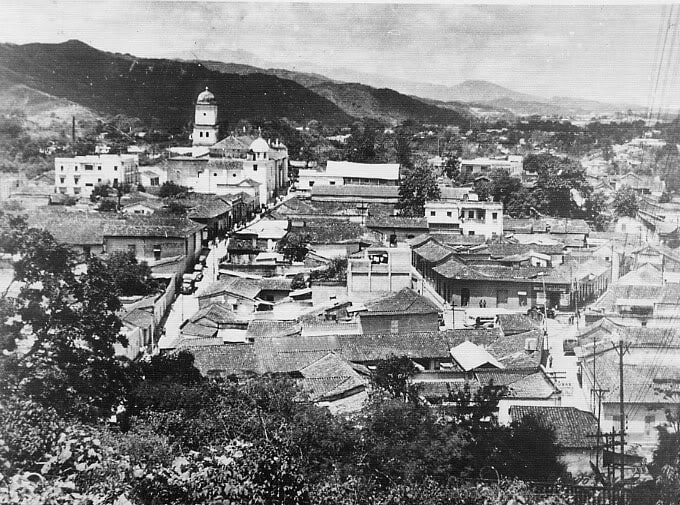
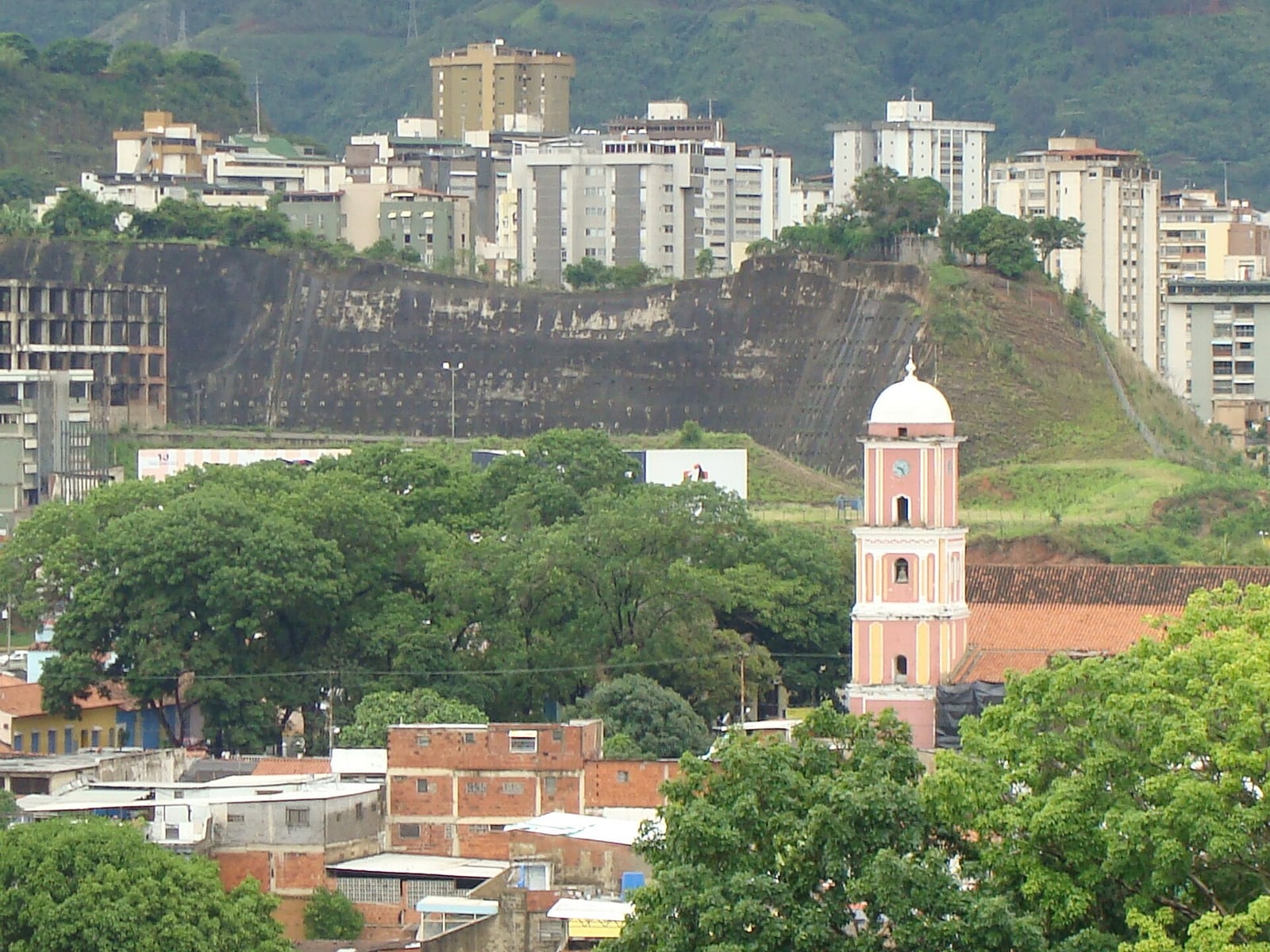
In 1954 Petare was still a town of its own, a colonial grid of tile roofs and a white church tower at the eastern end of the Caracas valley, about twenty minutes by road from the capital and fast being swallowed by it. Venezuela was rich with oil and ruled by General Marcos Pérez Jiménez, whose political police, the Seguridad Nacional, was feared by anyone who talked out of turn. The newspapers could not write freely about politics; they could write about flying saucers. All autumn the wire services had carried the great French wave of 1954, with its stories of dwarfs and stranger beings beside landed machines, and South America had begun to produce its own.
Sources: APRO Bulletin, vol. 3 no. 3 (“Deadline Dope”: the Petare report)OVNIS en Caracas (1953)Close Encounter at Kelly and Others of 1955Flying Saucers: The Startling Evidence of the Invasion from Outer Space
Two in the morning on Calle Bella Vista
Gustavo González was a Cuban, 24 years old in the Aruban reprint of El Universal (25 in APRO’s translation of the same article and in later reports), who lived in Catia on the west side of Caracas and made his living with a small van of his own, collecting goods before dawn and selling them at a Mercado Libre, one of the producers’ markets of Caracas. His helper was José Ponce. His route, as APRO’s Caracas correspondent later explained, took him to Petare at around 2 a.m. so his goods reached the city in time for the morning rush. In the small hours of Sunday, November 28, 1954, the two men turned into Calle Bella Vista, heading for the Scheper charcutería, APRO’s “sausage factory.” In the statement González gave the police, as El Universal printed it, he stopped the van abruptly because the street ahead had lit up “como si fuesen las doce del día,” as if it were noon. Both men got out. Ponce, González said, ran off at once “al ver lo que yo segundos más tarde pude observar,” when he saw what González saw a few seconds later. “No estábamos borrachos,” he added: we were not drunk, we were on our way to market to sell our goods.
Sources: Platillo Volador Aterrizo en VenezuelaUFOs: A History, 1954 November–December, Supplemental NotesAPRO Bulletin, vol. 3 no. 3 (“Deadline Dope”: the Petare report)
The fight
The official statement, issued by the press office of the Caracas police command and reprinted by El Universal, is the earliest surviving telling. “Al bajarme de la camioneta pude ver cómo un extraño ser viviente se acercaba a nosotros,” González said: as he got down he saw a strange living being coming toward them, and at first he felt as if something stopped him moving. Then he went forward, took the creature in his arms and tried to hold it, but the little man, as he called it, was very strong and broke his grip. González fell to the pavement and got up quickly. When he looked again, two more little men were coming, apparently to help their companion, “uno de los cuales me alumbró como una linterna,” one of whom shone a light on him like a flashlight. The light blinded him, and when he came back to himself everything was gone. Coming out of that “trance,” he found his knife in his right hand and remembered slashing at the creature as it came at him: “El arma rozó sobre el cuerpo áspero del extraño ser, y se deslizó como si hubiese caído sobre algún material muy fuerte,” the blade grazed the rough body and slid off as if it had struck some very hard material.
Sources: Platillo Volador Aterrizo en VenezuelaUFOs: A History, 1954 November–December, Supplemental Notes
Hairy, barefoot, in a loincloth
González and Ponce, the statement went on, both saw “algo así como un platillo luminoso,” something like a luminous saucer, from which the three little beings had come down. The one González grabbed “era peludo,” was hairy, barefoot, and wore “un traje muy raro — parecía un guayuco,” a very odd outfit that looked like a guayuco, the loincloth of the Venezuelan Indigenous peoples. His two eyes shone. “Se me zafó dando un salto felino,” it slipped away from me with a catlike leap. One phrase in the Aruban reprint reads “no tenía nada de baja estatura,” literally that it was not short at all, which sits oddly with every “hombrecillo” around it; A translation in APRO’s files, by a Caracas member signing himself “Joe” (almost certainly Joe Rolas), rendered the same passage as “small sized (3 feet or 36 inches)” and added that it “had no nose at all.” Whether the newspaper garbled the line, or the translator smoothed it, the archive cannot say.
Sources: Platillo Volador Aterrizo en VenezuelaUFOs: A History, 1954 November–December, Supplemental Notes
At the traffic inspectorate
Ponce ran to the Inspectoría del Tránsito, the traffic police post, which stood on the same street. A few minutes later González came in, drank some water and told his story to officers who stared at them. “Ustedes, lo que han visto es una visión como consecuencia de las libaciones,” somebody said: what you saw was a vision brought on by drink. The two men showed that their breath did not smell of alcohol and explained that they were on their way to the Scheper works. El Universal’s reporters added their own argument: if the men had been drunk, the traffic police would have detained them. Hours later González was taken to the central first-aid post at the Esquina de Salas in Caracas, where the medical staff on duty found “contusiones simples en el costado izquierdo,” minor bruises on his left side; the reporters added that he was very nervous. Joe’s notes in the APRO files say he was “pale and shaking” and took pills for his nerves. El Universal’s follow-up recorded that “el señor Cherchi duda que pueda estar loco,” Mr. Cherchi doubted he could be mad, and an English-language Caracas paper of December 7 quoted Antonio Cherchi, manager of the charcutería where González collected his goods, as saying that he was a calm man of good judgment who had done the job for more than a year, handled money on about a thousand items a day “and always keeps his account in order.”
Sources: Platillo Volador Aterrizo en VenezuelaUFOs: A History, 1954 November–December, Supplemental Notes
Hundreds on the street
On Monday, November 29, El Universal ran the story, and Bella Vista became a place of pilgrimage. Its follow-up on Tuesday reported that hundreds of people had gathered in the street the day before, and its subheads were cooler than the lore that followed: “No hay huellas en el lugar donde González jura haber combatido con un enanito. Ninguna otra persona vio iluminarse el cielo,” there were no traces where González swore he had fought a little dwarf, and nobody else saw the sky light up. Another deck promised “una detonación en la madrugada,” a detonation in the small hours. According to a translated clipping now in the files of NICAP (the National Investigations Committee on Aerial Phenomena, an American saucer group founded in 1956), a local man named Paolo showed reporters a slope leading down to two cottages: “this is the place from which Ponce says he saw one of the mannikins emerging with earth in his hands. If he gathered it there, he must have got some black soil from the portion that is under cultivation.” Luis Felipe Toro, a captain with the airline TACA, told reporters he and his copilot had seen something fast at about fifteen thousand feet while descending toward Maiquetía airport, and only learned on landing what had happened in Petare. By December 11 a Dutch-language paper in Curaçao reported that the people of Caracas were ringing air force officers, observatory directors, embassy air attachés and priests at all hours to ask whether men from Mars had really landed in Petare, and that two men had announced a society for the investigation of flying saucers.
Sources: UFOs: A History, 1954 November–December, Supplemental NotesPlatillos voladores todavía vuelen en VenezuelaVenezuela maakt zich druk om de vliegende schotelsClose Encounter at Kelly and Others of 1955
The most spectacular report
APRO, the Aerial Phenomena Research Organization, run by Coral and Jim Lorenzen from their home in Alamogordo, New Mexico, had two members in Caracas: Horacio González Ganteaume, a young man of Trinidadian origin who worked for General Motors in Venezuela, and Joe Rolas. On November 30 González Ganteaume wrote to Lorenzen: “This case I can tell you has taken the country by storm!” Joe sent word that his father had gone to the Petare inspectorate and talked to the men who saw the two that morning: “He says everything is true, and so do all the officers.” Lorenzen held back the bulletin dated November 15 to print the story, and the version that reached American readers had grown. Now a luminous sphere eight to ten feet across hung six feet above the street. González lifted the dwarf off the ground, “intending to put him in the truck,” and was surprised by its lightness; the body felt “as of stiff hair, and hard.” One push threw him fifteen feet. In this version Ponce did not run at once: watching, he saw two more little men come out of the bushes “with what looked like hunks of dirt in their hands” and leap into the sphere. The first creature came at González with “his eyes glowing” and “claws extended,” his scout knife slid off its shoulder, and a fourth being leaned out of the sphere with “some sort of tube” and blinded him with a ray. “We believe this account true,” the bulletin said, “and the most spectacular report we have ever received to date.”

Sources: APRO Bulletin, vol. 3 no. 3 (“Deadline Dope”: the Petare report)UFOs: A History, 1954 November–December, Supplemental NotesOVNIS en Caracas (1953)Flying Saucers: The Startling Evidence of the Invasion from Outer Space
Zeppelins, daggers and a helper called Carrizalez
Even in Caracas the details multiplied. According to Joe’s notes, the daily La Esfera said González was thrown fifteen feet and that the craft was a luminous, silver, cigar-shaped “zeppelin” that came down in the middle of the street; other papers had the dwarf round-faced and the machine leaving with blinding flashes. Outside Venezuela the versions barely agreed. A wire of the AL agency, printed in Santiago de Chile on December 7 and in La Paz on December 11, placed Petare 30 kilometers from the capital and had the three crewmen without noses, wearing “una gran coraza,” a great breastplate, and carrying daggers; the driver, named as Gustavo González de León, snatched one and slashed at his opponent without wounding him, the crew took it back and left vertically, and he was in hospital with a hand nearly crushed. A SICO wire printed in La Paz on December 27 described a zeppelin-shaped craft giving off blinding flashes, four dwarfs a meter and ten centimeters tall with “la cara redonda, los ojos centellantes y sin nariz,” round faces, sparkling eyes and no noses, and a helper named José Carrizalez, 19, who fled screaming while González was thrown five meters against a rock; psychiatrists, it said, still could not explain what had happened to a man first thought mentally disturbed and now found in perfect health. In February 1955 the Waco Tribune-Herald in Texas reported a letter from a former Waco woman working at a rural teachers’ college in Táchira, with a third version: a “luminous disk” two meters by one hovering “about 16 centimeters” over the street, a flashlight thrown and missing, a hard blow to the left ribs, and a knife that struck “a surface like stone.” Beside it ran a drawing of a shaggy, clawed creature with enormous round eyes, said to copy one González had made for the traffic police.
Sources: Wire report, “Caracas, 6 (AL)”Fantástico relato sobre el aterrizaje de un plato voladorEl Cubano Gustavo González Asegura que Luchó con un Marciano Cerca de CaracasEx-Wacoan in Venezuela Relates Saucer Saga ThereUFOs: A History, 1954 November–December, Supplemental Notes
Discs over Coro, little men at La Floresta
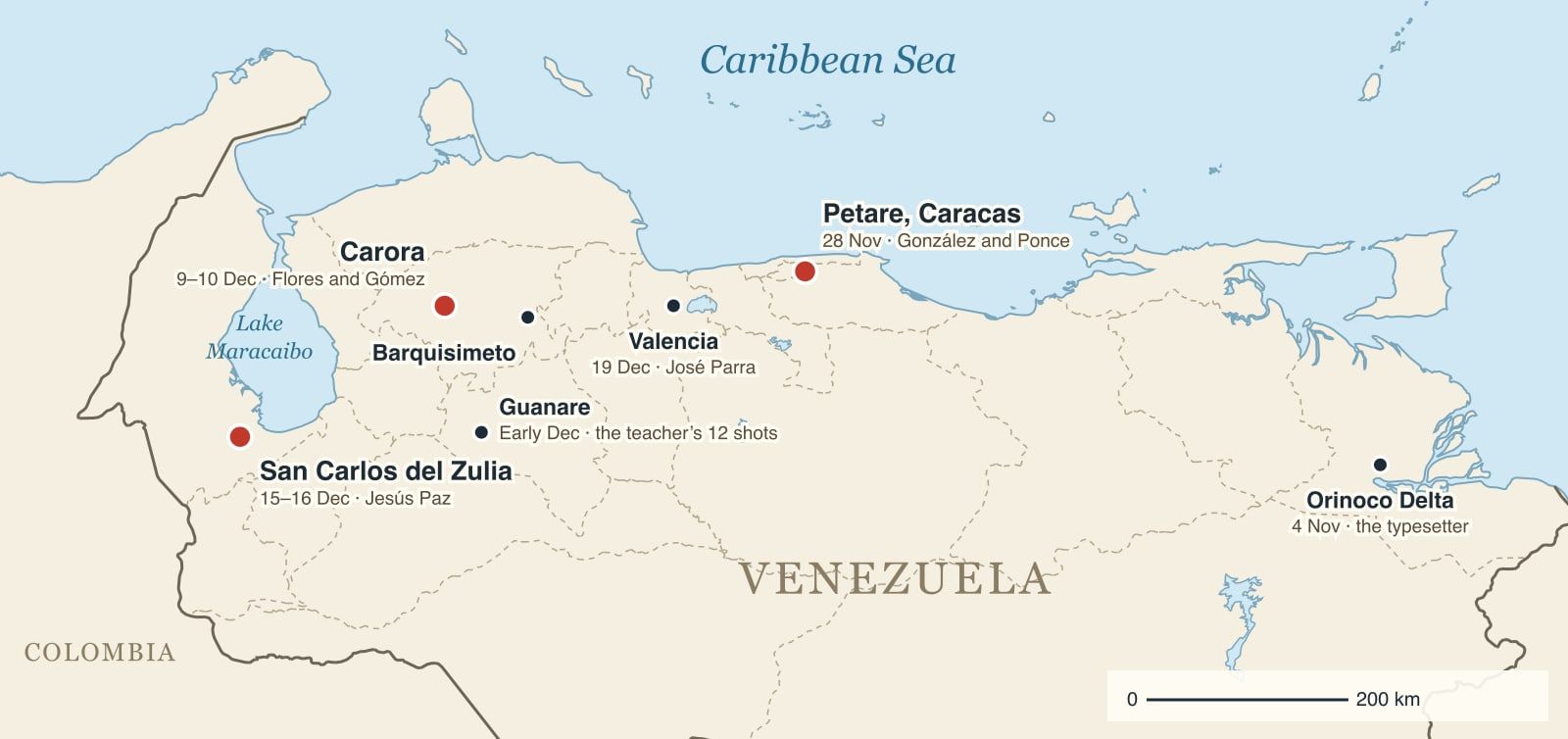
Petare also shook loose older stories. According to the APRO Bulletin, a typesetter who had kept quiet for fear of ridicule came forward after Petare to say that on November 4, hunting from a launch in the “Delta district,” presumably the Orinoco Delta, he had seen a luminous sphere hovering just inland and watched three or four dwarfish creatures carry dirt to it in their hands while the Indigenous men with him fled. The next three weeks made Petare the opening act of a national wave. According to Keyhoe and APRO, a priest reported a luminous disc over Coro, another hovered near the ground at Borburata, and a pilot named Saúl Páez Paredes turned back to Maracaibo after one crossed his path. Early in December the director of a school in Barquisimeto said a glowing disc chased his car near Guanare and that he fired at it, twelve times by APRO’s count. On the evening of December 8 or 10 (the sources differ) a well-known Caracas physician driving with his father near La Floresta, between La Carlota airfield and Avenida Francisco de Miranda, stopped when his father shouted “Look!” and watched two little men run into the thickets, from which a luminous disc rose “with a sharp whistle or sizzling sound.” On December 10 an American oil engineer at El Tigre photographed five objects like “turtles” flying in formation. In Chacao, on the east side of Caracas, The Caracas Journal reported that a Tomás Betancourt had wrestled with one of the saucer crew: “Hij was gelatineachtig en erg glibberig,” in the Curaçao paper’s Dutch, it was gelatinous and very slippery, and he lost his grip.
Sources: APRO Bulletin, vol. 3 no. 3 (“Deadline Dope”: the Petare report)The Flying Saucer Conspiracy, chapter “Angel’s Hair”APRO Bulletin, vol. 3 no. 4: “South American Issue” (“Hairy Dwarves in Venezuela” and commentary)UFOs: A History, 1954 November–December, Supplemental NotesVenezuela ziet vliegende schotels: Tomás Betancourt valt marsmannetje aanFlying Saucers: The Startling Evidence of the Invasion from Outer Space
Between Chirico and the Three Towers
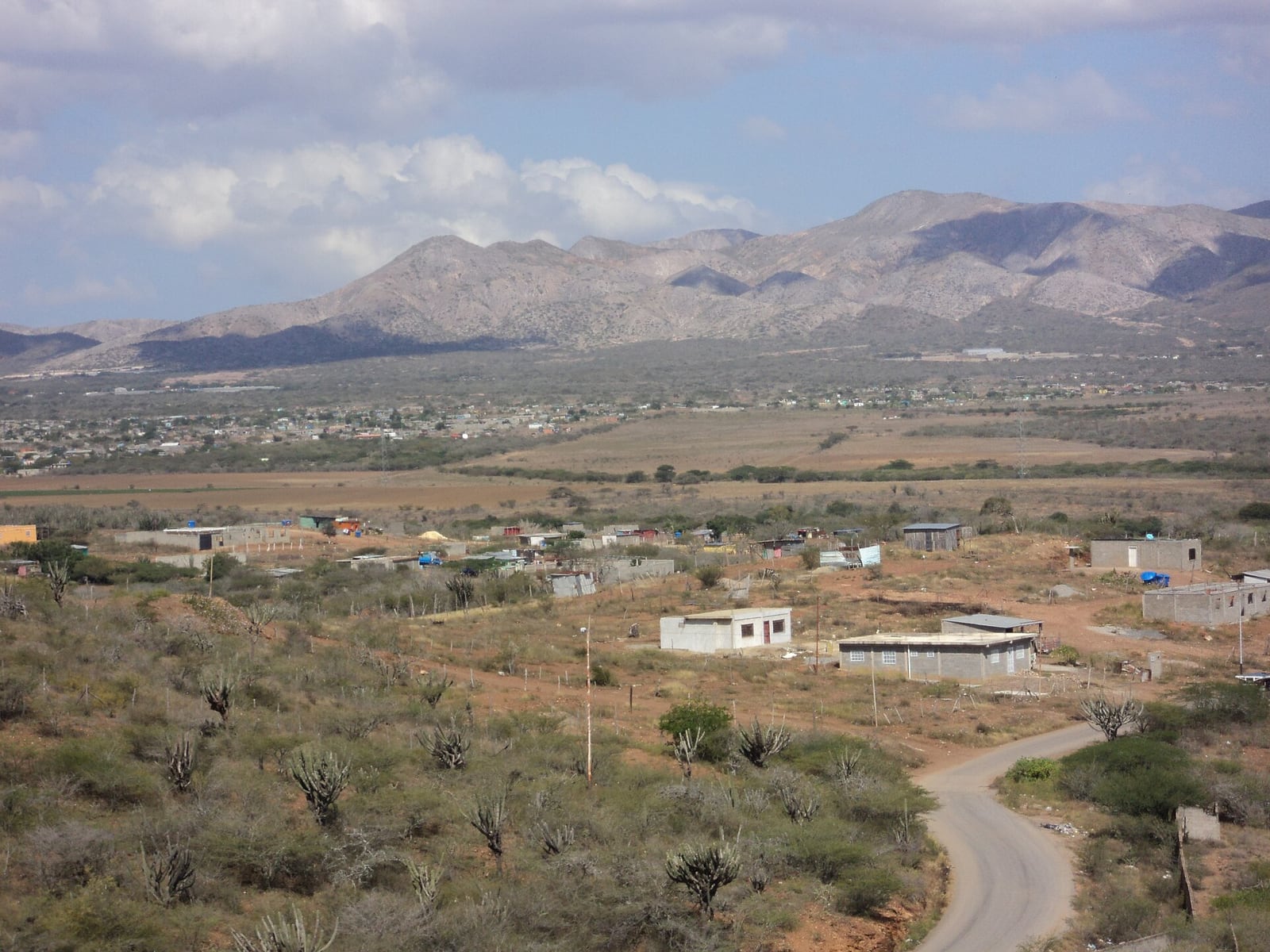
The second fight came on the night of Thursday, December 9 (December 10 in some English accounts), in the dry hill country of Lara state, beside the Trans-Andean highway outside Carora. A telegram from El Nacional’s Carora correspondent, as reproduced in 2016 by the Chilean bulletin NOUFA (the 1954 original has not been traced), names the witnesses as Lorenzo Flores, 18, and Jesús Gómez, 17, laborers, out hunting between “los sitios denominados Chirico y Cerro de Las Tres Torres.” They saw a light about fifty meters off and took it for a car, left their bicycles and crept closer. “Logramos apreciar un aparato redondo, que tenía la forma de dos palanganas superpuestas,” Flores said, a round machine shaped like two washbasins one on top of the other, about three meters across, giving off fire from underneath and hanging some eighty centimeters off the ground. Four little men of about a meter came out, threw themselves on Gómez and tried to force him into the machine. Flores had only his shotgun, unloaded, and swung the butt at them in blows that seemed to strike “una roca o algo muy fuerte,” a rock or something very hard, until the gun was smashed to pieces without leaving a mark on its target. Gómez told the police, “no pudimos ver ojos ni las uñas largas,” they could not make out eyes or long nails, “pero sí pudimos apreciar el vello fuerte que les cubría todo el cuerpo,” but we could see the thick hair covering their whole bodies. They broke free, ran twenty meters to the road and, looking back, saw that the craft had gone.
Sources: En Venezuela: el caso Petare, el más extraño de los avistamientos / Otro caso similar: Carora 1954APRO Bulletin, vol. 3 no. 4: “South American Issue” (“Hairy Dwarves in Venezuela” and commentary)The Flying Saucer Conspiracy, chapter “Angel’s Hair”Passport to Magonia: From Folklore to Flying Saucers, catalogue cases 344–357
Torn shirts at the Carora police station
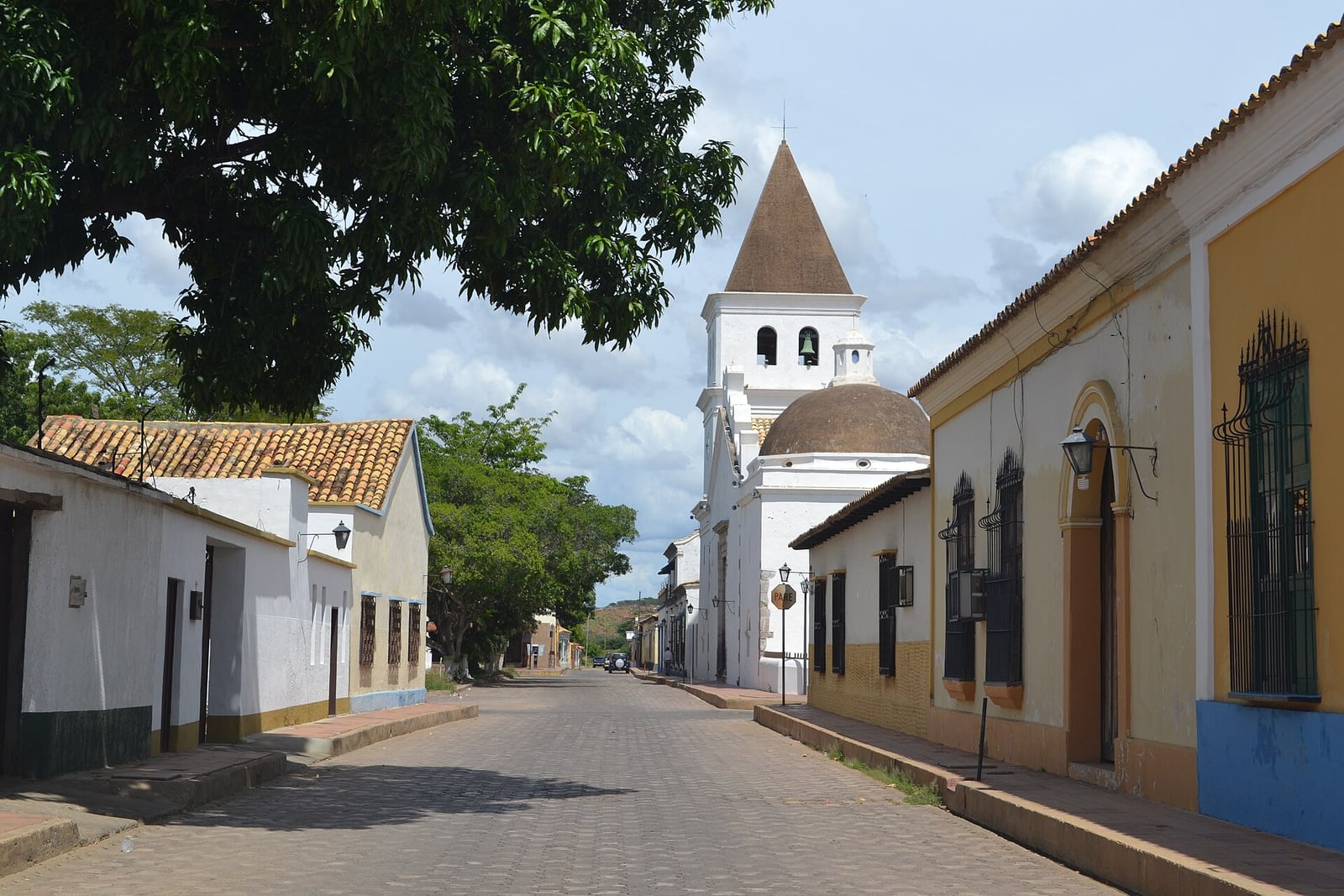
A truck of the dairy company Inlaca picked them up; its driver, the telegram says, had himself seen a strong light shortly before midnight. They reached the Carora police barracks barefoot, their shirts torn to rags, Gómez with light scratches, and the photographs that ran in the Venezuelan press show the two boys in their ripped shirts. A patrol of two officers and four agents went out and, by the telegram’s account, found the shattered shotgun, a machete, the abandoned bicycles, signs of a struggle, the boys’ shoe prints and smaller tracks “parecidas a las de un mono,” like a monkey’s but not a monkey’s, with a strong smell like sulfur in the air. The police chief, Manuel Azuaje, said both were known in Carora as honest young men and that it seemed very strange they would invent such a thing. Keyhoe, writing in 1955 from APRO’s material, added that a truck driver reported a glowing disc rising from the spot, that the story caused near panic in Carora, that the boys were jailed and that a commission of doctors and psychiatrists came from Caracas. Under prolonged police questioning, he wrote, they were said to have retracted part of the story, but when reporters questioned them again they insisted it was true. The 2016 text then runs beyond anything a single night’s telegram could have known. It says the boys were handed to Captain Julio Chacón, the local chief of the Seguridad Nacional, who first called the story a farce and questioned them separately, and that in the end the investigators were convinced they had seen a flying saucer. Joe, in a confidential letter to Lorenzen, said the Seguridad Nacional had tried to silence the boys and that they kept telling the truth in spite of its threats.
Sources: En Venezuela: el caso Petare, el más extraño de los avistamientos / Otro caso similar: Carora 1954The Flying Saucer Conspiracy, chapter “Angel’s Hair”UFOs: A History, 1954 November–December, Supplemental Notes
Sane, or feeble-minded
What the doctors decided depends on who reported it. APRO’s January bulletin said the boys were examined by psychiatrists and “found to be sane, responsible young men,” and Keyhoe wrote that a psychiatrist told APRO’s representative the commission had found them “perfectly sane and healthy.” González Ganteaume argued that no working-class youth would wreck an expensive shotgun to stage a hoax. But on December 18, 1954, the Amigoe di Curaçao carried a short Caracas item headlined “Zwakken van geest zagen vliegende schotel,” the feeble-minded saw a flying saucer: two young Venezuelans who had caused a stir by claiming to have fought dwarfs from a saucer had been examined at the psychiatric clinic in Barquisimeto, which had established that they were mentally deficient, and both still held to their story. It names no one, but the details fit Flores and Gómez, and it is the only clinical finding in the surviving press, though other papers, as Joe translated them, reported the boys “in perfect health.” Later retellings only enlarged the fight. By 1968 the Buenos Aires Crónica had the boys breaking “las escopetas y un hacha,” shotguns and an axe, on stone-hard little men and being treated at the Carora hospital.
Sources: APRO Bulletin, vol. 3 no. 4: “South American Issue” (“Hairy Dwarves in Venezuela” and commentary)The Flying Saucer Conspiracy, chapter “Angel’s Hair”Flying Saucers: The Startling Evidence of the Invasion from Outer SpaceZwakken van geest zagen vliegende schotelUFOs: A History, 1954 November–December, Supplemental NotesTambién en Venezuela (sidebar)
Jesús Paz, beside the park
The third attack, by APRO’s account, came on the night President Eisenhower told a press conference that flying saucers were not from outer space, which the bulletin dated December 16 (the press conference was on December 15). Jesús Paz and two friends had dined at a restaurant in San Carlos and were driving home when, near the Exposition Park of the Ministry of Agriculture, Paz asked the driver to stop and went behind some bushes. His friends heard “a piercing scream which literally raised the hair on their heads,” ran to the spot and found him unconscious on the ground, in time to see a hairy dwarf running toward “a flat, shiny craft” hovering a few feet up. One of them, Luis Mejía, a National Guardsman, reached for his gun, remembered he had left it at the barracks and threw a stone instead, as the craft rose with “a deafening buzzing sound.” Paz spent the night in hospital in shock, with “several large, long, deep scratches on his right side and along the spine, as if clawed by a wild animal.” APRO later listed a “Zulia” encounter, González Ganteaume called it “the Zulia encounter,” and Creighton placed it at San Carlos del Zulia, south of Lake Maracaibo. No Venezuelan press report of the Paz case has been found.
Sources: APRO Bulletin, vol. 3 no. 4: “South American Issue” (“Hairy Dwarves in Venezuela” and commentary)APRO Bulletin, vol. 3 no. 5 (the doctor witness; U.S. reporters in Caracas)Situation Red: The UFO SiegeMiddle American Creature Reports (with Brian Stross on the Tzeltal ihk’al)Flying Saucers: The Startling Evidence of the Invasion from Outer Space
The jockey at the cement works
In the early morning of December 19, by APRO’s account, José Parra, an 18-year-old jockey from Valencia, burst into the offices of the Seguridad Nacional, the political police, “yelling, without his shirt.” He had been out running on the highway to shed a couple of pounds when, near a cement factory he saw six little men, “all very hairy,” pulling boulders from the roadside and loading them into a disc-shaped craft hovering less than nine feet off the ground. When he turned to run for help one of them pointed a device at him that gave off a violet light, and he stood paralyzed while they leaped aboard and the craft vanished into the sky. Detectives sent to the spot, APRO said, found tracks they could not identify as either human or animal, and an hour after Parra’s experience a brightly lit disc was seen hovering a few feet off the ground near the Bárbula tuberculosis sanatorium at Valencia, by two employees at different times of the night. Joe’s notes put Parra’s run at ten the previous evening, which leaves hours unaccounted for before he reached the police. El Nacional ran his story, Joe stressed, without ridicule.

Sources: APRO Bulletin, vol. 3 no. 4: “South American Issue” (“Hairy Dwarves in Venezuela” and commentary)UFOs: A History, 1954 November–December, Supplemental NotesFlying Saucers: The Startling Evidence of the Invasion from Outer Space
Venus, balloons and Martians on parade
The skeptics answered in the same pages. Antonio Ornés, who had worked at the Cagigal Observatory in Caracas for fourteen years, told reporters that the lights were all the planet Venus, then easy to see from Caracas, and that he would not believe in saucers until he saw one and took its picture; the town planner Luis Roche suggested hydrogen balloons released by local pranksters “to break the boredom of our daily life.” By the end of the month the dwarfs had become a joke as well as a fear. On December 28, the Día de los Inocentes, Venezuela’s April Fools’ Day, a business in Puerto La Cruz paraded two costumed “marcianos” and a “platillo volador” through that town and neighboring Barcelona, where they told the local correspondent at the foot of the Anzoátegui statue that they had come from Mars on a tour of “inspección.” Hundreds of people followed them through the streets.
Sources: Venezuela ziet vliegende schotels: Tomás Betancourt valt marsmannetje aanEn los cielos, como carros de fuego (anniversary issue)Platillo volador con sus marcianos hizo recorrido por calles
The doctor who saw it all
The most often repeated detail of the Petare case appears in no source from 1954. In April 1955 the APRO Bulletin announced “a startling climax”: a well-known Venezuelan doctor, whose name APRO knew but withheld, had turned into the street during the scuffle and “made haste to get out of the vicinity as fast as he could,” saying nothing until he was called to treat “two other individuals who were involved with the mysterious hairy little bipeds”; he had then been invited to the United States to make a statement, which proved to APRO that the Air Force was “quite cognizant of the happenings.” On the same page APRO hinted at a wider interest, noting that reporters from Business Week, United Press and the North American Newspaper Alliance had all been in Caracas “coincidentally” two days after Petare. In Lorenzen’s books the doctor became “one of the doctors who had examined Flores and Gomez,” though Carora is some 350 kilometers from Caracas; Gordon Creighton and Antonio Ribera made him one of the physicians who treated González and Ponce and confessed to them that he had seen it on his way back from a night call; Frank Edwards had him “driving behind Gonzales.” Two other figures may sit under the legend: the unnamed physician who saw little men at La Floresta, and, in a Venezuelan retelling of about 2002, a “Dr.” Julio Garcés, laboratory assistant at the Pérez de León hospital in Petare, who said he drove past Bella Vista just after two that Sunday, heard cries of terror and saw nothing.
Sources: APRO Bulletin, vol. 3 no. 5 (the doctor witness; U.S. reporters in Caracas)Flying Saucers: The Startling Evidence of the Invasion from Outer SpaceMiddle American Creature Reports (with Brian Stross on the Tzeltal ihk’al)“Platillos volantes” en Iberoamérica y EspañaFlying Saucers—Serious Business, chapter “Who’s Driving?”URECAT-000061: Petare, Venezuela, November 29, 1954
Into the books
APRO complained that no American newspaper carried the Venezuelan stories (the Waco letter of February 1955 was a rare exception), and the hairy dwarfs reached English readers through its bulletins and the books built on them. Jacques Vallée’s Anatomy of a Phenomenon of 1965 already counted “hairy dwarfs” reported in South America on at least four occasions. Donald Keyhoe told them in The Flying Saucer Conspiracy in 1955 while admitting that “some of the Venezuelan reports also had a suspicious sound.” Coral Lorenzen called the Paz case “one of the first believable accounts of contact with occupants of UFOs” and wondered whether the hairy dwarfs were a lower order of being “pressed into service”; in the Lorenzens’ later typology, “small hairy, animal-like beings with claws and hot tempers seem to be menial workers.” She also printed a Venezuelan reader’s unpublished letter to Time, which suggested that if hairy bipeds were seen again pulling boulders off the highways, they must be U.S. Air Force pilots “sent by Quarles” (Donald Quarles, the U.S. Secretary of the Air Force) “to collect samples of Venezuelan dirt and rocks.” Jacques Vallée listed the cases in the catalogue of Passport to Magonia, a book that set the hairy dwarfs of modern reports beside the farfadets of Poitou, little men “very black and hairy” who lived in caves; Gordon Creighton linked them to the ihk’al, the small, black, hairy, flying abductor of Tzeltal and Tzotzil Maya belief, Venezuela being “very close to the traditional home of the ihk’al.” Frank Edwards gave the Petare dwarf eyes “like yellow cat’s eyes” and webbed hands with inch-long claws, and had Paz stumble on a hairy creature “which was examining the flowers.”
Sources: APRO Bulletin, vol. 3 no. 4: “South American Issue” (“Hairy Dwarves in Venezuela” and commentary)The Flying Saucer Conspiracy, chapter “Angel’s Hair”Flying Saucers: The Startling Evidence of the Invasion from Outer SpaceEncounters with UFO Occupants (first published as Flying Saucer Occupants, 1967)Passport to Magonia: From Folklore to Flying Saucers, catalogue cases 344–357Anatomy of a PhenomenonMiddle American Creature Reports (with Brian Stross on the Tzeltal ihk’al)Flying Saucers—Serious Business, chapter “Who’s Driving?”
From Petare to Hopkinsville
The wave reached the United States the following summer by another road. When the Sutton family of Kelly, Kentucky, reported glowing little goblins besieging their farmhouse in August 1955, APRO decided that the newspapers’ phrase “little green men” must have come from “someone who knew the facts of the South American green dwarfs,” though no Venezuelan witness had called the dwarfs green, and that the likeness bolstered both stories. Ted Bloecher, introducing his and Isabel Davis’s study of Kelly in 1978, wrote that six Venezuelan reports, “with many circumstantial details—the kind of details that do not occur to a deliberate liar or hoaxer,” were disturbingly realistic, and that if they were true, “perhaps the European stories would have to be re-examined.” The skeptic Martin Kottmeyer noticed a different chain: Betty Hill, whose 1961 abduction story with her husband Barney became the template for those that followed, had read Keyhoe’s book before the nightmares that followed their sighting, and in its account of Carora four little men try to drag a young man toward their craft. In 1978 a Golden Press comic book, UFO Encounters, drew the Petare, Carora and Paz stories. By 1996 Patrick Huyghe’s Field Guide to Extraterrestrials filed the Petare being as a “hairy mammalian” and noted that the hairy dwarfs reported so often in the 1950s “are rather infrequent in contemporary accounts.”
Sources: APRO Bulletin, November 1955 (on the Hopkinsville “little green men”)Close Encounter at Kelly and Others of 1955Entirely UnpredisposedThe Flying Saucer Conspiracy, chapter “Angel’s Hair”UFO Encounters (“The Saucers Strike at South America” and “Incident in the Park”)The Field Guide to Extraterrestrials
Petare remembers
In Venezuela the story became a national legend in its own right. The astronomer F. Aniceto Lugo put it in his book Los visitantes del espacio in 1959, and Horacio González Ganteaume, who appeared on the television program Reportaje Universal, collected the whole wave in Platillos voladores sobre Venezuela in 1961. In 1994 the Venezuelan heavy-metal band Gillman put “El extraño caso de Petare” on its album Escalofrío, alongside songs about El Silbón and La Sayona, the whistling and wailing ghosts of Venezuelan folklore, and the conquistador Lope de Aguirre. El Nacional’s anniversary feature of 2000 quoted the police report as saying the creature “weighed like 50 kilograms” and had “arms with hands like cutting weapons.” Around 2002 a writer named Gabriel Gutiérrez published a long retelling, presented as the police report, that lies behind many Spanish-language versions on the web: the van’s registration plate, a Major Jesús Antonio Yanes calling the event extremely unusual, Cherchi saying “if they say that they saw something, I believe them,” a sphere two meters across with two windows and a cupola floating half a meter above the street, a creature with hands like four sharpened claws and skin like a rhinoceros’s, and a chorus of neighbors who saw the light, heard a whistle or an explosion, or watched the police search the streets. Most of it has not been traced to a 1954 newspaper, though El Universal’s follow-up did report Cherchi’s doubts that González was mad and a detonation in the small hours.
Sources: OVNIS en Caracas (1953)“Platillos volantes” en Iberoamérica y EspañaURECAT-000061: Petare, Venezuela, November 29, 1954En los cielos, como carros de fuego (anniversary issue)Escalofrío, tracks “Relato de El Extraño Caso de Petare” and “El extraño caso de Petare”FIRSTHUMCAT: Catálogo de los primeros casos de humanoides
What survives
Nothing official has been published: not the police statement itself, the first-aid record from the Esquina de Salas, the Barquisimeto clinic’s findings, the Carora patrol’s report or anything from the Seguridad Nacional. The nearest thing to the 1954 record is El Universal’s account of the police press office’s statement, reprinted, apparently verbatim, in the Arubaanse Courant of December 1, together with English translations, a follow-up headline and press photographs of the Carora boys preserved in APRO’s files and published by Loren Gross. The wire versions in Chile, Bolivia and Curaçao show what the rest of Latin America read. For Carora there is the El Nacional correspondent’s telegram, known only from a 2016 reproduction. For Paz and Parra there is only APRO’s January 1955 bulletin and its translator’s notes; El Nacional’s story on Parra has not been found. Everything else, from Keyhoe and Lorenzen to the Gutiérrez retelling, comes from those sources at one or more removes. No photograph of any of the encounter craft and no artifact was ever produced; the reported traces were bruises, scratches, torn shirts, a broken shotgun and unidentified small tracks at Carora and Valencia.
Sources: Platillo Volador Aterrizo en VenezuelaUFOs: A History, 1954 November–December, Supplemental NotesWire report, “Caracas, 6 (AL)”El Cubano Gustavo González Asegura que Luchó con un Marciano Cerca de CaracasZwakken van geest zagen vliegende schotelEn Venezuela: el caso Petare, el más extraño de los avistamientos / Otro caso similar: Carora 1954APRO Bulletin, vol. 3 no. 4: “South American Issue” (“Hairy Dwarves in Venezuela” and commentary)
The contradictions
The Petare story changes with almost every telling. The date: November 28 at 2 a.m. in APRO, Keyhoe and the SICO wire, but November 29 in the police-report versions, Lugo and most Venezuelan retellings, which take the date of El Universal’s first story. The helper: José Ponce, except in the SICO wire, where he is José Carrizalez, 19. The beings: three (El Universal, the AL wire, the Waco letter), or four (SICO and APRO). Their size: about a meter or three feet, or, in one puzzling phrase of the Aruban reprint, not short at all. Their weight: surprisingly light in APRO, about 35 pounds for Lorenzen, under 20 kilograms in Vallée’s catalogue, 30 kilograms in the AL wire, 30 and then 50 kilograms in González Ganteaume’s letter and 50 in the version El Nacional quoted in 2000. The craft: a luminous saucer, a silver zeppelin, a sphere hovering six feet up, a disk sixteen centimeters off the street. The knife: González’s own, or a dagger snatched from the creature; it slid off something very hard, or stone, or steel, or rhinoceros hide. The injuries: minor bruises on his left side in the 1954 record; a hand nearly crushed in the AL wire; a long red scratch for Lorenzen; “torn, bleeding” for Edwards. At Carora the place is Chirico or Chico, the date December 9 or 10, and the psychiatrists found the boys either perfectly sane or feeble-minded.
Sources: APRO Bulletin, vol. 3 no. 3 (“Deadline Dope”: the Petare report)El Cubano Gustavo González Asegura que Luchó con un Marciano Cerca de CaracasURECAT-000061: Petare, Venezuela, November 29, 1954“Platillos volantes” en Iberoamérica y EspañaPlatillo Volador Aterrizo en VenezuelaWire report, “Caracas, 6 (AL)”Flying Saucers: The Startling Evidence of the Invasion from Outer SpacePassport to Magonia: From Folklore to Flying Saucers, catalogue cases 344–357UFOs: A History, 1954 November–December, Supplemental NotesEn los cielos, como carros de fuego (anniversary issue)Ex-Wacoan in Venezuela Relates Saucer Saga ThereFlying Saucers—Serious Business, chapter “Who’s Driving?”Zwakken van geest zagen vliegende schotelThe Flying Saucer Conspiracy, chapter “Angel’s Hair”
For and against
In González’s favor stand the things that impressed the men who first heard him: he went straight to the police, nobody could smell drink on him, the first-aid post found real bruises on his side, the manager of the charcutería vouched for him, and Ponce, in APRO’s version, confirmed what he had seen before he ran. The Carora boys broke a gun they could not easily replace, turned up torn and barefoot, and held to their story through questioning by the regular police and, it seems, by the feared Seguridad Nacional. Against them stand El Universal’s own finding of no traces and no other witness to the light; the timing, one month after the French occupant wave had filled the wire services; the speed with which copycat stories, jokes and an advertising stunt followed; the partial retraction Keyhoe reported and the Barquisimeto diagnosis the Amigoe printed; and the way each retelling added what the last one lacked. The dictatorship cuts both ways. Joe Rolas argued that nobody in Venezuela would dare make up a story the police might investigate; a Caracas blogger has argued since that censorship pushed the papers toward safe, sensational filler like hairy dwarfs. No later interview with González, Ponce, Flores or Gómez has surfaced in the sources this archive has found.
Sources: Platillo Volador Aterrizo en VenezuelaUFOs: A History, 1954 November–DecemberUFOs: A History, 1954 November–December, Supplemental NotesEn Venezuela: el caso Petare, el más extraño de los avistamientos / Otro caso similar: Carora 1954The Flying Saucer Conspiracy, chapter “Angel’s Hair”Zwakken van geest zagen vliegende schotelPlatillo volador con sus marcianos hizo recorrido por callesOVNIS en Caracas (1953)
Why it lasted
The Petare encounter has a shape few 1950s cases matched: not a sighting, not a contact with a benevolent visitor, but a brawl in a city street between a delivery man and something small, strong and hairy that would not be held. It came at the right moment, between the European wave and the American occupant reports of 1955, and it reached the outside world through one small, determined organization whose director made it a cornerstone of her thinking about alien visitors. Its details, the lightness, the hardness, the hair, the loincloth, the soil carried in the hands, gave later writers a template for an entire class of beings, from APRO’s “menial workers” to Vallée’s farfadets and Creighton’s ihk’al. Meanwhile the strongest skeptical evidence, the clinic in Barquisimeto and the empty street the next morning, sat in a Dutch-language paper in Curaçao and in Caracas headlines that the popular American books never mentioned.
Sources: APRO Bulletin, vol. 3 no. 3 (“Deadline Dope”: the Petare report)Flying Saucers: The Startling Evidence of the Invasion from Outer SpaceEncounters with UFO Occupants (first published as Flying Saucer Occupants, 1967)Passport to Magonia: From Folklore to Flying Saucers, catalogue cases 344–357Middle American Creature Reports (with Brian Stross on the Tzeltal ihk’al)Zwakken van geest zagen vliegende schotelUFOs: A History, 1954 November–December, Supplemental Notes
Classification and evidence note
This archive files the Venezuelan wave as a close encounter of the third kind because the central reports describe small beings beside a landed or hovering craft, and physical struggles with them. The resolution is unexplained: no conventional explanation for Petare or Carora has been demonstrated, though the contemporary Caracas press found no traces at Petare, a Barquisimeto clinic was reported to have judged the Carora boys mentally deficient, and the stories arrived on the heels of a widely reported European wave. Quotations from El Universal come from the Arubaanse Courant’s reprint and, for the November 30 follow-up, the clipping in Loren Gross’s notes; those from the Carora telegram come from its 2016 reproduction; English quotations from El Nacional (1954 and 2000) are Patrick Gross’s translation; the English renderings in this file are the archive’s own unless a source is quoted in English. Details found only in the Gutiérrez retelling of about 2002, or in Edwards and later writers, are attributed to them.
Sources: Platillo Volador Aterrizo en VenezuelaUFOs: A History, 1954 November–DecemberZwakken van geest zagen vliegende schotelEn Venezuela: el caso Petare, el más extraño de los avistamientos / Otro caso similar: Carora 1954URECAT-000061: Petare, Venezuela, November 29, 1954
- SEP–OCT 1954
The French wave of landing and occupant reports fills the wire services.
- 4 NOV 1954
A typesetter later reports seeing dwarfs carry dirt to a luminous sphere in the Orinoco Delta.
- 28 NOV 1954 · ABOUT 2:00 AM
Gustavo González and José Ponce report a fight with a hairy little man on Calle Bella Vista, Petare.
- 29 NOV 1954
El Universal publishes the police press office’s statement, and hundreds of people gather on Calle Bella Vista.
- 30 NOV 1954
El Universal reports no traces and no other witness to the light. González Ganteaume writes to APRO that the case has taken the country by storm.
- 2 DEC 1954
An Aruban paper reports the TACA pilot Luis Felipe Toro’s sighting over Caracas.
- 7 DEC 1954
The AL wire, printed in Santiago, describes noseless crewmen in breastplates carrying daggers.
- EARLY DEC 1954
A Barquisimeto school director says a glowing disc chased his car near Guanare and fires at it.
- 8–10 DEC 1954
A Caracas doctor and his father report two little men and a disc at La Floresta.
- 9 DEC 1954
Lorenzo Flores and Jesús Gómez report four hairy dwarfs and a craft like two washbasins near Carora.
- 11 DEC 1954
Caracas residents are said to be phoning priests and air attachés about the men from Mars.
- 15–16 DEC 1954
By APRO’s account, Jesús Paz is clawed beside the Exposition Park at San Carlos, on the night of Eisenhower’s saucer remarks.
- 17 DEC 1954
The Amigoe di Curaçao, citing The Caracas Journal, reports Tomás Betancourt’s fight with a gelatinous, slippery being in Chacao.
- 18 DEC 1954
The Amigoe di Curaçao reports that a Barquisimeto clinic found the two Lara youths feeble-minded.
- 19 DEC 1954
Jockey José Parra reports six hairy little men loading boulders near Valencia.
- 28 DEC 1954
Costumed “Martians” and a saucer parade through Puerto La Cruz and Barcelona for the Día de los Inocentes.
- 15 JAN 1955
APRO’s “South American Issue” presents the hairy dwarves of Venezuela.
- 13 FEB 1955
The Waco Tribune-Herald prints a letter from Venezuela and a drawing said to copy González’s sketch.
- APR 1955
APRO introduces the anonymous doctor who saw the Petare fight.
- 1955
Keyhoe tells the Venezuelan stories in The Flying Saucer Conspiracy.
- AUG–NOV 1955
After the Kelly–Hopkinsville siege, APRO links the Kentucky goblins to the Venezuelan dwarfs.
- 1959–1961
Aniceto Lugo and Horacio González Ganteaume publish Venezuelan books on the wave.
- 1966–1969
Lorenzen, Edwards, Creighton and Vallée fix the hairy dwarfs in the literature.
- 1994
Gillman records “El extraño caso de Petare.”
- 3 AUG 2000
El Nacional’s anniversary issue recalls the Petare fight and the skeptics of 1954.
- C. 2002
Gabriel Gutiérrez’s retelling, presented as the police report, spreads across Spanish-language websites.
Sources & interviews
Platillo Volador Aterrizo en VenezuelaArubaanse Courant, Oranjestad, Aruba · December 1, 1954, p. 4 · Reprinting El Universal (Caracas) and the police press office’s statement · Biblioteca Nacional Aruba, Internet ArchivePlatillos voladores todavía vuelen en VenezuelaArubaanse Courant, Oranjestad · December 2, 1954 · On the Taca pilot Luis Felipe Toro · Biblioteca Nacional Aruba, Internet ArchiveWire report, “Caracas, 6 (AL)”La Nación, Santiago de Chile · December 7, 1954 · Internet ArchiveFantástico relato sobre el aterrizaje de un plato voladorEl Diario, La Paz, Bolivia · December 11, 1954 · AL wire, “Caracas, 9” · Internet ArchiveVenezuela maakt zich druk om de vliegende schotelsAmigoe di Curaçao, Willemstad · December 11, 1954 · Internet ArchiveVenezuela ziet vliegende schotels: Tomás Betancourt valt marsmannetje aanAmigoe di Curaçao, Willemstad · December 17, 1954, front page · Citing The Caracas Journal · Internet ArchiveZwakken van geest zagen vliegende schotelAmigoe di Curaçao, Willemstad · December 18, 1954 · Internet ArchiveEl Cubano Gustavo González Asegura que Luchó con un Marciano Cerca de CaracasEl Diario, La Paz, Bolivia · December 27, 1954 · SICO wire from Caracas · Internet ArchivePlatillo volador con sus marcianos hizo recorrido por callesArubaanse Courant, Oranjestad · December 29, 1954 · Biblioteca Nacional Aruba, Internet ArchiveAPRO Bulletin, vol. 3 no. 3 (“Deadline Dope”: the Petare report)Aerial Phenomena Research Organization, Alamogordo · Dated November 15, 1954, mailed in December · Internet Archive (CUFOS copy)APRO Bulletin, vol. 3 no. 4: “South American Issue” (“Hairy Dwarves in Venezuela” and commentary)Aerial Phenomena Research Organization · January 15, 1955 · Internet Archive (CUFOS copy)APRO Bulletin, vol. 3 no. 5 (the doctor witness; U.S. reporters in Caracas)Aerial Phenomena Research Organization · April 1955 · Internet ArchiveAPRO Bulletin, November 1955 (on the Hopkinsville “little green men”)Aerial Phenomena Research Organization · November 1955 · Internet Archive (CUFOS copy)The Flying Saucer Conspiracy, chapter “Angel’s Hair”Donald E. Keyhoe · Henry Holt, New York, 1955 · Internet ArchiveEx-Wacoan in Venezuela Relates Saucer Saga ThereMary Louise Edgar · Waco Tribune-Herald, February 13, 1955 · Clipping and transcription by Patrick Gross, UFOs at close sightSituation Red: The UFO SiegeLeonard H. Stringfield · Doubleday, 1977 · Quoting Horacio González Ganteaume in Orbit (CRIFO), March 1956 · Internet Archive“Platillos volantes” en Iberoamérica y EspañaAntonio Ribera · Pomaire, Barcelona, 1969, pp. 394–398 · Quoting F. Aniceto Lugo, Los visitantes del espacio (Buenos Aires, 1959) · Internet ArchiveAnatomy of a PhenomenonJacques Vallée · Henry Regnery, Chicago, 1965 · Internet ArchiveFlying Saucers: The Startling Evidence of the Invasion from Outer SpaceCoral E. Lorenzen · Signet, New York, 1966 (expanded from The Great Flying Saucer Hoax, 1962) · Internet ArchiveFlying Saucers—Serious Business, chapter “Who’s Driving?”Frank Edwards · Lyle Stuart, New York, 1966 · Internet ArchiveEncounters with UFO Occupants (first published as Flying Saucer Occupants, 1967)Coral and Jim Lorenzen · Berkley, New York, 1976 · Internet ArchiveMiddle American Creature Reports (with Brian Stross on the Tzeltal ihk’al)Gordon Creighton · Flying Saucer Review, vol. 14 no. 3, May–June 1968 · Internet ArchivePassport to Magonia: From Folklore to Flying Saucers, catalogue cases 344–357Jacques Vallée · Henry Regnery, Chicago, 1969 · Internet Archive copy of the 1993 Contemporary Books reprintClose Encounter at Kelly and Others of 1955Isabel Davis and Ted Bloecher · Center for UFO Studies, Evanston, 1978 · Internet ArchiveUFO Encounters (“The Saucers Strike at South America” and “Incident in the Park”)Golden Press / Western Publishing, 1978 · Internet ArchiveEntirely UnpredisposedMartin Kottmeyer · Magonia no. 35, January 1990 · Internet ArchiveThe Field Guide to ExtraterrestrialsPatrick Huyghe · Avon, New York, 1996 · Internet ArchiveEscalofrío, tracks “Relato de El Extraño Caso de Petare” and “El extraño caso de Petare”Gillman · Venezuela, 1994 · MusicBrainz release entryEn los cielos, como carros de fuego (anniversary issue)Sara Maineiara Montiel · El Nacional, Caracas, August 3, 2000 · English translation by Patrick Gross, UFOs at close sightUFOs: A History, 1954 November–DecemberLoren E. Gross · Fremont, California · Sign Oral History Project archive (PDF)UFOs: A History, 1954 November–December, Supplemental NotesLoren E. Gross · Fremont, California, 2002 · From APRO and NICAP files, with El Universal translations · Sign Oral History Project archive (PDF)URECAT-000061: Petare, Venezuela, November 29, 1954Patrick Gross · UFOs at close sight · Sixteen versions compared, including Gabriel Gutiérrez’s retelling of the police statement (c. 2002)En Venezuela: el caso Petare, el más extraño de los avistamientos / Otro caso similar: Carora 1954NOUFA – Noticiero Ufológico Autónomo (Chile), no. 45 · October 30, 2016 · Reproduces the El Nacional Carora correspondent’s telegram of December 9, 1954 · Internet ArchiveFIRSTHUMCAT: Catálogo de los primeros casos de humanoidesCuadernos de Ufología, 3rd series, no. 31, pp. 138–139 · Internet ArchiveTambién en Venezuela (sidebar)Crónica, Buenos Aires · October 14, 1968 · Internet ArchiveOVNIS en Caracas (1953)Museo del Transporte de Caracas blog · May 2016 · On Horacio González Ganteaume and the press under the dictatorshipSpotted an error, or know a better source? Write to hello@uap.fun.
Connected files
The Little Men of KellyAPRO thought the press’s “little green men” label for the Kentucky goblins of 1955 came from someone who knew the Venezuelan reports.The Silver Threads over FlorenceThe same autumn of 1954, when Italian papers also carried stories of little men beside landed craft.The Green Lens over TananariveAnother 1954 case from far outside Europe and North America, told through the colonial and local press.Fifteen Minutes at Pampa LluscumaA South American soldier’s encounter that, like Carora, was argued over through newspapers and later retellings.The Shooting at Braeside FarmAnother case in which witnesses fought back against something that seemed impervious to their weapons.Discuss this case
Compare notes with other readers: witness details, sources, and the parts that still do not add up.
Open the discussion