Forty minutes over the Channel
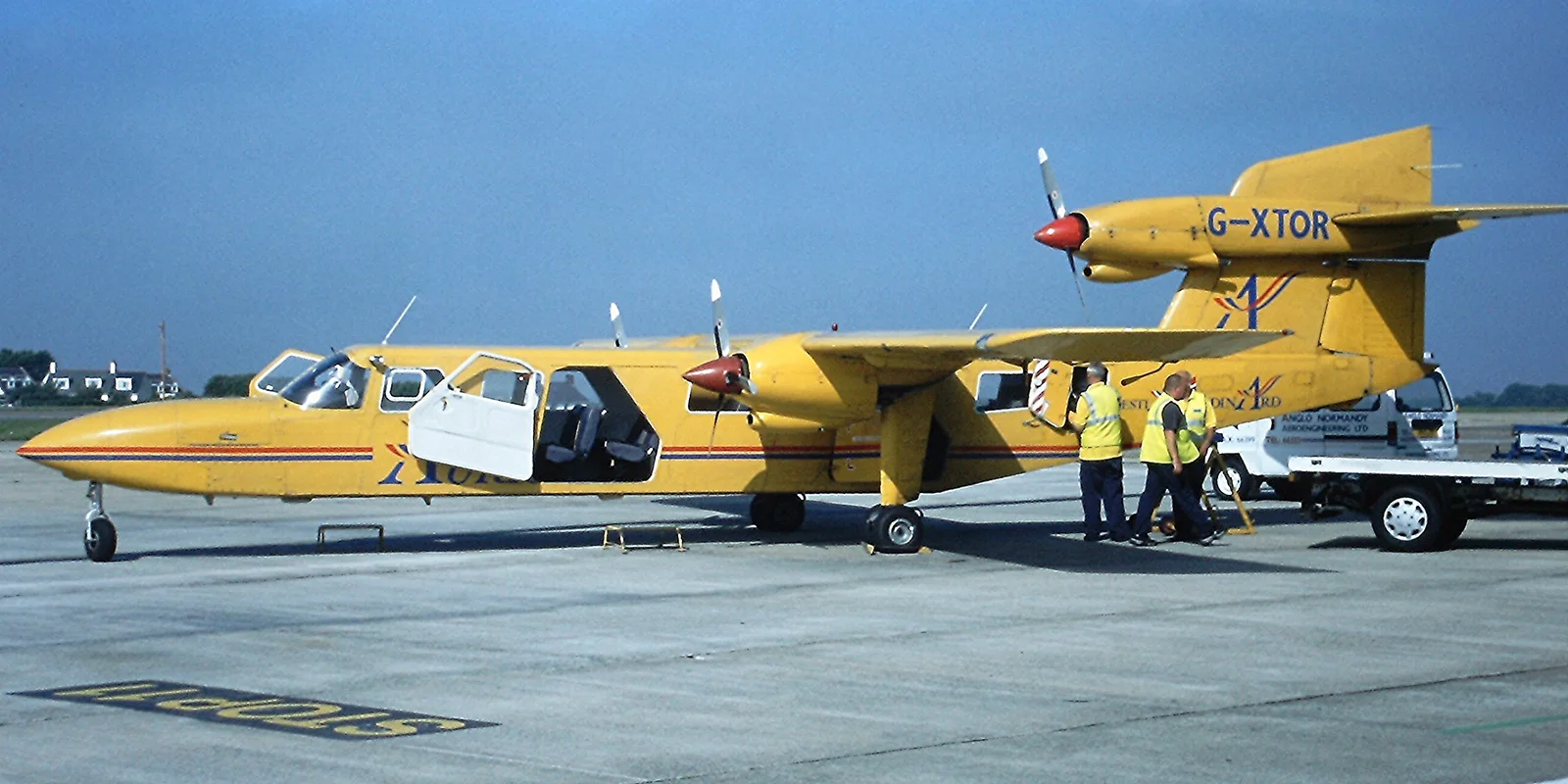
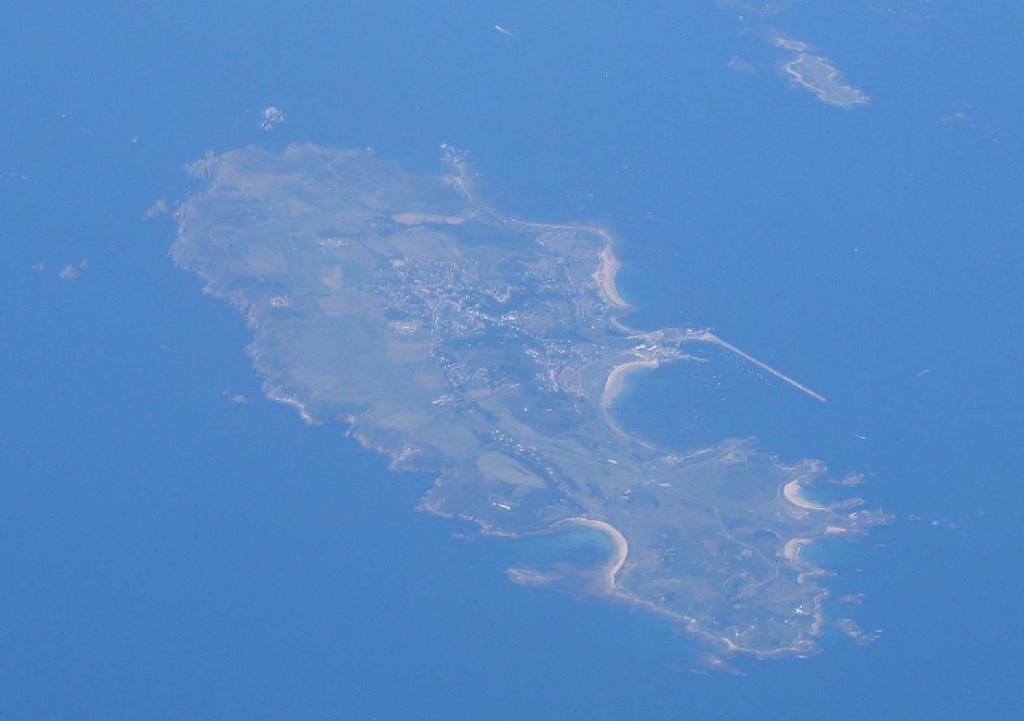
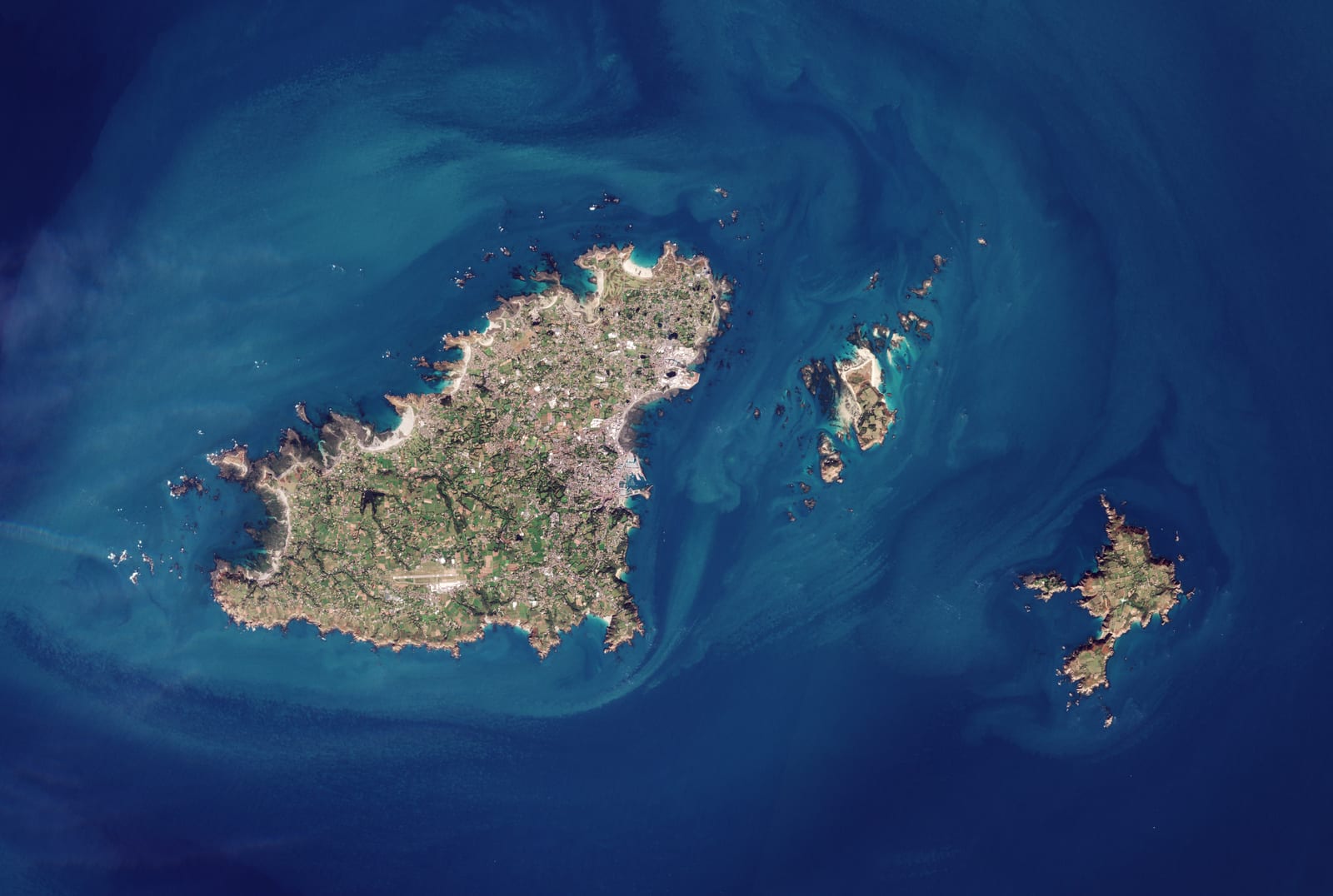
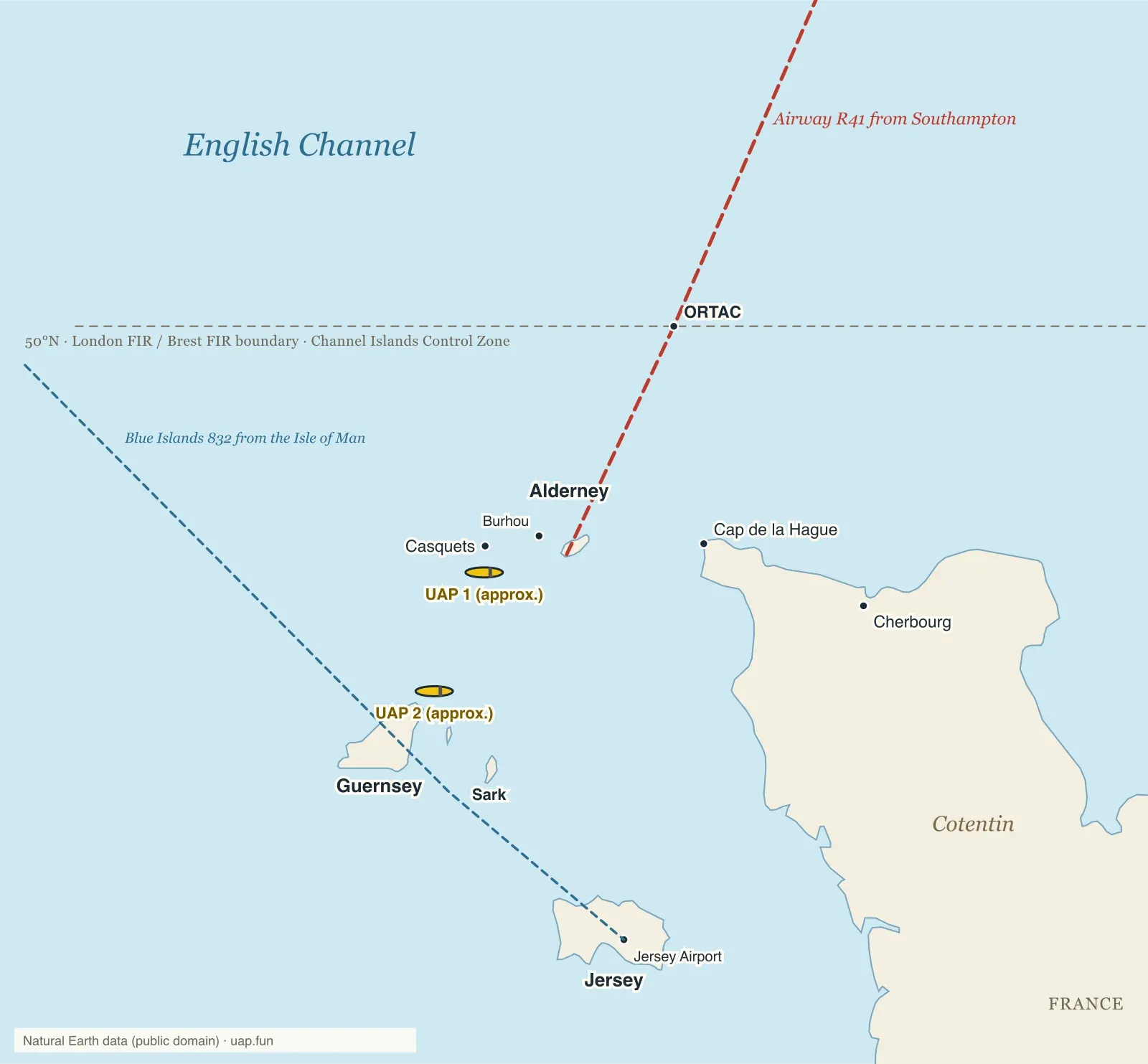
The Channel Islands sit in the lee of the Cotentin peninsula, closer to Normandy than to England, and the smallest of the airports that serve them is on Alderney, the most northerly island, about ten miles from the French coast and seven or eight miles east of the Casquets, the reef and lighthouse that have been wrecking ships since the age of sail. The island’s airline is Aurigny Air Services, which in 2007 still flew canary-yellow Britten-Norman Trislanders, three-engined piston aircraft with sixteen or so seats in an open cabin behind a single pilot. The Southampton–Alderney run took about forty minutes in still air: south on airway R41, down the 207-degree radial to a reporting point called ORTAC on the fiftieth parallel, which marks the boundary between the London and Brest flight information regions and the northern edge of the Channel Islands Control Zone worked by Jersey radar, then a descent, a turn to the left toward the island and a straight-in landing on runway 26. ORTAC is an imaginary point that borrows its name from a real rock west of Alderney and, as the pilot who flew the route would later explain, appears on no map. On Monday, April 23, 2007, that pilot was Captain Raymond Anthony Bowyer, fifty years old, who had begun flying in 1984, had been a professional airline pilot for eighteen years with Novair, Regionair, Channel Express, Jersey European and Farnair before Aurigny, and had flown this particular aircraft, G-XTOR, on this particular route for eight and a half years, something between five and six hundred round trips. He took off from Southampton at 13:39 UTC, 2:39 in the afternoon by British Summer Time, with the autopilot engaged, cruising at 130 knots indicated at flight level 40, about 4,200 feet above the sea once the day’s high pressure was allowed for. The afternoon was largely cloudy at height, with altocumulus and cirrus blocking the direct sun, which stood about 45 degrees up in the southwest, a little to the right of the nose. The eastern and western horizons were lost in cloud, but ahead the view was clear and Bowyer put the visibility at a hundred miles. Below the aircraft, at about 2,000 feet, lay a thin layer of haze, bad air from the continent in Bowyer’s description, and beneath that, out of sight, the sea was very calm.
Sources: Report on Aerial Phenomena Observed near the Channel Islands, UK, April 23 2007Unusual Atmospheric Phenomena Observed Near Channel Islands, UK, 23 April 2007Gigantic UFOs over the English Channel, 2007How the Pentagon Started Taking U.F.O.s SeriouslyG-XTOR B.N. Trislander, Aurigny, Guernsey, 24 August 2001
A reflection that would not go away
At about 14:06, some twelve nautical miles short of ORTAC, Bowyer noticed a bright light close to the horizon, almost straight ahead and a few degrees to the right. His first thought was the one any Channel Islands pilot would have had. Guernsey, twenty-odd miles beyond Alderney and some sixty miles ahead of him, is covered in commercial glasshouses, the “vineries” of its tomato industry, and from the air their glass catches the sun in a flash that lasts ten or fifteen seconds and vanishes as the aircraft moves through the critical angle. This light did not vanish. After a minute and a half or two Bowyer reached for the binoculars he kept in the cockpit, a pair with a 10× setting, and found that whatever he was looking at seemed to be in the sky, at or near his own height. What he described, that day and in every interview afterward, was the profile of a thin cigar lying horizontally above the horizon, “sparkling yellow,” “bright orange-yellow,” “golden yellow,” “sunlight yellow”: a light that seemed to come from the thing itself rather than to be reflected off it, “brilliant” but not dazzling, so that he could stare at it through the glasses without discomfort. Its edges were “very sharply defined,” its ends pointed. About two-thirds of the way along from the left, like a band around a cigar, was a patch of “dark graphite grey” a tenth of the object’s length, its boundaries hazy where they met the yellow, and the dark color had a “shaky” or “glittering” quality that Bowyer found hard to put into words and insisted was a property of the object, not a trick of his eyes. To the naked eye it was about the width of a pencil held at arm’s length, half a degree of arc, roughly the apparent diameter of the moon. His first impression was of something the size of a Boeing 737, or bigger, at about his own altitude, somewhere near ORTAC and not more than fifteen miles off.
Sources: Report on Aerial Phenomena Observed near the Channel Islands, UK, April 23 2007Unusual Atmospheric Phenomena Observed Near Channel Islands, UK, 23 April 2007Gigantic UFOs over the English Channel, 2007Guernsey Pilot Spots UFO
“Jersey Zone, A-Line 544”
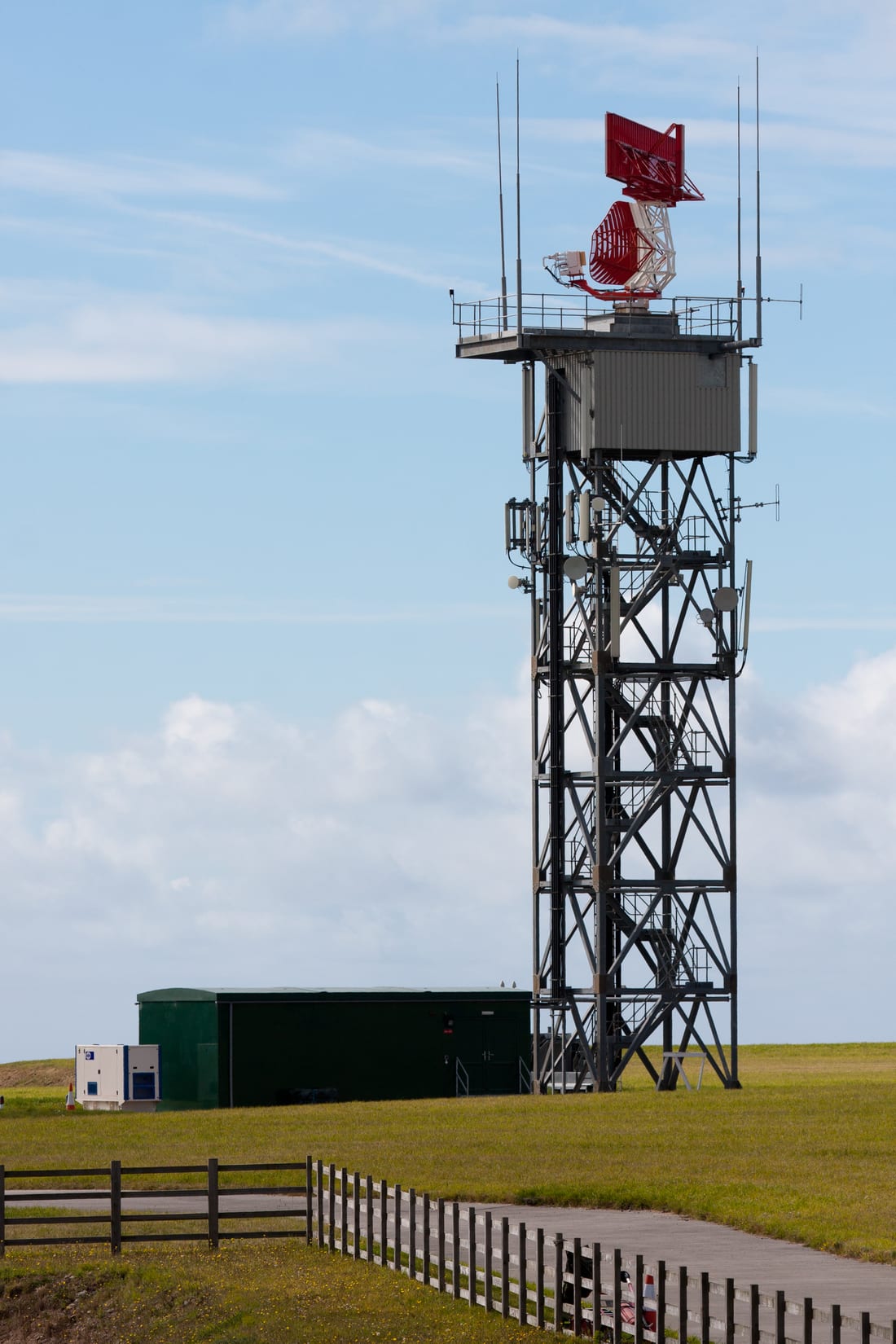
At 14:09:32, about three minutes after he had first seen the light, most of it spent with the binoculars, Bowyer keyed the microphone on 125.2 MHz. The Jersey Zone controller that afternoon was Paul Kelly, thirty-one. The recording, which Jersey Air Traffic Control later released to investigators, begins mildly enough. “Do you have any traffic, er, can’t really say how far, about my 12 o’clock, er, level?” “Er, no, no known traffic at all in your 12 o’clock.” “Roger, I’ve got a very bright object, er, well, as I say it’s difficult to say how far, extremely bright yellow, orange object, straight ahead, er, very flat platform, looking at it through binoculars as we speak.” Kelly came back at once: he did now have “a very faint primary contact, just to the left probably to your 11 o’clock this time and a range of, er, about 4 track miles.” A primary contact is a raw radar echo with no transponder behind it. When Bowyer asked a minute later for “any more information on that aircraft,” Kelly was careful: “negative, there’s just a primary contact, we sometimes get anaprop on the radar,” anomalous propagation, the false echoes that a temperature inversion can conjure from ships or ground far beyond the normal horizon. “There is something possibly your left, er, 10 o’clock at a range of 3 miles this time.” Neither echo was where Bowyer was looking. “I’ve got a definite contact, my 12 o’clock,” he said at 14:11:26, “very bright yellow object looking like, well, a cigar.” “Nothing at all in your 12 o’clock, erm, for the next 40 miles or so.”
Sources: Report on Aerial Phenomena Observed near the Channel Islands, UK, April 23 2007The UFO Files: The Inside Story of Real-Life Sightings
“Anyone else see that?”
“Anyone else see that?” Bowyer asked. Kelly turned to the only other aircraft in the area at a useful height, a Blue Islands Jetstream 32 inbound to Jersey from the Isle of Man, callsign Blue Island 832, which was passing Guernsey southeast-bound at around 250 knots and had been listening in. “That traffic is in your left, just behind 9 o’clock, can you see anything in that direction towards ORTAC?” “I’m having a look, stand by.” At 14:12:36 Bowyer confirmed that the object was at his own level and added a line that would be quoted in every newspaper account: “just confirming, now all the passengers can see this . . . aircraft.” He had Alderney in sight, dead ahead; the light seemed to lie off its north-northwest coast, “over Burhou-ish at the moment, but I can’t really tell,” and it was “staying the same size.” Kelly said he would try to raise Alderney tower. At 14:13:13 the Jetstream reported: “I have nothing in that, er, position at all, I can’t see anything.” It was then passing through flight level 65, descending, and Kelly handed it off to Jersey Approach on another frequency. He also asked a Flybe BAe 146 climbing out of Guernsey for Gatwick, whose course would take it up toward ORTAC, to look down as it passed Alderney.
Sources: Report on Aerial Phenomena Observed near the Channel Islands, UK, April 23 2007
“A second one just appeared behind the first one”
At about 14:12:30 the Trislander crossed the fiftieth parallel and passed abeam ORTAC, and Bowyer, still watching through the binoculars, saw a second light. It sat a little to the right of the first and a fraction higher, close enough that both fitted in the same six-degree binocular field, and it was identical in every respect, the golden color, the pointed ends, the graphite band two-thirds of the way along, except that it looked a little more than half the size, was a little less bright, and seemed to be further away. Both were to the right of his track and to the left of the Casquets lighthouse, which he could see about twelve degrees right of the nose. “Well, looking through binoculars as I am now,” he told Kelly at 14:14:04, “there’s a second one just appeared behind the first one.” Were they still between him and Alderney? “Negative, I think over maybe to the west of Alderney.” Kelly: “I do have a primary contact, just one . . . blob if you like, er, 8 miles or so to the west of Alderney in the vicinity of the Casquets.” “That would possibly be the second one, furthest out that I can see. The first one is maybe closer, looks like Burhou area or beyond Burhou from me in a straight line.” Then came the fullest description he gave in real time. “The second one appears to be beyond the first from where I am, in other words towards the south west. Er, it’s exactly the same, it’s got a gap. It’s a cylindrical . . . object, very bright yellow, and there’s a gap in light about two thirds of the way along it from, er, left to right as I look at it, and the second one is exactly the same.” Kelly offered descent. “Please, I better had go down I think.” As the aircraft was cleared down toward 2,000 feet on a QNH of 1021, Bowyer added that the lights were “very plain to see from where I am now, without, er, any binoculars.”
Sources: Report on Aerial Phenomena Observed near the Channel Islands, UK, April 23 2007Unusual Atmospheric Phenomena Observed Near Channel Islands, UK, 23 April 2007
Four rows back
Behind him, the cabin had noticed. Bowyer later insisted he had not pointed the lights out to anyone and that a man sitting alone directly behind him had spotted them for himself; John Russell remembered it differently, with the pilot getting “agitated” and calling to the man. Either way the two had been talking for some time, the pilot twisted round in his seat, before the man was handed the binoculars. A couple in the next row also saw something. None of these three ever agreed to be named. Four rows back, Kate Russell of Alderney looked up from her book because she had never seen a pilot turn round to talk to a passenger before. She could see nothing through the windscreen until the nose dropped for the descent, shortly after 14:15:30, and then: “a very bright light over the sea below us. It could have been sunlight reflecting off something. There were two lights.” They were shaped “like a fat cigar,” one larger and apparently nearer than the other, and the light was bright white, “a ‘sunlight-coloured light’ if you understand what I mean.” The plane’s nose came up and she lost them; when it dipped again, around 14:17, they were back, the yellow tinge now more distinct, and this time she could make out a little fishing boat on the sea below. Her husband John, who had to lean across her to see, caught only one of them, “a lozenge-shaped, orange light . . . a lot brighter than the reflection of the sun would create,” and thought it drifted a little to the west. “My husband said it was an orange colour,” Kate told David Clarke, “but he’s colour blind!”
Sources: Report on Aerial Phenomena Observed near the Channel Islands, UK, April 23 2007The UFO Files: The Inside Story of Real-Life Sightings‘Mile-wide UFO’ spotted by British airline pilot
“I’ve lost the objects now in the haze”
In the cockpit, three things were changing. The two lights were shifting their bearings relative to one another, the second climbing above the first and then sliding across to its left until, by about 14:16, they stood “lined up” one over the other and then reversed their original order; both had dropped slightly below the horizontal, to a depression of about two degrees, just before the descent began; and both were growing. “Certainly two objects now,” Bowyer reported at 14:16:35, “passengers can both . . . see, or passengers can see two objects. I’m going to be in a straight line with them on, er, sort of final approach into Alderney. Two very bright lights.” Kelly asked how big they were. “Difficult to say how far away they are, I’d say the furthest one is 10 miles away, closest one is 4 miles away, 5 miles away, maybe 7, erm, don’t know, like, the size of 737, something like that?” “Both stationary.” “Low to me now, er, I’d say 2000 feet, 1500.” By the time the Trislander reached the top of the haze the nearer light was nearly three times its original width, about a degree and a quarter across, and the two sat at his own eye level with the smaller one perhaps two degrees to the left. Then the aircraft sank into the haze, where the visibility fell to a few miles, and at 14:18:02 he called: “I’ve lost the objects now in the haze in descent.” Both had gone at the same instant. He had watched the first for about twelve minutes and the second for six or seven. He landed on runway 26 a little after 14:23, and as his passengers filed out he asked whether anyone had seen “that,” and would they leave their names. The man from the seat behind him did not.
Sources: Report on Aerial Phenomena Observed near the Channel Islands, UK, April 23 2007Unusual Atmospheric Phenomena Observed Near Channel Islands, UK, 23 April 2007
“Something about 8 o’clock”
The Jetstream had not finished with the lights. At 14:14:43, now on the Jersey Approach frequency and, by the radar plot, descending through about 4,400 feet some three miles east of Sark (Patterson himself would write five miles northwest of Sark, through 3,500 feet), its captain, Patrick Patterson, called in: “Zone asked us to look if we could see an object which is, um, being seen by A-Line at the moment, I’ve got something about 8 o’clock resembling the description.” How far? “Around about a similar range to Alderney from us now.” Same level? “Er, lower, I would suspect about 2000 lower.” Patterson, who had nearly three thousand hours and a year on Channel Islands routes, was looking back over his left shoulder from the left-hand seat, his face against the window; his first officer could not see past him and none of the passengers noticed anything. He saw it several times over about a minute between cockpit duties and then, looking back once more, found it gone. The letter he wrote out the next day, headed “Unidentified Flying Object NNW of Alderney,” said only that he had seen “something fitting the description viz. yellow/beige in colour, in my eight o’clock position, slightly to the north-west of Alderney at what I estimated to be 2,000’ below,” in fairly poor visibility, for about a minute. Months later, answering the investigators’ written questions, he put it about two miles west of the island, “possibly oblong/oval, yellow/beige colour, little definition due to haze, little depth,” with “no apparent motion,” and, by comparison with the width of Alderney behind it, half a mile across at most.
Sources: Report on Aerial Phenomena Observed near the Channel Islands, UK, April 23 2007DEFE 24/2077/1: Requests for information on UFOs under the Freedom of Information Act 2000, March–May 2007The UFO Files: The Inside Story of Real-Life Sightings
Nobody else saw anything
That was as far as the corroboration went. The Flybe 146, which Kelly told at 14:14:58 that there was “a primary just on your right hand side now, erm, vicinity of the Casquets, about a mile to your right,” saw nothing from above six thousand feet (“the FlyBe 146 I think was too high,” Kelly said later). An aircraft known only by its callsign, Golf Romeo Romeo, eighteen miles behind the Trislander on the same airway, was asked to keep an eye out as it passed down the east side of Alderney and reported at 14:32: “to my disappointment, nothing.” Alderney tower, asked to look, saw nothing from the ground; the haze, Bowyer thought, would have hidden the lights from anyone below it. For the next half hour Kelly briefed every aircraft that came onto his frequency. “What you’re looking for would be cigar-shaped very bright yellow objects emitting light,” he told the crew of Sky Elite 597 Papa at 14:24, who could be heard laughing. “We had a Trislander into Alderney over a period of about 10, 15 minutes, all the passengers saw the objects as well, there were two in the vicinity of Alderney and one at the Casquets.” To Jersey 511 at 14:36: “two cigar shaped objects, bright orange . . . just off the NW corner of Alderney.” “Sounds very strange,” the pilot replied, “maybe there’re UFOs in the area.” “Yes, maybe indeed.” Nobody else saw anything that afternoon.
Sources: Report on Aerial Phenomena Observed near the Channel Islands, UK, April 23 2007
The fax to Jersey
At 15:25, when Bowyer was back in the air as A-Line 563 bound for Southampton, Kelly asked him to come up on a spare frequency. He had already been on the phone to Aurigny’s operations office in Alderney, which had faxed him Bowyer’s flight log with the drawings on it; would the captain write up whatever details he could, draw the diagrams again and fax them to Jersey, for the attention of Paul Kelly? “Any other sightings?” Bowyer asked. “I understand a FlyBe got it.” The 146 had been too high, Kelly said, but “a Blue Island Jetstream passing down abeam Sark on its way down to us, once it was at a similar level, I think, 450, saw the objects, er, opposite direction to yourself in the vicinity of Alderney, estimated range from them about 10 miles.” “Did he see two objects like I did?” “Er, he didn’t say actually . . . but he certainly saw one in the vicinity of Alderney, perhaps the other one, if it was further west, would have been actually behind him.” “Yeah, that would confirm what I saw. Thanks very much, I’ll be in touch by fax.” Bowyer’s illustrated report reached Jersey at 16:00. On the Civil Aviation Authority’s air safety report form he had drawn the object as he first saw it, a flattened pointed shape with a dark band. The Ministry of Defence’s annual list of sightings would later boil his report down to three sentences, the whole official description of the day: “First object was bright orange/yellow. There was a gap in light or darker area. Second object was identical.”
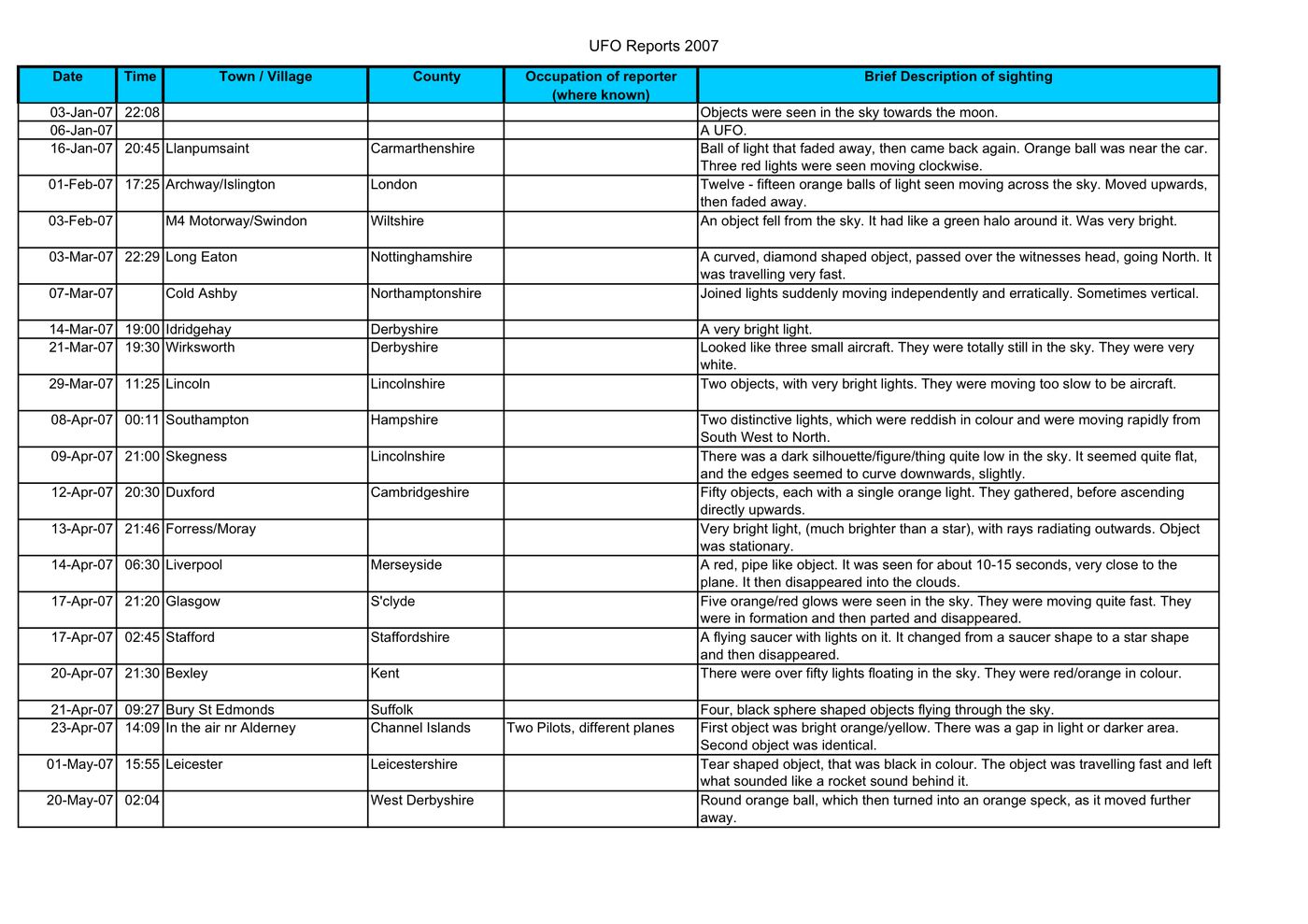
Sources: Report on Aerial Phenomena Observed near the Channel Islands, UK, April 23 2007Gigantic UFOs over the English Channel, 2007UFO Reports 2007
Paperwork, and a mistake about radar
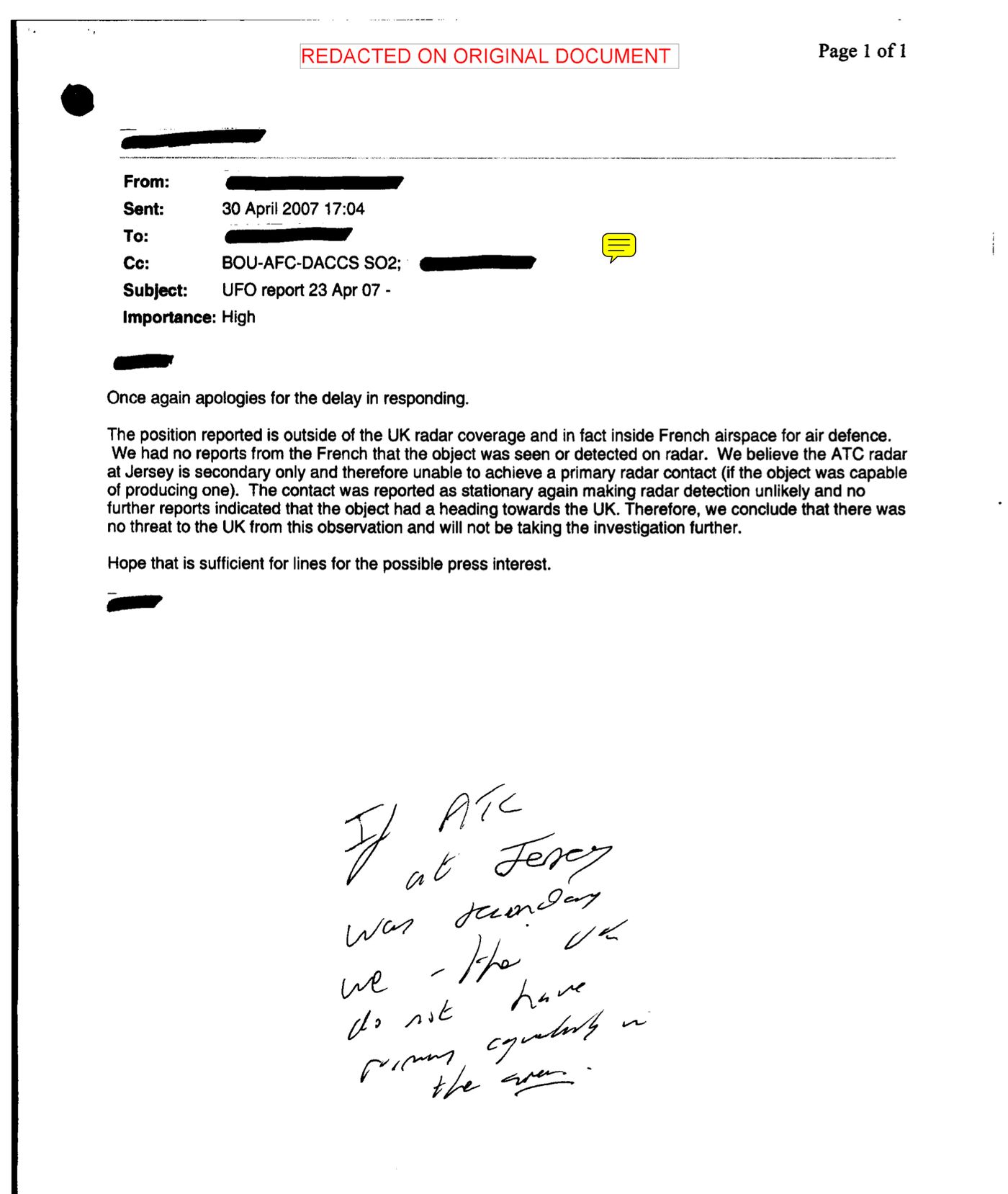
The paperwork moved faster than the explanations, and for a few days faster than the press. Kelly’s four-page Report of Unidentified Flying Object and Bowyer’s three-page Air Incident Safety Report went to the Civil Aviation Authority, and on April 24 Patterson, telephoned by Kelly (“Look, we’ve got the MoD crawling over this one. Can you write down what you saw?”), wrote his one-page letter. The CAA logged the whole affair as Mandatory Occurrence Report 200703486, location “Alderney, 10NNE,” classified “Miscellaneous Non-AD Occurrence,” with a précis that reads like a shrug: “BN2T crew observed a stationary bright light ahead, thought to be a reflection from the ground. However, crew viewed the light through binoculars and observed a shape, similar to a B737 fuselage. The crew contacted ATC, who originally stated that there wasn’t anything showing on radar. However, they then observed a primary contact. The crew and some passengers observed the bright lights again later in the flight. The shape was said to be bright yellow with a dark area nearer to one end.” The Ministry of Defence, which had told the BBC within two days that it would not investigate, settled the matter in an internal e-mail of April 30, written to supply “lines for the possible press interest”: the position reported lay outside British radar coverage and “inside French airspace for air defence,” the contact had been stationary and had not headed for Britain, and “we conclude that there was no threat to the UK from this observation and will not be taking the investigation further.” The e-mail also contained a mistake: “we believe the ATC radar at Jersey is secondary only and therefore unable to achieve a primary radar contact.” Jersey’s picture is in fact assembled from a secondary radar on Jersey, which reads transponders, and a primary radar head on Guernsey, which paints raw echoes from anything that reflects, ships and birds included. Freedom of Information requests began to arrive. The Ministry answered one requester directly on May 4 with the papers attached, and after further requests, including one on May 15 from the four private researchers who would spend the next ten months on the case, it posted a redacted file on its website around May 20: the e-mail, Kelly’s report, Bowyer’s report with his drawing, and Patterson’s letter. When the Ministry later published its annual list of sightings for 2007, the Channel Islands entry, filed under “In the air nr Alderney,” reporter “Two Pilots, different planes,” time 14:09, was Bowyer’s three sentences. The zone, the investigators would note, is watched by a French Centaure long-range radar at Maupertus near La Hague on the Cotentin, and the French air-defence operations center, asked in June, replied that a reconstruction of all movements between 14:09 and 14:18 showed nothing but aircraft under civil or military control, and that its recordings were in any case routinely dumped after a few hundred hours; the French space agency’s UAP office, GEIPAN, was told through its own channels that the data had been destroyed after eight weeks. Patterson heard that GEIPAN had asked his company for an interview with him and been turned down; “it wasn’t my decision,” he said, “I knew nothing about it.”
Sources: Report on Aerial Phenomena Observed near the Channel Islands, UK, April 23 2007DEFE 24/2077/1: Requests for information on UFOs under the Freedom of Information Act 2000, March–May 2007DEFE 24/2077/1 catalogue entryUFO Reports 2007Guernsey Pilot Spots UFOPilot spots ‘UFO’ over Guernsey
“As much as a mile wide”
The story was not supposed to get out. Bowyer told his interviewers that it was leaked to the Guernsey Press by a third party, that the paper rang Aurigny, and that the airline’s managing director, Malcolm Hart, rang him to ask whether he minded talking; he did not, and he felt the company rather welcomed the attention. The BBC’s Guernsey desk had it first, on the morning of Wednesday, April 25, under the headline “Pilot spots ‘UFO’ over Guernsey,” and had already asked the Ministry of Defence whether it would investigate: it would not. Bowyer was “pretty shook-up,” he told them. “This is not something you see every day of the week, it was pretty scary.” Nick Pope, who had run the Ministry’s UFO desk in the 1990s, called it “one of the most intriguing sightings I’ve heard about in recent years,” and John Spencer of the British UFO Research Association reminded readers of Frederick Valentich, the Australian pilot who had vanished over Bass Strait in 1978 while describing an object to the ground. The Guernsey Press ran Joel de Woolfson’s “Pilot’s UFO shock” the next morning, with a photomontage and a photograph of Bowyer’s logbook, in which he had written: “Unidentified object seen. Bright yellow thin, stationary. Size of 737. 2nd object same shape seen behind first at some distance.” The Jersey Evening Post, the sister paper, opened with Mulder and Scully. Within weeks the story had run in the Sun, the Independent, which gave it a page, and the New Zealand Herald, where Bowyer’s mother read it in Auckland. It was in the Guernsey Press interview that the object grew. Bowyer had been told on the ground that Jersey’s radar had something near the Casquets, and the Casquets were not ten miles from where he had first seen the light but forty. If the thing had looked the size of a 737 at ten miles, then at forty miles it “must have been much bigger . . . It could have been as much as a mile wide.” The Register made it “giant,” the Evening Standard in June “one of the largest UFOs ever seen,” and on Channel 4’s Richard & Judy and in a CNN interview that month the mile stuck; by summer Bowyer was also saying the objects had sat on Jersey’s radar for 55 minutes. Bowyer himself was careful on the point that mattered to him. “I can’t explain it,” he said in that first interview. “I’m certainly not saying that it was something of another world. All I’m saying is that I have never seen anything like it before in all my years of flying.” And he was candid about the cost of saying anything at all: “In the profession it’s fairly well known that if you come forward and tell these sort of stories, you become unemployable. I think if I had not had eight years with the company it would not have been mentioned.” Within a month some fifty islanders had stopped him to describe lights of their own in the triangle between Alderney, Guernsey and Jersey; he asked for their stories to be left at the La Croix Guérin café in St Martin’s. Colleagues whistled the Close Encounters theme when he walked in, “just banter, just ribbing.”
Sources: Pilot spots ‘UFO’ over GuernseyPilot’s UFO shockPilots spot mile-wide UFO close to AlderneyUK airline pilots spot giant UFO‘Mile-wide UFO’ spotted by British airline pilotUFO ‘evidence’ growsUFO spotter shocked by worldwide interestThe truth is up there: how the Pentagon gave hope to Britain’s UFO spottersAstronomers Find First Earth-like Planet in Habitable ZonePilots spot ‘UFOs’ near the Channel Islands
Sundogs, test planes and the Folkestone earthquake
The explanations began at once, and the first came from a fellow pilot. Flybe’s Troy Queripel, who had seen Bowyer forty-five minutes after he landed and found him “clearly shaken,” told the Guernsey Press that the Channel is ringed with military danger areas and that the stealth bomber had flown for years before anyone knew it existed: “Two per cent of me thinks it was little green men, but the other 98% thinks it was the military testing new technology that we haven’t even heard of.” On May 2 the paper printed the opposite view from Jean-Charles Duboc, the retired Air France captain whose own 1994 sighting of a huge lens-shaped object near Paris had been tracked by French military radar; Bowyer’s sighting, he said, was “really impressive” and in his opinion an extraterrestrial civilization was deliberately staging such things. On Alderney the local paper, the Alderney Journal, was “full of the story,” and Michael Maunder, an amateur astronomer and the author of a Springer book on lights in the sky, recognized Bowyer’s drawing at once: “so obviously that of a sundog, that I was impressed by the pilot.” Sundogs, the bright patches that ice crystals paint twenty-two degrees to either side of the sun, were his explanation in the Journal of May 26, and a Jersey amateur, Marcel Le Masson, recalled a similar sight near the same spot. Bowyer answered in the next issue that he had seen sundogs for years, that on April 23 the sun was hidden behind a sheet of cloud at eight thousand feet, and that both his objects had been on the same side of it. Maunder withdrew, then in 2008 published a pamphlet reverting to a version of the idea. Tim Lillington, the former senior forecaster at Guernsey airport, offered a subtler reading in e-mails of early May, later printed by the island’s astronomy section: a pocket of air of different density and humidity entrained in the southerly flow, “almond or oval shaped along a horizontal axis,” whose boundary would bend sunlight into a bright outline with darker patches to compensate, best seen from the pocket’s own level and perhaps invisible from the ground. The July BBC Magazine piece on the sixtieth anniversary of flying saucers put forward a third idea through the writer Paul Devereux, whose “earthlights” are glowing plasmas squeezed from stressed rock. Five days after the sighting, on April 28, a magnitude 4.3 earthquake had struck beneath Folkestone; asked about the link, Bowyer was “open-minded about everything,” and added, “It would be a fairly perverse universe if we were the only inhabitants.” By midsummer his own position had hardened. “They were not reflections,” he told UFO Data magazine. “I was looking at solid objects through binoculars with a 10x magnification. They were not lenticularis. These I have seen many times before. They were not ‘sun dogs’. The earthlights may have some credence . . . I am coming to the conclusion after two months that these objects were probably not from around ‘here’.”

Sources: Testing is UFO theoryUFO ‘evidence’ growsStrange Objects in the Sky · UFOs over Alderney · Alderney UFO – a Meteorological ViewSaucers in the skyGuernsey Pilot Spots UFO2007 Kent earthquakeReport on Aerial Phenomena Observed near the Channel Islands, UK, April 23 2007
Four investigators and a radar tape
What the official bodies declined to do, four private researchers did instead, and at a length that has few equals in the literature. David Clarke, a folklorist and journalism lecturer at Sheffield Hallam University who had spent years in the Ministry of Defence’s UFO files, and Paul Fuller of the British UFO Research Association, who with Jenny Randles had argued in 1990 that crop circles were a mystery solved, were joined by Martin Shough, a radar specialist in the north of Scotland and a research associate of the American National Aviation Reporting Center on Anomalous Phenomena, and Jean-François Baure, a French researcher who ran the ray-tracing calculations. Fuller interviewed Bowyer for two hours at Southampton Airport on June 8, 2007, and lent him a camera to photograph the distance-measuring readouts on his next trips; Clarke took the Russells’ statements by telephone on June 28 and Patterson’s on December 14; Baure spoke to Kate Russell in July. Jersey Air Traffic Control gave them two hours of radio recordings on three frequencies, composite radar screenshots and the raw data files, which they could not read without Jersey’s licensed software; Jersey’s meteorological office supplied the weather-radar scans for 14:00, 14:15 and 14:30 and a best estimate of the temperature profile over the sea; the harbormasters of St Malo and Guernsey were asked about ferries, a Guernsey nursery about the pitch and orientation of its glass, Météo-France about a mesoscale model of the Breton coast, IFREMER about wave slopes, and a roster of atmospheric physicists, radar meteorologists and earthquake-light researchers about everything else. Their 181-page Report on Aerial Phenomena Observed near the Channel Islands appeared in February 2008, and a condensed version in the Journal of Scientific Exploration that year.
Sources: Report on Aerial Phenomena Observed near the Channel Islands, UK, April 23 2007Unusual Atmospheric Phenomena Observed Near Channel Islands, UK, 23 April 2007How the Pentagon Started Taking U.F.O.s Seriously
What the radar saw
Their first finding confirmed what the radio tape already showed: the mile and Bowyer’s later claim that the objects had sat on radar for 55 minutes were his inferences from the Casquets echo and the playback, not measurements. The radar, examined, gave little comfort to either side. The faint primary contacts at 11 and 10 o’clock early in the sighting were left behind by the Trislander and had nothing to do with the lights. The “single blob” near the Casquets at 14:14 was described by Kelly in his own report as “anaprop possibly associated with one of the objects,” unstable and ragged, in his view probably not a solid target, and the two hour-long tracks, one moving north at about ten knots and one south some miles further west, were, Jersey’s radar engineers said, “99% certain” to be ships on shipping lanes: the northbound one fitted a Brittany Ferries vessel, the Bretagne, due up from St Malo toward Portsmouth and reaching the Alderney area around 14:30. But the primary radar on Guernsey ran with a moving-target indicator that could have eliminated anything stationary, the raw returns had been digitized into symbols at the radar head and could not be recovered, and in the composite view prepared at Bowyer’s request to clarify the ship tracks, Jersey’s engineers had suppressed many of the echoes within twenty miles of Guernsey, which happened to be where the lights had been triangulated. The weather radar’s single sixty-second sweep at the right altitude during the sighting showed “a weak signal intensity in one pixel” that might sit over the Casquet Banks, near the first light’s estimated position, and nothing at the second. “In summary,” the authors wrote, “the radar evidence examined is not helpful in establishing the presence of extraordinary phenomena,” noting the limits set by the moving-target filter and the sample rate and adding that, given the complexity of the radar and its software, “absence of evidence would not necessarily be sufficient evidence of absence.”
Sources: Report on Aerial Phenomena Observed near the Channel Islands, UK, April 23 2007Unusual Atmospheric Phenomena Observed Near Channel Islands, UK, 23 April 2007The Alderney Channel Islands UFO IncidentGigantic UFOs over the English Channel, 2007
Sixteen hypotheses
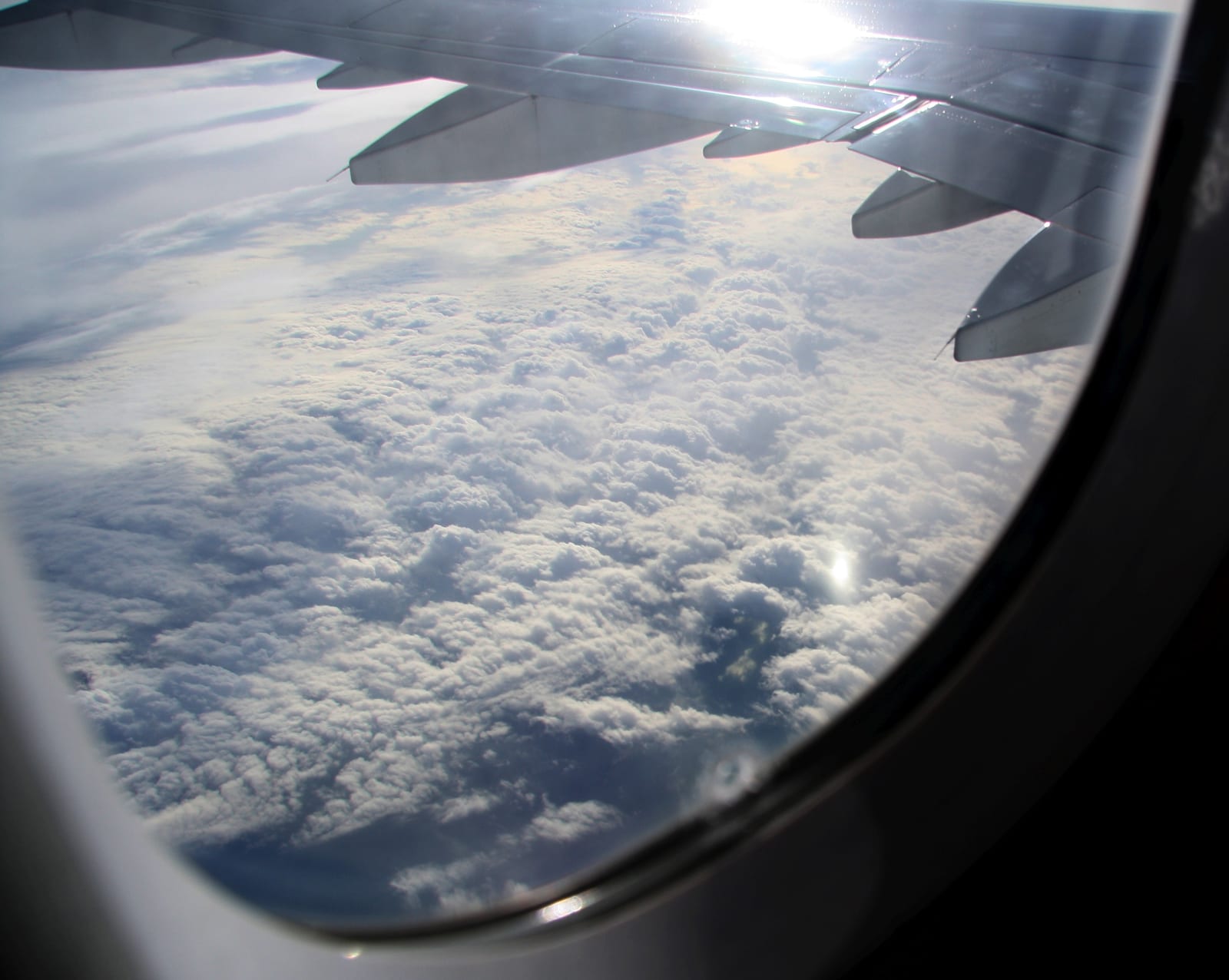
The weather was reconstructed in similar detail. The sun at 14:10 stood at an elevation of 44° 45′ and an azimuth of 225° 20′, about ten degrees to the right of the first line of sight, and was hidden behind altocumulus and cirrus; there was no ice crystal anywhere below ten thousand feet, no rain, no low cloud recorded at Guernsey or Alderney between 11:50 and 15:50, a sea “smooth or slight” and winds of six or seven knots at the surface. The Channel Islands have no radiosonde station, but the Brest ascent showed a tongue of very dry continental air, ten per cent humidity at about 2,500 feet, which the authors matched to Bowyer’s haze, and a Météo-France simulation found a sharp, shallow temperature inversion in the bottom 200 meters over the cool sea near the Breton coast, strong enough to trap light like a duct, weakening northward toward the islands. Sixteen hypotheses were then scored from zero (“very implausible”) to five (“definite identification”). Sundogs scored zero, for the reasons Bowyer had already given. So did a subsun, higher-order rainbows, reflections in the windscreen (Bowyer had flown G-XTOR for eight and a half years, and the lights tripled in size and were seen through binoculars) and “earthquake clouds.” Contrails, ship exhaust plumes, military exercises (“The MoD did not conduct any military exercises (naval, RAF or army) in the English Channel,” the Ministry told them, “nor is it aware of any known military activity involving other nations (e.g. France)”), balloons and airships, sun patches on the sea and the sun glinting off the lakes of the Monts d’Arrée a hundred and twenty nautical miles away in Brittany all scored one. Lenticular clouds, which need twenty-knot winds and a hill three hundred meters high where Guernsey offers a hundred, scored two, as did Bowyer’s own first idea, a direct flash from Guernsey’s million and a half square meters of greenhouse glass, which would have winked out within half a degree of travel instead of following him for ten. The most elegant candidate was a mock mirage proposed by the atmospheric-optics physicist Les Cowley: sunlight glittering off the sea near the Breton coast, trapped in the coastal duct and let out upward toward observers above it, so that a bright patch of a far horizon appeared to float in the sky. The duct was real, which, the authors conceded, “cannot reasonably be a coincidence.” But it offered nothing for Patterson, who was looking north from Sark, and it ran into what they called “one apparently insurmountable problem.”
Sources: Report on Aerial Phenomena Observed near the Channel Islands, UK, April 23 2007Unusual Atmospheric Phenomena Observed Near Channel Islands, UK, 23 April 2007
The lights that crossed
That problem was the thing Bowyer had been most explicit about. Over six minutes the two lights had steadily crossed one another, horizontally, through an arc of a few degrees: the second first appeared to the right of the first, then rose above it, then slid to its left. No mirage, the authors argued, does that. A temperature inversion can bend light up or down, a degree at the very most, but “lateral refraction of light rays of more than a few seconds of arc,” the report says, “is regarded as physically impossible,” and the crossing was a thousand times larger than that. “We are satisfied that there is no refractive index mechanism in the literature - even of a very speculative nature - that would begin to explain this, and that it is a significant feature of the report which we have no good reason to dismiss.” To rescue the mirage one would have to throw that feature out, and the authors declined: “ad hoc trimming for the express purpose of ‘saving the phenomena’ is not a good enough reason unless alternative explanations that do not require trimming can be ruled out as unacceptable on other grounds.” Taken at face value, on the other hand, Bowyer’s account behaved like a description of two real things in two real places. The investigators locked ten constraints from his testimony (both lights right of track and left of the Casquets, the second swinging from a degree right of the first to two or three degrees left of it, the pair rotating some twenty degrees to the right, the first about two miles south of the Casquets light) into the radar plot of the Trislander’s track, and found “only one unique combination of lines of sight” that satisfied them, with a degree or so of play. It put the first light over the Casquet Banks west of Alderney and the second further out toward Guernsey, both at about the height of the haze. Then the arithmetic began to agree with itself. Between 14:06 and 14:18 the first light had grown by a factor Bowyer put between 2.1 and 3; the triangulated position said the aircraft had closed its distance by a factor of 2.8. The second light looked “slightly more than half” the size of the first and was drawn at 0.54 of its width; the geometry said the two were at distances in the ratio 1:1.72, which for equal objects gives 0.58. The twenty-degree swing in bearing came out of the plot as about ten degrees of real rotation plus the beginning of the aircraft’s turn. And the line of sight from Patterson’s Jetstream, looking back from near Sark on a bearing some 140 degrees from Bowyer’s, passed within a few degrees of the same spot over the Casquet Banks. The two men’s estimates of the lights’ height had been made on different frequencies without hearing each other, and the size worked from Bowyer’s angles, about five hundred meters, matched the mean of Patterson’s two very different estimates, four or five Trislander lengths by one reckoning and half a mile by another. “During our investigation,” the report concluded, “the overall cohesion and reliability of Capt Bowyer’s account (in particular) has been tested in various small ways and it appears to us to have been careful and reliable. We think it possible that the UAPs did behave as described.”
Sources: Report on Aerial Phenomena Observed near the Channel Islands, UK, April 23 2007Unusual Atmospheric Phenomena Observed Near Channel Islands, UK, 23 April 2007
Glasshouses and earthquake lights
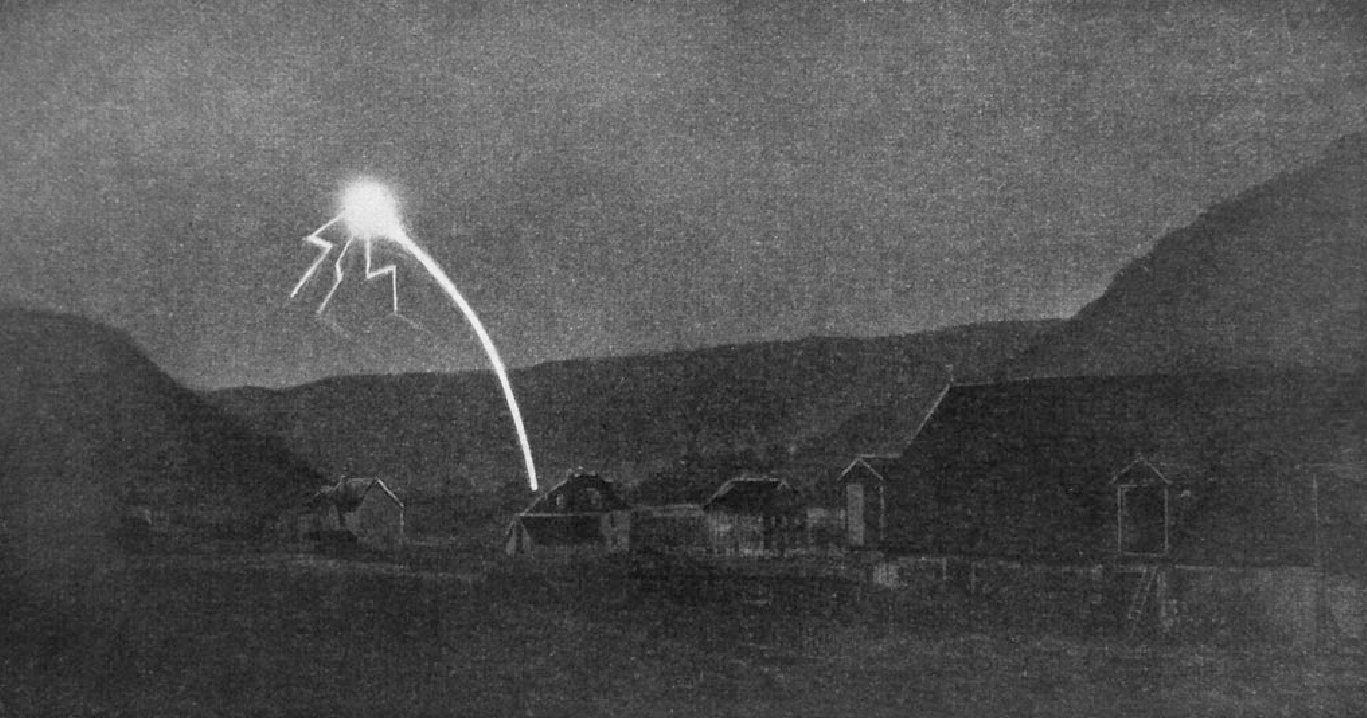
Two theories survived into the “somewhat plausible” band, and both put something luminous in those triangulated places. One was a refinement of the glasshouse idea: sunlight bouncing off Guernsey’s shallow-pitched Venlo roofs at a grazing angle onto the underside of the haze, where droplets scattered it forward into two soft patches that an observer at four thousand feet would see hanging at the top of the layer. A Campbell–Stokes sunshine card from Guernsey confirmed that the sun was shining on the glasshouse districts at the time. The difficulty was that scattering should blur, and Bowyer’s lights had edges “very sharply defined,” identical dark bands in two places miles apart, and a brilliance he had never once seen in hundreds of flights down the same airway. The other was earthquake lights. Five days later and 330 kilometers away, at 07:18 on the morning of April 28, an earthquake of local magnitude 4.3 by the British Geological Survey’s reckoning, the largest in Britain since 2002 and the strongest in the Dover Strait since 1950, struck a few kilometers beneath Folkestone, damaging nearly five hundred houses, and a fault system runs past Alderney toward Ushant, with the Hurd Deep, the deepest hole in the Channel, just northwest of the island. The BGS seismologist Roger Musson doubted that lights could appear so far from so small a rupture; the NASA physicist Friedemann Freund, whose theory of charge carriers released from stressed rock underlies most modern earthquake-light research, thought stress could build at that distance but “whether or not this situation is applicable to the reported sightings . . . of course I don’t know”; John Derr of the United States Geological Survey, after talking to his colleagues, wrote that “the sighting is highly likely to be precursory EQL.” The authors themselves listed everything an earthquake light has never been seen to do: shine steadily for twelve minutes in daylight, keep a sharp outline, hold still, come in identical pairs with matching bands. “We are aware of no well-authenticated observation of EQL that reproduces even a few of these features,” they wrote, and still could not rule it out.
Sources: Report on Aerial Phenomena Observed near the Channel Islands, UK, April 23 2007Unusual Atmospheric Phenomena Observed Near Channel Islands, UK, 23 April 20072007 Kent earthquake
“We have tried our hardest”
The report’s last pages take the reader through Minnaert’s photograph of a “double sun” over the Indian Ocean, which no halo physics explains, and the dark shapes that paced a BOAC Stratocruiser over Labrador in 1954, before trying one final speculation: that a sheet-like wall of air had acted as a one-way mirror, so that Patterson saw a mirage of the yellow Trislander and Bowyer, perhaps, a reflection of his own sunlit aircraft. By their count it failed on seven points, beginning with a 25-degree bearing error that no atmosphere can produce. “In summary,” they wrote, “we have tried our hardest to explain the observations but none of the theories we have explored sits comfortably with all significant features reported.” And in the sentence that has been quoted ever since: “We are unable to explain the UAP sightings satisfactorily without either a) discounting at least some significant features of the reports, or b) doing violence to at least some conventional meteorological optics or conventional EQL phenomenology. We hope that readers of this report will find it helpful in deciding which (if either) of those courses of action seems the more reasonable and economical.”
Sources: Report on Aerial Phenomena Observed near the Channel Islands, UK, April 23 2007Unusual Atmospheric Phenomena Observed Near Channel Islands, UK, 23 April 2007
“Not from around here”
The case traveled. On November 12, 2007, Bowyer stood at a lectern in the National Press Club in Washington, flown over with Aurigny’s blessing, one of fourteen speakers at the press conference that Leslie Kean and the film-maker James Fox had timed to coincide roughly with the first anniversary of the O’Hare airport sighting, alongside Iranian and Peruvian fighter pilots, a Belgian general, the two Rendlesham airmen and Fife Symington, the former governor of Arizona who had seen the Phoenix lights. He used his minutes to contrast the two countries’ systems: the CAA had known within twenty minutes, “this is not an option. This is an obligation,” and nobody at home had ridiculed him; “it seems as if pilots in America are used to this sort of thing here.” He put the lights at “up to possibly a mile across,” fifteen minutes in view, the first “visible from 55 miles distance,” and promised that Clarke’s team would shortly publish. In 2010 Kean gave him a chapter of his own in her book UFOs: Generals, Pilots, and Government Officials Go on the Record, “Gigantic UFOs over the English Channel,” and there, in his own words, is the fullest and most vivid version of the sighting: the “pulsating boundary layer” at the edge of the dark band, “some sort of interface with sparkling blues, greens, and other hues strobing up and down about once every second or so,” an edge he had called “glittering” and “shaky” in 2007 but whose colors appear in no account from that year; his confession that with an empty aircraft he “would have gone a lot closer, perhaps overflown the nearest object”; the relief of Patterson’s report, “as it confirmed that I alone was not bonkers!”; and his quarrel with his own investigators over the ship tracks, which, he argued, began and ended in mid-ocean at the same instant and ran over the Casquets, where no cargo vessel would go with the tide running at eight knots. His conclusion had traveled further than anyone’s: “I can only conclude that they were not from around here, and in that I mean they were not, can not, have been manufactured on Earth.”
Sources: Statement of Captain Ray Bowyer, National Press Club, Washington, November 12, 2007Gigantic UFOs over the English Channel, 2007How the Pentagon Started Taking U.F.O.s SeriouslyUFO Conference Nov 12, 2007 at National Press Club
“What I saw was real”
Channel 5 gave the final episode of its series Britain’s Closest Encounters to “Alderney Lights” in 2008. In 2012 Clarke learned from the CAA that the Alderney sighting was one of only ten mandatory occurrence reports of its kind in seven years, and in the 2013 edition of The UFO Files, the National Archives’ own book, he, the skeptic of the team, called it “one of the most impressive UFO sightings in the first decade of the new century,” noting that without the Freedom of Information Act its paperwork would have stayed shut for thirty years. Just before Christmas 2013 four television crews from as many countries contacted Bowyer within days of one another, and two came to Alderney to film reenactments, a coincidence he found too neat. In 2021 the Sunday Times ranked his report with Rendlesham among the most “impressive and perplexing” in the Ministry’s archive, and when Gideon Lewis-Kraus wrote the New Yorker’s long account of how the Pentagon came to take UFOs seriously, he opened not with the Nimitz but with Aurigny 544 at 2:06 in the afternoon. By then Bowyer had left airline flying and was living on Alderney. The object had become “the size of five or six battleships,” the greenhouses had moved, in the Times’s telling, to Alderney, and the band had become “a couple of black bands on the side that were kind of shimmering.” What had not changed was the point: “Nothing in nature could ever match what I saw that day . . . All I know is what I saw was real.” No new formal analysis has appeared since 2008, the French radar data went in the bin after eight weeks, and the man who sat behind the pilot with the binoculars has never said a word.
Sources: The UFO Files: The Inside Story of Real-Life SightingsAir Traffic Control, UFOs and the FOIAThe truth is up there: how the Pentagon gave hope to Britain’s UFO spottersHow the Pentagon Started Taking U.F.O.s SeriouslyRenewed interest in pilot’s ‘UFO’ sightingBritain’s Closest Encounters, series 1, episode 4: Alderney LightsCaptain Ray Bowyer on his encounter with massive UFOs, Alderney 2007Captain Bowyer’s account of the 2007 Alderney UFO sightingHuge rise in British UFO sightings
What survives
The Channel Islands case is unusually well documented for a sighting that left no photograph. Jersey Air Traffic Control preserved two hours of radio recordings on three frequencies, and the 2008 report prints every exchange about the lights, timed to the second, from Bowyer’s first call at 14:09:32 to his return-flight conversation with Kelly at 15:25. The same controllers supplied composite radar screenshots and the raw playback files, unreadable without Jersey’s licensed software, with plots that fix the Trislander’s position, heading and descent profile throughout the sighting and the Jetstream’s position when Patterson looked back. The written record consists of Bowyer’s three-page CAA Air Incident Safety Report with his first drawing, Kelly’s four-page controller’s report, Patterson’s letter of April 24, the CAA’s Mandatory Occurrence Report 200703486, and the Ministry of Defence’s internal e-mail of April 30, all released in redacted form in May 2007 and now in the National Archives file DEFE 24/2077/1. The Ministry’s published list of 2007 sightings carries the case as its entry for April 23. The witnesses were interviewed at length: Bowyer for two hours by Paul Fuller on June 8, 2007, in a 124-question record, with the co-authors’ follow-ups, that Bowyer corrected in July, and again by e-mail in August; Kate and John Russell by David Clarke on June 28 and Kate again by Jean-François Baure on July 22; Patterson by Clarke on December 14, followed by twenty-five written answers. Alongside these sit the Jersey weather-radar scans, the Brest radiosonde, Météo-France’s model run, the Guernsey sunshine card, ferry schedules and harbor records, and the correspondence with a dozen specialists. What does not survive is the one thing that would have settled the size question: no one on either aircraft had a camera to hand.
Sources: Report on Aerial Phenomena Observed near the Channel Islands, UK, April 23 2007Unusual Atmospheric Phenomena Observed Near Channel Islands, UK, 23 April 2007DEFE 24/2077/1: Requests for information on UFOs under the Freedom of Information Act 2000, March–May 2007UFO Reports 2007DEFE 24/2077/1 catalogue entry
The contradictions
The lights’ size is the first. On the radio Bowyer compared them to a 737 and put the nearer at four to seven miles; by the Guernsey Press interview three days later, told of a radar echo near the Casquets, he had revised the distance to forty miles and the width to “as much as a mile,” and in later years spoke of “five or six battleships.” His own passengers disagreed. Kate Russell thought the nearer light perhaps ten miles off and “nothing like as large”; John Russell thought it smaller than the merchant ships they had overflown; Patterson, who had seen Bowyer on television, said flatly, “What I saw was not ‘a mile wide’ or anything.” The investigators’ triangulation, taking Bowyer’s angles at face value, gave something on the order of five hundred meters; Patterson’s two very different estimates, four or five Trislander lengths by one reckoning and half a mile by another, averaged out near the same figure. The color is the second: “orange” to John Russell and, on the radio, to Bowyer; “definitely not an orange light,” “sunlight-coloured,” to Kate; “yellow/beige,” dim and reflective rather than self-luminous, to Patterson, which is hard to square with Bowyer’s “brilliant,” light-emitting object. The timings in the paperwork do not quite agree: Kelly’s report gives 14:09 for the first sighting and 14:16 for the second light, Bowyer’s form has 14:10 for the second, the radar and tape put the first light at about 14:06 and the second at about 14:12; Kelly put the Jetstream “5nmi northeast of Sark,” Patterson “five NM north-west of Sark,” and the radar about three miles east of it. The number of passengers who saw the lights is given variously as three, five and “up to nine,” and the three with the best view never came forward. Bowyer’s recollection in June of how the radio exchange went, with the primary contact appearing only on his third or fourth query, differs from the tape, which has it on Kelly’s second transmission. And the radar is contradictory by nature: a controller who called his own echo “anaprop,” a pilot who read hour-long ship tracks as the objects, engineers “99% certain” of the ships, and a filter that would have erased anything that stood still.
Sources: Report on Aerial Phenomena Observed near the Channel Islands, UK, April 23 2007Pilot’s UFO shockThe truth is up there: how the Pentagon gave hope to Britain’s UFO spottersGigantic UFOs over the English Channel, 2007The UFO Files: The Inside Story of Real-Life Sightings
Explanations and objections
Three explanations were offered within weeks, and each ran into the geometry. Michael Maunder’s sundogs failed on the position of the sun, and he withdrew them, returning to a version of the idea in 2008. Tim Lillington’s refraction at the edge of a pocket of denser air anticipated, in general terms, the family of mirage theories the investigators later tested with ray-tracing and oceanographic data before concluding that no refraction can shift an image sideways by degrees, let alone march two images past each other. Paul Devereux’s earthlights, linked to the Folkestone earthquake of April 28, drew a skeptical seismologist and an enthusiastic geophysicist, and an acknowledgment from the investigators that no earthquake light on record has ever looked like this. The two theories they left standing, glasshouse reflections scattered off the underside of the haze and an earthquake precursor, each fit the triangulated positions and the lateral crossing but fail on the sharp edges, the identical dark bands and the brilliance. The ferry hypothesis raised on Metabunk in 2023, a cross-Channel vessel reflecting the sun with its logo as the dark band, has the merit that a Brittany Ferries ship really was approaching Alderney around 14:30, but a ship at sea level cannot be at the height Bowyer and Patterson independently placed the lights, and the Bretagne, the report noted, was painted white with red trim. Patterson’s own guesses, a balloon towed behind a naval vessel, sunlight off guano-covered rocks, a secret aircraft being tested in public, were considered and scored low. Underneath all of them lies the question the report ends on: whether a careful pilot’s description of two sharp-edged objects crossing one another is a datum to be explained or a detail to be discarded.
Sources: Strange Objects in the Sky · UFOs over Alderney · Alderney UFO – a Meteorological ViewSaucers in the skyReport on Aerial Phenomena Observed near the Channel Islands, UK, April 23 2007Unusual Atmospheric Phenomena Observed Near Channel Islands, UK, 23 April 2007The Alderney UFO sightingGigantic UFOs over the English Channel, 2007
Classification and evidence note
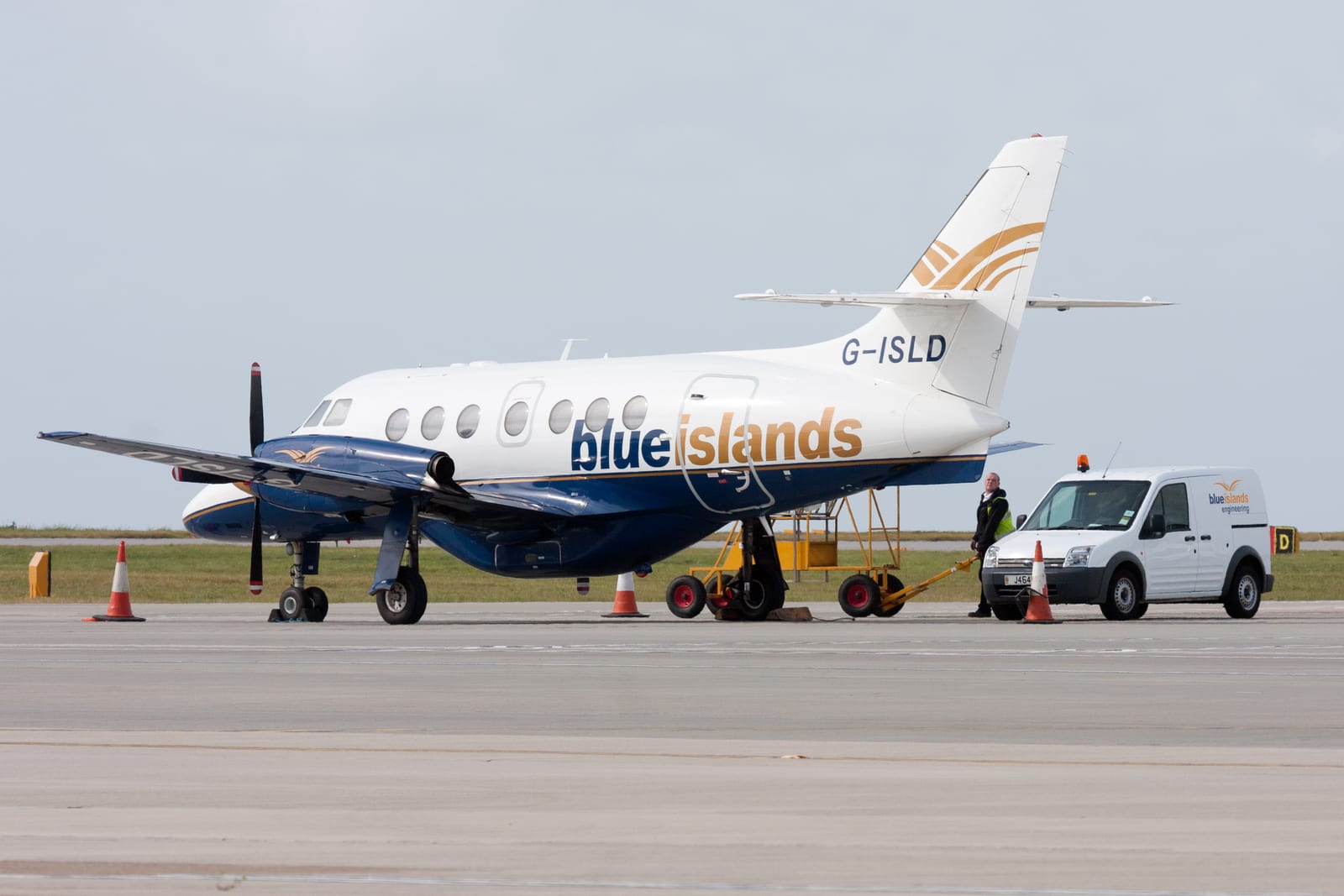
This archive files the Channel Islands sighting as an aviation encounter: every witness was airborne, the record was made through air traffic control, and the official paperwork is the Civil Aviation Authority’s. No close-encounter kind is assigned, because the nearest the lights came to any observer was several miles and no physical effect was claimed. The resolution is unexplained: the one formal investigation scored sixteen hypotheses on a scale from zero to five and left the two highest bands empty, and nothing published since has closed the case. Times are given in UTC, as in the radio log; local time was British Summer Time, one hour later, which is why the newspapers say “about 3 pm.” Quotations from the radio traffic, the witness interviews and the MoD and CAA papers are taken from the 2008 report of Baure, Clarke, Fuller and Shough and from the National Archives file; press quotations are from the articles cited. Distances in the aviation record are nautical miles and altitudes are feet. The hero image is the aircraft itself, G-XTOR, photographed at Guernsey in 2001; the route map is the archive’s own, drawn from Natural Earth data with the two objects placed at the approximate positions of the report’s triangulation. The report’s own figures, Bowyer’s drawings among them, are copyright of the authors and are not reproduced; the MoD e-mail is Crown copyright, reproduced under the Open Government Licence.
Sources: Report on Aerial Phenomena Observed near the Channel Islands, UK, April 23 2007UFO Reports 2007G-XTOR B.N. Trislander, Aurigny, Guernsey, 24 August 2001DEFE 24/2077/1: Requests for information on UFOs under the Freedom of Information Act 2000, March–May 2007
- 23 APR 2007 · 13:39 UTC
Aurigny 544, Trislander G-XTOR, leaves Southampton for Alderney with Captain Ray Bowyer and a near-full cabin of passengers; cruise at flight level 40 on airway R41.
- 23 APR 2007 · c. 14:06
About twelve miles short of ORTAC, Bowyer notices a bright yellow light near the horizon and takes it for the sun on Guernsey’s glasshouses; it does not fade.
- 23 APR 2007 · 14:09:32
“Jersey Zone, A-Line 544.” Bowyer asks about traffic at his 12 o’clock; Kelly has none, then reports “a very faint primary contact” at 11 o’clock, 4 miles.
- 23 APR 2007 · 14:11:26
“Very bright yellow object looking like, well, a cigar.” Kelly: nothing in the 12 o’clock “for the next 40 miles or so,” and the primary echoes may be anaprop.
- 23 APR 2007 · c. 14:12:30
Abeam ORTAC, Bowyer sees a second, identical light a degree to the right of the first; “now all the passengers can see this.” The Blue Islands Jetstream, asked to look, sees nothing from 6,500 feet.
- 23 APR 2007 · 14:14:04–14:14:36
Bowyer reports the second object; Kelly has a primary “blob” eight miles west of Alderney near the Casquets, which Bowyer thinks may be the further light.
- 23 APR 2007 · 14:14:43
On the Approach frequency, Patterson, descending near Sark, reports “something about 8 o’clock resembling the description,” about 2,000 feet below him.
- 23 APR 2007 · 14:15:13–14:15:43
“It’s got a gap . . . about two thirds of the way along it.” Bowyer accepts descent to 2,000 feet; the lights are now plain without binoculars. Kate Russell sees them as the nose drops.
- 23 APR 2007 · 14:16:35–14:17:14
“Two very bright lights,” the furthest 10 miles, the nearest 4 to 7, “the size of 737,” “both stationary,” “low to me now, 2000 feet, 1500.”
- 23 APR 2007 · 14:18:02
“I’ve lost the objects now in the haze in descent.” The Flybe 146 and a light aircraft behind see nothing; Alderney tower sees nothing.
- 23 APR 2007 · c. 14:23
G-XTOR lands on runway 26. Bowyer asks his passengers whether they saw “that” and to leave their names; the man behind him declines.
- 23 APR 2007 · 15:25–16:00
On the return flight Kelly asks Bowyer for a written report and drawings; the faxed CAA Air Safety Report arrives at Jersey at 16:00.
- 24 APR 2007
Patterson writes his letter, “Unidentified Flying Object NNW of Alderney,” for the CAA; it goes out by fax from Jersey Airport ATC that afternoon.
- 25 APR 2007
BBC News Guernsey: “Pilot spots ‘UFO’ over Guernsey.” The MoD says it will not investigate; Nick Pope calls it “one of the most intriguing sightings I’ve heard about in recent years.”
- 26 APR 2007
The Guernsey Press runs Joel de Woolfson’s “Pilot’s UFO shock”: the object was “approximately 40 miles from us” and “could have been as much as a mile wide.”
- 28 APR 2007 · 07:18 UTC
A magnitude 4.3 earthquake beneath Folkestone, Kent, damages nearly 500 houses; it will anchor the earthquake-lights theory.
- 30 APR 2007
An MoD e-mail concludes there was “no threat to the UK from this observation” and, wrongly, that Jersey’s radar “is secondary only.”
- MAY–JUN 2007
The Alderney Journal fills with the story; Michael Maunder proposes sundogs on May 26, and Bowyer replies in the next issue that he has seen sundogs and this was not one.
- c. 20 MAY 2007
After answering one requester directly on May 4, the MoD posts its redacted file on the sighting online for all the Freedom of Information requests at once.
- 8 JUN 2007
Paul Fuller interviews Bowyer for two hours at Southampton Airport.
- 22–25 JUN 2007
The Evening Standard reports the “mile-wide UFO” with the Russells’ account; Bowyer is interviewed for CNN, appears on Channel 4’s Richard & Judy, and visits Jersey radar to see the playback.
- 12 NOV 2007
Bowyer speaks at the National Press Club in Washington alongside pilots and officials from seven countries, at the panel organized by Leslie Kean and James Fox.
- FEB 2008
Baure, Clarke, Fuller and Shough publish their 181-page Report on Aerial Phenomena Observed near the Channel Islands; the condensed version appears in the Journal of Scientific Exploration later that year.
- 2010
Bowyer’s own chapter, “Gigantic UFOs over the English Channel,” is chapter 7 of Leslie Kean’s book UFOs: Generals, Pilots, and Government Officials Go on the Record.
- 2013
The revised edition of David Clarke’s The UFO Files quotes the Jersey tape and Kate Russell, and repeats that the mile-wide and radar-confirmation stories were untrue.
- 2021
The Sunday Times and The New Yorker revisit the case as one of the most impressive in the MoD’s files; Bowyer describes an object “the size of five or six battleships.”
Sources & interviews
Report on Aerial Phenomena Observed near the Channel Islands, UK, April 23 2007Jean-François Baure, David Clarke, Paul Fuller and Martin Shough · February 2008, 181 pages · radio transcript, radar and meteorological analysis, witness interviews and the MoD file as appendices · NICAP (PDF)Unusual Atmospheric Phenomena Observed Near Channel Islands, UK, 23 April 2007Jean-François Baure, David Clarke, Paul Fuller and Martin Shough · Journal of Scientific Exploration, vol. 22, no. 3, 2008, pp. 291–308 · the peer-reviewed summary of the reportDEFE 24/2077/1: Requests for information on UFOs under the Freedom of Information Act 2000, March–May 2007Ministry of Defence file, The National Archives, Kew · the MoD e-mail of April 30, 2007, the release authorization and the Jersey ATC fax of Captain Patterson’s letter · Internet Archive mirror of the DocumentCloud scan (PDF, 116 pages)DEFE 24/2077/1 catalogue entryThe National Archives, Discovery catalogue · record C12738158, digitized and openUFO Reports 2007Ministry of Defence · the annual sighting list, with the April 23 entry “In the air nr Alderney · Two Pilots, different planes” on page 1 · GOV.UK (PDF, Crown copyright, Open Government Licence)Pilot’s UFO shockJoel de Woolfson · Guernsey Press (thisisguernsey.com), April 26, 2007 · the first report, with Bowyer’s “as much as a mile wide” and Paul Kelly on the radar · Internet Archive Wayback MachinePilot spots ‘UFO’ over GuernseyBBC News, Guernsey, April 25, 2007 · with the MoD’s statement that it would not investigate and comments by Nick Pope and John Spencer of BUFORASaucers in the skyFinlo Rohrer · BBC News Magazine, July 4, 2007 · Bowyer on the object “like a CD on its edge” and on earthlights and the Dover earthquakeUK airline pilots spot giant UFOLester Haines · The Register, April 27, 2007‘Mile-wide UFO’ spotted by British airline pilotEvening Standard, London, June 22, 2007 · with John and Kate Russell’s account · Internet Archive Wayback MachineStrange Objects in the Sky · UFOs over Alderney · Alderney UFO – a Meteorological ViewGeoff Falla, Michael Maunder and Tim Lillington · Sagittarius, newsletter of the Astronomy Section of La Société Guernesiaise, July–September 2007 · the sundog proposal and the first meteorological reading (PDF)The Alderney Channel Islands UFO IncidentGeoff Falla · British UFO Research Association, February 1, 2010 · the Guernsey Press coverage of April–May 2007, the Sark visitors and the MoD’s conclusionThe Alderney UFO sightingMetabunk forum thread, November 2021 – May 2023 · the sun-reflection and cross-Channel ferry hypotheses2007 Alderney UFO sightingWikipedia · a summary with the later press, Clarke’s 2013 transcript and the sundog and earthquake-light proposals2007 Kent earthquakeWikipedia · April 28, 2007, 07:18 UTC, magnitude 4.3 ML by the British Geological Survey, epicenter near FolkestoneG-XTOR B.N. Trislander, Aurigny, Guernsey, 24 August 2001Rob Hodgkins · Wikimedia Commons · CC BY-SA 2.0 · the aircraft Bowyer flew on April 23, 2007Testing is UFO theoryJoel de Woolfson · Guernsey Press, April 28, 2007 · the Flybe pilot Troy Queripel’s military-test theory · Internet Archive Wayback MachineUFO ‘evidence’ growsJoel de Woolfson · Guernsey Press, May 2, 2007 · Jean-Charles Duboc’s endorsement and Bowyer on the cost of coming forward · Internet Archive Wayback MachineUFO spotter shocked by worldwide interestGuernsey Press, May 29, 2007 · the Sun, the Independent, the New Zealand Herald, and fifty islanders with sightings of their own · Internet Archive Wayback MachineRenewed interest in pilot’s ‘UFO’ sightingGuernsey Press, April 9, 2014 · four television crews in touch within days, two of them filming on AlderneyPilots spot mile-wide UFO close to AlderneyHarry McRandle · Jersey Evening Post, April 26, 2007 · copy at Patrick Gross’s UFOs at Close SightGuernsey Pilot Spots UFOSteve Johnson · UFO Data Magazine, July–August 2007 · with a written question-and-answer with Bowyer and the MoD’s reply to David Clarke’s Freedom of Information request · reprinted at Mercury RapidsPilots spot ‘UFOs’ near the Channel IslandsWikinews, April 26, 2007Huge rise in British UFO sightingsGary Cleland · The Daily Telegraph, February 7, 2008 · 135 reports in 2007, the Alderney pilots among themStatement of Captain Ray Bowyer, National Press Club, Washington, November 12, 2007Transcript at NOUFORS (Northern Ontario UFO Research and Study) · the “Pilots and Government Officials” press conference organized by Leslie Kean and James FoxGigantic UFOs over the English Channel, 2007Ray Bowyer · chapter 7 of Leslie Kean, UFOs: Generals, Pilots, and Government Officials Go on the Record, Harmony/Crown, 2010, pp. 73–81 · Google BooksThe UFO Files: The Inside Story of Real-Life SightingsDavid Clarke · Bloomsbury and The National Archives, revised edition, 2013 · “Alderney Lights,” pp. 166–168, with the Jersey tape and Kate Russell’s statement · Google BooksAir Traffic Control, UFOs and the FOIADavid Clarke · drdavidclarke.co.uk, August 19, 2012 · the CAA’s ten mandatory occurrence reports of 2004–2011, Alderney among themThe truth is up there: how the Pentagon gave hope to Britain’s UFO spottersMatthew Campbell · The Sunday Times, August 1, 2021 · Bowyer on “five or six battleships” and “what I saw was real” · syndicated text at the New Zealand HeraldHow the Pentagon Started Taking U.F.O.s SeriouslyGideon Lewis-Kraus · The New Yorker, May 10, 2021 · opens with Aurigny 544 and the National Press Club conferenceBritain’s Closest Encounters, series 1, episode 4: Alderney LightsChannel 5, July 30, 2008 · TheTVDB listingUFO Conference Nov 12, 2007 at National Press ClubExoMagazinTV · YouTube, February 5, 2008 · footage of the press conference at which Bowyer spokeCaptain Bowyer’s account of the 2007 Alderney UFO sightingEdward Rowe · YouTube, June 15, 2016Captain Ray Bowyer on his encounter with massive UFOs, Alderney 2007Unravelling the Universe, episode 64 · December 16, 2023 · an 88-minute interview; a companion episode of January 14, 2024 plays the Jersey ATC audioAstronomers Find First Earth-like Planet in Habitable ZoneEuropean Southern Observatory, press release eso0722, April 25, 2007 · the Gliese 581c announcement the Guernsey Press set beside the sightingSpotted an error, or know a better source? Write to hello@uap.fun.
Connected files
The Disc over O’HareThe sighting Bowyer contrasted with his own at the National Press Club: a Chicago airport, five months earlier, where the authorities declined to look and the witnesses stayed anonymous.The Last Call over Bass StraitThe case BUFORA’s John Spencer reached for on the first day: a pilot describing an object to the ground, who never landed.The Lights beside the Newspaper PlaneAnother small aircraft, another chain of lights over the sea, with radar echoes that investigators and skeptics read in opposite ways.The Lights Beside Flight 1628A captain whose description grew in the retelling, and an investigation that turned on what the radar had and had not seen.The Lights of HessdalenLuminous phenomena over a valley, studied by scientists with instruments; the earthquake-light hypothesis has been argued there too.The Lakenheath Radar NightBritain’s other great pilot-and-radar case, half a century earlier, in which the radar did show something.Discuss this case
Compare notes with other readers: witness details, sources, and the parts that still do not add up.
Open the discussion