Lights over the cane
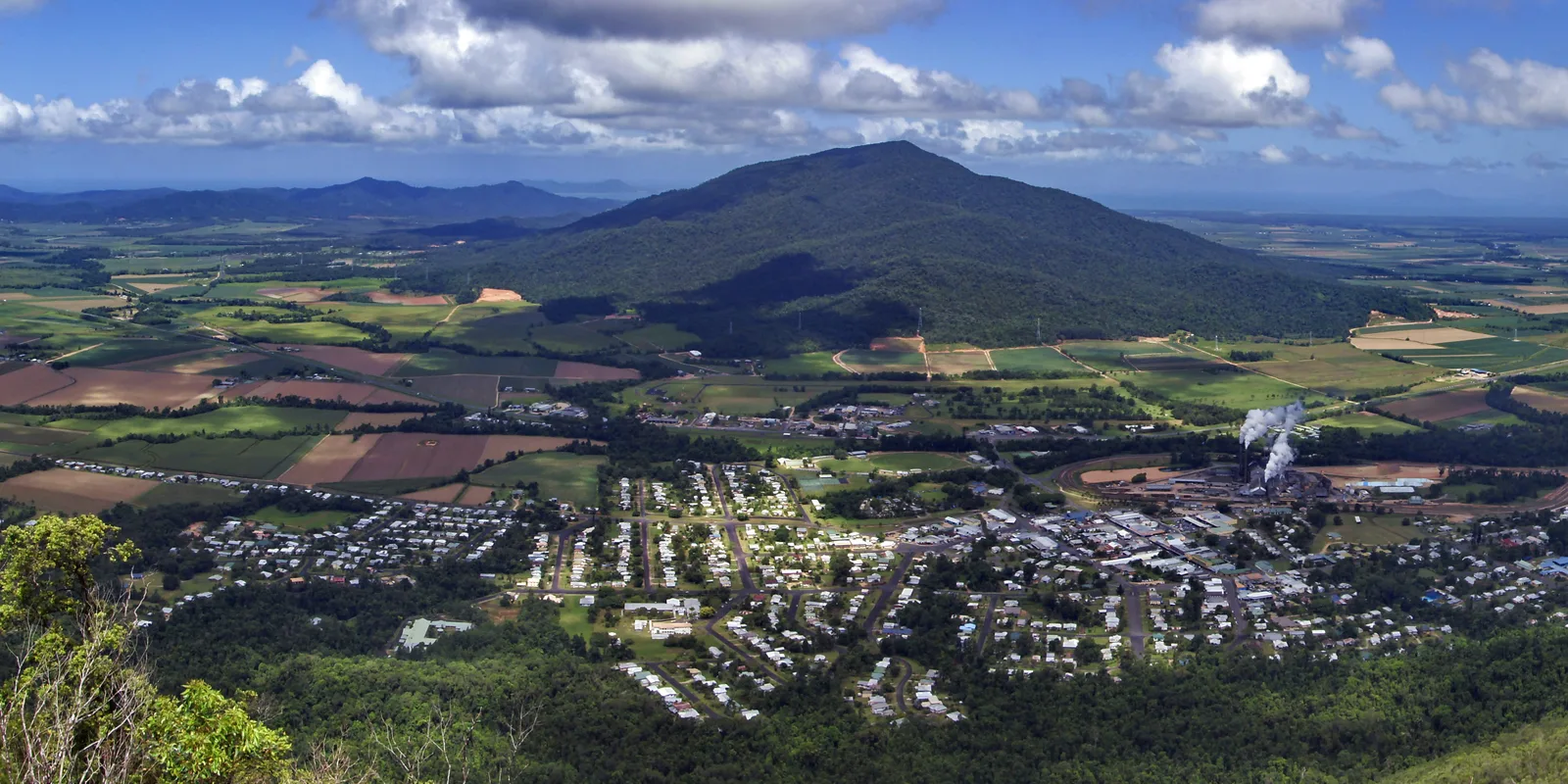
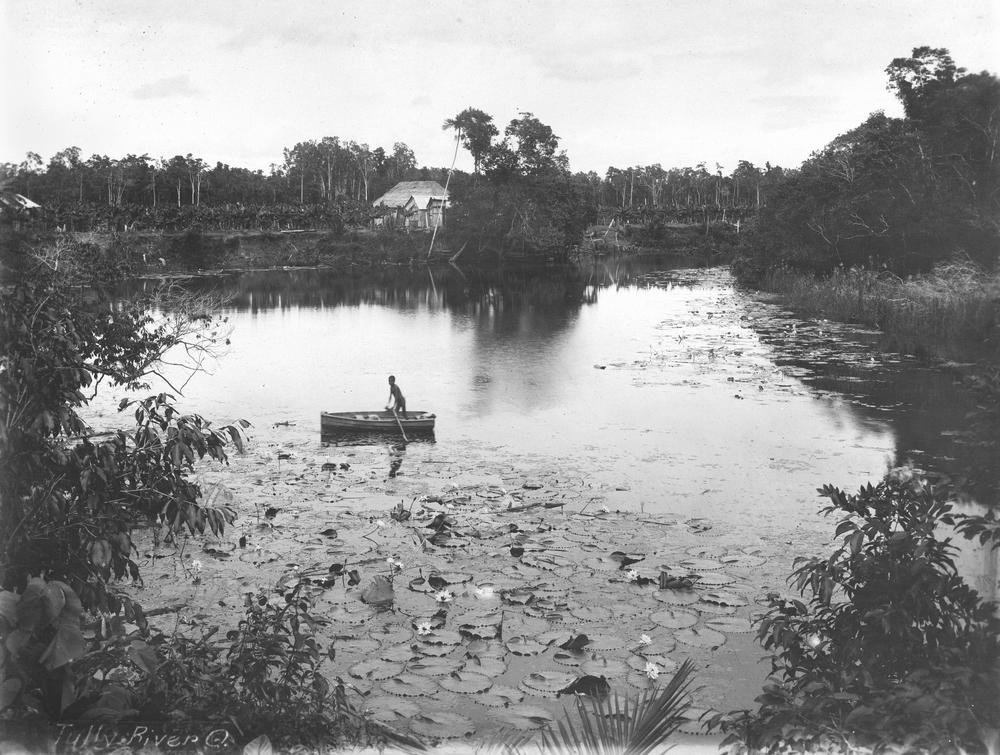
Tully sits on the narrow coastal plain of far north Queensland between Mount Tyson to its northwest and Mount Mackay to its east, a sugar town of about 2,500 people in 1966 with an annual rainfall Flying Saucer Review put at around a hundred inches. Between the cane farms lay swamps and lagoons thick with reeds and rushes. By January 1966 the district already had a reputation. In September 1959, the Sydney UFO Investigation Centre later recorded, a man named Max Menzel, driving a tractor about two miles from Euramo, had seen “a brilliant, large, conical craft, approximately 30 feet long” hovering over the cane tops a hundred feet away, lighting a nearby house red and orange. In the last months of 1965 the sightings came thick and fast: a wavering light that sank toward Horseshoe Lagoon in October, and on November 29 a group around Claire Noble, who would become one of the district’s most prolific UFO reporters, watched two bright lights come down and settle side by side on a hillside: on the slopes of Mount Mackay, by the Sydney centre’s account; on De Lucas’ Hill, about a mile from town, in Noble’s own report, where until past midnight they sat like “two white hot glows shaped like flower pots.” Shortly before Christmas, the Sun-Herald reported, people claimed to have seen two “flying vases” hovering on a hill less than a mile from town. So many reports had come in that Tully had formed a UFO club. A banana grower named John Zonta had been hearing something too: on two or three occasions, he said, a hissing noise in the air, with nothing to be seen.
Sources: 1966 Tully · UFOs no strangers to TullyAustralia’s flying saucer ‘nests’Queensland AgainFlying Saucers: Where Do They Come From? · Chapter 13, “Tully, Old Hat?”
A giant dish in a recurring dream
Albert Pennisi owned the lagoon. He had farmed the land south of Tully since 1947, and the local police, the UFO Investigation Centre said, knew him as “a sensible Army sergeant who had settled down on the land.” By Bill Chalker’s account, he and his wife had seen something strange there even before they bought the property: great revolving beams of light, and something crossing the sky that looked to Albert like “a battleship.” In the week before January 19, 1966, he was troubled by a dream. “I’d get them almost every night,” he told Ben Davie of the Sydney Sun a few days later. “And they were beginning to worry me. I couldn’t understand them. It was always the same. This thing like a giant dish would come out of nowhere and land nearby. And I would watch it in my dream and get real afraid before it went away.” Then, early on the Wednesday morning, his dog seemed to lose its mind, howling and racing off toward the lagoon. Pennisi put the time at about five o’clock. Pedley, retelling the story to the Sun-Herald, said 5:30; the transcription Chalker later printed reads 5:50. Claire Noble heard a version of her own. Two boys at a farm below the hill, she wrote, told her that on the morning of the sighting “all the geese and three dogs went mad.”
Sources: The 1966 Tully Flying Saucer Nest Revisited1966 Tully · UFOs no strangers to TullyAustralia’s flying saucer ‘nests’Flying Saucers: Where Do They Come From? · Chapter 13, “Tully, Old Hat?”
Air escaping from a tyre
George Pedley was a banana grower at Euramo, a bachelor in his late twenties who, by Chalker’s account, lived with the farmer Ashley Butler, on whose land he grew his bananas; he had worked as a stockman for ten years. The Sun-Herald and the Queensland Flying Saucer Research Bureau gave his age as 27, the police form as 28. At about nine on the morning of Wednesday, January 19, under a clear sky, he was driving his tractor south along a narrow track across Pennisi’s cane farm, about half a mile from the farmhouse, on his way to work. Horseshoe Lagoon, an acre or so of still water about five feet deep and thick with reeds, lay to his right, and the sun was well up on his left. He thought he heard the engine misfire. Then came the noise. “I heard a loud hissing noise above the engine noise of the tractor,” he told the Sun-Herald’s John Dickson. “It sounded like air escaping from a tire. But the tractor tires seemed O.K., so I drove on. At first I ignored the sound, but suddenly I saw a spaceship rise at great speed out of a swamp called Horseshoe Lagoon about 25 yards in front of me. It was blue-grey, about 25 ft. across and nine feet high. It spun at a terrific rate as it rose vertically to about 60 ft. then made a shallow dive and rose sharply. Travelling at a fantastic speed, it headed off in a south-westerly direction. It was out of sight in seconds.” He saw no portholes or antennae, he said, “and there was no sign of life either in or about the ship.” The Townsville Daily Bulletin, in one of the earliest reports, on January 21, added that the object “looked like two saucers joined together with a small cabin at its top and another small projection underneath,” and that it had hovered about thirty feet up “for at least a minute.” The police form, a few days later, had him first seeing it at treetop height, about thirty feet up, then watching it rise to about twice that and climb away at some 45 degrees, “much faster than an aeroplane.” When the RAAF summarized the file in 1973, for an inquiry from The Australian, it described a light grey, dull object with no structural detail, shaped like “two saucers, face to face.”
Sources: Australia’s flying saucer ‘nests’Queensland AgainNorth Queensland UFO SagaThe 1966 Tully Flying Saucer Nest RevisitedThe 1966 Tully Saucer “Nest”: A Classic UFO Physical Trace CaseGeorge Pedley, the UFO and the Tully “saucer nest”: a tribute
The water still turning
Pedley could hardly believe what he had seen. In the account the UFO Investigation Centre printed that November, he drove around the bend of the track to the lagoon, and there, on the spot where the object had risen, was a huge round clearing in the swamp grass. Chalker, reconstructing the morning from the witnesses, wrote that the water in the circle “was slowly rotating and appeared to be completely clear of reeds”; Pedley was positive, the Brisbane bureau reported, that it was still swirling slightly when he first saw it. “I have really seen something!” he concluded. Just outside the edge, a patch of giant water couch grass had been cut off short and the clippings taken away, a patch the Sun-Herald gave as about four feet square and the Brisbane bureau as about a square yard. He had passed the same spot about three hours earlier, the Sydney centre said, as close as twelve feet, and noticed nothing; in a statement quoted from the Tully Times he said that when he passed it the previous evening it had been “smothered in green grass-like reeds.” He walked back to his tractor. It was dead, and he had to restart it. He could not remember whether he had switched it off or stalled it, though Chalker wrote that he was sure it had not cut out when it misfired, and that, like most farmers, he never switched off until he was finished. Around noon he came back along the track. The open water had gone. In its place a mass of reeds about thirty feet across had risen to the surface, laid out radially in a clear clockwise swirl, and, he was certain, still green. The Brisbane bureau’s 1969 account skips the open water altogether: Pedley jumps from the tractor, hurries to the lagoon and finds the flattened reeds at once, swirled “in a noticeably anti-clockwise manner.” Stan Seers later admitted to Chalker that even he had got the direction confused, and agreed the first nest turned clockwise.
Sources: 1966 Tully · UFOs no strangers to TullyBill Chalker interview, part 1: the Tully saucer nestNorth Queensland UFO SagaAustralia’s flying saucer ‘nests’The Tully “Nests”: How freakish can whirlwinds be?The 1966 Tully Flying Saucer Nest Revisited
‘They were convinced I was crackers’
When and how Pedley first told anyone depends on who is telling it. In the Sun-Herald he said he had decided to keep quiet, because no one would believe him, until “on my way home to Tully that night I met Albert Pennisi,” who “believed me straight away” and told him about the dream and the dog. He also stopped at a service station and told three people there. “Then the fun started,” he said. “They were convinced I was crackers and told me so.” He took them to the lagoon. In the Brisbane bureau’s account, he called on Pennisi later in the day, and at about four in the afternoon the two went down to the lagoon together. Pennisi stripped off, waded out and found he could swim right under the flattened reeds from one side to the other: the whole mat was floating. Chalker adds that the floor beneath was smooth and clear of roots, and that the surface of the mat looked as though it had been pressed down by a huge inverted saucer, with a circular center six to eight feet across. At about five o’clock Pennisi took a series of color photographs. The reeds had now turned brown, but only on top; their undersides, nearest the water, were still green. Pennisi’s son Shane, seven at the time, remembered it differently in 2024: the family came home from the beach that afternoon to find their neighbor sitting on the front steps. “He started stuttering a bit. Something had happened.” Everyone piled into the ute, the children in the tray, and at the house afterward, Shane recalls, George took two teacup plates from the table and set one upside down on the other, lip to lip, to show what he had seen. In Shane’s telling the saucer was lit with bright lights and left in a puff of blue vapor, details absent from the 1966 accounts, though the first press reports did call it a “vapour-like saucer.” Someone sent a telegram to the UFO Investigation Centre in Sydney.
Sources: Australia’s flying saucer ‘nests’North Queensland UFO SagaBill Chalker interview, part 1: the Tully saucer nestThe 1966 Tully Flying Saucer Nest RevisitedTully’s cane farm crop circles and an enduring 58yo UFO mystery1966 Tully · UFOs no strangers to Tully
‘I do not believe in flying saucers — not yet’
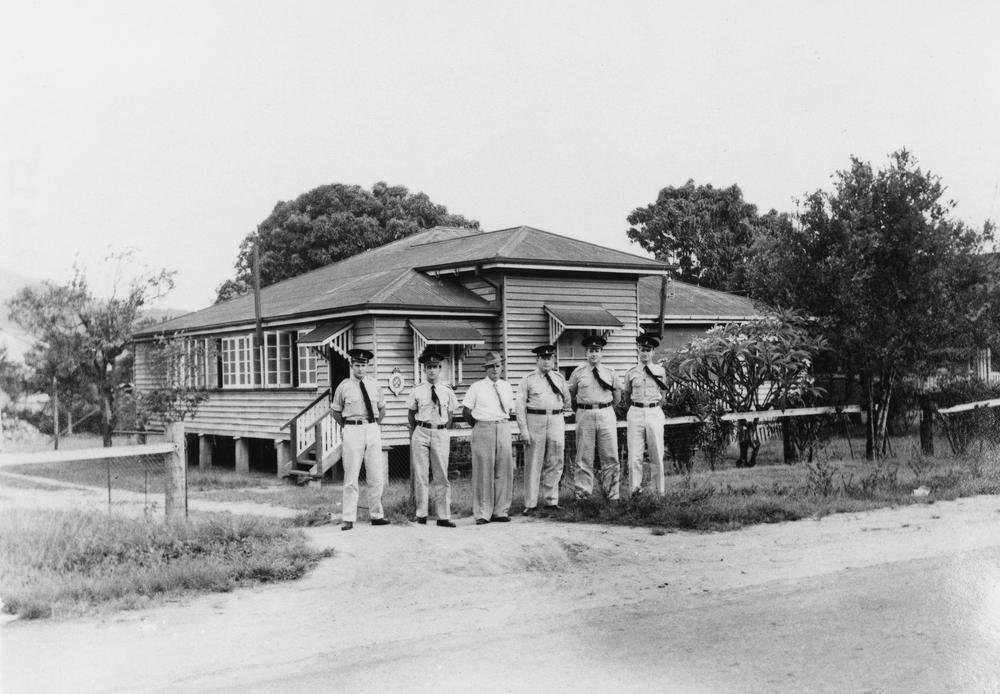
Pedley reported to Tully police at 7:30 that evening, and at seven the next morning Sergeant First Class A. V. Moylan, the officer in charge, went with him to the lagoon. The grass in the depression was still lying flat and had browned off, Moylan told the Townsville Daily Bulletin, though it did not appear to have been burned; there were no marks of cattle or other animals, and no tracks leading in or out. “I do not believe in flying saucers — not yet,” he said. “I have to see one first. But the peculiar mark in the swamp grass seems quite inexplicable. It occurred to me that it may possibly have been made by a helicopter, but to the best of my knowledge there has been no such aircraft in the area.” Moylan phoned the RAAF at Townsville, and Flight Lieutenant Wallace promised a questionnaire by post; the next day Wallace asked for “a sample of the grass from the scorched area,” and at 3:30 that afternoon Moylan went back for it. He filled in the RAAF’s “Report on Aerial Object Observed” himself from his interviews with Pedley and dated it January 26. It describes a depression “about 32′ long and 25′ wide,” the grass “flattened to surface of 4′ of water lying in xxxx-clockwise curves”: Moylan had first typed “anti-clockwise,” then struck out “anti.” In his remarks he gave his private view, that the depression had been made by a small helicopter and that Pedley, “in the early morning bright sunlight shining on the rotor may have mistaken the shape,” though there was cleared land to the east, about 200 yards of it, where a helicopter could have landed more safely than beside the trees. A Tully electrician, Wallace Evans, had told him he had seen similar markings in a swamp at Kurrimine Beach and was quite certain they had been made by a whirlwind, “sucking up water into a waterspout.” Wallace, for his part, confirmed that no service or civil aircraft had been operating in the area. No one from the RAAF ever interviewed Pedley himself.
Sources: The 1966 Tully Flying Saucer Nest RevisitedQueensland AgainPanorama, Vol. 5 No. 1The Prime Minister’s “flying saucer” briefing: Tully ’66, George Pedley, Harold Holt and John Busst
‘More flying saucer nests!’
On the Thursday, a cane farmer named Tom Warren and a Tully schoolteacher, Hank Penning, walked around it and found two more circles, about twenty-five yards from the first and hidden by dense scrub, a few feet apart and about eight feet across; one looked days old, the other fresh. The Sun-Herald reported the fresher one swirled anticlockwise; the Sydney centre said one went each way; John Busst, who looked into it a month later, said both were anticlockwise. On Sunday, January 23, the Sun-Herald ran an enormous front-page banner, “MORE FLYING SAUCER NESTS!” Judith Magee of the Victorian society regretted the word. “A pity they had to label them ‘nests,’” she wrote, but it had “more sensational appeal than the more prosaic term ‘landing place,’” and it gave the cartoonists plenty of scope. Within days the story was abroad. “Nest-building flying saucers found in land down under,” said the Bangkok World; London’s Daily Worker went with “Saucer ‘nests’ but no eggs.” Hundreds of people came to see, some camping overnight at the lagoon in the hope of a repeat performance, and the Cairns Aero Club sent a plane to search the swamps from the air. Shane Pennisi remembers the dust from the traffic so thick his mother could not hang out the washing. “They parked anywhere they could, they walked over plant cane … broke down trees … they just walked through the lagoon.” Exactly a week after the first finds, a cane farmer, Lou Lardi, and his nephew, Van Klaphake, stumbled on two older circles, twelve and eight feet across, the smaller with a round patch of scorched-looking reeds at its center; a few days later another, with the same scorched center, turned up among the earlier ones on Pennisi’s farm. Chalker allowed that hoaxing or misinterpretation might lie behind some of the later finds, made amid the crowds, but not the first.
Sources: Australia’s flying saucer ‘nests’Queensland Again1966 Tully · UFOs no strangers to TullyThe Prime Minister’s “flying saucer” briefing: Tully ’66, George Pedley, Harold Holt and John Busst‘Nest-building flying saucers found in land down under’Tully’s cane farm crop circles and an enduring 58yo UFO mysteryThe 1966 Tully Flying Saucer Nest Revisited
Drowned, not burned
Pennisi waded back into the five-foot-deep lagoon to gather samples. “I had trouble getting samples of the grass roots and mud which normally lie on the bottom of the lagoon … they were floating on the top of the water, which is most unusual,” he told The Age. “They must have been sucked up by something.” He air-freighted reeds, mud and water to Brisbane, where Roy Russell and Stan Seers of the Queensland Flying Saucer Research Bureau collected them at the airport on the night of January 24 and delivered them to the University of Queensland at 9:20 p.m. The radioactivity test was negative, Russell reported: nil on gamma, nil on beta, and the alpha equipment was not working. The physicist who ran it, G. Taylor, found the count “only 1/100 of that registered by the average luminous watch.” Dr. R. Langdon of the botany department concluded that the reeds had died from being held under swamp water, with no sign of parasites or burning. Alf Macdonald, the Stock Routes Inspector for North Queensland, who had lived in the district since 1933, dived under the mat himself. “There was no stubble under this circle,” he said. “The roots were sucked up whole and the lagoon floor was smooth.” That ruled out reed-eating grubs, he explained: “They cause water grasses to collapse, but the roots and remnants stay, like stubble, on the lagoon bed.” The floating layer of reeds was about nine inches thick and, the Sydney centre said, could bear the weight of a fourteen-stone man; Busst wrote that Macdonald could walk crouched right across beneath it. Then came a test of their own, which Chalker credits to Pennisi at the Brisbane bureau’s suggestion. Reeds pulled up by hand and sunk in the lagoon’s own water took about three days to die and turn brown. The reeds in the nest had done it in about twelve hours by the Sydney centre’s figure, eight by Chalker’s.
Sources: Queensland Again1966 Tully · UFOs no strangers to TullyThe Tully “Nests”: How freakish can whirlwinds be?The Prime Minister’s “flying saucer” briefing: Tully ’66, George Pedley, Harold Holt and John BusstThe 1966 Tully Saucer “Nest”: A Classic UFO Physical Trace Case
Willy willies and waterspouts
The official explanations arrived in layers. On January 25 the Brisbane Courier-Mail reported that the RAAF discounted helicopters, because in depressions left by helicopters the grass usually ran anticlockwise, and the main Tully nest ran clockwise. A Brisbane helicopter company added that a rotor might flatten grass, “but the grass would soon spring up again and it would not die.” RAAF Operational Command, forwarding Moylan’s report to the Department of Air under a RESTRICTED classification, offered its own view: “This headquarters believes that the depressions of the swamp grass were caused by small isolated waterspouts.” On February 11 the Secretary of the Department of Air, A. B. McFarlane, answered an inquiry from the civilian Commonwealth Aerial Phenomena Investigation Organisation. Local residents had said such nests were “fairly common during the onset of the ‘wet,’” he wrote, and the University of Queensland had found nothing unnatural in the samples. “There is no explanation for the visible phenomena reported but it could have been associated with or the result of ‘down draughts’, ‘willy willies’ or ‘water spouts’ that are known to occur in the area.” Pedley had heard the theory. “I’ve seen wet whirlwinds and dust whirlwinds,” he said. “If the police believe this, let them. I know what I saw. It wasn’t a whirlwind.” In July a member of the Victorian Flying Saucer Research Society with a background in atmospheric science went through the Weather Bureau maps and the Townsville soundings. A cold front had approached the coast on January 18, but every other factor was “highly unfavourable for the formation of local severe storms,” and in the twenty-four hours before 9 a.m. on the 19th no rain had been recorded anywhere northeast of a line from Rockhampton to Normanton. He judged the evidence evenly split, then came down against a whirlwind because the reeds were dead and there was no debris outside the circle. His essay ended with a question: “How freakish can whirlwinds be?” In 1973 the Department of Defence’s public relations director, G. J. Odgers, gave a journalist the final word: the sighting was most probably a “willy willy” that had flattened the reeds and “sucked up debris to a height of about 30 feet, thus forming what appeared to be a ‘flying saucer’,” its hiss and clockwise swirl both consistent with the theory. “You will appreciate,” he added, “that there is nothing to be gained from reopening old cases.”
Sources: The 1966 Tully Flying Saucer Nest Revisited1966 Tully · UFOs no strangers to TullyThe Tully “Nests”: How freakish can whirlwinds be?
‘What gives, chum?’
Harold Holt became prime minister of Australia in the same week, sworn in on January 26, 1966, the day Moylan posted his report. Among his personal papers in the National Archives the Westall researcher Shane Ryan later found six handwritten pages about Tully from John Busst, an artist and coastwatcher at Bingil Bay, up the coast from Tully, and a lifelong close friend of Holt’s. “Dear Harry,” Busst wrote on February 24. “Herewith the result of my rather thorough investigation into the sighting of the Flying Saucer at Euramo. I have had the young man, George Pedley, here and closely questioned him on all aspects.” He had also questioned a large number of people who knew Pedley, and judged him “a quite reliable witness.” In a two-and-a-half-hour cross-examination, his statement says, Pedley was “quite unshakeable” and never varied a detail: an object like “two inverted saucers joined together with protuberances approx. 2 ft high, on the top and the bottom,” hovering above nine-foot reeds, gone at a 45-degree angle “on a S.S.W. course in the direction of Charters Towers,” the whole incident occupying “approx. ½ minute at the longest.” The pad, Busst noted, was not only flattened but “sucked up about 3-4 feet off the ground,” its reeds “bruised, not burnt.” What baffled him most, “as a coast watcher,” was that “neither of the two teams of R.A.A.F investigators even bothered to interview the young man concerned. What gives, chum?” He signed it “Affectionately, Johnnie.” Chalker, who published the letter in 2025, does not report any reply.
Sources: The Prime Minister’s “flying saucer” briefing: Tully ’66, George Pedley, Harold Holt and John Busst
Sulphur, a stalled engine and a line of hoofprints
As the months passed, the story gathered new details. In Woman’s Day of February 21, Pedley said that a day after the sighting a neighbor had shown him tracks in the soft earth between the bananas. “I’d say they were made by a sharp, horny foot, about 3 inches long, with a soft frog in it. And I’d say they were made by something that had two feet, not four. They were straight in front of one another, about a pace apart, and in line with the flying saucer nest. I’ve been a stockman for 10 years and I have never seen tracks anything like these.” The start of the Wet washed them away, he said. Pennisi, writing to a correspondent in Canada, told it differently: he and Pedley had found the prints themselves, beside the large nest, on the day of the discovery, about three inches across and shaped like a calf’s hoof, eight or ten inches apart, and sightseers had trampled them before the police arrived the next morning; Chalker later credited the find to Christine Rounland, whose husband helped Pedley with his fertilizing, and described teardrop-shaped marks three or four inches long, a foot apart, leading from the direction of the lagoon. By November the Tully UFO club, interviewing Pedley again, had more. He had “omitted to report earlier” a sulphur smell around the nest after the object left. His engine had started to miss during the sighting and then stopped, which he had put down to stalling it in his astonishment. Repeated dives beneath the main nest had found three large holes in the mud, which suggested to the club a craft resting on three legs. From witnesses’ accounts, it deduced that the object had first come down at about two in the morning on the slopes of Mount Mackay and rested there until about five before moving to the lagoon. The Sydney centre concluded that “UFOs have visited Tully district with some definite purpose.”
Sources: Queensland AgainThose “Saucer Nests”The 1966 Tully Flying Saucer Nest Revisited1966 Tully · UFOs no strangers to Tully
The film that arrived empty
The nests came back in early 1968, and this time the Brisbane bureau was waiting. Primed by a predicted sunspot maximum, it set up a monitor near the lagoon, built by Vince Mele and an electronics friend: a photocell and a sensitive magnetic compass wired to an 8-millimeter Eumig cine camera, so that any magnetic disturbance would start the film running. On March 2, with four nests about three weeks old in the lagoon, the same day radio station 4KZ broadcast that an airliner between Cairns and Iron Range had been paced by a UFO, the bureau found the camera still whirring, its whole roll run through. On March 4 it was triggered again, but only fifteen or sixteen frames were exposed and the freshly charged batteries were flat. The film was sealed and posted to Kodak in Melbourne before two witnesses, with fourteen cents in stamps. About ten days later Kodak wrote that the container had arrived empty, and the post office confirmed that an empty container would have cost only five cents to send. The police inquired interstate and turned up nothing officially, though someone the bureau described as well informed in police matters hinted that Commonwealth authorities had probably taken the film; another contact advised loading the camera next time with black-and-white film. Around March 13, the bureau said, two RAAF helicopters were seen working over the lagoon. When the barrister and state member Colin Bennett took up the matter, the Minister for Air, Gordon Freeth, replied on August 29 that he could offer no suggestion as to the film’s fate and positively denied that his department had ever removed UFO material from Kodak. At 5:30 on the morning of Saturday, February 8, 1969, a detector in the Pennisi house went off; Albert found a new nest, twenty-nine feet six inches across and perfectly circular, its reeds pulled up roots and all, the floor beneath “almost as if it had been vacuumed.” A photograph in Flying Saucer Review dates a nest of that season to February 10. Pennisi, ridiculed in 1966, had resolved that the media would never hear of another, and kept counting. By his reckoning in 2002 they came back in 1972, 1975, 1980, 1982 and 1987, “about 22 smaller ones” besides the big ones, and “while the big one always went clockwise, (the others) were always anti-clockwise.”
Sources: North Queensland UFO SagaThe Tully nests of 1966 and 1969, with the RAAF police reportSomething in the AirThe 1966 Tully Flying Saucer Nest Revisited
Two men on a hill near Winchester
Among the people who read about the Tully nests in an Australian newspaper in 1966 was Doug Bower, an English painter who had emigrated in 1958. He went home that year to Southampton, later befriended a fellow artist, Dave Chorley, and on summer Friday evenings the two walked the fields at Cheesefoot Head, outside Winchester. In August 1992 Bower told Clas Svahn of UFO-Sweden what happened next, in an interview Paul Fuller printed in The Crop Watcher in 1993: “Well I lived in Australia from 1958 to 1966, which was eight years, and of course there was a report of some UFO nests in Tully in Queensland I think, and I’ve always been interested in that sort of thing and of course when Dave and I were on the hill at Winchester one evening I remarked about the saucer nests that were found in Queensland and I said ‘Let us put a circle in the cornfield’ and of course there it was.” He had never made one in Australia, he said; “it didn’t even enter my head then.” Was Tully the inspiration? “That’s right, yes.” To John Lundberg he remembered sitting on the bank and suggesting “it would be a bit of a laugh if we could find a way to make circular marks in these corn fields,” and in a 2002 documentary he explained the point of the joke: “People would think that a UFO had landed during the night when they discovered it the next morning.” Their first circles were made on hands and knees with the big, heavy security bar from Bower’s workshop door, about five feet long, swung around one fixed end. Meanwhile the meteorologist Terence Meaden, who had blamed whirlwinds for circles at Westbury in 1980, took up Tully as a precedent for his vortex theory, and Jenny Randles suggested in 1987 that it might explain the nest. Chalker objected that the lagoon lay on a flat plain miles from any high ground, that the day had been calm and fine, and that Pedley had seen a solid object at close range; he also traced part of the confusion to himself, since his entry in a 1980 UFO encyclopedia had been printed with the time as 9 p.m., the version Meaden used. After Bower and Chorley went public in 1991, Bower kept naming Tully as his starting point. Until then, the Canadian researcher Chris Rutkowski noted, “many cerealogists had never heard of the case.”
Sources: An Interview with Doug Bower, The Man Who Claims to have Invented the Crop CirclesThree Circles: 1975–1989Crop Circles: Signs of Intelligence?The 1966 Tully Flying Saucer Nest RevisitedThe 1966 Tully Saucer “Nest”: A Classic UFO Physical Trace CaseThe Swamp Gas Journal, Vol. 6 No. 1Crop circle
‘I would never have said I saw a spaceship’
Pedley soon stopped talking about it, except to his family. When Chalker interviewed him in June 1981, he disowned the newspapers’ most famous word. “Oh, I would never have said I saw a spaceship!” he said. “I saw an object … something going up and that’s it. Just what it was, I don’t know.” Nor had he seen it come out of the water: “I didn’t see it in the lagoon as they say. That’s wrong. The marks were in the lagoon … and it just took off from there.” He now put it at twenty-nine or thirty feet across, “something similar to like two saucers, you know, face to face,” silvery or blue-grey, in sight for perhaps thirty seconds. In 1990, as English crop circles filled the papers, he told The Age: “I wasn’t the sort of person who believed in things like that. I’m convinced it was a UFO. I saw it so clearly and I can tell you I didn’t make it up.” In 1994 he drove his tractor past the lagoon again for Arthur C. Clarke’s Mysterious Universe. In 2003 the travel writer John Van Tiggelen suggested in his book Mango Country that Pedley had played a trick on Pennisi; Chalker, who had known both men, called the idea unsustainable and the evidence for it nil. Pennisi kept watching his lagoon at night, sometimes with nothing but his cane knife. “They also tried to tell me it was a low-flying helicopter, a mini tornado, even a crocodile,” he said at 82. “But anyone who saw it will tell you whatever made it was not of this world, my friend.” He gave his first and last public lecture on the nests in Brisbane in 2006 and died in January 2009, three days short of his ninetieth birthday. Pedley died in 2022, aged 85; his widow, Helen, keeps the clippings in a manila folder at the local library. Shane Pennisi says the nests kept coming, “25, 30, more,” the last of them about a decade before he spoke to the ABC in 2024, and in August 2026, Chalker reported, he may have found a buyer for the farm who wants to keep Horseshoe Lagoon as it is.
Sources: George Pedley, the UFO and the Tully “saucer nest”: a tributeThe 1966 Tully Flying Saucer Nest RevisitedUFOs responsible for circles, say Tully menSomething in the AirTully’s cane farm crop circles and an enduring 58yo UFO mysteryReturn to Tully: the famous Flying Saucer nest and its legacy (1966–2026)
Police papers, seen at second hand
The earliest official documents are Sergeant Moylan’s police papers and the RAAF pro-forma he completed from his interviews with Pedley, dated January 26, 1966, with Flight Lieutenant Wallace’s covering minute, the Operational Command letter and the Department of Air’s reply to CAPIO of February 11. They survive in the National Archives of Australia: the RAAF Townsville file J63, 5/40/AIR Part 1, at pages 167–178 and 184–185, and the Department of Air file A703, 580/1/1 Part 5, according to Keith Basterfield, who reported the Townsville file digitised in 2013. Busst’s letter to Holt is in Holt’s papers, M2606, 112. The quotations here come from Bill Chalker’s published transcriptions of those files, not from the scans themselves, and they have one notable wrinkle: the form’s swirl direction, typed “anti-clockwise” and corrected to clockwise by striking out “anti.” The papers establish that Pedley reported promptly, that a police officer saw the depression within a day, that the RAAF checked for aircraft and found none, and that no RAAF officer interviewed the witness. They do not contain an investigation of the site by anyone with scientific training.
Sources: The 1966 Tully Flying Saucer Nest RevisitedThe Prime Minister’s “flying saucer” briefing: Tully ’66, George Pedley, Harold Holt and John BusstTully physical trace case 1966: RAAF papers now digitised‘Nest-building flying saucers found in land down under’
One witness, many versions
Pedley was the only person who saw the object, and the record of what he said is a record of other people writing it down. The duration runs from four or five seconds (the Brisbane bureau) and five or six (Basterfield, reading the file) through about fifteen (the police form) and half a minute at most (Busst) to thirty seconds (Pedley himself in 1981), while the Townsville Daily Bulletin had the object hovering for at least a minute. The distance is usually twenty-five yards, but forty in the Bulletin. His age is 25, 27 or 28. The size grew from about twenty-five feet to twenty-nine or thirty by 1981. The Sun-Herald’s “I have actually seen a spaceship” he later disowned, along with the idea that it rose out of the water; in 1981 he insisted he first saw it already in the air, above the spot where the marks were. Pennisi’s dog went mad at five, 5:30 or 5:50 depending on the account. None of these variations touches the core of the account, which stayed fixed from the police form onward: a hiss over the engine, a grey object like two saucers face to face rising from about tree height, a fast climb to the southwest, and a circle in the reeds directly below.
Sources: North Queensland UFO Saga‘Nest-building flying saucers found in land down under’The 1966 Tully Flying Saucer Nest RevisitedThe Prime Minister’s “flying saucer” briefing: Tully ’66, George Pedley, Harold Holt and John BusstQueensland AgainAustralia’s flying saucer ‘nests’
The reeds
The physical trace is better documented than the sighting. Moylan saw it the next morning and recorded a near-circular depression about thirty-two by twenty-five feet, and others gave thirty feet (the press), twenty-eight (Pennisi) or thirty by twenty (the Townsville Daily Bulletin). Several people, including Macdonald, Pennisi and, according to the Victorian society, a member of the local police, went under the floating mat and found the lagoon floor smooth and free of roots. Photographs were taken by Pennisi on the afternoon of January 19 and by the Tully photographer P. V. Vignale, probably the next day. The University of Queensland found no significant radioactivity and judged the reeds drowned; the RAAF had no comment on the uprooting. The direction of the swirl caused years of confusion. The police form, the RAAF, the press, Pennisi and Chalker all say the main nest ran clockwise and the small ones mostly anticlockwise, but the body of Seers and Lasich’s 1969 article says anticlockwise while its own footnote says clockwise, and Chalker says Seers agreed he had mixed them up. Pedley’s story would fit any of the official mechanisms only by discarding his description of a solid object; the natural explanations, their critics argued, have never accounted for roots pulled from under four or five feet of water on a calm, dry morning.
Sources: The 1966 Tully Flying Saucer Nest RevisitedQueensland AgainThose “Saucer Nests”The Tully “Nests”: How freakish can whirlwinds be?1966 Tully · UFOs no strangers to TullyNorth Queensland UFO Saga
Later layers
Much of what makes Tully strange arrived after January 1966, and some of it much later. The sulphur smell, the engine that stopped, the three holes in the lagoon floor and the overnight landing on Mount Mackay come from the Tully UFO club’s interviews and dives as reported in November 1966, and the club itself noted that Pedley had not mentioned the smell before. The footprints were in print by February 1966 but changed shape in the retelling, from a two-footed hoof “about a pace apart” to teardrops a foot apart; no casts were taken. The bright lights and blue vapor in Shane Pennisi’s 2024 recollection, and Valerie Keenan’s memory of three more “pads” in another lagoon, are childhood memories recorded nearly sixty years on. Pennisi’s dream, on the other hand, was in the papers within five days. The 1968 film is known only from the Brisbane bureau’s account. The count of later nests shifts with the teller: Pennisi gave The Age “between 40 and 50” in 1990, Chalker understood him to mean twenty-two, and Shane says “25, 30, more.” Few were investigated by anyone outside the family.
Sources: 1966 Tully · UFOs no strangers to TullyQueensland AgainThe Tully nests of 1966 and 1969, with the RAAF police reportTully’s cane farm crop circles and an enduring 58yo UFO mysteryNorth Queensland UFO SagaThe 1966 Tully Flying Saucer Nest RevisitedUFOs responsible for circles, say Tully men
Classification and evidence note
This archive classifies Tully as a reported close encounter of the second kind: a single witness saw an object at close range rising from the spot where a physical trace was found minutes later and inspected by police the next day. The label describes the report, not its cause. The documentary basis is Moylan’s police report and the RAAF papers as transcribed by Bill Chalker; the January 1966 press, chiefly the Townsville Daily Bulletin, the Sun-Herald, The Sun and The Age, much of it known through reprints in saucer journals; the Queensland bureau’s laboratory results; the 1966 analyses of the Victorian society and the Sydney UFO Investigation Centre; Busst’s letter to Holt; and later interviews with Pedley, Pennisi and Pennisi’s son. No photograph of the object exists, and the original 1966 photographs of the nest remain with private and local collections.
Sources: The 1966 Tully Flying Saucer Nest RevisitedThe Prime Minister’s “flying saucer” briefing: Tully ’66, George Pedley, Harold Holt and John BusstQueensland AgainThe Tully “Nests”: How freakish can whirlwinds be?1966 Tully · UFOs no strangers to Tully
- SEP 1959
Max Menzel, on a tractor near Euramo, reports a large glowing conical craft hovering over the cane.
- OCT–DEC 1965
A run of night lights around Tully, including two that settle on Mount Mackay on November 29; a UFO club forms in town.
- MID-JAN 1966
For about a week Albert Pennisi dreams almost nightly of a giant dish landing near his house.
- 19 JAN 1966 · ABOUT 5–5:50 AM
Pennisi’s dog goes wild and races toward Horseshoe Lagoon.
- 19 JAN 1966 · ABOUT 9 AM
George Pedley hears a hiss over his tractor and sees a grey object rise from about tree height, spin, and climb away to the southwest.
- MINUTES LATER
He finds a clear circle of slowly turning water in the reeds and a clipped patch of couch grass; his tractor has to be restarted.
- ABOUT NOON
A floating mat of uprooted reeds about thirty feet across has surfaced in the circle, swirled clockwise.
- ABOUT 4–5 PM
Pennisi swims under the floating mat and photographs it; the reeds are brown on top, green beneath.
- 19 JAN 1966 · 7:30 PM
Pedley reports to Tully police.
- 20 JAN 1966 · 7 AM
Sergeant A. V. Moylan inspects the site and phones the RAAF at Townsville; Tom Warren and Hank Penning find two smaller nests nearby.
- 21 JAN 1966
The Townsville Daily Bulletin breaks the story; Moylan takes a grass sample for the RAAF.
- 23 JAN 1966
The Sun-Herald’s front-page banner: “MORE FLYING SAUCER NESTS!”
- 24–25 JAN 1966
Samples reach the University of Queensland; radioactivity tests are negative, and botanists conclude the reeds drowned. The story runs from Bangkok to Dublin.
- 26 JAN 1966
Moylan sends his report and sample to the RAAF. Harold Holt is sworn in as prime minister.
- ABOUT 27 JAN 1966
Lou Lardi and Van Klaphake find two older nests, one with a scorched-looking center.
- 11 FEB 1966
The Department of Air tells CAPIO the nests may have been caused by down draughts, willy willies or waterspouts.
- 24 FEB 1966
John Busst sends Holt his report on Pedley: “What gives, chum?”
- JUL 1966
The Victorian society’s weather analysis asks, “How freakish can whirlwinds be?”
- 4 MAR 1968
The Brisbane bureau’s monitor camera at the lagoon is triggered; the film later reaches Kodak as an empty container.
- 8 FEB 1969
A detector in the Pennisi house goes off at dawn, and a new nest is found in the lagoon.
- 17 DEC 1973
Defence public relations tells a journalist writing for The Australian that the sighting was probably a willy willy.
- JUNE 1981
Pedley tells Bill Chalker he never said he saw a spaceship.
- AUG 1992
Doug Bower tells Clas Svahn that the Tully nests inspired the first crop circles he and Dave Chorley made near Winchester.
- 25 JAN 2009
Albert Pennisi dies, three days short of ninety.
- 2022
George Pedley dies, aged 85.
Sources & interviews
Australia’s flying saucer ‘nests’John Dickson · The Sun-Herald (Sydney) · January 23, 1966 · Pedley’s first long interview, reprinted in Saucers, Space & Science No. 42 · via the Internet ArchiveQueensland AgainJudith Magee · Flying Saucer Review 12(2) · March/April 1966 · quoting the Townsville Daily Bulletin of January 21, The Age and The Sun of January 24, Woman’s Day of February 21 and Roy Russell’s letter of January 25 · via the Internet ArchivePanorama, Vol. 5 No. 1Melbourne saucer newsletter · 1966 · reprints of the Townsville Daily Bulletin story, Sergeant Moylan’s comments and the Bankstown nest report in The Sun, February 1966 · via the Internet ArchiveA Tully-style circle on Long IslandThe Sun (Sydney) · October 27, 1966 · reprinted in Panorama, Vol. 5 No. 5 · via the Internet ArchiveThose “Saucer Nests”The A.P.R.O. Bulletin · March–April 1966 · with Albert Pennisi’s letter to Dr. P. M. H. Edwards · via the Internet ArchiveThe Tully “Nests”: How freakish can whirlwinds be?Australian Flying Saucer Review No. 5 · Victorian Flying Saucer Research Society · July 1966 · by an unnamed member “connected with studies in atmospheric sciences” · via the Internet Archive1966 Tully · UFOs no strangers to TullyAustralian Flying Saucer Review No. 9 · UFO Investigation Centre, Sydney edition · November 1966 · including the Tully UFO club’s later findings · via the Internet ArchiveFlying Saucers: Where Do They Come From? · Chapter 13, “Tully, Old Hat?”Richard Tambling · Horwitz Publications, Sydney · 1967 · quoting Claire Noble’s report · via the Internet ArchiveNorth Queensland UFO SagaStan Seers and William Lasich · Flying Saucer Review 15(3) · May/June 1969 · the Queensland Flying Saucer Research Bureau’s account, with the 1968 monitor camera · via the Internet ArchiveThe Tully nests of 1966 and 1969, with the RAAF police reportUFO Research Queensland account and Bill Chalker · reprinted in OLM issue 50 · via the Internet ArchiveBill Chalker interview, part 1: the Tully saucer nestProject Red Book 3(7) · January 2000 · Chalker’s reconstruction of the first hours from the witnesses’ accounts · via the Internet ArchiveUFOs responsible for circles, say Tully menGreg Roberts · The Age (Melbourne) · August 15, 1990 · reprinted in UFO Newsclipping Service No. 258 · via the Internet ArchiveSomething in the AirFrances Whiting · The Sunday Mail (Brisbane) · January 20, 2002 · Albert Pennisi at 82 and the Girrigun elder Jack Muriata · reprinted in Project Red Book 5(8) · via the Internet ArchiveThe 1966 Tully Saucer “Nest”: A Classic UFO Physical Trace CaseBill Chalker · Project 1947 · 1997 · with his rebuttal of the vortex theories · archived copy via the Wayback MachineThe 1966 Tully Flying Saucer Nest RevisitedBill Chalker · The Oz Files blog · July 17, 2017 · his transcriptions of the police report and RAAF papers, and his 1981 interview with PedleyGeorge Pedley, the UFO and the Tully “saucer nest”: a tributeBill Chalker · The Oz Files blog · September 7, 2022 · with the family eulogy of July 11, 2022The Prime Minister’s “flying saucer” briefing: Tully ’66, George Pedley, Harold Holt and John BusstBill Chalker · The Oz Files blog · August 20, 2025 · transcribing NAA M2606, 112 (item 4982058), found by Shane RyanReturn to Tully: the famous Flying Saucer nest and its legacy (1966–2026)Bill Chalker · The Oz Files blog · August 15, 2026Tully physical trace case 1966: RAAF papers now digitisedKeith Basterfield · UFOs and UAP: Researching the Unknown · August 28, 2013 · on NAA file J63, 5/40/AIR Part 1‘Nest-building flying saucers found in land down under’Keith Basterfield · UFOs and UAP: Researching the Unknown · September 13, 2017 · the international headlines found in the CUFOS archiveTully’s cane farm crop circles and an enduring 58yo UFO mysteryChris Calcino and Danielle O’Neal · ABC News, for the Expanse podcast series Uncropped · November 24, 2024 · Shane Pennisi’s recollectionsAn Interview with Doug Bower, The Man Who Claims to have Invented the Crop CirclesClas Svahn of UFO-Sweden · The Crop Watcher No. 16, ed. Paul Fuller · March/April 1993 · as quoted in the ISGP crop circle compilation · via the Internet ArchiveThree Circles: 1975–1989The Croppie · June 3, 2024 · quoting Bower’s account to John Lundberg in The Field GuideCrop Circles: Signs of Intelligence?Francesco Grassi · quoting Doug Bower’s 2002 interview for Matthew Williams’s documentary · via the Internet ArchiveThe Swamp Gas Journal, Vol. 6 No. 1Chris Rutkowski · 1992 · on Bower, Chorley and the forgotten trace literature · via the Internet ArchiveCrop circleWikipedia · English-language article on the history of crop circles and the 1991 Bower and Chorley interviewsSpotted an error, or know a better source? Write to hello@uap.fun.
Connected files
Crop circles: the messages in the fieldsThe English phenomenon that began, by Doug Bower’s own account, with a newspaper story about a lagoon near Tully.The Westall School MysteryEleven weeks later, in suburban Melbourne, another Australian sighting left a ring of flattened grass, and the researcher who has chased it, Shane Ryan, found Busst’s letter to Holt.The Lavender Field at ValensoleSix months earlier in Provence, a farmer surprised a craft in his field and left gendarmes measuring the marks it made in the soil.The Landing at Trans-en-ProvenceA lone witness, a landing trace and a debate over damaged plants, but this time a national agency ran the laboratory work.The Burning Grid at Falcon LakeAnother classic physical-trace case of the 1960s, with a witness who carried the marks on his own chest.Discuss this case
Compare notes with other readers: witness details, sources, and the parts that still do not add up.
Open the discussion